
The Builder Civilization (Part 2)
A civilizational systems analysis of converging risk, accelerating AI power, renewed geopolitics, NSIR resilience, and the human capability challenge shaping the 2020–2070 era.
Delve into in-depth discussions on mastering digital craftsmanship, focusing on the evolution of technology, sustainable innovations, and the harmonious integration of tradition with modern education. This category provides critical insights into the challenges and opportunities at the intersection of creativity and technology.
A civilizational systems analysis of converging risk, accelerating AI power, renewed geopolitics, NSIR resilience, and the human capability challenge shaping the 2020–2070 era.
A civilization begins to possess “the future” when it stops treating tomorrow as repetition and starts treating it as design space. Science made nature intelligible. Engineering turned intelligibility into machinery. Infrastructure made progress visible. But the builder civilization was never only about dams, grids, railways, or rockets. It was an operating system of aspiration, competence, trust, and execution.

The future does not only need trained workers. It needs formed people: lawgivers, makers, navigators, carriers, and truth-tellers who can rebuild institutions under pressure. This essay completes the Wisdom Armed archetype map and explains why the skills gap has become an archetype gap.

Navantia UK’s LASV75 could become more than a large unmanned vessel. With stealth-managed shaping, modular payloads, counter-UAS weapons, electronic warfare, and survivability designed as one system, it may point toward the hybrid navy’s future unmanned escort layer.

SGT is a self-funded, not-for-profit public-interest organization built through years of research, technical reporting, and personal investment. At this time, the organization is unable to invest in paid ads, but remains focused on completing, refining, and sharing serious systems work for public benefit.

The clue was not the missile. This SGT report follows a ramjet signal into the larger system forming around it: scalable aerospace architecture, kill webs, industrial production, deployment reality, AI governance, and frontier engineering philosophy.

Canada does not only need more people. It needs a national work specification: a clear list of the homes, infrastructure, energy systems, transportation systems, healthcare capacity, defence production, manufacturing, and digital modernization work that must be done, along with the technical workforce required to execute it.

Northstar Supersonic Part 2 defines the civilian, public-service, rail, and partnership architecture behind a Canadian transport capability strategy — showing why the strongest path is not mass-market supersonic tourism, but time-sensitive civil mobility, rail-first industrial rebuilding, and Canadian value capture.
Northstar Supersonic argues that Canada should build transport capability in stages: rail systems and support businesses first, then a modular supersonic fast-transport aircraft family for time-sensitive civil, emergency, government, industrial, Arctic, NORAD, and allied missions.

Fighter restomod is the doctrine of making imperfect aircraft dangerous again through signature management, electronic warfare, AI coordination, drones, and network stealth. For Canada and Sweden, it could become a new allied airpower industry: not clean-sheet stealth empire, but upgrade civilization.

AI companies should build internal safety systems, but they cannot be the sole authority over frontier AI risk. The Public AI Safety Firewall Doctrine argues for independent evaluation, lawful oversight, public rights, auditability, anti-capture safeguards, and democratic control so AI development remains innovative, but accountable under law.

Frontier AI safety has improved, but it remains fragmented. This report introduces a 16-layer AI safety architecture map and argues that the missing frontier is an auditable, regression-tested safety kernel that can preserve constraints across tools, updates, institutions, and time.

AI and robotics may be necessary to escape the debt trap, but they are not sufficient. Nations reduce debt only when systems engineering converts intelligence, labor, capital, energy, infrastructure, and technology into real productive capacity.

Europe’s AI infrastructure is not merely a data-center investment. It is a civilizational operating-system choice. The right path is distributed sovereign compute: German industrial AI, French and Nordic energy-backed nodes, Dutch connectivity, eastern resilience, southern expansion, and transparent governance designed to prevent national capture
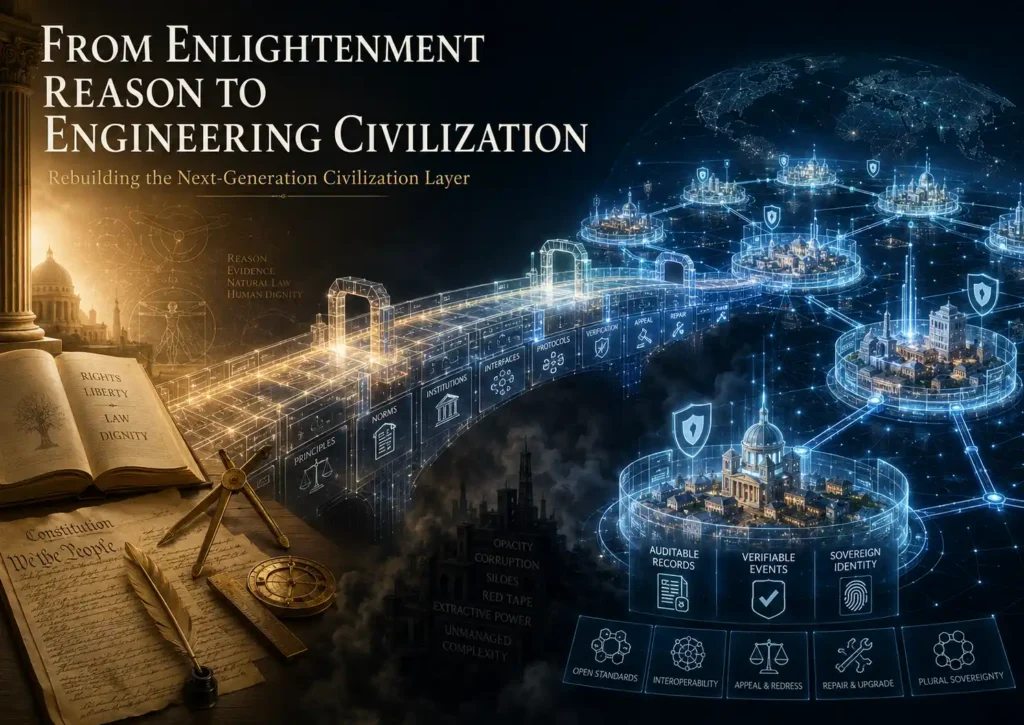
The Enlightenment gave civilization a moral and legal language for limiting arbitrary power. The AI age now requires an engineering language for limiting automated power: mapped systems, verifiable records, auditability, appealable decisions, secure identity, reversibility, and institutional repair — without surrendering sovereignty to centralized command systems.

Canada isn’t failing from lack of funding or talent — it’s failing from legal incoherence. The NSIR Blueprint introduces an engineering-grade, Charter-locked framework that audits and rebuilds law at the clause level, restoring determinism, accountability, and democratic sovereignty in the 21st century.

AI does not fix government. It amplifies it. This report argues that democratic public systems must be mapped, audited, repaired, and made visible, appealable, reversible, and correctable before high-impact AI automation is expanded across government.
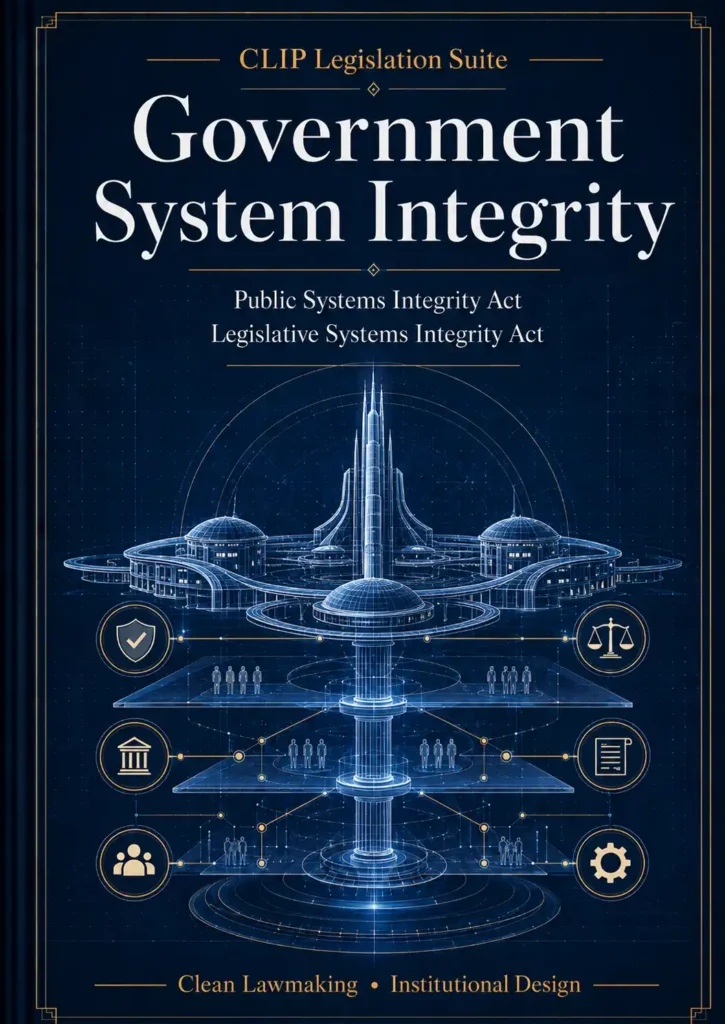
The Public Systems Integrity Act is a model law for clean public systems. It requires high-impact government systems to be mapped, audited, repairable, appealable, reversible, and citizen-legible before they are digitized, automated, integrated, or accelerated by AI. The rule is simple: map first, audit second, repair third, automate fourth.
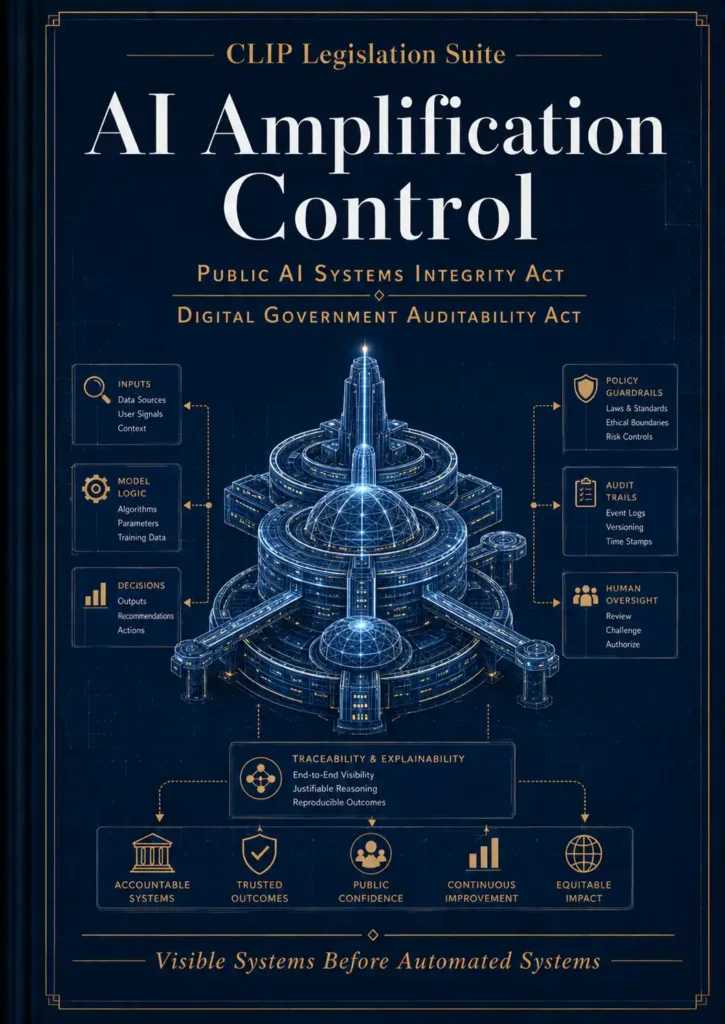
The Public AI Systems Integrity Act is a model clean-system law for preventing artificial intelligence from amplifying unmapped, unappealable, unauditable, or democratically uncorrectable public systems while preserving lawful, accountable, and human-reviewable AI use in government.
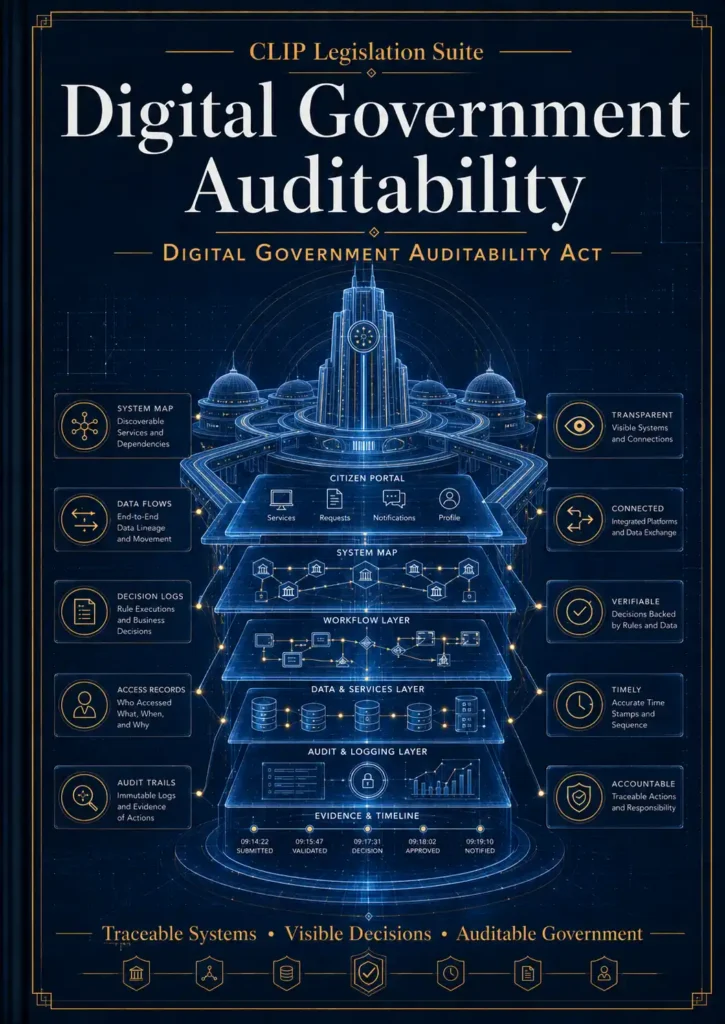
The Digital Government Auditability Act is a model clean-system law for preventing digital government from becoming invisible public power by requiring system mapping, data-flow visibility, audit logs, human support, fallback access, vendor auditability, and exit capability.
The Public Data Correction and Accountability Act is a model clean-system law for giving affected people the right to inspect, challenge, correct, and seek remedy for data used in high-impact public decisions.
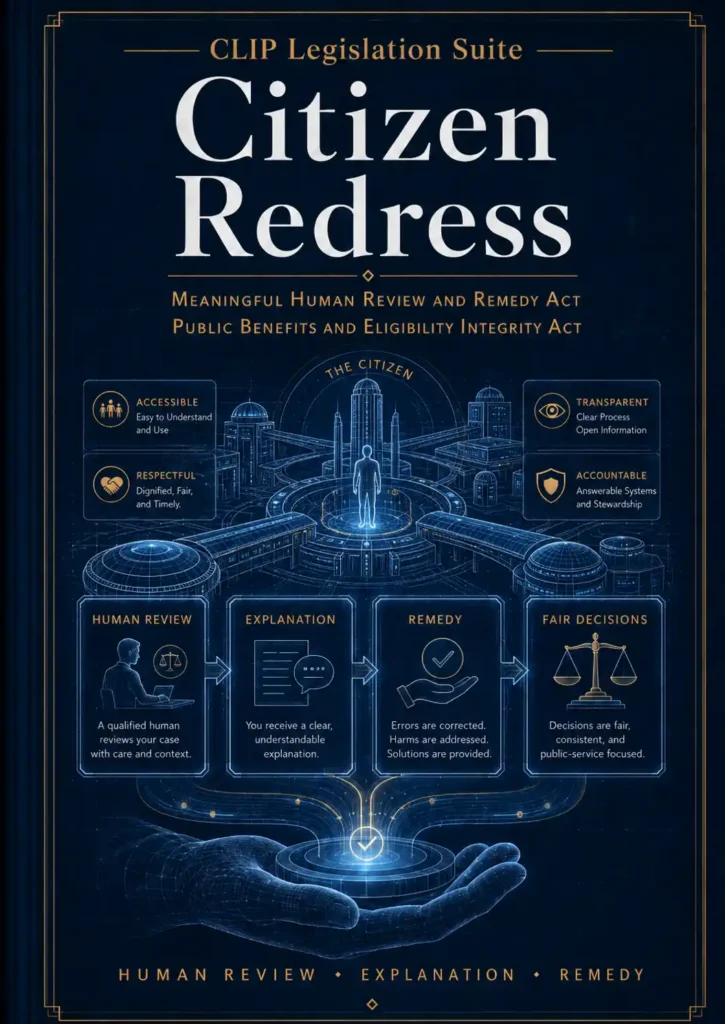
The Meaningful Human Review and Remedy Act is a model clean-system law for ensuring that high-impact public decisions remain explainable, challengeable, reviewable, correctable, and capable of remedy.
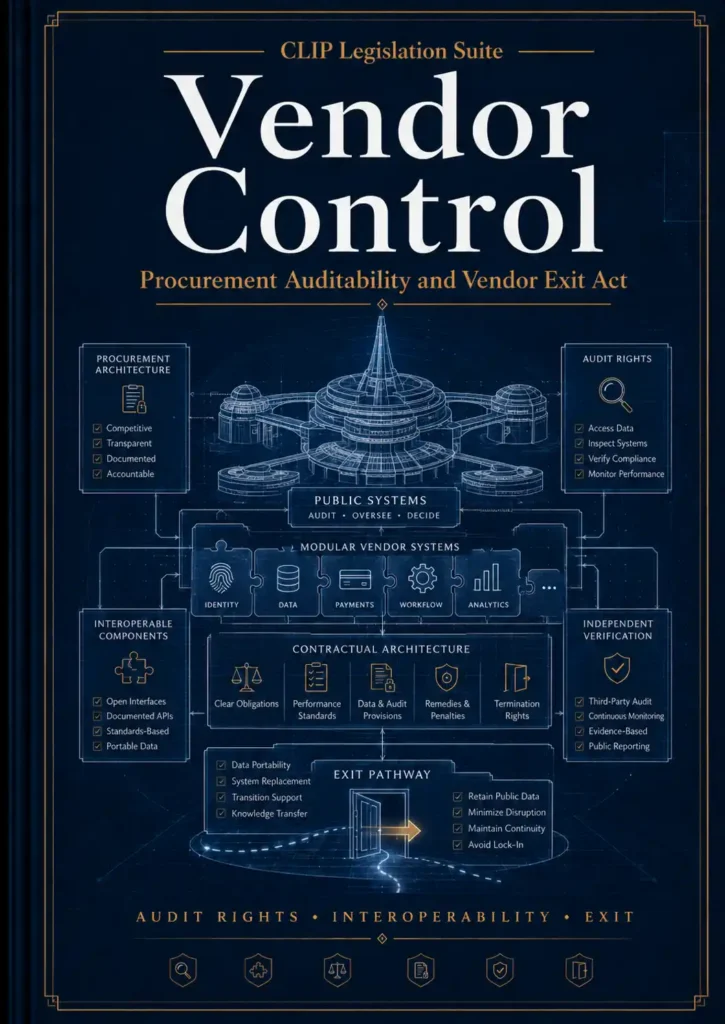
The Procurement Auditability and Vendor Exit Act is a model clean-system law for preventing vendor lock-in, black-box governance, inaccessible records, audit obstruction, and outsourced accountability in high-impact public systems.
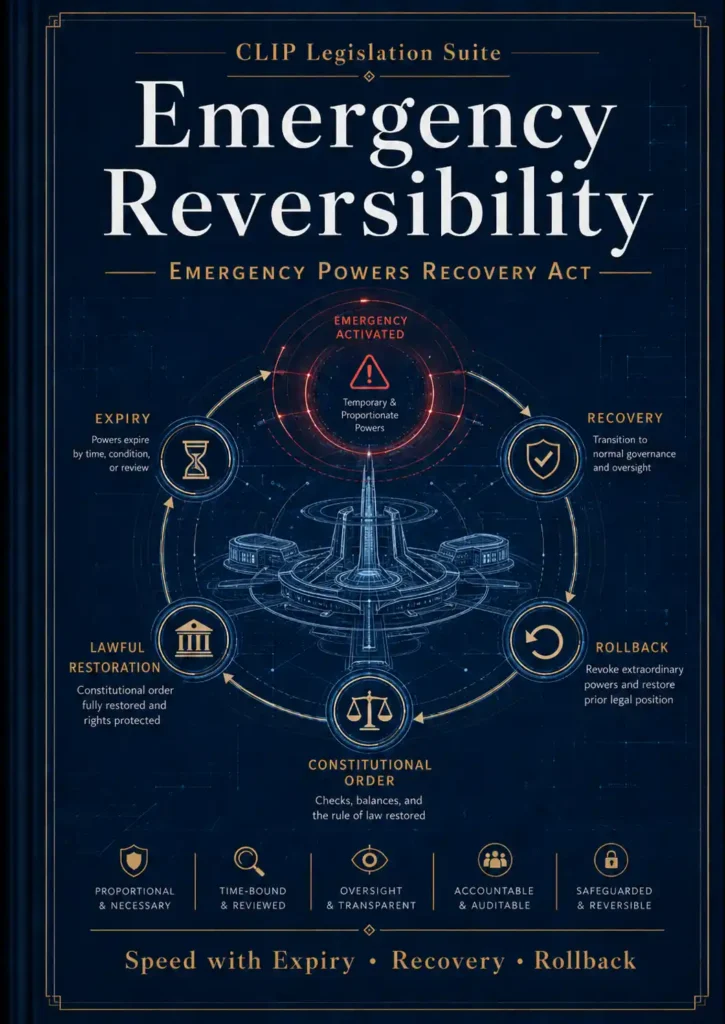
The Emergency Powers Recovery Act is a model clean-system law for preventing temporary crisis powers, emergency data systems, procurement shortcuts, digital tools, and enforcement measures from becoming permanent public architecture.
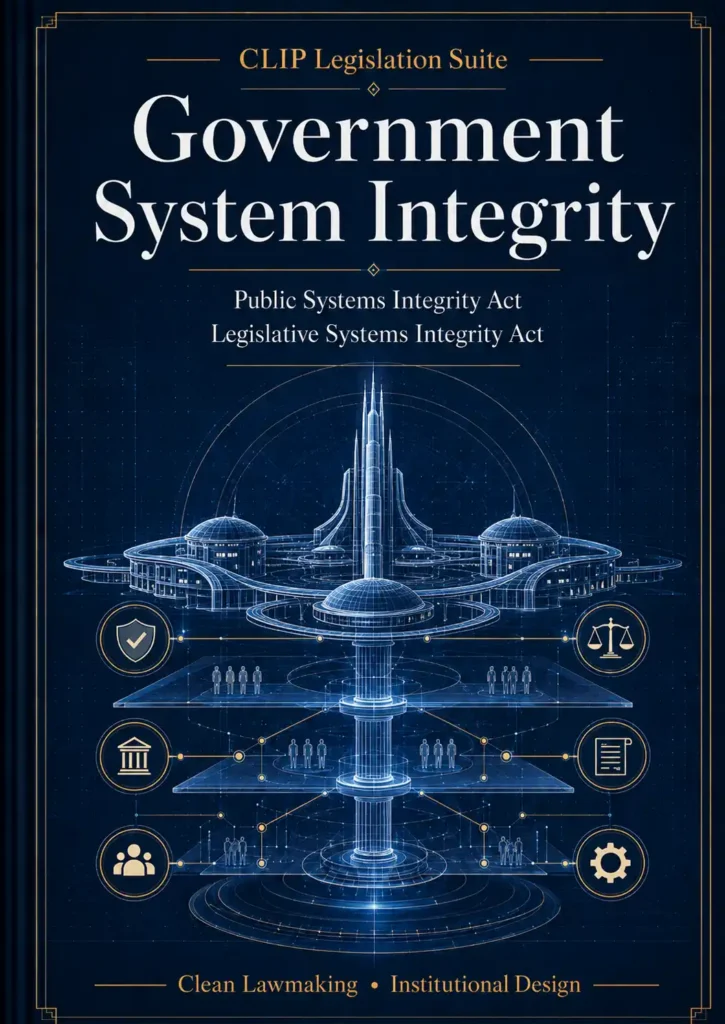
The Legislative Systems Integrity Act is a model clean-system law for ensuring that high-impact bills expose their purpose, authority, data powers, rights effects, AI exposure, appeal paths, implementation risks, failure modes, and rollback mechanisms before becoming law.
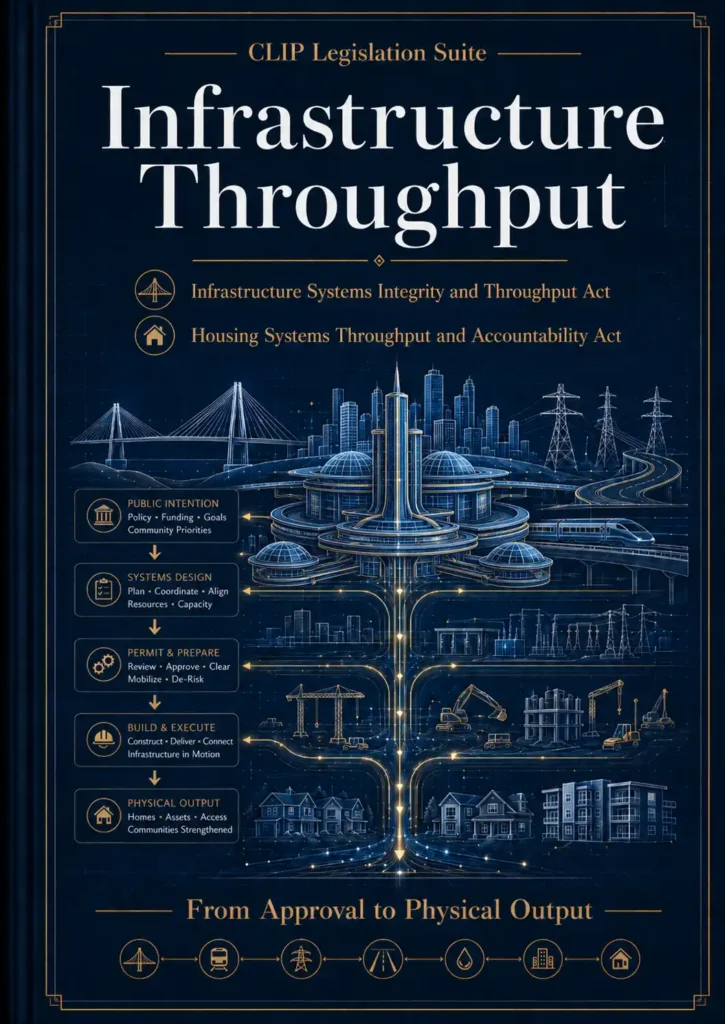
The Infrastructure Systems Integrity and Throughput Act is a model clean-system law for building infrastructure through clear approval gates, evidence standards, timelines, reasons, review pathways, redesign options, and completion tracking.
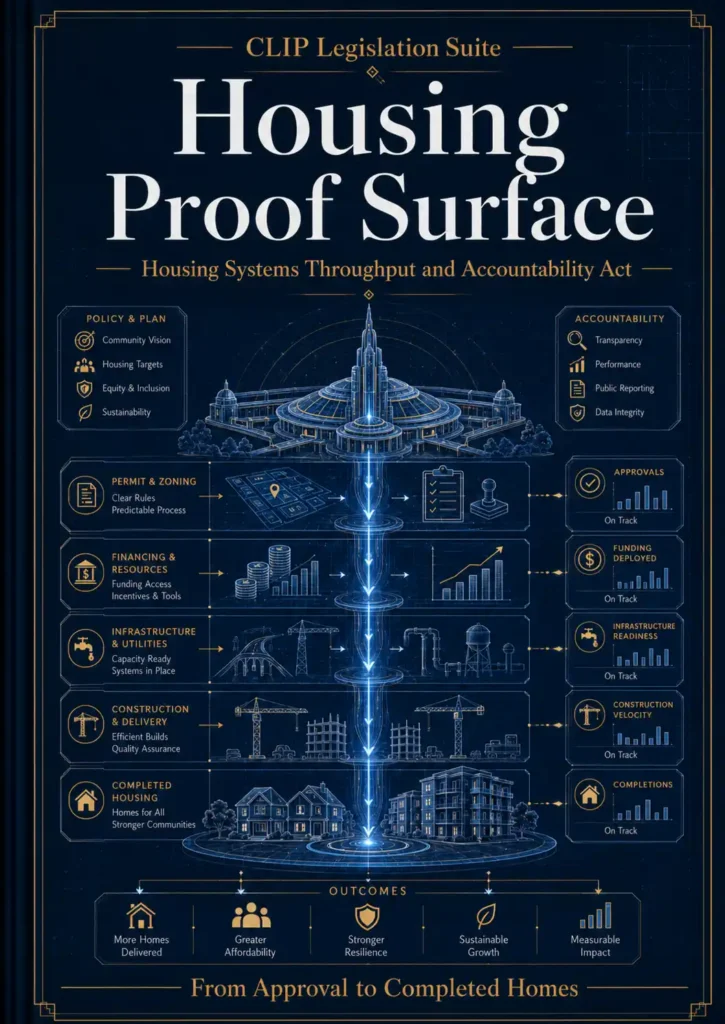
Housing systems should be judged by completed homes, not announcements. This model act creates a lawful, auditable framework for tracking housing need, approvals, infrastructure, bottlenecks, funding, permits, and occupancy.