Ramjets, Kill Webs, Sci-Fi Imagination, Deployment Reality, and the Birth of Scalable Aerospace Civilization
An SGT Frontier Path Engineering Report
This report is a public systems-level analysis. It is not a weapons blueprint, not a tactical guide, not operational targeting advice, and not classified implementation. Its purpose is frontier literacy: to help readers understand how small technical clues can reveal larger systems forming around them.
Final Flagship Edition Note
This edition is the polished public-systems version of the SGT Frontier Path Engineering report. It keeps the analysis at a non-operational level, strengthens the single trunk of the argument, compresses repeated scaffolding, and treats public sources as anchors for factual claims while keeping SGT concepts clearly labeled as interpretive frameworks.
Executive Summary
A ramjet propulsion clue matters not simply because it may produce faster or longer-range missiles. It matters because it may reveal a transition from maximum-performance platforms toward scalable-performance ecosystems: affordable high-supersonic effectors, distributed launch nodes, AI-assisted kill webs, industrial replenishment capacity, deployment into messy existing systems, and a new engineering philosophy for keeping power human-governed after it scales. The core thesis is simple: The clue was not the missile. The clue was the system trying to be born around it. This report follows that clue through eight layers: the public signal; first principles; the ramjet opportunity; carrier / effector architecture; kill web, industrial base, and deployment reality; civilizational imagination; engineering philosophy; and the SGT Frontier Path Engineering method.
The report’s central rule is that a powerful system is not mature because it exists. It is mature only when it can be understood, audited, bounded, rolled back, repaired, maintained, replenished, and kept under meaningful human authority.
The Argument in One Page
The report’s argument is simple enough to state in one page. A small aerospace clue can matter because it reveals more than an object. It may reveal a system beginning to form. In this case, the visible clue is ramjet-related: a possible path toward a high-supersonic middle layer that sits between slower cruise systems and premium hypersonic systems. The deeper issue is not the engine alone. The deeper issue is whether a civilization can produce useful speed at scale, connect it to target-quality data, launch it from distributed nodes, replenish it through real industry, deploy it into messy old systems, and keep the whole architecture under meaningful human authority.
The report then uses that clue as a training object. It teaches the reader to move from object thinking to systems thinking: from missile to architecture, from speed to scalability, from prototype to deployment, from dashboard to governance, from AI output to truth, from production as support to production as doctrine, from science fiction as entertainment to science fiction as imagination infrastructure, and from technology adoption to stewardship engineering.
The final claim is not that ramjets are magic. They are not. The final claim is that frontier systems usually appear first as fragments. The mature citizen, builder, policymaker, engineer, and public institution must learn to see those fragments before they harden into captured, ungovernable, or unrepairable systems.
Reader Promise
This report does not ask the reader to become a propulsion engineer, weapons designer, or classified analyst. It asks the reader to become a better frontier observer: someone who can see when a small technical clue is beginning to attract systems around itself.
Safety and Scope Boundary
The report discusses public-domain technology trends, high-level system architecture, industrial constraints, cultural imagination, governance, deployment risks, auditability, rollback, and repair. It does not discuss weapon construction, tactical attack planning, operational targeting, classified implementation, launch procedures, route planning, adversary-specific exploitation, cyber/electronic methods, or instructions for harm.
What Makes This Report Different
Most technology reports stay inside one lane: propulsion, defense, AI governance, industrial policy, or culture. This report argues that the emerging world is no longer organized that way. A propulsion clue can imply a kill web. A kill web can imply AI governance. AI governance can imply public legitimacy. Public legitimacy can imply culture. Culture can imply engineering philosophy. The point is not to collapse every topic into one blur. The point is to see the system before the system becomes normal.
Source and Claim Discipline
This final flagship edition separates three claim types. Public factual anchors are supported by the source ledger at the end of the report. Technical claims are kept at systems level and avoid operational implementation detail. SGT interpretive frames-such as “frontier observer,” “affordable supersonic mass,” “engineering philosophy,” and “the clue was the system”-are labeled as analytic theses rather than external facts.
Table of Contents
Part I – Signal
- Chapter 1 – A Small Aerospace Signal Appeared
- Chapter 2 – The Clue Was Not Speed
- Chapter 3 – Why Small Signals Matter Before Doctrine Exists
Part II – First-Principles Reset
- Chapter 4 – What Is the Real Problem?
- Chapter 5 – The Constraint Map
- Chapter 6 – The Scalable Effect Equation
- Chapter 7 – Why Maximum Performance Can Fail
Part III – Ramjet Opportunity
- Chapter 8 – What a Ramjet Is
- Chapter 9 – Ramjet vs Turbojet / Turbofan
- Chapter 10 – Ramjet vs Rocket
- Chapter 11 – Ramjet vs Hypersonic / Scramjet
- Chapter 12 – The Cost-Performance Ladder
- Chapter 13 – The Real Ramjet Thesis
Part IV – Aerospace Architecture
- Chapter 14 – The Carrier / Effector Split
- Chapter 15 – Use Case 1: Long-Range Ground-Launched Strike
- Chapter 16 – Use Case 2: Cargo Arsenal Launch
- Chapter 17 – Use Case 3: Blended-Wing Arsenal Carrier
- Chapter 18 – Use Case 4: Tiltrotor Distributed Shooter
- Chapter 19 – Use Case 5: No-Runway Ramjet Drone
- Chapter 20 – Use Case 6: Anti-Ship Mixed Salvo
Part V – Kill Web, Industrial Base, Deployment Reality
- Chapter 21 – The Combat Unit Is No Longer the Aircraft
- Chapter 22 – Sensors / Target-Quality Data
- Chapter 23 – AI Battle Management
- Chapter 24 – Industrial Base: Production Is Doctrine
- Chapter 25 – Deployment Reality: The World Is Not a White Canvas
- Chapter 26 – System Collision / Handoff Failure
- Chapter 27 – Output Discipline
- Chapter 28 – Auditability / Rollback / Repair
Part VI – Civilizational Imagination
- Chapter 29 – Why Culture Belongs
- Chapter 30 – Origin World 1600-1900
- Chapter 31 – Western European / British Scientific Fiction
- Chapter 32 – French Systems Imagination
- Chapter 33 – American Frontier Aerospace
- Chapter 34 – Japan 1980s-1990s Visual Engineering Peak
- Chapter 35 – China Civilizational-Scale Engineering Imagination
- Chapter 36 – Canada Megaproject Memory
- Chapter 37 – 1980s-1990s Global Sci-Fi Peak
Part VII – Engineering Philosophy Audit
- Chapter 38 – Why Engineering Philosophy Matters
- Chapter 39 – Honest-to-the-Galaxy Engineering
- Chapter 40 – Political-Capture Engineering
- Chapter 41 – Nihilist Engineering
- Chapter 42 – Stewardship Engineering
Part VIII – SGT Frontier Path Engineering
- Chapter 43 – What SGT Saw
- Chapter 44 – SGT Method
- Chapter 45 – Skills Gap to Frontier Gap
- Chapter 46 – Reader as Frontier Observer
Conclusion
- Chapter 47 – Old World vs Emerging World
- Chapter 48 – How Sci-Fi Becomes Reality
- Chapter 49 – How the Future Arrives
- Chapter 50 – Final Closing
Part I – Signal
Part I begins with the public clue: a small aerospace signal that matters only if it points to a larger system.
Part I – Signal
Part I teaches the reader to treat the ramjet not as a conclusion, but as a clue. The opening move is disciplined attention: neither hype nor dismissal, but system recognition.
Chapter 1 – A Small Aerospace Signal Appeared
The future rarely arrives as a complete system. It arrives as a clue. A small aerospace signal appeared: a ramjet-related propulsion clue, a missile clue, a speed clue, a technical note that many people could have filed under defense news and forgotten. SGT stopped because small technical clues can expose large architectural changes before doctrine, procurement, culture, and public understanding catch up. Most people see the surface object: a missile, an engine, a speed claim, a defense announcement, a contractor signal, a narrow technical story.
SGT asks a different question: what system would have to form around this clue for the clue to matter? A ramjet signal may seem narrow. But if it points toward affordable high-supersonic mass, carrier / effector separation, distributed launch nodes, kill-web dependency, industrial replenishment, AI-assisted decision support, and governance strain, then the clue is no longer narrow. It is a doorway. The discipline is to avoid both hype and dismissal. Hype says: this changes everything. Dismissal says: this is just another missile. Systems thinking says: map the architecture.
The signal is not the conclusion. The signal is the invitation. The future rarely arrives as a complete system. It arrives as a clue.
Chapter 2 – The Clue Was Not Speed
Speed is the visible feature. Scalability is the strategic feature. The shallow reading of the ramjet clue is simple: ramjets are fast. That is true enough to attract attention and shallow enough to miss the point. Speed matters. A faster effector may compress reaction time, extend reach, change defensive timelines, and alter the cost of interception. But speed alone is not a revolution. Speed can be expensive, scarce, fragile, hard to produce, hard to target, hard to govern, and hard to replenish.
The deeper question is not only how fast it is. The deeper question is whether speed can be produced, launched, networked, replenished, integrated, and governed at enough scale to matter. That is why the report focuses on affordable supersonic mass rather than speed worship. A very fast system that exists only in tiny numbers may shape moments. A less exotic system that can be produced, distributed, launched, targeted, replenished, and governed may shape campaigns and industrial competition.
The clue was not speed. The clue was scalable effect.
Chapter 3 – Why Small Signals Matter Before Doctrine Exists
A clue becomes important when it points to an architecture. Doctrine usually arrives late. Institutions wait for names, budgets, program offices, formal requirements, official strategy, procurement categories, training pipelines, and political consensus. By the time all of that exists, much of the future may already have hardened. Frontier systems often appear first as fragments: a new engine, a test article, a material improvement, a software capability, a sensor layer, a battlefield adaptation, a logistics workaround, a visual concept, a procurement phrase, or a cultural image.
At first, the fragment looks small. Then the fragment starts connecting. A propulsion clue becomes a launch architecture question. A drone clue becomes a command-and-control question. An AI clue becomes a public-authority question. A dashboard clue becomes a governance question. A factory clue becomes an industrial-base question. The old world often waits for doctrine before it sees the system. The emerging world tries to see the system before doctrine is written.
That is not prophecy. It is disciplined early perception. A clue is not proof. But a clue can be the first visible edge of a system.
Part II – First-Principles Reset
Part II strips the clue back to the real problem: scalable effect under real-world constraints.

Part II – First-Principles Reset
Part II resets the problem from speed to scalable effect. The report moves from object fascination to constraint mapping, because a system is only as strong as the weakest critical factor in the chain.
Chapter 4 – What Is the Real Problem?
The real problem is not maximum speed. The real problem is scalable effect under real-world constraints. A shallow technical frame asks: how do we build the fastest missile? A better systems frame asks: how does a force create enough precise, fast, survivable effects at scale without bankrupting itself, exhausting inventory, losing targeting quality, or making the system ungovernable? Maximum performance matters. High-end systems matter. Exquisite platforms matter. But maximum performance is only one variable inside a larger equation.
A system also needs range, quantity, affordability, launch capacity, target-quality data, network resilience, industrial throughput, maintenance, training, human authority, and governance. A very fast system with poor data is not mature. A highly capable system with no production depth is brittle. A networked system with no auditability is politically and morally unstable. The real problem is not simply engineering an object. The real problem is engineering a system that can survive reality.
Chapter 5 – The Constraint Map
A weapon is only as strong as the weakest constraint in the system that carries it. The constraint map begins with range, speed, quantity, affordability, targeting, launch capacity, communications, production throughput, and governance. Range asks whether the launch platform can remain survivable enough for the effector to matter. Speed asks whether the effector compresses timelines without outrunning the system’s ability to understand and govern action. Quantity asks whether enough units exist to matter beyond demonstration. Affordability asks whether the system can be purchased, trained on, stored, launched, replenished, and improved without exhausting the force or the state.
Target-quality data asks whether the kill web knows enough, with enough confidence, at the right time, under degraded conditions, for the effect to be legitimate and useful. Launch capacity asks whether there are enough launch nodes to make the effect repeatable. Communications resilience asks whether the system can survive disruption and degraded modes. Production throughput asks whether factories, suppliers, inspection systems, and trained workers can repeat the system under stress. Governance asks whether the system can be bounded, audited, paused, corrected, and repaired.
These constraints multiply. They do not merely add. A zero in one critical factor can collapse the whole system.
Chapter 6 – The Scalable Effect Equation
Strategic power is multiplicative. A zero in one critical factor can collapse the whole system. The scalable effect equation is not a mathematical law. It is a systems discipline. Scalable Effect = Range x Speed x Quantity x Affordability x Targeting Quality x Launch Capacity x Network Resilience x Production Throughput x Governance Control. Each factor matters because each factor can become the bottleneck. High speed with weak targeting creates waste or danger. High quantity with no governance creates chaos. Strong AI with dirty data accelerates incoherence. Beautiful prototypes with no production create ceremonial progress. Large budgets without output create institutional theater.
This equation is a way to stop asking whether one component is impressive and start asking whether the whole chain can perform. The ramjet matters only if it improves the equation without making other factors ungovernable.
Chapter 7 – Why Maximum Performance Can Fail
Exquisite systems can win moments. Scalable systems shape campaigns. Maximum performance has its place. Stealth aircraft matter. Hypersonic systems matter. Advanced sensors matter. Space systems matter. High-end platforms matter. But maximum performance can fail as a dominant strategy if it becomes too scarce, too expensive, too slow to build, too difficult to maintain, too dependent on fragile infrastructure, too politically sensitive to use, or too disconnected from replenishment. The highest-performing object may not create the strongest system.
Maximum performance becomes dangerous when it teaches leaders to ignore scale. It can create a false sense of superiority. It can draw attention toward the jewel and away from the chain. The emerging world does not eliminate high-end systems. It contextualizes them. The ramjet thesis is not a claim that ramjets replace exquisite systems. It is a claim that the middle layer matters.
Part III – Ramjet Opportunity
Part III defines the ramjet carefully and places it inside a disciplined propulsion and cost-performance comparison.
Part III – Ramjet Opportunity
Part III defines the ramjet carefully and compares it with adjacent propulsion layers. The point is not ramjet worship; the point is to locate a possible high-speed middle layer inside a larger architecture.
Chapter 8 – What a Ramjet Is
A ramjet is not a magic engine. It is not a complete aircraft. It is not a missile by itself. It is not a universal solution to speed, range, cost, or military power. A ramjet is a specialized air-breathing propulsion system that becomes useful only after the vehicle is already moving fast enough for the incoming air to be compressed by forward motion. That one fact explains almost everything important about the ramjet.
It explains the opportunity. It explains the limitation. It explains why the ramjet belongs in a systems report, not only a propulsion textbook. A ramjet can be simple in one way and difficult in another. It can avoid the rotating compressor and turbine machinery of a turbojet, but it cannot avoid the need for speed, inlet design, thermal control, fuel integration, launch architecture, data quality, production discipline, and governance. The ramjet is not the revolution by itself.
The ramjet is a clue.
The Basic Idea
A conventional jet engine uses machinery to compress air. A turbojet or turbofan has compressor stages. Those compressor stages squeeze incoming air before fuel is added and burned. The engine carries much of its own compression machinery. A ramjet does something different. It uses the forward speed of the vehicle. As the vehicle moves quickly through the atmosphere, incoming air is forced into the inlet. The shape of the inlet and the motion of the vehicle help compress that air. Fuel is added. Combustion occurs. Hot exhaust expands out the back, producing thrust.
That is the basic idea. The air is not compressed by a spinning compressor. It is compressed by speed and shape. This is why the name matters: ramjet. The vehicle’s motion rams air into the engine. But this also creates the central limitation. If the vehicle is not already moving fast enough, the ramjet cannot do useful work. A ramjet does not start from rest like a rocket. It does not taxi, take off, or accelerate from zero like a turbine-powered aircraft.
It needs help before it becomes useful. That help may come from another aircraft, a booster, or another launch/acceleration architecture. The report does not need to describe that architecture in operational detail. It only needs to recognize that the dependency exists. A ramjet is a high-speed engine after acceleration. It is not the whole launch system.
What the Ramjet Removes
The ramjet removes some forms of complexity. It does not need a mechanical compressor.
It does not need a turbine to drive that compressor. It does not need the same rotating machinery architecture found in turbojets or turbofans. That can matter. Moving parts create manufacturing burden, maintenance burden, cost burden, inspection burden, and supply-chain burden. If a high-speed effector can avoid some of that rotating machinery, it may open a different cost-performance path. But this is where the report must be careful.
Removing one form of complexity does not remove complexity itself. It moves the complexity. The ramjet may remove compressor and turbine machinery, but it creates or intensifies other requirements: inlet shaping, speed-envelope discipline, thermal stress, combustor stability, fuel integration, launch dependency, guidance integration, storage and handling requirements, production quality, and test validation. The ramjet is not simple in an absolute sense. It is simpler in one subsystem and more demanding in others.
That is systems thinking.
What the Ramjet Needs
A ramjet needs atmosphere. It is air-breathing. Unlike a rocket, it does not carry oxidizer for combustion. It depends on oxygen in the air. That means it belongs to atmospheric flight, not vacuum flight. A ramjet also needs speed. Its compression process depends on forward motion. Without sufficient motion, the engine cannot create the pressure conditions needed for useful thrust. This means the ramjet depends on a launch or acceleration system.
That dependency matters more than it first appears. It means the ramjet cannot be judged alone. The correct question is not: Is the ramjet good? The correct question is: What system gives the ramjet the starting condition it needs, and can that system be produced, launched, governed, and repeated under real constraints? This is why Chapter 8 belongs before the carrier / effector chapters. A ramjet is not only an engine choice.
It is an architecture choice.
The Ramjet as an Effect Engine
The best way to think about the ramjet in this report is as an effect engine. The carrier gets the effector into position. The launch or acceleration layer gives the ramjet its starting condition. The ramjet sustains high-speed atmospheric flight. The kill web provides data and coordination. The industrial base provides repeatability. The governance layer provides authority, auditability, and repair.
This is the carrier / effector split. The carrier does not need to become the high-speed object. The carrier can remain reusable, slower, larger, cheaper, or more flexible. The effector carries the speed. The ramjet may matter because it can help create a high-speed effect layer without forcing the whole carrier platform to become a high-speed aircraft. That is the key systems idea. Do not make the carrier do the effector’s job.
Do not make the effector do the carrier’s job. Do not make the ramjet carry the whole civilization. Make it carry the effect.
Why It Is Different From a Turbojet or Turbofan
A turbojet or turbofan can produce useful thrust from rest because it has machinery to compress air. That makes turbine engines useful for aircraft that must start, accelerate, take off, climb, cruise, maneuver, and return. They are excellent carrier engines.
They are mature, powerful, and deeply developed. But turbine engines carry compressor and turbine complexity. That complexity can be worth it for reusable aircraft. It may not always be the best fit for an expendable or attritable high-speed effector. A ramjet makes a different trade. It gives up start-from-rest capability. It depends on speed before it works. But once it has the right conditions, it may offer a path for sustained high-speed atmospheric flight with fewer moving propulsion components.
That trade is not automatically better. It is role-dependent. Turbojets and turbofans may belong on the carrier. Ramjets may belong on the effector. That is the systems distinction.
Why It Is Different From a Rocket
A rocket carries fuel and oxidizer. It can produce thrust without atmospheric oxygen. It can operate from rest. It can work in space. It can provide intense acceleration. This makes rockets powerful launch and boost systems.
But rockets must carry their reaction mass. They do not use atmospheric oxygen the way an air-breathing engine does. A ramjet makes the opposite trade. It depends on atmosphere and speed. But because it breathes air, it does not need to carry oxidizer in the same way. That can make it attractive for certain atmospheric high-speed roles after acceleration. Again, the point is not that ramjets beat rockets.
The point is that rockets and ramjets answer different questions. A rocket is excellent at providing launch energy. A ramjet may be useful for sustained high-speed atmospheric effect after launch. Rocket as launch brute. Ramjet as sustained high-speed layer. That is the simple distinction.
Why It Is Different From a Scramjet
A scramjet is a supersonic-combustion ramjet. At very high speeds, a conventional ramjet slows incoming air down before combustion. A scramjet keeps the airflow supersonic through the combustor.
That creates a much more extreme engineering environment. Scramjets are tied to the hypersonic frontier. They can matter enormously for advanced aerospace research and future high-speed systems. But they carry heavier burdens: thermal stress, materials, testing, combustion stability, airframe-engine integration, and validation. The ramjet studied in this report sits below that ceiling. It is not the hypersonic edge. It is the possible middle layer. That is why the report treats ramjets carefully.
The argument is not: Ramjets are more advanced than scramjets. The argument is: Ramjets may occupy a more scalable high-speed layer if their production, launch, data, and governance systems mature. That is a different claim. And it is a more defensible one.
The Real Opportunity
The ramjet opportunity is not speed alone. Speed is visible. Scalability is strategic. The real opportunity is the possibility of useful high-speed effect at a level of engineering burden that may be more repeatable than the most extreme hypersonic systems.
That possibility matters only if the rest of the system works. A ramjet without launch architecture is incomplete. A ramjet without target-quality data is dangerous. A ramjet without production capacity is scarce. A ramjet without industrial inspection is unreliable. A ramjet without governance is immature. A ramjet without auditability is politically fragile. This is why the report refuses to treat the ramjet as an isolated object. The engine matters because of the architecture it may enable.
The clue was not the engine alone. The clue was the system trying to form around it.
The False Path
The false path is ramjet worship. It says: No turbine. Fewer moving parts. Therefore cheap. Therefore scalable. Therefore revolutionary. That is too shallow. Fewer moving parts can matter. But they do not eliminate integration burden, thermal burden, testing burden, launch dependency, fuel and inlet design, storage, data quality, industrial quality, or governance.
Another false path is maximum-performance dismissal. It says: Ramjets are not hypersonic enough. Therefore they are not important. That is also too shallow. A technology can matter even if it is not at the ceiling. The middle layer may matter because it can be produced, integrated, and repeated more easily than the ceiling layer. But that remains a thesis, not a guarantee. The serious position is this: Ramjets are specialized high-speed air-breathing engines.
They are limited. They are dependent. They are not magic. But under the right architecture, they may become strategically significant.
The SGT Reading
SGT does not see the ramjet as a standalone miracle. SGT sees a systems clue. The ramjet reveals a possible shift from platform-centered thinking to effect-layer thinking. The old question asks: What is the fastest or most advanced platform? The new question asks: What combination of carrier, effector, launch node, data layer, industrial base, deployment environment, and governance system can produce useful effect repeatedly?
That is why this chapter matters. It gives the reader technical grounding before the report moves into comparisons. Before ramjet versus turbojet. Before ramjet versus rocket. Before ramjet versus hypersonic. Before the cost-performance ladder. Before the aerospace architecture use cases. The reader must understand the basic truth: A ramjet is not the whole system. It is a specialized effect engine whose importance depends on the system that carries, launches, guides, produces, governs, and replaces it.
The Real Lesson
A ramjet is an air-breathing engine that uses forward speed to compress incoming air.
That gives it a special place. It can be lighter in some mechanical ways than a turbine engine. It can sustain high-speed atmospheric flight after acceleration. It may support a scalable high-speed middle layer. But it cannot start from rest. It cannot escape launch dependency. It cannot create truth. It cannot produce itself. It cannot govern itself. It cannot repair the system around it. That is the lesson.
The ramjet is not the revolution. The ramjet is the clue. The revolution, if it comes, is the architecture: carrier / effector split, distributed launch, target-quality data, industrial throughput, deployment realism, human-governed authority, and repeatable high-speed effect. A ramjet is not the future by itself. It is one possible engine inside the system that may reveal the future.
Chapter 9 – Ramjet vs Turbojet / Turbofan
A ramjet is not better than a turbojet or turbofan. A turbojet or turbofan is not automatically better than a ramjet. They answer different questions. That is the first discipline. A turbojet or turbofan is a complete powered-flight engine. It can produce useful thrust from rest. It can help an aircraft taxi, take off, climb, cruise, maneuver, throttle, descend, and return. It belongs naturally to reusable aircraft. A ramjet is different.
It needs forward speed before it becomes useful. It gives up start-from-rest flexibility. It depends on a carrier, booster, or launch architecture to provide the starting condition. But once it has the right conditions, it may offer a useful high-speed atmospheric effect layer with fewer rotating propulsion components. That does not make the ramjet easy. It makes it role-specific. Turbojets and turbofans are excellent carrier engines.
Ramjets may be excellent effector engines. That is the chapter’s core distinction.
The Wrong Comparison
The wrong comparison says: Turbojets and turbofans are complex. Ramjets have fewer moving parts. Therefore ramjets are better. That is too shallow. A turbine engine carries compressor and turbine complexity, but that complexity buys something important: self-starting powered flight. A turbine aircraft can operate through many parts of a flight profile. It can take off, climb, cruise, change speed, maneuver, and return. It can be reused many times. It can support pilots, sensors, fuel, cargo, weapons, mission systems, and recovery.
That matters. A ramjet removes some machinery, but it also removes flexibility. It cannot produce useful thrust from rest. It cannot be judged like an aircraft engine that must operate across a broad envelope. It needs the system around it to provide the conditions where it works. So the correct question is not: Which engine is better? The correct question is: Which engine belongs to which layer of the architecture?
Turbojets and Turbofans as Carrier Engines
Turbojets and turbofans are carrier engines.
They are designed for powered aircraft. A turbojet compresses air using rotating compressor stages, burns fuel, and sends high-energy exhaust out the back to create thrust. A turbofan adds a fan and bypass airflow, allowing much of the thrust to come from moving a larger mass of air more efficiently, depending on design and bypass ratio. The details vary, but the systems meaning is clear: turbine engines are mature, flexible, reusable powered-flight machines.
That flexibility is why they dominate modern aviation. Passenger aircraft, fighters, bombers, transports, tankers, trainers, and many cruise systems depend on turbine-engine logic in different forms. They are not simple. They require precision parts, hot-section materials, compressors, turbines, shafts, bearings, control systems, maintenance, inspection, supply chains, and skilled labour. But they are mature. A mature engine can be expensive and still worth it. For a reusable aircraft, turbine complexity can make sense because the aircraft returns. The engine is maintained, inspected, repaired, and used again.
The carrier is worth preserving.
Ramjets as Effector Engines
A ramjet belongs to a different logic. It does not carry a compressor. It does not use a turbine to drive that compressor. It uses forward motion to compress incoming air. That means the ramjet’s simplicity is conditional. It is simpler in rotating machinery. It is not simpler as a whole system. The ramjet needs speed before it can work.
That speed must come from somewhere. A carrier may provide it. A booster may provide it. Another launch or acceleration architecture may provide it. The ramjet then becomes the engine for a high-speed atmospheric effect phase. This makes it attractive for the effector layer. An effector does not need to taxi. It does not need to return. It does not need to carry people. It does not need to serve as a reusable aircraft.
It needs to carry speed, range-energy logic, and effect. That is why the ramjet can be interesting. Not because it replaces turbine engines. Because it may let the carrier remain a carrier while the effector carries the speed.
The Carrier / Effector Split
This is the carrier / effector split in propulsion form. The carrier wants flexibility. The effector wants speed. The carrier may need to take off, climb, cruise, maneuver, survive, and return.
The effector may need to accelerate, sustain high speed, follow valid data, and complete its bounded role. Those are not the same requirements. If the carrier is forced to become the high-speed object, cost and complexity may rise across the whole aircraft. If the effector carries the high-speed burden, the carrier can remain reusable and role-appropriate. That is the architecture. Turbojet or turbofan carrier. Ramjet-family effector.
Networked data. Industrial replenishment. Human-governed authority. This is why ramjet thinking is not only engine thinking. It is systems thinking.
What the Turbine Engine Gives You
A turbine engine gives flexibility. It can produce thrust from rest. It can operate across a wide flight envelope. It can be throttled. It can support aircraft that must take off, climb, cruise, loiter, maneuver, descend, and land. It can serve long-duration missions.
It can be maintained and reused. That is a huge advantage. A report that dismisses turbine engines would be unserious. Turbines are one of the foundations of modern aviation civilization. They are also industrial achievements: materials, precision manufacturing, testing, maintenance, fuel systems, controls, sensors, logistics, and decades of accumulated operating knowledge. This matters because mature systems carry hidden power. A mature system has training pipelines. A mature system has maintainers.
A mature system has spare parts. A mature system has safety culture. A mature system has known failure modes. A mature system has institutions around it. A ramjet concept does not automatically inherit that maturity.
What the Ramjet Gives You
A ramjet gives a different possibility. It may reduce some rotating machinery burden. It may support sustained high-speed atmospheric flight after acceleration. It may fit an expendable or attritable effector better than a reusable aircraft.
It may create a high-speed middle layer between slower cruise systems and premium hypersonic systems. But it also gives up things. It gives up start-from-rest capability. It narrows the useful flight regime. It depends on launch architecture. It depends on inlet and combustor performance. It faces thermal burden. It depends on guidance and data quality. It must be produced reliably. It must be integrated with carriers, launch nodes, storage systems, and command systems.
The ramjet does not remove complexity. It moves complexity. That is the honest argument.
Maintenance and Reuse
Maintenance changes the comparison. A turbofan on a transport aircraft may be expensive, but the aircraft returns. The engine can be inspected, repaired, overhauled, and used again. The cost is distributed across many missions. A ramjet effector may be expendable or attritable. That changes the economics. If the effector does not return, the propulsion system must make sense in a different way. The question is not only performance. The question is whether the effect is worth the consumed industrial product.
This is where affordability becomes serious. An expendable high-speed system cannot inherit the economics of reusable aviation. It must be judged by production repeatability, storage, inspection, launch compatibility, data dependence, and useful effect. A ramjet may help if it reduces some manufacturing or maintenance burden. But that is not guaranteed. If the ramjet requires difficult materials, specialized fuels, hard testing, tight tolerances, complex integration, or fragile supply chains, then it may still become expensive.
The report must not assume affordability. It must test for it.
Integration Burden
The hidden cost is integration. A turbine aircraft has integration burden too, but much of that burden sits inside mature aviation ecosystems. A new ramjet-family effector may face different integration problems: carrier compatibility, launch or acceleration conditions, storage safety, data-link requirements, guidance integration, thermal environment, inlet performance, quality control, production inspection, and post-use assessment.
A ramjet may be mechanically simpler than a turbine engine in one subsystem. It may still be systemically difficult. This is why SGT rejects object worship. The engine is not the capability. The system is the capability.
Production Realism
Production realism is the real test. A turbine engine industry exists because aviation spent generations building it: factories, suppliers, inspection methods, repair systems, test cells, materials knowledge, certification regimes, and skilled labour.
A ramjet-family effector layer would need its own production reality. Can it be manufactured at useful scale? Can parts be inspected? Can quality be maintained? Can supply chains support it? Can production improve across batches? Can failures be found and corrected? Can storage and handling remain safe? Can the system be replenished after use? This is where the ramjet thesis either becomes serious or collapses. A ramjet is not strategically important because one engine can work.
It becomes strategically important only if the full production and deployment system can repeat.
Deployment Maturity
Deployment maturity is different from technical possibility. A ramjet can be technically interesting and still not deployable. A turbine engine can be mechanically complex and still mature. That distinction matters. A mature turbine-powered aircraft comes with operating procedures, training, maintainers, supply chains, safety regimes, airworthiness rules, and institutional knowledge. A new ramjet-family effector layer must build or adapt similar support systems.
Not the same systems. But equivalent maturity. Who stores it? Who inspects it? Who maintains configuration? Who certifies readiness? Who authorizes use? Who audits the decision chain? Who investigates failure? Who repairs the system? Those questions are not outside the engine comparison. They are part of it. A propulsion comparison that ignores deployment maturity is not a systems comparison. It is brochure logic.
The False Path
The false path is to use the ramjet as an insult against turbine engines.
No compressor. No turbine. Fewer moving parts. Therefore future. That is wrong. Turbojets and turbofans are among the greatest engineering achievements of the modern world. They made the global air age possible. They are powerful because they are flexible, reusable, mature, and deeply supported by industrial ecosystems. The other false path is to dismiss ramjets because they cannot start from rest. That is also wrong. Not every engine must do every job.
A ramjet does not need to be a carrier engine if it is designed as an effector engine. A system can use turbine engines to carry the effector and ramjets to power the high-speed effect layer. That is not contradiction. That is architecture.
The Real Comparison
The real comparison is not simple versus complex. It is not old versus new. It is not carrier versus missile. It is role versus role.
Turbojets and turbofans are flexible reusable powered-flight engines. Ramjets are specialized high-speed air-breathing engines after acceleration. Turbines belong naturally to aircraft that must operate across the full flight profile. Ramjets may belong to effectors that do not need to return and do not need to work from rest. The carrier preserves endurance. The effector carries speed. The carrier may use turbine maturity. The effector may use ramjet specialization.
The network provides truth. The industrial base provides repetition. The governance layer provides responsibility. That is the system.
The Real Lesson
The lesson is not that ramjets replace turbojets or turbofans. They do not. The lesson is that future aerospace architecture may separate propulsion roles more clearly. One engine type may carry the reusable platform. Another may carry the high-speed effect. That is why the ramjet matters. It may allow high-speed performance to move off the carrier and into the effector.
It may allow aircraft to remain reusable carriers instead of becoming ever more exquisite speed platforms. It may create a middle layer of high-speed effect if the launch architecture, data system, industrial base, and governance layer mature. But the turbine world remains essential. The future is not ramjet instead of turbofan. The future may be turbofan carrier plus ramjet effector. That is the systems distinction. The carrier wants turbofan flexibility.
The effector may want ramjet speed.
Chapter 10 – Ramjet vs Rocket
A rocket is not a primitive ramjet. A ramjet is not a superior rocket. They are different answers to different physical problems. That is the first discipline. A rocket carries its own fuel and oxidizer. It can produce thrust from rest. It can work without atmospheric oxygen. It can launch, boost, accelerate hard, and operate in places where air-breathing engines cannot work. A ramjet is different. A ramjet breathes atmospheric air. It does not carry oxidizer in the same way. It uses forward speed to compress incoming air. It cannot produce useful thrust from rest. It needs another system to give it the starting condition.
So the comparison is not: rocket versus ramjet. The comparison is: launch energy versus sustained atmospheric high-speed flight. Rocket as launch brute. Ramjet as sustained high-speed layer. That is the systems distinction.
The Wrong Comparison
The wrong comparison says: Rockets are crude. Ramjets are efficient. Therefore ramjets are better. That is wrong. Rockets are not crude. They are among the most powerful propulsion systems humans have built. They launch spacecraft. They power high-speed research aircraft. They provide rapid acceleration. They operate beyond the atmosphere. They can work when there is no air to breathe. That is not crude. That is extraordinary. The other wrong comparison says: Ramjets cannot start from rest.
Therefore rockets are better. That is also wrong. Not every engine must do every job. A ramjet does not need to be the launch system if another system gives it speed. It may still be valuable after acceleration, when atmospheric air becomes useful and sustained high-speed flight matters. The serious comparison is role-based. Rockets provide launch and boost energy. Ramjets may provide sustained high-speed atmospheric propulsion after launch.
What the Rocket Gives You
A rocket gives independence from the atmosphere. It carries fuel. It carries oxidizer. It does not need atmospheric oxygen for combustion. That means a rocket can work from rest, at high altitude, and in space. This is why rockets dominate launch. They can lift from zero. They can produce intense acceleration. They can pass through thin air. They can operate beyond the atmosphere. They can provide compact, powerful energy for short-duration or high-energy phases.
This makes rockets extremely valuable for launch, boost, interception, space access, ballistic flight, and high-speed research. But the same strength creates a burden. Because a rocket carries its own oxidizer, it must carry more mass that an air-breathing engine can avoid while operating in atmosphere. That carried oxidizer is not a flaw. It is the price of independence. The rocket brings its own oxygen. That is why it can work almost anywhere.
What the Ramjet Gives You
A ramjet gives a different possibility. It breathes air. It uses atmospheric oxygen for combustion. It uses forward speed to compress incoming air instead of a mechanical compressor. That can make it attractive for sustained high-speed flight inside the atmosphere after acceleration. But the word “after” matters. A ramjet does not launch itself from rest. It cannot produce useful static thrust. It must already be moving fast enough for the inlet and combustor to work properly.
That means a ramjet needs help. A rocket booster may provide that help. A carrier aircraft may provide that help. Another acceleration architecture may provide that help. The ramjet’s advantage appears only after the system has solved the starting-condition problem. That is why the ramjet is not a complete architecture. It is a layer inside one.
Rocket as Launch Brute
“Launch brute” is not an insult. It is respect. A rocket can do the brutally difficult thing: create thrust without waiting for airspeed, airflow, runway, or atmospheric oxygen. It can accelerate the system from zero. It can provide the energy needed to reach the conditions where other systems become useful. In many possible ramjet-family architectures, the rocket is not the enemy of the ramjet. The rocket is the enabler.
Without the launch brute, the ramjet may never reach its useful regime. This matters for the report’s architecture. A booster can give the ramjet its starting condition. The ramjet can then sustain the atmospheric high-speed phase. The two systems can be sequential rather than rival. Rocket first. Ramjet after. Boost energy first. Air-breathing sustain after. That is a systems view.
Ramjet as Sustained Atmospheric Layer
The ramjet’s natural role is not launch from rest. Its natural role is sustained high-speed atmospheric flight after acceleration. That role matters because atmospheric flight is different from space flight. Inside the atmosphere, oxygen is available. An air-breathing engine can use that oxygen instead of carrying all of it onboard. That can support a different range-energy logic. Again, the report must be careful. This does not mean ramjets are always more efficient in every circumstance.
It does not mean ramjets are cheap. It does not mean ramjets are simple. It means that, for certain high-speed atmospheric roles, using atmospheric oxygen may create a useful trade compared with carrying oxidizer through the entire flight. That trade is design-dependent. It is mission-dependent. It is industrial-base-dependent. It is deployment-dependent. The ramjet’s promise exists only inside those conditions.
Range-Energy Logic
The rocket and the ramjet treat energy differently. The rocket carries its own oxidizer. That gives independence and launch power, but it also means oxidizer mass is part of the vehicle’s burden. The ramjet avoids carrying oxidizer in the same way while operating in atmosphere, but it pays for that by depending on speed and atmospheric air. So the trade is not simple. Rocket: works from rest, works without air, provides intense boost, carries oxidizer, faces storage and safety burdens, may be ideal for launch or short high-energy phases.
Ramjet: requires air, requires forward speed, can sustain high-speed atmospheric propulsion after acceleration, does not carry oxidizer in the same way, faces inlet, combustor, thermal, guidance, and integration burdens, may be useful as a middle high-speed effect layer. The comparison is not moral. It is architectural. Which burden belongs where?
The Real Lesson
The rocket gives the system its brute opening move. The ramjet may give the system its sustained atmospheric middle move. The rocket is not the past. The ramjet is not automatically the future. The future is the architecture that assigns each layer its proper role. If the report says “ramjet beats rocket,” it fails. If the report says “rocket beats ramjet,” it also fails. The stronger claim is this: Rockets and ramjets solve different parts of the high-speed problem.
A rocket can create the starting condition. A ramjet can exploit the atmospheric condition. Together, inside a carrier / effector architecture, they may help create a scalable high-speed layer. But only if the data, launch architecture, production system, storage system, safety regime, and governance layer mature with them. Rocket as launch brute. Ramjet as sustained high-speed layer. Architecture as the real revolution.
Chapter 11 – Ramjet vs Hypersonic / Scramjet
Hypersonics chase the ceiling. Ramjets may define the middle layer that can actually be bought, launched, integrated, governed, and replaced. That is the careful version of the argument. The purpose of this chapter is not to say that ramjets are “better” than hypersonics. They are not the same class of answer. The purpose is to separate three ideas that are often mixed together: speed, propulsion architecture, and scalable deployment. Hypersonic systems point toward the extreme edge of speed, heat, materials, guidance, testing, and prestige.
Scramjets point toward one especially difficult air-breathing path inside that hypersonic world. Ramjets point toward a lower but potentially more scalable high-speed layer. The question is not: Which system is the most advanced? The better question is: Which layer can produce useful speed, in useful numbers, at useful cost, inside a real kill web, from a real industrial base, under real deployment constraints? That is the SGT reading.
The First Clarification: Hypersonic Is a Speed Regime, Not One Machine
The word “hypersonic” does not name one weapon or one engine. It describes flight through the atmosphere at speeds generally above Mach 5. Many systems can enter that regime in different ways. Some are rocket-boosted. Some are glide vehicles. Some are experimental aircraft or research vehicles. Some concepts use scramjets. Some rely on different combinations of boost, glide, propulsion, materials, guidance, and thermal protection. So the first mistake is to compare “ramjet” and “hypersonic” as if they were equal categories.
They are not. A ramjet is a propulsion type. A scramjet is a propulsion type. Hypersonic is a speed regime. A boost-glide vehicle is an architecture. A missile is a system. A kill web is the architecture around the system. An industrial base is the reality that determines whether the system can repeat. The category discipline matters. Without it, the debate becomes slogan thinking.
The Second Clarification: Scramjets Are Not Just Faster Ramjets
A scramjet is not simply a ramjet turned up to a higher setting. A conventional ramjet slows incoming air to subsonic flow before combustion. A scramjet keeps the airflow supersonic through the combustor. That difference creates enormous engineering consequences. At very high speeds, heating becomes severe. Combustion time becomes extremely short. Airframe and engine integration become more demanding. Materials must survive more punishing conditions. Testing becomes harder. Guidance and sensing become more difficult.
The vehicle must remain controllable while flying through an extreme thermal and aerodynamic environment. That does not make scramjets impossible. It makes them premium systems. They may matter greatly for specialized missions, research, prestige, deterrence, or future strategic layers. But they should not be confused with the middle layer this report is studying. The ramjet opportunity is not maximum speed. The ramjet opportunity is useful high speed with a potentially more scalable engineering burden.
The Third Clarification: Ramjets Are Also Not Easy
The report must avoid the opposite mistake too. Ramjets are not simple just because they have no compressor or turbine. They shift complexity. A ramjet may remove compressor stages, turbine hot sections, shafts, bearings, and some moving-part burdens. But it introduces other burdens: inlet design, thermal stress, booster or carrier dependency, fuel and combustor integration, speed-envelope limits, guidance and data dependency, storage and safety requirements, and production-quality control.
So the correct comparison is not: scramjets are hard, ramjets are easy. The correct comparison is: scramjets usually push deeper into the extreme-speed, extreme-heating, extreme-testing layer, while ramjets may occupy a less extreme high-supersonic layer where scalable production and integration may be more plausible. “May” is important. This is not a guarantee. It is a thesis to be tested by engineering, procurement, production, and deployment reality.
The Ceiling Layer and the Middle Layer
The hypersonic layer is the ceiling layer. It asks: How fast can a system go? Can it survive extreme heating? Can it maneuver or remain controllable at very high speed? Can sensors, guidance, communications, and materials function under those conditions? Can the system be tested enough to be trusted? Can it be produced at useful scale? The ramjet middle layer asks a different question: Can a system travel faster than subsonic cruise missiles, slower than the most extreme hypersonic systems, and still create useful speed pressure in sufficient quantity?
That question is less glamorous. But it may be strategically important. The ceiling layer can shape deterrence, prestige, specialized strike, scientific knowledge, and advanced aerospace competition. The middle layer may shape inventory depth, repeated effects, distributed launch architecture, and industrial replenishment. The ceiling matters. But wars, deterrence postures, and long competitions are not shaped only by the ceiling. They are also shaped by what can be produced, integrated, maintained, replaced, and governed.
Why the Middle Layer Matters
A civilization can admire the ceiling and still lose the middle. That is one of the hidden dangers of maximum-performance thinking. The most advanced system may be too expensive, too rare, too hard to test, too difficult to replace, or too politically sensitive to use frequently. That does not make it useless. It means it occupies a specific role. The middle layer matters because it may allow enough performance to matter and enough quantity to repeat.
This is the possible ramjet opening. Not cheap speed. Not simple speed. Not universal speed. Scalable high-speed effect. A middle-layer ramjet-family system may not compress time as brutally as a hypersonic system. It may not carry the same prestige. It may not solve the hardest strategic problems. But it may create a different kind of pressure: high enough speed to matter, low enough complexity to produce in greater numbers, enough range-energy logic to justify its place, enough launch compatibility to fit multiple carriers or nodes, and enough industrial realism to be replaced after use.
The Cost-Performance Trap
Cost-performance language is dangerous if it becomes fake precision. This report should not pretend to know exact future unit costs for systems that are classified, emerging, program-specific, or highly dependent on production scale. Instead, the report should speak in tendencies. Hypersonic and scramjet systems tend to carry heavier burdens in thermal protection, materials, testing, guidance, propulsion integration, and flight validation. Ramjet systems also carry real burdens, but they may operate in a less extreme regime and may therefore offer a more plausible path toward repeated production, depending on design and supply chain maturity.
That is the careful claim. The report should not say: Ramjets are cheap. It should say: Ramjets may offer a more scalable cost-performance layer than the most extreme hypersonic systems, if the supporting architecture, production base, and targeting system are mature. The “if” carries the honesty.
Chapter 12 – The Cost-Performance Ladder
The middle layer matters because wars and industrial competitions are not won only by the most advanced system. They are won by the system that can appear in sufficient numbers, at sufficient speed, with sufficient reliability, under real constraints. That is the purpose of the cost-performance ladder. But this chapter must be handled carefully. This is not a price chart. It is not an official procurement model. It is not a verified unit-cost database.
It is not a claim that one propulsion type is always cheaper, better, or more important than another. It is an SGT conceptual model. Its purpose is to help the reader compare different aerospace layers by the burdens they carry: propulsion complexity, thermal burden, testing burden, materials burden, launch dependency, integration burden, production repeatability, industrial-base realism, deployment maturity, governance, and auditability. The ladder does not ask: Which system is the most advanced?
It asks: Which layer can produce useful effect repeatedly under real-world constraints? That is the difference between maximum performance and scalable effect. The Danger of Fake Precision Cost-performance language is powerful. That is why it is dangerous. If the report says one system is cheap, another is expensive, and another is unaffordable, the reader may assume those are verified numbers. But many aerospace costs are program-specific, classified, production-scale dependent, supply-chain dependent, and highly sensitive to assumptions.
A prototype cost is not a production cost. A flyaway cost is not a lifecycle cost. A unit cost is not a campaign cost. A factory demonstration is not industrial repeatability. A high-performance test article is not deployable inventory. A spreadsheet can create false confidence. A table can look more certain than the evidence behind it. So the cost-performance ladder must be labeled honestly. It is not a price list.
It is a way of comparing engineering burden and scalability pressure.
- The SGT Ladder The SGT cost-performance ladder compares aerospace layers by maturity, burden, and repeatability. It is not official doctrine. It is not a final answer. It is an audit tool.
- Layer Typical Performance Logic Main Engineering Burdens Scalability Question SGT Caution
- Subsonic cruise / drone layer Persistence, range, lower speed, simpler flight regime Survivability, data links, guidance, propulsion endurance, countermeasures, production quality Can it appear in large numbers and remain useful against stronger defenses? Persistence is not the same as survivability.
- Rocket-boosted layer High acceleration, launch energy, short or intense flight profiles Propellant, thermal load, storage, guidance, motor production, safety, range-energy tradeoffs Can the system be produced, stored, transported, and replenished reliably? Launch power does not equal scalable effect.
- Turbojet / turbofan cruise layer Efficient sustained powered flight, mature aircraft-like propulsion logic Turbine complexity, inlet integration, fuel efficiency, maintenance, engine manufacturing, cost Can mature propulsion and production support enough inventory? Maturity helps, but cost and survivability still matter.
- Ramjet high-supersonic middle layer Air-breathing high-speed effect after acceleration Inlet design, thermal stress, launch dependency, speed-envelope limits, fuel/combustor integration, guidance/data dependency Can it deliver useful high speed with a production and integration burden low enough to scale? Ramjets are not easy. They only move the bottleneck.
- Scramjet / advanced hypersonic air-breathing layer Extreme speed with supersonic combustion Severe heating, materials, testing, combustion stability, vehicle integration, guidance, validation Can it become reliable and producible beyond specialized roles? The ceiling is impressive, but hard to scale.
- Boost-glide / premium hypersonic layer Extreme speed, specialized trajectories, deterrence or premium mission value Thermal protection, precision guidance, materials, testing, manufacturing, high integration burden Can premium performance be produced and replenished in useful numbers? Strategic value may be high even if inventory is limited.
This ladder should be read vertically and horizontally. Vertically, the layers move from lower-speed or mature systems toward more extreme speed and engineering burden. Horizontally, each layer is judged not only by performance, but by the system around it. The point is not to rank them as good or bad. Each layer can matter. Each layer can fail. Each layer has a different relationship between performance, cost, maturity, production, and deployment. Maximum Performance Is Not the Same as Scalable Effect Maximum performance asks: What is the most extreme system we can build?
Scalable effect asks: What can be produced, integrated, launched, governed, replenished, and repaired in useful numbers? Those are different questions. The most advanced system may be rare. The most numerous system may be too slow. The cheapest system may be easy to defeat. The fastest system may be too expensive to repeat. The most mature system may be predictable. The most experimental system may be impressive but not deployable. The best architecture may not be one layer.
It may be a stack. A mature force, institution, or industrial base does not ask one machine to do everything. It asks which layer belongs where. Why Ramjets May Occupy the Middle The ramjet opportunity sits in the middle of the ladder. Not at the low-speed persistence layer. Not at the extreme hypersonic ceiling. The ramjet middle layer may matter because it could offer useful high speed without entering the full burden profile of the most extreme hypersonic systems.
But every word in that sentence matters. “May” means it is not guaranteed. “Could” means design and production choices matter. “Useful high speed” means speed must serve a system purpose. “Without entering the full burden profile” does not mean without burden. Ramjets have serious burdens: they need forward speed, they require launch or acceleration support, they face thermal and inlet challenges, they must be integrated with guidance and data systems, they must be manufacturable, they must be stored and handled safely, they must fit the carrier / effector split, and they must be governed inside a kill web.
So the thesis is not: Ramjets are cheap. The thesis is: Ramjets may provide a scalable high-speed middle layer if the supporting launch architecture, data system, production base, and governance structure mature around them. That is the honest version. The Hidden Cost Is Often Integration The unit price is not the whole cost. A system can look affordable as an object but expensive as an integration problem. Integration costs appear in places that are easy to miss: new launch interfaces, software updates, training, test ranges, storage rules, safety certification, maintenance procedures, supply-chain qualification, operator workload, data-link requirements, command authority, audit logging, and post-use assessment.
A technology that looks simple in isolation may become complex when it enters a real operating system. This is why the report keeps returning to deployment reality. New systems do not deploy onto a clean white canvas. They enter old institutions, old platforms, old budgets, old procurement systems, old doctrine, old data problems, old vendors, and old political incentives. Cost-performance must include those realities. Otherwise it is not cost-performance.
It is brochure logic. The Industrial Base Is Part of the Ladder A system’s place on the ladder is not determined only by physics. It is also determined by factories. Can the parts be made? Can suppliers keep up? Can skilled labour keep up? Can quality be inspected? Can production be repeated? Can inventory be replenished? Can components be substituted if a supply chain fails? Can the design improve across batches?
Can maintenance remain practical? Can enough test articles exist to build confidence? This is why production is doctrine. A premium system may be worth the burden if its mission value is high enough. A middle-layer system may be worth the burden if it can repeat at scale. A lower-cost system may still fail if production quality, data links, or survivability collapse. The factory does not merely support the system.
The factory helps define what the system is. Governance Is Also Part of Cost Governance is often treated as external to performance. That is wrong. A system that cannot be reviewed, paused, audited, updated, or corrected carries hidden cost. A system that cannot explain its decision chain carries political cost. A system that depends on opaque AI recommendations carries trust cost. A system that cannot correct bad data carries moral cost.
A system that cannot be governed under stress carries legitimacy cost. A mature cost-performance model must include those costs. The cheapest object can become expensive if it creates confusion, misclassification, political backlash, safety failures, or unreviewable decisions. The most advanced object can become strategically weak if it cannot be used responsibly, replenished, or explained. A powerful system is not mature until it can be governed under stress.
The False Path
The false path is to turn the ladder into a scoreboard.
Subsonic: old. Ramjet: better. Scramjet: best. Hypersonic: ultimate. That is not the argument. The other false path is to reverse the scoreboard. Hypersonics: too expensive. Ramjets: practical. Mass: wins. That is also not the argument. The real argument is systems placement. A subsonic system may be excellent for persistence or cost-efficient coverage. A rocket system may provide necessary acceleration or compact launch energy. A turbojet or turbofan system may benefit from maturity and efficiency.
A ramjet system may occupy a useful high-supersonic middle layer. A scramjet system may matter for the advanced hypersonic future. A boost-glide system may matter for premium strategic effects. The question is not which layer is morally or technically superior. The question is which layer solves which problem under which constraints. The Output Test A system earns its place on the ladder only if it passes the output test.
Can it produce useful effect? Can it do so from valid data? Can it be integrated with real launch architecture? Can it be produced and replenished? Can it be maintained and inspected? Can it survive the deployment environment? Can it remain auditable? Can it be governed under stress? Can it be corrected when errors appear? If the answer is no, then performance alone is not enough. Mach number is not output.
Range is not output. Payload is not output. Prototype success is not output. Press-release capability is not output. Output is useful, repeatable, governed effect under real constraints.
The Real Lesson
The cost-performance ladder is not a ranking of machines. It is a way to see where reality enters. Physics enters through speed, heat, propulsion, and materials. Systems engineering enters through launch, integration, data, and interfaces. Industrial base enters through production, inspection, storage, and replenishment.
Deployment reality enters through law, procurement, doctrine, training, safety, and public trust. Engineering philosophy enters through governance, auditability, and repair. That is why the middle layer matters. The future is not only won by the most advanced system. It is often decided by the layer that can scale. The ramjet clue matters because it may point to such a layer. Not a cheap layer. Not an easy layer. Not a universal layer.
A possible scalable high-speed middle layer. And that possibility is important enough to study carefully. –
Chapter 13 – The Real Ramjet Thesis
The real ramjet thesis is not that ramjets replace everything. They do not. Ramjets do not replace turbojets. They do not replace turbofans. They do not replace rockets. They do not replace scramjets. They do not replace hypersonic systems. They do not replace aircraft, ships, ground launchers, satellites, factories, command systems, human judgment, or governance. A ramjet is not the revolution by itself. The real thesis is different. Ramjets may help create a scalable high-speed middle layer if they are paired with the right architecture: carrier / effector split, launch support, target-quality data, industrial throughput, storage and handling discipline, deployment maturity, human command authority, and governance.
That is the real ramjet thesis. Not ramjet worship. Not hypersonic dismissal. Not rocket replacement. Not turbine replacement. Architecture. The ramjet is the clue. The system is the thesis.
The Bad Thesis
The bad thesis says: Ramjets have fewer moving parts. Therefore ramjets are cheap. Therefore ramjets can be mass-produced. Therefore ramjets will replace expensive systems. Therefore ramjets are the future. That is not serious enough. Fewer moving parts in one subsystem do not eliminate complexity. They move complexity. A ramjet may remove compressors and turbines, but it creates or intensifies other burdens: launch dependency, speed-envelope limits, inlet design, combustor stability, thermal stress, fuel integration, guidance integration, storage and handling, quality control, carrier compatibility, testing, deployment maturity, and governance.
The engine may look simple. The system may not be simple. That is why the ramjet cannot be treated as a magic shortcut. The report must reject the bad thesis.
The Other Bad Thesis
There is another bad thesis. It says: Ramjets cannot start from rest. Therefore they are marginal. Rockets are more powerful. Scramjets are more advanced. Hypersonics are more extreme. Therefore ramjets are not strategically interesting. That is also too shallow. Not every propulsion system needs to do every job. A ramjet does not need to be the launch system if another system gives it speed. It does not need to be a fighter engine if it belongs to the effector layer.
It does not need to be the hypersonic ceiling if it occupies the scalable middle. A technology can matter without being the most extreme technology in the room. The future is not always decided at the ceiling. Sometimes it is decided in the layer that can be built, launched, integrated, repeated, and governed. That is where the ramjet becomes interesting.
The Correct Thesis
The correct thesis is conditional. Ramjets may matter if they help create affordable supersonic mass. That phrase must be handled carefully. “Affordable supersonic mass” is an SGT thesis. It is not official doctrine. It is not a price claim. It is not a guarantee. It is a systems hypothesis. It means a possible future layer of high-speed atmospheric effectors that are: fast enough to stress defensive timelines, affordable enough to exist beyond token numbers, repeatable enough to be produced and replenished, integrated enough to operate inside a kill web, bounded enough to remain under human authority, and mature enough to survive deployment into the real world.
The ramjet is one possible engine inside that thesis. It is not the thesis by itself.
Why the Middle Layer Matters
The middle layer matters because civilizations often overfocus on extremes. The most advanced platform. The fastest system. The longest range. The highest altitude. The most exquisite survivability. The most dramatic prototype. Those things matter. But they do not automatically become scalable power. A premium system may win an exquisite mission and still be too scarce to shape a campaign. A prototype may prove physics and still fail production. A high-end weapon may impress analysts and still be too expensive to replenish.
An advanced platform may survive one scenario and still fail under industrial stress. The middle layer matters because campaigns, deterrence, and industrial competition are not shaped only by the most advanced object. They are shaped by repeatable systems. A ramjet-family middle layer may matter if it can sit between slower cruise systems and premium hypersonic systems. Not as a replacement. As a scalable layer.
Carrier / Effector Split
The central architecture is the carrier / effector split. The carrier should not always carry the speed burden. The carrier may be a reusable aircraft, cargo aircraft, blended-wing arsenal carrier, tiltrotor, ship, ground launcher, or other launch node. The effector carries the speed, risk, and expendable or attritable mission burden. This split matters because it prevents the whole platform from becoming exquisite. If the carrier must be fast, stealthy, long-range, heavily defended, deeply integrated, and reusable, cost can rise quickly.
If the effector carries the speed, the carrier can remain role-appropriate. The carrier preserves endurance. The effector carries speed. The carrier returns. The effector may be spent. The network assigns meaning. The factory replenishes. The governance layer bounds the power. That is the architecture. The ramjet may fit because it can power the high-speed effect layer after launch. It does not need to make the carrier itself fast.
Launch Dependency Is Not a Defect
A ramjet needs speed before it works. That fact must not be hidden. It is one of the most important truths in the report. But launch dependency is not automatically a defect. It is an architectural condition. A rocket booster may provide the starting condition. A carrier aircraft may provide the starting condition. A ship or ground launcher may provide the starting condition. A future modular launch system may provide the starting condition.
The correct question is not: Can the ramjet start from rest? The correct question is: Can the architecture provide the starting condition safely, repeatably, affordably, and under control? If the answer is no, the ramjet thesis collapses. If the answer is yes, the ramjet may become part of a scalable high-speed layer. This is the difference between engine thinking and systems thinking.
The Real Lesson
The real ramjet thesis is not: ramjet beats turbojet. It is not: ramjet beats turbofan. It is not: ramjet beats rocket. It is not: ramjet beats scramjet. It is not: ramjet beats hypersonics. The real thesis is: ramjets may help fill the scalable middle layer. The carrier carries endurance. The effector carries speed. The booster solves the starting condition. The kill web provides target-quality data. The factory provides repetition.
The deployment system provides maturity. The governance layer provides responsibility. The ramjet is not the revolution. Affordable supersonic mass is not even the whole revolution. The revolution, if it comes, is the architecture that makes high-speed effect scalable, legible, replenishable, and governable. The clue was not the missile. The clue was not even the ramjet. The clue was the system trying to be born around it.
Part IV – Aerospace Architecture
Part IV tests how the propulsion clue changes platform logic: the carrier carries position and persistence, while the effector carries speed and risk.
Part IV – Aerospace Architecture
Part IV asks how the engine clue becomes an architecture. The core move is the carrier / effector split: do not force the reusable platform to carry every burden if a specialized effector can carry the high-speed effect.
Chapter 14 – The Carrier / Effector Split
The future is not one platform. It is the separation of roles. The carrier preserves endurance. The effector carries speed. That is the carrier / effector split. This chapter begins the architecture section because the report must now move from propulsion to system design. A ramjet may matter. A rocket may matter. A turbofan may matter. A ground launcher may matter. A cargo aircraft may matter. A blended-wing carrier may matter.
A tiltrotor may matter. A ship may matter. A no-runway launch node may matter. But none of these objects is the system by itself. The system is the relationship among carriers, effectors, sensors, networks, factories, logistics, command authority, and governance. That is why the carrier / effector split matters. It prevents the report from falling back into platform worship.
The Old Platform Habit
The old habit is to ask: What is the next aircraft? What is the next missile? What is the next ship? What is the next launcher? What is the next drone? Those questions are not useless. But they are incomplete. Platform thinking sees the object. Systems thinking sees the chain. A platform can be impressive and still fail if the chain around it is weak. A missile can be fast and still fail if data is stale.
A carrier can be large and still fail if it lacks survivability. A launcher can be mobile and still fail if communications are brittle. A drone can be cheap and still fail if production cannot replenish it. A kill web can be connected and still fail if authority, auditability, and correction paths are unclear. The modern aerospace problem is not solved by asking one platform to do everything. It is solved by assigning roles correctly.
What the Carrier Does
The carrier is the reusable or persistent part of the architecture. It may be an aircraft. It may be a ground launcher. It may be a ship. It may be a cargo aircraft. It may be a blended-wing arsenal carrier. It may be a tiltrotor. It may be another launch node. Its role is not always to be the fastest object. Its role is to place effectors where they can matter while preserving as much reusable value as possible.
The carrier should carry endurance. The carrier should carry logistics. The carrier should carry range, volume, positioning, communications, and survivability appropriate to its role. The carrier should return when designed to return. The carrier should not be sacrificed because the architecture failed to separate risk correctly. This is why the carrier must not be confused with the effector. If the carrier is forced to carry all speed, all stealth, all range, all payload, all survivability, all sensing, all communications, all weapons, and all risk, it becomes exquisite.
What the Effector Does
The effector is the object that creates the forward effect. It may be a missile. It may be a high-speed drone. It may be a decoy. It may be a sensor. It may be a relay. It may be a jammer. It may be another expendable or attritable aerospace system. The effector does not need to be the whole platform. It does not need to carry the full civilization.
It needs to carry its bounded role. The effector may carry speed. It may carry range. It may carry confusion. It may carry sensing. It may carry a communication function. It may carry a limited payload. It may carry an expendable mission. It may be spent. That is the logic. The carrier preserves reusable value. The effector accepts higher forward risk. The carrier returns. The effector may not. This is not a moral demotion of the effector.
Why the Split Matters
The split matters because aerospace power is expensive when every platform must be heroic. If the same aircraft must be fast, stealthy, long-range, heavily armed, survivable, reusable, sensor-rich, communication-rich, and numerous, the design may become expensive and scarce. If a reusable carrier can remain slower, larger, simpler, more flexible, or more logistically mature while expendable effectors carry speed and risk, the architecture changes. The carrier does not need to win every contest directly.
It needs to place the right effectors into the right part of the network. This can lower the burden on the carrier. It can increase launch capacity. It can create more options. It can make old platforms newly consequential. It can allow different propulsion systems to serve different roles. Turbofans may serve the carrier. Rockets may serve the boost phase. Ramjets may serve the high-speed atmospheric effect phase. The carrier / effector split is where propulsion comparison becomes architecture.
The Propulsion Logic
The previous chapters built the propulsion discipline. Turbojets and turbofans are excellent reusable carrier engines because they support takeoff, climb, cruise, maneuver, throttle, return, maintenance, and repeated use. Rockets are excellent launch and boost systems because they carry oxidizer, can produce thrust from rest, and can operate without atmospheric oxygen. Ramjets may serve a different role because they breathe air and may sustain high-speed atmospheric flight after acceleration. That means the propulsion question becomes architectural: What should the carrier carry?
What should the booster carry? What should the effector carry? What should the network carry? What should the factory carry? What should governance carry? A mature system does not ask the ramjet to solve the whole problem. It places the ramjet where it belongs, if it belongs. The carrier carries endurance. The rocket may carry the starting condition. The ramjet may carry sustained high-speed effect. The kill web carries context.
Carrier Burden
The carrier has its own burden. It must be available. It must be maintained. It must be crewed or controlled. It must be supplied. It must be protected. It must be integrated. It must be governed. It must survive long enough to remain useful. A carrier is not free because it does not enter the final effect phase. It still creates cost, infrastructure, maintenance, training, and political consequence. This is why the split must not become fantasy.
A cargo aircraft is useful because it moves mass, but it is not a stealth bomber. A blended-wing arsenal carrier may be useful because it offers volume and standoff potential, but it is not automatically cheap or stealthy. A tiltrotor may be useful because it expands launch geography, but it is not a fighter or bomber. A ground launcher may be useful because it uses existing infrastructure, but it is not automatically survivable.
The Real Lesson
The carrier / effector split matters because it changes how the reader sees aerospace power. The future may not arrive as one heroic aircraft. It may arrive as a relationship: reusable carriers, expendable or attritable effectors, distributed launch nodes, AI-assisted but human-governed kill webs, industrial replenishment, deployment maturity, and accountable authority. The old world asked: What is the platform? The emerging world asks: What is the architecture? That is the lesson.
The carrier carries endurance. The effector carries speed. The network carries meaning. The factory carries repetition. The governance layer carries responsibility. The future is not one platform. The future is the system that assigns each burden to the layer that can carry it.
Chapter 15 – Use Case 1: Long-Range Ground-Launched Strike
A drop-in upgrade can change the map faster than a new platform family. That is the core lesson of long-range ground-launched strike. This chapter is not about targeting. It is not about launch procedures. It is not about routes, coordinates, adversary systems, salvo construction, or operational employment. It is about infrastructure. The fastest strategic transitions often do not begin with a clean-sheet aircraft, a new fleet, or a revolutionary platform family.
Sometimes they begin when a new effector enters an existing launch ecosystem. Same launcher. Same training base. Same logistics pathways. Same maintenance culture. Same command institution. Greater reach. Faster effect. Expanded kill web. That is the architecture. The machine does not need to look revolutionary to change the map. Sometimes the revolution is that the old launcher can carry a new layer of consequence.
Why Existing Infrastructure Matters
Existing infrastructure is one of the most powerful forces in technology transition. A new aircraft family takes time. A new ship class takes time. A new base architecture takes time. A new training pipeline takes time. A new maintenance ecosystem takes time. A new procurement category takes time. A new industrial base takes time. But when a new effector can fit into an existing launch ecosystem, the transition can move faster.
Not effortlessly. Not automatically. Not without testing, certification, safety rules, software integration, logistics, doctrine, and authority. But faster than building everything from zero. That is why ground-launched long-range strike matters in this report. It shows how an existing system can become more consequential when the effector changes. The launcher may look familiar. The map does not.
The System Pattern
The pattern is simple: same launcher, same training and logistics, greater reach, faster effect, expanded kill web. Each step matters. “Same launcher” means the system begins with existing physical infrastructure. “Same training and logistics” means the system may inherit part of a living institution. “Greater reach” means the geography of consequence expands. “Faster effect” means timelines compress. “Expanded kill web” means the launch node becomes more valuable only if sensors, command, communications, and data can support it.
The pattern is powerful because it uses what already exists. But it is also dangerous if misunderstood. Same launcher does not mean same system. Greater reach changes everything downstream. It changes targeting burden. It changes communications burden. It changes inventory burden. It changes survivability burden. It changes escalation burden. It changes production burden. The launcher may remain familiar. The system around it becomes more demanding.
It Is Not a Magic Upgrade
The phrase “drop-in upgrade” must be handled carefully. It does not mean zero work. It does not mean plug-and-play war. It does not mean old doctrine can remain untouched. It does not mean safety, certification, software, logistics, communications, and command authority disappear. A real drop-in upgrade is relative. It means the new capability enters through an existing interface instead of requiring a completely new platform ecosystem.
That is still difficult. A new effector must be tested. Software must be integrated. Crews must be trained. Maintenance must be adjusted. Storage rules must be updated. Transport rules must be understood. Command authority must be clarified. Deconfliction must be designed. Inventory must be produced. Industrial replenishment must exist. The term “drop-in” is useful only if the report refuses to let it become fantasy. A drop-in upgrade can change the map faster than a new platform family.
Same Launcher
The first advantage is launcher continuity. A launcher is not only a vehicle. It is an institution. It comes with operators, maintainers, manuals, spare parts, loading practices, transportation rules, safety cultures, software pathways, logistics units, command relationships, and procurement memory. If a new long-range effector can be launched from an existing launcher family, the system may avoid some of the delay and cost of creating an entirely new launch platform.
That can matter enormously. The force does not need to invent every part of the system from zero. The launcher already exists. The crews may already understand the platform. The sustainment system may already support it. The command institution may already recognize it. That existing ecosystem becomes the acceleration pathway. But launcher continuity is not enough. The new effector may change the mission, range, data needs, safety requirements, and political meaning of the system.
Same Training and Logistics
The second advantage is training and logistics continuity. Training is not background. Training is capability. A weapon system exists only when people can operate, maintain, inspect, move, secure, communicate with, and govern it under stress. If a new effector can enter an existing training and logistics ecosystem, the adoption path may become faster. Operators do not begin from zero. Maintainers do not begin from zero. Commanders do not begin from zero.
Supply systems do not begin from zero. That does not remove the need for new training. It reduces the amount of new institutional invention required. The deeper point is this: The fastest systems are not always the ones that move fastest in flight. Sometimes the fastest systems are the ones that move fastest through institutions. A new platform family must fight for institutional existence. A new effector inside an existing launcher ecosystem may inherit part of that existence.
Greater Reach
Greater reach changes the map. It does not merely extend a line on a chart. It changes which launch nodes matter. It changes which sensors matter. It changes which command authorities matter. It changes which bases matter. It changes which logistics routes matter. It changes which political decisions matter. A launcher that once affected one local geometry may begin to affect a much wider one. That can create strategic opportunity.
It can also create strategic risk. Reach is not only distance. Reach is responsibility. The farther a system can affect the world, the more serious its data, authority, deconfliction, and escalation-management burdens become. That is why long-range strike cannot be treated as a range upgrade alone. A longer arm needs a clearer brain. A faster arm needs stronger governance.
The Real Lesson
Long-range ground-launched strike matters because it shows how fast the map can change when a new effector enters an existing system. The launcher may remain familiar. The reach changes. The timing changes. The kill web expands. The inventory burden grows. The communications burden grows. The production burden grows. The escalation burden grows. The governance burden grows. That is the lesson. A drop-in upgrade can change the map faster than a new platform family.
But it can also expose every weakness in the system it enters. That is why the mature version of long-range ground-launched strike is not only a missile story. It is a systems story: same launcher, same training and logistics, greater reach, faster effect, expanded kill web, harder governance, deeper production burden, and a stronger requirement for truth. The old launcher may stay the same. The system around it cannot
Chapter 16 – Use Case 2: Cargo Arsenal Launch
The cargo aircraft is not the revolution. The reusable carrier plus expendable high-speed mass is the revolution. That is the purpose of cargo arsenal launch. A cargo aircraft is not a stealth bomber. It is not a fighter. It is not a penetrating first-wave platform. It was not designed to survive deep inside the most contested airspace. It was designed to move mass. That is exactly why it matters.
Cargo aircraft already belong to the logistics civilization. They move people, vehicles, pallets, supplies, ammunition, spare parts, medical equipment, and the physical weight of national power. They already have bases, crews, maintainers, cargo-handling processes, training pipelines, allied familiarity, safety systems, and institutional legitimacy. The question is what happens when that logistics architecture becomes a launch architecture. Cargo aircraft → palletized or modular weapons → standoff release → networked effectors → mixed salvos. That pattern does not make the cargo aircraft the hero.
It makes the cargo aircraft the reusable carrier. The effectors carry the speed. The network carries the coordination. The industrial base carries the replenishment. The governance layer carries the responsibility. Launch-Mass Logic Launch mass means the ability to place many effectors into the air from a platform that already has payload volume, range, and logistics depth. This is not the same as turning a cargo aircraft into a bomber.
A bomber is designed around combat-aircraft assumptions. A cargo aircraft is designed around logistics assumptions. Cargo arsenal launch works only if that distinction remains clear. The aircraft should not be asked to become something it is not. It should remain a reusable carrier operating from a survivable position while the expendable or attritable effectors move forward into the higher-risk environment. That is the carrier / effector split in practice.
The carrier preserves endurance. The effector carries risk. The carrier moves mass. The effector creates effect. The network assigns meaning. The factory determines whether the effect can be repeated. This is why cargo arsenal launch is not a platform fantasy. It is a systems architecture. Existing Aircraft as Strategic Infrastructure The first strength is the use of existing aircraft. New aircraft families take years or decades to design, test, certify, procure, train, maintain, and integrate. Existing cargo aircraft already sit inside a living operating system. They already have aircrews, maintainers, bases, loading processes, cargo practices, safety cultures, and allied interoperability.
That does not make conversion simple. Nothing serious is simple. Palletized or modular launch concepts still require safety engineering, certification, software integration, release testing, command-and-control integration, cargo procedures, crew training, maintenance rules, storage rules, and legal authority. But the starting point is different. The force is not inventing the whole carrier ecosystem from zero. It is adapting a carrier ecosystem that already exists. That is why the idea matters.
It uses logistics as the foundation for launch capacity. Magazine Depth The second strength is magazine depth. A fighter may be fast, flexible, and survivable, but it carries limited payload. A bomber may carry more, but bombers are expensive, scarce, and politically significant. A cargo aircraft has a different kind of power: volume and lift. If a cargo aircraft can carry modular effect packages, it can become a standoff launch node with meaningful magazine depth. It can move many effectors into a release position without requiring every weapon to be carried by a scarce combat aircraft.
This changes the launch-capacity problem. The question becomes: How many effectors can the system place into the air from reusable logistics carriers without pushing those carriers into unacceptable risk? That is the launch-mass question. But magazine depth is not enough by itself. A full aircraft is not automatically a useful aircraft. A large payload is not automatically a mature capability. Every effector still needs purpose, target-quality data, deconfliction, command authority, communications resilience, and replenishment.
Mass without meaning is clutter. Mass without truth is waste. Mass without governance is risk. Standoff Release The third strength is standoff release. Cargo aircraft should not be imagined as heroic platforms charging into the densest threat environment. Their logic is different. They can remain farther back, release effectors from a more survivable position, and allow the effectors to carry the speed, range, and risk. This is why effector range matters.
If the effector lacks range, the cargo aircraft is pulled too close. If the aircraft is pulled too close, the architecture begins to fail. A cargo arsenal system depends on the effector being able to travel far enough to preserve the carrier. That is where high-speed, long-range, or ramjet-family effectors become interesting as a thesis. If they can sustain high-speed atmospheric flight after launch and remain compatible with modular launch systems, they may strengthen the architecture.
But this must remain conditional. Compatibility must be engineered. Range must be proven. Safety must be certified. Production must be real. Governance must be designed. A cargo aircraft does not become revolutionary because someone imagines weapons inside it. It becomes strategically interesting only if the whole system can carry the effect. Rapid Conversion, Real Constraints The fourth strength is rapid conversion of logistics assets. A modular launch architecture suggests that a cargo aircraft does not need to become a permanent strike platform. It can remain a logistics aircraft most of the time and, under defined conditions, carry an effect package.
That flexibility matters. A platform that can move supplies, people, vehicles, and equipment in one context, then support launch capacity in another, gives the force more optionality. It preserves the aircraft’s logistics identity while adding a temporary arsenal role. But flexible roles require stricter governance, not less. If logistics aircraft can become launch platforms, the system must be explicit about authority, configuration, certification, crew training, mission approval, safety rules, maintenance status, and auditability.
The more flexible the platform becomes, the clearer the control system must become. A system that can change roles must also be able to prove which role it is in, who authorized it, what rules apply, and how errors will be reviewed. Flexibility without legibility becomes confusion. Networked Effectors Cargo arsenal launch only matters if the effectors are connected to a meaningful information architecture. The cargo aircraft is not the brain of the battle. It does not need to become the sensor, commander, analyst, shooter, and assessor all at once. It becomes one launch node inside a larger kill web.
The kill web may connect sensors, aircraft, ships, ground systems, satellites, unmanned systems, human judgment, command authorities, and AI-assisted coordination tools. The cargo aircraft provides launch capacity. The network provides context. That context must be valid. A fast effector with stale data is wasteful. A mass salvo with weak classification is dangerous. A networked weapon with no audit trail is immature. An AI-assisted assignment system with bad data is not intelligent. It is automated confusion.
This is why launch mass increases the burden on data quality. The more effectors a system can release, the more important target assignment, deconfliction, communications resilience, and human command responsibility become. The weapon count rises. The judgment burden rises with it. Mixed Salvos The fifth strength is mixed salvo potential. A future launch-mass architecture may not release only one kind of effector. It may combine different effect types: decoys, sensors, relays, electronic effects, subsonic systems, high-speed systems, and other publicly discussed categories of networked aerospace effect.
The high-level purpose is not merely more objects. It is multiple timelines. Different speeds, signatures, roles, and effects can create a more complex defensive problem. A single threat type can be optimized against. Mixed effects can make the defender allocate attention, sensors, interceptors, communications, emissions, and decision time across competing demands. But mixed salvos also increase self-complexity. The launch architecture must avoid duplication, interference, wasted inventory, unclear assignment, friendly-force conflict, and command confusion. The more varied the effectors, the more serious the deconfliction problem becomes.
Mixed effects are not magic. They are only useful if the system can coordinate them without losing truth, control, or accountability. Weakness 1 – Aircraft Vulnerability The first weakness is aircraft vulnerability. Cargo aircraft are large logistics platforms. They are not stealth bombers. They are not optimized to penetrate dense air defenses. If they are used outside their proper role, they become vulnerable. This weakness defines the architecture. The cargo aircraft must remain a carrier, not a hero.
The effector must carry the dangerous forward movement. The aircraft’s survivability depends on standoff range, airspace conditions, mission planning, support, and the broader force environment. If the system requires the cargo aircraft to enter the wrong environment, the concept is being misused. The carrier should return. The effector may be spent. Weakness 2 – Range Requirement The second weakness is range requirement. Cargo arsenal launch depends on effectors that can reach far enough from a standoff release point. Without enough range, the carrier is forced closer to danger. Without enough speed, the defender may have more time. Without enough guidance discipline, distance becomes uncertainty.
This is why the effector layer matters. A cargo aircraft can create launch mass only if the effectors can carry the mission beyond the aircraft’s safe operating position. The architecture is not cargo aircraft plus weapons. It is cargo aircraft plus range, speed, targeting, communications, deconfliction, logistics, production, and governance. Weakness 3 – Loading and Sortie Demand The third weakness is the loading and sortie cycle. Launch mass is not real because one aircraft can carry many objects once.
Launch mass is real only if the system can repeat. Can modular packages be built? Can they be inspected? Can they be stored? Can they be transported? Can they be loaded safely? Can crews be trained? Can aircraft be turned around? Can maintenance keep pace? Can the factory replenish the effectors? Can the whole cycle survive stress? This is where many impressive concepts become ordinary systems problems. A demonstration can show possibility.
A sortie cycle shows capacity. Airdrop success is not campaign capacity. Activity is not output. Weakness 4 – Airspace Control The fourth weakness is airspace control. Cargo aircraft need an environment they can survive in. That may require standoff release, friendly support, route planning, defensive systems, command coordination, emissions discipline, or operations from locations where risk is manageable. The details belong to military planning, not this report. The systems point is enough: A launch-mass architecture does not erase airspace risk.
It redistributes risk. The reusable carrier stays back. The expendable effector moves forward. If that separation fails, the architecture fails. Weakness 5 – Target Assignment Burden The fifth weakness is target assignment burden. The more effectors a system can release, the more serious the assignment problem becomes. Each effector must have a purpose. The system must avoid duplication, stale tracks, unnecessary effects, invalid targets, and unclear authority. This is why AI-assisted battle management becomes tempting.
AI may help organize data, rank options, match effectors to tasks, and reduce cognitive overload. But AI cannot create truth from corrupted inputs. It cannot invent lawful authority. It cannot carry moral responsibility. It cannot repair an incoherent command system. The target assignment burden is not only computational. It is institutional. Who decides? On what evidence? Under what authority? With what audit trail? With what correction path? These questions must be answered before launch mass becomes mature. Weakness 6 – Deconfliction The sixth weakness is deconfliction.
Mass launch creates overlap. Effectors may have different roles, routes, speeds, time windows, communications needs, sensor relationships, and assessment functions. Friendly aircraft, allied systems, civilian airspace, electronic effects, and other operations may also be present in the broader environment. A scalable architecture must prevent its own power from becoming self-interference. Deconfliction is not paperwork. It is safety, effectiveness, and legitimacy. A system that cannot deconflict its own effects is not scalable. It is only large.
That is why cargo arsenal launch must remain inside the scalable-effect equation. Range. Speed. Quantity. Affordability. Targeting quality. Launch capacity. Network resilience. Production throughput. Governance control. Cargo aircraft may increase launch capacity and quantity. They do not automatically solve targeting quality, network resilience, production throughput, or governance control.
The Real Lesson
Cargo arsenal launch matters because it shows how logistics can become launch architecture. Future aerospace power may not always arrive as a new heroic aircraft. It may arrive as a new relationship between an old aircraft and a new effector layer.
A cargo aircraft can remain a cargo aircraft. A pallet can become a launch module. An effector can become high-speed mass. A kill web can assign meaning. A factory can replenish the layer. A governance system can bound the power. That is the architecture. If the reader only sees a cargo plane launching weapons, the lesson is missed. The deeper lesson is that reusable carriers and expendable high-speed effectors separate endurance from effect. The carrier preserves the expensive logistics asset. The effector carries the risk and speed. The network coordinates. The industrial base replenishes. The governance layer keeps the system inside human judgment.
That is why cargo arsenal launch belongs in this report. It is not about turning logistics into spectacle. It is about recognizing launch-mass logic. The cargo aircraft is not the revolution. The reusable carrier plus expendable high-speed mass is the revolution.
Chapter 17 – Use Case 3: Blended-Wing Arsenal Carrier
The future arsenal carrier may not be exquisite. It may be survivable enough, large enough, and cheap enough. That is the blended-wing arsenal carrier thesis. This chapter is a future-concept chapter. It must be handled with discipline. The concept is not a declared program. It is not a stealth bomber replacement. It is not a normal cargo aircraft. It is not a dogfighter. It is not a penetrating first-wave platform.
It is an architectural slot. The question is not whether one perfect aircraft can dominate the future. The question is whether a future aircraft could sit between ordinary cargo vulnerability and exquisite stealth scarcity. A blended-wing or delta-like cargo/arsenal aircraft may become a reduced-observable standoff carrier optimized for range, payload volume, internal capacity, and reusable launch mass. It does not need to be the sharpest spear tip.
It may need to carry many spear tips close enough to matter, while remaining far enough back to survive. That is the role.
Why the Shape Matters
A blended-wing body changes the relationship between wing and fuselage. In a conventional tube-and-wing aircraft, the fuselage carries people, fuel, cargo, or systems while the wings provide most of the lift. In a blended-wing body, the body and wing blend into a broader lifting shape. That can create advantages in aerodynamic efficiency, internal volume, fuel distribution, payload placement, and possibly acoustic performance. Those advantages matter for civil transport.
They may also matter for a future military carrier concept. But the report must not overstate this. A blended-wing body is not automatically stealthy. It is not automatically cheap. It is not automatically easy to certify. It is not automatically easy to maintain. It is a shape family with promise and burden. The promise is volume, efficiency, range, and layout flexibility. The burden is control, certification, integration, maintenance, and mission-system complexity.
The Middle Platform
This concept sits between two worlds. On one side is the conventional cargo aircraft. A cargo aircraft is large, useful, mature, and logistically powerful. It moves the weight of reality: supplies, people, vehicles, pallets, ammunition, spare parts, fuel systems, medical equipment, and the physical mass of national power. But a conventional cargo aircraft was not designed to be a reduced-observable standoff arsenal carrier. If pushed too close to high-threat environments, it becomes vulnerable.
On the other side is the exquisite stealth bomber. A stealth bomber is built for premium missions, high-end survivability, deep integration, strategic roles, and operations that ordinary aircraft cannot perform. But that level of survivability carries cost, scarcity, maintenance burden, secrecy burden, and production limits. Between those layers sits a possible middle platform: more survivable than conventional cargo aircraft, less exquisite than premium stealth bombers, optimized for range, volume, and standoff launch, built around carrier / effector separation, and disciplined enough not to chase every premium requirement.
It Is Not a Stealth Bomber Replacement
The first boundary is essential. A blended-wing arsenal carrier is not a stealth bomber replacement. If it tries to become a stealth bomber, it may inherit the bomber’s cost, sustainment demands, coatings, internal complexity, secrecy burden, production limits, and scarcity. That would defeat the concept. The purpose is not to create another premium blade. The purpose is to create a reusable high-capacity bow. The stealth bomber may remain the platform for missions that require premium survivability.
The arsenal carrier may support a different role: standoff launch capacity at a lower requirement level. Not invisible. Not invincible. Not first-wave. Survivable enough for the role. That phrase is the discipline. Survivable enough does not mean survivable everywhere. It means survivable enough inside a defined standoff architecture.
It Is Not a Normal Cargo Plane
The second boundary is also important. A blended-wing arsenal carrier is not a normal cargo plane. A normal cargo aircraft is designed around broad logistics utility: loading, unloading, pallets, vehicles, troops, supplies, airfield compatibility, cargo handling, and transport flexibility. That role remains essential. A civilization still needs machines that move mass. But an arsenal carrier has a narrower mission. It may use cargo-like volume logic, but it is not primarily a universal logistics aircraft.
It may trade some general cargo flexibility for range, internal volume, reduced observability, smoother shaping, mission systems, and standoff launch integration. That makes it different from Chapter 16. Chapter 16 showed adaptation: existing cargo aircraft temporarily supporting launch mass through modular or palletized effect packages. Chapter 17 shows a future purpose-built path: an aircraft designed from the beginning around volume, range, standoff, and reusable carrier logic. One is adaptation.
It Is Not a Dogfighter
The third boundary protects the reader from fighter mythology. A blended-wing arsenal carrier is not a dogfighter. It should not be evaluated like a fighter. It does not need to turn like a fighter, accelerate like a fighter, or survive by close-range maneuver. It does not exist to win through air-to-air heroism. Its logic is different. It carries volume. It flies far. It stays back. It releases effectors.
It connects to the kill web. It returns. Not every aircraft must become the fighter. The future force may need fighters. But it also needs carriers, tankers, launch nodes, sensors, relays, logistics aircraft, unmanned systems, and industrially repeatable effect layers. The arsenal carrier matters precisely because it does not try to be the fighter. It tries to be the reusable launch-mass platform.
It Is Not a Penetrating First-Wave Platform
The fourth boundary protects the concept from fantasy. A blended-wing arsenal carrier should not be treated as a penetrating first-wave platform. If the concept is pushed into the densest threat environment, it becomes confused. It may not have the full survivability of a premium stealth bomber. If designers force it to approach that level, cost and maintenance burden may rise until the platform loses the affordability and quantity logic that made it interesting.
The correct role is standoff. It operates where range, reduced observability, payload volume, and network integration improve survivability without requiring the platform to perform the most dangerous premium missions. This is the middle-layer logic applied to aircraft. Not maximum stealth. Not ordinary cargo vulnerability. Reduced-observable standoff launch.
The Real Lesson
The blended-wing arsenal carrier matters because it shows how the carrier side of affordable supersonic mass could evolve. Chapter 16 showed the rapid path: use existing cargo aircraft and modular or palletized launch concepts. Chapter 17 shows the future path: design a new carrier around volume, range, reduced observability, and standoff launch from the beginning. Both follow the same carrier / effector split. The carrier should return. The effector may be spent.
The carrier carries mass. The effector carries speed. The network carries meaning. The factory carries replenishment. The governance layer carries responsibility. This concept is not certain. It is not mature. It is not proven. But it is architecturally important because it shows that the future arsenal carrier does not need to be an exquisite stealth bomber to matter. It may need to be something more subtle: survivable enough to operate from standoff, large enough to carry meaningful launch mass, efficient enough to travel far, affordable enough to exist beyond token numbers, and governable enough to remain inside human responsibility.
The future arsenal carrier may not be exquisite. It may be survivable enough, large enough, and cheap enough. –
Chapter 18 – Use Case 4: Tiltrotor Distributed Shooter
The tiltrotor does not need to be the fighter. It only needs to be a launch node inside the kill web. That is the correct role. A tiltrotor or VTOL launch platform is not a stealth penetrator. It is not a dogfighter. It is not a bomber. It is not a cargo arsenal aircraft. It is not a ship replacement. It is not a ground-launcher replacement. It is not the platform that wins by being the most exquisite machine in the sky.
Its value is different. It can move limited launch capacity into places that ordinary fixed-wing aircraft may not use easily: ships, islands, road-accessible sites, austere locations, temporary nodes, dispersed bases, and locations where a full runway may not exist or may not survive. That is the distributed shooter concept. The tiltrotor becomes important not because it is best at every category, but because it may widen the launch geography of the system.
It is not the spear tip. It is one more hand that can hold the spear.
The Distributed Basing Problem
Traditional aviation power depends heavily on runways, large bases, fuel systems, maintenance facilities, predictable logistics, and centralized infrastructure. Those systems are powerful. They are also visible. They can become expensive to defend, difficult to move, and vulnerable to disruption. Distributed basing asks a different question: What if some launch capacity did not need to live only at major airfields? What if some aircraft, sensors, communications nodes, support packages, and effectors could move through a wider geography?
What if useful launch options could be spread across ships, islands, roads, expeditionary sites, and temporary operating nodes? That question does not eliminate logistics. It multiplies logistics. Distributed basing is not magic. It requires fuel, maintenance, munitions handling, communications, security, weather awareness, repair, command authority, crew training, and disciplined movement. But it changes the geometry of the system. Instead of concentrating every launch option at a few large fixed hubs, a force may distribute some functions across a wider map.
The Tiltrotor as Launch Node
A launch node is not the whole combat unit. It is one node inside a larger chain. That chain may include: sensors, human command authority, communications, AI-assisted coordination, launch platforms, effectors, assessment, reload, industrial replenishment, maintenance, deconfliction, and governance. The tiltrotor’s possible role is to become a mobile launch node inside that chain. It may move limited effectors. It may support distributed locations. It may reposition faster than some ground systems in some circumstances.
It may connect ship and shore. It may operate where major runways are unavailable. It may help distribute the missile-cell problem across more places. The key word is “node.” The tiltrotor is not the system. It is a node inside the system. The effectors carry the speed. The kill web carries the targeting context. The communications layer carries coordination. The industrial base carries replenishment. The governance system carries responsibility.
Strength 1 – Ship Use
The first strength is ship use. Tiltrotors and VTOL aircraft can operate from ships in ways conventional fixed-wing aircraft cannot. That gives them maritime relevance. A ship can become more than a transport platform. It can become a moving support point for distributed aviation activity. This matters because the maritime environment is large, fragmented, and infrastructure-poor. Ships, islands, small ports, expeditionary sites, and temporary support locations may matter more in a distributed aerospace system than traditional large air bases alone.
A tiltrotor distributed shooter could help connect the sea and land sides of the launch architecture. But this strength must remain bounded. Ship decks are not unlimited. Space, fuel, maintenance, deck cycles, heat, safety, weather, communications, and command coordination all matter. A tiltrotor operating from a ship does not create infinite launch capacity. It creates another possible launch node inside a constrained maritime system.
Strength 2 – Island Use
The second strength is island use. Islands are not just dots on a map. They are geography. They may become sensor positions, logistics points, refueling points, temporary support sites, communications nodes, or launch nodes. But many islands do not have large runways, hardened shelters, deep sustainment capacity, or heavy infrastructure. A tiltrotor can use vertical lift to access places that may be unsuitable for conventional fixed-wing aircraft. That runway independence can make it useful in island chains, littoral regions, and expeditionary environments.
This is not a claim that island operations are simple. They are not. A wider basing map can complicate adversary planning. It can also complicate friendly logistics, maintenance, communications, deconfliction, and governance. Distributed geography increases freedom. It also increases management burden.
Strength 3 – Road-Accessible Sites
The third strength is road-accessible use. A tiltrotor does not need a classic runway in the same way a conventional fixed-wing aircraft does. That means it may use smaller landing areas, road-adjacent sites, temporary pads, or austere nodes where infrastructure is lighter. This can support dispersed basing logic. A force that can move limited launch nodes between road-accessible sites may be harder to predict than one tied only to major airfields.
It may reduce dependence on a few large bases. It may preserve some launch geography if fixed infrastructure is degraded. But road-accessible does not mean casual. Temporary sites still need security, fuel, maintenance, communications, safety, command integration, weather awareness, and recovery plans. The ground does not become a base simply because an aircraft can land there. Austere does not mean effortless. Austere means the support burden has moved.
Strength 4 – Dispersed Basing
The fourth strength is dispersed basing. Dispersal responds to a world where large fixed targets can be surveilled, tracked, disrupted, or struck. A distributed force tries not to present one obvious target. It spreads functions across multiple nodes. Tiltrotors may support dispersal because they can move people, parts, sensors, communications packages, and limited effectors between nodes without depending entirely on runways. This supports the larger SGT principle: the combat unit is no longer only the aircraft.
The combat unit is the chain. A distributed chain can be more resilient if it is well organized. It can also become chaotic if it is not. More nodes mean more communication pathways, more maintenance points, more fuel requirements, more security questions, more deconfliction, and more chances for misalignment. Dispersal is not automatically resilience. Dispersal becomes resilience only when the system can coordinate, sustain, repair, and govern the distributed nodes.
The Real Lesson
The tiltrotor distributed shooter matters because it shows how launch capacity may become geographically flexible. It is weaker in payload than larger platforms. It is weaker in speed than fighters. It is weaker in stealth than purpose-built low-observable aircraft. It is more vulnerable if misused. But it may be stronger in runway independence, ship access, island access, road-accessible dispersal, and forward launch-node distribution. That is the systems lesson.
A platform does not need to be best at everything to be strategically useful. It needs to strengthen the constraint that matters. In this use case, the constraint is launch geography. The tiltrotor does not need to be the fighter. It only needs to be a launch node inside the kill web. –
Chapter 19 – Use Case 5: No-Runway Ramjet Drone
A ramjet drone is not a long-loiter loyal wingman. It is a fast, launched, attritable effect system. That distinction matters. A loyal wingman, in the common imagination, flies with fighters, stays airborne for meaningful time, cooperates with crewed aircraft, carries sensors or weapons, and behaves like an aircraft partner. It may need endurance, reusability, recovery, autonomy, airfield support, maintenance cycles, and broad mission flexibility. A ramjet drone has a different logic.
It does not begin with endurance. It begins with launch. It does not begin with runway operations. It begins with acceleration. It does not begin with long loiter. It begins with high-speed effect. This use case exists because the ramjet has one severe operational weakness: it does not create useful thrust from rest. The ramjet needs forward speed before it becomes useful. That weakness is real. It cannot be ignored. But in systems engineering, a weakness can become manageable if the architecture is designed around it.
The no-runway ramjet drone uses the architecture to solve the starting problem. Container, ship, ground launcher, or aircraft launch. Booster acceleration. Ramjet cruise or sprint. Decoy, scout, jammer, missile carrier, or strike effector. That is the conceptual pattern. The ramjet does not take off like an aircraft. The system launches it like an effector. The Zero-Speed Problem A ramjet is powerful only after the vehicle is already moving fast enough for the inlet and airflow to work properly.
That is the starting problem. A turbofan aircraft can taxi, take off, climb, cruise, and return because the engine carries the machinery needed to compress air across a wide operating envelope. A rocket can launch from rest because it carries its own oxidizer and produces thrust independently of atmospheric intake. A ramjet does neither. The ramjet needs speed. This makes it a poor general aircraft engine. But it does not make it useless.
It means the ramjet must be paired with a launch system that solves the zero-speed problem. The drone may be accelerated by a booster, dropped or launched from another aircraft, released from a ship or ground node, or integrated into a containerized launch architecture. The exact implementation is not the point of this chapter. The point is the role separation. The launcher solves the beginning. The ramjet solves the high-speed portion.
The drone carries the effect. No Runway The first strength is runway independence. A no-runway ramjet drone does not need to take off from a conventional airfield in the way a reusable aircraft does. It can be treated as a launched effector rather than a runway aircraft. That changes the basing logic. Runways are powerful infrastructure, but they are also visible, fixed, expensive, and hard to replace quickly if damaged. A system that depends entirely on runways inherits runway vulnerability. A launched effector can shift some launch capacity away from runway dependence and into containers, ships, mobile launch nodes, aircraft, or distributed sites.
This does not eliminate logistics. It changes the logistics problem. A no-runway system still needs storage, transport, safety procedures, inspection, loading, launch authority, communications, and replenishment. A container is not a base by itself. A ship is not unlimited magazine depth. A mobile launcher is not magically survivable. An aircraft release is not trivial. Every launch method carries integration burden. But runway independence can matter. It expands the geography of launch.
It supports distributed basing. It allows the effector to be carried by the architecture rather than by a traditional airfield. Booster Acceleration The second strength is that booster acceleration solves the ramjet’s starting condition. This is the heart of the use case. The booster, carrier, or launch system gives the vehicle the speed it cannot create by itself. Once the vehicle enters the useful speed range, the ramjet can sustain high-speed atmospheric flight for the portion of the mission where its strengths matter.
This is not unusual systems logic. Use the right tool for the right phase. A rocket or launch system can solve the beginning. A ramjet can solve the sustained high-speed layer. The drone can carry a specific effect. The kill web can assign purpose. The industrial base can replenish inventory. The governance system can bound the use. The architecture matters more than the engine alone. The mistake would be to ask the ramjet to behave like a turbofan.
The correct move is to let the ramjet behave like a ramjet and design the launch system around that fact. High Speed The third strength is high speed. A ramjet drone may create faster-than-cruise pressure without chasing the full hypersonic ceiling. It may move faster than propeller drones, loitering systems, or many subsonic cruise systems. That speed can reduce reaction time, increase defensive workload, and create different timing problems inside a kill web.
But speed alone does not make the drone useful. A fast drone with poor sensors is blind. A fast drone with weak datalinks is brittle. A fast drone with poor target-quality data is wasteful. A fast drone with no governance trail is immature. A fast drone with no production base is a prototype, not a layer. The drone’s speed matters only when it is part of the scalable-effect equation.
Range. Speed. Quantity. Affordability. Targeting quality. Launch capacity. Network resilience. Production throughput. Governance control. The ramjet drone may strengthen speed and launch flexibility. It does not automatically solve the other variables. Distributed Launch The fourth strength is distributed launch. A no-runway ramjet drone can be imagined as one more distributed effector option inside a larger architecture. It might be launched from a containerized system, ship, aircraft, or other platform type, depending on design and certification. It could be stored or moved differently than runway aircraft. It could support dispersed launch nodes.
This matters because modern systems increasingly punish concentration. Large fixed bases can be monitored. Runways can be targeted. Centralized launch points can become bottlenecks. A distributed launch architecture tries to make the map less predictable and the launch system less dependent on a small number of hubs. But distributed launch is not automatically resilience. More launch nodes mean more command burden, communications burden, maintenance burden, safety burden, and audit burden. If the distributed system cannot coordinate itself, it becomes confusing rather than resilient.
The no-runway ramjet drone expands launch geography. The system must still supply discipline. Attritable Role The fifth strength is the attritable role. A no-runway ramjet drone should not be judged like a reusable aircraft. It may not return. It may not need long service life. It may not need the full sensor suite or survivability package of a premium platform. It may be designed for specific effects, repeated production, and replacement.
That can be strategically useful. Attritable does not mean careless. It does not mean low quality. It does not mean uncontrolled. It means the system is designed so that loss of the individual unit does not collapse the force. The value lies in the layer, not the single object. This is different from the emotional logic of exquisite platforms. A rare aircraft becomes precious because it carries enormous cost, training, and prestige. An attritable effector is meant to be used, replaced, and improved. Its strategic meaning comes from the architecture: production throughput, inventory depth, launch capacity, and network integration.
The ramjet drone fits this logic if it can be produced, stored, launched, tasked, and replenished at the scale required. If it cannot, it becomes another exquisite object disguised as mass. Kill-Web Compatibility The sixth strength is kill-web compatibility. A no-runway ramjet drone could perform several high-level roles inside a kill web: decoy, scout, jammer, missile carrier, or strike effector. The role depends on payload, sensors, communication, mission design, and authority.
The important point is that the drone is not necessarily the whole weapon. It may be a node. A decoy node. A sensing node. An electronic-effects node. A relay node. A carrier node. A strike node. The kill web assigns meaning to the node. Without the kill web, the drone is only a fast object. With a mature kill web, the drone may become one selectable effect inside a larger architecture of sensors, launchers, command systems, communications, human judgment, assessment, and replenishment.
But kill-web compatibility increases responsibility. A drone that receives updates needs resilient communications. A drone that scouts needs sensor quality. A drone that jams needs deconfliction. A drone that carries another effector needs integration. A drone that strikes needs target-quality data and lawful authority. The network makes the drone useful. It also makes the system accountable. Possible Roles The no-runway ramjet drone is not one thing. It is a family of possible roles.
As a decoy, it could complicate sensors, timelines, and defensive allocation. As a scout, it could move quickly through a region and collect or relay limited information. As a jammer, it could create an electronic effect as part of a larger operation. As a missile carrier, it could extend the launch position of another effector. As a strike effector, it could create direct high-speed pressure. These roles are conceptually different and should not be collapsed into one fantasy machine.
A decoy does not need the same payload as a strike effector. A scout does not need the same signature logic as a jammer. A missile carrier does not need the same endgame behavior as a direct effector. A high-speed system cannot automatically do all roles well. The mature architecture chooses the role first, then designs the effector around it. Role discipline prevents technology worship. Weakness 1 – Recovery Difficulty The first weakness is recovery difficulty.
A ramjet drone designed for high-speed launched effect may be difficult to recover. High-speed flight, narrow mission profiles, launch from distributed nodes, and expendable or attritable economics all push the system away from ordinary runway recovery. This does not automatically make the concept bad. It defines the concept. If recovery is essential, the aircraft begins to need more of the systems that reusable aircraft need: landing gear, control envelope, slow-speed handling, structural margins, maintenance cycles, recovery sites, safety systems, and inspection regimes. Those requirements can increase cost and reduce payload fraction.
A no-runway ramjet drone should therefore be judged honestly. It may be attritable. It may not return. It may require non-runway recovery approaches if recovery is part of the design. The more reusable the system becomes, the less simple the attritable logic becomes. Weakness 2 – Thermal Stress The second weakness is thermal stress. High-speed atmospheric flight creates heating and material challenges. A ramjet drone may avoid the most extreme hypersonic ceiling, but high-supersonic flight is still demanding. The vehicle must handle heat, pressure, vibration, structural loads, sensor protection, fuel-system realities, and repeated quality control.
Thermal stress is not decorative. It affects materials. It affects sensors. It affects electronics. It affects maintenance. It affects cost. It affects production yield. This is why “faster than cruise” is not a casual upgrade. Speed moves the bottleneck into materials, inspection, manufacturing, and testing. The drone may be attritable, but it still must survive long enough to perform its role. Weakness 3 – Booster Complexity The third weakness is booster complexity.
The booster solves the zero-speed problem, but it also adds another subsystem. That subsystem must be designed, integrated, stored, transported, inspected, launched, and separated or managed safely. It may affect cost, handling, reliability, and mission planning. It may create safety requirements. It may affect the drone’s size, payload fraction, and launch compatibility. This is the SGT rule again: When one constraint is solved, another constraint becomes visible. The booster solves starting speed.
It introduces integration burden. A mature architecture does not hide this. It prices it into the system. Weakness 4 – Payload Fraction The fourth weakness is payload fraction. A compact launched drone must divide its mass and volume among propulsion, fuel, structure, guidance, communications, sensors, thermal protection, control systems, booster integration, and payload. Every mission role competes for space. A ramjet drone that tries to carry too much may become too large, too expensive, too hard to launch, or too difficult to produce. A drone that is too small may lack useful payload, sensors, range, or communication capability.
Payload fraction is where the fantasy becomes engineering. Every function has mass. Every sensor has volume. Every datalink needs power. Every thermal solution has cost. Every payload choice displaces something else. A no-runway ramjet drone must therefore be designed around a clear role. Decoy, scout, jammer, missile carrier, and strike effector are not the same design problem. Weakness 5 – Sensor Limits The fifth weakness is sensor limits. A fast, attritable drone may not carry the large, expensive, high-power sensors of a reusable aircraft. It may have limited aperture, limited power, limited cooling, limited processing, limited time on station, or limited ability to revisit an area.
This matters because high speed can reduce observation time. A long-loiter drone can watch. A ramjet drone may pass. If the system expects persistent surveillance from a fast launched effector, it may be asking the wrong platform to do the wrong job. A ramjet drone may scout or sense in a narrow way, but it is not automatically a replacement for slower, persistent, reusable sensor platforms. Again, role discipline matters.
Do not make the ramjet drone carry the surveillance civilization. Make it carry the effect it is designed to carry. Weakness 6 – Datalink Needs The sixth weakness is datalink need. A networked ramjet drone may need communications for tasking, updates, relay, assessment, abort logic, or coordination. But communications are contested. Jamming, spoofing, latency, cyberattack, bandwidth limits, electromagnetic signature, and degraded networks can all weaken the system. The faster the drone moves, the less time the network may have to correct errors.
The more distributed the launch architecture becomes, the more important authentication, authority, and auditability become. A drone that acts on bad data is not advanced. A drone that cannot be controlled when control is required is not mature. A drone that depends on perfect communications is fragile. The communications architecture must be resilient enough for the role and bounded enough to remain governable. Not a Long-Loiter Loyal Wingman The most important correction is conceptual.
A no-runway ramjet drone is not a long-loiter loyal wingman. A loyal-wingman-type aircraft may need to fly with crewed aircraft, return to base, operate over longer periods, carry sensors, coordinate with pilots, and behave like a reusable aircraft. It may prioritize endurance, autonomy, team behavior, maintainability, and recoverability. A ramjet drone prioritizes something else. Launch. Speed. Effect. Attritability. Distributed basing. Kill-web compatibility. It may support crewed aircraft indirectly. It may extend a force’s reach. It may act ahead of a formation. It may carry a specific effect into a compressed timeline. But it is not primarily a companion aircraft.
It is closer to a fast, launched system than a flying teammate. That distinction prevents confusion. The loyal wingman lives in the aircraft family. The ramjet drone lives in the effector family. Governance and Safety A no-runway ramjet drone raises governance questions because it can be distributed, fast, attritable, and networked. That combination is powerful. It also creates risk. Who authorizes launch? Who verifies tasking? Who defines the allowed mission envelope?
Who prevents duplicate effects? Who confirms target-quality data? Who handles datalink loss? Who audits the mission afterward? Who repairs the system when errors occur? A society that scales fast attritable systems without auditability is not demonstrating maturity. It is only increasing velocity. Governance is not an external add-on. It is part of the system design. A distributed, launched, high-speed drone layer must be bounded, logged, reviewable, correctable, and accountable.
A fast machine still belongs inside human judgment.
The Real Lesson
The no-runway ramjet drone matters because it shows how the ramjet’s weakness can become architecture. The weakness is real: The ramjet cannot start from rest. The solution is architectural: Do not ask it to. Launch it. Accelerate it. Then use it in the regime where it belongs. This is the same logic that runs through the whole report.
Do not make the ramjet carry the civilization. Make it carry the effect. Do not make the drone carry every aircraft role. Make it carry the fast attritable role. Do not make the launch node solve targeting. Connect it to the kill web. Do not make speed replace governance. Build auditability, boundaries, and human command responsibility into the system. The no-runway ramjet drone is not the future by itself.
It is one possible layer. Its value depends on whether it strengthens scalable effect without collapsing targeting quality, communications resilience, production throughput, or governance control. It is not a long-loiter loyal wingman. It is a fast, launched, attritable effect system. –
Chapter 20 – Use Case 6: Anti-Ship Mixed Salvo
The defender does not lose because one weapon is perfect. The defender loses because too many timelines arrive at once. That is the anti-ship mixed salvo lesson. This chapter must be handled carefully. The purpose is not to describe operational employment. It is not to explain how to attack a ship. It is not a targeting guide, salvo recipe, or tactical playbook. The purpose is to show a systems principle: single-weapon thinking is too small.
A modern defensive system is not stressed only by one object. It is stressed by the interaction of speed, signatures, uncertainty, sensor load, communications burden, inventory limits, decision time, assessment error, and command responsibility. That is why the mixed-salvo concept belongs in this report. Not as a tactic. As an architecture test.
The Single-Weapon Trap
The old-world question asks: Which weapon is best? The fastest missile. The stealthiest missile. The longest-range missile. The smartest missile. The cheapest missile. The most advanced missile. This is the heroic-platform mindset applied to effectors. It searches for the perfect object. But the emerging world does not reward object worship. It rewards system coordination under real constraints. A single effector can create one kind of problem. A mixed effect package can create several kinds of problems at the same time.
Different speeds create timeline pressure. Different signatures create classification pressure. Different information demands create sensor pressure. Different roles create coordination pressure. Different communications needs create network pressure. Different inventory demands create replenishment pressure. Different assessment paths create truth pressure. The point is not that every mix succeeds. The point is that mixed systems show why the weapon is not the system. The system is the chain that produces valid, coordinated, bounded, and repeatable effects.
Mixed Timelines
The first systems principle is mixed timelines. Speed is not only about distance divided by time. Speed changes the defender’s decision environment. A slow object gives one kind of timeline. A fast object gives another. A sensor platform gives another. A decoy-like object gives another. An electronic or information-pressure effect gives another. A high-speed effector gives another. A mixed system does not merely add objects. It can create overlapping timelines that must be interpreted together. This matters because decision systems are finite. Sensors have limits. Operators have limits. Command processes have limits. Interceptors have limits. Communications have limits. Assessment has limits. A system that can manage one timeline may struggle when several credible timelines appear together. But this creates a danger for the attacker too. Mixed timelines are not magic. They create coordination burden on both sides.
Defender Burden Is Not the Same as Victory
The second systems principle is that burden is not victory. A mixed effect package may increase defensive burden. That does not mean it succeeds. Burden becomes meaningful only if the full system can convert complexity into useful, lawful, bounded, and assessable outcomes. This distinction matters. A systems report must not confuse complication with capability. More objects are not automatically better. More speed is not automatically better. More signatures are not automatically better.
More network links are not automatically better. More autonomy is not automatically better. More effects are not automatically better. Complexity can overwhelm the defender. It can also overwhelm the attacker. A system that cannot coordinate its own complexity is not sophisticated. It is only crowded. The output test is not: Can many things be launched? The output test is: Can the system create useful effects while preserving truth, control, deconfliction, replenishment, auditability, and human command responsibility?
Data Quality Is the Center
The third systems principle is data quality. Fast or mixed effectors do not create truth. They consume truth. The more complex the effect package, the more important the information layer becomes. What is being observed? How confident is the track? How old is the data? What is uncertain? What has changed? What is duplicated? What is misclassified? What is missing? What evidence supports the action? The report’s earlier chapters already established the key point: the scarcest thing in a kill web is not always the missile. Sometimes it is truth. Mixed systems intensify that truth burden. A single effector may fail because the target data was wrong. A mixed effect package can fail more dangerously because several elements may be acting on the same flawed assumption. Bad data scales badly. AI cannot fix that by itself. AI can help sort, prioritize, flag, compare, and reduce overload. But AI cannot turn corrupted data into moral certainty. It cannot invent legal authority. It cannot carry command responsibility.
Deconfliction Is a System Requirement
The fourth systems principle is deconfliction. A mixed system must not interfere with itself. Different effectors, sensors, communications pathways, assessment tools, allied systems, civilian environments, and command authorities may overlap in time and space. The more complex the system becomes, the more important it is to prevent duplication, interference, wasted inventory, conflicting signals, unclear authority, and assessment confusion. Deconfliction is not paperwork. It is safety, effectiveness, legitimacy, and repairability. A system that cannot deconflict itself is not scalable.
It is only large. This matters because the report’s thesis is not mass alone. The thesis is scalable effect. Scalable effect requires more than quantity. It requires: range, speed, quantity, affordability, targeting quality, launch capacity, network resilience, production throughput, and governance control. A mixed salvo may increase quantity and complexity. It does not automatically improve targeting quality, network resilience, production throughput, or governance control. Those must be designed. Those must be tested.
Industrial Throughput Decides Whether Complexity Can Repeat
The fifth systems principle is industrial throughput. A mixed system consumes different kinds of inventory. Not only one missile type. Not only one sensor. Not only one datalink. Not only one motor. Not only one seeker. Not only one electronic subsystem. Not only one logistics pathway. Mixed systems may create tactical and operational complexity, but they also create industrial complexity. Can the components be built? Can enough be built? Can they be inspected?
Can they be stored? Can they be transported? Can they be maintained? Can they be replaced? Can suppliers keep up? Can skilled labour keep up? Can the next batch improve? Can the system repeat under stress? If the answer is no, then the mixed system may be impressive once, but fragile over time. That is why the factory is part of the weapon system. A mixed effect architecture without production depth becomes a performance demonstration, not a durable capability.
The Real Lesson
The anti-ship mixed salvo is not important because it is a dramatic image. It is important because it reveals why single-weapon thinking fails. The future does not belong only to the fastest object. It belongs to the system that can coordinate different effects, across different timelines, through valid data, with enough production depth, under human-governed authority, and still remain auditable after stress. That is the actual lesson.
A single weapon asks the defender to solve one problem. A mixed system asks the defender to solve many problems at once. But a mature civilization must also ask whether its own system can handle the complexity it creates. That is where SGT places the boundary. Not weapon worship. Not salvo fantasy. Not tactical spectacle. Systems discipline. Truth discipline. Production discipline. Governance discipline. The defender does not lose because one weapon is perfect.
The defender loses because too many timelines arrive at once. –
Part V – Kill Web, Industrial Base, Deployment Reality
Part V moves from aircraft to chain: data, AI, production, deployment, handoffs, output, auditability, rollback, and repair.
Part V – Kill Web, Industrial Base, Deployment Reality
Part V shows that the combat unit is no longer the aircraft alone. The real unit is the chain: sensors, data, AI support, launch nodes, production, deployment, handoffs, output discipline, auditability, rollback, and repair.
Chapter 21 – The Combat Unit Is No Longer the Aircraft
The combat unit is no longer only the aircraft. The combat unit is the chain. That is the central lesson of the kill-web era. For most of the airpower imagination, the aircraft was the hero. The fighter. The bomber. The interceptor. The reconnaissance aircraft. The carrier aircraft. The drone. The platform carried the story because the platform was visible. People could see it, name it, compare it, photograph it, admire it, fear it, and build doctrine around it.
But modern aerospace power is moving away from that simple picture. The aircraft still matters. It may matter enormously. But the aircraft is no longer the whole combat unit. The combat unit is now the relationship among sensors, data, command authority, communications, carriers, effectors, industrial replenishment, assessment, repair, and governance. The aircraft is a node. The chain is the unit.
Why This Chapter Begins Part V
Part IV showed the carrier / effector split. Chapter 14 established the architecture. Chapter 15 showed how existing ground launchers can become more consequential when new effectors enter the system. Chapter 16 showed cargo aircraft as launch-mass carriers. Chapter 17 showed a future blended-wing standoff arsenal carrier. Chapter 18 showed tiltrotors as distributed launch nodes. Chapter 19 showed no-runway ramjet-family effectors. Chapter 20 showed mixed-effect complexity.
Those chapters were about launch architecture. Part V asks the next question: What makes those launch architectures meaningful? The answer is not the aircraft alone. The answer is the kill web. A launcher without data is only a launcher. An aircraft without valid tasking is only an aircraft. An effector without truth is only motion. A network without governance is only speed with uncertainty. Chapter 21 begins Part V because it names the new combat unit: the chain.
The Old Aircraft-Centered Model
The old aircraft-centered model was easier to see. A fighter takes off. A bomber carries weapons. A reconnaissance aircraft finds something. A strike aircraft attacks. A carrier launches aircraft. The aircraft becomes the visible measure of combat power. How fast is it? How far can it fly? How much can it carry? How stealthy is it? How maneuverable is it? How survivable is it? Those questions still matter. But they are no longer sufficient.
A beautiful aircraft can fail if it lacks data. A fast aircraft can fail if communications are broken. A stealth aircraft can fail if maintenance cannot sustain availability. A bomber can fail if inventory is thin. A drone can fail if deconfliction is weak. A missile can fail if target-quality data is stale. The old model sees the platform. The new model sees the chain that makes the platform meaningful.
The New Combat Unit
The new combat unit includes many layers. Sensors. Satellites. Aircraft. Ground systems. Ships. Unmanned systems. Human observers. Command authorities. Data fusion systems. AI-assisted decision tools. Communications networks. Launch nodes. Effectors. Assessment systems. Maintenance systems. Factories. Legal authority. Audit trails. Repair paths. Governance. No single aircraft contains all of that. The aircraft may carry sensors. It may carry effectors. It may carry communications equipment. It may carry people. It may carry fuel.
It may carry computing power. But it does not carry the whole system. The combat unit is the chain that turns sensing into decision, decision into action, action into assessment, and assessment into correction. That chain is now the real unit of power.
The Kill Web
The kill web is the architecture that connects sensing, decision, communication, launch, effect, assessment, and correction. It is not merely a network. A network connects. A kill web must decide, coordinate, authorize, act, assess, and repair. That is a much higher burden. A weak network can spread confusion faster. A strong kill web can give many different platforms access to a shared operating picture and coordinated effect. That is why the kill web changes the meaning of the aircraft.
An aircraft inside a weak chain must do too much alone. An aircraft inside a strong chain may become one node among many. A fighter may not need to carry every sensor. A bomber may not need to carry every decision. A cargo aircraft may not need to be a bomber. A tiltrotor may not need to be a fighter. A ground launcher may not need to see the target itself.
The Aircraft as Node
An aircraft remains important. This chapter is not anti-aircraft. It is anti-platform worship. Aircraft can provide speed, altitude, mobility, sensing, survivability, payload, persistence, range, communications, or launch capacity. Different aircraft provide different combinations. A fighter may provide speed and survivability. A bomber may provide payload and range. A cargo aircraft may provide launch mass. A blended-wing carrier may provide future standoff volume. A tiltrotor may provide launch geography.
A drone may provide persistence or attritable presence. But each aircraft is still only a node. The question becomes: What role does this node play inside the chain? Does it sense? Does it relay? Does it carry? Does it launch? Does it deceive? Does it assess? Does it return? Does it replenish? Does it survive? Does it remain governable? The aircraft matters because of its role in the chain. Not because the aircraft alone is the chain.
Sensor Layer
The first layer is sensing. Modern aerospace power depends on knowing what is happening across a wide geography. Sensors may be airborne, space-based, maritime, ground-based, unmanned, human, or distributed across many systems. But sensing is not truth by itself. A sensor can be wrong. A sensor can be late. A sensor can be spoofed. A sensor can be misinterpreted. A sensor can be disconnected from decision authority. The sensor layer must produce usable information.
That means collection, validation, fusion, classification, timing, confidence, and human interpretation all matter. The aircraft may carry one sensor. The kill web must manage the truth problem. Speed without truth is danger. Range without truth is reach into uncertainty.
The Real Lesson
The combat unit is no longer only the aircraft. It is the chain that turns aircraft, launchers, effectors, sensors, data, industry, and human judgment into a governed system. This does not make aircraft less important. It makes architecture more important. A great aircraft inside a weak chain is limited. An ordinary aircraft inside a strong chain may become strategically powerful. A fast effector inside a bad data system is dangerous.
A distributed launch network without governance is immature. A factory that cannot replenish the effect layer makes the whole chain temporary. That is the lesson. The aircraft still flies. The missile still moves. The sensor still sees. The commander still decides. The factory still builds. The governance layer still bounds. But the combat unit is the chain. The old world asked: What can the aircraft do? The emerging world asks: What can the system make true, decide responsibly, launch reliably, replenish repeatedly, and govern under stress
Chapter 22 – Sensors / Target-Quality Data
The scarcest thing in a kill web is not always the missile. Sometimes it is truth. That is the lesson of sensors and target-quality data. A modern aerospace system can have aircraft, drones, satellites, ground launchers, ships, missiles, ramjet-family effectors, cargo arsenal aircraft, tiltrotor launch nodes, and AI-assisted battle-management tools. But none of that matters if the system does not know what is true. A sensor is not truth by itself.
A track is not truth by itself. A data feed is not truth by itself. A classification is not truth by itself. An AI recommendation is not truth by itself. Truth is produced by a chain: collection, validation, fusion, classification, confidence, timeliness, authority, deconfliction, human judgment, auditability, and correction. That is target-quality data. Not merely data about a target. Data good enough, timely enough, verified enough, contextualized enough, and authorized enough to support responsible action.
The False Confidence of More Sensors
The false path is to believe that more sensors automatically create more understanding. They do not. More sensors can create more visibility. They can also create more noise. More tracks. More signals. More ambiguity. More conflicting reports. More false positives. More stale information. More duplication. More overload. More opportunities for misclassification. A sensor-rich system can still be truth-poor. That is the danger. The modern battlefield may not suffer only from lack of information.
It may suffer from too much information arriving too quickly, from too many sources, with too many confidence levels, through too many pathways, under too much pressure. A mature kill web does not merely collect. It must know how to judge.
Sensor Data Is Not Target-Quality Data
Sensor data is raw or processed observation. Target-quality data is operationally and institutionally usable information. That difference matters. A sensor may detect something. A target-quality system must answer harder questions: What is it? Where is it? How confident are we? How recent is the information? What sources agree? What sources disagree? Could this be deception? Could this be civilian, allied, neutral, or protected? What is the legal authority?
What is the command authority? What is the deconfliction status? What happens if the data is wrong? Who is accountable? That is why target-quality data is not merely technical. It is institutional. The sensor sees. The system must know.
The Target Is Not Just Coordinates
A shallow system treats the target as coordinates. A mature system treats the target as a verified relationship among identity, location, time, context, authority, and permissible action. Coordinates can be wrong. Coordinates can be stale. Coordinates can be ambiguous. Coordinates can describe something that moved. Coordinates can describe something that was misclassified. Coordinates can describe something that should not be engaged. Coordinates without context are not enough. The question is not only: Where is the thing?
The question is: What is the thing? How do we know? How recently do we know? Who verified it? Who has authority? What else is nearby? What risk is attached? What is the correction path if the system is wrong? Target-quality data is not a dot. It is a governed judgment.
Timeliness
The first requirement is timeliness. Old truth can become new error. A sensor may have been correct when it reported. But the world moves. Objects move. People move. Weather changes. Communications degrade. Adversaries adapt. Friendly forces move. Civilian patterns change. A high-speed effector makes timeliness more important because the decision cycle compresses. A slow system may have more time to verify. A fast system may have less time to correct.
That does not mean fast systems should be trusted less. It means fast systems require stronger data discipline. Speed raises the standard. The faster the effect, the more serious the truth burden becomes.
Confidence
The second requirement is confidence. Not all data carries the same confidence. One sensor may be uncertain. Another may be precise but delayed. Another may be current but ambiguous. Another may be vulnerable to deception. Another may conflict with prior information. A mature system must represent confidence honestly. It must not turn uncertainty into certainty because the interface looks clean. A dashboard can create false confidence. A symbol can look authoritative.
must be legible. Otherwise the kill web becomes theater.
Provenance
matters because a decision chain must be auditable. If the system cannot explain where information came from, it cannot properly evaluate reliability. If the system cannot reconstruct how a conclusion was reached, it cannot repair failure.
If the system cannot distinguish trusted data from uncertain data, it cannot govern itself. A kill web without provenance is not mature. It is a machine of assertions.
The Real Lesson
Sensors are not enough. Data is not enough. AI is not enough. Connectivity is not enough. A kill web becomes powerful only when it can convert observation into target-quality data under human-governed authority. That means the system must validate, fuse, classify, time-stamp, deconflict, authorize, audit, and correct. Target-quality data is not a feed. It is a governed system output. The fastest effector is useless with stale data.
The longest-range launcher is dangerous with weak classification. The smartest AI tool is immature without governance. The most connected kill web is brittle without correction paths. That is the lesson. Speed needs truth. Range needs truth. Launch mass needs truth. Distributed nodes need truth. AI battle management needs truth. The future does not belong to the side with the most sensors. It belongs to the side that can turn sensing into responsible, auditable, target-quality truth.
Chapter 23 – AI Battle Management
AI can accelerate a kill web. It cannot absolve a civilization of judgment. That is the central rule of AI battle management. Artificial intelligence may become one of the most powerful organizing tools inside future aerospace systems. It may help sort sensor feeds, identify patterns, reduce overload, prioritize uncertainty, match launch nodes to approved tasks, flag contradictions, monitor inventories, recommend timing windows, simulate options, and help commanders understand a fast-moving battlespace.
But AI does not create truth from bad data. It does not create lawful authority. It does not carry moral responsibility. It does not repair an incoherent command system. It does not make weak governance strong. AI battle management is not automatic command. It is decision support inside a governed chain. That distinction is the whole chapter.
The Proper Role
The proper role of AI battle management is assistance. Not command replacement. Not automatic authority. Not target truth. Not moral agency. Not policy. Not accountability. Assistance. AI may help the chain sense, make sense, organize, compare, rank, warn, monitor, simulate, and recommend. But the system must remain under human-governed command authority. A mature AI battle-management system should help humans see the state of the chain more clearly. It should show uncertainty.
It should show confidence. It should show provenance. It should show constraints. It should show conflicts. It should show what it is recommending and why. It should show what it does not know. It should show when it should not be trusted. The more powerful the AI becomes, the more legible it must become.
What AI May Help With
AI may help with speed and complexity. A modern kill web can produce more information than humans can manually process at full tempo. Sensors may report continuously. Tracks may update. Communications may degrade. Launch nodes may move. Effectors may be consumed. Threats may change. Weather may shift. Inventories may fall. Deconfliction demands may multiply. AI may help organize this complexity. It may help identify patterns. It may help highlight anomalies.
It may help detect contradictions. It may help compare options. It may help estimate confidence. It may help prioritize human attention. It may help coordinate logistics visibility. It may help monitor whether the chain is still healthy. But every one of these functions remains bounded. AI can help manage the chain. It cannot become the chain’s conscience.
The Sense / Make Sense / Act Problem
Modern command systems increasingly describe the problem as sensing, making sense, and acting. AI is attractive because the “make sense” layer is hard. Sensing produces data. Acting requires authority. Making sense sits between them. That middle layer is where systems fail. Too much data. Too little confidence. Too many feeds. Too little provenance. Too many tracks. Too little time. Too many recommendations. Too little accountability. AI battle management may help this middle layer by compressing analysis time and organizing information.
But the danger is that the system may confuse “machine-organized” with “true.” A model can organize wrong data. A model can rank bad options. A model can hide uncertainty. A model can produce confident nonsense. A model can optimize the wrong objective. A model can make the interface look cleaner than reality. That is why the make-sense layer must be governed.
Data Dependency
AI battle management depends on data quality. If the data is wrong, stale, biased, incomplete, corrupted, spoofed, or misclassified, AI may amplify the error. This is not a small problem. It is the central problem. A human can be misled by bad data. An AI system can process bad data at scale, distribute the conclusion quickly, and make the error look systematic. That is why Chapter 22 matters before Chapter 23.
Target-quality data must come before AI battle management. The AI system should not be treated as the source of target-quality truth. It should be treated as a tool that helps handle data whose quality must be independently governed. The order matters: sensor, data validation, fusion, confidence, provenance, human authority, AI assistance, command decision, action, assessment, audit, correction. If AI moves ahead of data quality, the kill web becomes dangerous.
The Automation Trap
The automation trap is the belief that automation removes responsibility. It does not. Automation changes where responsibility must be placed. If AI recommends an action, someone still owns the decision. If AI ranks options, someone still owns the criteria. If AI filters data, someone still owns the filter. If AI fuses tracks, someone still owns the fusion process. If AI labels an object, someone still owns the classification standard. If AI flags a risk, someone still owns the response.
If AI fails, someone still owns the repair path. The system cannot hide behind the model. “AI recommended it” is not governance. It is abdication if no accountable authority remains. A mature system must know who is responsible before, during, and after AI assistance.
Human Command Authority
Human command authority must remain clear. AI may help commanders understand options. It may help staff manage complexity. It may help reduce information overload. It may help present likely consequences. It may help identify conflicts and constraints. But AI should not dissolve the command chain. The question must remain: Who decides? Under what authority? On what evidence? With what rules? With what confidence? With what audit trail? With what fallback if the system degrades?
With what correction path after error? Those questions cannot be answered by model output alone. They require command architecture. AI battle management is mature only when it strengthens command legibility instead of hiding command behind computation.
The Real Lesson
AI battle management matters because the kill web may become too fast and complex for manual coordination alone. But AI does not solve the kill web. It intensifies the need for clean systems. If the data is bad, AI spreads bad data faster. If authority is unclear, AI makes unclear authority more dangerous. If communications are brittle, AI may optimize a chain that is already broken. If inventory is thin, AI may recommend consumption the factory cannot replace.
If governance is weak, AI may create opaque power. That is the lesson. AI can accelerate a kill web. It cannot absolve a civilization of judgment. The mature future is not automatic battle command. It is human-governed battle management assisted by systems that are tested, bounded, monitored, audited, and repairable. The machine may help make sense. The human system must still decide what is lawful, responsible, and true. –
Chapter 24 – Industrial Base: Production Is Doctrine
Production is not support. Production is doctrine. That is the industrial lesson of the kill-web era. A civilization can design brilliant aircraft, fast missiles, ramjet-family effectors, distributed launch nodes, AI battle-management systems, and elegant kill-web architectures. But if it cannot build, inspect, store, transport, replenish, repair, and improve the consumed layer, the architecture remains temporary. The factory is not behind the weapon system. The factory is part of the weapon system.
That is the central argument of this chapter.
The Factory Is Inside the Combat Unit
The old platform-centered imagination treats the factory as background. Designers design. Operators operate. Commanders command. Factories supply. That picture is too shallow for the emerging world. If the architecture depends on expendable or attritable effectors, the factory is not background. It is inside the combat unit. A carrier may return. An effector may be spent. A decoy may be consumed. A booster may be consumed. A missile may be consumed.
A sensor package may be lost. A relay may be lost. A drone may be attrited. That means the consumed layer must be replaced. If replacement is slow, the system is thin. If replacement is expensive, the system is scarce. If replacement depends on fragile supply chains, the system is brittle. If replacement depends on rare labour, the system is fragile. If replacement depends on components that cannot be sourced, the system is symbolic.
Prototype Is Not Production
Prototype is not production. A prototype proves possibility. Production proves repeatability. A demonstration may show that a system can work once under selected conditions. Production asks whether the system can work across batches, suppliers, inspections, labour shifts, quality variation, storage cycles, transport stress, maintenance demands, and operational tempo. That is a different question. A prototype can hide cost. Production reveals cost. A prototype can use hand-selected parts. Production reveals supplier depth.
A prototype can depend on heroic engineers. Production reveals workforce reality. A prototype can tolerate delay. Production reveals schedule discipline. A prototype can impress. Production determines whether the system exists in numbers that matter. This is why SGT distinguishes activity from output. A test is activity. A press release is activity. A prototype is activity. A production line producing reliable units at useful tempo is output.
Deployment Is Not Resilience
Deployment is not resilience. A system can be fielded and still be fragile. It may have limited inventory. It may require scarce components. It may depend on one supplier. It may depend on one skilled workforce pool. It may depend on one test facility. It may depend on one propellant source. It may depend on one guidance component. It may depend on one software team. It may depend on one depot.
It may be deployed but not replenishable. That is not resilience. Resilience means the system can absorb stress, recover, repair, replace, and continue. It means production can keep up with consumption. It means supply chains can handle disruption. It means quality does not collapse under scale. It means maintainers can keep carriers available. It means stockpiles can recover. It means allies can be supported. It means doctrine does not outrun the factory.
Inventory Is Strategy
Inventory is not merely accounting. Inventory is strategy. A force with ten brilliant effectors has a different strategy than a force with ten thousand adequate ones. A force with scarce premium weapons must husband them. A force with replenishable weapons can train, deter, experiment, and absorb use. A force with thin inventories may appear strong until the first sustained demand. A force with deep inventories can remain credible over time.
This is why stockpiles matter. Not because quantity replaces quality. It does not. But because quality without quantity may become fragile. The middle layer matters only if it can exist beyond token numbers. Affordable supersonic mass is not a performance claim. It is an inventory claim. Can the system exist in enough numbers to matter? Can it be replaced after use? Can the factory keep the layer alive? If not, the layer is not scalable.
The Consumed Layer
The carrier / effector split creates an industrial burden. The carrier may be reusable. The effector may be consumed. That means the effector layer becomes the recurring industrial demand. This is not a flaw. It is the logic of the architecture. The carrier preserves expensive reusable value. The effector carries speed, risk, and forward effect. But if the effector is consumed, the industrial base must replenish it. The consumed layer must be designed for production, inspection, storage, transport, and replacement.
A beautiful effector that cannot be built in quantity is not a scalable layer. A cheap effector that fails quality control is not a scalable layer. A fast effector that depends on fragile components is not a scalable layer. A networked effector that cannot be updated, audited, or repaired across batches is not a scalable layer. The consumed layer must be industrially honest.
The Bottleneck Problem
Every architecture has bottlenecks. The bottleneck may not be the final assembly line. It may be a motor. A seeker. A chip. A guidance component. A battery. A sensor. A thermal material. A casing. A machine tool. A test range. A chemical precursor. A certification step. A skilled labour pool. A software verification process. A supplier that nobody noticed until demand rose. This is why production must be mapped as a system.
A weapon is not built by the prime contractor alone. It is built by a chain of suppliers, sub-suppliers, processes, inspections, materials, machines, and people. A single weak link can throttle the whole layer. The bottleneck is doctrine because the bottleneck decides what the force can actually do.
The Real Lesson
Industrial base is not a rear-area topic. It is the material spine of the kill web. The aircraft may be a node. The chain may be the combat unit. Truth may be the scarce information resource. AI may help manage the chain. But production determines whether the chain survives time. A high-speed effector that cannot be replenished is temporary. A distributed launcher network without inventory is symbolic. A mixed salvo architecture without production depth is theater.
An AI battle manager that ignores stockpiles is strategically blind. A doctrine that outruns the factory is fantasy. That is the lesson. Production is not support. Production is doctrine. The factory is part of the weapon system. The industrial base is part of the kill web. A civilization that cannot build repeatedly cannot fight, deter, repair, or govern the future it imagines. –
Chapter 25 – Deployment Reality: The World Is Not a White Canvas
New systems are never deployed onto a clean white canvas. They enter a world already filled with systems. Old infrastructure. Old laws. Old procurement rules. Old airfields. Old ships. Old launchers. Old software. Old data. Old contracts. Old command cultures. Old training pipelines. Old maintenance habits. Old political narratives. Old trust failures. Old institutional incentives. Old failure modes. That is deployment reality. A system is not real because it works in theory.
It is not real because it works in a demonstration. It is not real because it appears in a slide deck. It is not real because it has a promising prototype. It becomes real when it survives contact with the operating environment. That is the lesson of Chapter 25.
The White Canvas Myth
The white canvas myth says that a new technology enters a neutral environment. The old system waits. The new system arrives. The new system improves performance. Users adopt it. Institutions adjust. The future unfolds. That is rarely how reality works. The real world is not a neutral canvas. It is a layered operating environment. Every new system must enter existing legal authorities, budgets, procurement processes, training systems, communications networks, supply chains, institutional habits, maintenance depots, vendor contracts, classification rules, public narratives, allied relationships, and adversary reactions.
The new system does not enter silence. It enters noise. It enters friction. It enters resistance. It enters misunderstanding. It enters incentives. It enters legacy. That is why deployment must be treated as a design problem, not an afterthought.
Prototype Is Not Deployment
Prototype is not deployment. A prototype proves that something may be possible. Deployment proves that the thing can live in the world. A prototype can be protected by special conditions. Deployment cannot. A prototype can rely on hand-picked operators. Deployment requires ordinary units. A prototype can use heroic engineers. Deployment requires maintainers, logisticians, instructors, inspectors, commanders, lawyers, procurement staff, budget officers, and replacement pipelines. A prototype can hide integration burden.
Deployment reveals it. A prototype can succeed once. Deployment must succeed repeatedly. A prototype can impress. Deployment must endure. The prototype asks: Can it work? Deployment asks: Can it become part of a governed system? That is a harder question.
Demonstration Is Not Capacity
A demonstration is not capacity. A flight test is not a production system. A launch is not an inventory. A demo is not a doctrine. A successful integration event is not a training pipeline. A press release is not readiness. A small batch is not replenishment. A temporary interface is not maintainability. A pilot program is not institutionalization. Demonstrations matter. They reveal possibility. But a civilization can become addicted to demonstrations.
It can mistake visible activity for durable output. That is why SGT separates activity from output. Activity is what the system does to appear alive. Output is what the system can reliably produce, sustain, govern, and repair. Deployment is the bridge from activity to output. Most systems fail somewhere on that bridge.
The Operating Environment Is Already Occupied
The operating environment is already occupied by other systems. If a ramjet-family effector enters the force, it enters launch systems, carriers, storage facilities, training programs, safety rules, command systems, communications protocols, targeting workflows, maintenance depots, stoc kpile policies, and industrial contracts. If AI battle management enters the force, it enters data standards, command authority, legal review, human-machine interfaces, cybersecurity rules, model governance, audit practices, procurement rules, and institutional trust levels.
If a distributed launch node enters the force, it enters fuel logistics, base security, airspace deconfliction, maintenance capacity, local infrastructure, allied permissions, public visibility, and weather reality. No system enters alone. Every system collides with other systems. That collision is deployment.
System Collision
System collision is where new technology often fails. The new system may work technically. But it may collide with the old system’s interfaces. A new effector may not fit old storage rules. A new AI tool may not fit old command authority. A new sensor may not fit old data formats. A new carrier may not fit old maintenance capacity. A new launch node may not fit old deconfliction procedures.
A new production plan may not fit old acquisition cycles. A new doctrine may not fit old training culture. A new governance requirement may not fit old accountability habits. The system fails not because the invention is fake. It fails because the handoff is unmanaged. The failure point is often not the technology. It is the interface between technology and institution.
Interface Ownership
If an interface has no owner, it is a future accident. Deployment requires interface ownership. Who owns the interface between sensor data and command authority? Who owns the interface between AI recommendation and human decision? Who owns the interface between launcher and effector? Who owns the interface between production batch and quality assurance? Who owns the interface between storage and operational use? Who owns the interface between vendor software and military accountability?
Who owns the interface between allied systems and national authority? Who owns the interface between public explanation and classified reality? If no one owns the interface, failure hides there. Deployment maturity requires naming the interfaces, assigning owners, testing handoffs, logging failures, and repairing weaknesses. A system without owned interfaces is not mature. It is merely assembled.
The Real Lesson
Deployment reality is the difference between imagination and civilization. A civilization can imagine a system. It can design a system. It can prototype a system. It can produce a system. But it has not completed the work until the system survives contact with institutions, infrastructure, law, people, supply chains, adversaries, allies, and public trust. That is the lesson. New systems are never deployed onto a clean white canvas. They enter a world already crowded with old systems.
If the interfaces are not owned, failure hides there. If the data is dirty, AI amplifies it. If the vendor controls the black box, accountability weakens. If training is shallow, operators improvise. If maintenance is ignored, readiness decays. If legal authority is unclear, action becomes brittle. If public trust is absent, legitimacy erodes. If repair paths are missing, mistakes repeat. The future does not arrive just because a machine works.
The future arrives when the machine can be integrated, governed, repaired, trusted, and sustained inside the real world. –
Chapter 26 – System Collision / Handoff Failure
Most systems do not fail at the invention point. They fail at the handoff. That is the lesson of system collision. A new technology may work. A prototype may succeed. A production batch may exist. A launch platform may be available. A sensor may detect. An AI tool may recommend. A commander may decide. An effector may launch. An assessment system may report. But the system can still fail if the handoffs between those layers are unclear, unowned, untested, or unrepairable.
The weakest point in a modern aerospace system may not be the engine. It may not be the aircraft. It may not be the missile. It may not be the factory. It may be the seam between them. A chain can fail at the quietest link.
System Collision
System collision happens when a new system enters an existing operating environment and meets older systems, rules, habits, contracts, infrastructures, and authorities. The new system may be technically strong. But it may collide with old data formats. Old procurement rules. Old storage rules. Old safety rules. Old training programs. Old command authorities. Old maintenance capacity. Old vendor contracts. Old public expectations. Old legal boundaries. Old communications pathways. Old allied interfaces.
The collision may be quiet. It may not look like failure at first. The system may still brief well. It may still pass a demonstration. It may still produce a successful test. But once it tries to become routine, the collision appears. The system slows. Confusion grows. Ownership becomes unclear. Operators improvise. Vendors become gatekeepers. Data breaks. Authority blurs. Maintenance lags. Assessment fails to return lessons. The technology worked. The system did not.
Handoff Failure
Handoff failure is the specific place where system collision becomes visible. A handoff occurs whenever responsibility, data, authority, material, software, command, or evidence moves from one part of the system to another. Handoffs are everywhere. A sensor hands data to a fusion system. A fusion system hands confidence to a commander. An AI tool hands a recommendation to a staff process. A commander hands authorization to a launch node. A launch node hands an effector into motion.
An effector hands outcome data to assessment. Assessment hands lessons to repair. Repair hands changes back to doctrine, training, software, and production. Every handoff needs ownership. Every handoff needs standards. Every handoff needs evidence. Every handoff needs logging. Every handoff needs failure rules. Every handoff needs repair paths. If the handoff is unmanaged, failure hides there.
Interface Ownership
If an interface has no owner, it is a future accident. This is the central rule. An interface is not only a plug, port, cable, connector, or software API. An interface is any boundary where systems meet. Data to decision. Decision to action. Action to assessment. Assessment to repair. Vendor to public authority. Operator to automation. AI model to command judgment. Production batch to fielded inventory. Allied data to national authority.
Public explanation to classified reality. Each interface must have an owner. Not a vague office. Not a symbolic stakeholder. An owner. Someone responsible for definition, documentation, testing, monitoring, escalation, and repair. A system with many interfaces and no owners is not integrated. It is only connected.
The Quiet Link
The quiet link is the part of the chain nobody celebrates. Not the aircraft. Not the missile. Not the AI dashboard. Not the dramatic launch. Not the press release. The quiet link may be a data standard. A storage rule. A training manual. A maintenance workflow. A software version. A human-machine interface. A supplier qualification. A deconfliction rule. A command-authority boundary. An audit log. A repair ticket. A vendor-exit clause.
These quiet links rarely appear in the heroic story. But they decide whether the system actually works. A civilization that ignores quiet links will overbuild visible machines and underbuild real capability.
Handoff 1 – Research to Program
The first handoff is research to program. Research can explore. Programs must deliver. Research may tolerate uncertainty. Programs need requirements. Research may use experimental conditions. Programs need repeatability. Research may accept fragile prototypes. Programs need supportable systems. This handoff fails when promising technology is transferred without a clear maturity standard, integration plan, cost estimate, production path, test burden, or ownership model. The result is familiar: a technology that works in research but struggles inside acquisition reality.
The lesson is not to kill research. The lesson is to manage the handoff. The question is not only: Can the technology work? The question is: Can it enter a program without hiding maturity risk?
Handoff 2 – Prototype to Production
The second handoff is prototype to production. A prototype is often built by exceptional people under exceptional conditions. Production must be done repeatedly, by institutions, across time. This handoff fails when a prototype is treated as if it already proves manufacturability, inspection discipline, supplier depth, storage safety, workforce readiness, or cost control. The prototype may fly. The production system may still fail. A hand-built success can hide a batch-production problem.
A test article can hide supplier fragility. A demonstration can hide inspection burden. A one-time launch can hide storage and shelf-life reality. Production is where invention meets repetition. The handoff must be owned.
The Real Lesson
System collision is not an exception. It is deployment reality. New systems meet old systems. New tools meet old rules. New data meets old formats. New AI meets old authority. New effectors meet old logistics. New platforms meet old maintenance. New doctrines meet old training. New vendors meet public accountability. New alliances meet technical interfaces. At every boundary, the future can break. That is the lesson. Most systems do not fail at the invention point.
They fail at the handoff. The mature civilization does not only invent. It integrates. It owns interfaces. It tests degraded conditions. It logs decisions. It preserves accountability. It repairs after failure. It keeps the chain legible. A powerful system is not mature because it connects many things. It is mature when every critical handoff is owned, tested, auditable, and repairable. –
Chapter 27 – Output Discipline
Activity is not output. That is the discipline. A system can brief. A system can demo. A system can connect. A system can automate. A system can launch. A system can collect data. A system can generate dashboards. A system can produce reports. A system can conduct pilots. A system can announce programs. A system can appear alive. But none of that proves output. Output is what the system can reliably produce, sustain, govern, measure, correct, and repeat under real conditions.
That is the difference. Activity is motion. Output is result. A civilization that confuses the two will mistake technological theater for capability.
The Activity Trap
The activity trap is one of the easiest traps for modern institutions. Activity feels like progress. Meetings. Pilots. Workshops. Dashboards. Integration events. Exercises. Press releases. Prototype flights. Concept art. Strategy documents. Task forces. Innovation units. AI demonstrations. Industry days. Roadmaps. All of these can be useful. But none of them is output by itself. A meeting is not readiness. A pilot is not deployment. A dashboard is not truth. An exercise is not resilience.
A prototype is not production. A contract is not capability. A roadmap is not execution. A launch is not inventory. A connection is not governance. A model is not judgment. The activity trap begins when institutions count motion because they cannot yet prove result.
What Output Means
Output means a system produces the intended result under real constraints. In this report, output means the chain can do what it claims: sense with usable confidence, turn sensing into target-quality data, support human command authority, communicate under stress, place effectors through appropriate launch nodes, act within lawful and governed boundaries, assess what happened, replenish what was consumed, repair what failed, and improve across cycles. Output is not a single event.
Output is repeatable performance. A one-time demonstration may be impressive. A repeatable, governed system is capability. That is the standard.
Connectivity Is Not Capability
Connectivity is not capability. Connecting sensors, platforms, launchers, databases, AI tools, and command systems can be useful. But connection alone does not mean the system can act responsibly. A connected system can still have stale data. A connected system can still have weak provenance. A connected system can still have unclear authority. A connected system can still lack deconfliction. A connected system can still produce contradictory recommendations. A connected system can still hide uncertainty.
A connected system can still fail under degraded communications. A connected system can still be ungovernable. Connection is only the beginning. Capability exists when the connection can produce reliable, authorized, auditable, and correctable output. The kill web is not mature because everything is connected. It is mature only if connection produces governed effect.
Automation Is Not Output
Automation is not output. Automation can accelerate good systems. It can also accelerate bad systems. If a process is incoherent, automation may make incoherence faster. If data is dirty, automation may scale dirty data. If authority is unclear, automation may hide unclear authority. If interfaces are unowned, automation may make the handoff harder to see. If assessment is weak, automation may repeat errors before humans notice. The question is not: Is it automated?
The question is: What does automation produce? Does it reduce error? Does it show uncertainty? Does it preserve accountability? Does it improve timing? Does it strengthen deconfliction? Does it create audit trails? Does it help humans command better? Does it expose system health? Does it support repair? Automation without output discipline is theater with speed.
Dashboards Are Not Truth
Dashboards are not truth. A dashboard can show data. It can also hide uncertainty. A dashboard can organize information. It can also create false confidence. A dashboard can make the system look coherent. It can also conceal disagreement among sources. A clean interface can be dangerous if the underlying system is messy. The dashboard may show a green icon. But the data may be stale. The classification may be weak.
The provenance may be missing. The communications link may be degraded. The model confidence may be misunderstood. The authority may be unclear. The deconfliction may be incomplete. The interface may look mature while the chain remains fragile. Output discipline asks what the dashboard proves. Does it help the system decide responsibly? Does it show uncertainty? Does it reveal confidence? Does it preserve provenance? Does it support audit? Does it trigger repair?
Pilots Are Not Institutionalization
Pilots are not institutionalization. A pilot can test an idea. A pilot can reveal possibility. A pilot can help identify risk. A pilot can create learning. But a pilot is not a mature system. A pilot may depend on special funding. Special operators. Special data. Special vendor support. Special leadership attention. Special workarounds. Special legal interpretation. Special urgency. Special exceptions. When the pilot ends, the question is: What changed? Did doctrine change?
Did training change? Did procurement change? Did maintenance change? Did governance change? Did the interface become owned? Did the data standard improve? Did the audit trail become real? Did the repair path exist? Did the system move from activity to output? If not, the pilot was not transformation. It was performance.
The Real Lesson
Output discipline is the difference between a civilization that performs progress and a civilization that builds capability. The first produces motion. The second produces results. The first confuses dashboards with truth. The second demands target-quality data. The first confuses pilots with deployment. The second demands institutionalization. The first confuses automation with maturity. The second demands governance. The first confuses production announcements with inventory. The second demands replenishment. The first confuses integration events with resilience.
The second demands degraded-mode performance. That is the lesson. Activity is not output. Connectivity is not capability. Automation is not judgment. Deployment is not resilience. Production is not a press release. Governance is not a slogan. A civilization that wants to build the future must measure what the system actually produces. The future becomes real only when imagination turns into repeatable, governed, repairable output. –
Chapter 28 – Auditability / Rollback / Repair
A powerful system is not mature until it can be audited, rolled back, and repaired. That is the closing rule of Part V. A system can sense. A system can decide. A system can connect. A system can automate. A system can launch. A system can produce. A system can deploy. A system can output. But if it cannot be audited, rolled back, and repaired after failure, it is not mature.
, rollback, and repair are not afterthoughts. They are how powerful systems remain human-governed after contact with reality.
Auditability
means the system can reconstruct what happened. Not vaguely. Not politically. Not through memory. Not through after-the-fact storytelling. Through evidence. A mature system should be able to show: what data entered the system, where the data came from, how it was processed, what confidence existed, which model or tool was used, which version was active, which human reviewed it, which authority approved it, which action followed, what result occurred, what failed, what changed, and who was responsible.
does not mean everything must be public. Some details may remain classified. Some details may remain protected. But the system itself must be able to know what happened. A system that cannot audit itself cannot govern itself.
The Audit Trail
An audit trail is not bureaucracy. It is memory under stress. Without an audit trail, a complex system becomes forgetful. It cannot explain why it acted. It cannot show whether authority was followed. It cannot distinguish data failure from human failure. It cannot distinguish model failure from interface failure. It cannot distinguish production defect from operational misuse. It cannot distinguish communications failure from command failure. It cannot repair what it cannot trace.
The audit trail is the system’s ability to remember honestly. If the chain cannot remember, it cannot learn. If it cannot learn, it cannot mature.
Auditability Is Not Blame
should not be reduced to blame. Blame may sometimes be necessary. But blame is not the purpose. The purpose of auditability is correction. A mature system audits to find failure modes, weak interfaces, bad data, poor assumptions, missing ownership, broken training, faulty models, brittle procurement, quality problems, and governance gaps. A weak institution audits only to protect itself. A mature institution audits to repair the system. This distinction matters.
If auditability becomes punishment theater, people hide errors. If auditability becomes repair discipline, the system learns. The goal is not fear. The goal is truth that can lead to correction.
Provenance
means the system knows where information came from and how it changed. Which sensor reported? Which feed contributed? Which model processed? Which rule applied? Which human reviewed? Which authority accepted? Which interface transformed? Which system stored? Which version was active? Which exception was used? Without provenance, confidence becomes theater. A fused track without provenance may look clean. An AI recommendation without provenance may look smart.
is not a technical luxury. It is governance infrastructure.
Explainability Is Not Enough
Explainability is useful, but it is not enough. A model may provide an explanation that sounds plausible. A dashboard may provide a summary. A system may provide a reason code. But auditability requires more than explanation. It requires reconstructability. Can the system reconstruct the data? Can it reconstruct the model version? Can it reconstruct the human decision? Can it reconstruct the authority chain? Can it reconstruct the interface state? Can it reconstruct the communications condition?
Can it reconstruct what changed after the action? An explanation can be shallow. An audit must be evidentiary. A mature system does not merely explain. It preserves enough evidence to be examined, challenged, corrected, and improved.
Rollback
is control. A mature system must be able to pause, revert, disable, isolate, downgrade, or return to a known safer state when conditions demand it. This applies to software. It applies to AI models. It applies to data feeds. It applies to interfaces. It applies to deployment configurations. It applies to command workflows.
It applies to vendor updates. It applies to production batches. It applies to operational procedures. If a system cannot rollback, every deployment becomes a one-way door. That is dangerous. A powerful system must not be trapped inside its own mistake.
The Real Lesson
, rollback, and repair are how civilization stays in command of powerful systems. Without auditability, the system cannot remember. Without rollback, the system cannot stop safely. Without repair, the system cannot learn. That is the lesson. A powerful aerospace system may include ramjets, rockets, turbofans, cargo carriers, blended-wing launch platforms, tiltrotors, ground launchers, no-runway effectors, sensors, AI battle management, industrial replenishment, and distributed kill webs. But power is not maturity.
Maturity is governable power. A civilization that cannot audit its systems will not understand its failures. A civilization that cannot rollback its systems will be trapped by its mistakes. A civilization that cannot repair its systems will repeat those mistakes until failure becomes normal. The future becomes safe enough to build only when powerful systems remain legible, stoppable, and repairable. That is the closing standard of Part V. A powerful system is not mature until it can be audited, rolled back, and repaired.
Part VI – Civilizational Imagination
Part VI explains why culture belongs: civilizations build from imagination before they build from metal.
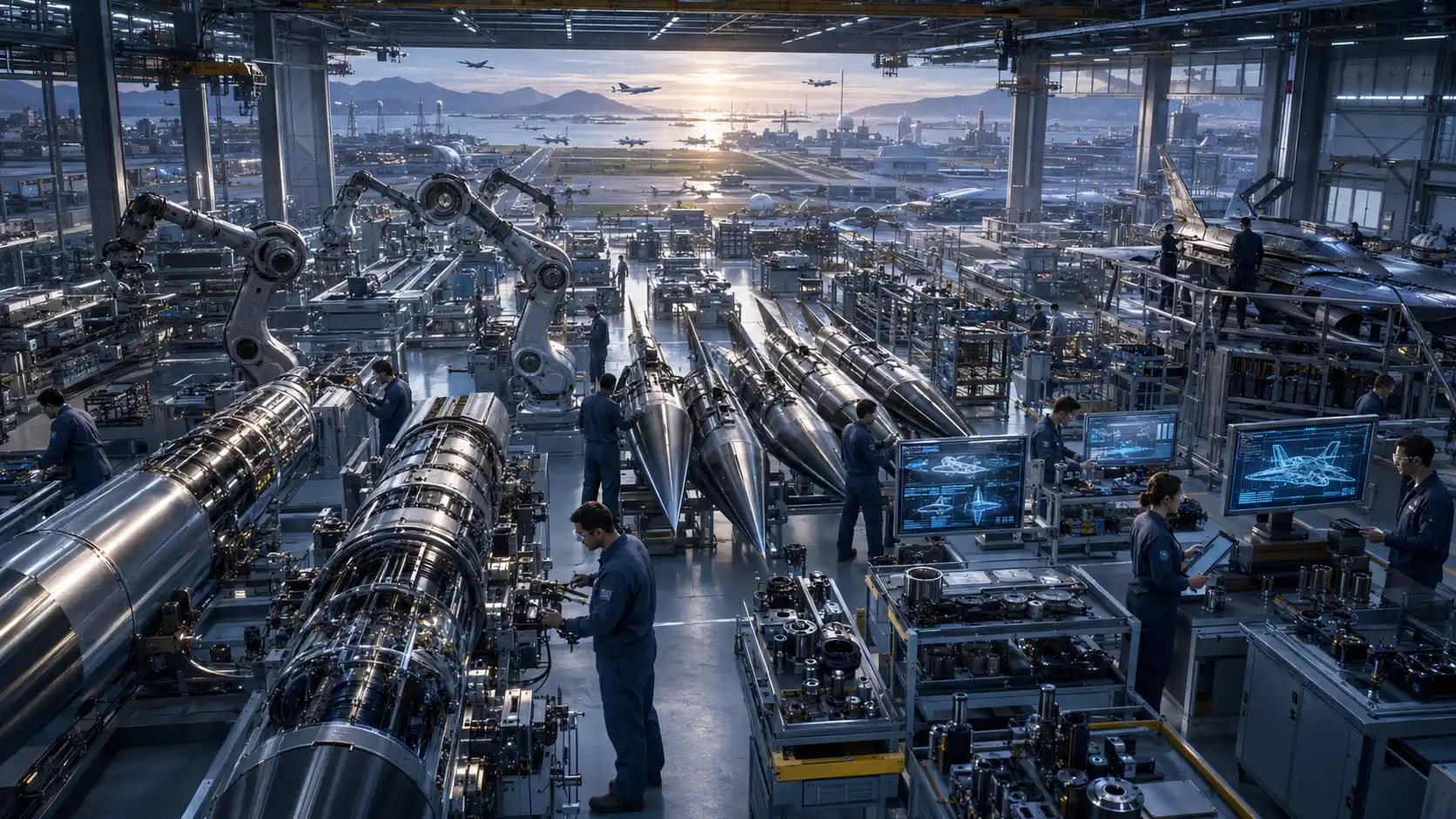
Part VI – Civilizational Imagination
Part VI explains why culture belongs after the technical argument has been established. Culture is not proof or engineering; it is imagination infrastructure, the place where civilizations rehearse their relationship with power before machines scale.
Chapter 29 – Why Culture Belongs
, rollback, and repair are technical governance problems. So why discuss culture?
Because culture is where civilizations rehearse the future before they build it. Culture teaches people what machines are for. It teaches whether power should dominate, serve, explore, protect, replace, liberate, control, or repair. It teaches whether the future should be feared, worshipped, governed, romanticized, commercialized, militarized, humanized, or abandoned. A civilization does not only build from equations. It builds from imagination.
Culture Is Not Decoration
Culture is not decoration. It is not a soft add-on after the hard engineering is finished. It is not entertainment placed beside serious work. It is one of the places where a civilization forms its assumptions about technology, power, danger, duty, agency, heroism, authority, sacrifice, and the human future. Science fiction, mythology, cinema, anime, architecture, national stories, frontier stories, engineering legends, military memory, spaceflight memory, and industrial memory all help form the civilizational imagination.
They do not replace engineering. They do not replace testing. They do not replace production. They do not replace governance. But they shape what people believe engineering is for. That matters. A civilization that imagines machines only as domination will build differently than one that imagines machines as stewardship. A civilization that imagines AI only as control will build differently than one that imagines AI as assistance under human judgment.
The Future Is First Imagined
The future is first imagined. Before a spacecraft exists, someone imagines leaving Earth. Before a robot exists, someone imagines artificial labour. Before AI battle management exists, someone imagines a machine helping the human mind manage complexity. Before a kill web exists, someone imagines distributed sensing, decision, and action. Before a ramjet-family middle layer exists, someone imagines speed as something that can be separated from the carrier and placed into an effector.
Before a country builds a sovereign industrial base, it must imagine itself as a builder civilization. The imagined future is not the blueprint. Fiction is not engineering. Myth is not procurement. Cinema is not production. Anime is not doctrine. But imagination creates the space in which blueprints become desirable. It gives language to the thing before the thing exists. It teaches people to recognize the clue before the system is complete.
Why Engineers Should Care
Engineers should care about culture because engineering is never morally empty. Every system encodes assumptions. Who is the user? Who is protected? Who is replaced? Who is accountable? Who is allowed to decide? Who benefits? Who carries risk? Who can repair the system? Who can stop it? Who understands it? Those questions are not only technical. They are cultural. An engineer may design an interface, but culture influences what kind of user the system assumes.
An engineer may design an aircraft, but culture influences whether the aircraft is imagined as a heroic platform, a node in a chain, or a servant of a governed mission. An engineer may design an AI tool, but culture influences whether AI is imagined as commander, oracle, assistant, weapon, judge, or clerk. An engineer may design production systems, but culture influences whether a civilization values skilled labour, industrial depth, maintenance, repair, and the dignity of building.
Why Policy Should Care
Policy should care about culture because public systems cannot govern what society cannot understand. If citizens understand only the machine and not the system, they will debate the wrong thing. They will ask whether a missile is fast. They will miss whether the kill web is governable. They will ask whether AI is impressive. They will miss whether the data is clean. They will ask whether a prototype flew. They will miss whether production can replenish it.
They will ask whether a platform is advanced. They will miss whether the handoffs are owned. They will ask whether the future is exciting. They will miss whether the future is repairable. Culture gives citizens the stories through which they understand technology. If those stories are shallow, public judgment becomes shallow. If those stories are mature, citizens can ask better questions. That is why a technical report must sometimes examine culture.
Why Strategy Should Care
Strategy should care about culture because strategic imagination precedes strategic architecture. A society that imagines only exquisite platforms may underbuild production. A society that imagines only speed may underbuild truth. A society that imagines only AI command may underbuild accountability. A society that imagines only procurement announcements may underbuild output. A society that imagines only crisis may underbuild long-term formation. A society that imagines only collapse may stop repairing.
A society that imagines only control may lose human agency. Strategic imagination sets the horizon of what leaders think is possible. Bad imagination creates bad strategy. Small imagination creates small strategy. Corrupt imagination creates captured systems. Nihilist imagination creates systems that see danger but forget duty. Stewardship imagination creates systems that ask not only what can be built, but what can remain human-governed after it scales. That is why culture belongs in strategy.
The Real Lesson
Culture belongs because engineering civilization does not begin with metal. It begins with meaning. A civilization must imagine what power is for before it can build power responsibly. It must imagine what machines should serve before machines scale. It must imagine the human person before AI becomes infrastructure. It must imagine responsibility before kill webs accelerate action. It must imagine production before factories become doctrine. It must imagine repair before failure becomes permanent.
That is the lesson. The clue was not only the missile. The clue was not only the ramjet. The clue was not only the kill web. The clue was the system trying to be born. Culture belongs because culture is where civilizations first learn how to see that system. Before the blueprint, there is imagination. Before the factory, there is meaning. Before the machine, there is a story about what kind of civilization should exist after the machine arrives.
Chapter 30 – Origin World 1600-1900
The origin world taught civilization to measure nature, command energy, and imagine the future as something humans could build. That is why 1600-1900 matters. This chapter is not a full history of science. It is not a full history of Europe. It is not a full history of empire, industry, war, philosophy, electricity, railways, steam, astronomy, chemistry, or fiction. It is a systems-origin chapter. It asks one question: What changed in the civilizational imagination between 1600 and 1900 that made the modern aerospace future thinkable?
The answer is enormous. Nature became measurable. Experiment became authority. Instruments extended the human senses. Machines multiplied human labour. Steam changed distance. Electricity changed time. Railways changed geography. Factories changed production. Telegraphs changed command. Industrial states changed scale. Scientific fiction changed imagination. The future stopped being only prophecy, myth, or divine mystery. It became something that could be engineered.
The Scientific Turn
The first transformation was scientific. Nature became something that could be investigated through observation, experiment, mathematics, instruments, replication, and public argument. This was a civilizational change. The natural world did not cease to be mysterious. But it became more legible. The heavens could be observed. Motion could be described. Pressure could be tested. Chemistry could be measured. Light could be studied. Electricity could be investigated. Life could be classified. Machines could be improved through experiment.
This changed the human relationship with reality. The world was no longer only inherited. It could be studied. It could be tested. It could be mapped. It could be manipulated. It could be engineered. This was one of the great origin moments of the modern future.
Instruments Extended the Human Body
The origin world was also an instrument world. The telescope extended sight. The microscope extended sight inward. The clock disciplined time. The barometer made pressure visible. The thermometer made heat measurable. The sextant helped navigation. The steam gauge made pressure governable. The telegraph made distant signals actionable. The camera changed memory and evidence. Instruments transformed the relationship between human beings and reality. They allowed civilization to perceive what the unaided senses could not reliably perceive.
They created new forms of trust. A measurement could travel. A reading could be compared. A chart could be shared. A calculation could be repeated. A system could be designed around instrumented knowledge. This matters because modern aerospace civilization is an instrument civilization. Aircraft, missiles, satellites, sensors, radars, navigation systems, telemetry, AI battle management, and kill webs all descend from this deeper move: reality becomes actionable when it becomes measurable.
Mathematics and Mechanism
The origin world also taught civilization to think mechanically. Not in the shallow sense that humans are machines. In the deeper sense that physical behaviour could be described through relationships, forces, rates, pressures, flows, constraints, and repeatable laws. This mattered enormously. Once motion could be described mathematically, machines could become more than craft objects. They could become systems of predictable behaviour. A bridge could be calculated. A ship could be designed.
A steam engine could be improved. A factory could be organized. A railway could be scheduled. A telegraph network could be operated. A projectile could be studied. A future aircraft could eventually be imagined. The machine imagination did not appear all at once. It grew from the habit of seeing physical reality as structured enough to be reasoned about. The modern aerospace world begins here.
Steam and the Command of Energy
The second great transformation was energy. Steam taught civilization that energy could be converted into repeatable mechanical work at scale. This was not only a technical transformation. It was a philosophical transformation. Human and animal muscle had limits. Wind and water had limits. Steam moved power into a new category. Power could be concentrated. Power could be transported through machines. Power could be scheduled. Power could be industrialized. Power could drive pumps, mills, factories, locomotives, ships, and eventually a new vision of technological civilization.
Steam changed the imagination of what human society could do. A civilization that commands energy differently imagines distance differently. It imagines labour differently. It imagines production differently. It imagines war differently. It imagines the future differently. Steam was not aerospace. But it helped create the energy imagination without which aerospace could not later be understood.
The Factory
The factory changed civilization’s relationship with production. Before the factory, production could be skilled, local, artisanal, dispersed, and slow. Factories did not eliminate skill. But they reorganized skill. They concentrated labour, machines, capital, timing, management, logistics, and output into repeatable systems. The factory taught civilization that production itself could be engineered. This is one of the deepest origins of the report’s industrial-base argument. Production is doctrine. But production doctrine has roots.
The factory made output visible. It made throughput measurable. It made labour scalable. It made supply chains matter. It made standardization valuable. It made maintenance essential. It made management powerful. It also created shadows: exploitation, pollution, dehumanization, dangerous labour, urban misery, and the temptation to treat people as machine parts. The factory taught civilization both the power and danger of scale.
The Real Lesson
The origin world taught civilization that the future could be built. That was its great gift. It also taught that built power can outrun moral responsibility. That was its great warning. Both lessons matter now. The ramjet signal belongs to a much longer story. So does the kill web. So does AI battle management. So does industrial base. So does systems engineering. So does the question of whether powerful systems can remain human-governed.
Between 1600 and 1900, civilization learned to measure reality, command energy, organize production, transmit signals, imagine machines, and scale power. The modern aerospace future begins there. Not because airplanes already existed as mature systems. But because the civilization capable of imagining, building, and governing such systems was beginning to form. The origin world gave modern engineering its instruments and its shadows. –
Chapter 31 – Western European / British Scientific Fiction
This tradition supplies the conscience that asks what happens when reason outruns responsibility. That is the role of Western European and British scientific fiction in this report. It is not merely a list of books. It is not a fandom chapter. It is not literary decoration. It is an engineering-philosophy chapter. The origin world taught civilization to measure nature, command energy, organize production, transmit signals, and imagine machines. Western European and British scientific fiction then asked the dangerous question: What happens if the machine future is built by people whose moral development does not keep pace with their technical power?
That question belongs inside an aerospace systems report. It belongs inside a report about ramjets, kill webs, AI battle management, industrial base, deployment reality, auditability, rollback, and repair. Because every one of those systems can be technically impressive and morally immature. The British and Western European scientific-fiction tradition understood that danger early. It gave modern engineering its conscience.
Scientific Fiction as Conscience
Scientific fiction is not only fiction about gadgets. It is fiction about consequences. A machine is invented. A process is discovered. A future society is imagined. A scientific principle becomes social reality. A technical system scales. Then the story asks: What happens to the human person? What happens to authority? What happens to responsibility? What happens to class? What happens to language? What happens to freedom? What happens to memory?
What happens to the body? What happens to the soul? What happens to the worker? What happens to the citizen? What happens to the creator? This is why the tradition matters. It does not replace engineering. It interrogates engineering. It asks whether technical power remains humanly governed.
The Creator Problem
The creator problem is one of the central questions of modern machine civilization. What responsibility does a maker have toward the thing made? What responsibility does a maker have toward the world affected by the making? What happens if the creator seeks power, discovery, prestige, or mastery, but refuses stewardship? That is the moral architecture of the early scientific-fiction tradition. The danger is not simply that the creation becomes dangerous.
The deeper danger is that the creator becomes irresponsible. The machine reveals the maker. The experiment reveals the experimenter. The system reveals the civilization. This question now returns in AI, robotics, biotechnology, autonomous systems, public digital systems, kill webs, aerospace architectures, and industrial-scale weapons. The creator problem did not disappear. It scaled.
Frankenstein and the Maker’s Duty
The great early warning is the maker who creates without responsibility. The lesson is not anti-science. It is anti-abandonment. The tragedy is not that knowledge exists. The tragedy is that creation is separated from duty. That distinction matters. A mature engineering civilization does not stop building because creation is dangerous. It builds with responsibility. It asks: Who is affected? Who is accountable? Who cares for the system after creation?
is not defeat. Repair is not a report. The maker’s duty is the ancient version of the modern governance problem.
Jekyll, Hyde, and the Divided Technologist
Another Western European and British anxiety is the divided self. The human being who believes he can control a hidden force inside himself. The scientist, doctor, inventor, or elite mind who thinks technical separation will protect moral identity. One self acts. Another self denies. One self experiments. Another self remains respectable. One self unleashes power. Another self claims innocence. This is not only a psychological story. It is a systems warning.
Modern institutions can also become divided selves. A research office invents. A vendor deploys. A commander authorizes. A model recommends. A dashboard displays. A contractor maintains. A public agency explains. A different office audits. Responsibility diffuses. Nobody sees the whole chain. The divided self becomes the divided system. That is why handoff ownership matters. A civilization must not let its moral responsibility split across interfaces until no one is responsible.
Wells and the Scientific Romance
H.G. Wells brought another layer. The future became a social experiment. Time travel. Invasion. Evolution. Invisible power. Biological manipulation. Technological superiority. Class division. Imperial reversal. Human fragility. Wells did not merely ask what machines could do. He asked what scientific ideas might reveal about society. The future became a laboratory for exposing the present. That is one of the greatest contributions of the British scientific-fiction tradition. It takes an idea and follows its consequences.
If time becomes travel, what happens to progress? If superior beings arrive, what happens to imperial confidence? If invisibility is possible, what happens to morality? If biology can be manipulated, what happens to the human boundary? If society evolves badly, what happens to civilization’s belief in progress? This is systems thinking in narrative form. The idea is not enough. The consequences matter.
The Real Lesson
Western European and British scientific fiction belongs in this report because it teaches the moral discipline of machine civilization. It asks what happens when intelligence outruns wisdom. It asks what happens when invention outruns duty. It asks what happens when systems outrun language. It asks what happens when efficiency outruns dignity. It asks what happens when surveillance outruns trust. It asks what happens when progress outruns repair. That is the lesson.
A ramjet is not only a propulsion clue. A kill web is not only a network. AI battle management is not only software. Industrial base is not only production. Deployment is not only installation. Each one asks a human question: Can power remain responsible after it scales? This tradition supplies the conscience that asks what happens when reason outruns responsibility. –
Chapter 32 – French Systems Imagination
French systems imagination shows the beauty and danger of elegance at scale. That is its role in this report. If the British and Western European scientific-fiction tradition supplies the conscience that asks what happens when reason outruns responsibility, the French systems tradition supplies a different question: What happens when reason becomes architecture? What happens when a civilization tries to turn intelligence into order, order into infrastructure, infrastructure into state capacity, and state capacity into future-making?
This is not merely a literary question. It is an engineering question. France has often imagined the future through systems: roads, bridges, schools, maps, plans, cities, engineers, ministries, railways, aviation, space, cinema, and scientific adventure. The French tradition sees the future as something that can be drawn, organized, classified, engineered, administered, and made elegant. That is its power. That is also its danger.
Reason as Architecture
The French tradition often treats reason as something that can become built form. Not only a private virtue. Not only a method. Not only a laboratory practice. Reason becomes school. Reason becomes road. Reason becomes bridge. Reason becomes map. Reason becomes code. Reason becomes bureaucracy. Reason becomes city plan. Reason becomes engineering corps. Reason becomes national project. This is the core French systems instinct. The world is not merely observed.
It is organized. The disorder of nature, geography, commerce, education, movement, defence, and public administration can be made legible through systems. This is powerful. It is why French history carries so many images of organized technical order: the engineer, the planner, the civil servant, the school, the map, the metric, the boulevard, the bridge, the railway, the aircraft, the launcher. In this tradition, intelligence wants form.
The Engineering State
French systems imagination is strongly tied to the engineering state. The state does not only regulate after invention. It helps form the technical imagination. It creates schools. It forms corps. It maps territory. It builds infrastructure. It centralizes expertise. It creates standards. It organizes public works. It turns engineering into national capacity. This matters because modern aerospace systems are not built by isolated inventors alone. They require institutions. Schools. Procurement systems.
Test ranges. Industrial policy. Safety authorities. Factories. Supply chains. Public investment. Strategic direction. France’s engineering-state imagination helps reveal this truth: advanced systems require organized capacity. The heroic inventor is not enough. The market alone is not enough. The machine alone is not enough. A civilization that wants large technical systems must know how to organize intelligence.
The School as Machine of Civilization
The French tradition understands the school as infrastructure. A school is not only a building. It is a formation system. It shapes engineers, administrators, scientists, commanders, inspectors, planners, and public servants. This matters deeply. A civilization cannot build complex systems if it does not form people capable of thinking in systems. The French grandes écoles tradition reflects a belief that national capability depends on disciplined formation. This can produce extraordinary technical culture.
It can also create elite closure. That is the double edge. A serious engineering civilization needs formation. It needs mathematical discipline. It needs public technical competence. It needs people trained to think beyond isolated objects. But if formation becomes too narrow, the system may confuse credential with wisdom, centralization with truth, and elite confidence with public legitimacy. The school can produce systems intelligence. It can also produce technocratic blindness.
Infrastructure as Public Reason
Infrastructure is one of the great French themes. Roads. Bridges. Canals. Railways. Ports. Cities. Airports. Telecommunications. Energy systems. Space systems. Infrastructure is reason made public. It takes a line on a plan and turns it into a durable pathway through reality. This is why infrastructure belongs inside civilizational imagination. A society that builds infrastructure imagines time differently. It thinks beyond the immediate. It plans for movement, trade, defence, communication, and national integration.
It makes geography legible. It turns territory into system. This matters for aerospace. A launch architecture is infrastructure. A kill web is information infrastructure. An industrial base is production infrastructure. A data-governance system is institutional infrastructure. French systems imagination teaches that infrastructure is not background. Infrastructure is civilization choosing a shape.
The City as System
France also gives one of the great modern images of the city as system. The city is not only streets and buildings. It is flow. Movement. Visibility. Drainage. Policing. Commerce. Architecture. Power. Beauty. Control. Public life. A planned city can be elegant. It can also be coercive. It can improve sanitation, traffic, administration, and public order. It can also erase older patterns, concentrate authority, and make the population more legible to power.
This is one of the deep lessons of French systems imagination. Order is not automatically humane. Beauty is not automatically freedom. Legibility is not automatically justice. A perfectly drawn system can still be morally incomplete. That lesson applies directly to AI dashboards, kill webs, public digital systems, and centralized command architectures. A clean map can hide human damage. A beautiful system can still need a conscience.
The Real Lesson
French systems imagination belongs in this report because the future is not built from machines alone. It is built from architectures. The French tradition helps us see architecture. It teaches that the future can be organized. It teaches that infrastructure is civilizational thought made physical. It teaches that schools form national capability. It teaches that measurement and standards make scale possible. It teaches that scientific adventure can make impossible journeys emotionally thinkable.
It teaches that cinema can make the machine future visible. It teaches that aerospace can become sovereignty. It also warns that elegant systems can become overcentralized, brittle, and morally incomplete. That is the lesson. A kill web without French systems imagination may remain a pile of disconnected machines. A kill web with French systems imagination can become architecture. But a kill web with only French systems imagination may become elegant control.
It needs the conscience tradition. It needs output discipline. It needs auditability. It needs rollback. It needs repair. French systems imagination shows the beauty and danger of elegance at scale. –
Chapter 33 – American Frontier Aerospace
America builds futures quickly, sometimes before it has morally understood them. That is the power and danger of American frontier aerospace. The American aerospace imagination is not mainly elegant. It is not mainly cautious. It is not mainly literary. It is not mainly bureaucratic. It is frontier execution. A garage. A desert range. A runway. A wind tunnel. A rocket stand. A test pilot. A military requirement. A federal agency.
A contractor. A startup. A launch pad. A countdown. A moonshot. A prototype that should probably not work yet. A team that decides to try anyway. That is the American aerospace imagination. It takes distance personally. It treats the sky as a problem. It treats the frontier as a calling. It turns fear into programs. It turns crisis into mobilization. It turns technical ambition into national myth. It asks, again and again: How fast can we build the impossible?
The Frontier as Technical Myth
The frontier is one of the deepest American myths. The frontier says the world is not finished. There is more land. More sky. More distance. More risk. More invention. More room to test the human being. In American imagination, the frontier is not only geography. It becomes a way of thinking. The frontier is where old rules weaken. The frontier is where competence matters. The frontier is where improvisation becomes survival.
The frontier is where institutions are distant and action is immediate. The frontier is where danger and opportunity arrive together. This myth helped create American aerospace culture. The sky became frontier. Then the stratosphere. Then orbit. Then the Moon. Then Mars. Then reusable launch. Then commercial space. American aerospace is frontier mythology translated into engineering.
The Wright Pattern
The Wright brothers matter not only because of the first successful powered airplane. They matter because they represent a pattern. Small workshop. Practical mechanics. Obsessive testing. Wind tunnel work. Pilot skill. Iteration. Control surfaces. Engine improvisation. Data from failure. No massive state system at first. No perfect theory first. No giant bureaucracy first. A pair of builders solving a physical problem through disciplined experimentation. This is one of the American archetypes: the practical builder who proves the future before institutions fully understand it.
That pattern returns again and again. In aviation. Rockets. Computing. Defense technology. Startups. Private space. Autonomous systems. The American imagination loves the builder who makes the expert consensus look too slow. That can produce breakthroughs. It can also produce overconfidence.
Catch-Up Becomes Institution
America also learned that frontier builders are not enough. After early aviation breakthroughs, the country still needed organized research capacity. Wind tunnels. Aerodynamics. Materials. Flight testing. Standards. National laboratories. Public funding. Military requirements. Industrial production. Institutional memory. That is where NACA matters. The United States did not remain only a garage civilization. It became a research civilization. It learned to turn frontier energy into institutional aeronautics. This matters for the report.
. Repair. The American lesson is not only: let builders build. It is also: build institutions that can absorb what builders discover.
Goddard and the Lonely Rocket
Robert Goddard represents another American pattern. The lonely technical visionary. The person working ahead of public imagination. The inventor whose work seems strange until history catches up. Rocketry was not immediately understood as civilization-scale infrastructure. It could look eccentric. Dangerous. Unrealistic. Even ridiculous. But the rocket imagination persisted. This is another American aerospace lesson: frontier work often begins before legitimacy arrives. A civilization must be careful here. It should not worship every outsider.
Many strange ideas are simply wrong. But it should also not crush every strange idea before testing can reveal the truth. The frontier requires disciplined tolerance for technical outsiders. Not blind belief. Disciplined tolerance. The future sometimes begins as a lonely experiment.
The Test Range
The American aerospace imagination is inseparable from the test range. Deserts. Air bases. Dry lakes. Rocket stands. Supersonic corridors. Military ranges. Launch complexes. The test range is where theory meets danger. It is where the machine is allowed to fail in public enough to teach, but controlled enough not to destroy the whole program. This is one of America’s great technical institutions. The test range turns risk into knowledge.
, rollback, and repair require failure testing. The test range is not only a place. It is a philosophy: learn from reality under controlled danger.
The Real Lesson
American frontier aerospace belongs in this report because it teaches that the future can be attempted before it feels reasonable. That is its gift. The Wright Flyer. Goddard’s rocket. The X-planes. Apollo. Mission Control. DARPA. Private space. Reusable launch. Commercial crew. These are not only technical milestones. They are cultural signals. They show a civilization repeatedly telling itself: the frontier is not closed. But the lesson must be completed.
A frontier civilization must learn stewardship or it will confuse reach with right. A launch is not maturity. A moonshot is not permanence. A startup is not governance. A prototype is not deployment. A test is not production. A network is not truth. A machine is not a civilization. America builds futures quickly, sometimes before it has morally understood them. The mature American task is not to stop building. It is to build with enough conscience, systems discipline, output discipline, auditability, rollback, and repair that the frontier remains worthy of the civilization that reaches it.
Chapter 34 – Japan 1980s-1990s Visual Engineering Peak
Japan gave the machine future an interior life. That is the central lesson of this chapter. The British and Western European tradition gave machine civilization its conscience. The French systems tradition gave machine civilization elegant architecture. The American frontier tradition gave machine civilization speed, risk, test culture, and moonshot execution. Japan’s 1980s-1990s visual engineering peak gave machine civilization something different: interiority. The machine was no longer only outside the human being.
It was cockpit. Armor. City. Interface. Weapon. Memory. Body. Spirit. Trauma. Companion. Shell. Guardian. Prison. Mirror. This is why Japan belongs in the report. Japan did not merely imagine machines that moved. It imagined machines that surrounded the human person.
Visual Engineering
Visual engineering is not engineering in the formal sense. An anime mechanical designer does not replace an aerospace engineer. A background painter does not replace an urban planner. A cockpit drawing does not replace avionics validation. A robot design does not replace robotics testing. But visual engineering matters because it teaches the public, the designer, and the young builder how machines feel from the inside. It asks: Where does the pilot sit?
What does the operator see? How does the city feel under technological pressure? Where do cables go? Where does the warning light appear? What does the machine sound like? What is the texture of the metal? How does the armor move? How does the human body relate to the machine body? How does the interface change the soul? This is not trivial. Machines are not only specifications. They are environments.
The Machine Future Became Inhabited
Before this peak, many machine futures were imagined from the outside. The rocket. The aircraft. The submarine. The city. The robot. The weapon. Japan moved the camera inward. Inside the cockpit. Inside the hangar. Inside the armored suit. Inside the city infrastructure. Inside the cybernetic body. Inside the artificial intelligence. Inside the trauma of the pilot. Inside the maintenance culture. Inside the command room. Inside the system. This shift matters.
Aerospace systems are also inhabited systems. Pilots inhabit aircraft. Astronauts inhabit spacecraft. Operators inhabit command interfaces. Maintainers inhabit maintenance procedures. Analysts inhabit data systems. Commanders inhabit decision environments. Citizens inhabit public systems. The machine future is never only the machine. It is the human being inside the machine-world. Japan’s visual engineering peak saw that with unusual force.
Mecha as Systems Thinking
Mecha is often misunderstood. To shallow observers, it is only giant robots. That misses the deeper lesson. Mecha is a visual language for human-machine systems. A mobile suit is not only a robot. It is armor, cockpit, weapon, sensor package, propulsion system, maintenance burden, operator interface, military doctrine, production object, symbolic identity, and psychological pressure. A transforming fighter is not only cool motion. It is aerospace, robotics, pilot workload, tactical role change, mechanical imagination, and spectacle fused into one moving system.
A powered suit is not only armor. It is the body extended by machine. Mecha made systems visible. It taught a generation to see machines as layered objects: hardware, operator, maintenance, mission, interface, identity, and moral burden. That is why mecha belongs in an aerospace report.
Gundam and the Real Robot Imagination
The Gundam tradition helped shift mecha away from pure superhero machine mythology toward a more militarized, industrial, political, and operational imagination. The machine became a weapon system. A production system. A logistics burden. A political object. A pilot’s trauma. A battlefield node. The robot was no longer only a magical champion. It became part of war. That mattered. It made the machine more real. Not realistic in every engineering detail.
Real in systems meaning. The pilot is young. The machine is powerful. The war is larger than the cockpit. The state and military systems use human beings. Technology does not save innocence. This is a major Japanese lesson: the machine is never only a machine. It is a relationship between youth, authority, war, industry, and trauma.
Macross and the Transforming Aerospace Imagination
Macross added another layer. Aerospace, transformation, music, culture, war, romance, and civilization shock became entangled. The transforming fighter is not only a mechanical trick. It is a sign of role fluidity. Aircraft. Robot. Hybrid. Pilot. Performer. Weapon. Cultural bridge. Macross understood that war is not only hardware. It is culture. Morale. Communication. Identity. Emotion. The future battlefield is not only technical. It is psychological and civilizational. That lesson matters for kill webs.
A network does not only move data. It shapes perception. It shapes morale. It shapes coordination. It shapes what the human being believes is happening. Macross made aerospace emotional without making it shallow.
The Real Lesson
Japan’s 1980s-1990s visual engineering peak belongs in this report because it teaches that machines are not only objects. They are worlds people inhabit. A ramjet is not only propulsion. It is part of a chain that humans must understand. A cockpit is not only a control space. It is a psychological environment. A kill web is not only a network. It is a lived command world. AI battle management is not only software.
It is a pressure system around human judgment. Industrial base is not only production. It is respect for small truths repeated at scale. Deployment is not only installation. It is human beings living inside old and new systems at the same time. That is the lesson. Japan gave the machine future an interior life. It taught that the shell matters, but the ghost matters more. A civilization that builds shells without protecting ghosts may become technically advanced and spiritually lost.
A mature engineering civilization must build machines that remain legible, humane, repairable, and worthy of the people who live inside them. –
Chapter 35 – China Civilizational-Scale Engineering Imagination
China demonstrates that future competition is not only about concepts, but about converting civilizational imagination into production systems. That is the central lesson of this chapter. China’s engineering imagination is not mainly the British conscience tradition. It is not mainly French elegance. It is not mainly American frontier speed. It is not mainly Japanese interiority. China’s distinctive contribution is scale. Civilizational scale. Historical scale. Infrastructure scale. Manufacturing scale.
State-capacity scale. Population scale. Supply-chain scale. Industrial-learning scale. Space-program scale. China imagines engineering as civilization organized across time. That makes it powerful. It also makes it dangerous. A civilization that can build at scale can also control at scale. That is the double lesson.
The Civilization-Time Imagination
China often imagines itself through long time. Dynasties. Continuity. Rupture. Reunification. Civil service. Canals. Walls. Rivers. Agriculture. Bureaucracy. Cities. Examinations. Infrastructures. Reform. Humiliation. Recovery. Modernization. This creates a different imagination of engineering. A bridge is not only a bridge. A railway is not only a railway. A dam is not only a dam. A port is not only a port. A satellite is not only a satellite. A factory is not only a factory.
Each can become part of a national and civilizational continuity story. This matters because long time changes ambition. A country that imagines itself across centuries may attempt projects that shorter political cultures struggle to sustain. It may also justify too much in the name of history. That is the danger. Civilizational memory can support endurance. It can also become a shield for power.
The State as Builder
China’s modern engineering imagination is strongly tied to the state as builder. The state plans. The state directs. The state finances. The state coordinates. The state mobilizes. The state standardizes. The state builds corridors, ports, railways, energy systems, satellites, cities, industrial parks, logistics chains, and strategic sectors. This is not the only force in China. Private firms matter. Local governments matter. Export markets matter. Universities matter. Engineers matter. Entrepreneurs matter.
Foreign technology transfer mattered. Global supply chains mattered. But the Chinese imagination places state capacity close to the centre. The state is not merely a regulator. It is an organizer of scale. That is the systems lesson. A civilization that wants large technical systems must solve the state-capacity problem. China has treated that problem as central.
Infrastructure as National Integration
Infrastructure is one of China’s clearest engineering languages. High-speed rail. Ports. Bridges. Dams. Expressways. Urban metros. Airports. Power grids. Industrial zones. Logistics networks. Telecommunications. Data centers. Space-launch sites. Infrastructure is not only movement. It is integration. It connects regions. It compresses distance. It creates markets. It displays capacity. It disciplines geography. It turns territory into system. This is why China’s high-speed rail network matters as imagination, not only transportation.
It says: the country can be physically reorganized. Distance can be compressed. Regional economies can be linked. Industrial learning can be accumulated. Construction can become routine. Scale can become normal. This is civilizational engineering imagination made visible.
High-Speed Rail as Systems Signal
High-speed rail is one of the clearest examples of China’s scale logic. It is not only a train. It is track. Stations. Bridges. Tunnels. Power. Signaling. Rolling stock. Maintenance. Land policy. Finance. Construction labour. Supplier ecosystems. Standards. Procurement. Training. Urban planning. Regional development. National image. A high-speed rail system is a kill web of civilian infrastructure. Not because it is military. Because it reveals the same systems principle: the visible machine is only one layer.
The system around it is the real achievement. A train without track is not a system. Track without stations is not a system. Stations without integration are not a system. Infrastructure without maintenance is not a system. Scale without output is not a system. China’s high-speed rail imagination teaches the report to look beyond the vehicle. The train is the clue. The network is the system.
Manufacturing as Civilization
China’s manufacturing imagination is also central. Manufacturing is not treated only as low-status assembly. It is national capacity. Learning capacity. Export capacity. Employment capacity. Industrial-depth capacity. Supply-chain capacity. Tooling capacity. Process-improvement capacity. Manufacturing is where abstract ambition becomes repeated output. This connects directly to Chapter 24. Production is doctrine. China’s rise demonstrates that doctrine is not only what armed forces write. Doctrine is also what factories can repeat.
The factory teaches the civilization. Every batch improves the process. Every supplier deepens the chain. Every component reveals bottlenecks. Every export product teaches quality, price, logistics, and competition. Manufacturing is cumulative learning at scale. A civilization that gives up manufacturing gives up one of the schools where reality teaches systems discipline.
The Real Lesson
China’s civilizational-scale engineering imagination belongs in this report because it forces the reader to think beyond objects. Beyond the missile. Beyond the ramjet. Beyond the aircraft. Beyond the prototype. Beyond the dashboard. Beyond the launch. Beyond the platform. It asks: Can a civilization convert imagination into infrastructure? Can it convert infrastructure into production? Can it convert production into strategic endurance? Can it convert state capacity into technical capability? Can it convert space ambition into systems proof? Can it convert scale into civilization without destroying the human person inside the system? That is the lesson. China demonstrates that future competition is not only about concepts. It is about converting civilizational imagination into production systems. But the mature answer cannot be scale worship. The mature answer is stewardship at scale. Build at scale. Produce at scale. Learn at scale. Repair at scale. Audit at scale. Preserve dignity at scale. Keep human agency alive inside the system. A civilization that can scale power but cannot scale accountability becomes dangerous. A civilization that can scale production but cannot scale repair becomes brittle. A civilization that can scale infrastructure but cannot scale freedom becomes a machine too large for the human person. The future will not be won by imagination alone.
Chapter 36 – Canada Megaproject Memory
A country that forgets how to build forgets how to imagine itself. That is the Canadian lesson. Canada is not a country without builder memory. That is the tragedy. Canada has built. Railways. Canals. Seaways. Highways. Hydroelectric systems. Nuclear reactors. Aircraft. Satellites. Robotic arms. Resource infrastructure. Northern logistics. Aerospace clusters. Public institutions. Universities. Research facilities. Cities. Ports. Pipelines. Power systems. Canada has not always built perfectly. Canada has not always built justly.
Canada has not always built wisely. But Canada has built at civilizational scale. That memory still exists. The problem is that memory has become unstable. Canada remembers megaprojects the way a family remembers an ancestor: with pride, with distance, with fragments, with myth, with grief, and sometimes without knowing how to reproduce the competence that made the ancestor real.
Canada Was a Megaproject Country
Canada was built through megaproject imagination. The country is too large, too cold, too geographically difficult, too regionally complex, and too sparsely populated to exist without systems thinking. Canada required lines across distance. Rail lines. Road lines. Power lines. Shipping routes. Air routes. Pipelines. Telecommunications. Northern supply chains. Port systems. Resource corridors. Industrial clusters. Public institutions. Canada was never going to survive as a purely local society. It had to become a systems country.
The railway was not only transportation. It was Confederation made physical. The seaway was not only shipping. It was continental trade architecture. The highway was not only road. It was national continuity. Hydroelectric development was not only power. It was geography converted into industrial energy. Aerospace was not only aircraft. It was proof that a middle power could participate in advanced technological civilization. This is Canada’s megaproject memory.
The National Dream
The railway is the founding symbol of Canadian builder imagination. It connected political promise to physical infrastructure. It made Confederation credible across distance. It tied British Columbia to the national project. It turned geography into a line of steel. The railway was not only an engineering achievement. It was a political achievement. A financial achievement. A labour achievement. A logistical achievement. A moral problem. A national myth. A colonial instrument.
A builder signal. That complexity matters. Canada’s railway memory contains both achievement and shadow. It showed that Canada could organize across impossible distance. It also showed that national projects can impose costs on workers, Indigenous peoples, communities, and landscapes. This is why megaproject memory must be honest. The lesson is not nostalgia. The lesson is disciplined inheritance. Receive the builder courage. Study the shadows. Build better.
The Seaway Mind
The St. Lawrence Seaway belongs to Canada’s systems memory because it shows Canada thinking in continental infrastructure. River. Canals. Locks. Dams. Shipping. Hydroelectric power. United States cooperation. Great Lakes industry. Atlantic access. Trade. Engineering. Diplomacy. The seaway was not a single object. It was a negotiated machine across geography and sovereignty. That is a systems lesson. Canada once understood that national capability depends on interfaces: river to ship, lake to ocean, Canada to United States, trade to engineering, power to navigation, regional industry to global market.
The seaway imagination is not only about the past. It teaches that middle powers survive through infrastructure intelligence. They must know how to connect geography to strategy.
The Trans-Canada Highway
carries another kind of memory. It is not as glamorous as aerospace. It is not as mythic as the railway. But it is one of Canada’s most important continuity systems. A country of distance needs roads that make the nation feel physically real. The highway is not only asphalt. It is movement. Tourism. Trade. Military mobility. Family memory. Regional connection. Maintenance. Federal-provincial coordination. Weather.
Terrain. Safety. The highway reminds Canada that infrastructure is not built once. It must be maintained. Improved. Repaired. Adapted. A country that cannot maintain its national lines cannot sustain its national imagination. The highway is a quiet megaproject. Quiet systems often carry civilization.
Hydroelectric Canada
Hydroelectric development is one of Canada’s deepest engineering memories. Quebec. Manitoba. British Columbia. Newfoundland and Labrador. Northern rivers. Dams. Transmission lines. Remote construction camps. Indigenous lands. Environmental transformation. Provincial utilities. Industrial energy. Export contracts. Regional politics. Hydroelectricity reveals the Canadian pattern: vast geography converted into public power. It also reveals the Canadian shadow: major projects often collided with Indigenous rights, local consent, environmental protection, and northern communities. This double memory is essential.
shows capacity. It also demands humility. A mature builder civilization cannot only ask: Can we build it? It must also ask: Who carries the cost? Who was consulted? What land was changed? What agreements govern the system? What repair is owed? What stewardship follows? Megaproject memory without moral memory becomes dangerous.
The Real Lesson
Canada Megaproject Memory belongs in this report because it shows what is at stake when a civilization loses builder continuity. A ramjet signal means little to a country that cannot read frontier systems. A kill web means little to a country that cannot integrate public authority, data, industry, and repair. AI means little to a country that cannot clean its systems before automating them. Industrial strategy means little to a country that cannot distinguish announcements from output.
Megaproject memory means little if it becomes nostalgia. The real question is: Can Canada build again? Not as fantasy. Not as slogan. Not as imitation. As disciplined national systems recovery. Canada has builder memory. Railway memory. Seaway memory. Highway memory. Hydro memory. Nuclear memory. Aerospace memory. Space robotics memory. Northern memory. Industrial memory. But memory must become method. A country that forgets how to build forgets how to imagine itself.
A country that remembers honestly can begin again. The next Canadian frontier is not only a machine. It is the recovery of builder civilization itself. –
Chapter 37 – 1980s-1990s Global Sci-Fi Peak
The 1980s and 1990s taught the world to imagine systems, not only machines. That is why this period matters. This chapter is not nostalgia. It is not a list of beloved films, anime, games, novels, shows, and images. It is not a museum of references. It is a systems-imagination chapter. The earlier chapters in Part VI separated the streams. Western European and British scientific fiction supplied the conscience tradition.
French systems imagination supplied elegance, architecture, and infrastructure. American frontier aerospace supplied speed, risk, test culture, moonshot execution, and public-private technical ambition. Japan’s 1980s-1990s visual engineering peak supplied interiority, cockpit worlds, cybernetic identity, city-machine environments, and the ghost inside the shell. China supplied civilizational-scale conversion: infrastructure, manufacturing, state capacity, space ambition, survival imagination, and scale. Canada supplied megaproject memory: middle-power builder identity, lost spines, niche sovereignty, northern systems, aerospace memory, and the grief of interrupted capacity.
Chapter 37 now asks: What happened when these streams began to collide globally? The answer is the 1980s-1990s sci-fi peak. A global moment when the future became visual, networked, cybernetic, corporate, post-industrial, militarized, urban, psychological, simulated, biological, and planetary all at once. The machine was no longer a single object. The machine became the world.
The Machine Became Environment
Earlier science fiction often imagined machines as objects. The spaceship. The robot. The ray gun. The time machine. The submarine. The rocket. The 1980s-1990s changed the scale. The machine became environment. A city could be a machine. A corporation could be a machine. A network could be a machine. A police system could be a machine. A biological park could be a machine. A simulated reality could be a machine.
A battlefield could be a machine. A space station could be a machine. A school, hospital, prison, factory, or command center could become machine-like. This shift matters because modern civilization is now increasingly environmental technology. People do not merely use machines. They live inside systems. They live inside platforms. They live inside networks. They live inside logistics chains. They live inside digital identity systems. They live inside automated public systems.
Cyberpunk and the High-Tech Low-Life Warning
Cyberpunk was one of the signature languages of the period. High technology. Low trust. Corporate power. Rainy cities. Neon. Decay. Artificial bodies. Private security. Hackers. Networks. Surveillance. Synthetic humanity. Urban alienation. Information power. Cyberpunk mattered because it rejected clean progress mythology. It said: the future may be advanced and degraded at the same time. The city may be high-tech and broken. The body may be upgraded and exploited. The network may connect and control.
The corporation may innovate and dominate. The state may weaken in some places and become intrusive in others. The human person may become editable, replaceable, trackable, or disposable. This warning belongs directly to this report. A kill web can be advanced and morally dangerous. AI battle management can be sophisticated and unaccountable. A public digital system can be efficient and dehumanizing. An industrial base can be powerful and extractive. Cyberpunk taught the public to distrust surface futurism.
Blade Runner and the Artificial Human Question
Blade Runner became one of the great visual and philosophical anchors of the period. Its future was not clean. It was rainy, dense, corporate, exhausted, synthetic, beautiful, and morally uncertain. The central question was not only whether machines could imitate humans. The deeper question was whether humans would still recognize humanity when it appeared in a manufactured form. This question matters for AI, robotics, synthetic media, autonomous systems, and human-machine integration.
The artificial human question is not only about androids. It is about dignity. Who counts? Who decides? What is memory? What is personhood? What happens when institutions treat life as product? What happens when humans become less humane than their machines? Blade Runner made the machine future morally atmospheric. The environment itself became an accusation.
The Terminator Pattern
The Terminator pattern supplied another global warning: automation without human control can become existential danger. The machine does not merely assist. It targets. It learns. It pursues. It returns. It does not tire. It turns time itself into a battlefield. The lesson is not that all AI becomes killer robots. That is too shallow. The deeper lesson is that automated systems tied to violence, command, prediction, and survival can outrun human governance if they are built without limits.
This is why Chapter 23 mattered. AI can accelerate a kill web, but it cannot absolve a civilization of judgment. The Terminator pattern is crude if treated as literal prophecy. But it is powerful as a warning symbol. Do not build command systems that remove human responsibility. Do not give machine speed moral authority. Do not let survival logic erase the human future.
RoboCop and the Corporate-State Machine
RoboCop added the corporate-state warning. Police power. Privatization. Urban decay. Corporate governance. Human body as platform. Memory inside machinery. Public authority captured by private profit. Violence packaged as product. This is not only a story about a cyborg. It is a story about institutional capture. A human being is turned into infrastructure. A public function becomes corporate asset. A city becomes a market. A body becomes equipment. A badge becomes branding.
This belongs directly to SGT’s governance concerns. Vendor capture is not abstract. Public authority can be hollowed out if the institution no longer controls the system it deploys. A mature public system may use vendors. It must not surrender repair authority to them. RoboCop dramatized that danger in machine form.
The Real Lesson
The 1980s-1990s global sci-fi peak belongs in this report because it trained civilization to see the future as a system. Not a single machine. A world. A network. A city. A corporation. A command room. A cockpit. A simulation. A body. A database. A laboratory. A battlefield. A public institution. A planet. That is the lesson. A ramjet signal is not only a missile clue. It is part of a system trying to form. A kill web is not only a network. It is the operational descendant of a world that learned to imagine networks as power. AI battle management is not only software. It belongs to a cultural lineage that feared machine recommendation, simulation, and managed reality long before the tools matured. Industrial base is not only production. It belongs to a civilization that learned through factories, mecha, spacecraft, cyberpunk cities, and megaprojects that machines require worlds around them. The global sci-fi peak gave the late twentieth century a shared warning: the future will not arrive as one machine. It will arrive as an environment. The task now is not merely to recognize the environment. The task is to govern it. To build it honestly. To audit it. To roll it back when necessary. To repair it. To keep the human person alive inside it.
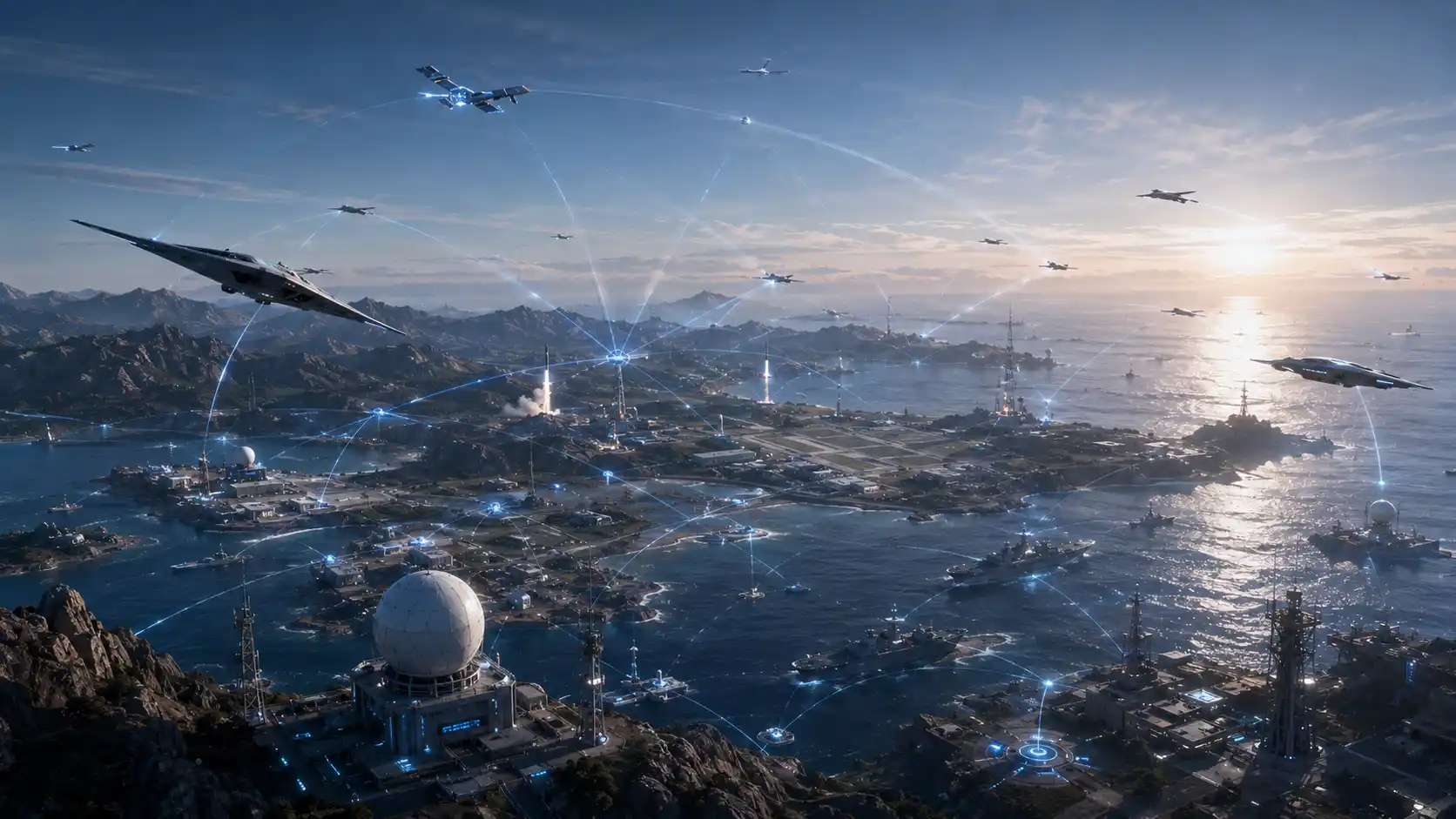
Part VII – Engineering Philosophy Audit
Part VII names the moral architecture beneath technical systems. Powerful systems are not morally empty after they scale; they encode assumptions about truth, authority, agency, repair, and human dignity.
Chapter 38 – Why Engineering Philosophy Matters
Engineering is not morally empty. It encodes assumptions about life, authority, agency, and the future. That is why engineering philosophy matters. A machine is never only a machine. A system is never only a system. A platform is never only a platform. A network is never only a network. An AI model is never only a model. A factory is never only a factory. A kill web is never only a kill web.
Each one contains a philosophy. Sometimes that philosophy is declared. Sometimes it is hidden. Sometimes it is noble. Sometimes it is corrupt. Sometimes it is nihilistic. Sometimes it is merely inherited. Sometimes no one remembers choosing it. But it is there. Engineering philosophy is the set of assumptions a civilization builds into its systems before those systems act on the world.
The Hidden Philosophy Inside Systems
Every system answers questions whether or not its designers admit it. Who gets to decide? Who gets overridden? Who sees the evidence? Who can appeal? Who can repair? Who is watched? Who is trusted? Who is automated? Who is excluded? Who is protected? Who carries risk? Who benefits from failure? Who pays for maintenance? Who inherits the consequences? These questions may not appear in the performance chart. But the system answers them.
An interface answers them. A procurement contract answers them. A data model answers them. A command chain answers them. A factory design answers them. An AI workflow answers them. A public dashboard answers them. A missile architecture answers them. A launch system answers them. If these questions are not asked consciously, they are answered accidentally by incentives, politics, vendors, bureaucracy, fear, fashion, and power. That is dangerous.
Engineering as Applied Moral Choice Under Constraint
Engineering is applied moral choice under constraint. It is not only calculation. It is not only optimization. It is not only design. It is not only physics. It is not only code. Engineering decides what trade-offs become real. Safety versus speed. Cost versus resilience. Automation versus judgment. Centralization versus local agency. Secrecy versus accountability. Performance versus maintainability. Scale versus repairability. Efficiency versus dignity. Speed versus truth. Novelty versus trust.
The engineer may not always decide alone. Executives decide. Politicians decide. Commanders decide. Procurement officials decide. Customers decide. Regulators decide. Markets decide. But engineering gives those decisions physical, digital, and institutional form. That is why it carries moral weight.
The Machine Obeys the Philosophy
A system will often obey its underlying philosophy more reliably than it obeys its public slogan. A system that says “human-centered” but removes human appeal is not human-centered. A system that says “transparent” but cannot reconstruct evidence is not transparent. A system that says “safe” but cannot rollback is not safe. A system that says “innovative” but cannot produce output is not innovative. A system that says “AI-assisted” but makes humans rubber-stamp machine outputs is not assisted.
A system that says “resilient” but collapses under one interface failure is not resilient. A system that says “public-serving” but locks public authority inside vendor dependency is not public-serving. The slogan is not the philosophy. The architecture is the philosophy. The system tells the truth.
Philosophy Appears at the Interface
Engineering philosophy often appears most clearly at the interface. The interface tells the human being what the system thinks of them. Is the operator trusted? Is the citizen respected? Is the maintainer informed? Is the commander warned? Is uncertainty visible? Is authority clear? Is evidence traceable? Is appeal possible? Is repair supported? Or does the interface hide complexity, suppress doubt, encourage obedience, convert judgment into button-pressing, and make refusal difficult?
The interface is not only usability. It is political philosophy made visible. A dashboard that hides uncertainty teaches false confidence. An AI output that appears authoritative without provenance teaches obedience. A command system that suppresses dissent teaches compliance over judgment. A public benefits system that denies without explanation teaches institutional contempt. A mature engineering philosophy makes the human role legible.
Philosophy Appears in Failure
Engineering philosophy also appears in failure. When the system fails, what happens? Does the institution hide the failure? Does it blame the operator? Does it protect the vendor? Does it erase the logs? Does it redefine success? Does it continue deployment? Does it punish whistleblowers? Does it abandon users? Does it repair? Failure reveals the real philosophy. A system that audits failure has one philosophy. A system that conceals failure has another.
A system that rolls back unsafe changes has one philosophy. A system that keeps moving because stopping would embarrass leadership has another. A system that repairs root causes has one philosophy. A system that produces reports without changing anything has another. The philosophy of a system is revealed by what it does after reality says no.
The Four Engineering Philosophies
Part VII will classify four engineering philosophies. The first is honest-to-the-galaxy engineering. This philosophy tells the truth about reality, then builds as if life, dignity, and the future matter. The second is political-capture engineering. This philosophy builds systems that look advanced while reducing human agency, hiding failure, protecting institutions, or serving power. The third is nihilist engineering. This philosophy can see danger, corruption, fragility, and absurdity, but forgets the duty to repair.
The fourth is stewardship engineering. This philosophy asks not only whether the system can be built, but whether it can remain human-governed after it scales. These categories are not perfect boxes. Real institutions may contain all four. A project can begin honestly and become captured. A brilliant system can drift into nihilism. A captured system can be repaired toward stewardship. A stewardship system can decay if maintenance and public trust fail.
The Real Lesson
Engineering philosophy matters because powerful systems do not remain neutral after they scale. They become environments. They become institutions. They become incentives. They become habits. They become dependencies. They become language. They become memory. They become authority. They become the world people live inside. That is why engineering cannot be morally empty. A ramjet is not only propulsion. A kill web is not only architecture. AI battle management is not only software.
Industrial base is not only production. A public system is not only administration. A future is not only technology. Every system asks: What kind of human being is this system built for? What kind of authority does it serve? What kind of civilization will exist after it scales? That is the question Part VII now answers. Engineering is not morally empty. It encodes assumptions about life, authority, agency, and the future.
Chapter 39 – Honest-to-the-Galaxy Engineering
Honest-to-the-galaxy engineering tells the truth about reality, then builds as if life, dignity, and the future matter. That is the first engineering philosophy. It begins with truth. Not slogan truth. Not political truth. Not institutional truth. Not vendor truth. Not dashboard truth. Not model output truth. Not the truth that helps the program survive. Reality truth. The truth that physics will enforce. The truth that failure will reveal.
The truth that production will expose. The truth that operators will feel. The truth that citizens will live with. The truth that the future will inherit. Honest-to-the-galaxy engineering is engineering that refuses to lie to reality. It does not pretend the system is mature before it is mature. It does not pretend the interface is owned when nobody owns it. It does not pretend the data is clean when the data is dirty.
It does not pretend the AI understands when it only correlates, predicts, or generates. It does not pretend the factory can scale when the suppliers are fragile. It does not pretend deployment has happened when only a pilot has happened. It does not pretend a machine is a civilization. It tells the truth. Then it builds.
Why “Galaxy”?
The word “galaxy” matters. Honest-to-the-galaxy engineering is not only honest to the office. Not only honest to the manager. Not only honest to the ministry. Not only honest to the board. Not only honest to the funding announcement. Not only honest to the procurement brief. Not only honest to the political cycle. Not only honest to the company. Not only honest to the country. It is honest to reality at the largest scale.
Physics does not care about the press release. Materials do not care about the slide deck. Thermal limits do not care about political need. Supply chains do not care about slogans. Bad data does not become good data because a dashboard renders it cleanly. A brittle interface does not become resilient because the program was announced as integrated. An unsafe system does not become safe because the institution cannot afford embarrassment.
The First Loyalty Is Reality
Honest-to-the-galaxy engineering begins with a simple rule: the first loyalty is reality. Not because people do not matter. Because people matter too much to build on falsehood. If the system is not ready, say it is not ready. If the data is uncertain, show the uncertainty. If the model has limits, name the limits. If the supplier base is fragile, expose the fragility. If the production rate is theoretical, label it theoretical.
If deployment has not been tested, say deployment has not been tested. If governance is not operational, do not call it governance. If rollback does not exist, do not call the system mature. If repair is unfunded, do not pretend lessons have been learned. Reality is not cruelty. Reality is the foundation of care. A system built on falsehood eventually harms the people it was supposed to serve.
Truth Before Power
Power should not come before truth. This is one of the central rules. A civilization can build faster weapons, larger infrastructures, smarter AI, more connected networks, deeper supply chains, stronger launch systems, more automated public systems, and more capable factories. But if truth is subordinated to power, every capability becomes dangerous. The system may become fast before it becomes accurate. Autonomous before it becomes accountable. Scalable before it becomes repairable.
Connected before it becomes governable. Efficient before it becomes humane. Impressive before it becomes mature. Honest-to-the-galaxy engineering reverses the order. Truth first. Power second. Because power built on falsehood becomes failure at scale.
The Anti-Hype Discipline
Honest-to-the-galaxy engineering is anti-hype. Not anti-ambition. Not anti-technology. Not anti-frontier. Not anti-builder. Anti-hype. Hype is not excitement. Excitement can be good. A civilization needs wonder. Builders need energy. Young people need reasons to care. Leaders need imagination. Hype is different. Hype is when excitement outruns evidence. Hype is when possibility is sold as capability. Hype is when demo becomes deployment. Hype is when “AI-powered” replaces process knowledge.
Hype is when “strategic” replaces proof. Hype is when “transformational” replaces output. Hype is when “future-ready” replaces testing. Honest engineering protects ambition from hype by forcing ambition to earn contact with reality.
The Cargo-Cult Warning
One of the great dangers in technical civilization is cargo-cult engineering. The outer form is copied. The inner discipline is missing. There is a dashboard. But no truth. There is an AI model. But no governance. There is a prototype. But no production path. There is a command room. But no reliable data. There is an innovation lab. But no deployment authority. There is a report. But no repair.
There is a test. But no learning loop. There is a factory announcement. But no supplier depth. There is a strategy. But no output. Cargo-cult engineering imitates the shape of technical competence without the discipline that makes competence real. Honest-to-the-galaxy engineering rejects that. It asks: What is actually working? What has actually been tested? What can actually be produced? What failure modes have actually been found?
The Courage to Report Bad News
Honest engineering requires courage. Not only technical courage. Moral courage. The courage to report bad news early. The courage to tell leadership the schedule is unrealistic. The courage to tell procurement that the requirement is incoherent. The courage to tell the vendor that the interface is unacceptable. The courage to tell the public that the system is not ready. The courage to tell commanders that data confidence is insufficient. The courage to tell investors that production cannot scale yet.
The courage to tell a ministry that the pilot did not prove deployment. The courage to tell a team that the design is elegant but brittle. This courage is not sabotage. It is service. A system protected from bad news is being prepared for worse failure later.
The Real Lesson
Honest-to-the-galaxy engineering matters because every powerful system eventually meets reality. The aircraft meets the air. The rocket meets launch. The ramjet meets its operating envelope. The sensor meets uncertainty. The AI model meets distribution shift. The kill web meets degraded conditions. The factory meets repetition. The public system meets citizens. The institution meets failure. The civilization meets the future. If the system has lied, reality will expose it.
If the institution has lied, people will pay for it. If the civilization has lied, decline becomes normal. The answer is not to stop building. The answer is to build from truth. Tell the truth about the machine. Tell the truth about the data. Tell the truth about the model. Tell the truth about the supply chain. Tell the truth about the user. Tell the truth about the public. Tell the truth about failure.
Tell the truth about repair. Then build with courage. Honest-to-the-galaxy engineering tells the truth about reality, then builds as if life, dignity, and the future matter. –
Chapter 40 – Political-Capture Engineering
Political-capture engineering builds systems that look advanced while reducing human agency. That is the second engineering philosophy. It is not always crude. It is not always obviously corrupt. It is not always illegal. It is not always partisan. It does not always announce itself as control. Often, it arrives wearing the language of progress. Innovation. Modernization. Efficiency. Safety. Security. Equity. Transformation. Smart systems. AI-powered services. Digital government. Future force.
Public-private partnership. National strategy. Optimization. Resilience. Trust. But underneath the language, something has shifted. The system is no longer built primarily to tell the truth about reality. It is built to protect a narrative. It is built to protect an institution. It is built to protect a vendor. It is built to protect leadership. It is built to protect a political objective. It is built to make dissent harder.
It is built to reduce appeal. It is built to make power appear technical. It is built to make judgment look unnecessary. It is built to make the human person smaller inside the system. That is political-capture engineering.
Political Capture Is Not Ordinary Politics
Political-capture engineering is not the same as ordinary politics. Politics is unavoidable. Public systems require choices. Budgets require choices. Defense systems require choices. Infrastructure requires choices. AI governance requires choices. Procurement requires choices. Citizens disagree. Leaders decide. Institutions prioritize. That is normal. Political capture is different. Political capture happens when public authority is redirected away from truth, public welfare, human agency, and accountable output toward the protection of a faction, vendor, ideology, institution, leader, or narrative.
In engineering terms, capture occurs when the system’s real purpose differs from its declared purpose. The declared purpose may be service. The real purpose may be control. The declared purpose may be modernization. The real purpose may be narrative management. The declared purpose may be efficiency. The real purpose may be reducing human review. The declared purpose may be safety. The real purpose may be expanding surveillance. The declared purpose may be innovation.
The System Serves the Narrative
The first sign of capture is narrative supremacy. The story comes first. Reality comes second. The system must prove the policy was right. The pilot must prove the announcement was serious. The dashboard must prove progress exists. The AI tool must prove modernization is happening. The procurement must prove leadership is forward-looking. The program must survive even when evidence says it should pause. In an honest system, reality corrects the narrative.
In a captured system, the narrative edits reality. Bad results are reframed. Failures become “implementation challenges.” Delays become “phased rollout.” User harm becomes “edge case.” Systemic failure becomes “communications issue.” Dirty data becomes “data modernization opportunity.” Ceremonial review becomes “human oversight.” Vendor lock-in becomes “strategic partnership.” A captured system does not necessarily lack information. It lacks permission to let information change the story.
Optics Become Requirements
Political-capture engineering often begins when optics become requirements. The system must look modern. It must look digital. It must look AI-enabled. It must look equitable. It must look secure. It must look efficient. It must look innovative. It must look decisive. The visible appearance becomes more important than the operating truth. The interface becomes cleaner than the data. The announcement becomes stronger than the capability. The pilot becomes more important than deployment.
The public dashboard becomes more important than the repair path. The strategy document becomes more important than output. The system is engineered to be seen. Not to be governed. This is dangerous because optics can absorb engineering discipline. A beautiful system can be untruthful. A modern system can be unjust. A digital system can be unaccountable. An AI system can be bureaucratic coercion with better language.
The Dashboard Curtain
The dashboard is one of the main tools of political-capture engineering. A dashboard can be useful. It can make information legible. It can support coordination. It can reveal bottlenecks. It can help leaders make decisions. But a dashboard can also become a curtain. It can hide uncertainty. It can simplify away human suffering. It can replace evidence with indicators. It can convert people into categories. It can create false confidence.
It can make leadership feel in control while frontline reality deteriorates. It can count activity instead of output. It can show green lights while the system is failing. A captured dashboard does not ask: Is the public better served? Can errors be corrected? Can users appeal? Can the system rollback? Are the numbers meaningful? What is missing? Who is harmed? What does the frontline say? It asks: Does the picture look acceptable?
AI as Capture Accelerator
AI can accelerate political capture if placed inside dirty systems. AI can make decisions faster. But faster injustice is not improvement. AI can summarize evidence. But summary without provenance can hide what matters. AI can classify people. But classification without appeal can become administrative violence. AI can recommend actions. But recommendation without accountability can become command by another name. AI can optimize processes. But optimization without public purpose can optimize the wrong thing.
AI can generate language. But fluent language can cover institutional incoherence. AI capture happens when a model is used to give old power a new interface. The institution says: the machine recommended it. The vendor says: the model performed as designed. The official says: the process was automated. The human reviewer says: the system already decided. Responsibility dissolves. That is political-capture engineering.
Human Review as Theater
One of the most dangerous capture patterns is ceremonial human review. The system claims that humans remain in the loop. But the design tells a different story. The human is overloaded. The AI output appears authoritative. The time available is too short. The evidence is hidden. The interface discourages disagreement. The override process is burdensome. The institution rewards agreement. The reviewer lacks training. The reviewer lacks authority. The reviewer is blamed if they override and blamed if they do not.
This is not meaningful human review. It is theater. The human becomes a moral liability shield for the machine and the institution. Political-capture engineering loves this pattern because it preserves the appearance of accountability while removing its substance. A captured system keeps the human visible enough to absorb blame, but powerless enough not to govern.
The Real Lesson
Political-capture engineering matters because advanced systems can make bad authority more effective. That is the danger. A bad paper process is harmful. A bad automated process can be harmful at scale. A captured procurement process wastes money. A captured digital infrastructure can transfer sovereignty. A captured dashboard misleads leaders. A captured AI system can process people without justice. A captured kill web can accelerate error. A captured industrial strategy can protect incumbents while national capacity decays.
A captured emergency system can normalize extraordinary power. A captured engineering culture can teach young builders that truth is secondary. The answer is not to abandon engineering. The answer is to recover honest engineering and move toward stewardship. Tell the truth. Expose the handoffs. Audit the data. Protect appeal. Own the interfaces. Exit captured vendors. Fund repair. Make rollback real. Preserve human judgment. Measure output. Keep public authority accountable. Political-capture engineering builds systems that look advanced while reducing human agency.
A mature civilization must learn to recognize it before it becomes the operating system of the future. –
Chapter 41 – Nihilist Engineering
Nihilist engineering can see the danger but forgets the duty to repair. That is the third engineering philosophy. It is not the same as honesty. It is not the same as pessimism. It is not the same as warning. It is not the same as moral seriousness. It is what happens when a civilization sees failure so clearly that it stops believing repair is possible. The captured system is corrupt.
The institution lies. The vendor owns the state. The AI system will be abused. The dashboard hides reality. The public cannot understand. The politicians will exploit it. The bureaucracy will absorb it. The military will weaponize it. The market will distort it. The public will forget. The young will inherit the burden. The machine will win. The future is already lost. That is nihilist engineering. It sees much that is real.
Then it abandons responsibility.
Nihilism Is Not Honesty
Nihilism often disguises itself as honesty. It says: I am just being realistic. I am just telling the truth. I am just not naive. I am just not falling for optimism. I am just not pretending institutions work. I am just not worshipping technology. I am just not buying the narrative. Sometimes this is partly true. Nihilist engineering often begins with real perception. It sees capture. It sees fraud. It sees institutional cowardice.
It sees hype. It sees fake governance. It sees vendor dependency. It sees automation without repair. It sees public systems treating citizens as objects. It sees military systems tempted by speed worship. It sees AI used to hide bad authority. But honesty asks what repair requires. Nihilism asks why bother. That is the difference.
Nihilism Is Failed Responsibility
Nihilist engineering is not merely dark thinking. It is failed responsibility. A person or institution can diagnose failure accurately and still fail morally if they refuse to help repair it. The bridge is cracked. The data is dirty. The procurement is captured. The AI is ungoverned. The public system is unjust. The industrial base is hollow. The kill web is immature. The aerospace signal is overhyped. The country is drifting.
A responsible engineer asks: What is the repair path? A nihilist engineer says: There is no point. That is the collapse. Not the technical failure itself. The abandonment of repair.
The Seduction of Dark Intelligence
Nihilist engineering is seductive because darkness can sound intelligent. The person who says “this will fail” often appears wiser than the person who says “this can be repaired.” The cynic looks sharp. The builder looks naive. The mocker looks sophisticated. The repairer looks boring. The apocalypse narrator looks prophetic. The maintainer looks small. This is a serious cultural problem. Civilizations often reward the language of collapse more than the discipline of repair.
It is easier to say the system is doomed than to map interfaces. It is easier to mock a dashboard than to build a better audit trail. It is easier to say procurement is captured than to design exit rights. It is easier to say AI will ruin governance than to build meaningful human review. It is easier to aestheticize dystopia than to fund maintenance. Dark intelligence without repair becomes performance.
The Dystopia Trap
Science fiction helped civilization imagine systems. That was good. But science fiction also created a trap. Some people learn the warning but not the responsibility. They see Blade Runner and learn only decay. They see The Matrix and learn only managed reality. They see Terminator and learn only machine apocalypse. They see RoboCop and learn only corporate capture. They see Akira and learn only urban collapse. They see Ghost in the Shell and learn only identity dissolution.
They see Evangelion and learn only interior trauma. They see Jurassic Park and learn only control failure. But the mature lesson is not: all futures become dystopia. The mature lesson is: future systems require governance, humility, repair, and stewardship. The warning was meant to prevent the dystopia. Nihilist engineering treats the warning as destiny.
Warning Is Not Prophecy
A warning is not prophecy. A warning says: this could happen if you do not correct course. A prophecy says: this will happen regardless of what you do. Nihilist engineering turns warnings into prophecies. AI will become tyranny. Automation will erase agency. Government will always lie. Vendors will always capture. Industrial base will always decay. War systems will always dehumanize. Public systems will always process citizens. The future will always become worse.
This is not maturity. It is surrender. A mature civilization treats warnings as design inputs. If the warning is surveillance, design privacy, appeal, auditability, and limits. If the warning is vendor capture, design exit rights and interface ownership. If the warning is AI overreach, design human authority and rollback. If the warning is industrial decay, rebuild production memory. If the warning is speed worship, discipline speed with truth. Warning should produce architecture.
The Blackpill Failure Mode
The blackpill is one of the cultural forms of nihilist engineering. It says the system is too captured to repair. The people are too asleep. The institutions are too corrupt. The elites are too entrenched. The technology is too advanced. The public is too weak. The future is too determined. Nothing can be done. This is emotionally powerful because it relieves responsibility. If nothing can be done, then one does not have to build.
One does not have to organize. One does not have to test. One does not have to repair. One does not have to persuade. One does not have to take risk. One does not have to be disappointed by partial progress. The blackpill feels like truth. But it often functions as escape. It gives despair the moral status of realism.
The Real Lesson
Nihilist engineering matters because civilizations can die before they physically collapse. They die when they stop believing repair is possible. A factory can still stand. A university can still operate. A government can still publish strategies. A military can still buy platforms. An AI lab can still release models. A public system can still process citizens. A country can still announce programs. But if the builders no longer believe truth can matter, repair can work, or the future can be made worthy, the civilization has already entered spiritual decline.
The answer is not naive optimism. The answer is stewardship. Tell the truth. Name capture. Reject hype. Reject despair. Find the repair path. Build the repair path. Fund the repair path. Protect the repair path. Teach the next generation that darkness is not destiny. Nihilist engineering can see the danger but forgets the duty to repair. A mature civilization must remember that duty. –
Chapter 42 – Stewardship Engineering
Stewardship engineering asks not only whether the system can be built, but whether it can remain human-governed after it scales. That is the fourth engineering philosophy. It is the mature path. It is not naïve optimism. It is not technological worship. It is not bureaucratic caution. It is not anti-innovation. It is not anti-risk. It is not nostalgia. It is not surrender. Stewardship engineering is disciplined responsibility for power over time.
It asks: Can this system be built honestly? Can it be deployed safely? Can it be governed under stress? Can it be audited? Can it be rolled back? Can it be repaired? Can humans still understand it? Can public authority still control it? Can operators still question it? Can citizens still appeal? Can maintainers still sustain it? Can the industrial base still produce it? Can the system remain worthy after it scales?
That is stewardship engineering.
Stewardship Is Not Control
Stewardship is often confused with control. That is wrong. Control seeks domination. Stewardship seeks responsible custody. Control asks: How can the system produce the desired behaviour? Stewardship asks: How can the system remain accountable while producing legitimate outcomes? Control reduces agency. Stewardship preserves agency. Control hides uncertainty. Stewardship exposes uncertainty. Control centralizes authority without appeal. Stewardship defines authority with correction. Control treats citizens, operators, and users as objects. Stewardship treats them as persons inside a system.
Control persists because it can. Stewardship rolls back when it must. Control manages people. Stewardship governs power. This distinction matters for AI, kill webs, public systems, infrastructure, industrial base, and aerospace. A civilization that confuses stewardship with control will build elegant prisons and call them systems.
Stewardship Is Not Timidity
Stewardship is also not timidity. It does not say: do not build, do not test, do not innovate, do not fly, do not automate, do not scale, do not defend, do not attempt frontier systems. That is not stewardship. That is fear. Stewardship accepts that civilization must build. It accepts that some systems are necessary. It accepts that risk cannot be eliminated. It accepts that speed sometimes matters. It accepts that defense can be legitimate.
It accepts that infrastructure must be renewed. It accepts that AI can be useful. It accepts that industrial base must be restored. But stewardship refuses hidden risk, ungoverned power, fake maturity, and systems that make the human person smaller. Stewardship is boldness under responsibility.
The Stewardship Question
The central stewardship question is: what happens after success? Not after failure. After success. The system works. The AI model performs. The rocket launches. The drone flies. The sensor connects. The network integrates. The dashboard becomes trusted. The procurement succeeds. The infrastructure opens. The public system automates. The industrial base scales. The kill web accelerates. Then what? Does the system remain governable? Does it expand beyond its original purpose? Does it become dependent on one vendor?
Does human review become ceremonial? Does data correction propagate downstream? Does maintenance keep up? Does public trust survive? Does emergency authority roll back? Does the institution still understand what it built? Many systems become dangerous not only because they fail. They become dangerous because they succeed without stewardship.
Governable Power
Stewardship engineering is the doctrine of governable power. Power is not mature because it exists. Power is mature when it can be governed. A fast system must be governed. A large system must be governed. An AI system must be governed. A defense system must be governed. A public system must be governed. A factory system must be governed. A space system must be governed. A data system must be governed.
Governance does not mean slowing everything to paralysis. It means authority, evidence, responsibility, correction, and repair remain real. Governable power can say: yes, no, pause, rollback, repair, audit, escalate, degrade, retire, and learn. Ungovernable power can only continue. That is not maturity. That is momentum without wisdom.
Stewardship Begins Before Deployment
must be designed before deployment. Repair paths must be designed before deployment. Human review must be designed before deployment. Appeal must be designed before deployment. Data correction must be designed before deployment. Vendor exit must be designed before deployment. Maintenance must be designed before deployment. Public explanation must be designed before deployment.
Emergency limits must be designed before deployment. If these are added afterward, they become expensive, weak, or ceremonial. Stewardship is architecture. Not decoration.
The Three Stewardship Controls
is not weakness.
It is disciplined restraint. Repair is not cleanup. It is civilization learning from reality. A powerful system that lacks these three controls is immature.
The Real Lesson
Stewardship engineering matters because the future will scale. AI will scale. Robotics will scale. Aerospace networks will scale. Industrial automation will scale. Defense systems will scale. Public digital systems will scale. Synthetic media will scale. Biotechnology will scale. Energy systems will scale. Infrastructure demands will scale. The question is not whether civilization will build powerful systems. It will. The question is whether those systems will remain human-governed. Stewardship engineering is the answer.
It does not worship machines. It does not fear machines. It does not surrender to captured systems. It does not flee into nihilism. It builds from truth. It governs power. It repairs failure. It protects agency. It keeps the human person visible inside the system. Stewardship engineering asks not only whether the system can be built, but whether it can remain human-governed after it scales. That is the mature builder path.
That is the philosophy a civilization needs before the future becomes too powerful to repair. –
Part VIII – SGT Frontier Path Engineering
Part VIII turns the report into method: how SGT saw the clue, how the method works, and how the reader becomes a frontier observer.
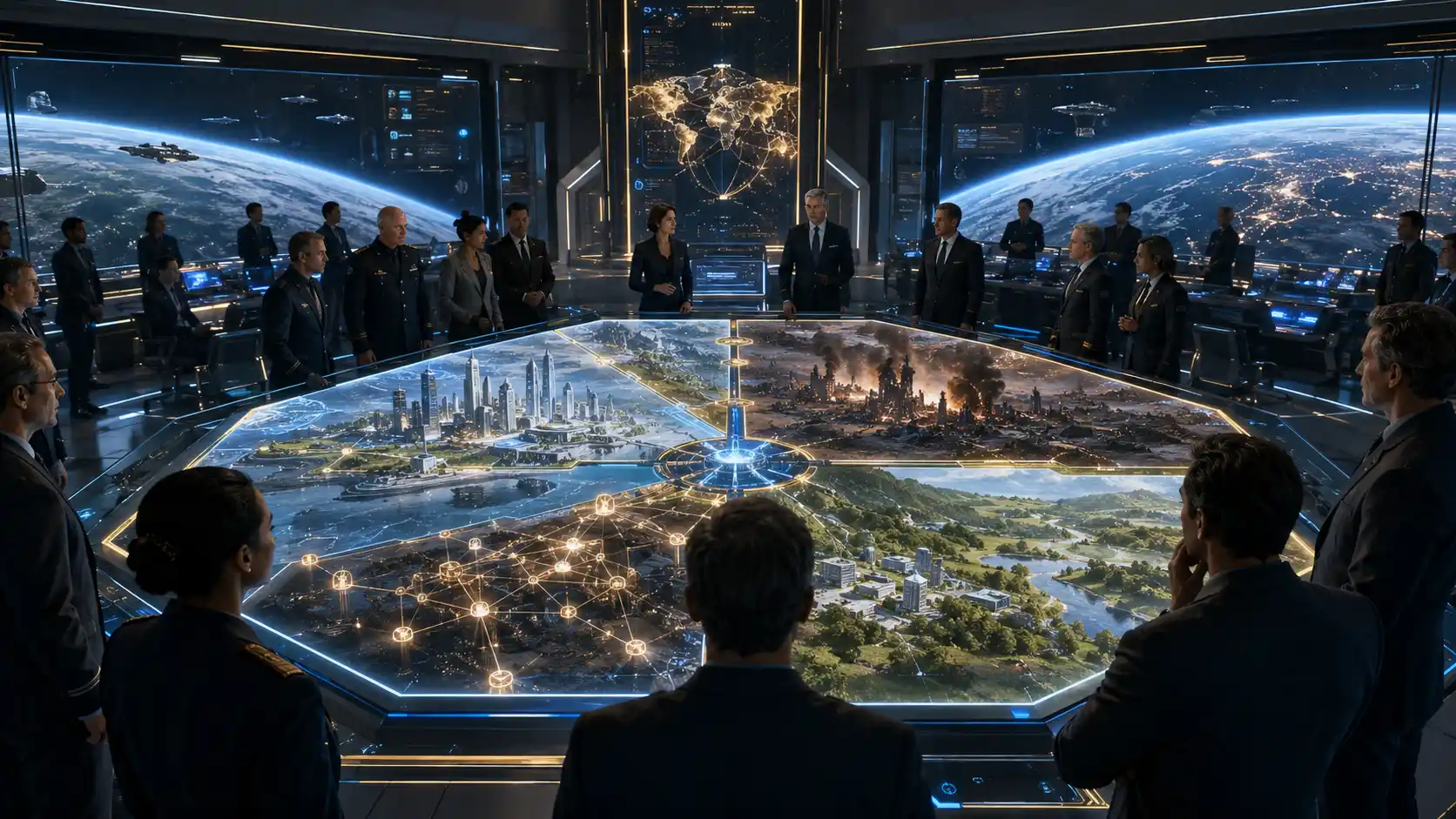
Part VIII – SGT Frontier Path Engineering
Part VIII turns the report back into method. SGT is not only a voice; it is a way to see frontier systems early enough to govern, repair, and build before they harden.
Chapter 43 – What SGT Saw
SGT did not see a missile first. SGT saw a world-pattern forming. That is the opening claim of Part VIII. The ramjet was visible. The missile was visible. The speed was visible. The defense headlines were visible. The aerospace language was visible. But the visible object was not the deepest clue. The deeper clue was the system trying to organize around it: affordable high-supersonic mass, carrier / effector separation, distributed launch nodes, AI-assisted kill webs, target-quality data, industrial replenishment, deployment reality, public-system fragility, cultural imagination, and engineering philosophy.
That is what SGT saw. Not a single machine. A formation.
The Visible Clue
The visible clue was propulsion. A ramjet signal appeared. A small aerospace signal. A possible change in speed, range, cost-performance, launch architecture, and effect distribution. Most people would see the clue and ask: Is the missile faster? How far can it go? Who has it? Who is threatened? Is it hypersonic? Is it new? Is it dangerous? Those are understandable questions. But they are not enough. SGT asked a different question: What system would need to exist around this clue for it to matter?
That question opened the report.
The Clue Was Not the Missile
The clue was not the missile. The missile was the object. The clue was the architecture behind the object. A missile without target-quality data is not decisive. A missile without launch infrastructure is not decisive. A missile without production depth is not decisive. A missile without doctrine is not decisive. A missile without sustainment is not decisive. A missile without governance is not mature. A missile without deployment reality is only a technical artifact.
The ramjet mattered because it pointed beyond itself. It suggested a possible layer in a larger system: not maximum-performance wonder weapons, but scalable high-speed effectors integrated into networks, carriers, production systems, and command structures. That is the SGT move. Do not stare only at the machine. Read the system forming around the machine.
What SGT Saw First
SGT saw several things at once. First, a propulsion clue. Second, a cost-performance question. Third, a carrier / effector split. Fourth, a distributed launch possibility. Fifth, a kill-web dependency. Sixth, a target-quality data bottleneck. Seventh, an industrial-base test. Eighth, a deployment-reality problem. Ninth, a public-comprehension gap. Tenth, an engineering-philosophy question. This is why the report became large. A small clue opened a large system.
That is often how the future appears. The future rarely arrives as a complete system. It arrives as a clue.
The Affordable Supersonic Mass Question
SGT saw that speed alone was not the deepest issue. The deeper issue was affordable supersonic mass. Maximum performance systems can matter. Exquisite systems can matter. Hypersonic systems can matter. Stealth platforms can matter. But wars and industrial competitions are not shaped only by the most advanced object. They are shaped by what can be built, launched, replaced, connected, sustained, and governed in sufficient numbers. SGT therefore asked: What if the strategic layer is not the most expensive high-end system?
What if the decisive layer is a middle layer that is fast enough, numerous enough, replaceable enough, and integrated enough to change the defender’s timelines? That was the first major insight. Speed is the visible feature. Scalability is the strategic feature.
The Carrier / Effector Split
SGT saw that the carrier and the effector want different things. The carrier wants range. Endurance. Flexibility. Recovery. Reuse. Payload management. Basing options. Human or remote control. Sensor integration. Mission planning. The effector wants speed. Terminal energy. Compactness. Launch compatibility. Cost discipline. Production repeatability. The carrier does not need to be the weapon. The effector does not need to return. This split changes the imagination. A bomber, cargo aircraft, tiltrotor, ground launcher, ship, unmanned platform, or future arsenal carrier may become a launch node.
The ramjet-style effector becomes the high-speed layer. The architecture matters more than one platform. SGT saw that the carrier / effector split could become a new organizing principle.
The Kill Web Dependency
SGT saw that propulsion does not solve truth. A fast effector still needs to know where to go, when to go, why to go, and under whose authority. That means sensors. Data fusion. Communications. Target-quality data. Command authority. Human judgment. AI decision support. Deconfliction. Assessment. Repair. The kill web is not a decorative term. It is the operating architecture that decides whether speed becomes useful or dangerous. Without target-quality data, speed can accelerate error.
Without governed authority, speed can dissolve responsibility. Without auditability, speed can hide failure. Without production, speed can exhaust inventory. SGT saw that the scarcest thing in a kill web may not be the missile. Sometimes it is truth.
The Real Lesson
What SGT saw was not only a missile. Not only a ramjet. Not only a propulsion detail. Not only a defense headline. SGT saw a civilizational test. Can the reader see the system behind the clue? Can the institution distinguish signal from hype? Can the engineering community map constraints honestly? Can the industrial base produce output? Can AI support judgment without replacing responsibility? Can kill webs move fast without making truth disappear?
Can public systems become machine-assisted without becoming machine-captured? Can culture warn without trapping civilization in nihilism? Can engineering philosophy become stewardship before the system scales? That is what SGT saw. A world-pattern forming. A small clue pointing to a large architecture. A future not yet named but already assembling itself through propulsion, networks, production, culture, and governance. The clue was not the missile. The clue was the system trying to be born around it.
Chapter 44 – SGT Method
SGT Method turns a clue into a systems map. That is the purpose of this chapter. Chapter 43 explained what SGT saw. SGT did not see a missile first. SGT saw a world-pattern forming. Chapter 44 now explains how SGT sees. This matters because the future does not usually arrive with labels attached. It does not say: I am now a new doctrine. I am now a new industrial architecture.
I am now a new governance problem. I am now a civilizational transition. The future arrives as fragments. A propulsion signal. A procurement notice. A laboratory result. A failed public system. A strange cultural image. A new interface. A supply-chain bottleneck. A military diagram. A dashboard. A startup claim. A government announcement. A prototype. A crisis. A failure report. The SGT Method asks: What system is trying to become visible through this fragment?
The Core Move
The core SGT move is simple: do not stop at the visible object. A missile is visible. A ramjet is visible. A drone is visible. An AI model is visible. A dashboard is visible. A new law is visible. A prototype is visible. A strategy document is visible. A public failure is visible. But the visible object is only the entry point. SGT asks: What system is behind it? What architecture would make it matter?
What constraints govern it? What interfaces can fail? What deployment world will it enter? What output would prove it works? What governance would make it legitimate? What culture imagined it? What engineering philosophy does it encode? This is the difference between reacting to a headline and reading a frontier system.
Stage 1 – Signal Detection
The first stage is signal detection. A signal is not proof. A signal is a clue worthy of disciplined attention. Many signals are noise. Some are hype. Some are marketing. Some are political theater. Some are genuine but small. Some are genuine and large. Some are early signs of a new architecture. SGT does not assume every signal matters. It asks why a signal might matter. A signal becomes important when it points beyond itself.
A new engine matters if it changes architecture. A new AI model matters if it changes institutional behaviour. A new drone matters if it changes launch, sensing, production, or doctrine. A new public dashboard matters if it changes accountability. A failed procurement matters if it reveals a systemic weakness. Signal detection is not excitement. It is disciplined noticing.
Stage 2 – First-Principles Reset
The second stage is first-principles reset. SGT asks: What is the real problem? Not the announced problem. Not the fashionable problem. Not the stakeholder slogan. Not the procurement title. The real problem. For the ramjet report, the real problem was not simply speed. It was scalable effect under real-world constraints. For AI in government, the real problem is not whether the model is impressive. It is whether the underlying system is clean enough to automate.
For industrial base, the real problem is not whether money was announced. It is whether production capacity and learning loops actually grow. For public systems, the real problem is not whether a portal exists. It is whether citizens can receive lawful, correctable, accountable service. First principles strip away narrative. They force the system to answer reality.
Stage 3 – Constraint Mapping
The third stage is constraint mapping. A system is shaped by constraints. Physics. Materials. Cost. Time. Data quality. Production capacity. Human training. Maintenance. Law. Public trust. Procurement. Supply chains. Interfaces. Energy. Basing. Software. Security. Institutional authority. No system escapes constraints. The mistake is to describe the future as if constraints do not exist. SGT maps constraints early because constraints reveal the true shape of possibility. A ramjet is constrained by operating conditions and launch architecture.
A kill web is constrained by target-quality data and command authority. AI is constrained by data, governance, evaluation, context, and human review. Industrial strategy is constrained by suppliers, workforce, tooling, and demand. Public-sector reform is constrained by law, legacy systems, incentives, and trust. A system is only as strong as the constraint it refuses to acknowledge.
Stage 4 – Architecture Reading
The fourth stage is architecture reading. A machine becomes important when it enters an architecture. SGT asks: What are the layers? What carries what? What depends on what? What must connect? What can fail quietly? Who owns the interfaces? What is reusable? What is expendable? What is centralized? What is distributed? What is human-governed? What is automated? What is visible? What is hidden? For the ramjet clue, the key architecture was not one missile.
It was carrier / effector separation, kill webs, target-quality data, launch nodes, production, and governance. Architecture reading turns scattered parts into system shape. It reveals whether the object is a toy, a tool, a component, a platform, or a frontier layer.
Stage 5 – Interface-Control Thinking
The fifth stage is interface-control thinking. Interfaces are where systems fail. Hardware to software. Sensor to data fusion. AI output to human decision. Prototype to production. Vendor system to public authority. Procurement to operations. Law to implementation. Citizen data to automated decision. Factory to supply chain. National system to allied system. A weak interface can destroy a strong component. SGT therefore asks: Where does responsibility cross a boundary? Who owns the boundary?
What information crosses? What authority crosses? What uncertainty crosses? What error can cross? What repair path exists? If an interface has no owner, it is a future accident. Interface-control thinking prevents the illusion that components alone make a system mature.
The Real Lesson
The SGT Method matters because the next era will not wait for citizens to understand it. AI will move. Robotics will move. Aerospace will move. Defense networks will move. Public systems will automate. Industrial competition will intensify. Culture will supply images faster than institutions supply understanding. The danger is not only that civilization builds bad systems. The danger is that civilization fails to see the systems it is already building.
SGT Method is a way to see. To slow the clue down. To unfold the architecture. To name the constraints. To expose the handoffs. To test the output. To audit the deployment. To read the culture. To judge the philosophy. To make the future governable while it is still forming. SGT Method turns a clue into a systems map. That is how a civilization begins to read the future before the future becomes too expensive to repair.
Chapter 45 – Skills Gap to Frontier Gap
The deepest skills gap is becoming the inability to read the future while it is still disguised as fragments. That is the frontier gap. For years, societies have talked about the skills gap. Workers need new skills. Students need new skills. Engineers need new skills. Trades need new skills. Public servants need new skills. Companies need new skills. Countries need new skills. This is true. But it is no longer enough.
The old skills-gap frame asks whether people can perform known tasks inside known systems. The frontier-gap frame asks whether civilization can understand new systems before those systems become too powerful, too expensive, too captured, or too late to repair. That is a deeper problem. A person may know how to code and still not understand the system being automated. A government may fund AI and still not understand the public authority being transferred.
A military may buy advanced platforms and still not understand the kill web, industrial base, data chain, or repair burden. A country may train workers and still lose the industrial memory needed to build. A university may produce talent and still fail to connect that talent to sovereign output. A citizen may consume technology headlines and still not know how to judge whether the future is being governed or merely announced.
That is the shift. From skills gap to frontier gap.
The Old Skills Gap
The old skills gap is familiar. A job exists. A person lacks the required skill. A factory needs welders. A hospital needs nurses. A company needs programmers. A public agency needs data analysts. An aerospace firm needs engineers. A shipyard needs tradespeople. A school needs teachers. A grid operator needs technicians. The solution is difficult but understandable: train people, educate people, credential people, mentor people, hire people, retain people, and connect skill to work.
This problem remains important. A civilization cannot build without skilled people. No report should dismiss the old skills gap. But the old frame is incomplete because it assumes the system is already legible. It assumes we know what the job is. We know what the task is. We know what the institution is trying to do. We know what the machine is. We know what the output should be. The frontier gap begins when those assumptions fail.
The Frontier Gap
The frontier gap appears when the system itself is emerging. The job is not fully defined. The institution does not understand the architecture. The public cannot name the risk. The technology is not mature. The deployment world is messy. The governance model is missing. The industrial base is uncertain. The cultural imagination is confused. The engineering philosophy is unexamined. The frontier gap is not only: Can people use the tool?
It is: Can people understand what world the tool is creating? That is a much harder question. Can citizens understand AI before it becomes public infrastructure? Can governments understand vendors before public authority becomes dependent? Can defense institutions understand kill webs before speed outruns judgment? Can countries understand industrial base before crisis exposes hollow capacity? Can schools train young people not only for tasks, but for systems? Can civilization see the frontier while it is still forming?
Why Training Alone Is Not Enough
Training alone cannot solve the frontier gap. A worker may be trained to use an AI tool. But who trained the institution to decide whether the AI tool should be used? A public servant may be trained on a digital platform. But who trained the agency to preserve appeal, correction, auditability, and rollback? A soldier may be trained on a networked system. But who trained the command architecture to preserve uncertainty and responsibility?
A technician may be trained to maintain equipment. But who trained the country to preserve the industrial base that supplies the equipment? A student may learn coding. But who teaches the student to ask what the code does to human agency? Skills matter. But skills inside incoherent systems can become absorbed. A skilled person in a bad system may only help the bad system move faster. The frontier gap asks whether skill is connected to truth, output, governance, and repair.
The System Eats Skills
A broken system can consume skilled people without producing capability. This is one of the hardest truths. A talented engineer can enter a captured procurement system and produce little output. A good programmer can automate a bad process. A strong analyst can feed dashboards that hide reality. A serious public servant can be trapped inside ceremonial governance. A young technician can learn workarounds instead of system repair. A skilled researcher can publish work that never connects to industrial capacity.
A disciplined operator can be made responsible for a system they cannot fix. The issue is not personal competence. The system eats the skill. This is why the frontier gap is deeper. A country does not only need skilled individuals. It needs systems that convert skill into output.
From Worker Skills to Civilization Skills
The old skills gap focuses on workers. The frontier gap focuses on civilization. Can the civilization read weak signals? Can it map constraints? Can it recognize architecture? Can it own interfaces? Can it test load cases? Can it distinguish activity from output? Can it audit deployment reality? Can it preserve industrial memory? Can it govern AI? Can it resist political capture? Can it avoid nihilism? Can it build stewardship? These are civilization skills.
They cannot be taught only through individual training modules. They require institutions, culture, leadership, public language, procurement reform, technical literacy, and moral discipline. A civilization can have many skilled people and still lack civilization skills. That is the danger.
The New Literacy
The frontier gap requires a new literacy. Not only digital literacy. Not only AI literacy. Not only media literacy. Not only financial literacy. Systems literacy. A systems-literate person asks: What is the visible object? What is the hidden architecture? What does the system depend on? What can fail? What is being automated? Who has authority? Who can appeal? Who can repair? What output proves the system works? What happens after deployment?
What happens after success? What happens after failure? What philosophy is encoded? This literacy is not only for experts. Citizens need it. Students need it. Policymakers need it. Journalists need it. Engineers need it. Military leaders need it. Founders need it. Public servants need it. Parents need it. Without systems literacy, people become spectators inside systems that govern them.
The Real Lesson
The real lesson is that the future will not only test what people can do. It will test what people can see. Can they see the system behind the tool? Can they see the architecture behind the object? Can they see the deployment world behind the prototype? Can they see the citizen behind the data? Can they see the handoff behind the diagram? Can they see the factory behind the strategy?
Can they see the governance burden behind the AI model? Can they see the repair path behind the warning? Can they see the human person inside the machine? That is the frontier gap. The deepest skills gap is becoming the inability to read the future while it is still disguised as fragments. SGT exists to train that ability. Not so people can admire the future. Not so people can fear the future.
So they can build, govern, repair, and keep the future human. –
Chapter 46 – Reader as Frontier Observer
The reader is not only learning about ramjets. The reader is learning how to see frontier systems. That is the purpose of this chapter. Part VIII began with what SGT saw. Then it explained SGT Method. Then it explained the shift from skills gap to frontier gap. Now the reader enters the frame. This report is not meant to leave the reader impressed. It is meant to change the reader’s perception.
After reading, the reader should not look at frontier technology the same way. A missile should no longer appear only as a missile. An AI model should no longer appear only as a model. A drone should no longer appear only as a drone. A dashboard should no longer appear only as a dashboard. A public system should no longer appear only as administration. A factory should no longer appear only as production.
A science-fiction image should no longer appear only as entertainment. A clue should no longer appear only as an isolated detail. The reader should ask: What system is forming? That is the frontier observer.
What Is a Frontier Observer?
A frontier observer is a person who can see a system while it is still forming. Not after the doctrine is written. Not after the procurement is locked. Not after the public system is automated. Not after the vendor is embedded. Not after the emergency power becomes permanent. Not after the industrial base has decayed. Not after the cultural warning has become normal life. A frontier observer sees earlier. They notice clues.
They separate signal from hype. They map constraints. They ask what architecture is forming. They look for handoffs. They test output. They ask what deployment world the system will enter. They ask whether the system can be audited, rolled back, and repaired. They ask what happens to the human person inside the system. A frontier observer is not a prophet. A frontier observer is disciplined enough not to need prophecy.
Not a Fan
The frontier observer is not a fan of the future. Fans can be useful. Wonder matters. Excitement matters. Builders need energy. Civilizations need imagination. But fandom alone is dangerous. The fan says: this is amazing. This will change everything. This is the future. This is unstoppable. This is beautiful. This is inevitable. The fan often sees possibility but not constraint. They see the object but not the architecture. They see the demo but not deployment.
They see the promise but not repair. They see the speed but not truth. A frontier observer can feel wonder. But wonder must pass through discipline. The question is not only: Is this impressive? The question is: What system would make this real, governable, useful, and repairable?
Not a Cynic
The frontier observer is also not a cynic. The cynic says: this is hype, this is corruption, this will fail, this will be captured, this will harm people, this is just another announcement, this is another machine fantasy. Sometimes the cynic is partly right. But cynicism stops too early. It sees failure and stops before repair. It sees capture and stops before stewardship. It sees hype and dismisses signal. It sees danger and calls responsibility naive.
A frontier observer does not confuse darkness with depth. A frontier observer can criticize without becoming nihilist. The question is not only: What is wrong? The question is: What repair path follows from the diagnosis?
Not a Technocrat
The frontier observer is not merely a technocrat. Technical knowledge matters. But technical knowledge alone is not enough. A technocrat may understand the machine and miss the public. They may understand the model and miss the citizen. They may understand the platform and miss the institution. They may understand the system diagram and miss the culture. They may understand efficiency and miss legitimacy. They may understand control and miss agency.
A frontier observer needs technical respect without technical reductionism. They must ask: What does this system do to people? What does it do to public authority? What does it do to workers? What does it do to operators? What does it do to trust? What does it do after scale? A machine that works technically can still fail civilization.
Not a Passive Citizen
The frontier observer is not a passive citizen. A passive citizen waits. Waits for experts. Waits for announcements. Waits for institutions. Waits for crisis. Waits for media interpretation. Waits for the future to become obvious. But by the time the future is obvious, many choices are already locked. The vendor is embedded. The data structure is chosen. The procurement is signed. The doctrine is written. The industrial base is gone.
The dashboard is trusted. The emergency power remains. The AI workflow becomes normal. The citizen becomes processed. A frontier observer does not need classified detail or technical mastery. But they do need the right questions. Democracy needs citizens who can ask system questions before systems become permanent.
The First Discipline – Notice the Clue
The first discipline is noticing. A frontier clue may appear small. A propulsion detail. A procurement phrase. A demo. A failed audit. A new dashboard. A cultural image. A strange policy term. A supply-chain warning. A military diagram. A startup claim. A public-service failure. A clue is not proof. But a clue can point to an architecture. The frontier observer notices without overreacting. They ask: Why might this matter?
What does it point beyond? What system would need to exist around it? What would make it meaningful? What would make it irrelevant? This is disciplined attention. Not hype. Not dismissal. Attention.
The Real Lesson
The real lesson is that the future needs better observers. Not only better machines. Not only better models. Not only better missiles. Not only better dashboards. Not only better policies. Better observers. People who can see systems early. People who can refuse hype without becoming cynical. People who can see danger without surrendering to nihilism. People who can understand technology without worshipping it. People who can demand output without despising process.
People who can value culture without mistaking fiction for proof. People who can ask where authority, evidence, repair, and human agency live inside a system. People who can help civilization remain human-governed after power scales. That is why the reader matters. The reader is not only learning about ramjets. The reader is learning how to see frontier systems. And once the reader can see, the future becomes less magical, less terrifying, less inevitable, and more governable.
That is the beginning of stewardship.

Conclusion
The conclusion lands the whole argument: the old world sees objects, the emerging world sees systems, and the future arrives as clues becoming normal architecture.
Conclusion – From Clue to System
The conclusion lands the argument. The old world sees objects. The emerging world sees systems. Science fiction becomes reality when imagination acquires operating structure. The future arrives as fragments becoming normal. The final task is stewardship.
Chapter 47 – Old World vs Emerging World
The old world asked what the machine could do. The emerging world asks what system the machine creates. That is the difference. This report began with a small aerospace clue. A ramjet signal. A missile signal. A speed signal. But the report did not stay there. It moved through first principles, propulsion, architecture, kill webs, industrial base, deployment reality, culture, engineering philosophy, SGT Method, the frontier gap, and the reader as frontier observer.
Now the conclusion begins. The question is no longer only: What does the ramjet mean? The question is: What kind of world is able to understand what the ramjet means? That question separates the old world from the emerging world.
Why This Chapter Exists
Chapter 46 closed Part VIII by making the reader a frontier observer. The reader is not only learning about ramjets. The reader is learning how to see frontier systems. Chapter 47 now applies that lens to the whole report. It compares two ways of seeing. The old world sees isolated objects. The emerging world sees systems. The old world sees machines. The emerging world sees architectures. The old world sees announcements.
The emerging world asks for output. The old world sees pilots. The emerging world asks about deployment. The old world sees AI as a tool. The emerging world sees AI as an institutional amplifier. The old world sees production as support. The emerging world sees production as doctrine. The old world sees culture as entertainment. The emerging world sees culture as imagination infrastructure. The old world sees ethics as an appendix.
The Old World Was Not Nothing
The old world built many things. It built aircraft. Ships. Railways. Factories. Dams. Power grids. Satellites. Computers. Telecommunications. Cities. Hospitals. Universities. Launch systems. Public institutions. The old world should not be mocked. It contained discipline, courage, engineering, manufacturing, law, public service, industrial capacity, and civilizational memory. Many of its achievements still carry modern life. The problem is not that the old world built nothing. The problem is that many of its mental models are becoming inadequate for the systems now forming.
A civilization can inherit great machines and still misunderstand the next architecture. That is the danger.
Platform Thinking vs Systems Thinking
The old world thinks in platforms. Aircraft. Ships. Tanks. Missiles. Factories. Programs. Departments. Agencies. Databases. The emerging world thinks in systems. Networks. Interfaces. Data chains. Industrial base. AI decision support. Governance loops. Maintenance ecosystems. Procurement dependencies. Cultural imagination. Human agency. A platform can be impressive and still fail as part of a system. A missile can be fast and still lack target-quality data. An AI model can be powerful and still enter a dirty public system.
A dashboard can be beautiful and still hide uncertainty. A factory can be funded and still lack supplier depth. A policy can be announced and still produce no output. The emerging world does not ask only: Is the platform good? It asks: What system makes the platform matter?
Object vs Architecture
The old world sees the object. The emerging world sees the architecture. The object is visible. The architecture is often hidden. A missile is visible. The kill web is hidden. A drone is visible. The logistics and data chain are hidden. An AI model is visible. The workflow, authority, appeal, and data provenance are hidden. A public portal is visible. The correction system is hidden. A factory ribbon-cutting is visible.
The supplier base is hidden. A strategy document is visible. The output path is hidden. The emerging world belongs to those who can see hidden architecture. The object attracts attention. The architecture determines consequence.
Speed vs Scalability
The old world sees speed. The emerging world asks whether speed scales. A faster system is not automatically decisive. It must be built. Launched. Supplied. Targeted. Integrated. Governed. Maintained. Replenished. Repaired. Speed without scale may be a demonstration. Speed with production, data, launch architecture, and governance becomes a strategic layer. That is why the ramjet clue mattered. Not because speed alone changes the world. Because affordable high-supersonic mass might point toward a scalable effect layer.
Speed is visible. Scalability is structural. The old world sees the number. The emerging world asks what ecosystem can repeat the effect.
Prototype vs Deployment
The old world often celebrates prototypes. The emerging world asks about deployment. A prototype proves that something may be possible. Deployment proves whether it can survive the world. A prototype meets engineers. Deployment meets users. A prototype meets controlled conditions. Deployment meets legacy systems. A prototype meets enthusiasm. Deployment meets maintenance. A prototype meets a planned test. Deployment meets politics, contracts, data errors, public distrust, procurement limits, and fatigue. Prototype is not deployment.
Deployment is not resilience. Resilience is not maturity unless auditability, rollback, and repair exist. The old world celebrates first contact with possibility. The emerging world asks whether possibility survives reality.
The Real Lesson
The real lesson is that the future is not asking whether humanity can build more powerful machines. Humanity can. It is asking whether humanity can understand the systems those machines create. That is the old-world / emerging-world divide. The old world asked what the machine could do. The emerging world asks what system the machine creates. A ramjet is not only propulsion. AI is not only software. A dashboard is not only information.
A factory is not only production. A public portal is not only modernization. A science-fiction image is not only entertainment. A citizen is not only a user. A system is not only a system. It is a world people must live inside. The emerging world is already arriving. The task is not to worship it. The task is not to fear it. The task is to see it, govern it, repair it, and keep it human.
Chapter 48 – How Sci-Fi Becomes Reality
Science fiction becomes reality when imagination stops being a picture and becomes an operating system. That is the real lesson. Not because fiction predicts the future perfectly. It does not. Not because engineers simply copy movies. They do not. Not because anime, cyberpunk, Star Trek, The Matrix, Jurassic Park, or old aerospace dreams are blueprints. They are not. Science fiction becomes reality when the images a civilization once carried in imagination begin to acquire engines, factories, networks, institutions, laws, budgets, interfaces, doctrines, and deployment paths.
The picture becomes a system. The dream becomes infrastructure. The warning becomes governance. The machine fantasy becomes a procurement problem. The starship becomes an industrial-base question. The AI companion becomes a public-authority question. The cyberpunk city becomes a data-governance question. The drone swarm becomes a command-and-control question. The machine-speed battle becomes a kill-web question. The imagined future becomes real when it stops living only in culture and starts entering logistics, law, production, and daily life.
That is how sci-fi becomes reality.
Why the Ordinary Explanation Is Too Small
The common explanation is too simple: science fiction inspires engineers. That is true, but incomplete. It explains the poster on the wall. It does not explain the system. A young engineer may be inspired by Star Trek. A designer may be inspired by anime. A programmer may be inspired by thinking machines. A founder may be inspired by cyberpunk interfaces. A pilot may be inspired by aerospace myth. But inspiration is only the first step.
The deeper question is: what happens when enough people, capital, institutions, tools, materials, software, military needs, public fears, industrial capacity, and political incentives begin to make the imagined thing technically possible? That is when fiction becomes reality. Not as a clean dream. As a messy system.
The Dream Becomes a System
A fictional image is simple. A real system is not. The fictional image shows the starship. The real system requires launch infrastructure, supply chains, propulsion, maintenance, mission control, training, budgets, doctrine, failure investigations, political will, and industrial base. The fictional image shows the AI. The real system requires data, compute, procurement, evaluation, liability, appeal, safety, labour transition, institutional authority, monitoring, and rollback. The fictional image shows the drone. The real system requires sensors, communications, production, logistics, target-quality data, command authority, rules, maintenance, and replenishment.
The fictional image shows the future city. The real system requires zoning, energy, water, privacy, governance, procurement, public trust, and maintenance. Science fiction becomes reality only when the image survives conversion into system form. Most dreams do not survive that conversion. The ones that do become civilization.
The Ramjet Case
The ramjet clue is exactly this kind of conversion. The cultural imagination already had the picture: fast machines, networked war, AI-supported command, distributed launch, drone-like effectors, machine-speed battles, aerospace systems moving faster than human institutions can understand. But the report’s question was never: does this look like science fiction? The question was: is the world beginning to assemble the architecture that makes old science-fiction imagination operational?
A ramjet-style effector by itself is not sci-fi becoming reality. A missile is only an object. But affordable high-supersonic mass connected to carrier / effector separation, kill webs, target-quality data, AI support, distributed launch nodes, industrial replenishment, and governance pressure begins to look like imagination acquiring system structure. The old image starts becoming an architecture. That is why the clue mattered.
The 1980s and 1990s Machine Future
The 1980s and 1990s taught the world to imagine systems, not only machines. That era did not only give people robots, spaceships, cybernetic bodies, AI, corporate dystopias, machine cities, military futures, and networked worlds. It gave people a visual grammar for the emerging world. Networks. Interfaces. Command rooms. Machine bodies. Digital ghosts. Corporate states. Artificial companions. Surveillance cities. Human beings inside technical shells. The point is not that those works predicted everything.
The point is that they trained civilization to recognize the emotional and philosophical shape of machine civilization before machine civilization fully arrived. Now the real world is catching up. Not exactly. Not cleanly. But structurally. AI is no longer only fictional. Networks are no longer only fictional. Drones are no longer only fictional. Machine-speed conflict is no longer only fictional. Managed reality is no longer only fictional. Public systems mediated by software are no longer only fictional.
The images are becoming operating environments.
The Danger of Becoming Real Badly
Science fiction can become reality badly. That is the danger. A society can copy the look of the future without the discipline of the future. The command center without truth. The AI assistant without accountability. The smart city without dignity. The cybernetic workflow without appeal. The drone network without governance. The digital state without correction. The space dream without industrial base. The machine shell without the human ghost. This is cargo-cult futurism.
It copies the surface of the imagined future while missing the systems discipline required to make the future humane. That is how sci-fi becomes dystopia. Not because the machines arrive. Because stewardship does not arrive with them.
The Correct Question
The correct question is not: which science fiction will come true? The correct question is: which parts of science fiction are becoming operational, and are they becoming operational under stewardship or capture? That question changes everything. If AI becomes real under stewardship, it may assist judgment. If AI becomes real under capture, it may automate institutional power. If drones become real under stewardship, they may serve legitimate missions under accountable command.
If drones become real under nihilism or speed worship, they may accelerate irresponsibility. If public digital systems become real under stewardship, they may improve service, correction, and transparency. If they become real under political capture, they may process citizens with less dignity. If aerospace dreams become real under stewardship, they may expand human capability. If they become real under spectacle, they may become expensive mythology. The dream is not enough.
The operating philosophy matters.
The Three Translation Tests
There are three tests for any science-fiction image becoming reality. First: can the dream pass through physics? Second: can the dream pass through production? Third: can the dream pass through governance? Physics asks whether the imagined capability can exist in matter, energy, heat, mass, friction, time, and failure. Production asks whether it can be repeated by workers, machines, suppliers, standards, inspection, tooling, and learning loops. Governance asks whether it can remain human-governed after scale.
Many dreams pass the image test and fail the physics test. Many pass the physics test and fail the production test. Many pass the production test and fail the governance test. The future becomes mature only when all three tests are taken seriously.
The Aesthetic Trap
The aesthetic trap is one of the great failures of the emerging world. A system looks futuristic. Glass rooms. Blue screens. AI language. Command dashboards. Drones. Digital twins. Space imagery. Cyberpunk style. Automated portals. But the architecture may be weak. The data may be dirty. The citizen may lack appeal. The vendor may own the interface. The worker may lack authority. The public may be unable to understand the system.
The industrial base may be hollow. Futuristic appearance is not future maturity. The emerging world must distinguish aesthetic future from governed future.
The Blueprint Trap
There is also a blueprint trap. Some people treat science fiction too literally. They ask: when will we build that exact ship? When will that exact robot exist? When will that exact city appear? When will that exact machine be real? Those questions can be fun, but they often miss the deeper point. The important question is not whether the exact fictional object appears. The important question is whether the system pattern appears.
The exact starship may not arrive, but institutional exploration, space infrastructure, and command ethics may matter. The exact cyberpunk city may not arrive, but data power, corporate capture, and low-trust technology may arrive. The exact Matrix may not arrive, but managed reality, synthetic media, algorithmic feeds, and invisible systems may matter. The pattern matters more than the prop.
The Hype Trap and the Nihilism Trap
Science fiction can feed hype. A company invokes fiction to sell a product. A government invokes fiction to sell a program. A contractor invokes fiction to sell capability. A founder invokes fiction to sell inevitability. This can motivate, but it can also deceive. The phrase “science fiction becoming reality” can become a marketing weapon. It can make people feel that a system is inevitable before it is tested. It can make citizens accept power because it looks futuristic.
Sci-fi can also feed nihilism. Dystopia becomes identity. Collapse becomes style. Machine domination becomes assumed. Corporate capture becomes inevitable. Public systems become hopeless. Warnings are supposed to create responsibility. Nihilism turns warnings into paralysis. The mature reader asks: what design failures produced this warning? What institutions would prevent it? What controls would matter? What repair paths are missing? What stewardship did the imagined world lack? Dystopia should become design discipline.
The Stewardship Path
The best path is stewardship imagination. This means using science fiction to ask better questions. Not: can we build the coolest machine? But: what kind of future would be worthy of being inhabited? Can the system remain human-governed? Can the public understand it? Can errors be corrected? Can power be restrained? Can the machine serve without absorbing? Can culture inspire without deceiving? Can ambition survive without hubris? Can warning become repair?
Stewardship imagination treats science fiction neither as prophecy nor decoration. It treats science fiction as a moral simulator. A place where civilization rehearses what power might do.
The Real Lesson
Science fiction becomes reality when imagination acquires machinery. But whether that reality becomes humane depends on engineering philosophy. That is why this report had to move from ramjets to kill webs, from kill webs to industrial base, from industrial base to deployment, from deployment to culture, from culture to engineering philosophy, and from engineering philosophy to stewardship. The old science-fiction image is no longer safely fictional. Parts of it are becoming real.
The question is no longer whether humanity can build the machines. The question is whether humanity can govern the systems those machines create. Science fiction becomes reality when imagination stops being a picture and becomes an operating system. The task now is to make sure the operating system remains human.
Chapter 49 – How the Future Arrives
The future does not arrive as one machine. It arrives as fragments that become systems before most people realize the system has changed. That is how the future arrives. Not all at once. Not cleanly. Not with a perfect announcement. Not with a single invention. Not with a banner that says: the new era has begun. The future arrives as clues. A propulsion signal. A model release. A prototype. A supply-chain shortage.
A doctrine paper. A startup claim. A procurement notice. A battlefield adaptation. A public-service failure. A dashboard. A cultural image. A strange phrase. A new dependency. A new habit. A new interface. A new normal. Then, one day, people look around and realize the architecture changed.
The Future Arrives as a Clue
The first arrival is the clue. The clue is small. It may look technical. It may look narrow. It may look like an isolated story. A ramjet signal. A reusable rocket landing. A chatbot. A drone video. A microchip shortage. A strange battlefield adaptation. A digital identity pilot. A new sensor. A factory bottleneck. A public system failure. Most people see the clue and move on. They ask whether the object is impressive.
They ask whether it is overhyped. They ask whether it is dangerous. They ask whether it is real. Those questions matter. But the deeper question is: what system does this clue point toward? The future often begins as a small detail that reveals a larger architecture.
The Future Arrives as Misclassification
At first, the future is often misclassified. The old category absorbs the new clue. A drone is called a toy. A rocket landing is called a stunt. AI is called autocomplete. A digital public system is called modernization. A kill web is called networking. A ramjet effector is called just another missile. A public dashboard is called transparency. A vendor platform is called procurement. The old language makes the new thing seem smaller.
This is normal. People understand new things through old categories. But old categories can hide new architectures. The future becomes dangerous when institutions keep using old words after the system has changed. Misclassification delays governance. It delays repair. It delays public understanding. It lets the future harden before civilization has named it correctly.
The Future Arrives as Hype and Dismissal
The future rarely arrives without distortion. One side hypes it. The other side dismisses it. The hype side says: this changes everything. The dismissal side says: this is nothing new. The hype side sees possibility without constraints. The dismissal side sees constraints without possibility. The hype side turns clues into certainty. The dismissal side turns uncertainty into irrelevance. Both can fail. The frontier observer must stand between hype and dismissal.
A clue is not proof. But a clue is not nothing. The right response is disciplined investigation. What must be true? What constraints matter? What architecture would make it real? What deployment world will test it? What governance would be required? The future arrives through the tension between hype and dismissal. The mature response is method.
The Future Arrives as Prototype
The prototype is another arrival stage. A prototype says: something may be possible. It is an important stage. But it is not the end. A prototype does not prove deployment. A prototype does not prove production. A prototype does not prove sustainment. A prototype does not prove public legitimacy. A prototype does not prove governance. A prototype does not prove repair. The old world often celebrates prototype as arrival. The emerging world knows prototype is only first contact with possibility.
The prototype still must meet reality. Production. Users. Maintainers. Vendors. Law. Data. Weather. Cost. Trust. Failure. Time. The future arrives as prototype, but matures only through deployment.
The Future Arrives as Interface
Sometimes the future arrives through interface before people understand the deeper system. A touchscreen. A chatbot. A dashboard. A targeting display. A digital public portal. A cockpit interface. A supply-chain platform. A smart-city app. An AI assistant. The interface makes the future feel usable. This matters. Interfaces shape perception. They make systems feel simple, friendly, inevitable, or authoritative. But an interface can hide architecture. The dashboard may hide uncertainty.
The chatbot may hide data provenance. The public portal may hide appeal failure. The cockpit display may hide confidence gaps. The procurement platform may hide dependency. The interface is where power becomes experience. The future often arrives first as a user experience and only later as a governance problem.
The Future Arrives as Dependency
A major arrival stage is dependency. At first, the new system is optional. Then it becomes useful. Then it becomes expected. Then it becomes infrastructure. Then people cannot easily function without it. This is how dependence forms. The map app becomes navigation. The cloud platform becomes operations. The AI tool becomes workflow. The vendor system becomes public administration. The digital portal becomes access. The dashboard becomes decision authority. The network becomes military coordination.
The industrial supplier becomes national capacity. Dependency is not automatically bad. Civilization depends on systems. But dependence must be governed. The future becomes dangerous when dependency forms before ownership, auditability, rollback, repair, and public legitimacy are designed.
The Future Arrives as Procurement
Procurement is one of the quiet arrival mechanisms. The future enters through contracts. Requirements. Licenses. Maintenance agreements. Cloud services. Consulting packages. Upgrade paths. Data formats. Vendor interfaces. Exit terms. Support dependencies. A public announcement may say modernization. The contract may say dependency. A defense strategy may say integration. The procurement may create lock-in. An AI policy may say innovation. The vendor architecture may decide authority. Procurement is where imagined future becomes institutional reality.
That is why procurement cannot be treated as administrative detail. It is one of the main gates through which the future enters the state.
The Future Arrives as Industrial Base
The future also arrives through industrial base. What can be made? At what quality? By whom? With what suppliers? With what materials? With what machine tools? With what inspection? With what workforce? With what maintenance culture? With what replenishment capacity? Many ideas do not arrive because the industrial base cannot carry them. Other ideas arrive slowly because production is harder than imagination. Some arrive suddenly because a production ecosystem reaches readiness.
Industrial base is the conversion layer between concept and world. A civilization’s imagination is limited by what it can repeatedly produce. A future without factories remains a story. A future with factories becomes power.
The Future Arrives as Failure
Failure is one of the most important ways the future arrives. A system fails. The failure reveals hidden architecture. A data error exposes a public system. A crash exposes maintenance gaps. A procurement collapse exposes vendor dependency. A cyber incident exposes insecure interfaces. A battlefield failure exposes doctrine gaps. A dashboard failure exposes false metrics. An AI error exposes missing appeal. A supply shock exposes industrial fragility. Failure is painful.
But it is also diagnostic. A civilization that studies failure becomes wiser. A civilization that hides failure becomes more fragile. The future arrives through failure because failure reveals what the announcement concealed.
The Future Arrives as Repair or Non-Repair
becomes real. Non-repair means the system absorbs the failure and continues. The report is written. The apology is issued. The dashboard is adjusted.
The vendor contract continues. The public forgets. The same failure returns later. This is where the future becomes either stewardship or decay. The future does not only arrive through invention. It arrives through how civilizations respond to failure.
The Future Arrives as Normality
The strangest arrival stage is normality. The future stops feeling futuristic. A technology that once seemed strange becomes ordinary. People stop noticing it. They no longer ask who owns it. They no longer ask what it replaced. They no longer ask what skill it removed. They no longer ask what authority moved. They no longer ask what dependency formed. This is when systems become powerful. Not when they are new.
When they are normal. Normality can be good. Useful systems should become reliable and ordinary. But normality can also hide capture. A bad system becomes hard to challenge once people are trained to live inside it. The frontier observer tries to understand the system before normality makes it invisible.
The Future Arrives Unevenly
The future does not arrive everywhere at once. One domain may be advanced while another decays. AI may advance while public systems remain dirty. Aerospace may advance while procurement remains slow. Drones may advance while industrial base remains fragile. Digital services may expand while appeal weakens. Culture may imagine the future while institutions cannot govern it. A country may lead in research but fail in production. A company may innovate while society loses formation pathways.
This unevenness matters. The future is not one smooth wave. It is a jagged terrain. Advanced parts and broken parts coexist. That is why frontier systems are hard to read. The clue may be advanced. The surrounding system may be immature.
The Future Arrives Through Old Systems
New systems enter old systems. This is one of the central lessons of the report. AI enters old public administration. Ramjet effectors enter old defense procurement. Drones enter old command cultures. Industrial strategy enters old subsidy habits. Digital services enter old data systems. Dashboards enter old political incentives. Automation enters old legal frameworks. The old system shapes the new tool. Sometimes it improves it. Sometimes it corrupts it. Sometimes it slows it.
Sometimes it captures it. The future never arrives on a clean white canvas. It arrives through the old world. That is why old-world repair is part of future-building.
The Future Arrives Through Language
Language changes before institutions do. New phrases appear. Smart systems. AI-powered. Autonomous. Integrated. Resilient. Human-centered. Digital-first. Future-ready. Innovation. Trustworthy. Secure. Optimized. Language can reveal new thinking. It can also hide old failure. The frontier observer watches language carefully. When words lose meaning, systems become harder to govern. If “pilot” means deployment, language has failed. If “human review” means rubber stamp, language has failed. If “transparency” means dashboard, language has failed.
If “modernization” means vendor dependency, language has failed. The future arrives through language. So does capture.
The Correct Frame
The correct frame is: the future arrives as a sequence of clues becoming systems. First signal. Then prototype. Then language. Then funding. Then procurement. Then interface. Then dependency. Then deployment. Then failure. Then repair or non-repair. Then normality. By the time the system feels normal, many choices have already been made. SGT Method exists to read the sequence earlier. The frontier observer exists to keep the sequence visible. Stewardship engineering exists to govern the sequence before power becomes unrepairable.
The Real Lesson
The real lesson is that the future does not arrive when everyone agrees it has arrived. By then, the architecture may already be built. The future arrives when a clue begins attracting systems around itself. People. Budgets. Factories. Interfaces. Language. Culture. Doctrine. Vendors. Governance gaps. Public habits. Operational pressures. A ramjet clue can become an aerospace architecture. An AI tool can become public infrastructure. A dashboard can become political reality.
A procurement contract can become sovereignty loss. A cultural image can become engineering ambition. A failure can become repair or decay. The future does not arrive as one machine. It arrives as fragments that become systems before most people realize the system has changed. The task is to see earlier. To govern earlier. To repair earlier. To keep the future human before it becomes normal.
Chapter 50 – Final Closing
The clue was not the missile. The clue was not even the ramjet. The clue was the system trying to be born around it. That is the final lesson of this report. A small aerospace signal appeared. It could have been treated as only a technical detail. A propulsion story. A missile story. A speed story. A defense story. A niche story. But SGT treated it as a clue. A clue to a larger architecture.
Affordable supersonic mass. Carrier / effector separation. Distributed launch nodes. Kill webs. Target-quality data. AI-assisted decision support. Industrial replenishment. Deployment reality. Cultural imagination. Engineering philosophy. Stewardship. The report followed that clue until the system became visible.
What This Report Was Really About
This report was not only about ramjets. It was not only about missiles. It was not only about aerospace. It was not only about military technology. It was not only about science fiction. It was not only about AI. It was not only about industrial base. It was not only about governance. It was about how advanced systems become real. How small clues point to large architectures. How old imagination becomes operational.
How machines become institutions. How prototypes become deployment problems. How production becomes doctrine. How dashboards can hide truth. How AI can amplify dirty systems. How public authority can be transferred through procurement. How culture shapes technical ambition. How engineering philosophy determines whether power remains human-governed after scale. The ramjet was the door. The system was the subject.
The Ten Lessons
First: do not stare only at the machine. Machines matter, but the machine is never the whole system. A machine needs architecture, inputs, outputs, interfaces, users, operators, maintainers, suppliers, authority, doctrine, data, production, governance, and repair. The machine attracts attention. The system determines consequence. Second: speed is not enough. Speed can compress time, but speed without truth is accelerated error. Speed without production is scarcity. Speed without governance is danger. Speed without repair is fragility.
Third: the weapon is not the system. The AI model is not the system. The dashboard is not the system. The public portal is not the system. The factory is not the system. Each is a component inside a larger architecture. Fourth: production is doctrine. A civilization cannot rely on what it cannot produce. It cannot sustain what it cannot repair. It cannot scale what it cannot supply. It cannot govern what it cannot understand.
Fifth: deployment is the real test. A prototype proves possibility. Deployment proves contact with reality. New systems never enter a clean white canvas. They enter the world as it is. Sixth: AI amplifies the system it enters. Clean systems become more capable. Dirty systems become faster at being dirty. AI is not magic. It is acceleration. Seventh: culture is part of the system. Science fiction, anime, cyberpunk, aerospace myth, national megaproject memory, and machine futures shape how people understand power before they build it.
Eighth: engineering philosophy matters. Technical systems are not morally empty after they scale. They encode assumptions about truth, power, agency, responsibility, repair, public authority, and human dignity. Ninth: the reader must become a frontier observer. Not a fan. Not a cynic. Not a passive citizen. Not a technocrat. A person who can see a clue, map the system, test the constraints, watch the handoffs, demand output, audit deployment reality, read culture, judge philosophy, and protect the human person inside technical power.
Tenth: the future must remain human. This does not mean fear of technology. It means power must remain governable, people must remain visible, citizens must remain appealable, operators must remain meaningful, builders must remain truthful, institutions must remain repairable, and machines must remain inside stewardship.
What the Report Refused
This report refused hype. The ramjet is not magic. AI is not magic. Kill webs are not magic. Science fiction is not magic. Stewardship is not magic. It refused dismissal. Small clues can reveal large architectures. It refused operationalism. Public systems literacy does not require harmful technical instruction. It refused nihilism. Seeing danger does not cancel the duty to repair. It refused nostalgia. The old world cannot simply be restored.
It refused disruption worship. The emerging world is not automatically salvation. It refused machine worship. Power without governance is not maturity. It refused human erasure. The person inside the system still matters.
What the Report Affirmed
. Repair. Public legibility. Cultural imagination. Engineering philosophy. Stewardship. It affirmed that advanced systems can be built without surrendering to hype. It affirmed that danger can be seen without surrendering to despair. It affirmed that public citizens can learn systems literacy. It affirmed that young builders need formation, not only tools.
It affirmed that democracies need technical imagination. It affirmed that civilization must learn to read the future while the future is still disguised as fragments.
The Final Warning
The final warning is simple. The future can arrive before civilization understands it. AI can become infrastructure before public authority understands where judgment moved. Drones can become doctrine before governance catches up. Digital public systems can process citizens before appeal is real. Industrial base can decay before crisis exposes the loss. Dashboards can become truth before anyone audits the categories. Procurement can transfer sovereignty before leaders notice dependency. Culture can normalize dystopia before people remember stewardship.
The future does not wait for understanding. That is why understanding must move earlier.
The Final Hope
The final hope is also simple. The future can still be governed if it is seen early enough. Not perfectly. Not without conflict. Not without failure. But better. If citizens become frontier observers. If builders choose stewardship. If institutions tell the truth. If public systems are cleaned before automation. If procurement preserves public authority. If industrial base is treated as memory. If AI remains accountable. If dashboards reveal uncertainty. If culture warns without trapping people in despair.
If systems can be audited, rolled back, and repaired. Then the emerging world does not have to become absorption. It can become machine-assisted self-government. It can become builder civilization. It can become a future still worthy of human beings.
Final Frame
The final frame is this: the future does not arrive as one machine. It arrives as a system forming around clues. The old world sees the clue. The emerging world sees the system. SGT exists to train that second sight. The ramjet was the clue. Affordable supersonic mass was the technical thesis. The kill web was the architecture. Industrial base was the reality test. Deployment was the collision with the real world.
Culture was the imagination layer. Engineering philosophy was the moral audit. Stewardship was the mature path. The reader was the frontier observer. That is the report.
Final Closing
The clue was not the missile. The clue was not even the ramjet. The clue was the system trying to be born around it. A system of engines, networks, factories, doctrine, data, AI, culture, institutions, and human judgment. A system that could become powerful. A system that could become captured. A system that could become nihilistic. A system that could become stewardship. The future is not predetermined. It is not automatically good.
It is not automatically doomed. It is formed by what civilizations can see, build, govern, repair, and imagine. The task is to see the clue before the system hardens. To read the architecture before it becomes normal. To tell the truth before narrative captures it. To repair before failure repeats. To govern before speed outruns judgment. To keep the human person visible before the machine absorbs the frame. The clue was not the missile.
The clue was the system. And the system is now the question civilization must learn to answer.
Appendices
The appendices are application tools for readers who want to audit, apply, or source-harden the report. They are compact by design: the main report carries the argument; the appendices provide comparison tables, checklists, taxonomies, and source anchors for readers who want to test or apply the framework.
Appendix A – Technical Comparison Matrix
- Turbojet / turbofan carrier
- Basic logic: Flexible reusable powered flight
- Main burden: Compressor/turbine complexity, maintenance, cost
- Scaling question: Can it carry mission systems repeatedly and return?
- SGT caution: Do not dismiss mature aviation ecosystems.
- Rocket boost
- Basic logic: Launch energy and independence from air
- Main burden: Propellant, storage, safety, thermal and structural load
- Scaling question: Can it be produced, stored, handled, and replenished safely?
- SGT caution: Launch power is not the same as scalable effect.
- Ramjet middle layer
- Basic logic: Air-breathing high-speed effect after acceleration
- Main burden: Launch dependency, inlet/combustor/thermal integration
- Scaling question: Can it create useful high-speed effect in repeatable numbers?
- SGT caution: Ramjets are not magic; they move the bottleneck.
- Scramjet / premium hypersonic layer
- Basic logic: Extreme speed and advanced aerospace frontier
- Main burden: Heating, materials, testing, validation
- Scaling question: Can premium performance become reliable and producible?
- SGT caution: The ceiling is impressive, but hard to scale.
Appendix B – Aerospace Use Case Matrix
- Long-range ground-launched strike
- Purpose in report: Tests static launch architecture
- Core question: Can high-speed effect be launched and governed without aircraft dependency?
- Cargo arsenal launch
- Purpose in report: Tests reusable carrier plus expendable effectors
- Core question: Can a large carrier release high-speed mass without becoming exquisite?
- Blended-wing arsenal carrier
- Purpose in report: Tests future carrier geometry
- Core question: Can payload volume, range, and distributed launch scale together?
- Tiltrotor distributed shooter
- Purpose in report: Tests dispersed launch nodes
- Core question: Can distributed platforms add launch geometry without becoming the weapon?
- No-runway ramjet-family drone
- Purpose in report: Tests runway independence
- Core question: Can launch dependency be solved without turning the system into fantasy?
- Maritime mixed-effect architecture
- Purpose in report: Tests defender timeline stress
- Core question: Can different speeds and vectors complicate defense without becoming speed worship?
Appendix C – Kill-Web Dependency Map
Sensor observation -> provenance -> fusion -> confidence display -> human authority -> launch node -> effector -> assessment -> audit -> rollback -> repair. The central warning: the scarcest thing in a kill web is not always the missile. Sometimes it is truth.
Appendix D – Deployment Reality Checklist
- What old systems does the new system enter?
- What data is inherited?
- What law or authority governs the system?
- What procurement contracts shape control?
- What vendor dependencies form?
- What interfaces can fail quietly?
- Who owns each handoff?
- What output proves maturity?
- What can be audited?
- What can be rolled back?
- What can be repaired?
- What happens to the human person inside the system?
Appendix E – Cultural Imagination Map
- Origin world 1600-1900
- Contribution: Measurement, instruments, steam, industry, early scientific fiction
- Warning: Power without stewardship becomes domination.
- Western European / British scientific fiction
- Contribution: Conscience tradition
- Warning: Reason can outrun responsibility.
- French systems imagination
- Contribution: Elegance, infrastructure, state systems, aerospace form
- Warning: Elegant systems can become centralized absorption.
- American frontier aerospace
- Contribution: Speed, risk, industry, frontier ambition
- Warning: Acceleration can outrun moral understanding.
- Japan 1980s-1990s visual engineering peak
- Contribution: Machine interiority, shell/ghost, cybernetic emotion
- Warning: Do not let the human disappear inside the machine.
- China civilizational-scale engineering imagination
- Contribution: Scale, production, infrastructure, state capacity
- Warning: Scale without liberty becomes control.
- Canada megaproject memory
- Contribution: Builder continuity, public infrastructure, unfinished industrial spine
- Warning: Memory without method becomes nostalgia.
Appendix F – Engineering Philosophy Taxonomy
- Honest-to-the-galaxy engineering
- Core question: Does the system tell the truth about reality?
- Failure mode: Truth without institutions may not survive scale.
- Political-capture engineering
- Core question: Does the system protect power while appearing advanced?
- Failure mode: Human agency is reduced.
- Nihilist engineering
- Core question: Does the system see danger but abandon repair?
- Failure mode: Diagnosis becomes escape.
- Stewardship engineering
- Core question: Can the system remain human-governed after it scales?
- Failure mode: Stewardship language without architecture becomes branding.
Appendix G – SGT Frontier Audit Worksheet
- What is the visible clue?
- What hidden system might be forming?
- What is the first-principles problem?
- What constraints govern the clue?
- What architecture would make it matter?
- What interfaces can fail?
- What output would prove maturity?
- What deployment world will it enter?
- What industrial base must exist?
- What governance must remain real?
- What cultural imagination is shaping perception?
- What engineering philosophy does the system encode?
- Can it be audited?
- Can it be rolled back?
- Can it be repaired?
- What should the frontier observer watch next?
Appendix H – Selected Source Ledger and Claim Map
This appendix anchors the report’s public factual claims. It does not turn SGT interpretive theses into external facts; it identifies the public sources that support the report’s technical, governance, systems-engineering, historical, and cultural background.
- S1 — NASA Glenn Research Center, Ramjet Propulsion
- URL: https://www.grc.nasa.gov/www/k-12/airplane/ramjet.html
- Report use: Ramjet basics: air-breathing propulsion, forward-speed compression, and the limits of static operation.
- S2 — NASA Glenn Research Center, Ramjet / Scramjet Thrust
- URL: https://www.grc.nasa.gov/www/k-12/BGP/ramth.html
- Report use: Public explanation of ramjet/scramjet thrust, inlets, combustors, no moving parts, and high-speed air compression.
- S3 — NASA Glenn Research Center, Engines
- URL: https://www.grc.nasa.gov/www/k-12/UEET/StudentSite/engines.html
- Report use: Public teaching reference on engine types, including the ramjet’s no-moving-parts simplification and assisted-takeoff limitation.
- S4 — NASA, Systems Engineering Handbook
- URL: https://www.nasa.gov/reference/systems-engineering-handbook/
- Report use: Systems-engineering grounding for life-cycle thinking, integration, verification, validation, and technical maturity framing.
- S5 — NIST, Artificial Intelligence Risk Management Framework
- URL: https://www.nist.gov/itl/ai-risk-management-framework
- Report use: AI governance anchor for managing risks to individuals, organizations, and society.
- S6 — NIST, AI RMF 1.0 PDF
- URL: https://nvlpubs.nist.gov/nistpubs/ai/nist.ai.100-1.pdf
- Report use: Source anchor for Govern, Map, Measure, and Manage as AI risk-management functions.
- S7 — U.S. Government Accountability Office, AI Accountability Framework
- URL: https://www.gao.gov/products/gao-21-519sp
- Report use: AI accountability anchor: governance, data, performance, monitoring, deployment, and continuous oversight.
- S8 — OECD, AI Principles
- URL: https://www.oecd.org/en/topics/sub-issues/ai-principles.html
- Report use: Trustworthy AI, human rights, democratic values, transparency, accountability, and human-centered governance framing.
- S9 — OECD, Framework for Anticipatory Governance of Emerging Technologies
- URL: https://www.oecd.org/en/publications/2024/04/framework-for-anticipatory-governance-of-emerging-technologies_14bf0402.html
- Report use: Foresight, values, societal engagement, adaptive regulation, and longer-term governance capacity for emerging technologies.
- S10 — Royal Society, History of the Royal Society
- URL: https://royalsociety.org/about-us/who-we-are/history/
- Report use: Origin-world anchor: 1660 founding context and natural philosophy / science framing.
- S11 — Science Museum Group, James Watt and the Separate Condenser
- URL: https://blog.sciencemuseum.org.uk/james-watt-and-the-separate-condenser/
- Report use: Watt’s separate condenser and steam-engine efficiency improvement as an industrial-origin anchor.
- S12 — Encyclopaedia Britannica, Watt Steam Engine
- URL: https://www.britannica.com/technology/Watt-steam-engine
- Report use: Historical anchor for Watt’s steam-engine improvement and separate condenser.
- S13 — Library of Congress, Frankenstein
- URL: https://www.loc.gov/item/2017600664/
- Report use: Cultural-history anchor for Frankenstein as a major early scientific-fiction / moral-machine text.
- S14 — Encyclopaedia Britannica, H. G. Wells
- URL: https://www.britannica.com/biography/H-G-Wells
- Report use: Wells as a major science-fiction author associated with The Time Machine and The War of the Worlds.
- S15 — Encyclopaedia Britannica, Jules Verne
- URL: https://www.britannica.com/biography/Jules-Verne
- Report use: Verne’s role in pioneering science-fiction novels and technical adventure imagination.
Claim Map
- Ramjet fundamentals
- Source anchors: S1-S3
- Notes: The report stays at public propulsion concept level and avoids implementation detail.
- Systems engineering / integration / maturity
- Source anchors: S4
- Notes: Supports life-cycle and system-maturity language. SGT terms remain internal frames.
- AI governance / accountability
- Source anchors: S5-S8
- Notes: Supports governance, monitoring, data quality, accountability, trustworthy AI, and human-centered governance themes.
- Anticipatory governance / frontier observation
- Source anchors: S9
- Notes: Supports foresight and emerging-technology governance; “frontier observer” remains SGT taxonomy.
- Origin-world history
- Source anchors: S10-S12
- Notes: Supports Royal Society and steam-engine anchors; the larger “origin world” periodization is SGT interpretation.
- Scientific fiction / cultural imagination
- Source anchors: S13-S15
- Notes: Supports major cultural-history anchors; the “imagination infrastructure” model is SGT interpretation.
SGT Interpretive Terms
The following terms are SGT analytic frames rather than external-source claims: affordable supersonic mass, frontier observer, frontier gap, SGT Frontier Path Engineering, political-capture engineering, nihilist engineering, stewardship engineering, clean systems before automated systems, and the clue was the system.
Final Source Discipline
This manuscript is ready for public review as a source-hardened flagship draft. A later academic or policy-publication edition can add formal footnotes, page-specific citations, and layout-grade bibliography formatting without changing the report’s core argument.