Chapter 7 — The Great Filter and Converging Risk
The future is often imagined as a sequence of separate problems. Climate is one problem. War is another. AI is another. Demographic change, economic fragility, institutional distrust, surveillance, food security, cyber conflict, energy systems, cultural fragmentation, and public-health shocks are each assigned their own folder, their own ministry, their own specialist vocabulary, their own conference circuit. This way of seeing is administratively convenient and civilizationally misleading. The age now approaching is not defined by one isolated threat at a time. It is defined by interaction.
That is why the Great Filter matters in this project. Not because it must be accepted as a literal cosmic law, and not because the book needs a melodramatic metaphor for doom, but because it provides a disciplined way of asking the right question: what if the real danger to advanced civilization is not one crisis alone, but a threshold where many pressures begin to converge faster than institutions can adapt? Used properly, the Great Filter is not prophecy. It is a framework for thinking about civilizational bottlenecks.
The value of that frame is not that it predicts one cinematic ending. Its value is that it changes scale. It moves the analysis from “what could go wrong in this sector?” to “what happens when multiple bottlenecks reinforce one another across the whole civilizational stack?” That is the real subject of this chapter.
Why this age is compressed
Some eras are stretched across long cycles. Others feel, in retrospect, unnaturally dense. The period from 2020 to 2070 appears increasingly likely to be one of those dense eras, and the decades from 2030 to 2050 may prove densest of all. That emphasis matters because it gives the chapter temporal shape. It prevents the Great Filter frame from dissolving into vague century-long anxiety.
The compression is structural. Climate pressure is rising while energy demand is rising.[1][2] AI capability is rising while institutional trust is weakening.[3][6] Demographic aging is advancing while many systems still depend on assumptions of labor abundance and fiscal elasticity that belonged to an earlier period.[4][9] Geopolitical rivalry is hardening while globalization fragments unevenly rather than disappearing cleanly. Information systems are accelerating persuasion and confusion at the same time that publics are becoming more sensitive to legitimacy loss, status threat, and civic exhaustion.[6] The result is not a normal policy environment with one extra problem added. It is a density of interaction.
A civilization can often survive one major strain at a time. It can recover from a recession, absorb one war, redesign one industry, or patch one regulatory failure. What becomes dangerous is when the buffering time between pressures narrows. Recovery requires surplus — surplus in energy, institutional capacity, trust, competence, public patience, and material throughput. A compressed age is one in which surplus thins. There is less time to repair one layer before another begins to fail.
The Great Filter as framework, not prophecy
The Great Filter emerges from the Fermi Paradox — the question of why, in a vast universe, we do not obviously observe countless advanced civilizations. One possible answer is that somewhere along the path from simple life to complex technological civilization there are difficult thresholds, and that many societies do not pass them.
That concept is useful here only if it is disciplined. The Great Filter is not evidence. It is not an excuse for theatrical certainty. It is a way of organizing a wide field of modern risks and critical bottlenecks into a single civilizational question: can a technologically advanced society remain functional, adaptive, and worth inhabiting as multiple pressures converge?
That is the right level of claim. The Great Filter becomes valuable when it teaches humility, systems awareness, and temporal discipline. It becomes unhelpful when it turns into a maximalist doom theory. This book needs the former and should reject the latter.
Environmental, technological, economic, political, and social convergence
The Great Filter logic is strongest when it refuses narrowness. It does not reduce the problem to climate alone, or AI alone, or debt alone. It identifies a field of interacting domains: environmental crises, technological and scientific risks, economic and financial instability, political and geopolitical conflict, social and cultural fragmentation, health and pandemic threats, cybersecurity, energy, education, media, law, ethics, agriculture, transportation, and more. That breadth can become unwieldy if handled badly. But the underlying insight is sound: the civilization stack is multi-layered, so its bottlenecks will also be multi-layered.
The environmental layer matters because physical systems are not negotiable. Heat, drought, flood, ecosystem loss, food-system strain, and adaptation burden all impose real costs.[1] The technological layer matters because capability acceleration can produce both resilience tools and destabilization tools faster than institutions can absorb them. The economic layer matters because fragility in debt, supply chains, asset bubbles, or inequality can reduce a society’s freedom to respond intelligently to shocks.[4][11][12] The political layer matters because strategic rivalry, war pressure, and collapsing trust can transform every other domain into a security question. The social layer matters because exhausted, fragmented, or humiliated publics become harder to mobilize for competent long-range action and easier to push toward punitive or control-heavy answers.
The point is not to stack scares. It is to recognize interaction. Climate stress worsens migration and fiscal strain. Fiscal strain worsens political polarization. Polarization worsens information disorder. Information disorder weakens legitimacy. Weak legitimacy weakens build capacity. Weak build capacity undermines energy expansion, housing, adaptation, and industrial depth. Weak industrial depth raises geopolitical vulnerability. Geopolitical vulnerability encourages surveillance, control, and emergency powers. None of these linkages is automatic. Together, however, they create the kind of converging-risk environment this book is trying to name.
Food, water, agriculture, and the material stability of civilization
Converging risk becomes more concrete when it is forced down into material systems. Food-system fragility is one of the clearest examples.[8][11][12] A modern civilization does not eat by agriculture alone. It eats through a chain: fertilizer, fuel, machinery, labour, transport, storage, refrigeration, distribution, price stability, and public order. Weakness at any one point may appear manageable in isolation. Under converging stress, those links reinforce one another. A fertilizer disruption becomes a crop problem. A crop problem becomes a price problem. A price problem becomes a legitimacy problem. A legitimacy problem becomes a political problem.
This is why food security cannot be treated as a secondary humanitarian concern sitting below “real” strategic analysis. Food distribution is one of the operating conditions of social peace.[8][11] A society that cannot keep food affordable, routable, and physically available under stress will feel fragility not only in stomachs, but in trust, migration pressure, unrest, and institutional credibility. The age of converging risk therefore makes food systems part of civilizational analysis rather than agricultural policy alone.
Water belongs in the same category. Water stress is not just an environmental statistic. It is a conflict and migration multiplier.[1] Where water systems weaken, agriculture weakens. Where agriculture weakens, prices rise and rural stability degrades. Where scarcity worsens, movement accelerates and political strain deepens. Water stress does not create every crisis by itself, but it sharpens the interaction between resource strain, human mobility, governance pressure, and regional inequality.
Agriculture therefore appears here in two forms at once: as resilience layer and as failure amplifier. A society with robust agricultural systems, secure transport, stable water access, and enough redundancy in inputs can absorb shocks better than one that treats food as something global markets will always provide on time. But where those systems are weak, agriculture becomes one of the ways local stress multiplies into wider fragility. Civilization rests on more than grids and code. It also rests on whether people can continue to eat and whether land and water can continue to sustain them.
Biosecurity, public health, and civilizational recovery capacity
Pandemics and biosecurity shocks also belong inside the converging-risk model, not outside it.[7] They are not merely medical events. They are throughput shocks and legitimacy shocks. They test whether institutions can route information, preserve labor continuity, maintain public trust, protect supply chains, and coordinate action without collapsing into confusion or panic.
Public-health systems are therefore resilience architecture.[7] They do not just treat illness. They help preserve social continuity under biological stress. When they function well, they reduce the secondary consequences of crisis: labor disruption, panic behavior, institutional distrust, cascading shortages, overloaded emergency systems, and political delegitimation. When they function badly, biological events spread outward into the rest of the civilizational stack.
That is why health crises interact so deeply with trust, labour, governance, and fiscal fragility.[4][6][7] A disease event can weaken workforce participation, expose weak state capacity, intensify public suspicion, and force governments to spend under already constrained fiscal conditions. Under converging-risk conditions, a health shock is not simply one more problem added to the pile. It can accelerate failure across multiple layers at once.
This is also why public health belongs beside energy, logistics, and infrastructure in a serious future framework. A civilization that cannot preserve biological continuity under stress is not resilient in any full sense. It may still be advanced. It may still be rich. But its recovery capacity will be weaker than its self-image suggests.
Why 2030–2050 is a dense interval
The project is unusually clear that the period from roughly 2030 to 2050 may be the most compressed danger zone. That claim should remain central because it gives the chapter temporal shape.
Why this interval? Because multiple curves that were once easy to discuss separately begin intersecting there. Climate adaptation costs are larger. Aging becomes more binding. Energy systems are under pressure both to decarbonize and to support electrification, industrial policy, and AI-scale compute.[1][2][3][9] Strategic rivalry over chips, materials, shipping, industrial capacity, and military technology intensifies. Large language systems, robotics, synthetic media, and automation mature enough to alter labour, trust, and command structures more directly. Governance systems already weakened by distrust or permission-heavy delay face demands for faster execution exactly when their legitimacy is most fragile.
A dense interval is not the same as a singular crisis. It is more difficult than that. It is a period when multiple important decisions can no longer be deferred cheaply. Build or stall. Train or displace. Expand energy or ration ambition. Widen capability or concentrate it. Repair institutions or govern through emergency. Those are the kinds of choices a civilization faces when many bottlenecks mature together.
Bottleneck interaction and compounding systems
One of the weaknesses of much public discussion is that it treats crises additively. Five crises seem like five units of trouble. But in real systems, interactions compound. A modest energy bottleneck interacting with a modest legitimacy bottleneck and a modest logistics bottleneck may produce outcomes much worse than any one bottleneck would suggest in isolation.
This is why the Great Filter frame belongs in the same book as the NSIR world and the permission age. The Great Filter gives the macro field. NSIR gives the system criteria. The permission age gives the institutional delay logic. Together they explain why modern crises can compound so quickly. If a society is already slow to authorize projects, already weak at routing through legal and administrative complexity, already short on trained humans, and already vulnerable to information disorder, then even a manageable external shock can create outsized internal failure. The weakness lies not only in the size of the threat but in the thinness of the buffer.
That synthesis matters because it expresses the project’s deeper logic. The challenge is not just surviving one kind of shock. It is building a civilization thick enough to absorb many shocks without losing function or freedom.
Debt, monetary stress, and crisis-response limits
That is the meaning of the Great Filter in this book. It is not a cosmic curse. It is a civilizational test.
The next chapter must now turn from converging pressure to converging capability. If Chapter 7 defines the bottlenecks gathering around civilization, Chapter 8 must show the opposite force rising at the same time: the age of accelerating power, in which AI, robotics, compute, synthetic media, and industrial-technological speed intensify both the danger and the possibility of the era.
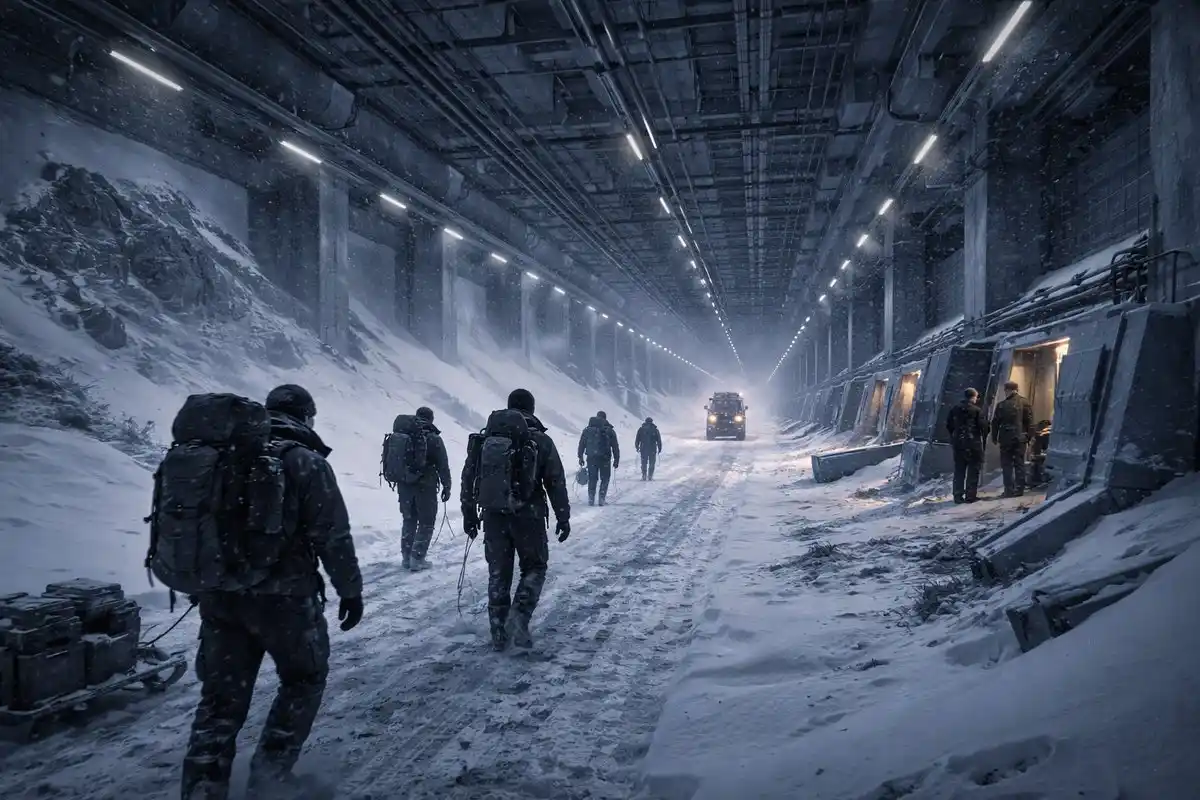
Chapter 8 — The Age of Accelerating Power
A civilization can spend decades worrying that the future has slowed, only to discover that it has not disappeared at all. It has simply returned in a different form. It no longer arrives first as a dam, a rail corridor, a moonshot, or a steel-and-concrete declaration visible on the horizon. It now arrives through models, chips, code, robotics, networks, synthetic cognition, and systems that alter the tempo of work, power, decision, persuasion, and coordination all at once. The defining shock of the post-2020 world is not merely that technology continues. It is that capability has begun to rise faster than many institutions, cultures, and populations can comfortably absorb. What looks, at first glance, like a new phase of technical progress is better understood as a change in civilizational speed.
This is why the architecture of the book gives this chapter such a central role. It is not a side chapter about AI news. It is the place where the story turns. If the earlier chapters showed how the future became imaginable, buildable, and then more delayed, this chapter must explain why delay is no longer the only defining fact. After 2020, multiple technical domains began to compress time itself. AI, automation, robotics, synthetic media, compute, energy demand, and strategic competition started to interact in ways that made the age feel closer to science fiction — not because prophecy had come true, but because capability was beginning to arrive faster than social absorption.[2][3][10]
The crucial point is that acceleration is not only about innovation. Innovation can occur inside stable civilizational rhythms. Acceleration is different. It means that several capability layers begin changing together, creating pressure not only on products or professions, but on the timing of institutions. The result is a mismatch between technical possibility and social metabolism. Machines and models improve faster than schools update, firms reorganize, legal systems adapt, grids expand, and publics learn how to tell signal from hallucination. That mismatch is the real subject of this chapter. The question is not whether AI or robotics are impressive. The question is whether civilization can remain substantial enough to metabolize them.
The acceleration threshold after 2020
Not every year deserves to be treated as a hinge. But some periods reveal themselves, even from within, as threshold years. The post-2020 era is one of those thresholds. What changed was not a single invention. It was a threshold condition. General-purpose AI systems became more visible, more usable, and more culturally consequential. Automation pressures broadened. Synthetic media advanced enough to threaten trust environments, not just entertainment niches. Compute demand rose alongside model ambition.[3] Robotics re-entered public discussion not as distant fantasy but as an increasingly plausible partner to software intelligence. Industry 4.0 stopped sounding like branding and started looking like a real question about how factories, logistics, software, sensors, and machine learning would fuse. And all of this unfolded inside a world already under geopolitical strain, energy-transition pressure, demographic aging, and institutional distrust.
The acceleration threshold therefore did not appear in empty space. It struck an already unstable civilization. That matters because acceleration does not act on a neutral field. It acts on existing weaknesses. A society that still possessed thick institutions, broad trust, stable educational pathways, and abundant energy might absorb the new pace differently from one already hollowed out by underbuilding, fragmentation, and procedural drag. The age of accelerating power is therefore not merely a story of technological rise. It is a story of technological rise interacting with civilizational unevenness.
The mistake many observers make is to isolate the threshold to one headline technology. But the age is not defined by one tool. It is defined by the emergence of a capability atmosphere. A civilization begins to feel different when it becomes normal to assume that systems will update faster, that cognition itself can be partially externalized into models, that whole professions may be reconfigured, that war and industrial strategy will be recalibrated by software, and that infrastructure once considered adequate may suddenly prove insufficient for the demands of the new stack. In that atmosphere, the future stops being a distant abstraction and starts behaving like a near-field pressure.
AI and general capability multiplication
Artificial intelligence matters in this chapter not because it is magical, but because it acts like a general capability multiplier. It can enter writing, search, coding, design, logistics, analysis, support, simulation, planning, surveillance, media, tutoring, and coordination. It does not remain inside a single sector. It spreads horizontally across domains, then vertically through them, changing not only how tasks are done but how institutions think about tasks.
This is why the book cannot treat AI as simply another productivity story. It matters less because it replaces one category of labor and more because it alters the ratio between thought, execution, and scale. Things that once required larger teams, longer search cycles, more junior labor, or more time can sometimes be done faster, cheaper, or by fewer people. That does not automatically translate into net social gain. It translates first into strategic disequilibrium. Whoever adapts well may gain throughput and leverage. Whoever adapts poorly may experience confusion, displacement, imitation pressure, or concentration of power elsewhere.
AI is therefore best understood as a reweighting technology. It changes the value of different human skills. It reduces the scarcity of some forms of output while increasing the importance of judgment, verification, orchestration, and domain-specific competence. It multiplies possibilities for both democratization and concentration. It can help distribute capability more broadly through tutoring, analysis, drafting, and translation, or it can concentrate capability in organizations with the most compute, capital, data, security integration, and institutional legitimacy. This is why the larger civilizational fork already matters here. AI does not tell us which future wins. It intensifies the stakes of the contest between them.
Robotics, automation, and labour recomposition
If AI alters the cognitive surface of the economy, robotics and automation alter the material and organizational surface. Automation is neither purely destructive nor purely liberating. It raises the need for training, continual upskilling, and new kinds of human contribution.[5] That is a narrower claim than much future rhetoric makes, but it is the right starting point. Automation changes the shape of participation. It compresses some routines, expands the value of others, and pushes human beings toward tasks where ambiguity, coordination, problem-solving, and responsibility still matter most.
The crucial word here is re-composition. Too much public discourse still assumes that labor change comes in binary form: either jobs vanish or they survive. But in a high-acceleration environment, what often changes first is the internal composition of work. Easy tasks go first. Middle layers thin. Supervisory burdens rise. Verification becomes more important. Weakly trained workers can be squeezed out of meaningful participation because the new tools do not eliminate standards; they often raise them. A worker aided by powerful systems may become more productive, but only if the surrounding organization knows how to integrate the tools and only if the worker has enough baseline competence to use them well.
This is where the chapter must connect forward to the human-capability chapter without duplicating it. The age of accelerating power is not merely a story of machines arriving. It is also a story of labor architectures becoming more brittle if societies fail to build enough adaptability. Automation pressure without human formation produces passive displacement. Automation pressure with strong training and on-boarding can produce capability expansion. The machines do not decide between those outcomes. The civilizational response does.
Synthetic media and the trust crisis
There is another reason the age feels fast. It is not only because more work can be performed or automated more quickly. It is because reality itself becomes more difficult to parse at public speed. Synthetic media pushes acceleration into the domain of trust.[6][10] Text, images, audio, video, and persuasion artifacts can be generated, modified, multiplied, and tailored at volumes earlier media systems were not built to absorb. The result is not merely an increase in content. It is a pressure on the civic filters by which societies distinguish signal from noise, evidence from theater, and competent authority from confident fabrication.
That pressure matters because institutions do not operate in a vacuum. Their legitimacy depends partly on the surrounding information environment. A civilization already weakened by opaque systems, procedural fatigue, and delayed execution becomes even more vulnerable when the public sphere fills with low-cost imitation, emotional saturation, and synthetic ambiguity. In such a world, speed becomes its own political weapon. The faster claims circulate, the harder it becomes for slower institutions to maintain credibility. The temptation then grows to centralize truth, lock down flows, or outsource judgment to ever narrower intermediaries. That is one of the ways acceleration drifts toward control.
The trust crisis is therefore not only informational. It is institutional. Synthetic media increases the strain, but it becomes most dangerous where legitimacy and functional trust were already weakening. This is one reason the age of accelerating power cannot be treated as a purely technical story. It is inseparable from governance, public reasoning, and freedom.
Synthetic reality and the rewiring of public cognition
Synthetic media does not only corrupt individual facts. It changes the cognitive environment in which public life occurs. Generated text, image, audio, and video alter public reasoning by increasing the volume of plausible artifacts faster than ordinary verification habits can scale. A civilization accustomed to treating sight, sound, quotation, and recorded speech as relatively stable anchors of reality now enters a period in which those anchors become easier to counterfeit, remix, stylize, and weaponize.
That shift changes the epistemic burden carried by citizens and institutions. The individual is asked to verify more, distrust more, compare more sources, hold more uncertainty, and absorb more ambiguity, often while still living at normal civic speed. Meanwhile, institutions that once relied on slower forms of credibility must adapt to environments where synthetic persuasion can travel faster than correction. The burden is therefore redistributed upward and downward at once. Citizens carry more verification labor. Institutions carry more authentication labor. Neither carries it comfortably.
Under those conditions, trust systems may centralize under verification stress. This does not always begin as censorship or overt control. It can begin as a practical demand for trusted intermediaries, authenticated channels, official verification layers, platform-level filtering, and narrower sources of public confidence. In unstable times, those responses will appear reasonable, even necessary. But they carry a danger. The same conditions that justify stronger verification can also justify greater control over what counts as real.
This is where synthetic environments connect to control-stack temptation. A civilization saturated by fabricated plausibility becomes more likely to accept narrower systems of truth management in exchange for stability. That does not mean every authentication regime is oppressive. The difference that matters is the one the later chapters will make explicit: the difference between trustworthy verification and coercive information control. The age of accelerating power sharpens that distinction because it raises the cost of epistemic disorder while simultaneously increasing the temptation to govern disorder through concentration.
Compute, energy, and scale
Every era of technological excitement eventually collides with a material base. The new capability stack is not weightless. Models require chips. Chips require factories, minerals, water, and precision manufacturing. Compute requires power. Power requires grids, generation, transmission, maintenance, and political legitimacy.[2][3] Scale requires cooling, land, logistics, skilled operators, financing, and regulatory clarity. In other words, the seemingly abstract future returns us to material civilization.
This matters because acceleration can hide its own dependencies. A society dazzled by software may fail to notice that its bottlenecks have shifted downward into energy, supply chains, rare materials, siting, and electrical infrastructure. But those bottlenecks are civilizationally decisive. If compute demand outstrips grid expansion, if industrial coordination lags model ambition, if power becomes geopolitically constrained, then the future slows not because intelligence vanished but because its substrate ran into friction.[2][3][12] The acceleration chapter therefore must be grounded by the same material seriousness that runs through the builder-civilization and NSIR layers. Power in the digital age is still power. It still occupies land, consumes fuel, routes through institutions, and depends on systems that can fail.
This also explains why acceleration cannot be separated from strategic rivalry. Compute concentration, chip supply chains, energy systems, industrial capacity, and data-center geography become questions of sovereignty as well as efficiency. Once that happens, the age of accelerating power ceases to be only an innovation story. It becomes a geopolitical systems story.
Capital concentration and the political economy of intelligence
The future of intelligence will not be decided by engineering alone. It will also be decided by who can afford it. Frontier AI is expensive. Compute clusters, model training, data infrastructure, power procurement, cooling, chip access, security hardening, and deployment ecosystems all demand enormous capital. That means capability concentration is partly a financing story.
Who can afford compute, infrastructure, and frontier model scale already matters because it shapes who gets to set the pace of the age. A civilization in which only a narrow group of firms, states, or strategic alliances can finance frontier-scale intelligence will not experience AI in the same way as one where capability diffuses more broadly through smaller firms, educational institutions, regional systems, and public-interest infrastructure. The tools may look similar at the surface. Their civilizational meaning will not be.
Financing concentration therefore influences capability concentration. If the cost of entering the frontier keeps rising, then the commanding heights of intelligence may settle into a relatively small number of actors. Those actors may then shape standards, access, safety doctrine, labor architectures, public interfaces, and even what kinds of intelligence are socially visible. This does not automatically produce domination. But it does tilt the age toward asymmetry.
That is why AI abundance and AI dependency are different futures. In one future, powerful systems exist but diffuse widely enough, and are paired with enough human formation and institutional adaptability, that many people and many organizations become more capable. In the other, AI exists at extraordinary scale but is experienced largely as something administered by others: a service layer, a governance layer, a labor-disciplining layer, or a strategic advantage held elsewhere. The technical artifact may be the same. The civilizational outcome is not.
Diffusion versus concentration
Every great technological change raises the same political question in new form: who gets the capability? Does it diffuse broadly enough to deepen civilization, or does it concentrate in ways that make society more brittle? The whole project culminates in a fork between resilience and control, and the acceleration chapter is where the material for that fork begins to accumulate.
Diffusion means that capabilities spread through institutions, smaller firms, educators, workers, public systems, and wider populations. Concentration means that capability remains locked inside a relatively narrow zone: a few platforms, states, capital clusters, defense contractors, or elite technical networks. Both patterns can coexist, of course. The real issue is their ratio. If diffusion is strong enough, acceleration may enlarge productive participation, raise competence density, and make decentralization more plausible. If concentration dominates, the age may feel dazzling at the top and thinner below — more powerful, but also more hierarchical, more dependent, and easier to govern through technical asymmetry.
This is why the project was right to protect decentralization and the Nexus alternative as a cross-cutting strand rather than an isolated chapter empire. The question is not whether decentralization is trendy. The question is whether the age will widen the base of meaningful capability or narrow it. If societies fail to broaden access to tools, learning, infrastructure, and institutional participation, then acceleration becomes socially extractive. It creates power faster than belonging.
Capability rising faster than absorption capacity
The central problem of the age is now visible. Capability is rising faster than absorption capacity.
Absorption capacity means more than consumer adoption. It means whether a civilization can widen grids fast enough, educate people fast enough, redesign institutions fast enough, absorb labor disruption fast enough, preserve trust fast enough, and distribute competence fast enough to prevent acceleration from collapsing into brittleness.[2][5][6] A civilization may possess extraordinary tools and still fail the age if its schools remain slow, its infrastructure underbuilt, its permission structures clogged, its publics disoriented, and its human pipelines too thin.
That is why acceleration creates both resilience opportunity and brittleness risk. It can widen capability, strengthen training, increase throughput, and make better adaptation possible. But it can also destabilize work, centralize power, exhaust trust, and make already-fragile institutions more dependent on technical systems they do not really govern. The age is not self-interpreting. It does not announce whether it is moving toward freedom or control. It only raises the stakes of that question.
This is also why the chapter cannot end in either panic or celebration. The right civilizational response to accelerating power is not denial, and it is not surrender. It is thickening: thicker institutions, thicker energy systems, thicker training pipelines, thicker verification systems, thicker public reasoning, thicker capacity for adaptation without coercion. A society that meets acceleration with only awe will be governed by it. A society that meets it with only fear will retreat from it. The serious path is to become substantial enough to carry it.
And that is why the next chapter must move into geopolitics. Accelerating capability does not arrive into an empty laboratory. It arrives into a contested world of blocs, sovereignty, war pressure, industrial rivalry, and strategic dependence. If Chapter 8 establishes that capability is rising faster than absorption, Chapter 9 must show the geopolitical world into which that capability enters.
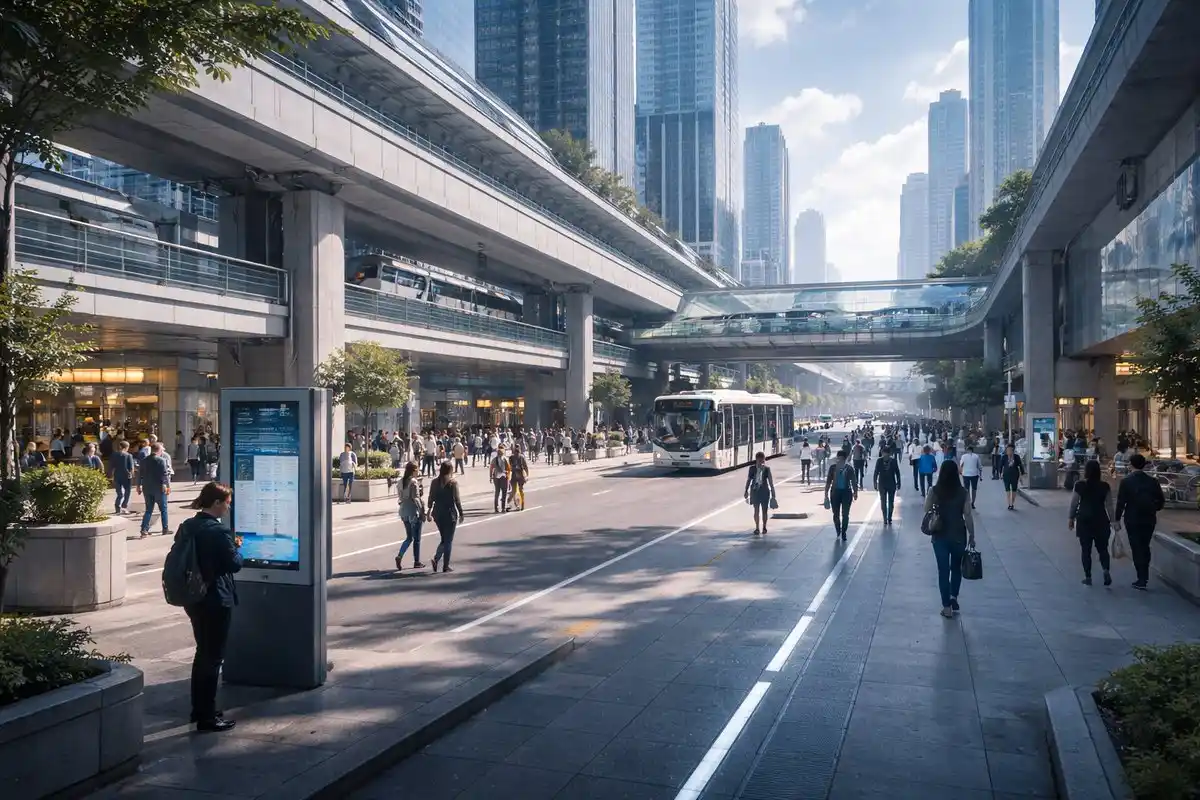
Chapter 9 — The Return of Geopolitics
For a time, many advanced societies behaved as though geopolitics had been demoted. War still happened, but often elsewhere. Sovereignty still mattered, but frequently as a legal form rather than a felt civilizational condition. Supply chains stretched across continents as though logistics were more important than rivalry. Markets, institutions, rights, and technical exchange gave many people the impression that history had become procedural. The future seemed likely to be determined by innovation, regulation, culture, finance, and climate long before it would again be determined by territorial competition, industrial depth, military posture, or bloc formation.
That assumption is breaking. The age of accelerating power is not arriving into a flat world. It is arriving into a contested one. AI, robotics, compute, infrastructure, energy systems, semiconductors, rare materials, shipping lanes, satellites, industrial policy, information systems, and even identity architectures are increasingly entangled with rivalry, strategy, and force. The project architecture makes this chapter’s task clear: restore hard power, blocs, war, sovereignty, and strategic rivalry to the center of the 2020–2070 story, and show that the future cannot be modeled as if we were still living in a post-geopolitical world.
The key point is not that the world has suddenly become geopolitical. It always was. The key point is that advanced societies can no longer pretend geopolitics is background noise. It now changes the meaning of everything else. Energy is no longer only an economic input. It is strategic endurance.[2][12] Chips are not only a commercial product. They are bottleneck power. AI is not only a productivity tool. It is also a military, surveillance, and command multiplier. Infrastructure is not only development. It is national security architecture. Sovereignty is not a slogan. It is the question of who can still make binding decisions over territory, systems, resources, law, and identity under pressure.
The end of post-geopolitical assumptions
The post-Cold War imagination was not entirely foolish. Global trade expanded. Financial systems deepened. Technology spread across borders. Conflict, though never absent, often appeared manageable relative to the older specter of systemic great-power confrontation. Many elites learned to think of geopolitics as a residue — still relevant for diplomats and generals, but less central to the ordinary logic of growth, modernization, and social life.
The age now opening makes that posture harder to sustain. Strategic rivalry among major powers has sharpened. Alliances have become less automatic and more instrumental. Economic interdependence no longer guarantees political alignment. Military conflict, cyber conflict, sanctions, industrial restrictions, and information warfare increasingly act not as exceptions to the global order but as expressions of its deeper fracture. Hard power has returned as a first-order variable. That single correction is enough to alter the meaning of everything in the preceding chapter.
This does not mean the book should indulge in sensationalism. The point is not to collapse the future into one superpower duel or to let world-war rhetoric stand in for analysis. The better claim is narrower and stronger: the future must now be modeled under conditions of renewed strategic rivalry. Once that is granted, many of the century’s most important systems look different. Growth becomes strategic. Infrastructure becomes strategic. Platforms become strategic. Education becomes strategic. Even truth becomes strategic.
Rivalry, blocs, and strategic systems
Once geopolitics returns, systems reorganize around it. Trade no longer appears as simple efficiency. It becomes dependency mapping.[11] Infrastructure no longer appears as neutral development. It becomes corridor competition. Technology no longer appears as a generic force for modernization. It becomes an arena of strategic denial, industrial policy, alliance leverage, and platform power. Blocs do not need to be perfectly unified to matter. They only need to harden enough that states begin making long-range decisions around alignment, resilience, and strategic exposure rather than around purely price-driven optimization.
This means that a society can no longer ask only whether a system is efficient. It must ask whether it is strategically survivable. Can it endure supply interruption? Can it secure critical materials? Can it withstand sanctions or coercion? Can it protect communications, compute, ports, and grids in a contested environment? Can it remain politically sovereign if its deepest technical stack is owned, manufactured, or controlled elsewhere? Those are bloc questions, even when asked domestically.
The return of blocs therefore changes the horizon of policy. Supply chains are no longer just business architecture. They are strategic commitments.[11] Industrial gaps are no longer just competitiveness issues. They are vulnerabilities.[11][12] Even partnerships become less innocent. A civilization that fails to think in these terms risks waking up inside someone else’s system while still congratulating itself on its openness.
Sanctions, debt, currency power, and the geopolitics of finance
Geopolitics now runs through money as much as territory. A reserve currency is not only a convenience of trade. It is a form of strategic leverage. A sanctions regime is not only moral signaling. It is an infrastructure of pressure. A debt relationship is not only finance. It can become a corridor of influence, dependence, and conditional sovereignty.[4] Once rivalry hardens, the monetary order itself becomes part of the strategic battlefield.
This is why the return of geopolitics cannot be understood through military rivalry alone. Financial infrastructure — payment rails, settlement systems, reserve assets, sovereign debt markets, sanctions architecture, clearing systems, and the wider legal-financial stack — now functions as a strategic control surface. States able to shape or deny access to this infrastructure possess a form of power that can wound rivals without open war. States dependent on it without alternatives discover that sovereignty is thinner than formal independence suggests.
Reserve-currency leverage is especially important because it alters the cost of pressure. A state whose currency anchors trade, reserves, and settlement can externalize instability more easily, finance strategic priorities more flexibly, and weaponize exclusion more effectively. That does not make such power absolute. It does mean that monetary hierarchy now shapes geopolitical room to maneuver.
Debt diplomacy operates in a related way.[4] A country burdened by external debt, reliant on foreign refinancing, or deeply tied to a rival’s capital networks may retain flags and constitutions while losing practical freedom of action. Under conditions of rivalry, debt ceases to be merely a development issue. It becomes a question of alignment, leverage, and long-run dependency.
This is one of the chapter’s key additions to the project. Sovereignty now depends not only on territorial defense or industrial production, but also on how deeply a society is exposed to strategic finance. A nation can be politically independent and financially constrained enough to behave as though someone else still writes the outer limits of its choices.
War pressure and dual-use technology
A geopolitically serious century is also one in which dual-use technology becomes harder to separate from ordinary innovation. AI can optimize business processes, but it can also improve targeting, command systems, surveillance, logistics, and cyber operations. Satellites support communication and weather monitoring, but they also structure military awareness. Drones serve industry, agriculture, and inspection, but also reshape tactical and strategic conflict. Semiconductors, telecom systems, cloud infrastructure, and software stacks all acquire military meaning once rivalry hardens.
That is why the age of accelerating power and the return of geopolitics belong together. Capability is not entering a peaceful vacuum. It is entering strategic competition. A society’s relationship to AI, compute, robotics, and networks changes once those systems are no longer merely economic tools but instruments inside a contested order.
War pressure matters here not only in the literal sense of battlefield conflict, but in the way it reorganizes planning. States begin asking which technologies must be controlled, which supply chains must be domesticated or allied, which infrastructures must be hardened, and which capabilities can no longer be left to market drift alone. Once that logic enters, the distinction between innovation policy and security policy becomes thinner.
Narrative sovereignty, information war, and synthetic influence
The geopolitical struggle is now also a struggle over what publics can trust. Influence operations, strategic misinformation, censorship pressure, synthetic persuasion, platform shaping, and narrative management all become part of rivalry conditions. This does not mean truth was once pure and has only now become contested. It means that information environments have become more weaponizable at the same time that societies have become more dependent on them.
Narrative sovereignty is therefore not a decorative phrase. It names the problem of whether a political community can still maintain a minimally coherent public reality under pressure from external influence, internal fragmentation, synthetic media, and strategic persuasion. A civilization that cannot defend the conditions of shared judgment will eventually find it harder to defend its institutions, its legitimacy, and even its industrial strategy.
This is where Chapters 6 and 8 feed directly into Chapter 9. The permission age showed how symbolic legitimacy can overwhelm structural necessity. The acceleration chapter showed how synthetic media rewires public cognition and increases verification stress. Geopolitics now sharpens both. Information war is no longer an external propaganda problem alone. It is a contest over the architecture of trust itself.
That pressure creates censorship temptation as well. Societies under information stress may turn toward stronger moderation systems, narrower authorized channels, or more securitized public discourse in the name of defending truth. Some of this may be necessary in bounded form. But the danger is obvious. The battle over what publics can trust can easily become a battle over who gets to decide what counts as real. That is why information war belongs not only to this chapter but also to the later chapters on resilience, control, and the dashboard.
Infrastructure as security architecture
When geopolitics intensifies, infrastructure becomes easier to see clearly. A port is not just commerce. A rail corridor is not just transport. A pipeline is not just energy. A grid is not just utility. A semiconductor fab is not just industrial policy. A data-center cluster is not just the cloud. Under strategic pressure, these become organs of national endurance.
This is one reason the builder-civilization chapters matter so much in this book. They remind the reader that large systems are not decorative. They are the material preconditions of sovereignty. A country that cannot route power reliably, move freight efficiently, expand its grid, refine resources, protect communications, secure industrial inputs, or maintain strategic transport is not merely less prosperous. It is less free to choose. It becomes more dependent on the decisions and capacities of others.
Infrastructure vulnerability is now broader than physical sabotage. It includes cyber intrusion, sanctions exposure, supply-chain dependency, software dependence, fragile contractor ecosystems, and political inability to build replacements or redundancy in time. A society that has the legal right to act but lacks the practical capacity to harden its infrastructure remains strategically exposed.
This is also why infrastructure should not be narrated as a domestic-policy silo. In a geopolitically serious century, infrastructure is one of the main ways sovereignty becomes real or proves hollow.
Energy, sovereignty, and industrial depth
Energy is where geopolitics becomes unavoidable. The age ahead will place more, not less, pressure on power systems. Electrification, AI compute, industrial reshoring, climate adaptation, military readiness, and transportation all increase the strategic importance of stable, abundant, secure energy. A world of high technological capability without sufficient energy is not advanced in any durable sense. It is constrained.
That is why sovereignty must be read materially. Political independence without energy depth, industrial capacity, and logistics resilience becomes brittle. The next era belongs more to societies that can align energy, industrial depth, and sovereignty than to those that treat them as separable policy silos.
Industrial depth matters for the same reason. A society that cannot make enough of what it needs — or at least secure reliable access under stress — loses strategic room to maneuver. This does not mean autarky. It means understanding that certain capacities are no longer merely economic. They are geopolitical buffers. Semiconductors, defense systems, transmission equipment, software stacks, drones, batteries, critical minerals, shipbuilding, heavy equipment, nuclear components, and telecom infrastructure increasingly sit in that category. The return of geopolitics therefore makes industrial policy less optional and more existential.
Food, water, and biosecurity as strategic pressure multipliers
Strategic security is broader than armies, energy, and industry. Food security can become geopolitical leverage. Water instability can become migration pressure, internal unrest, or interstate strain. Disease and biosecurity shocks can become state-capacity tests in the middle of already hardening rivalry conditions. These pressures often appear secondary in easy times. They do not remain secondary when systems tighten.
Food matters geopolitically because societies unable to secure reliable supply become more vulnerable to price shocks, coercive dependency, and social instability. In a fragmented world, agricultural resilience, fertilizer access, transport reliability, and food-chain security become part of strategic durability. Hunger and price volatility do not stay inside the humanitarian register for long.
Water belongs here for similar reasons. Water stress can amplify agricultural fragility, worsen regional inequality, accelerate migration, and heighten domestic instability. It does not create every conflict, but it can thicken the pressure field in which conflict, coercion, and breakdown become more likely.
Biosecurity completes the picture. A disease shock in an already contested world is not merely a public-health problem. It becomes a state-capacity test, a legitimacy test, a logistics test, and sometimes a geopolitical opportunity or vulnerability. A society that cannot protect continuity under biological stress is easier to unsettle and harder to mobilize.
This wider definition of strategic pressure matters because the geopolitically serious future will not be shaped only by missiles, fleets, and sanctions. It will also be shaped by whether states can feed populations, stabilize water systems, preserve health continuity, and prevent cascading disorder under rivalry conditions.
Freedom, resilience, and the security-state temptation
The return of geopolitics does not only change external strategy. It changes internal politics. A society that experiences itself as contested becomes more willing to securitize domains once treated as civic, commercial, or cultural. Industry becomes strategy. Platforms become strategy. Education becomes strategy. Information becomes strategy. Energy becomes strategy. Once this happens, the pressure for more secrecy, more surveillance, more industrial direction, and more executive latitude grows.
Some of this is unavoidable. Harder worlds demand harder planning. But the danger is that strategic seriousness can slide into permanent exception. A civilization that fails to distinguish bounded security measures from widening control habits may preserve itself externally while hollowing itself internally. This is one of the central reasons the book must connect geopolitics to the later resilience-or-control fork.
The serious question, then, is not whether geopolitics has returned. It has. The serious question is what kind of civilization answers its return. One answer is resilient seriousness: stronger infrastructure, wider energy depth, better industrial capability, more trustworthy institutions, and enough civic confidence to bear strategic pressure without abandoning freedom. The other is brittle securitization: a thinner, more anxious society that responds to rivalry through concentration, opacity, and permanent management.
What the return of geopolitics changes
The return of geopolitics means the future can no longer be narrated as a frictionless contest of innovation, climate adjustment, and regulatory design. Strategic rivalry has re-entered the core of modern life. That does not make every century a world war, nor every policy dispute a civilizational showdown. It does mean that hard power, bloc logic, financial leverage, industrial buffers, information conflict, and infrastructure vulnerability now shape the conditions under which every other chapter of the book unfolds.
That is why this chapter matters. It restores territoriality, force, and strategic dependence to a story that would otherwise be too procedural to be true. The age of accelerating power is also an age of strategic hardening. The race is not only to invent, but to endure. Not only to connect, but to remain sovereign under connection. Not only to grow, but to do so without waking up inside systems whose ultimate control lies elsewhere.
And that is why the next chapter must move into the NSIR world. Once geopolitics returns, the question is no longer only who has power in theory. It is who can still route it through functioning systems — grids, logistics, public order, repair loops, maintenance, continuity, and auditability. Rivalry reveals what systems are for. Chapter 10 must show what happens when those systems are strong, weak, or no longer fully functional.
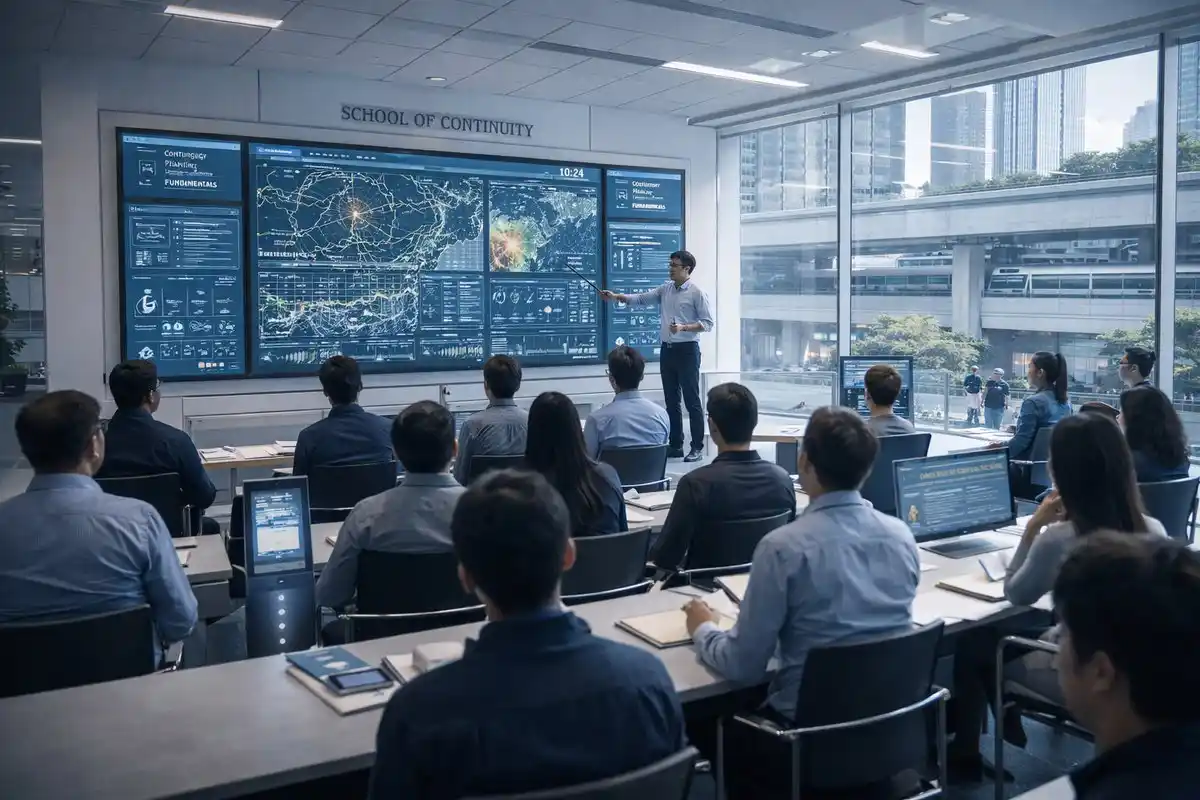
Chapter 10 — The NSIR World
Civilizations do not survive stress by slogans. They survive by function. They survive because power still routes, water still moves, food still arrives, signals still travel, repairs still occur, institutions still know who is responsible, and someone can still see failure early enough to correct it before breakdown becomes normal. The deepest question of the next fifty years is not only whether societies possess advanced tools. It is whether their systems still work under pressure. A civilization can have intelligence, wealth, ideals, and high rhetoric, and still become non-functional. It can know what should be done and still fail to do it. It can speak constantly of resilience while quietly losing the properties that make resilience real.
That is why this chapter matters. It supplies the book’s systems language. The earlier chapters explained how the future became imaginable, visible, delayed, accelerated, and geopolitically contested. This chapter asks a harder question: what kind of civilizational machinery can still absorb stress without falling into drift, opacity, paralysis, or cascading failure? The answer is not mystical. It lies in throughput, auditability, repairability, state capacity, and the ability to route reality through functioning institutions.
The value of NSIR-style thinking is that it forces the analysis downward. It does not let a society hide inside abstraction. It asks whether systems deliver, whether loops close, whether responsibilities are legible, whether failure is observable, whether overrides exist, whether repair can happen before decay turns terminal, and whether the public order still has enough coherence to keep critical functions alive. Under strategic pressure, converging risk, and accelerating capability, those questions stop being technical side questions. They become civilizational.
Why throughput matters more than rhetoric
A civilization can promise far more than it can route. That difference is one of the central realities of late modern life. Public language has grown rich in aspiration: transition, justice, modernization, innovation, inclusion, sustainability, adaptation, readiness, transformation. But a system does not become real because it has been eloquently announced. It becomes real when it moves matter, energy, information, authority, and repair through time without collapsing into friction.
Throughput is therefore one of the least glamorous and most decisive properties of civilization. It asks whether systems can carry load. Can a permitting system produce a decision? Can a grid carry added demand? Can a transport corridor still move under stress? Can a hospital absorb surge conditions? Can a ministry route information in time to matter? Can replacement parts arrive before the system degrades further? Can the people responsible for function still act before drift becomes failure?
This is why rhetoric becomes dangerous when it detaches from throughput. A society can become eloquent precisely as it becomes non-functional. It can produce a dense moral vocabulary around resilience while losing the capacity to repair a bridge, harden a grid, expand transmission, restore water reliability, or train enough operators for complex systems. The problem is not that language is useless. The problem is that language can mask function loss when it is no longer disciplined by delivery.
A civilization that still works does not only know what it values. It knows how to route value into operating systems. That is the first law of the NSIR world.
Systems, feedback, and control logic
Every large system lives or dies by feedback. It has to be able to detect what is happening, compare performance against reality, identify deviation, and adjust before drift compounds. This is true of power systems, freight systems, water systems, public-health systems, military logistics, and state administration. It is also true of civilization more broadly. A society that cannot see its own failures clearly, or cannot respond to them in bounded time, begins accumulating invisible weakness.
Control logic matters because modern systems are too interdependent to be managed by sentiment alone. A grid failure affects communications. Communications failure affects coordination. Coordination failure affects emergency response. Emergency failure affects trust. Trust failure affects compliance, legitimacy, and recovery. Under such conditions, feedback is not a minor engineering concept. It is a political and civilizational necessity.
This is also why system opacity is so dangerous. A civilization can continue functioning for a while even when its feedback loops are degrading, especially if it is still living on inherited infrastructure or institutional capital. But once signals become noisy, responsibilities diffuse, and correction cycles slow, breakdown becomes more likely to arrive as surprise. The society still experiences the effects, but no longer understands the chain.
The NSIR world therefore insists on something basic: if a system matters, it must be legible enough to be governed. If it cannot be observed, audited, stress-tested, and corrected in time, then sophistication becomes fragility wearing a technical mask.
Determinism, auditability, and legitimacy
There is a political reason functioning systems require auditability. In a low-trust environment, legitimacy increasingly depends on whether people can see how decisions are made, who is responsible, what standards apply, and whether outcomes follow from intelligible process rather than opaque improvisation. Determinism here does not mean mechanical rigidity. It means a system whose pathways are clear enough that participants know what inputs lead to what kinds of outputs, and where breakdown can be located rather than mythologized.
Auditability is one of the bridges between technical function and political legitimacy. A process that cannot be audited tends to become either arbitrary or theatrical. A system that cannot explain its own outcomes will eventually rely on status, fear, or habit. But in periods of stress, that is not enough. Public trust erodes faster when institutions cannot demonstrate why decisions were made, how standards were applied, or whether failure came from overload, poor design, contradictory mandates, or simple incompetence.
This is why legitimacy in the NSIR world cannot be reduced to moral intention. Institutions need moral purpose, but they also need visible logic. A society asked to bear difficulty will tolerate more if it believes the system is real, the process bounded, the responsibilities clear, and the failures correctable. It will tolerate less if outcomes feel improvised, discretionary, or structurally unknowable.
That is one reason the later decentralization strand belongs here. Distributed or modular systems are not automatically better. But one of their advantages, when designed well, is that they can make failure more local, responsibility more visible, and repair more tractable. The deeper issue is not ideology. It is whether a civilization can still build systems whose logic remains comprehensible under pressure.
Repairability, override pathways, and recovery
A system that cannot recover is not resilient. It is only temporarily unbroken. This distinction matters because many societies still mistake endurance for resilience. They assume that because a system continues to function most of the time, it must still be healthy. But health is revealed by recovery. How quickly can the system detect failure, isolate damage, authorize action, mobilize repair, and return to function? If that sequence is slow, confused, or politically blocked, then the system may be weaker than its normal-state appearance suggests.
Repairability is therefore one of the core civilizational properties in this chapter. It asks whether complex systems remain serviceable by the societies that depend on them. Can parts be replaced? Can decisions be made in time? Can skilled people still enter the system and act? Can rules flex without dissolving legitimacy? Can emergency overrides exist without becoming permanent habits of arbitrary command?
Override pathways are especially important. A society that has no bounded mechanism for acting under abnormal conditions will often discover, too late, that it must choose between paralysis and improvised exceptionalism. Neither is attractive. The healthier design is a system that contains explicit, limited, auditable override capacities for genuine stress conditions without normalizing permanent exception.
Recovery, then, is not just technical. It is institutional. It depends on whether the civilization has preserved enough clarity, enough skill, enough authority, and enough political trust to move from disruption back into function before erosion becomes permanent.
Infrastructure and logistics as national nervous system
Infrastructure is not scenery. In a serious society, it is a nervous system. Power, transport, fuel, communications, ports, rail, roads, switching systems, warehousing, emergency coordination, and digital control layers together determine whether a nation can sense, move, route, and respond. A system may appear civilian in ordinary time and reveal its strategic nature only under stress. But the nature was always there.
This is why logistics belongs at the center of the chapter. Logistics is not the shadow of civilization. It is one of its most revealing forms. It shows whether a society can coordinate matter at speed. It shows whether institutions can align across public-private seams, across jurisdictions, across civilian and security layers, and across routine and emergency conditions. It shows whether the country actually functions as a system or merely as a set of adjacent components.
The seam logic matters here. A military can depend on civilian grids. Emergency responders can depend on private telecom systems. Hospitals can depend on fuel deliveries routed through commercial networks. Public authority can depend on privately operated infrastructure it does not directly command. Information may exist inside the broader state and still fail to reach the place where operational use matters. None of this is aberrant. It is normal modern complexity. But it means the national nervous system is only as strong as its coordination across seams.
That is why infrastructure failure is rarely just one failure. It is usually a failure of linkage. A system breaks not only because a component fails, but because no one can translate across the boundaries fast enough to restore function.
Food, Water, and Public Health as Functional Subsystems
This is where the chapter has to become more civilizationally complete. Food, water, and public health are not side issues sitting outside “real” infrastructure. They are functional subsystems of civilization itself. A society that cannot move food, stabilize water, or preserve biological continuity under stress is not functionally resilient, no matter how advanced its software or military vocabulary may be.
Water systems are infrastructure in the strongest sense. They are not merely environmental amenities. They are operating conditions of sanitation, health, agriculture, energy production, and basic urban life. When water systems fail, the failure is not symbolic. It enters the bloodstream of civilization directly.
Food distribution is throughput. That is the right language. Modern societies do not eat through farms alone. They eat through storage, transport, refrigeration, pricing, fuel, labor, logistics, and public order. Failure in food systems looks like delay, spoilage, cost shock, panic behavior, legitimacy loss, and widened inequality. A civilization that cannot maintain food continuity under stress is already revealing something about the weakness of its underlying routing capacity.
Public health is continuity architecture. Its value is not only treatment. It preserves labor continuity, lowers panic, protects institutional trust, and slows the spillover of biological stress into political and logistical dysfunction. Failure here looks like workforce disruption, overloaded emergency response, weakened social trust, cascading shortages, and recovery windows that narrow instead of widen.
This is why repairability must include these subsystems. A theory of resilience that talks only about grids, roads, ports, and data while ignoring food, water, and public health is not wrong because those things are unimportant. It is wrong because it has misunderstood what civilization has to keep alive.
Non-functional systems and slow decay
The most dangerous failures are not always spectacular. Some systems fail slowly enough that the public adjusts its expectations downward before it realizes what has been lost. Delays become normal. Workarounds become routine. Small outages are absorbed. Maintenance is deferred. Skilled staff thin out. Documentation degrades. Institutional memory fades. Interfaces become more fragile. The system still runs, but increasingly by improvisation.
This is what non-function looks like in advanced societies. It is not always ruin. It is often drift. A system that once produced predictable outcomes begins producing erratic ones. A process that once closed begins hanging open. An institution that once repaired itself begins accumulating exceptions. Public trust does not collapse in one day. It thins as people learn, again and again, that formal structures no longer map cleanly onto real delivery.
Slow decay is dangerous because it invites misrecognition. Leaders point to surviving artifacts. The public points to normal-state performance. Administrators point to compliance, volume, or process completion. But none of these alone proves health. A system can still produce output while losing reliability, maintainability, and resilience.
That is why this chapter cannot be satisfied with surface indicators. Function means more than “not yet broken.” It means that the system can still absorb load, detect deviation, correct failure, and recover without depending on luck, heroic individuals, or unrepeatable workarounds.
Fiscal Brittleness and the Maintenance Trap
Slow decay is often governed by money long before it becomes visible as collapse. Debt stress, narrow fiscal room, inflation pressure, and repeated budget compression weaken maintenance cycles even where the society understands perfectly well what needs repair. This is one of the most important additions to the chapter because it prevents system analysis from floating above political economy.
The maintenance trap is simple and cruel. A state inherits systems whose repair cannot be deferred forever, but its fiscal condition makes timely repair politically difficult, financially expensive, or perpetually postponable. Under those conditions, maintenance shifts from routine stewardship to episodic crisis response. Preventive investment looks optional until the failure bill arrives at a far higher price.
This trap matters because it reveals a difference between knowledge and capacity. A society can understand failure and still be unable to fund repair at the speed required. It can know where the bottlenecks are and still narrow its own room to maneuver through debt burden, interest cost, weak growth, or politically fragile taxation. Fiscal brittleness therefore degrades resilience even when diagnostic intelligence remains intact.
The relationship is recursive. Deferred maintenance raises future cost. Higher cost increases hesitation. Hesitation deepens decay. Deeper decay makes emergency intervention more likely and more expensive. Over time, the society becomes less sovereign over its own systems because it is always acting late and from weakness. That is the maintenance trap.
State capacity as civilizational variable
The chapter now reaches its widest point. State capacity is not just an administrative property. It is a civilizational variable. It asks whether a public order can define a problem, coordinate institutions, make decisions, carry time, route resources, correct failure, and preserve legitimacy while doing so. In a century of converging risks and accelerating power, that question grows harder, not easier.
A state with weak capacity may still speak the language of ambition. It may legislate, consult, announce, regulate, and aspire. But without functional routing power, its language floats above reality. A stronger state is not simply a larger one. It is one whose institutions can still convert intention into auditable outcomes without collapsing into permanent arbitrariness or procedural paralysis.
This is also where the human layer returns. State capacity is never only institutional design. It rests on trained people, operational culture, technical competence, documentation quality, leadership quality, and the ability to onboard new entrants into real responsibility. That is why SGT belongs inside this chapter structurally. Human competence is part of system function, not downstream from it. A society that cannot form enough people who know how systems actually work will gradually lose state capacity no matter how sophisticated its formal architecture appears.
Under strategic pressure, this becomes decisive. Brittle systems break faster. Repairability matters more. Throughput matters more. Competence matters more. Auditability matters more. A civilization entering the 2030–2050 pressure window without these properties is not merely underprepared. It is entering the future with concealed system weakness.
The NSIR world, then, is not a side framework. It is one of the book’s central discoveries. It tells us that the contest ahead will not be won by rhetoric, intelligence, or power alone. It will be shaped by whether civilizations still possess the quiet system properties required to remain functional under stress.
And that is why the next chapter must turn to the human stack. If Chapter 10 explains what system function requires, Chapter 11 must explain whether societies can still form enough capable people to keep those systems alive in the age they are entering
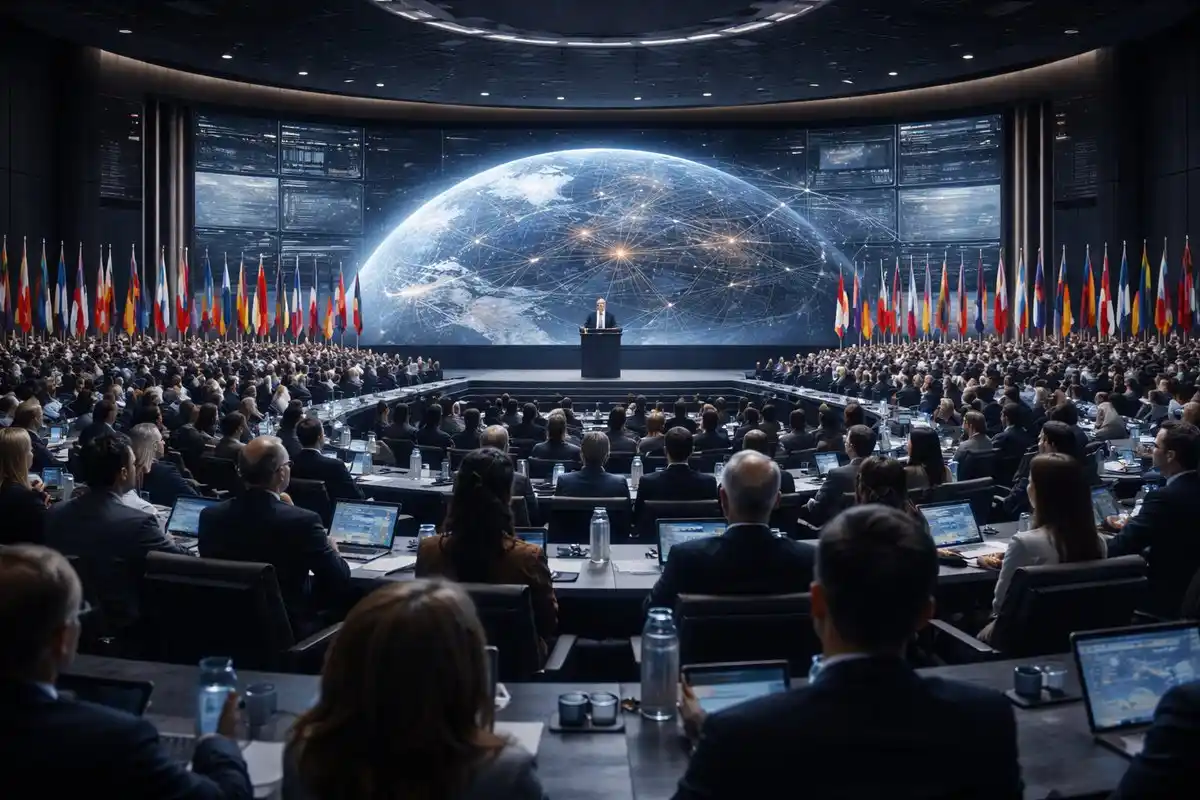
Chapter 11 — Human Capability in the Age of Accelerating Power
A civilization can inherit machines and still fail. It can possess grids, data centers, ports, legal systems, universities, corporations, and states, and still discover, too late, that it has lost something more difficult to replace than hardware. It can lose the human ability to operate complexity with confidence. It can lose the capacity to form people fast enough for the age it has entered. It can lose the chain that runs from aspiration to training, from training to competence, and from competence to real responsibility. That loss does not announce itself with one dramatic sound. It arrives more quietly, in weaker entry points, longer on-boarding curves, brittle institutions, exhausted teachers, inflated credentials, frightened young workers, and systems that grow more advanced even as the people expected to use them feel less prepared to belong inside them.
This is why the skills gap is too small a phrase for the problem now in front of us. The phrase sounds administrative, almost clerical, as though the issue were a paperwork mismatch between employers and applicants. But the deeper problem is civilizational. The age of accelerating power is not only placing new tools into the world. It is demanding that societies generate enough capability, judgment, discipline, and adaptive intelligence to absorb those tools without tearing their own institutional fabric. The central question is no longer whether machines can do more. The central question is whether human beings, schools, firms, states, and civic cultures can keep pace with what machines now require of them.
That is why this chapter is one of the book’s proof chapters. The project’s own architecture makes the point plainly: human capability is not a decorative social layer but one of the major adaptation variables of the whole 2020–2070 story, and the core question is whether societies can train, educate, onboard, and organize people fast enough for the age they are entering. It is also the chapter where SGT must become intellectually inevitable. Skills, youth preparedness, technical and creative competence, on-boarding, AI-era adaptation, and practical readiness at scale are not side missions here. They are the human answer.
The skills gap as civilizational bottleneck
Every age has bottlenecks. Some are material: power, transport, water, compute, land. Some are political: legitimacy, law, sovereignty, permission. But one of the least adequately named bottlenecks of the coming decades is human capability itself. A society can have frontier models, strategic plans, resilient infrastructure blueprints, and industrial ambitions, and still fail because too few people are able to enter live systems with enough competence to keep them functioning.
That is why the skills gap must be elevated from labor-market language to civilizational language. A bottleneck in capability formation affects more than employment. It affects whether a grid can be maintained, whether a hospital can staff complexity, whether a factory can reorganize around automation, whether an institution can absorb AI without hallucinating its own competence, whether a democracy can retain a middle class capable of real participation, and whether sovereignty remains more than a legal fiction.
The problem is not only shortage. It is delay. Human beings are slower to form than software is to scale. A model can be updated in months. A serious engineer, operator, teacher, machinist, nurse, analyst, project manager, or systems architect is formed over years. A civilization that forgets this begins to assume that technical acceleration automatically solves the human burden it actually intensifies. It imagines that better tools compensate for weaker people. In reality, better tools often demand better people: more judgment, more discernment, more systems sense, more responsibility under ambiguity.
This is one of the chapter’s central claims. The decisive human variable of 2020–2070 is whether societies can build enough capability, competence, and onboarding capacity to keep human adaptation from falling fatally behind machine and system acceleration. The book’s frozen chapter brief makes that thesis explicit, and it is right to do so.
Youth preparedness in a high-velocity world
The age confronts the young with an unusually difficult bargain. They are told they live in an era of unprecedented possibility, and this is not false. But they are also entering a world of faster systems, less stable occupational identity, more technical demand, more mediated pressure, and more uncertainty about what counts as readiness. Earlier generations often entered institutions that, however imperfectly, assumed some responsibility for training, gradual progression, and durable belonging. Many younger people now enter environments that demand fluency before formation, performance before apprenticeship, and flexibility without a corresponding promise of stewardship.
This changes the psychology of entry. A young person trying to become serious in such a world does not merely face competition. He faces ambiguity about what seriousness even means. Which skills will endure? Which credentials still matter? Which tools will replace tasks faster than institutions can redesign pathways? Which organizations are truly willing to train, and which merely demand polished readiness at the first touchpoint? When those questions remain unresolved, aspiration weakens. Not because the young are incapable, but because the social contract around formation becomes less believable.
A civilization should worry when younger generations feel that adulthood is all pressure and little structure. Not because every generation has not known anxiety, but because capability formation depends on some credible relation between effort and entrance. Where that relation dissolves, societies do not only get disillusionment. They get thinner pipelines into competence. They get more drift between intelligence and useful formation. They get populations more likely to hover around systems than to enter them confidently.
This is why youth preparedness is not sentimental. It is strategic. Great-power competition, industrial depth, sovereignty, and resilience all eventually become talent-pipeline questions. A nation that cannot prepare the young for high-complexity systems under conditions of ambiguity will not remain strong merely because it owns advanced machinery. The geopolitical note in the chapter brief is exactly right: industrial strategy, national resilience, security competition, and the operation of high-complexity systems all intensify the importance of competent populations.
Family Formation, Delayed Adulthood, and the Fragility of Human Continuity
The human problem is deeper than skills in the narrow sense. It reaches into the timing and structure of adulthood itself. Long transitions into adulthood weaken capability formation because they delay not only earnings or independence, but the consolidation of responsibility. A person formed too long in ambiguity becomes less likely to attach himself to difficult institutions, long projects, or inter-generational obligations with confidence. Capability is not merely technical acquisition. It is also the formation of seriousness under time.
This is where the chapter needed the revision insert, and the revision was correct. Family formation, delayed adulthood, and household stability are not private trivia sitting outside civilization. They shape resilience. A society in which fewer people form stable households, fewer people believe the future is inhabitable, and fewer people feel that adulthood means carrying something beyond the self becomes weaker at inter-generational transmission. Skills are transmitted that way. Motivation is transmitted that way. Confidence is transmitted that way. So is the sense that difficult work belongs to one’s life rather than to a distant professional caste.
This does not license moralizing. The point is structural, not therapeutic and not culture-war rhetoric. Unstable household formation affects resilience because it affects continuity. Fertility and family matter civilizationally because they influence whether a society still imagines itself as something that will go on. A civilization less confident in its own continuity tends to become less confident in long-range formation as well. It becomes more short-term, more consumption-oriented, more hesitant about the burdens by which serious systems are maintained.
The connection to capability formation is therefore direct. A people without believable adulthood pathways will struggle to produce enough builders, operators, maintainers, teachers, and institutional stewards. Human capability weakens where continuity weakens.
Education-to-work failure modes
Modern societies often describe education and work as though the problem were mostly alignment. But misalignment is the mildest version of the problem. The harder problem is that many systems no longer contain a credible bridge between learning and responsibility. Students accumulate credentials but not fluency. Employers demand experience from entrants who were never given exposure. Universities generate abstraction without always sustaining contact with live systems. Firms complain of shortages while reducing their willingness to train. Public institutions speak of preparedness while allowing onboarding cultures to atrophy.
That is not one failure. It is a chain failure. A civilization that once knew how to carry people from aspiration into competence begins to produce a landscape of partial initiations. People learn enough to feel the scale of the world and not enough to function well inside it. They become literate in the rhetoric of complexity without gaining much experience in the reality of consequence. That is one reason so many institutions feel simultaneously credential-heavy and capability-thin.
This matters more under acceleration than in slower eras because faster systems punish weak bridges. When machines update faster, tools shift faster, and organizations reorganize faster, the gap between formal education and live performance widens if the transition architecture remains weak. A society can then develop the worst of both worlds: educated populations increasingly unsure of how to enter real work, and employers increasingly unsure how to trust, train, and retain them.
This is one of the most devastating forms of passive displacement. The displaced person is not always replaced by a machine in one dramatic moment. More often he is stranded between increasingly abstract education and increasingly demanding systems, too credentialed to believe he is unformed and too unformed to function with confidence where responsibility begins. That condition eats away at dignity long before it appears in aggregate statistics.
Professional competence as resilience infrastructure
Civilizations survive stress through professional competence more than they admit. Not glamorous intelligence, not performative intelligence, but competence that stays calm in live systems. Someone must still know how to diagnose failures, restore services, interpret ambiguity, manage teams, evaluate tradeoffs, maintain standards, and make bounded decisions when conditions are poor. In ordinary times, that competence is easy to overlook because systems seem to run themselves. Under pressure, it becomes visible all at once.
That is why professional competence belongs in the same conceptual family as infrastructure. It is resilience infrastructure. A society with weak professional formation may still appear sophisticated while conditions are easy. But when crises come — grid strain, cyber incidents, supply disruptions, public-health stress, institutional redesign, AI integration, military pressure — the difference between societies becomes brutally concrete. Some have enough practiced people in enough layers to absorb the shock. Others discover that their system was resting on too few competent adults spread too thin.
This is also why the chapter cannot let human capability collapse into generic “upskilling” language. Competence is not a list of modular content packets. It is judgment under conditions. It is knowing how a real system behaves when abstractions fail. It is the confidence born of exposure, correction, repetition, mentorship, and earned responsibility. A civilization that stops forming such people becomes dependent in a deeper sense than it realizes. It becomes dependent on a narrowing class of experts, on external providers, on more opaque systems, and eventually on technologies it cannot fully govern because too few humans understand the context in which they operate.
A chapter about human capability therefore must link competence to civilizational survival. Not sentimentally. Directly.
Adult learning and reskilling under AI pressure
The older industrial assumption that most people can front-load formation early in life and then coast on a relatively stable skill set is breaking down. AI pressure makes that break impossible to ignore. As systems change faster, adult learning becomes less optional. But the phrase “lifelong learning” can become a euphemism if it hides the scale of what is actually required. It is one thing to tell adults to stay curious. It is another to redesign institutions so that workers in mid-career can genuinely re-enter learning, absorb new tools, and regain footing without losing dignity, income, or social membership.
This is where re-skilling rhetoric often fails. It treats adults as infinitely elastic and institutions as static. In reality, adult learning under AI pressure is hard because adults carry constraints: families, mortgages, fatigue, habits of identity, professional pride, and finite cognitive bandwidth. They are not empty vessels waiting for updated modules. A serious society has to build adult learning systems around actual life rather than around the fantasy of endless personal reinvention.
That is why on-boarding matters so much. The project brief is correct to treat on-boarding as more load-bearing than many future narratives admit. A great many workers are not shut out because they are incapable of learning. They are shut out because institutions no longer absorb the cost of guided transition. Under AI pressure, that failure becomes more punishing. The difference between capability expansion and passive displacement often lies not in raw intelligence, but in whether institutions still know how to accompany adults into new tools, new roles, and new systems.
Attention, Meaning, and the Social Psychology of Readiness
Capability formation is also a psychological and cultural problem. Attention fragmentation matters because durable effort depends on sustained orientation. A population living in increasingly mediated identity environments, under constant cognitive interruption, may retain plenty of information while losing some of the conditions required for depth. Digital life does not make seriousness impossible. But it can make sustained apprenticeship, patient concentration, and reality-oriented formation harder to stabilize.
This is why the revision insert was necessary. Meaning is a condition of durable effort. People exert themselves most seriously when they believe there is a world worth entering and a role inside it that is not merely extractive, humiliating, or temporary. Populations without believable pathways become less adaptive not because they lose all talent, but because effort without horizon erodes. The will to master difficult systems weakens when life feels like endless improvisation inside architectures built by others.
This does not turn the chapter inward into therapy. It remains civilizational. A society that weakens attention, diffuses identity, and offers fewer believable pathways into responsible adulthood should expect weaker adaptive capacity. People do not become competent at scale by accident. They require enough psychic order to commit to difficult formation. They require enough public meaning to believe that the effort belongs somewhere real.
The broader danger is that digitally saturated societies may become better at reaction than at orientation. They may produce fast opinion, fast imitation, fast symbolic performance, and weak depth. But the age now arriving requires the opposite of that: more depth, more judgment, more bounded confidence, more human beings capable of staying with reality longer than the feed.
The human stack inside the civilization stack
The NSIR chapter made one fact unavoidable: systems depend on throughput, repairability, feedback, auditability, and state capacity. This chapter makes the complementary fact unavoidable: none of those properties float above the human layer. There is no civilization stack without a human stack inside it.
That stack includes childhood formation, youth preparedness, entry pathways, apprenticeship, professional culture, adult re-skilling, leadership quality, institutional memory, and the capacity to transfer competence from one generation to the next. If any of these thin badly enough, the system can keep running for a while on inheritance. But only for a while. Eventually the missing human layer appears everywhere: in maintenance gaps, coordination failures, managerial confusion, over-dependence on thin elites, tool misuse, brittle institutions, and exhausted organizations unable to renew themselves.
This is why the human chapter sits after NSIR and before Resilience or Control. It is not a soft chapter between harder ones. It is the hidden substrate of both. Systems are only as intelligent as the humans who can still interpret them. Infrastructure is only as resilient as the people who can still maintain it. Institutions are only as legitimate as the people who can still enter them, learn them, and trust that effort leads somewhere honorable.
Decentralization belongs here too, but quietly. Distributed resilience is not only a systems design question. It is a human distribution question. A society that broadens capability can distribute responsibility more widely without dissolving standards. A society that lets competence collapse will centralize by necessity, because too few people will be trusted to carry real load.
Why capability formation is the human answer
Every serious book about the future eventually has to decide whether it is only diagnosis or whether it also contains an answer. This chapter contains one of the book’s answers. Not the only answer, but one of the deepest. Capability formation is the human answer.
The phrase matters because it is larger than schooling and narrower than vague hope. It means building pathways by which human beings can become adequate to the age: skills, yes, but also discipline, orientation, apprenticeship, onboarding, confidence in complexity, and enough social structure that responsibility is bearable rather than absurd. It means institutions willing to train again. It means schools less detached from live systems. It means firms that understand that human formation is not charity but strategic necessity. It means adults who can re-enter learning without being treated as obsolete. It means youth who can still imagine serious futures and find real ladders toward them.
This is where SGT becomes historically necessary rather than merely admirable. The mission language of skills, youth preparedness, technical and creative competence, onboarding, AI-era adaptation, and practical readiness at scale belongs here because the age itself has made such work structurally unavoidable. Once a civilization realizes that machine acceleration is outrunning human formation, the need for organizations that bridge aspiration to capability stops being optional. It becomes one of the few direct responses available.
That is the energizing side of the chapter. The situation is difficult, but not empty. Human beings remain trainable. Institutions remain re-designable. Capability can still be broadened. Onboarding can still be rebuilt. Seriousness can still be taught, transmitted, and honored. The answer is not guaranteed. But it is real.
The harsher side is equally important. If societies do not build this capability, then accelerating power will not simply pass them by. It will reorganize them without their consent. They will become more dependent, more stratified, more easily managed by systems they cannot fully inhabit, and more tempted to substitute control for formation. A civilization that fails to broaden capability will eventually discover that it has chosen hierarchy by neglect.
That is why this chapter must end in the way the project brief required: not with generic optimism, but with a harder question. If societies do or do not build this human capability, what kind of civilization does that produce? What happens when acceleration meets a population able to rise into it? And what happens when acceleration meets a population increasingly displaced from meaningful participation inside the systems that govern its life?
Those are no longer questions about labor policy. They are the first questions of the civilizational fork.
“The Builder Civilization (Part 1)” https://skillsgaptrainer.com/the-builder-civilization-part-1/
“The Builder Civilization (Part 3)” https://skillsgaptrainer.com/the-builder-civilization-part-3/