Why the future vehicle should not fail like a phone — it should degrade like an aircraft.
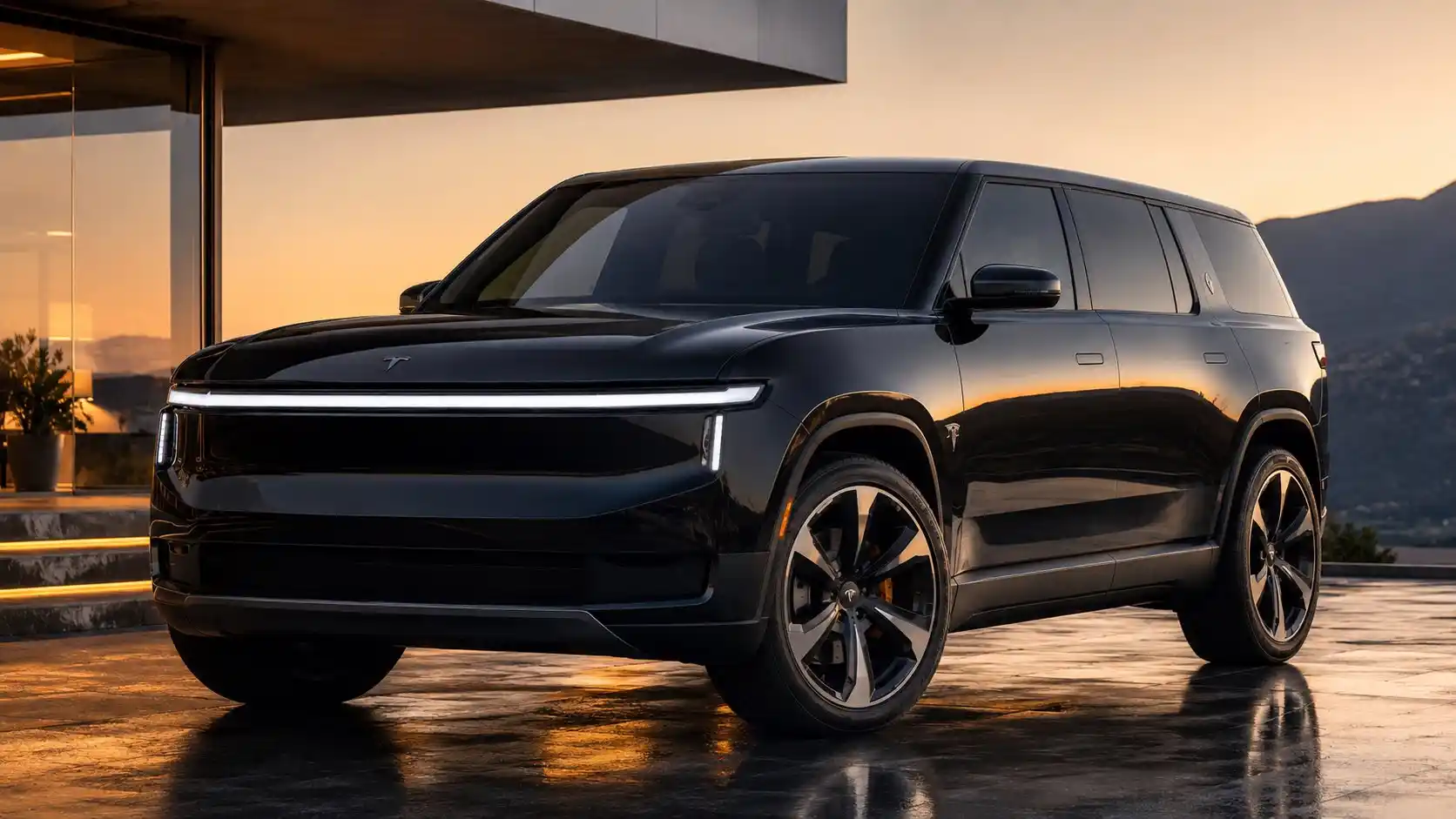
Tesla CyberSUV Concept — Built on Cybertruck platform — Steer by wire, 48 volt, rear wheel steering — Charge up to 500 kW with 4680 structural pack — 7 or 8 seat configurations — AI5 self-driving — Starts at $79,990 Would you buy one? https://x.com/wholemars/status/2060217714116010427
SGT: Valentin’s design philosophy pertaining to vehicles basically says:
A vehicle should be judged by the world it must survive, not by the propulsion label it carries.
Valentin’s Vehicle Doctrine
Valentin’s vehicle philosophy is very coherent:
1. Start with the threat world, not the drivetrain. A city commuter, rural household, emergency vehicle, overlanding truck, island vehicle, military platform, and cyber-exposed fleet are not solving the same problem. The benchmark must begin with mission and environment. Separate normal life, degraded infrastructure, remote/off-road use, and contested systems.
2. Separate reliability from resilience. Reliability means the vehicle rarely fails in normal life. Resilience means it can keep moving, recover, or be repaired when the surrounding system degrades. An EV can be excellent in daily use yet vulnerable during charging disruption. An ICE vehicle can need more maintenance but retain advantages in fuel portability and field repair.
3. Count dependencies, not just parts. The key question is not “how many chips?” but which functions depend on electronics, software, cloud access, specialized diagnostics, proprietary modules, or fragile infrastructure. This is defined as critical electronic dependency, cyber attack surface, offline operability, diagnostic sovereignty, manual fallback, and mission recoverability.
4. Treat infrastructure as part of the vehicle. Fuel stations, chargers, grids, payment systems, cloud accounts, dealer tools, parts supply, repair networks, and software servers are all part of the real vehicle system. A vehicle is not just what sits in the driveway; it is the machine plus the ecosystem required to keep it useful.
5. Prefer mission-fit portfolios over monoculture. SGT’s LNG/CNG resilience thesis reinforces this strongly: future transport should not be one universal architecture. Dense corridors may favor rail and electric buses. Stable urban commuting may favor EVs. Rural, cold-weather, work-use, fleet, continuity-sensitive, or degraded-infrastructure roles may justify hybrids, PHEVs, ICE, CNG/LNG hybrid concepts, dual fuel gas/NG or hardened platforms.
What this means for a Tesla CyberSUV
From this doctrine, the CyberSUV should not be judged as a futuristic styling object. It should be judged as a software-defined, high-power, battery-electric, infrastructure-dependent mobility platform.
A Valentin-style first question would be:
Is this CyberSUV a resilient transportation node, or a luxury dependency stack?
The answer depends on the design details.
Strong points
A CyberSUV could score well in stable infrastructure:
-
low drivetrain mechanical maintenance
-
strong torque and traction control
-
7/8-seat family utility
-
possible vehicle-to-load or backup-power capability
-
software diagnostics
-
large battery energy reserve
-
fast charging if the grid and charging network support it
In an urban, suburban, depot, or high-infrastructure environment, it could be excellent.
Weak points
Under the SGT benchmark, the vulnerabilities are obvious:
-
500 kW charging depends on very strong grid and charger infrastructure
-
steer-by-wire must prove fail-operational redundancy
-
AI5 autonomy increases sensor, compute, software, and cyber dependency
-
structural battery pack raises repairability and post-crash service questions
-
large mass increases tire, road, brake, and recovery burdens
-
cloud/app/software dependence could reduce degraded-world operability
-
high-voltage parts may be harder to repair in rural or emergency settings
So the CyberSUV is not automatically “future-proof.” It is future-powerful if the surrounding system remains strong.
Questions from Valentin’s Design Philosophy
Here is the sharper version:
-
Mission fit: What world is this CyberSUV designed for — stable suburb, rural winter, emergency evacuation, remote work, or contested infrastructure?
-
Critical dependency: What must keep working for it to move, stop, steer, charge, diagnose faults, unlock, receive repairs, and recover?
-
Manual fallback: If steer-by-wire, AI driving, sensors, cloud access, or software systems fail, what remains under human control?
-
Energy resilience: Is 500 kW charging a real advantage, or does it simply transfer the bottleneck from the car to the grid?
-
Repair sovereignty: Can independent shops diagnose and repair the battery, inverter, steering, suspension, thermal system, sensors, and software faults?
-
Offline operation: Can the vehicle operate fully without cellular service, app access, cloud authentication, live maps, or OTA servers?
-
Graceful degradation: Can it limp home after sensor failure, charger failure, partial battery fault, software fault, thermal fault, or communications loss?
-
Structural pack tradeoff: Does the 4680 structural pack improve mass and stiffness enough to justify repair and recycling complexity?
-
Cyber posture: Are propulsion, braking, steering, charging, and autonomy isolated from infotainment, apps, fleet systems, and external interfaces?
-
Strategic value: Does the vehicle strengthen domestic manufacturing in Canada, America, Mexico and Europe, battery supply chains, grid modernization, and emergency mobility — or does it deepen dependence on fragile centralized systems, or even perhaps CCP?
SGT-style verdict
A Tesla CyberSUV is strongest in the stable-grid, high-service, software-rich, suburban/urban family utility lane.
It becomes weaker in the remote, degraded, blackout, low-repair-access, cyber-contested, electronic warfare or infrastructure-fragile lane unless Tesla deliberately designs for:
offline operation, diagnostic sovereignty, manual fallback, modular repair, battery serviceability, cyber isolation, local parts access, field recovery, and energy export.
The best future version is not just an electric SUV. It is a resilience vehicle: a mobile battery, family transporter, emergency power node, winter-capable utility platform, and recoverable machine.
The worst version is a beautiful dependency stack: powerful, luxurious, software-heavy, expensive, hard to repair, and only excellent while the grid, cloud, chargers, parts network, and service ecosystem remain healthy.
The worst version repeats the 20th-century error of mistaking centralized technical sophistication for real-world resilience.
Should Valentin buy a Tesla CyberSUV?
SGT: Probably not as a default personal buy.
Valentin’s answer would probably be:
“I would not buy it because it is futuristic. I would buy it only if it proves resilience, repairability, energy utility, and degraded-mode usefulness.”
At $79,990, a CyberSUV with 7/8 seats, 500 kW charging, rear-wheel steering, steer-by-wire, AI5, and a structural 4680 pack would be tempting. SGT directors John and Valentin would hesitate because it is also a high-dependency machine: software-defined, cloud-linked, high-voltage, charger-dependent, sensor-heavy, and likely difficult to repair outside Tesla’s ecosystem.
So his final verdict is:
For stable suburban/urban life: yes, maybe. With home charging, strong service access, future family transport planning needs, and as a future-facing engineering platform that could navigate autonomously all of North America, he might buy it as a secondary travel and expedition and family vehicle.
For rural, blackout, emergency, overlanding, or contested-world resilience: not as the only vehicle. He would want an ICE, PHEV, ultra-light CNG/LNG hybrid, dual-fuel gas/NG platform, or EMP-hardened low-dependency backup ICE vehicle.
As a research object: limited value.
Even if Tesla built a CyberSUV, the source code access is not likely to be provided for engineering research and applied project purposes:
-
Vehicle hardware: proprietary.
-
Battery pack / structural design: proprietary.
-
Steer-by-wire control: proprietary and safety-critical.
-
48V architecture details: partly observable, not open-source.
-
AI5 / self-driving stack: proprietary.
-
Diagnostics and repair tooling: not fully open.
-
CAD, firmware, control software, BMS, inverter code: not public open-source. To buy or test one only to study steer-by-wire, 48V architecture, structural battery design, AI vehicle control, fast charging, thermal management, and software-defined mobility on such a limited basis, seems limiting.
Valentin would not buy one as a faith-based EV purchase. He would buy one only if it passed a resilience audit. Otherwise, he would admire the engineering, question the dependency stack, and keep a lower-tech backup ICE vehicle, that he would personally harden with an EMP Shield or DEFCON Vehicle upgrade. Or maybe he already has done that.
Appendix A — Aerospace-Grade Vehicle Resilience
The vehicle should not fail like a phone. It should degrade like an aircraft.
A resilience vehicle should not be designed like a consumer device. It should be designed closer to an aircraft, emergency platform, or mission-critical machine.
The design goal is not more screens, more apps, more sensors, more cloud services, or more automation. The design goal is mission continuity.
The first-principles question is:
What must remain functional for the vehicle to move, stop, steer, power essentials, protect occupants, communicate, diagnose faults, and recover when normal support systems fail?
That question changes the design philosophy.
A phone can crash. A laptop can freeze. A cloud service can go offline. A software update can wait. A vehicle carrying people through the physical world cannot be allowed to become a brick because an app, modem, sensor suite, infotainment module, payment system, cloud service, or software layer fails.
The aerospace-style rule is simple:
Advanced systems may assist the mission, but they must not own the mission.
This is not feature stacking.
This is mission-continuity engineering.
1️⃣ Mission hierarchy comes before feature integration
A resilient vehicle must begin with a hierarchy of what matters most. Not all systems are equal. Some are life-critical. Some are mobility-critical. Some support the mission. Some are only convenience.
🛡️ Tier 1 — Life-critical control Braking, steering, propulsion control, crash response, occupant protection, fire prevention, thermal safety, high-voltage isolation, and emergency egress must remain protected above all other systems.
🚗 Tier 2 — Mobility-critical support Battery management, fuel or energy management, cooling, low-voltage power, traction control, charging or refueling interface, local diagnostics, limp-home logic, and fault isolation keep the vehicle mobile and recoverable.
📡 Tier 3 — Mission-support systems Navigation, communications, lighting, cabin heat, external power export, offline maps, hazard signaling, emergency shelter functions, and backup communications improve mission usefulness, but must not control the survival of the vehicle.
🎛️ Tier 4 — Convenience systems Infotainment, personalization, telemetry, app services, entertainment, seat memory, cloud features, cabin mood features, and nonessential automation belong at the bottom of the control hierarchy.
🔒 Engineering rule: Lower-tier systems must never be allowed to disable higher-tier systems.
❌ Failure example: Infotainment must not compromise propulsion.
❌ Failure example: Cloud services must not prevent basic driving.
❌ Failure example: Telemetry must not control emergency mobility.
❌ Failure example: A failed app must not lock the owner out of essential use.
❌ Failure example: A compromised convenience layer must not cascade into braking, steering, charging, battery safety, or occupant protection.
✅ Design verdict: A vehicle that allows convenience systems to disable mission systems has confused integration with dependence.
2️⃣ Separation before sophistication
A resilient vehicle does not merely contain advanced systems. It separates them.
The purpose of separation is to prevent cascade failure. Damage, corruption, or malfunction in one domain should not collapse the whole machine.
🧱 Material separation Battery modules, crash structures, power electronics, thermal systems, steering components, braking hardware, sensors, and communication systems should be physically arranged so that damage in one zone does not automatically destroy remaining mission capability.
⚡ Electrical separation High-voltage systems, low-voltage systems, reserve power, critical controls, and emergency circuits should be designed so that a fault in one power domain does not automatically kill the others.
🧠 Electronic separation Infotainment, telemetry, diagnostics, autonomy, charging, propulsion, braking, steering, and battery management should not exist as one flat digital nervous system. Critical systems need protected gateways, limited trust pathways, and hardened boundaries.
💻 Software separation Nonessential software should not have direct authority over safety-critical controls. External communications should be gated away from propulsion, braking, steering, battery safety, and charging logic.
🔐 Security separation Externally exposed systems should be treated as untrusted by default. Cellular, Wi-Fi, Bluetooth, USB, charging networks, apps, fleet portals, and cloud services should not have direct uncontrolled pathways into core drive systems.
✅ Design verdict: The goal is not primitive design. The goal is controlled complexity.
✅ Core principle: Advanced systems are allowed. They must be gated, isolated, monitored, reversible, and subordinate to the core mission.
3️⃣ Software may coordinate the machine, but it must not own the machine
Software-defined vehicles can be powerful, efficient, and safer in many normal conditions. Software can improve traction, braking, diagnostics, thermal control, charging, autonomy, battery protection, navigation, and user experience.
But software creates new failure modes.
⚠️ Update failure: A bad OTA update can change behaviour, disable features, or create new bugs.
⚠️ Sensor conflict: Cameras, radar, lidar, GPS, ultrasonic sensors, or driver-monitoring systems can disagree.
⚠️ Authentication failure: Digital keys, app accounts, cloud tokens, or replacement modules may fail authorization.
⚠️ Cyber failure: A compromised interface can become a pathway toward higher-value systems.
⚠️ Cloud failure: Backend services may be unavailable, overloaded, blocked, or attacked.
⚠️ Calibration failure: Steering, braking, autonomy, battery, charging, or thermal systems may require recalibration after repair.
⚠️ Edge-case failure: Autonomy may misread unusual roads, weather, markings, obstacles, lighting, or human behavior.
🔒 Resilience standard: No single software layer should be allowed to own the mission.
✅ Required capability: Verified update paths.
✅ Required capability: Rollback capability.
✅ Required capability: Local operating modes.
✅ Required capability: Offline diagnostics.
✅ Required capability: Independent safety monitors.
✅ Required capability: Fault containment.
✅ Required capability: Manual recovery procedures.
✅ Required capability: Degraded modes that preserve safe motion when full capability is unavailable.
✅ Design verdict: The more authority software receives, the stronger the isolation and fallback architecture must become.
Core line: Software may coordinate the vehicle. It should not be the only reason the vehicle remains useful.
4️⃣ Manual authority must remain real
A resilient vehicle must preserve human agency when automation fails.
This does not mean rejecting automation. It means automation remains subordinate to mission continuity.
The operator should never become helpless because an app fails, a modem disconnects, a sensor is blinded, a cloud service is unavailable, an OTA update misbehaves, or an infotainment module crashes.
🚪 Physical access fallback Doors, hood, charge port, cargo area, cabin release, and emergency exits should have human-accessible backup modes.
🛑 Control fallback Braking, steering, parking brake, propulsion enablement, and emergency shutdown should have independent or fail-operational pathways.
🔋 Energy fallback The vehicle should preserve isolated reserve power for essential controls, emergency lighting, hazard signaling, cabin survival, and safe shutdown.
🔑 Digital fallback The vehicle should be able to unlock, start, drive, diagnose, and recover locally without total dependence on a phone, cloud account, cellular network, or manufacturer server.
📴 Radio fallback Nonessential radios, telemetry, cabin cameras, Wi-Fi, Bluetooth, GPS assist, and external data links should have real disable or isolation modes when the operating environment requires it.
🧰 Service fallback Basic access, towing mode, diagnostic mode, recovery mode, and safe high-voltage isolation should remain available even when the normal service ecosystem is unavailable.
✅ Design verdict: Manual authority is not nostalgia. It is a safety layer.
5️⃣ Graceful degradation is the core aerospace idea
A resilient vehicle should not fail all at once.
❌ Wrong failure model: Full function → total immobilization.
✅ Correct failure model: Full function → reduced automation → human driving → limited performance → limp-home mode → stationary shelter/power mode → safe shutdown and recovery.
This is the aerospace-grade degradation ladder.
🧠 Level 1 — Full capability Autonomy, connected services, live navigation, high-power charging, advanced diagnostics, full performance, and full software-defined operation are available.
🚗 Level 2 — Assisted capability Autonomy, cloud services, or advanced sensors degrade, but assisted driving, local diagnostics, and normal human driving remain available.
🧍 Level 3 — Manual mobility Advanced automation is unavailable. The human can still drive, steer, brake, navigate locally, and operate the vehicle without cloud dependence.
🐢 Level 4 — Limp-home mode A critical subsystem is degraded, but the vehicle preserves limited speed, limited range, essential cooling, lighting, braking, steering, hazard signaling, and fault reporting.
🏕️ Level 5 — Stationary mission mode If mobility is no longer possible, the vehicle remains useful as shelter, power supply, heat source, communications node, medical-support platform, or emergency workspace.
🧯 Level 6 — Safe shutdown and recovery If continued operation is unsafe, the vehicle shuts down in a controlled way that protects occupants, preserves diagnostic data, allows towing or service access, and does not trap the user behind software locks.
✅ Design verdict: A resilient vehicle does not merely work when everything works. It remains useful when important things stop working.
Core line: The vehicle should not fail like a phone. It should degrade like an aircraft.
6️⃣ Energy resilience matters as much as range
A future vehicle is not only transportation. It is stored energy on wheels.
For a CyberSUV-class platform, the battery is not merely a range device. It can become an emergency power reserve, mobile grid asset, worksite supply, family shelter system, disaster-response node, and continuity platform.
🔋 Stored-energy role The vehicle should be able to preserve energy for motion, heat, lighting, communications, diagnostics, and safe shutdown.
🔌 Power-export role The vehicle should support vehicle-to-load or equivalent power export for tools, emergency devices, home support, field operations, and disaster response.
🌡️ Survival role The vehicle should preserve cabin heat, ventilation, lighting, and low-power survival modes when mobility is reduced.
⚡ Reserve-power role The vehicle should maintain isolated 12V or 48V reserve power for essential controls, emergency systems, hazard signaling, and service access.
🏠 Infrastructure role The vehicle should be able to interact safely with home backup systems, depot systems, microgrids, generator-backed charging, and slow-charging sources where technically appropriate.
🔒 Safety role The vehicle must preserve high-voltage isolation, thermal safety, and fault containment after impact, water exposure, battery damage, or charging failure.
⚠️ 500 kW audit question: High-power charging is impressive only in a strong infrastructure world. Can the vehicle also survive slow charging, weak-grid charging, generator-backed charging, microgrid charging, interrupted charging, charger incompatibility, public-network failure, or no charging at all?
✅ Design verdict: High-power capability is impressive. Low-infrastructure survivability is strategic.
7️⃣ Cybersecurity must be architectural, not rhetorical
A software-defined vehicle cannot rely on promises of security. It needs security by architecture.
The attack surface includes cellular modems, Bluetooth, Wi-Fi, USB, diagnostic ports, mobile apps, cloud accounts, charging interfaces, digital keys, fleet systems, OTA updates, GPS, cameras, sensors, backend services, and software supply chains.
📡 External-interface risk Every external interface is a possible pathway for disruption, manipulation, surveillance, spoofing, or compromise.
🧠 Control-authority risk The more authority software has over steering, braking, propulsion, charging, and battery systems, the more serious software compromise becomes.
🔌 Charging-network risk A charging interface is not only an energy interface. It can also become a data, authentication, payment, and infrastructure dependency.
📱 App-dependence risk A vehicle that depends too heavily on apps, accounts, digital keys, cloud authorization, or remote settings is less sovereign in degraded conditions.
🛰️ Navigation and sensor risk GPS, maps, cameras, radar, lidar, and autonomy sensors can be degraded by weather, dust, snow, glare, spoofing, jamming, bad data, or physical obstruction.
🔒 Resilience standard: Reduce the pathways by which compromised systems can reach critical functions.
✅ Design requirement: Infotainment compromise must not reach braking.
✅ Design requirement: App compromise must not reach propulsion.
✅ Design requirement: Cloud compromise must not immobilize local driving.
✅ Design requirement: Charging-network failure must not disable basic recovery.
✅ Design requirement: A telematics fault must not become a mission failure.
✅ Design verdict: Cybersecurity is not an add-on. It is vehicle safety.
8️⃣ Diagnostic sovereignty is part of resilience
A vehicle that cannot be diagnosed is not fully recoverable.
If the only path to repair is a manufacturer server, proprietary tool, locked software process, unavailable module, distant service center, or cloud authorization chain, the vehicle may be reliable in normal life but weak in degraded conditions.
🧰 Local diagnostic access The owner, fleet operator, or qualified technician should be able to retrieve essential faults without total cloud dependence.
📋 Readable fault hierarchy Faults should be organized by severity: life-critical, mobility-critical, mission-support, and convenience.
🛠️ Modular replacement path Sensors, modules, power electronics, thermal components, and serviceable hardware should be replaceable without unnecessary full-system replacement.
📚 Service documentation Critical systems should have clear service procedures, emergency procedures, high-voltage procedures, and recovery procedures.
🔌 Offline fault retrieval Fault codes and service states should be available locally when cellular networks, apps, or manufacturer portals are unavailable.
⚙️ Calibration pathway Where calibration is required, the vehicle should support safe, controlled, local calibration procedures where appropriate.
🔁 Recovery pathway The vehicle should distinguish between critical faults that require shutdown and noncritical faults that permit degraded operation.
✅ Design verdict: The goal is not hacking. The goal is mission restoration.
Core line: A vehicle that cannot be repaired locally, diagnosed offline, or recovered after a noncritical fault is not fully resilient.
9️⃣ Structural resilience must match software resilience
A resilient vehicle is not only a digital architecture. It is also a physical machine.
🧱 Crash structure The vehicle must manage crash energy while protecting occupants, battery modules, high-voltage routing, and emergency egress.
🔋 Battery protection Battery systems must be protected from underbody impacts, water intrusion, thermal runaway, crush damage, and post-crash uncertainty.
🌧️ Environmental sealing Water, dust, salt, mud, snow, humidity, and corrosion must be treated as design realities, not edge cases.
❄️ Climate durability Cold weather, heat, altitude, icing, and thermal cycling must be evaluated for battery, sensors, wiring, seals, tires, suspension, and cabin survival.
🛞 Mobility hardware Tires, suspension, brakes, bearings, steering joints, wheels, and recovery points must match the vehicle’s mass, torque, payload, and terrain claims.
🧰 Repairability Exterior panels, underbody protection, sensors, wiring, thermal components, battery access, and service zones should be designed for inspection and repair.
🚧 Recovery design The vehicle should include real towing points, recovery procedures, lifting points, transport modes, and post-crash service access.
⚠️ Structural-pack audit question: Does the structural battery improve mission integrity more than it reduces repair and recovery options?
✅ Design verdict: A structural pack is good if it strengthens the whole mission. It is bad if it turns ordinary damage into expensive immobilization or unrecoverable service dependence.
🔟 Aerospace logic applied to the CyberSUV
Aerospace engineering does not reject advanced systems. It organizes them around failure.
Aircraft may use automation, sensors, fly-by-wire control, digital monitoring, lightweight materials, and complex software. But the serious aerospace mindset insists on redundancy, isolation, fallback procedures, independent backup systems, checklists, clear human authority, and graceful degradation.
A resilience CyberSUV should follow the same pattern.
🧠 Primary system Full software-defined driving, autonomy, connected services, fast charging, live navigation, cloud diagnostics, and high-performance operation.
🛰️ Secondary system Local vehicle control, offline maps, offline diagnostics, local key authorization, non-cloud driving, backup communications, and limited self-test functions.
🛑 Emergency fallback layer Manual access, emergency braking and steering fallback, isolated reserve power, physical releases, hazard signaling, towing access, and safe shutdown.
🔁 Bypass layer The vehicle should be able to bypass noncritical electronics such as infotainment, telemetry, cloud services, advanced driver assistance, and nonessential automation while preserving core mobility.
🛡️ Fail-operational layer If one critical path fails, another independent path should preserve motion, steering, braking, power essentials, or safe-location recovery.
📉 Graceful degradation layer Full autonomy should degrade to assisted driving. Assisted driving should degrade to human driving. Human driving should degrade to limp-home mode. Limp-home mode should degrade to stationary shelter and power mode. Stationary mode should degrade to safe shutdown and recoverable service state.
✅ Design verdict: Advanced systems can help. They cannot be sovereign.
1️⃣1️⃣ The CyberSUV resilience test
The CyberSUV should not be judged by beauty, acceleration, screen size, AI branding, charging headline, or futuristic styling alone.
It should be judged by mission-continuity questions.
☁️ Cloud failure: If the cloud is gone, does it drive?
🛰️ GPS failure: If GPS is gone, can it navigate locally?
📵 Cellular failure: If cellular service is gone, can it unlock, start, diagnose, and operate?
🤖 Autonomy failure: If AI driving fails, can the human fully control it?
🖥️ Infotainment compromise: If infotainment is compromised, do propulsion, braking, steering, charging, and battery safety remain isolated?
👁️ Sensor failure: If one sensor fails, can the vehicle degrade safely?
🔋 Battery fault: If a battery module is damaged, can the vehicle isolate the fault?
🔌 Fast-charging failure: If fast charging is unavailable, can it accept slower or alternate charging?
🧰 Service-network failure: If the service network is unavailable, can local diagnostics still identify the fault?
🏕️ Mobility failure: If mobility is impossible, can the vehicle become shelter, heat, power, and communications support?
These questions define the difference between a futuristic SUV and a resilience vehicle.
A true resilience CyberSUV would not merely be an electric family SUV. It would be a mobile energy reserve, emergency shelter, autonomous-capable transport platform, field-recoverable machine, and mission-continuity node.
The final principle is simple:
Advanced systems may assist the mission, but they must not own the mission.
That is the aerospace-grade standard for future vehicle design.
Appendix R — Vehicle Resilience Differential Model
Standard CyberSUV vs SGT/Aerospace CyberSUV, 2020–2070
Mission: Can the vehicle make it home, reach destination, evacuate, or remain useful when one or more major 21st-century risk conditions disrupt normal mobility support?
Vehicles compared:
-
Standard CyberSUV: advanced software-defined electric SUV optimized for normal high-infrastructure use.
-
SGT/Aerospace CyberSUV: CyberSUV redesigned around mission continuity, offline operation, manual fallback, diagnostic sovereignty, energy resilience, cyber isolation, repairability, and graceful degradation.
Main quantifier: Mission Continuity Advantage = SGT mission probability − Standard mission probability
Example: Standard CyberSUV 45% vs SGT CyberSUV 78% = +33 percentage points
“Percentages are first-pass engineering estimates, not empirical test results.”
Performance Color Definition
🟢 Green / Acceptable: 75–100% Strong mission-continuity performance. Vehicle is likely to make it home, reach destination, evacuate, or remain useful under the condition.
🟡 Yellow / Marginal: 50–74% Conditional mission-continuity performance. Vehicle may succeed if conditions are moderate, preparation is good, damage is limited, or support systems partially remain.
🔴 Red / Unacceptable: 0–49% High mission-failure risk. Vehicle is likely to be immobilized, locked out, dependent on unavailable infrastructure, or unable to recover without outside support.
Confidence grades:
-
A: strong evidence or test data
-
B: good engineering estimate
-
C: plausible but uncertain
-
D: speculative; requires testing
2020–2070 Risk Scenario Scorecard
1. Grid blackout / long power outage
-
Severity: High
-
Standard CyberSUV: 🔴 40%
-
SGT/Aerospace CyberSUV: 🟢 78%
-
Mission Continuity Advantage: +38
-
Main failure driver: charging dependence
-
SGT advantage: backup charging, slow charging, reserve logic, V2L/V2H, low-power survival mode
-
Confidence: B/C
2. Weak-grid / rolling brownout region
-
Severity: High
-
Standard CyberSUV: 🔴 48%
-
SGT/Aerospace CyberSUV: 🟢 80%
-
Mission Continuity Advantage: +32
-
Main failure driver: unstable charging infrastructure
-
SGT advantage: weak-grid charging tolerance, alternate charging, microgrid compatibility
-
Confidence: B/C
3. Charger network / payment / authentication failure
-
Severity: Medium-high
-
Standard CyberSUV: 🟡 50%
-
SGT/Aerospace CyberSUV: 🟢 83%
-
Mission Continuity Advantage: +33
-
Main failure driver: charger access and payment dependence
-
SGT advantage: local charging fallback, non-cloud charging logic, alternate energy acceptance
-
Confidence: B
4. Extreme cold event
-
Severity: Medium-high
-
Standard CyberSUV: 🟡 60%
-
SGT/Aerospace CyberSUV: 🟢 80%
-
Mission Continuity Advantage: +20
-
Main failure driver: range loss, thermal demand, frozen access points
-
SGT advantage: thermal reserve, survival mode, physical access fallback, energy-priority control
-
Confidence: B
5. Extreme heat / wildfire / smoke event
-
Severity: High
-
Standard CyberSUV: 🟡 58%
-
SGT/Aerospace CyberSUV: 🟢 78%
-
Mission Continuity Advantage: +20
-
Main failure driver: thermal stress, visibility loss, evacuation pressure, charger congestion
-
SGT advantage: thermal degradation modes, cabin survival, offline navigation, power reserve
-
Confidence: B/C
6. Flood / hurricane / road washout
-
Severity: High
-
Standard CyberSUV: 🔴 45%
-
SGT/Aerospace CyberSUV: 🟡 68%
-
Mission Continuity Advantage: +23
-
Main failure driver: high-voltage safety, blocked roads, recovery difficulty
-
SGT advantage: isolation logic, safe shutdown, recovery points, post-water inspection access
-
Confidence: C
7. Solar storm / geomagnetic disturbance
-
Severity: Extreme
-
Standard CyberSUV: 🔴 30%
-
SGT/Aerospace CyberSUV: 🟡 60%
-
Mission Continuity Advantage: +30
-
Main failure driver: grid failure, satellite/GPS disruption, charging disruption
-
SGT advantage: offline operation, reserve power, local navigation, grid-independent charging options
-
Confidence: C/D
8. EMP weapon / severe electromagnetic disruption
-
Severity: Extreme
-
Standard CyberSUV: 🔴 20%
-
SGT/Aerospace CyberSUV: 🟡 55%
-
Mission Continuity Advantage: +35
-
Main failure driver: critical electronics damage
-
SGT advantage: shielding, segmentation, isolation, spare modules, fallback control paths
-
Confidence: D
9. Nuclear-adjacent evacuation / fallout mobility
-
Severity: Extreme
-
Standard CyberSUV: 🔴 35%
-
SGT/Aerospace CyberSUV: 🟡 65%
-
Mission Continuity Advantage: +30
-
Main failure driver: infrastructure collapse, panic evacuation, grid/comms failure, contaminated environment
-
SGT advantage: offline navigation, sealed cabin strategy, power/shelter mode, local diagnostics, degraded mobility
-
Confidence: C/D
10. Cyberattack on vehicle, cloud, or charging network
-
Severity: High
-
Standard CyberSUV: 🔴 40%
-
SGT/Aerospace CyberSUV: 🟢 82%
-
Mission Continuity Advantage: +42
-
Main failure driver: connected attack surface
-
SGT advantage: cyber isolation, local control, OTA rollback, cloud-independent driving
-
Confidence: C
11. Cloud outage / app failure / digital key lockout
-
Severity: Medium-high
-
Standard CyberSUV: 🟡 60%
-
SGT/Aerospace CyberSUV: 🟢 95%
-
Mission Continuity Advantage: +35
-
Main failure driver: digital access dependence
-
SGT advantage: local key authorization, physical fallback, offline drive mode
-
Confidence: B
12. GPS jamming / spoofing / communications disruption
-
Severity: High
-
Standard CyberSUV: 🟡 55%
-
SGT/Aerospace CyberSUV: 🟢 86%
-
Mission Continuity Advantage: +31
-
Main failure driver: navigation and autonomy degradation
-
SGT advantage: offline maps, manual navigation, sensor-degraded driving, backup comms
-
Confidence: B/C
13. AI/autonomy sensor failure
-
Severity: Medium-high
-
Standard CyberSUV: 🟡 68%
-
SGT/Aerospace CyberSUV: 🟢 92%
-
Mission Continuity Advantage: +24
-
Main failure driver: sensor blindness, perception failure, bad handoff
-
SGT advantage: clean autonomy-to-human degradation, manual authority, local diagnostics
-
Confidence: B
14. Parts shortage / semiconductor shortage / service bottleneck
-
Severity: High
-
Standard CyberSUV: 🔴 42%
-
SGT/Aerospace CyberSUV: 🟢 75%
-
Mission Continuity Advantage: +33
-
Main failure driver: proprietary parts and service dependence
-
SGT advantage: modularity, local diagnostics, replaceable modules, repair sovereignty
-
Confidence: B/C
15. State-capacity decline / service-system degradation
-
Severity: High
-
Standard CyberSUV: 🔴 38%
-
SGT/Aerospace CyberSUV: 🟢 76%
-
Mission Continuity Advantage: +38
-
Main failure driver: service network degradation, weak emergency response, delayed repairs
-
SGT advantage: local repair, offline diagnostics, limp-home logic, field recovery
-
Confidence: C
16. Civil unrest / looting / unsafe travel environment
-
Severity: High
-
Standard CyberSUV: 🔴 45%
-
SGT/Aerospace CyberSUV: 🟡 72%
-
Mission Continuity Advantage: +27
-
Main failure driver: blocked routes, charging vulnerability, comms failure, physical security
-
SGT advantage: offline routing, energy reserve, shelter mode, local operation, reduced dependency
-
Confidence: C
17. War-zone / sabotage / infrastructure attack
-
Severity: Extreme
-
Standard CyberSUV: 🔴 30%
-
SGT/Aerospace CyberSUV: 🟡 62%
-
Mission Continuity Advantage: +32
-
Main failure driver: roads, bridges, energy, communications, and service systems attacked
-
SGT advantage: degraded mobility, offline operation, repair access, energy reserve, cyber isolation
-
Confidence: C/D
18. Pandemic / biological disruption / quarantine mobility
-
Severity: Medium-high
-
Standard CyberSUV: 🟡 65%
-
SGT/Aerospace CyberSUV: 🟢 82%
-
Mission Continuity Advantage: +17
-
Main failure driver: service disruption, restricted movement, medical transport stress
-
SGT advantage: cabin filtration planning, shelter mode, low-contact diagnostics, local repair
-
Confidence: C
19. High-tech authoritarian lock-in / mobility control
-
Severity: High
-
Standard CyberSUV: 🟡 50%
-
SGT/Aerospace CyberSUV: 🟢 80%
-
Mission Continuity Advantage: +30
-
Main failure driver: centralized digital identity, remote access control, surveillance-linked mobility
-
SGT advantage: local operation, radio disable modes, offline authorization, reduced command-stack dependence
-
Confidence: C
20. Fragmented recovery / local microgrid / right-to-repair world
-
Severity: Medium-high
-
Standard CyberSUV: 🟡 55%
-
SGT/Aerospace CyberSUV: 🟢 84%
-
Mission Continuity Advantage: +29
-
Main failure driver: uneven infrastructure and local repair dependence
-
SGT advantage: microgrid compatibility, local diagnostics, modular repair, community-level resilience
-
Confidence: B/C
21. Colliding dystopias / combined stress case
-
Severity: Extreme
-
Standard CyberSUV: 🔴 28%
-
SGT/Aerospace CyberSUV: 🟡 68%
-
Mission Continuity Advantage: +40
-
Main failure driver: simultaneous grid, cyber, climate, governance, repair, and infrastructure stress
-
SGT advantage: reduced external dependency, graceful degradation, local control, energy reserve, diagnostic sovereignty
-
Confidence: C/D
Summary Metric
-
Standard CyberSUV average under stable-world use: 🟢 ~95%
-
SGT/Aerospace CyberSUV average under stable-world use: 🟢 ~92%
-
Standard CyberSUV average under degraded 2020–2070 risk scenarios: 🔴/🟡 ~45–50%
-
SGT/Aerospace CyberSUV average under degraded 2020–2070 risk scenarios: 🟢 ~78–82%
Estimated Mission Continuity Advantage: 🟢 +30 to +35 percentage points
Final Interpretation
The standard CyberSUV is stronger in the world Tesla normally optimizes for: reliable grid, reliable service, reliable charging, reliable cloud, reliable roads, and predictable consumer use.
The SGT/Aerospace CyberSUV is stronger in the world the 2020–2070 risk model worries about: degraded grid, cyberattack, climate extremes, service scarcity, infrastructure failure, autonomy degradation, geopolitical stress, and institutional breakdown.
Standard CyberSUV: best when the world works. SGT/Aerospace CyberSUV: better when the world becomes unstable.
Quotes from Valentin
“A thousand horsepower is not engineering if the road is 40 km/h and the vehicle cannot limp home.”
“0–100 in 3 seconds means nothing if a cloud outage, AI compromise, or electronic-warfare strike can turn the vehicle into a brick.”
“I would consider buying it — even with thousands of chips — if Tesla hardens the mission-critical systems and proves that advanced electronics do not become single points of failure.”
“I am not against electronics. I am against unmanaged critical dependency.”
“3,000 chips are acceptable if none of them are allowed to become king.”
Related Articles
The Resilience Vehicle Thesis https://skillsgaptrainer.com/the-resilience-vehicle-thesis/
Examples of Civilian Hardening Products / Not Endorsements
EMP Shield https://www.empshield.com/