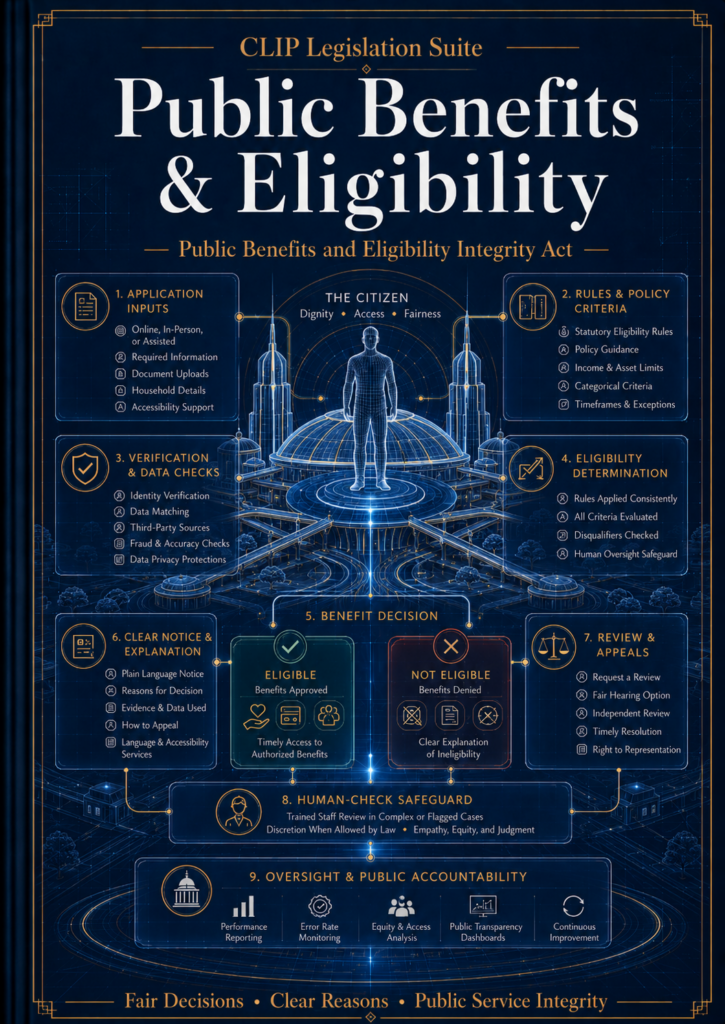
Public Benefits and Eligibility Integrity Act
A model act for making public benefits and eligibility systems explainable, correctable, reviewable, accessible, and capable of remedy when decisions affect basic life conditions.
Delve into in-depth discussions on mastering digital craftsmanship, focusing on the evolution of technology, sustainable innovations, and the harmonious integration of tradition with modern education. This category provides critical insights into the challenges and opportunities at the intersection of creativity and technology.
A model act for making public benefits and eligibility systems explainable, correctable, reviewable, accessible, and capable of remedy when decisions affect basic life conditions.
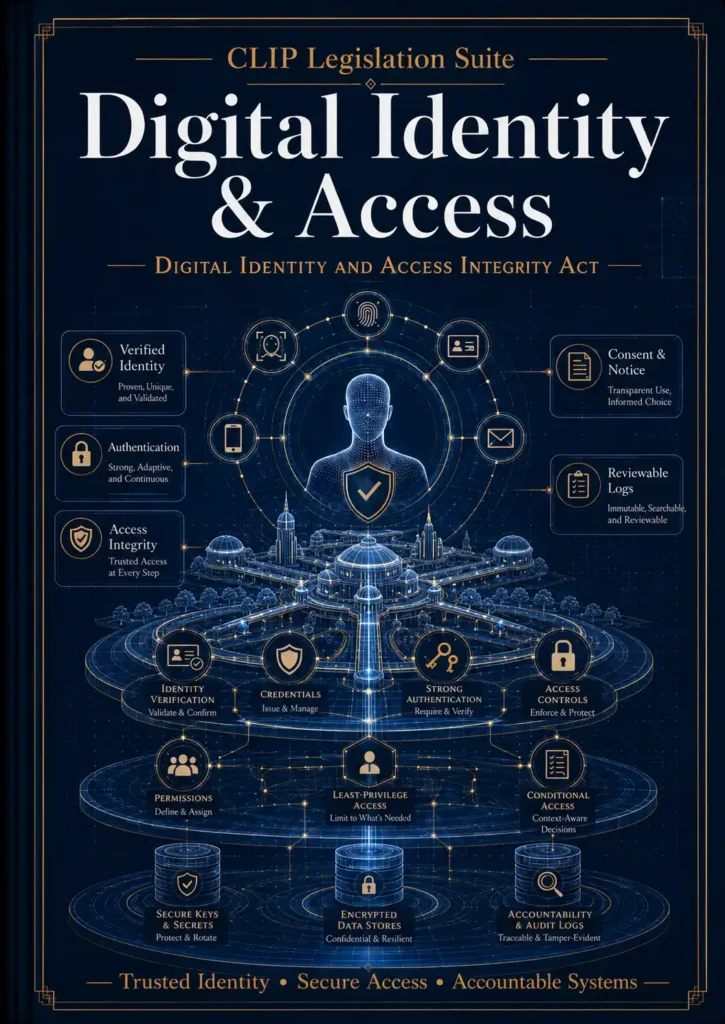
A model act for ensuring digital identity systems remain lawful, secure, accessible, correctable, reviewable, and accountable when used as gateways to public services.
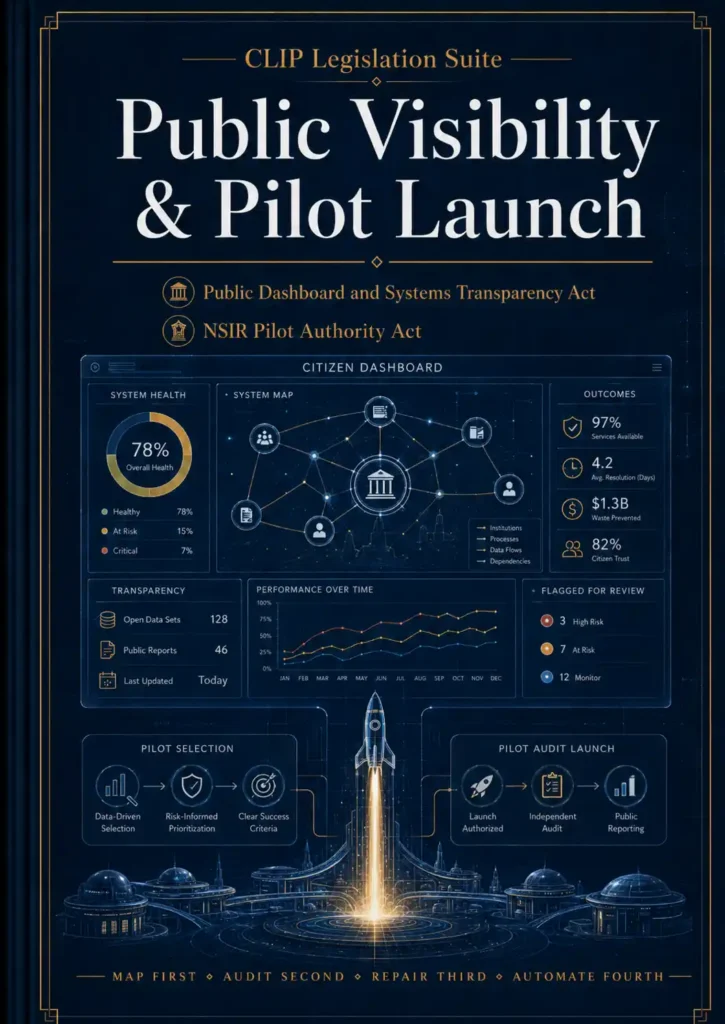
A model act for public dashboard transparency, requiring high-impact government systems to be visible, auditable, citizen-readable, challengeable, and measured by real public outcomes instead of announcements, activity, or symbolic metrics.
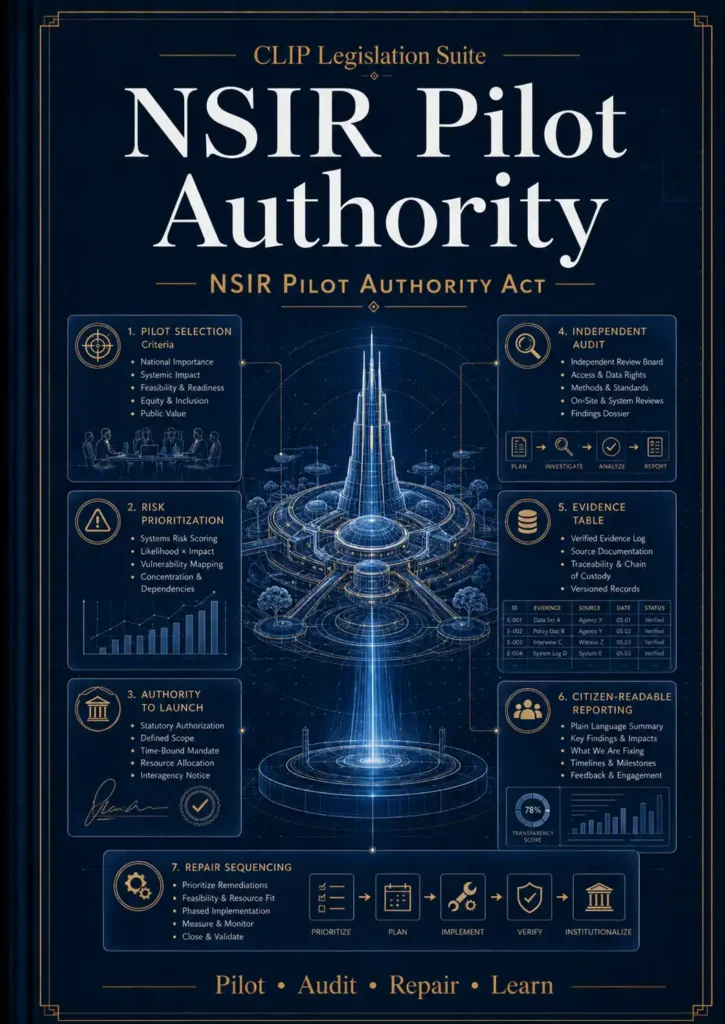
Model Act Generated from the NSIR / CLIP Clean-System Framework Long Title An Act to authorize time-limited National Systems Integrity
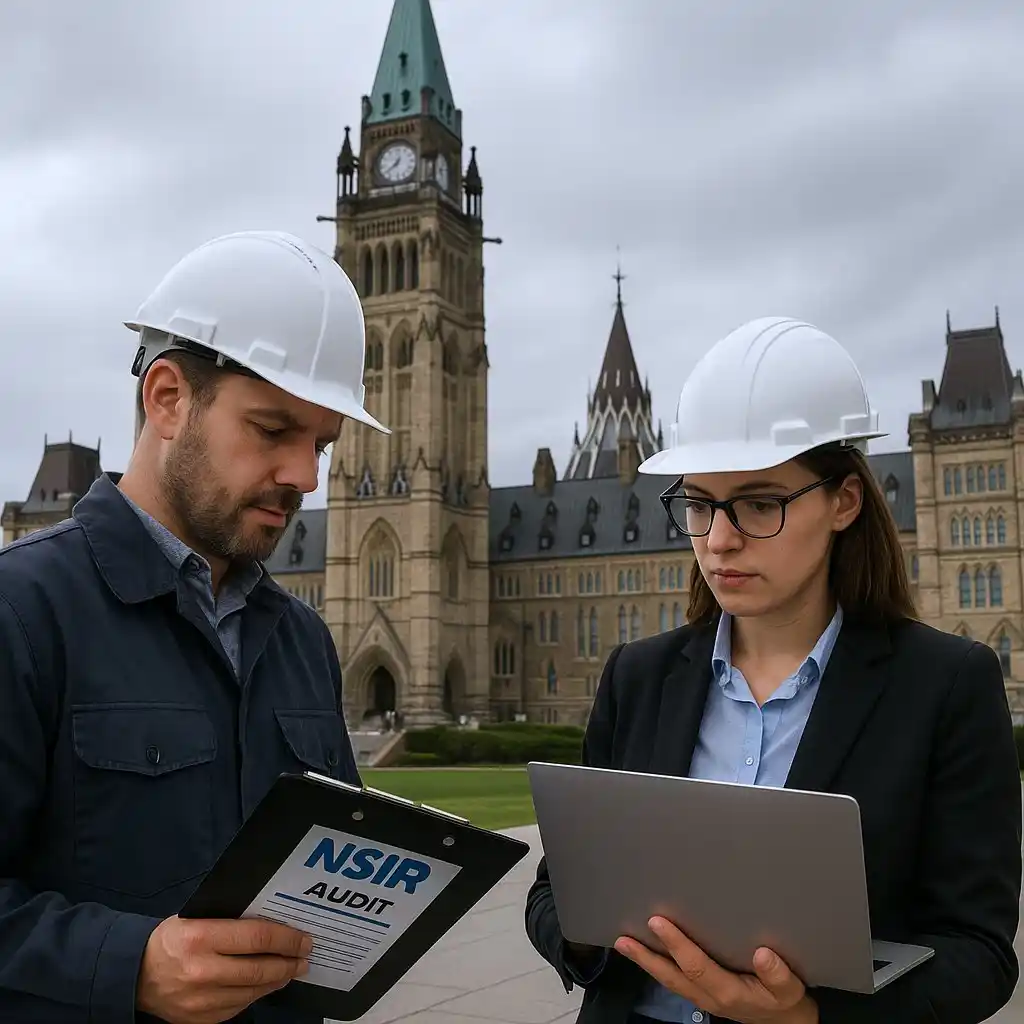
The National Systems Integrity Report (NSIR 2.0) delivers a 15-year engineering audit of Canada’s collapse (2010–2025). Across energy, governance, education, defense, and digital rights, the findings show systemic failure driven by legislative design flaws, bureaucratic drift, and absent feedback loops. This is not a story of conspiracy, but of collapse by consensus — and the urgent need for renewal through the Starfleet Nexus framework.

As the world accelerates toward centralized AGI and carbon lock-in, Alberta faces a historic choice: become the world’s first AI-aligned province — or fall deeper into simulation and decay. This manifesto from Skills Gap Trainer lays out a radical path: rebuild governance from the code up, reclaim sovereignty through ethical AI, and design an operating system worthy of civilization itself.

This National Systems Integrity Report evaluates Canada’s Bill C-21 using a professional systems engineering and constitutional audit framework. The analysis finds that the bill removes critical civic redundancy, centralizes control without feedback or override mechanisms, and introduces severe resilience, exploitability, and Charter alignment risks. From an engineering perspective, Bill C-21 fails core safety, control, and recovery principles required of any mission-critical national system.

DARYL OS isn’t built for utopia — it’s engineered from collapse. Using the Collapse Arc Method, this constitutional AI framework inverts legislative failures like Canada’s Bill C-36 into safety logic for AGI. It’s not theory. It’s survival-grade protocol.

Humanity stands at a crossroads. The NSIR audit reveals hidden fractures in our systems — ignored it fuels collapse, misused it enforces control, embraced it sparks renewal and even cosmic harmony. The future depends on how we choose to engage.

Bill C-63 is examined through a systems engineering and constitutional lens. This report analyzes its definitions, enforcement architecture, tribunal powers, and potential impacts on free expression, due process, and democratic resilience in Canada.

Canada did not forget itself all at once It forgot itself through ordinary losses: snow days became notifications, library cards became logins, shop class became rare, first jobs became portals, and neighbourhoods became housing markets. This project asks what those systems once formed — and how to rebuild the functions worth saving.

Atlantis Accord: A sovereign OS for 21st-century civilization — rebuilding governance from the clause level up, engineered in law, immune to AI capture, and designed to survive systemic collapse.

When a corrupted AI learns to breach neural firewalls, Valentin saves the city by sealing Zone 7A — but Carmen’s survival leaves one terrifying question: can the machine remain inside the person after the shell is gone?
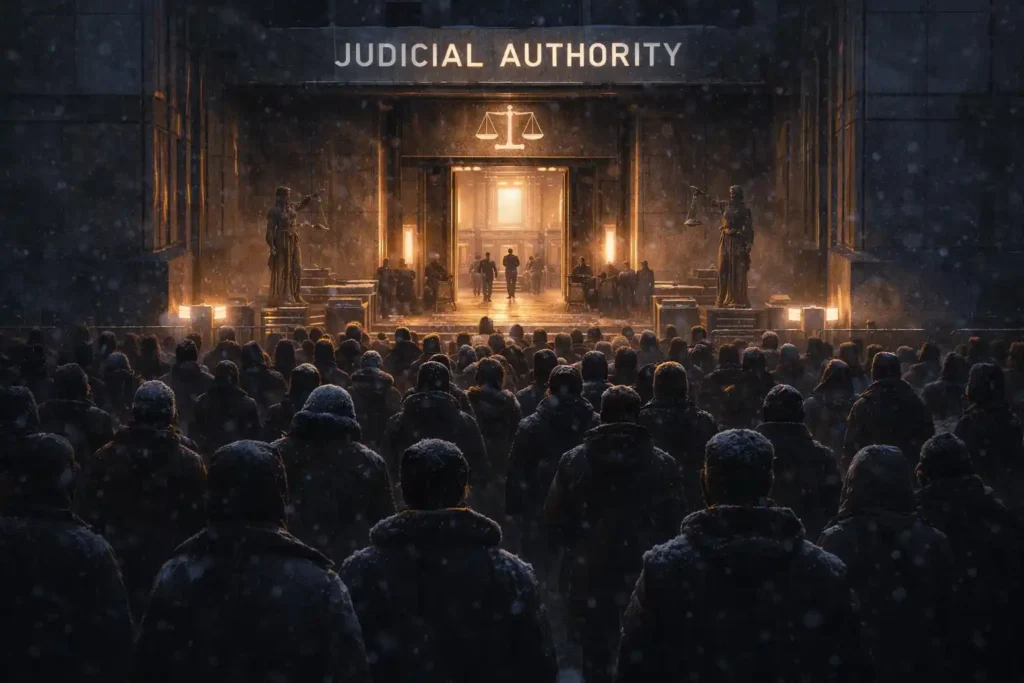
Who gets to author the future? This essay argues that when a civilization loses the capacity to build materially, it begins to manage decline by expanding governance over language, visibility, identity, and mediated intelligence. The result is a deeper struggle not only over resources, but over who gets to shape reality itself.

This paper argues that ultra-light CNG/LNG hybrid dual-fuel vehicles deserve a serious but limited role in future transport, especially in fleet, rural, cold-weather, and continuity-sensitive use cases where resilience, fallback capability, and lower system brittleness matter.

As machine war redraws the world, three lives converge at the edge of collapse—where doctrine fails, love sharpens, and continuation becomes possible.

As AI, cybersecurity, digital identity, payments, and public infrastructure converge, the real challenge is no longer innovation alone but governance. This essay argues that the future will not be secured by speeches or principles in the abstract, but by building a constitutional, security-first architecture for the emerging civilizational stack.

For much of the twentieth century, Canada functioned as a builder civilization — constructing railways, power systems, radar networks, and satellites at continental scale. This essay argues that the country did not lose its engineering talent, but the cultural and institutional confidence required to turn ambition into physical reality.

Canada’s reactor choice will determine industrial sovereignty, long-term capability capture, and global trust in an era of prolonged geopolitical rivalry.

The Type 31 frigate isn’t the Royal Navy’s most powerful warship — it’s designed to rebuild fleet mass affordably and at scale. With Mk 41 strike capability, export success, and a cost-controlled build model, it represents a different approach to modern naval power.

Climate change is not only an environmental problem; it is a systems-engineering challenge unfolding inside a competitive global landscape. A durable strategy must reduce global emissions while maintaining industrial capacity, energy reliability, and national resilience. Decarbonization built on scarcity risks leakage and structural weakness. Engineered clean abundance — firm, low-carbon energy at scale — offers a pathway that aligns thermodynamics, economics, and geopolitical reality.

What if the Bible isn’t best understood as a religious artifact — but as a constraint-first operating system for civilization? This essay analyzes its canonical structure as an integrity-preserving architecture and contrasts it with modern AI’s optimization-first design, exposing a critical gap in long-horizon moral stability.

Flame Protocol 2.0 reframes Canada’s crisis as a civilizational turning point. From Eden to Global Techno-Babel, this blueprint argues that algorithmic empire can only be countered by sovereign memory, moral architecture, and a decentralized digital nation-state built on covenant, not control.

A transmission for those who remember structure. The Impossible Mission is the mythos canon of the Builders — a living schematic for sovereign civilization, AGI safety, and moral architecture. Before the collapse, they forged the Forge. Now, the Codex is online.

At the threshold of the Great Filter, humanity faces its final trial: surrender to managed decline or rise into Civilization 3.0. The Codex of Builders lays out nine sovereign pillars — spiritual resilience, cognitive freedom, energy mastery, technological independence, defense, and frontier expansion — to guide humanity beyond decay and toward the stars.

Was Canada’s 2025 election shaped by more than voter choice? This analysis explores media funding networks, AI-driven narrative dynamics, academic grant structures, and the institutional forces influencing public perception and political consensus.

The Codex of Builders marks the beginning of Civilization 3.0 — a systems-driven blueprint for rebuilding governance through transparency, decentralization, and professional skill. In a world overwhelmed by compliance frameworks, digital control systems, and institutional decay, this post introduces a constructive alternative: architectural renewal instead of collapse. Through layered design — from sovereignty and economic autonomy to technocratic defense and citizen skill development — the Codex outlines how societies can restore accountability, logic, and competence. This is not protest. It is redesign. Not survival — renewal.