THE SPEECH AND THE SHADOW
An evidence-driven reconstruction of how Skills Gap Trainer’s earlier Canadian sovereignty framework may have anticipated the strategic architecture later expressed in Mark Carney’s Davos speech.
Canada is not simply passing isolated digital-era laws. It is assembling a layered governance stack across speech, identity, AI, data, cyber security, and platform regulation — an emerging operating system that could reshape visibility, access, surveillance, and human agency.
Canada is not facing isolated policy disputes, but a deeper systems transition: from constitutional, consent-based governance toward a managerial order built on harm language, technocratic legitimacy, digital compatibility, medical administration, and output-based sovereignty.
Part 4 argues that “Boomer” was kept fuzzy to avoid naming generational command, then tests the lock-in thesis against counterarguments before delivering a final verdict on Canada’s inherited strength, scarcity regime, and historical responsibility.
Part 3 argues that Canada’s lock-in survived not merely through policy failure, but because it rewarded insiders, shifted burdens onto later entrants, blamed the injured, and protected the whole structure with comforting national myths.
Canada’s housing crisis was not an accident of demand alone. It was produced through politicized land, filtered supply, thicker permissions, and a financial system that turned scarcity into collateral wealth. Part 2 shows how access narrowed, incumbents gained, and later entrants inherited the burden.
Canada’s decline was not just a string of policy failures. It was a long lock-in: a shift from building capacity to managing scarcity, from broad access to incumbency advantage, and from inherited strength to burden transfer. This report asks who held command while that order hardened — and who paid the price.
Who gets to author the future? This essay argues that when a civilization loses the capacity to build materially, it begins to manage decline by expanding governance over language, visibility, identity, and mediated intelligence. The result is a deeper struggle not only over resources, but over who gets to shape reality itself.
This paper argues that ultra-light CNG/LNG hybrid dual-fuel vehicles deserve a serious but limited role in future transport, especially in fleet, rural, cold-weather, and continuity-sensitive use cases where resilience, fallback capability, and lower system brittleness matter.
An exploration of housing scarcity in Canada, showing how rising costs, constrained land supply, and policy choices turned homes from shelter into scarce assets. The result is delayed adulthood, weaker family formation, and a country forced to choose between scarcity protection and building renewal.
The Housing Scarcity Regime examines how Canada turned housing from shelter into a scarcity-driven asset. It argues that land-use restrictions, weaker supply response, credit expansion, and homeowner politics helped transform housing into a system of exclusion, rising prices, and defended scarcity.
This article argues that Canada’s housing crisis did not begin with recent demand pressures alone. It traces the deeper structural shift to the 1970s, when land-use regulation made housing supply less responsive and turned homes into scarce financial assets.
As machine war redraws the world, three lives converge at the edge of collapse—where doctrine fails, love sharpens, and continuation becomes possible.
British Columbia’s Pacific partners — Japan, South Korea, Australia, and the United States — are the most natural allies for building the province’s future in technology, advanced industry, and innovation.
As AI, cybersecurity, digital identity, payments, and public infrastructure converge, the real challenge is no longer innovation alone but governance. This essay argues that the future will not be secured by speeches or principles in the abstract, but by building a constitutional, security-first architecture for the emerging civilizational stack.
This article outlines a structured framework of Canadian core values, identifying 45 principles that shape the nation’s moral, civic, cultural, and institutional identity.
Canada’s population growth since 2000 has been driven overwhelmingly by immigration, while fertility has fallen well below replacement and family formation has become harder to sustain. This raises a deeper question: can a society maintain long-term cohesion, shared memory, and cultural continuity when demographic renewal depends more on intake than on internal generational replacement?
Hormuz is not just a chokepoint. It is the first real test of whether a great power can keep strategic flow alive under missiles, drones, mines, commercial fear, and nuclear risk. This essay argues that the new measure of success is not sea supremacy, but continuity supremacy: the ability to preserve throughput, defend the wider GCC energy belt, and out-adapt disruption.
Canada does not lack resources, ambition, or technical talent. It has become slow at turning recognized need into built reality — in energy, project approvals, and defence procurement — and that failure now defines the country’s deeper state-capacity problem.
Canada’s decline is often treated as a pile of separate failures; housing, productivity, energy, procurement, and industrial drift. This essay argues they share a deeper structure: a long shift from a builder-oriented order that answered pressure with new capacity to a scarcity order that answers pressure with managed access, procedural layering, and permission gates. Housing is the clearest measurable proof of that change.
For much of the twentieth century, Canada functioned as a builder civilization — constructing railways, power systems, radar networks, and satellites at continental scale. This essay argues that the country did not lose its engineering talent, but the cultural and institutional confidence required to turn ambition into physical reality.
As AI moves from screens into factories, mines, grids, and logistics, sovereignty stops being about data centers and becomes about physical continuity. This doctrine argues Canada should hedge for two futures — globalized robotics or fragmented tech blocs — by building Level 2–3 sovereignty: control of intelligence layers, standards, and secure update governance, plus selective hardware wedges backed by procurement and trigger-based escalation.
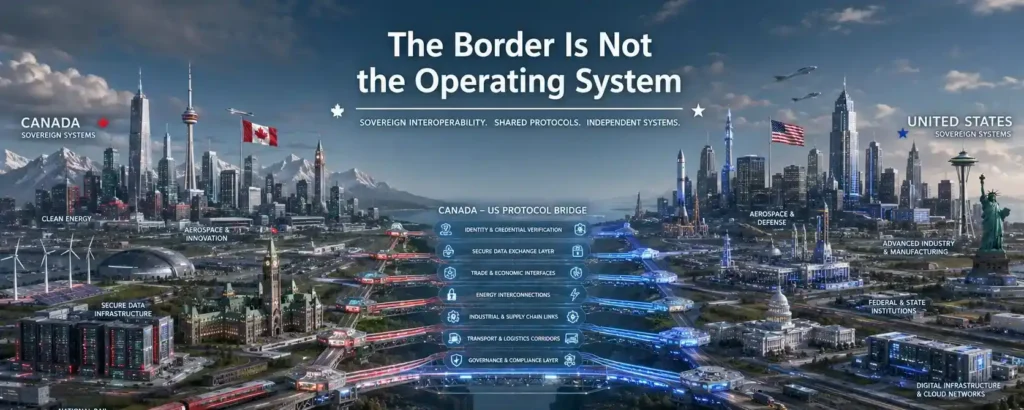
Why do the United States and Mexico remain structurally aligned despite friction, while Canada gradually drifts in tone and identity? The answer is not trade alone. It lies in civilizational architecture: immigration origin shifts, legitimacy models, demographic trajectory, and the difference between nation-centered states and multicultural framework-states. This essay maps the deeper structural forces reshaping North America.
Canada’s reactor choice will determine industrial sovereignty, long-term capability capture, and global trust in an era of prolonged geopolitical rivalry.
Option 1 — Clean & Analytical (Recommended)
For more than four centuries, Canada endured not by avoiding tension but by preserving continuity — in law, institutions, family, and production. Today, fertility decline, productivity stagnation, housing strain, and expanding administrative complexity raise a difficult question: is Canada still transmitting generational strength, or merely managing structural drift?
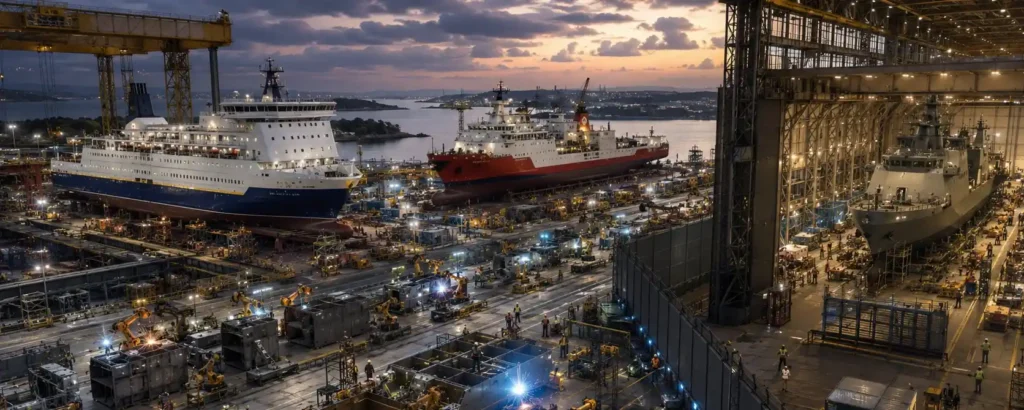
The Type 31 frigate isn’t the Royal Navy’s most powerful warship — it’s designed to rebuild fleet mass affordably and at scale. With Mk 41 strike capability, export success, and a cost-controlled build model, it represents a different approach to modern naval power.
Climate change is not only an environmental problem; it is a systems-engineering challenge unfolding inside a competitive global landscape. A durable strategy must reduce global emissions while maintaining industrial capacity, energy reliability, and national resilience. Decarbonization built on scarcity risks leakage and structural weakness. Engineered clean abundance — firm, low-carbon energy at scale — offers a pathway that aligns thermodynamics, economics, and geopolitical reality.