
I. Engineered Abundance: Climate as a Systems-Engineering Challenge
Engineered Abundance: Climate change is not only an environmental problem; it is a systems-engineering problem unfolding inside a competitive global landscape. Any serious solution must operate under the constraints of physics, economics, institutional capacity, and geopolitics simultaneously.
If de-carbonization is pursued primarily through energy cost escalation, production displacement, or enforced contraction — rather than technological substitution and energy expansion — industrial capacity may erode and emissions may leak abroad. In the absence of border mechanisms and cost parity, energy-intensive production can relocate to lower-cost, higher-emission jurisdictions. In that case, global emissions decline marginally, while industrial leverage shifts structurally.
Energy cost is a necessary but not sufficient condition of industrial power. Institutions, capital markets, labour productivity, and innovation ecosystems determine how effectively energy converts into output. However, sustained industrial scale has historically required abundant and affordable primary energy as a foundational input. Energy asymmetry amplifies institutional strength over time. A durable climate strategy must therefore reduce real global emissions while maintaining — or strengthening — industrial capacity, energy reliability, and national resilience.

II. Engineered Abundance: Energy Abundance as the Foundation
The foundation of such a strategy is energy abundance, not enforced scarcity. Energy abundance means firm, low-carbon electricity available at stable prices sufficient to support industrial expansion, electrification, and export growth without inducing energy poverty or grid instability.
Modern civilization runs on high, stable energy throughput. Reliable and affordable electricity is the multiplier that enables electrification, advanced manufacturing, and industrial competitiveness. Firm low-carbon power — nuclear where viable, hydro where geographically available, supported by a hardened and modernized grid — forms the backbone of a resilient de-carbonized system.
Achieving this requires standardized designs, disciplined capital structures, regulatory reform, supply chain scaling, and workforce development to prevent cost inflation and construction delays. Without firm capacity, electrification becomes fragile and expensive; with it, clean industry becomes structurally competitive.

III. Engineered Abundance: Sector-by-Sector Engineering Realism
Electrification should proceed rapidly where physics makes it straightforward: buildings, light transport, and many industrial motors. Harder sectors — steel, cement, aviation, shipping, and high-temperature industrial heat — require engineering realism rather than slogans. These sectors demand continuous, high-density energy and often chemical feed-stocks.
Transitional fuels such as natural gas can play a coal-displacement role only if methane leakage is aggressively minimized and lifecycle emissions are transparently measured. Displacement must be verifiable — otherwise demand growth, not substitution, occurs.
Over time, firm clean power enables electrified process heat, hydrogen-derived fuels, synthetic hydrocarbons, and other engineered solutions suited to sector-specific thermodynamic requirements. Coal becomes economically obsolete only when clean alternatives undercut it on price, reliability, and strategic security simultaneously. Price alone is insufficient; reliability and national energy security are decisive.

IV. Engineered Abundance: Embodied Carbon and Industrial Materials
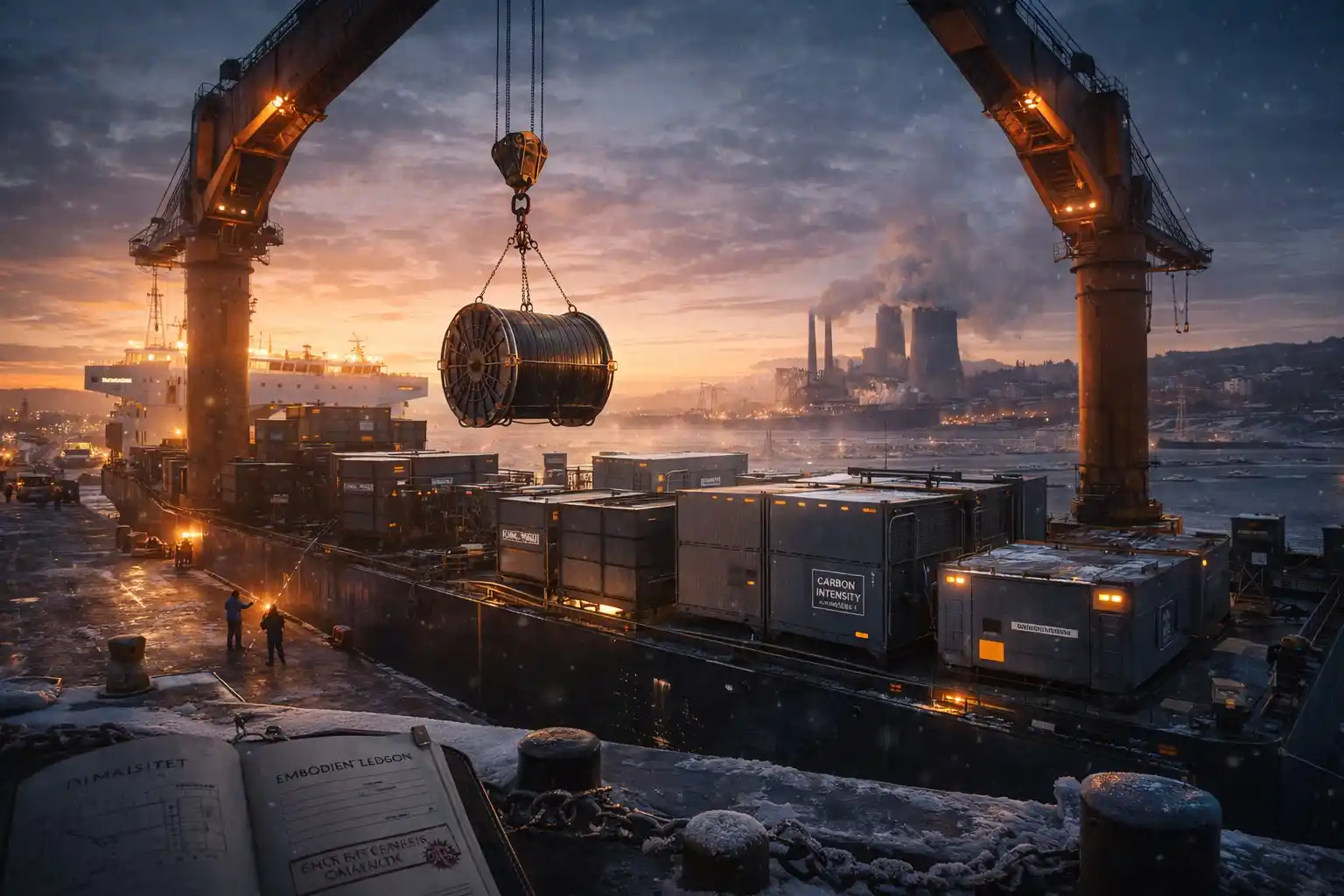
Electrifying end use without addressing embodied carbon weakens climate impact. Electrifying transport or industry does not meaningfully reduce emissions if upstream materials are produced using coal-heavy systems.
Advanced materials engineering — vehicle lightweighting, high-strength alloys, recyclable battery chemistries, low-carbon cement formulations, and clean steel production — must be integrated into the transition. Domestic refining, recycling loops, and clean-powered manufacturing reduce both life-cycle emissions and strategic dependency.
A de-carbonization pathway that ignores industrial materials, supply chains, and embedded energy merely shifts emissions geographically rather than eliminating them systemically.
V. Engineered Abundance: Economic Strength as the Scaling Mechanism
To scale globally and remain politically durable, the transition must generate economic strength rather than rely on contraction narratives. Historically, energy policies perceived as materially reducing living standards have encountered political resistance, limiting long-term durability. Clean systems spread when they are economically compelling, financeable, and reliable.
Exporting coal-displacing energy during transitional periods — with strict methane governance — can reduce global emissions if displacement is real and measurable. Over time, exporting clean fuels, grid systems, nuclear expertise, and industrial de-carbonization technologies transforms climate policy into industrial policy.
Revenue, scale, and capital formation fund further de-carbonization. Economic expansion aligned with emissions reduction is more durable than contraction imposed through cost escalation.

VI. Engineered Abundance: Preventing Emissions Leakage and Competitive Distortion
Carbon leakage is not theoretical. When domestic producers internalize carbon costs and imports do not, high-emission producers gain structural price advantage.
Border carbon intensity standards, clean procurement requirements, and trade coordination among lower-emission producers prevent emissions outsourcing. Competitive symmetry aligned with climate physics ensures that de-carbonization does not translate into industrial displacement.
Without symmetry, cost differentials compound into structural trade imbalances over time.

VII. Engineered Abundance: Energy Infrastructure as National Resilience
Energy infrastructure is resilience infrastructure. Grid redundancy, reserve margins, cyber hardening, diversified fuel sources, and secure supply chains are preconditions for economic stability.
Energy transitions that destabilize reliability undermine political durability. A transition that collapses under stress — supply shocks, geopolitical conflict, extreme weather, or capital scarcity — will not endure.
Resilience is not an accessory to de-carbonization; it is its survival condition.

VIII. Engineered Abundance: Energy Asymmetry and Structural Power
Energy asymmetry, when reinforced by institutional strength and capital formation, can compound into structural power asymmetry over time.
Nations that secure abundant, low-cost primary energy build industrial scale faster, produce advanced materials more cheaply, and accumulate capital through trade surpluses and manufacturing dominance.
Only a strategy that aligns thermodynamics, institutional capacity, economics, and resilience can deliver lasting global emissions reductions without sacrificing prosperity or sovereignty.

IX. Engineered Abundance: Historical Cycles of Energy, Power, and Dominance
For most of recorded history, nations have lived under the dominance of other nations — through empire, dependency, debt, or control of trade routes and critical technologies. That hierarchy is not accidental; it is a compounding system.
Cheap, reliable energy enables industrial scale; industrial scale enables military power, industrial power and technological power, supply chain dominance and financial dominance — reserve currency status designation in the case of superpowers — locks that advantage in by shaping credit, trade settlement, and the rules of global commerce.
China’s coal-backed industrial expansion fits this historical pattern: dispatchable low-cost energy at extreme scale accelerates manufacturing dominance and shifts the world’s production center of gravity.
If lower-emission economies significantly increase domestic energy costs without offsetting innovation, productivity gains, or border symmetry mechanisms, they may weaken industrial competitiveness relative to lower-cost producers. In competitive global markets, sustained cost asymmetries — absent compensating innovation or trade alignment — can translate into relative dependency over time.
The only durable answer is engineered clean abundance — firm low-carbon power so competitive that it breaks coal’s compounding advantage and prevents climate externalities from being converted into lasting geopolitical dominance.

X. Engineered Abundance: National Security as a Design Constraint
“Engineering without resilience and national security awareness is incomplete engineering.”
That should not be controversial. It is basic systems thinking. National security is an engineering constraint.
And yet in Canada, institutional frameworks frequently treat climate policy and national security as separate domains. This separation is not neutral. It reflects governance choices about which constraints are integrated into design models and which are scoped out.
As a result, security considerations are often under-integrated into public discourse, academic curricula, and technical policy design. When national security is excluded from the formal constraint set, it does not disappear from reality; it simply disappears from the model.
The effect is cumulative: generations of engineers, policymakers, and analysts are trained to optimize within a narrowed assumption set. In a competitive world, narrowed models produce fragile systems.
Climate discourse often treats security and sovereignty as political topics rather than as design parameters. But energy systems determine industrial capacity, supply chain autonomy, financial stability, and strategic leverage. Excluding national security from the constraint set does not remove it from reality; it simply removes it from the model.
This separation is not inevitable. It reflects institutional and governance choices about which constraints are emphasized and which are ignored. Engineers who understand security dynamics, geopolitical competition, and systemic interdependence must operate with a broad global lens rather than a narrow assumption set. Policymakers must do the same.
Responsibility follows from that choice. Whether national security is treated as a core design requirement — or left outside the model — is not determined by fate. It is determined by the people building the system.
In a competitive world, incomplete engineering does not merely produce inefficiency. It produces fragility.

“Energy abundance alone does not guarantee industrial dominance; institutional quality, innovation capacity, and financial systems determine how effectively energy translates into sustained economic power.”
To see our Donate Page, click https://skillsgaptrainer.com/donate
To see our Instagram Channel, click https://www.instagram.com/skillsgaptrainer/
To see some of our Udemy Courses, click SGT Udemy Page
To see our YouTube Channel, click https://www.youtube.com/@skillsgaptrainer