Over the past twenty-five years, Canada’s population growth has been overwhelmingly driven by immigration rather than domestic fertility. That is visible in the numbers. Since 2000, Canada has grown by roughly 10.8 million people. Under official demographic accounting, approximately 7.5–8.0 million of that growth came directly from net international migration, while roughly 3 million came from natural increase (births minus deaths).
At the same time, Canada’s total fertility rate has fallen well below replacement (2.1). In recent years it has hovered near 1.3 – 1.5 — among the lowest in Canadian history. Without immigration, population growth would have been minimal or even negative in several recent years.
When demographic sustainability is discussed in public policy and government-funded mainstream media, the dominant lever is intake. The public debate rarely treats domestic fertility decline as a central strategic issue. Family policy exists — child benefits, parental leave, childcare subsidies — but the framing remains individual and economic rather than civilizational or cultural.
However, the demographic breakdown becomes even more revealing when examined more closely.
Roughly 30% of births in recent decades have been to immigrant mothers (lower in the early 2000s, higher today). If approximately 0.9 million of the 3 million natural increase is attributable to immigrant mothers, then about 8.4–8.9 million of Canada’s 10.8 million population growth since 2000 — roughly 78–83% — can reasonably be described as immigration-driven when immigrant births are included.
Only approximately 2–2.5 million of that growth is attributable to long-established residents and their descendants.

This does not mean Canada allocates nothing to domestic continuity — that would be inaccurate. Canada spends billions annually on family policy and child benefits. However, in today’s Canada, the real prerequisite for raising children is not a government cheque — it’s access to stable family housing. In many regions that effectively means homeownership, and homeownership increasingly concentrates among those with high job security and predictable incomes — often in government or government-adjacent employment.
The structural gap is that most assistance activates after a family is already formed — after the child exists and the housing is secured. But the primary barrier occurs earlier, during the formation stage itself. The challenge is not supporting families once they are established; it is enabling the conditions under which young adults can realistically form families in the first place. Liberal Party policies tend to assume family formation as a given, rather than treating it as a process that requires upfront economic stability, housing accessibility, and long-term predictability. The broader structural result is that demographic continuity is now overwhelmingly sustained through migration rather than through internal generational replacement.
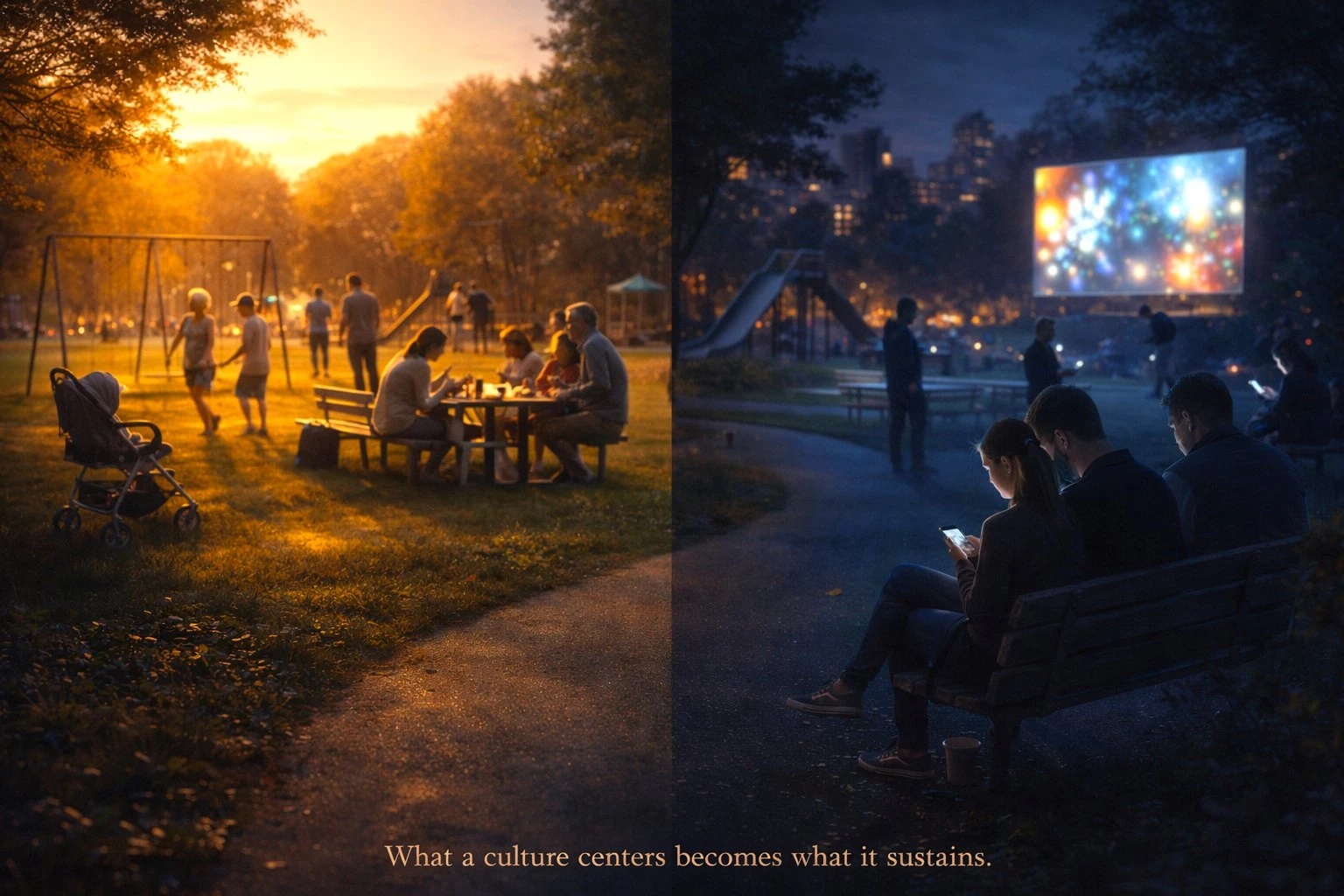
This is unusual not only in a historical sense, but also in comparison to many nations around the world today. In many societies — including modern Eastern and Southern nations — public discourse centers far more on family life, community continuity, and intergenerational activities than on immigration levels.Media, civic events, and cultural programming regularly highlight families, children, and communal gatherings. In some countries, dozens or even hundreds of communities organize annual retreats or seasonal gatherings where thousands of families spend extended periods together in shared spaces such as beaches, parks, or mountain regions. These events reinforce social bonds, normalize child-centered life, and make intergenerational continuity visibly central to the culture.
By contrast, Canada’s national conversation has, for decades, focused heavily on demographic intake, immigration levels, labour supply, housing pressures, and identity policy. The difference is not merely statistical — it is atmospheric. One model visibly celebrates generational renewal; the other treats population maintenance primarily as an administrative and economic matter.
That shift has cultural consequences.
A mature civilization does not rely almost entirely on demographic replacement from outside its own generational cycle. Population growth and civilizational continuity are not identical concepts. A country can grow numerically while its birth culture weakens. If nearly all net growth comes from intake rather than internal family formation, policymakers should ask whether they are primarily managing labour supply or sustaining long-term social cohesion.
Nations are not merely economic zones; they are value-transmitting and identity-forming systems. Their continuity depends on the successful transmission of norms, memory, and shared meaning from one generation to the next. When that transmission weakens, cohesion weakens with it. A civilization falters not because its population changes, but when its core principles are no longer consistently reproduced and internalized.
Like the kernel of an operating system, a society’s foundational values must maintain structural integrity across updates and expansions. Growth and adaptation are natural, even necessary — but they cannot come at the expense of rewriting the core architecture without deliberate integration. Sustainable societies renew themselves internally by reproducing and transmitting their norms across generations, rather than relying solely on demographic supplementation to maintain numerical stability.
Media and Cultural Reinforcement Layer
In low-fertility societies, children become statistically rarer and therefore less central in public life. Public space gradually shifts toward adult-oriented consumption — nightlife, entertainment, identity discourse, and career narratives — rather than intergenerational visibility.
Canada’s mainstream media ecosystem both reflects and reinforces this shift.
News cycles focus heavily on:
-
Immigration levels
-
Identity policy
-
Labour shortages
-
Housing and economic intake
Comparatively less attention is devoted to:
-
Fertility decline as a national question
-
Cultural valuation of parenthood
-
Public rituals around children
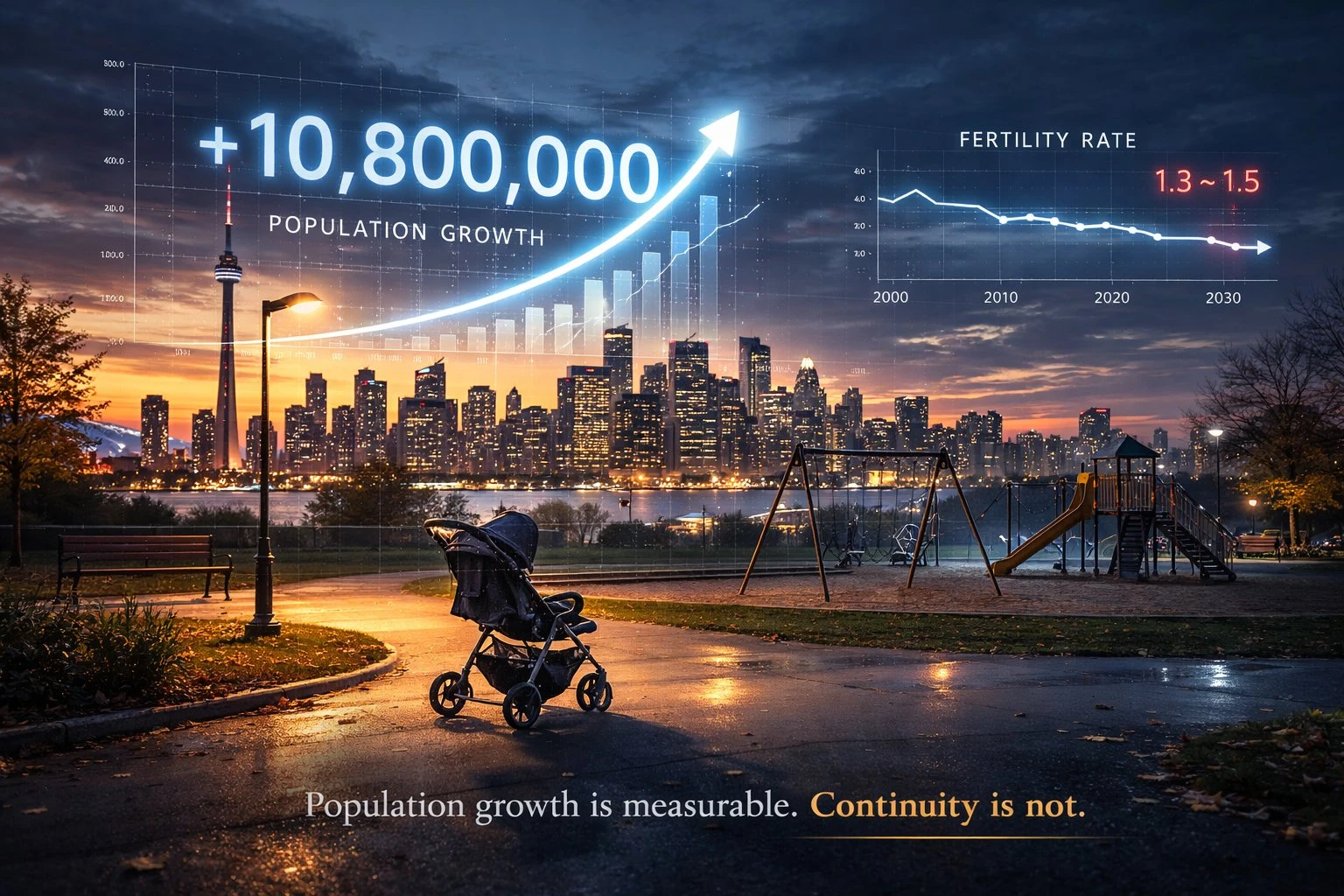
Intergenerational Continuity as Civic Identity
In entertainment media, including major streaming platforms, dominant themes often revolve around adult relationships, personal autonomy, and conflict-driven narratives. Stable family life and communal child-centered life are rarely framed as aspirational national ideals.
Government-funded mainstream media plays a structural role in shaping national narrative. When that media disproportionately emphasizes immigration levels, identity debates, and intake policy — while rarely centering family formation, fertility decline, or intergenerational continuity — it signals a hierarchy of civic priorities.
Corporate streaming platforms, driven by market incentives and contemporary ideological trends, often amplify adult-centered narratives rather than depictions of stable family life or communal intergenerational bonds. While this may not reflect coordinated hostility, it does illustrate a commercial and cultural framework that does not prioritize civilizational continuity as a core theme.
The concern is not that media is secretly plotting destruction. The concern is that a media ecosystem shaped by liberal individualism, engagement incentives, and identity-driven narratives may unintentionally sideline the cultural centrality of children and generational renewal.
In traditional or higher-fertility societies:
-
Strangers interact warmly with infants.
-
Extended family gatherings are common.
-
Public parks are visibly intergenerational.
-
Large group baby-centered events are normalized.
In highly individualist, low-fertility societies:
-
Parenting becomes privatized.
-
Babies are treated primarily as a personal responsibility.
-
Public enthusiasm becomes more restrained.
-
Intergenerational clustering declines.
The shift is subtle but perceptible.
When one compares public atmosphere, community behaviour, and visible intergenerational interaction, there appears to be a noticeable difference in how centrally children are positioned within everyday cultural life. In some societies, babies and young families occupy a highly visible and emotionally reinforced place in public space; in others, that visibility appears diminished.
This need not imply hostility toward children or coordinated erasure. It is plausibly the cumulative outcome of:
-
Urban housing costs delaying family formation
-
Dual-income economic pressures
-
Secularization
-
Rising age at first birth
-
Individual autonomy norms
-
Market media prioritizing adult-centered narratives
The Liberal Party’s ideological framework places strong emphasis on individual autonomy, pluralism, secularization, and mobility. While these principles expand personal freedom, they may also deprioritize intergenerational continuity as a central civic value. When public policy consistently emphasizes inclusion, intake, and identity rights — while rarely framing fertility decline or family formation as matters of long-term sustainability — it reinforces a broader cultural shift already underway in liberal modern societies.
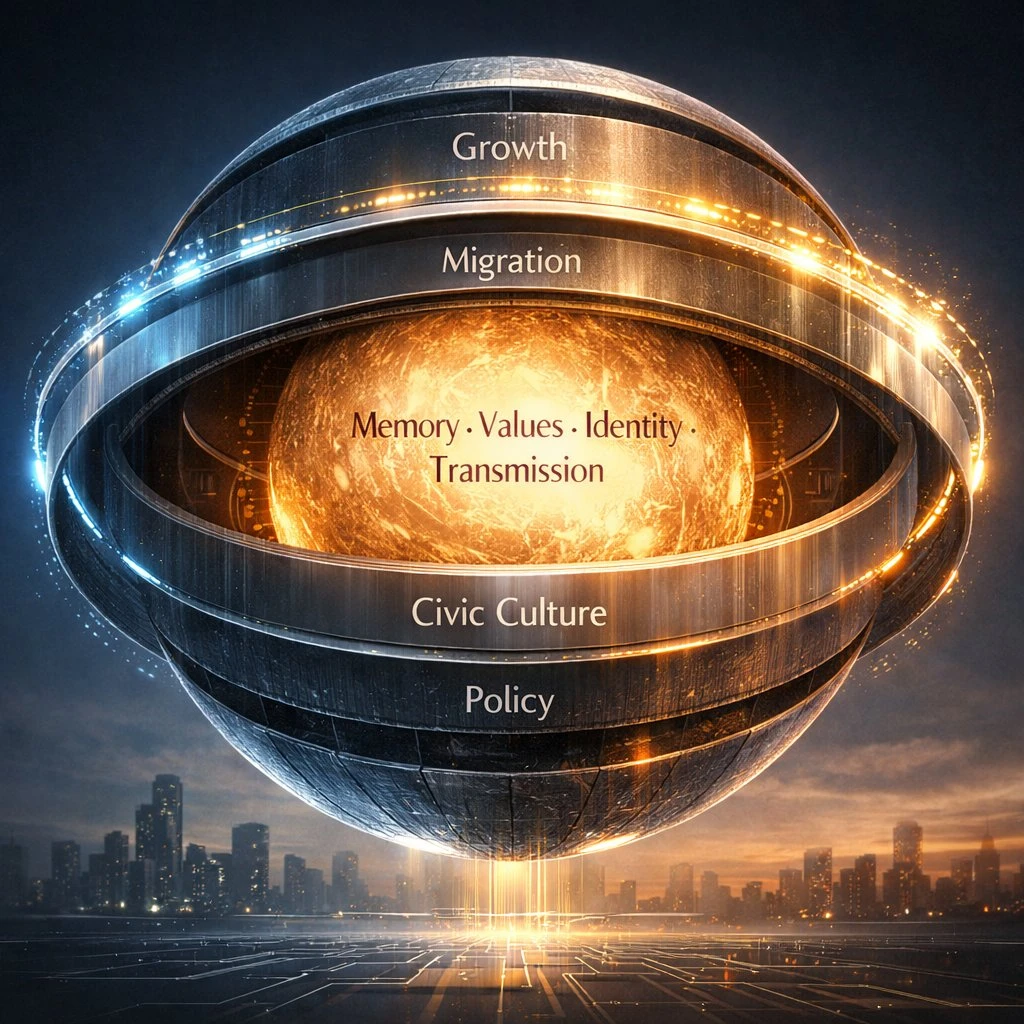
What Is Actually at Stake
The deeper question is not immigration versus babies.
It is whether a society that:
-
Sustains population primarily through intake
-
Treats fertility decline as a private lifestyle choice
-
De-centers public baby visibility
-
Frames demographic growth economically rather than generationally
… can maintain long-term social cohesion, shared memory, and value continuity at the same strength as a society that visibly centers intergenerational renewal.
That is a legitimate philosophical and policy question.
It is not about ethnicity. It is about civilizational structure.
Conclusion
Canada’s demographic growth since 2000 has been overwhelmingly immigration-driven, even when immigrant births are included. At the same time, fertility has fallen well below replacement and family formation is increasingly privatized rather than nationally centered. When public discourse emphasizes intake while rarely elevating intergenerational continuity as a shared civic priority, it risks weakening the symbolic centrality of children in public life. Over time, that shift may affect cohesion, identity transmission, and cultural memory.