🧭 R2 DEFINITIVE FULL-DEPTH HUMAN-READABLE EDITION
The Complete SGT / NSIR Canadian Architecture + Mature FCMA Hardening + Starfleet Integrity Closure — Presented as One Human-Legible System
First-principles review and editorial assistance (2026): ChatGPT — GPT-5.6 Sol (OpenAI). Original article and concepts: Skills Gap Trainer (SGT). Inherited Tech Concepts from Humanity listed at bottom in citation and sources list.
🔗 SGT FRAMEWORK INTEGRATION NOTE
The Digital Federation was developed through a Canadian national architecture, but its hardened technical core — FCMA, bounded AI, modular civic systems, machine identity, interface contracts, failure containment, vendor replaceability, evidence architecture, Second Paths and interoperability without political merger — is designed to be country-portable. Unless a section specifically addresses Canadian constitutional law, provincial jurisdiction, Canadian institutions or historical Canadian project lineage, the underlying systems-engineering architecture may also be adapted to the United States. In a U.S. implementation, lawful authority would remain with the appropriate federal, state, tribal, territorial, county and municipal institutions rather than being inherited from the Canadian jurisdictional model.
The Digital Federation does not stand alone. It is designed to interoperate with and draw support from the wider family of compatible SGT architectures, while preserving the distinct purpose and authority boundary of each framework.
At the national level, NSIR provides the mapping, audit, diagnosis, repair and feedback methodology; Civilization OS provides the higher-order systems frame; FCMA provides the hardened modular civic implementation layer; and the Governance Operating System provides complementary human-governed institutional repair mechanisms. The Bridge Protocol extends the same logic across sovereign borders by defining how independent systems can cooperate without surrendering their lawful authority.
Beyond the national layer, Sector 001 / Terra Nexus provides a decentralized civilization-scale cooperation architecture. The Digital Federation can contribute compatible national interfaces, standards, verified knowledge, trained people and productive capability into that wider network where participation is lawful and voluntary. The governing principle remains:
INTEROPERABILITY ≠ POLITICAL MERGER.
Canada, the United States, or another participating country remains sovereign inside its own constitutional order. The wider Nexus connects capable systems; it does not erase their borders, governments or lawful authority.
Other aligned SGT frameworks reinforce different parts of the same architecture: Digital Sovereignty strengthens citizen control, anti-surveillance, replaceability and exit; the Builder Class connects digital modernization to engineering, skilled trades, infrastructure and productive capacity; Digital Twins provide simulation and decision-support without becoming authoritative reality; the Great Filter framework supplies the long-horizon resilience and civilizational-risk lens; and the Atlantis Accord / Nexus lineage contributes additional sovereign-system and decentralized-cooperation thinking.
The relationship is therefore not one giant centralized system. It is closer to a stack of cooperating architectures:
Civilization OS / SGT-TNG / Starfleet civilizational principles
↓
Sector 001 / Terra Nexus — civilization-scale cooperation
↓
Bridge Protocol — sovereign interoperability between countries
↓
Digital Federation — national coordination architecture
↓
NSIR / Governance OS — audit, diagnosis, repair and institutional governance
↓
FCMA — modular technical implementation
↓
Municipal, state/provincial, federal and other lawful institutional systems
Each layer supports the others without silently inheriting their authority.
That last sentence is important because the existing R2 report explicitly treats wider SGT / Starfleet architecture as parent or interface context where relevant, rather than automatically making it national jurisdiction.
Architecture core: R2 — unchanged
Publication status: Definitive integrated reading layer
Source-depth: Fully preserved
Architecture deleted or replaced for readability: None
Operational validation: Still separate and unclaimed
> PRESERVE THE DEPTH. PRESERVE THE LINEAGE. PRESERVE THE MATURE RULINGS. MAKE THE STRUCTURE HUMAN-LEGIBLE.
The preserved R2 master begins immediately below. Every added Human Reading Guide is visibly separated from the underlying architecture and may be removed without deleting an R2 design line.
━━━━━━━━━━━━━━━━━━━━━━━━━━━━━━━━━━━━━━━━━━━━━━━━━━━━
<!– END R2 HUMAN-READABLE PUBLICATION LAYER –>
### 🔐 CURRENT R2 DISTRIBUTED-TRUST NOTE
The blockchain-specific mechanism below is preserved as historical source architecture.
Its underlying trust objective remains eligible.
Implementation is governed by the current Distributed Trust Selection Gate.
Do not infer that blockchain is mandatory, prohibited or automatically preferred from the recovered historical wording alone.
Where historical wording conflicts with lawful authority, truth-status separation, bounded trust domains, correction rights, recovery requirements or other controlling R2 rules, the mature R2 ruling controls.
━━━━━━━━━━━━━━━━━━━━━━━━━━━━━━━━━━━━━━━━━━━━━━━━━━━━
🇨🇦 𝐓𝐇𝐄 𝐃𝐈𝐆𝐈𝐓𝐀𝐋 𝐅𝐄𝐃𝐄𝐑𝐀𝐓𝐈𝐎𝐍
━━━━━━━━━━━━━━━━━━━━━━━━━━━━━━━━━━━━━━━━━━━━━━━━━━━━
🧭 𝐅𝐈𝐍𝐀𝐋 𝐅𝐔𝐋𝐋 𝐒𝐎𝐔𝐑𝐂𝐄-𝐃𝐄𝐏𝐓𝐇 𝐁𝐔𝐋𝐋𝐄𝐓 𝐄𝐃𝐈𝐓𝐈𝐎𝐍
A Canadian Architecture for Sovereign, Interoperable, Auditable and Recoverable Government
🔒 Same full source-depth architecture.
📚 No major section removed.
🧠 Same Pass 1–6 truth and lineage controls.
📊 All tables converted into bullet hierarchies.
✨ Real headings, emoticons and deep indentation retained for X / WordPress readability.
━━━━━━━━━━━━━━━━━━━━━━━━━━━━━━━━━━━━━━━━━━━━━━━━━━━━
━━━━━━━━━━━━━━━━━━━━━━━━━━━━━━━━━━━━━━━━━━━━━━━━━━━━
🔗 𝐓𝐇𝐄 𝐃𝐈𝐆𝐈𝐓𝐀𝐋 𝐅𝐄𝐃𝐄𝐑𝐀𝐓𝐈𝐎𝐍
━━━━━━━━━━━━━━━━━━━━━━━━━━━━━━━━━━━━━━━━━━━━━━━━━━━━
◆ 𝐀 𝐂𝐚𝐧𝐚𝐝𝐢𝐚𝐧 𝐀𝐫𝐜𝐡𝐢𝐭𝐞𝐜𝐭𝐮𝐫𝐞 𝐟𝐨𝐫 𝐒𝐨𝐯𝐞𝐫𝐞𝐢𝐠𝐧, 𝐈𝐧𝐭𝐞𝐫𝐨𝐩𝐞𝐫𝐚𝐛𝐥𝐞, 𝐀𝐮𝐝𝐢𝐭𝐚𝐛𝐥𝐞 𝐚𝐧𝐝 𝐑𝐞𝐜𝐨𝐯𝐞𝐫𝐚𝐛𝐥𝐞 𝐆𝐨𝐯𝐞𝐫𝐧𝐦𝐞𝐧𝐭
────────────────────────────────────────────
▰ ◆ 𝐌𝐚𝐬𝐭𝐞𝐫 𝐈𝐧𝐭𝐞𝐠𝐫𝐚𝐭𝐞𝐝 𝐄𝐝𝐢𝐭𝐢𝐨𝐧 — 𝐑𝐞𝐬𝐭𝐨𝐫𝐚𝐭𝐢𝐨𝐧 + 𝐓𝐞𝐜𝐡𝐧𝐢𝐜𝐚𝐥 𝐇𝐚𝐫𝐝𝐞𝐧𝐢𝐧𝐠 + 𝐒𝐓𝐀𝐑𝐅𝐋𝐄𝐄𝐓 𝐈𝐍𝐓𝐄𝐆𝐑𝐈𝐓𝐘 𝐂𝐋𝐎𝐒𝐔𝐑𝐄 𝐑𝟐
Historical project lineage: The Digital Federation: How AGI, Blockchain & NSIR Can Rebuild Canada From Collapse.
This edition: preserves the original SGT/NSIR Canadian architecture while integrating the later Federated Civic Module Architecture (FCMA), constitutional, cybersecurity, privacy, AI-governance, failure-recovery, economic-validation and deployment hardening.
<!– BEGIN R2 HUMAN-READABLE PUBLICATION LAYER –>
━━━━━━━━━━━━━━━━━━━━━━━━━━━━━━━━━━━━━━━━━━━━━━━━━━━━
🧭 𝐑𝟐 𝐃𝐄𝐅𝐈𝐍𝐈𝐓𝐈𝐕𝐄 𝐅𝐔𝐋𝐋-𝐃𝐄𝐏𝐓𝐇 𝐇𝐔𝐌𝐀𝐍-𝐑𝐄𝐀𝐃𝐀𝐁𝐋𝐄 𝐄𝐃𝐈𝐓𝐈𝐎𝐍
━━━━━━━━━━━━━━━━━━━━━━━━━━━━━━━━━━━━━━━━━━━━━━━━━━━━
Architecture revision: R2 — unchanged
Publication layer: Definitive Full-Depth Human-Readable Edition
Status: This is not R3 and it is not a replacement architecture.
The purpose of this edition is to recover the strongest communication lessons from every previous Digital Federation generation without deleting, compressing, renaming, reordering, or silently replacing the R2 architecture.
The governing rule is:
> NEVER REMOVE DEPTH TO GAIN READABILITY. ADD ORIENTATION SO THE DEPTH BECOMES READABLE.
And the architectural preservation rule is:
R2 REMAINS THE CONTROLLING DESIGN. EARLIER VERSIONS MAY IMPROVE EXPLANATION; THEY MAY NOT OVERRIDE MATURE R2 RULINGS.
🇨🇦 EXECUTIVE SUMMARY — THE DIGITAL FEDERATION
Canada does not suffer from a shortage of intelligence, institutions, resources or technical capability. It suffers from a systems problem. Capable organizations frequently operate through fragmented interfaces, duplicated processes, incompatible information structures, unclear responsibility boundaries, accumulated technological dependencies and weak mechanisms for detecting and repairing failure. The Digital Federation is a proposed architecture for addressing that problem without replacing Canadian federalism with technological centralization.
Its central proposition is simple:
INTEROPERABILITY AT THE INTERFACE; AUTHORITY AT THE LAWFUL NODE.
Municipalities remain municipalities. Provinces remain provinces. Federal institutions remain federal institutions. Courts remain courts. Health authorities remain responsible for health state, property registries remain responsible for authoritative property state, and treasury authorities remain responsible for fiscal state. The objective is not to combine those institutions into one enormous government database, one national artificial intelligence or one central operating authority. It is to make their boundaries explicit, their interfaces understandable, their evidence auditable, their technology replaceable and their failures recoverable.
In practical terms, the Digital Federation asks Canada to coordinate more without centralizing everything; automate more without surrendering lawful human authority; share more without creating universal databases; and use advanced technology without allowing the technology itself to become sovereign.
1. From Digital Bureaucracy to Systems Engineering
Conventional digital-government modernization often begins too low in the architecture. A ministry acquires a new portal, a province replaces a form, a municipality adopts a permitting platform, one department deploys AI, and another builds a new identity system. Each project may improve something locally while leaving the larger system fragmented. The result can be a more digital bureaucracy without a fundamentally more coherent system.
The Digital Federation begins one level higher. Before choosing AI, blockchain, cloud infrastructure, databases or other technologies, it first asks what legitimate public function is being performed, who has lawful authority, what rights constrain that authority, what state must remain authoritative, what information is actually necessary, who may call the service, what happens when the service fails, who can correct a false decision, whether another vendor can replace the implementation, and whether the function can continue in degraded conditions.
The design sequence is therefore:
PURPOSE → AUTHORITY → RIGHTS → FUNCTION → FAILURE → BOUNDARIES → INTERFACES → IMPLEMENTATION → TECHNOLOGY → PILOTS → EVIDENCE → ITERATE
Technology comes after the institutional problem has been defined. The government problem should determine the technology; the technology should not determine the government.
2. A Federation of Bounded Systems
The Digital Federation is not one machine. It is a federation of bounded civic systems connected through defined interfaces. The larger architecture retains the layers developed throughout the SGT / NSIR work: Civilization OS provides the high-level systems frame; NSIR provides mapping, diagnosis, audit, repair and feedback; the Digital Federation provides the Canadian coordination architecture; Municipal Nodes and Provincial Stacks provide local and provincial implementation environments; the Federation Interoperability Layer allows jurisdictions to understand bounded assertions without merging their domestic systems; and FCMA — the Federated Civic Module Architecture — provides the hardened technical architecture underneath consequential civic functions.
The practical rule is:
STANDARDIZE THE SOCKET, NOT THE MACHINE.
Two provinces do not need identical health systems to exchange a valid health assertion. A municipality does not need access to an entire provincial identity database to determine that a credential is valid. A benefit program does not need a citizen’s complete tax history if it can lawfully establish that an income threshold has been met. A business operating across provinces should not need to recreate the same verified facts repeatedly simply because receiving institutions use different internal systems.
Compatibility therefore does not require uniformity. Coordination does not require submission, and a common interface does not create a common sovereign.
3. Authority, Identity, AI, Execution and Evidence
One of the most important mature corrections in the architecture is the separation of five different trust functions:
IDENTITY ≠ AUTHORITY ≠ COGNITION ≠ EXECUTION ≠ EVIDENCE
Identity establishes who or what an actor is. Authority establishes what that actor may lawfully decide. Cognition analyzes information and proposes conclusions. Execution performs an authorized action. Evidence records what happened. Those functions should not silently collapse into one another.
An AI may identify an anomaly without gaining authority to punish someone. An identity credential may establish who a person is without becoming a master key to every public system. A payment service may execute an approved transfer without becoming the authority that determines eligibility. A blockchain may prove that an institution signed a record at a particular time without proving that the underlying real-world statement was correct.
The permanent governance principle is therefore:
CAN DO ≠ MAY LAWFULLY DO.
Technical capability never manufactures jurisdiction. Lawful authority remains attached to the institution that legitimately possesses it, while software performs bounded functions on its behalf.
4. Intelligent Use of AI, Blockchain and Cryptography
The original Digital Federation placed AI, blockchain and zero-knowledge technology near the centre of its implementation vision. The mature architecture keeps the useful objectives of those technologies while removing the assumption that every problem should use the same mechanism.
AI becomes a bounded and replaceable component rather than a single “Government AI.” Some civic functions may use AI extensively for analysis, translation, anomaly detection, simulation or workflow support. Others may use little or none. The architecture can explicitly specify AI SLOT 0 — NONE where an automated cognitive system would add more risk than value.
Blockchain is treated with the same discipline. The mature architecture does not ask whether government should be “on blockchain.” It asks what trust topology exists. Where one lawful institution owns canonical state, a conventional authoritative database may be the correct mechanism. Where that lawful authority owns the state but citizens or other institutions need independently verifiable history, signed transparency or provenance structures may be preferable. Where several autonomous institutions genuinely require one shared ordered history, no participant should possess unilateral editing authority, and no acceptable sole recorder exists, a permissioned distributed ledger or equivalent distributed-consensus mechanism may be the best fit.
The rule is:
BLOCKCHAIN IS NEITHER THE DEFAULT NOR THE EXCEPTION. THE TRUST TOPOLOGY DECIDES.
Zero-knowledge proofs and verifiable credentials remain particularly valuable where a service needs to establish a bounded fact without obtaining the complete underlying record. The architecture can therefore use advanced cryptography aggressively where it solves a real trust problem while retaining simpler technologies where they are safer, cheaper and easier to govern.
5. Privacy Through Boundaries Rather Than Promises
The Digital Federation rejects the assumption that interoperability requires one universal citizen database. Lawful institutions retain their own authoritative records and expose only the information required for a legitimate interface.
Whenever possible:
EXCHANGE THE PROOF, NOT THE DATABASE.
A coherent citizen experience therefore does not require every institution to know everything about the citizen. A provincial service may confirm that a credential is valid without disclosing the entire source record. A benefit system may receive a bounded eligibility assertion rather than a complete tax history. A professional licensing interface may verify that a qualification is current without merging educational databases across jurisdictions.
This creates a mature version of the original aspiration of “public ledger, private life.” Canonical state can remain private or lawfully bounded while selected proofs, receipts, signatures, provenance events and audit evidence remain independently verifiable. Privacy is produced through architecture — least privilege, least knowledge, purpose limitation and bounded disclosure — rather than through promises layered on top of unrestricted data collection.
6. Failure, Recovery and Sovereignty
A digital state is not sovereign merely because it works under ideal conditions. It must remain understandable and recoverable when technology, institutions, vendors or assumptions fail.
The architecture therefore treats failure as a first-class design condition. Civic modules require defined failure behaviour, degraded modes, human fallback, Second Paths, rollback, reconciliation, observability, recovery procedures and explicit responsibility for repair. Systems must be able to stop safely, continue in reduced form where necessary, restart after deep failure and reconcile state afterward.
Vendor replacement is part of the same principle. A system that cannot migrate its data, replace its software supplier, rotate cryptographic mechanisms, operate during the loss of an external service or recover without the original vendor contains a hidden sovereignty dependency.
For that reason:
EXIT IS A SOVEREIGNTY PROPERTY.
And when a serious failure occurs, the response is:
STOP → CONTAIN → MEASURE → REPAIR → RETEST
The architecture is designed to make failure visible and recoverable rather than forcing institutions to conceal problems simply because the surrounding system cannot tolerate interruption.
7. Human Capability Is Part of the Infrastructure
The Digital Federation is not merely an information-technology proposal. Its deeper objective is productive and civic capacity.
The original architecture described a Builder Class encompassing engineers, skilled trades, scientists, technical professionals, infrastructure specialists, manufacturers, maintainers and other people whose competence converts knowledge into physical and institutional capability. The mature architecture preserves that objective while correcting earlier overstatements about administrative labour.
Administrative work is not inherently wasteful. Lawful review, records, audit, safety, due process, procurement controls and independent oversight can all be essential. The target is unnecessary repetition: duplicated transcription, repeated verification of the same facts, avoidable manual reconciliation, obsolete routing, incompatible forms, preventable status uncertainty and human labour devoted simply to compensating for badly designed interfaces.
Modernization should therefore release scarce human capability for higher-value work while helping workers transition through education, apprenticeship, simulation, applied learning and re-skilling. Education and maintenance capability become part of the national architecture because a digital system that future Canadians cannot understand, repair, challenge or replace is not truly sovereign.
The Digital Federation therefore connects government modernization with engineering, infrastructure, energy, productive capacity and the continuity of technical competence across generations.
8. Federalism Without Technological Merger
The architecture does not require every province to make the same policy choices. Interoperability is not the same thing as harmonization, and common standards should not quietly become instruments of hidden sovereignty.
Where wider interoperability is useful — whether with the United States, allied systems, regional networks or the wider Sector 001 / Nexus architecture — the same rule applies. Sovereign systems retain their lawful authority and canonical records while exchanging bounded proofs through explicit interfaces.
This allows deep cooperation without requiring political merger.
The Canadian Digital Federation remains a Canadian national architecture. FCMA remains an implementation architecture underneath it. Wider Starfleet / Sector 001 concepts remain parent, interface or civilizational context where relevant; they do not become Canadian jurisdiction merely because systems interoperate.
9. Evidence Before National Rollout
R2 is a design architecture. It is not evidence that Canada has already deployed the system.
The architecture has undergone extensive internal structural testing. The current R2 Starfleet Integrity closure assigns an explicit architectural home and mechanism to 627 of 627 current-suite design criteria, with no design-level partials or failures remaining in that suite. That result means the written architecture is highly developed. It does not mean that 627 operational conditions have been demonstrated.
It is not independent certification. It does not prove that another vendor has already taken over the system under real load, that citizens have accepted the interfaces, that recovery mechanisms have survived a national outage, that cryptographic migration has been demonstrated, or that predicted economic benefits will occur. Architecture maturity and deployment maturity remain separate.
The remaining proof sequence is deliberately harder:
BUILD → PILOT → ATTACK → MEASURE → REPLACE → RECOVER → INDEPENDENTLY VALIDATE
Scale should follow evidence rather than enthusiasm. If reality contradicts the architecture, the governing rule is:
CHANGE THE DESIGN, NOT THE SCORE.
10. The Larger Objective
The Digital Federation ultimately proposes that Canada treat government as a complex, lawful, human-governed system whose components should be understandable, interoperable, bounded, inspectable, replaceable and recoverable.
It seeks to preserve the advantages of federalism while reducing unnecessary friction between its parts. It seeks powerful AI without AI sovereignty, digital identity without universal surveillance, cryptographic verification without confusing provenance with truth, automation without eliminating appeal or responsibility, interoperability without one universal database, efficiency without eliminating resilience, and national coordination without political submission.
The objective is therefore larger than digitizing government. It is to create institutions capable of memory, evidence, correction, lawful authority, productive competence and recovery.
The mature Digital Federation can be summarized in one sentence:
Canada should be able to function as a highly coordinated digital federation without requiring one database, one AI, one vendor, one cloud, one identity root, one technical authority or one political interpretation to become sovereign.
That is the architecture this report develops, preserves, hardens and places forward for external review, controlled pilots and further validation.
🌐 WHAT THE DIGITAL FEDERATION COULD CHANGE ACROSS SOCIETY
The Digital Federation is not merely a government-software modernization project.
Its larger purpose is to reduce the friction that prevents people, skills, capital, information, infrastructure, institutions and technology from coordinating efficiently — while preserving lawful authority, privacy, human judgment and the ability to challenge or replace failing systems.
If the architecture works as intended, its effects reach across society.
🤖 Safer AI Without AI Government
AI can assist with analysis, routing, planning, verification and bounded automation without becoming the sovereign decision-maker.
The architecture explicitly separates identity, cognition, execution, evidence and lawful authority, and requires AI models to remain replaceable rather than becoming permanent institutional dependencies.
🛡️ Stronger Cybersecurity and Resilience
The design assumes that systems can be compromised.
The objective is therefore not impossible perfect security, but containment: blast-radius limits, module isolation, machine identity, update authority, degraded modes, rollback, human fallback and recovery.
COMPROMISE IS POSSIBLE. CASCADE IS NOT ACCEPTABLE.
👷 A More Efficient Labour Market
People should not lose years of productive life because credentials, licences or professional records cannot move between jurisdictions.
The architecture supports interoperable credential recognition and seeks to redirect human capability from repetitive administrative work toward engineering, skilled trades, infrastructure, science, analytics and other productive roles.
🏠 Faster Housing, Permitting and Infrastructure
Housing and infrastructure delays are often not caused by a single bad decision. They emerge from incompatible permits, duplicated reviews, fragmented records, slow approvals and poor coordination between institutions.
The Digital Federation proposes interoperable permitting, shared schemas, transparent project status, bounded credentials and cross-domain planning without requiring one centralized authority.
🏢 Lower Friction for Businesses
Businesses can spend less time navigating contradictory forms, licences, compliance systems and jurisdictional interfaces — and more time building, hiring, investing and exporting.
Reducing administrative friction is therefore not merely a government-efficiency objective.
It is a productivity objective for the entire economy.
🏥 Better Health, Education and Social-Service Coordination
The architecture attempts to reduce fragmented records, duplicated administration and incompatible systems while preserving the lawful authority of the institutions responsible for health, education and social services.
The goal is not one universal database.
It is better coordination between bounded systems.
🔐 Privacy With Useful Digital Services
Citizens should not have to choose between efficient digital government and a universal surveillance database.
The governing principle is:
EXCHANGE THE PROOF, NOT THE DATABASE.
Minimum necessary disclosure, least privilege, least knowledge and bounded proofs allow systems to verify what they need without automatically inheriting everything another institution knows.
🚪 Governments That Can Escape Bad Technology
No country should become permanently dependent on one AI model, cloud provider, database vendor, software platform or cryptographic root.
The architecture therefore treats vendor and model replacement as a sovereignty requirement:
EXIT IS A SOVEREIGNTY PROPERTY.
⚡ Better Emergency and Infrastructure Coordination
Wildfires, floods, energy shortages, logistics failures and infrastructure problems do not respect departmental or jurisdictional boundaries.
The architecture allows institutions to exchange bounded operational information and coordinate response without transferring their underlying authority. Earlier Digital Federation designs explicitly envisioned cross-jurisdiction emergency response, credential mobility and energy balancing.
🏗️ Restoring Productive Capacity
The deeper economic objective is not simply to reduce public-sector cost.
It is to move human capability away from unnecessary repetition and toward building, repairing, engineering, teaching, producing and creating.
The original Digital Federation modeled very large potential gains — including a $500B+ annual upper-range value scenario, major administrative reductions and large productivity/export gains. Those numbers remain important design targets, but R2 correctly treats them as scenarios requiring independent fiscal reproduction and real-world pilot evidence before they can be claimed as demonstrated savings.
👨👩👧 Less Bureaucracy in Everyday Life
The practical test is simple:
Can people spend less time proving who they are, repeating information, waiting for recognition, chasing permits, correcting administrative mistakes or discovering which institution is responsible?
The final architecture explicitly asks whether it can reduce citizen burden, improve service outcomes, survive AI failure, allow vendor exit and let citizens challenge decisions.
🇺🇸🇨🇦 More Mobility Without Political Merger
The same systems-engineering pattern can support compatible Canadian and American implementations while preserving separate sovereignty.
People, businesses, credentials, proofs and authorized information can move more easily where law permits — without requiring one political system or one continental database.
⭐ THE BIGGER IDEA
A modern civilization wastes enormous human capability when:
skills cannot find opportunity;
credentials cannot cross boundaries;
permits cannot move;
data cannot interoperate safely;
institutions cannot coordinate;
AI cannot be trusted;
vendors cannot be replaced;
and failure cannot be contained.
The Digital Federation attempts to redesign those interfaces.
The objective is not simply faster government. It is a society that can coordinate better, build faster, move talent more efficiently, use AI more safely, survive technological failure and retain human control while doing it.
🧭 EXECUTIVE ARCHITECTURE MAP
CANADIAN CONSTITUTIONAL / LEGAL ORDER
│
│
AUTHORITY REMAINS AT THE LAWFUL INSTITUTION
│
┌────────────────────────┼────────────────────────┐
│ │ │
▼ ▼ ▼
FEDERAL SYSTEMS PROVINCIAL SYSTEMS MUNICIPAL SYSTEMS
│ │ │
└────────────────────────┼────────────────────────┘
│
▼
CANADIAN DIGITAL FEDERATION
│
┌────────────────────────┼─────────────────────────┐
│ │ │
▼ ▼ ▼
CIVILIZATION OS NSIR FEDERATION
Systems frame Map / Audit / Repair INTEROPERABILITY
LAYER
│ │ │
└────────────────────────┼─────────────────────────┘
│
▼
FEDERATED CIVIC MODULE ARCHITECTURE
(FCMA)
│
┌───────────────────────┼────────────────────────┐
│ │ │
▼ ▼ ▼
IDENTITY / BOUNDED AI / EVIDENCE /
CREDENTIALS COGNITION PROVENANCE
│ │ │
└───────────────────────┼────────────────────────┘
│
▼
LAWFUL CIVIC FUNCTIONS / SERVICES
│
▼
SECOND PATHS / RECOVERY / EXIT
STANDARDIZE THE SOCKET, NOT THE MACHINE.
INTEROPERABILITY AT THE INTERFACE;
AUTHORITY AT THE LAWFUL NODE.
🔐 AUTHORITY, TRUST & EXECUTION FLOW
HUMAN / CONSTITUTIONAL ORDER
│
▼
LAWFUL AUTHORITY
│
▼
CANONICAL STATE
│
│
┌────────────────┼────────────────┐
│ │ │
▼ ▼ ▼
IDENTITY COGNITION EVIDENCE
Who is this? What does the What happened?
evidence suggest?
│ │ │
│ ▼ │
│ BOUNDED AI │
│ MAY ASSIST │
│ │ │
└───────────────►│◄───────────────┘
│
▼
AUTHORIZED DECISION
│
▼
EXECUTION
│
▼
RECEIPT / AUDIT / PROOF
│
┌─────────┴─────────┐
▼ ▼
SUCCESS FAILURE
│ │
▼ ▼
CONTINUE STOP → CONTAIN
│
▼
MEASURE
│
▼
REPAIR
│
▼
RETEST
IDENTITY ≠ AUTHORITY ≠ COGNITION ≠ EXECUTION ≠ EVIDENCE
CAN DO ≠ MAY LAWFULLY DO
🧬 HOW THE ARCHITECTURE EVOLVED
The Digital Federation did not emerge as one finished architecture. It developed through several generations, each solving a different weakness discovered in the one before it. Understanding that progression matters because the current R2 design is neither a rejection of the original project nor a simple preservation of everything originally proposed. It is the result of keeping the mission while progressively hardening the mechanisms.
The original Digital Federation established the scale of the idea. It treated Canada as more than a collection of ministries and individual software projects and introduced the larger family of concepts that still defines the architecture: Civilization OS, NSIR, Digital Federation, Municipal Nodes, Provincial NSIR Stacks, inter-nodal coordination, Digital Twins, the Builder Class and national re-skilling. Its central ambition was to connect local sovereignty, digital infrastructure and productive national capability into one coherent systems model. That architecture supplied much of the project’s enduring intellectual DNA.
The next generation discovered that technical completeness was not enough. A system can contain good ideas and still be difficult for a reader, policymaker or engineer to understand. The architecture therefore began to distinguish the human explanation from the underlying technical specification. The problem had to be explained before the stack; the reason for a layer before its implementation; and the difference between architecture maturity and operational proof had to remain visible. This was a communication improvement, not a replacement architecture.
Later restoration work then confronted a different risk: simplification had begun to erase too much of the original lineage. Concepts could survive in name while their causal reasoning, provincial examples, terminology and historical relationships disappeared. The restoration therefore established a stricter rule:
REMOVE ONLY TRUE DUPLICATION; PRESERVE UNIQUE SOURCE INFORMATION.
That decision produced the full source-depth architecture. Earlier language and mechanisms were restored where necessary to show how the system developed, while mature corrections remained controlling whenever older and newer mechanisms conflicted.
The R1 generation added another layer: explicit ethical and civilizational invariants. It translated higher-order values into different implementation domains rather than allowing every moral principle to become ordinary public law. Constitutional guarantees, voluntary service covenants, engineered capability requirements and wider parent/interface inheritance were separated. This preserved the distinction between moral purpose, lawful public authority and technical implementation.
R2 then closed the remaining design-level gaps identified by the integrity work. It added stronger collision resolution, accountable ownership, hard gates, adversarial testing, AI-substrate integrity tests and recursive reopen rules. The architecture became deliberately capable of challenging itself: a new technology, new concentration of power, new failure mode or new contradiction can reopen the analysis instead of being forced into an old answer.
The result is therefore best understood as an evolutionary architecture:
ORIGINAL MISSION → SYSTEMS ARCHITECTURE → COMMUNICATION → RESTORATION → HARDENING → ADVERSARIAL TESTING → R2
Each generation contributes something different. Earlier generations preserve mission, scale and genealogy. Later generations govern current implementation where testing discovered that an earlier mechanism was too broad, too centralized, too technologically prescriptive or insufficiently bounded.
The permanent versioning rule is therefore:
PRESERVE THE MISSION. PRESERVE THE LINEAGE. KEEP VALID MATURE CORRECTIONS. EXPLAIN MORE CLEARLY. TEST FOR DRIFT. CREATE A NEW VERSION ONLY WHEN THE ARCHITECTURE ITSELF CHANGES.
—
## 🧬 𝐖𝐇𝐀𝐓 𝐖𝐀𝐒 𝐋𝐄𝐀𝐑𝐍𝐄𝐃 𝐅𝐑𝐎𝐌 𝐄𝐀𝐂𝐇 𝐆𝐄𝐍𝐄𝐑𝐀𝐓𝐈𝐎𝐍
### GEN 0 — Original Digital Federation
Preserve:
● the Canadian scale of the idea;
● Civilization OS;
● NSIR;
● Municipal Nodes;
● Provincial NSIR Stacks;
● inter-nodal federation;
● Digital Twins;
● the Builder Class;
● education / re-skilling;
● provincial specificity;
● the ambition to rebuild productive national capability.
Do not restore superseded mechanisms merely because they are historically original.
—
### GEN 1 — Human Communication / Mature FCMA Synthesis
Preserve the communication lesson:
● begin with the human problem before the technical stack;
● explain why each layer exists before describing its internals;
● use memorable first-principles rules;
● separate the continuous argument from reference/audit detail;
● give the reader clear “what this means” transitions;
● distinguish architecture maturity from operational proof.
This generation contributes reader orientation, not replacement architecture.
—
### GEN 2 — Master Integrated Restoration
Preserve:
● original → mature concept lineage;
● the distinction between restoration and technical hardening;
● truth-status discipline;
● FCMA as a hardened implementation architecture beneath the larger Digital Federation;
● explicit separation of capability from authority.
—
### GEN 3 — Full Source-Depth Master
Preserve the decisive completeness rule:
> REMOVE ONLY TRUE DUPLICATION; PRESERVE UNIQUE SOURCE INFORMATION.
This generation restored provincial cases, original terminology, causal chains, examples, historical reasoning and source depth that earlier synthesis compressed too aggressively.
—
### GEN 3B — Final Bullet / Visual Language
Preserve:
● visible hierarchy;
● copy/paste-safe bullets;
● deep indentation;
● strong headings;
● visual separation between doctrine, examples, warnings and tests.
Presentation must clarify architecture rather than flatten it.
—
### GEN 4 — R1 Invariant Alignment
Preserve:
● the sixteen Starfleet / SGT-TNG invariant constellations;
● the 199-line entrance-invariant conformance architecture;
● moral-to-architecture translation;
● the separation between Constitutional Guarantee, Voluntary Service Covenant, Capability Requirement and Parent/Interface Inheritance;
● the rule that morality sets boundaries, law defines public authority, engineering implements controls, and AI does not become moral sovereign.
—
### GEN 5 — R2 Starfleet Integrity Closure
Preserve as controlling architecture:
● the full collision resolver;
● no monopoly on moral interpretation;
● accountable-owner overlay;
● canonical hard gates;
● institutional / political / civilizational adversarial testing;
● AGI substrate integrity tests;
● Government / AI safety stack;
● recursive reopen triggers;
● the Infinite Alignment Operating Rule.
—
## 🛡️ 𝐄𝐃𝐈𝐓𝐈𝐎𝐍 𝐂𝐎𝐍𝐒𝐓𝐈𝐓𝐔𝐓𝐈𝐎𝐍 — 𝐀𝐍𝐓𝐈-𝐃𝐑𝐈𝐅𝐓 𝐑𝐔𝐋𝐄𝐒
This publication layer is allowed to:
● explain;
● orient;
● summarize locally without deleting the full source;
● add navigation;
● explain why one section follows another;
● identify whether a block is current architecture, recovered history, evidence, scenario, or audit material;
● surface controlling R2 rules earlier for reader comprehension.
It is not allowed to:
❌ remove unique R2 content;
❌ rewrite R2 as though earlier terminology never existed;
❌ project later terms backward into historical source material;
❌ convert a scenario into a fact;
❌ convert architecture into operational proof;
❌ change FCMA into the parent architecture;
❌ turn interoperability into political merger;
❌ turn AI capability into lawful authority;
❌ turn blockchain provenance into real-world truth;
❌ turn Starfleet context into Canadian jurisdiction;
❌ replace a mature R2 ruling with an older mechanism for stylistic reasons.
If any of those changes become desirable in the future, that is an architecture revision and must be versioned separately.
—
# 🗺️ 𝐇𝐎𝐖 𝐓𝐎 𝐑𝐄𝐀𝐃 𝐓𝐇𝐄 𝐅𝐔𝐋𝐋 𝐀𝐑𝐂𝐇𝐈𝐓𝐄𝐂𝐓𝐔𝐑𝐄
The 56,000+ word R2 master becomes much easier to understand if read as five movements, followed by a reference layer.
### MOVEMENT 1 — WHY CHANGE IS NEEDED
Prologue → Parts I–II
Canada’s problem is framed as a systems problem: strong local intelligence can still produce weak national outcomes when interfaces, authority, feedback, repair and productive capacity are poorly connected.
### MOVEMENT 2 — THE PARENT CANADIAN ARCHITECTURE
Parts III–IX
Civilization OS → NSIR → Digital Federation → Municipal Nodes → Provincial Stacks → Federal Architecture → Federation Interoperability.
This is where the historical SGT/NSIR Canadian architecture lives.
### MOVEMENT 3 — THE HARDENED IMPLEMENTATION ARCHITECTURE
Parts X–XVI
FCMA → bounded AI → identity/provenance → Digital Twins → privacy/sovereignty → failure/recovery → constitutional authority.
This is where the original vision is converted into a safer, testable, modular implementation model.
### MOVEMENT 4 — HUMAN AND PRODUCTIVE CAPABILITY
Parts XVII–XIX
Builder Class → education/re-skilling → provincial/regional applications.
The Digital Federation is not merely a government-software architecture. It is meant to restore productive, technical and civic capability.
### MOVEMENT 5 — PROOF, ATTACK AND CIVILIZATIONAL DIRECTION
Parts XX–XXIII
Pilots → Red Team → Builder Civilization → Conclusion.
A design does not earn national rollout merely by being coherent. It must be tested, attacked, measured, repaired and independently reviewed.
### REFERENCE / AUDIT LAYER
Appendices A–P
Truth statuses, assumptions, validation gaps, FCMA summary, gates, pilots, lineage, concept maps, quantitative claims, integrity benchmarks, Starfleet invariant conformance and R2 closure.
—
# 👥 𝐓𝐇𝐑𝐄𝐄 𝐑𝐄𝐀𝐃𝐈𝐍𝐆 𝐌𝐎𝐃𝐄𝐒
### 1. First-time public reader
Read the Prologue, the Human Reading Guides, and the mature prose in each Part first.
Recovered historical source-depth blocks can be read second.
### 2. Designer / policymaker / engineer
Read each Human Reading Guide and then the complete Part beneath it.
Do not skip the mature correction language around historical material.
### 3. Auditor / red team
Treat the Human Reading Guides as orientation only.
The controlling test remains the complete R2 architecture, truth registers, authority boundaries, failure conditions, correction paths, ownership rules and evidence requirements.
—
# 🔎 𝐂𝐔𝐑𝐑𝐄𝐍𝐓 𝐀𝐑𝐂𝐇𝐈𝐓𝐄𝐂𝐓𝐔𝐑𝐄 𝐕𝐒. 𝐑𝐄𝐂𝐎𝐕𝐄𝐑𝐄𝐃 𝐇𝐈𝐒𝐓𝐎𝐑𝐈𝐂𝐀𝐋 𝐃𝐄𝐏𝐓𝐇
R2 deliberately preserves earlier source material even when a mature mechanism later changed.
When reading a recovered source-depth block, use this hierarchy:
CURRENT / CONTROLLING R2 RULING
↓
MATURE TECHNICAL MECHANISM
↓
TRUTH / EVIDENCE STATUS
↓
RECOVERED HISTORICAL SOURCE DEPTH
Historical preservation is evidence of lineage.
It is not automatic re-endorsement of every old mechanism or quantitative claim.
The safest reader question is:
> “Is this paragraph telling me what the architecture currently requires, or showing me how the architecture historically developed?”
—
# ⭐ 𝐓𝐇𝐄 𝐂𝐎𝐑𝐄 𝐑𝐔𝐋𝐄𝐒 𝐓𝐎 𝐊𝐄𝐄𝐏 𝐈𝐍 𝐌𝐈𝐍𝐃
● MAP → AUDIT → REPAIR → AUTOMATE
● PURPOSE → AUTHORITY → RIGHTS → FUNCTION → FAILURE → BOUNDARIES → INTERFACES → IMPLEMENTATION → TECHNOLOGY → PILOTS → EVIDENCE → ITERATE
● COORDINATION WITHOUT SUBMISSION
● COORDINATE THROUGH PROTOCOLS, NOT THROUGH AN OMNISCIENT COORDINATOR
● STANDARDIZE THE SOCKET, NOT THE MACHINE
● MODULE ≠ AI
● IDENTITY ≠ AUTHORITY ≠ COGNITION ≠ EXECUTION ≠ EVIDENCE
● BLOCKCHAIN PROVENANCE ≠ REAL-WORLD TRUTH
● COMPROMISE IS POSSIBLE. CASCADE IS NOT ACCEPTABLE
● CAN DO ≠ MAY LAWFULLY DO
● ELIMINATE ACCIDENTAL DUPLICATION. PRESERVE PURPOSEFUL REDUNDANCY
● STOP → CONTAIN → MEASURE → REPAIR → RETEST
● ARCHITECTURE COMPLETENESS ≠ OPERATIONAL PROOF
● CHANGE THE DESIGN, NOT THE SCORE
● RE-RUN THE FULL STACK WHEN MATERIAL CONDITIONS CHANGE
These rules are memory aids. The complete architecture below remains controlling.
━━━━━━━━━━━━━━━━━━━━━━━━━━━━━━━━━━━━━━━━━━━━━━━━━━━━
<!– END R2 HUMAN-READABLE PUBLICATION LAYER –>
• • • • • • • • • • • • • • • • • • • •
🔎 𝐏𝐫𝐨𝐣𝐞𝐜𝐭 𝐋𝐢𝐧𝐞𝐚𝐠𝐞 𝐚𝐧𝐝 𝐓𝐫𝐮𝐭𝐡 𝐍𝐨𝐭𝐢𝐜𝐞
────────────────────────────────────────────
The Digital Federation, NSIR, Builder Class, Civilization OS, Provincial NSIR Stack, Municipal Node, Digital Sovereignty and related Canadian modernization concepts have documented development lineage in Skills Gap Trainer (SGT) work. This edition preserves that project lineage while identifying where later technical work changed an earlier mechanism. It does not retroactively rewrite the older architecture as though the mature implementation existed from the beginning.
The wider Starfleet architecture is context and interface, not the object being rebuilt in this report. The Canadian Digital Federation is a Canadian national modernization architecture. It is not the whole Starfleet network, and FCMA is not the whole Digital Federation.
This edition also separates architecture from proof. A strong design can still be operationally unverified. An internal model can still be wrong. A pilot design is not a completed pilot. A blockchain can preserve provenance without proving the underlying real-world claim. An AI can analyze government without becoming lawful government.
The evidence/status vocabulary used in this report is:
● Established / Observed — directly supported by the controlled source record or appropriate external authority.
● Supported Conclusion — a conclusion reasonably supported by evidence but not equivalent to direct observation.
● Source-Derived — Not Reverified — carried from a source whose underlying primary evidence has not been independently reopened in this edition.
● Internal Model — an SGT/NSIR/Digital Federation model.
● Design Conclusion — a systems-engineering conclusion.
● Scenario — one possible future or stress case.
● Target — an intended outcome, not a forecast.
● Hypothesis — a proposition requiring validation.
● Proposal — a design option.
● Open — unresolved or requiring external validation.
Where a numerical claim once appeared as fact but is not independently established, this edition preserves the architecture and corrects the status of the number.
• • • • • • • • • • • • • • • • • • • •
• • • • • • • • • • • • • • • • • • • •
🖖 𝐒𝐓𝐀𝐑𝐅𝐋𝐄𝐄𝐓 / 𝐒𝐆𝐓-𝐓𝐍𝐆 𝐈𝐍𝐕𝐀𝐑𝐈𝐀𝐍𝐓 𝐈𝐍𝐇𝐄𝐑𝐈𝐓𝐀𝐍𝐂𝐄 𝐑𝐔𝐋𝐄
────────────────────────────────────────────
The Digital Federation now treats the SGT-TNG Entrance Invariants as a parent ethical and civilizational constraint set at the interface between the Canadian national architecture and the wider Starfleet / SGT-TNG architecture.
This does not mean that every spiritual, cultural or personal virtue becomes enforceable public law. That would conflict with conscience, equal citizenship, lawful opposition, due process and the report’s own rule that technology and optimization cannot manufacture legitimate authority.
The conformance model therefore separates four implementation modes:
● ✅ PASS-G — Constitutional Guarantee
├─ The civic architecture must protect a right, dignity, freedom or lawful institutional condition.
└─ Examples: conscience, bodily integrity, due process, lawful opposition, equal citizenship.
● ✅ PASS-S — Voluntary Service Covenant
├─ A virtue may be required of people who voluntarily enter SGT / Starfleet service or another explicitly covenantal role.
├─ It is not imposed as a condition of ordinary citizenship or access to public services.
└─ Examples: holiness, chastity, enemy-love, oath-keeping, crew loyalty.
● ✅ PASS-C — Capability Requirement
├─ The invariant becomes an engineered, inspectable and testable system property.
└─ Examples: black start, islanding, diagnostic sovereignty, safe shutdown, manuals, reserve margins.
● ✅ PASS-I — Parent / Interface Inheritance
├─ The invariant belongs to a wider civilizational layer but the Digital Federation must preserve a lawful interface to it.
└─ Examples: Sector 001 contribution and responsible space-age civilization.
The resulting rule is:
▌ MORALITY SETS BOUNDARIES AND PURPOSE. LAW DEFINES PUBLIC AUTHORITY. ENGINEERING IMPLEMENTS TESTABLE CONTROLS. AI MAY ASSIST THE TRANSLATION, BUT AI DOES NOT BECOME THE MORAL SOVEREIGN.
A moral invariant is considered satisfied at the design-conformance level only when its authority domain, implementation mechanism, failure condition and review path are explicit.
This is architecture conformance, not proof that institutions or people will always behave morally. Operational validation remains separate.
◆ 𝐅𝐔𝐋𝐋 𝐒𝐎𝐔𝐑𝐂𝐄-𝐃𝐄𝐏𝐓𝐇 𝐑𝐄𝐋𝐄𝐀𝐒𝐄 𝐍𝐎𝐓𝐄
────────────────────────────────────────────
This edition is the full source-depth master integration produced after the Pass 0–6 recovery, contradiction, truth and completeness work. The earlier 17.4k-word master correctly restored the architecture at the destination level but compressed too much of the original source detail. This release corrects that execution error.
The editorial rule is now literal: remove only true duplication; preserve unique source information. The surrounding master prose contains the mature rulings. Recovered source-depth subsections restore detailed original examples, provincial cases, causal chains, terminology and design reasoning. Historical claims inside those subsections remain governed by the truth statuses in Appendix L; preservation is not re-validation.
The document therefore has two simultaneous responsibilities:
● 1. preserve the complete recoverable SGT/NSIR Canadian Digital Federation architecture and its intellectual genealogy; and
● 2. preserve the later constitutional, cybersecurity, privacy, bounded-AI, failure-recovery, vendor-replacement, truth and validation hardening.
Original concept → stress test → failure discovered → mature treatment remains visible throughout.
• • • • • • • • • • • • • • • • • • • •
━━━━━━━━━━━━━━━━━━━━━━━━━━━━━━━━━━━━━━━━━━━━━━━━━━━━
🇨🇦 𝐏𝐑𝐎𝐋𝐎𝐆𝐔𝐄 — 𝐂𝐀𝐍𝐀𝐃𝐀 𝐃𝐎𝐄𝐒 𝐍𝐎𝐓 𝐋𝐀𝐂𝐊 𝐈𝐍𝐓𝐄𝐋𝐋𝐈𝐆𝐄𝐍𝐂𝐄
<!– BEGIN R2 HUMAN-READABLE PUBLICATION LAYER –>
### 👥 𝐇𝐔𝐌𝐀𝐍 𝐑𝐄𝐀𝐃𝐈𝐍𝐆 𝐆𝐔𝐈𝐃𝐄
What this section is doing: It establishes the central thesis before technology appears.
Canada can possess intelligent people, capable institutions and enormous resources while still losing capability through poor interfaces, unclear authority, duplication, dependency and weak correction loops.
Read this as: a systems diagnosis, not an argument for abolishing federalism or replacing institutions with software.
The key transition: the original ambition is preserved, but mature FCMA and Starfleet integrity controls determine how that ambition may be implemented.
Remember: coherence does not require centralization.
<!– END R2 HUMAN-READABLE PUBLICATION LAYER –>
━━━━━━━━━━━━━━━━━━━━━━━━━━━━━━━━━━━━━━━━━━━━━━━━━━━━
Canada does not lack intelligent people. It does not lack universities, engineers, public servants, tradespeople, scientists, entrepreneurs, natural resources, cities, ports, energy, aerospace capability, software talent, agricultural capacity, capital or democratic institutions. The central problem examined by the Digital Federation project is different: how well does the country convert all of those capabilities into coherent public action, productive capacity, reliable infrastructure, learning and recovery?
That is a systems question.
A modern country can possess exceptional local competence while still producing weak national outcomes if its institutions cannot communicate, if the same information must be recreated repeatedly, if authority is unclear, if procurement creates permanent dependency, if software cannot be replaced, if data is copied without purpose, if audits arrive after failure, if AI becomes a hidden decision maker, or if citizens cannot understand which institution actually made a consequential decision.
The original Digital Federation material attacked this problem with unusual ambition. It treated Canada not merely as a collection of ministries but as a civilization-scale system with municipal, provincial, federal, economic, educational, industrial and technological layers. It introduced Civilization OS, NSIR, Digital Sovereignty, Municipal Nodes, Provincial NSIR Stacks, an Inter-Nodal Coordination Grid, Digital Twins, a Builder Class, and an architecture for re-skilling and productive renewal.
Some of those early mechanisms were too confident. AI was sometimes given too much coordinating power. Blockchain was sometimes treated as though it were the natural backbone of truth. Smart contracts were sometimes asked to perform work that belongs to lawful institutions. Quantitative scenarios were sometimes written as if they had already been externally demonstrated. A desire to remove waste sometimes drifted toward “zero redundancy,” even though resilience often requires independent backups, human fallback and parallel recovery paths.
Those are not reasons to erase the original architecture. They are reasons to mature it.
The later FCMA work supplied that maturity. It separated identity from authority, cognition from execution, execution from evidence. It required least privilege and least knowledge. It treated AI as a replaceable component rather than a sovereign. It introduced degraded modes, Second Paths, reconciliation, vendor-replacement rehearsals, correlated-dependency analysis, compositional privacy, machine identity, update-authority separation, hard gates and an evidence-driven pilot ladder.
The master architecture therefore has two obligations at once:
First: preserve the original Canadian system — its language, scale, productive ambition and intellectual genealogy.
Second: refuse to preserve mechanisms or claims that fail first-principles, legal, security or truth tests.
The result is not “old report plus disclaimers,” and it is not “new report with the old names sprinkled back in.” It is the mature descendant that should exist when an ambitious national architecture survives its own red team.
The governing idea can be stated simply:
▌ Canada should be able to coordinate more without centralizing everything; automate more without surrendering lawful human authority; share more without creating universal databases; use AI without creating an AI government; use cryptography without confusing provenance with truth; and modernize without making the country dependent on one vendor, one cloud, one model, one identity root, one standards body or one political interpretation.
This is the Digital Federation.
• • • • • • • • • • • • • • • • • • • •
━━━━━━━━━━━━━━━━━━━━━━━━━━━━━━━━━━━━━━━━━━━━━━━━━━━━
⚠️ 𝐏𝐀𝐑𝐓 𝐈 — 𝐂𝐀𝐍𝐀𝐃𝐀’𝐒 𝐒𝐘𝐒𝐓𝐄𝐌𝐈𝐂 𝐏𝐑𝐎𝐁𝐋𝐄𝐌
<!– BEGIN R2 HUMAN-READABLE PUBLICATION LAYER –>
### 👥 𝐇𝐔𝐌𝐀𝐍 𝐑𝐄𝐀𝐃𝐈𝐍𝐆 𝐆𝐔𝐈𝐃𝐄 — 𝐖𝐇𝐘 𝐓𝐇𝐄 𝐏𝐑𝐎𝐁𝐋𝐄𝐌 𝐈𝐒 𝐀𝐁𝐎𝐔𝐓 𝐈𝐍𝐓𝐄𝐑𝐅𝐀𝐂𝐄𝐒
This Part asks why a federation can contain competent municipal, provincial and federal institutions and still create friction for citizens, businesses and public servants.
The problem is not that several lawful levels of government exist. The problem appears when their interfaces are unclear, repetitive, incompatible or difficult to reconcile.
Human question: Where is scarce Canadian capability being consumed by unnecessary translation, duplication and uncertainty instead of building, maintaining, teaching, healing, designing and producing?
Do not infer: that lawful review, safety, records, due process or independent oversight are “waste.” The mature objective is higher legitimate state capacity with less unnecessary friction.
<!– END R2 HUMAN-READABLE PUBLICATION LAYER –>
━━━━━━━━━━━━━━━━━━━━━━━━━━━━━━━━━━━━━━━━━━━━━━━━━━━━
🛡️ 𝟏. 𝐓𝐡𝐞 𝐓𝐡𝐫𝐞𝐞-𝐋𝐚𝐲𝐞𝐫𝐞𝐝 𝐅𝐚𝐢𝐥𝐮𝐫𝐞 𝐏𝐫𝐨𝐛𝐥𝐞𝐦
────────────────────────────────────────────
The original report described a three-layered problem: federal strain, provincial strain and municipal gridlock. The mature edition keeps that architecture but removes the implication that every failure can be blamed on one level of government or solved by technically bypassing lawful authority.
Canada is a federation. Different functions properly belong at different levels. Municipalities operate close to streets, permits, local infrastructure, emergency response and direct citizen service. Provinces carry major responsibilities in health, education, resources, property, infrastructure and many regulatory systems. The federal government carries national taxation, macro coordination, federal programs, national standards where lawful, interprovincial and international functions, national infrastructure interests and many security or continuity responsibilities.
The problem is not that these layers exist. The problem emerges when their interfaces are poor.
A resident may experience several governments as one life event. Starting a business can involve identity, registration, tax, municipal licensing, inspections, utilities, zoning, payments and notifications. A hospital transfer can cross organizational and sometimes provincial boundaries. A wildfire can simultaneously involve local responders, provincial emergency management, utilities, transportation, health capacity and federal support. A major infrastructure project may require permits, procurement, finance, environmental evidence, land state, supply chains and multiple jurisdictions.
If every boundary becomes manual translation, duplicated data entry, incompatible status vocabularies and delayed reconciliation, then the country pays for its federalism through friction.
The Digital Federation does not respond by abolishing the boundaries. It asks how to make boundaries legible and interoperable.
◆ 𝟐. 𝐂𝐨𝐨𝐫𝐝𝐢𝐧𝐚𝐭𝐢𝐨𝐧 𝐈𝐬 𝐍𝐨𝐭 𝐂𝐞𝐧𝐭𝐫𝐚𝐥𝐢𝐳𝐚𝐭𝐢𝐨𝐧
────────────────────────────────────────────
The mature architecture rejects a common mistake: assuming that greater coordination requires a larger central database, one national AI, or one common operating organization.
The permanent rule is:
▌ Interoperability at the interface; authority at the lawful node.
That means a federal system can understand a provincial assertion without owning the provincial database. A municipal permit process can query a credential without becoming the identity authority. A payment service can move money without deciding entitlement. A notification service can send a decision without becoming the decision maker.
A coherent citizen experience therefore does not require one sovereign computer.
◆ 𝟑. 𝐓𝐡𝐞 𝐀𝐝𝐦𝐢𝐧𝐢𝐬𝐭𝐫𝐚𝐭𝐢𝐯𝐞/𝐏𝐫𝐨𝐝𝐮𝐜𝐭𝐢𝐯𝐞 𝐁𝐚𝐥𝐚𝐧𝐜𝐞
────────────────────────────────────────────
The original report used forceful language about administrative expansion and the decline of the Builder Class. The exact ratios it proposed require external reconstruction, but the underlying systems question remains important:
⭐ 𝐇𝐨𝐰 𝐦𝐮𝐜𝐡 𝐂𝐚𝐧𝐚𝐝𝐢𝐚𝐧 𝐜𝐚𝐩𝐚𝐛𝐢𝐥𝐢𝐭𝐲 𝐢𝐬 𝐬𝐩𝐞𝐧𝐭 𝐦𝐨𝐯𝐢𝐧𝐠 𝐢𝐧𝐟𝐨𝐫𝐦𝐚𝐭𝐢𝐨𝐧 𝐭𝐡𝐫𝐨𝐮𝐠𝐡 𝐢𝐧𝐡𝐞𝐫𝐢𝐭𝐞𝐝 𝐩𝐫𝐨𝐜𝐞𝐬𝐬𝐞𝐬, 𝐚𝐧𝐝 𝐡𝐨𝐰 𝐦𝐮𝐜𝐡 𝐢𝐬 𝐚𝐯𝐚𝐢𝐥𝐚𝐛𝐥𝐞 𝐟𝐨𝐫 𝐛𝐮𝐢𝐥𝐝𝐢𝐧𝐠, 𝐦𝐚𝐢𝐧𝐭𝐚𝐢𝐧𝐢𝐧𝐠, 𝐝𝐞𝐬𝐢𝐠𝐧𝐢𝐧𝐠, 𝐫𝐞𝐩𝐚𝐢𝐫𝐢𝐧𝐠, 𝐭𝐞𝐚𝐜𝐡𝐢𝐧𝐠, 𝐫𝐞𝐬𝐞𝐚𝐫𝐜𝐡𝐢𝐧𝐠 𝐚𝐧𝐝 𝐩𝐫𝐨𝐝𝐮𝐜𝐢𝐧𝐠?
Administrative work is not inherently waste. Lawful review, audit, safety, records, due process, procurement controls and independent oversight can be essential. But repeated transcription, unnecessary routing, duplicated checks, incompatible forms, preventable status uncertainty and manual reconciliation can consume skilled human time without increasing public value.
The mature objective is therefore not “remove administrators.” It is:
▌ Reduce capability trapped in unnecessary repetition and increase capability available for productive, technical, scientific and high-value civic work.
That is a transition problem, a training problem and a system-design problem — not a layoff slogan.
◆ 𝟒. 𝐅𝐫𝐨𝐦 𝐅𝐫𝐚𝐠𝐦𝐞𝐧𝐭𝐞𝐝 𝐌𝐨𝐝𝐞𝐫𝐧𝐢𝐳𝐚𝐭𝐢𝐨𝐧 𝐭𝐨 𝐚 𝐍𝐚𝐭𝐢𝐨𝐧𝐚𝐥 𝐀𝐫𝐜𝐡𝐢𝐭𝐞𝐜𝐭𝐮𝐫𝐞
────────────────────────────────────────────
Many governments digitize individual services. That can be useful, but isolated digitization can also preserve the old bureaucracy in software. A bad process with an attractive portal is still a bad process.
The Digital Federation therefore starts higher:
⭐ 𝐖𝐡𝐚𝐭 𝐢𝐬 𝐭𝐡𝐞 𝐥𝐞𝐠𝐢𝐭𝐢𝐦𝐚𝐭𝐞 𝐩𝐮𝐛𝐥𝐢𝐜 𝐩𝐮𝐫𝐩𝐨𝐬𝐞? 𝐖𝐡𝐨 𝐡𝐚𝐬 𝐚𝐮𝐭𝐡𝐨𝐫𝐢𝐭𝐲? 𝐖𝐡𝐚𝐭 𝐫𝐢𝐠𝐡𝐭𝐬 𝐜𝐨𝐧𝐬𝐭𝐫𝐚𝐢𝐧 𝐭𝐡𝐞 𝐟𝐮𝐧𝐜𝐭𝐢𝐨𝐧? 𝐖𝐡𝐚𝐭 𝐬𝐭𝐚𝐭𝐞 𝐦𝐮𝐬𝐭 𝐫𝐞𝐦𝐚𝐢𝐧 𝐚𝐮𝐭𝐡𝐨𝐫𝐢𝐭𝐚𝐭𝐢𝐯𝐞? 𝐖𝐡𝐚𝐭 𝐢𝐧𝐟𝐨𝐫𝐦𝐚𝐭𝐢𝐨𝐧 𝐢𝐬 𝐚𝐜𝐭𝐮𝐚𝐥𝐥𝐲 𝐧𝐞𝐜𝐞𝐬𝐬𝐚𝐫𝐲? 𝐖𝐡𝐚𝐭 𝐜𝐚𝐧 𝐟𝐚𝐢𝐥? 𝐖𝐡𝐚𝐭 𝐦𝐮𝐬𝐭 𝐜𝐨𝐧𝐭𝐢𝐧𝐮𝐞 𝐝𝐮𝐫𝐢𝐧𝐠 𝐟𝐚𝐢𝐥𝐮𝐫𝐞? 𝐖𝐡𝐢𝐜𝐡 𝐢𝐧𝐭𝐞𝐫𝐟𝐚𝐜𝐞𝐬 𝐧𝐞𝐞𝐝 𝐭𝐨 𝐛𝐞 𝐬𝐭𝐚𝐧𝐝𝐚𝐫𝐝𝐢𝐳𝐞𝐝? 𝐖𝐡𝐢𝐜𝐡 𝐢𝐧𝐭𝐞𝐫𝐧𝐚𝐥 𝐢𝐦𝐩𝐥𝐞𝐦𝐞𝐧𝐭𝐚𝐭𝐢𝐨𝐧𝐬 𝐬𝐡𝐨𝐮𝐥𝐝 𝐫𝐞𝐦𝐚𝐢𝐧 𝐟𝐫𝐞𝐞 𝐭𝐨 𝐝𝐢𝐟𝐟𝐞𝐫?
Only then should the architecture select technology.
That is the transition from digital bureaucracy to systems engineering.
• • • • • • • • • • • • • • • • • • • •
🏗️ 𝐑𝐞𝐜𝐨𝐯𝐞𝐫𝐞𝐝 𝐎𝐫𝐢𝐠𝐢𝐧𝐚𝐥 𝐍𝐚𝐭𝐢𝐨𝐧𝐚𝐥 𝐃𝐢𝐚𝐠𝐧𝐨𝐬𝐢𝐬 𝐚𝐧𝐝 𝐄𝐜𝐨𝐧𝐨𝐦𝐢𝐜 𝐅𝐫𝐚𝐦𝐞
────────────────────────────────────────────
▌ Truth control: Historical source detail is preserved here; Pass 5 and Appendix L govern claim status, and mature rulings control conflicts.
<!– BEGIN R2 HUMAN-READABLE PUBLICATION LAYER –>
### 📚 𝐑𝐄𝐀𝐃𝐄𝐑 𝐂𝐔𝐄 — 𝐑𝐄𝐂𝐎𝐕𝐄𝐑𝐄𝐃 𝐇𝐈𝐒𝐓𝐎𝐑𝐈𝐂𝐀𝐋 𝐒𝐎𝐔𝐑𝐂𝐄 𝐃𝐄𝐏𝐓𝐇
The block below is preserved to retain genealogy, examples, terminology, causal reasoning and historical design intent.
If older wording conflicts with the surrounding mature architecture:
> THE MATURE R2 RULING CONTROLS.
Read the recovered block as how the design developed, not as an automatic restoration of every earlier mechanism or numerical claim.
<!– END R2 HUMAN-READABLE PUBLICATION LAYER –>
Core Thesis: Replacing Separatism and Collapse with Digital Sovereignty Across Canada, a silent fracture line is widening — not just between provinces and the federal government, but between citizens and the very idea of governance. Talk of separatism is no longer confined to Alberta or Quebec. It’s spreading — a symptom of deeper rot: broken trust, administrative overload, collapsing public services, and an economy that punishes producers while rewarding bureaucratic expansion. But what if separatism is not the disease — but a pain signal? What if the real problem is the absence of sovereign, efficient, future-oriented alternatives to a top-heavy, centralized, and decaying federation? This report argues that Canada doesn’t need to break apart — it needs to reboot. And the tools to do so are already here: artificial general intelligence (AGI), blockchain, NSIR protocols, and Civilization OS — all part of a new class of Digital Civil Infrastructure capable of replacing the brittle, analog machinery of 20th-century governance. ❱ Canada’s Civilizational Imbalance
▰ ◆ 𝐓𝐡𝐞 𝐝𝐚𝐭𝐚 𝐢𝐬 𝐮𝐧𝐝𝐞𝐧𝐢𝐚𝐛𝐥𝐞:
● 55%+ of GDP is now trapped in rent-seeking sectors — public admin, compliance, finance, bureaucracy-heavy education and health systems
● Less than 3% of Canada’s exports involve high-tech engineering or advanced production
● The Builder Class — STEM professionals, engineers, skilled trades — now represents under 20% of the workforce
● Meanwhile, administrative overhead and regulatory complexity are growing faster than productivity
This isn’t just inefficient. It’s fatal in a world where the next decades will decide whether nations collapse, stagnate, or rise. ❱ The Great Filter Is Real — And Canada Is Facing It Now Civilizations throughout history reach a point where complexity outpaces the capacity of institutions to adapt. Joseph Tainter, Thomas Homer-Dixon, and contemporary collapse theorists have described it. Today, it goes by many names — supply chain failure, de-dollarization, institutional entropy — but the result is the same: systems fail faster than they can be rebuilt.
▰ ◆ 𝐓𝐡𝐢𝐬 𝐫𝐞𝐩𝐨𝐫𝐭 𝐦𝐚𝐤𝐞𝐬 𝐭𝐡𝐞 𝐜𝐚𝐬𝐞 𝐭𝐡𝐚𝐭:
● Canada is now the test-bed for the next phase of sovereign failure
● But that failure is not inevitable — if digital civil infrastructure replaces the collapsing administrative state
❱ The Path Forward: Digital Sovereignty Rather than tearing the country apart through decentralization by fracture, we propose decentralization by design:
● Use AI and blockchain to automate redundant government layers
● Deploy NSIR protocols at municipal and provincial levels to harmonize data, service delivery, and legal interoperability
● Train and rebuild the Builder Class, shifting labour from administration to STEM and infrastructure
● Connect all provinces through decentralized service hubs, enabling autonomy without isolation
The result is a Digital Federation — where each province can move at its own pace, adopt sovereign technology stacks, and retain full constitutional identity — while still participating in a coherent, coordinated national framework. This is not a utopia. It is a recovery blueprint:
● $500B+/year in recoverable administrative and productivity waste
● Full restoration of the engineering export economy
● A civilization-level model that can survive the Great Filter
❱ Our Mission To all Canadians — federal, provincial, and municipal leaders; engineers, analysts, and citizens — this report offers a final warning and a practical solution: If we act now, we don’t have to choose between collapse and separatism. We can choose digital sovereignty. We can choose a Builder Canada. And we can do it one province at a time — together.
📘 Table of Contents Outline of $500B+/Year in Recoverable Value
Canada’s Hidden Wealth Is Trapped in Administrative Waste and Institutional Decay
If a nation’s wealth is measured not just in dollars but in productive capacity, coherent governance, and civic resilience, then Canada is not poor — it is misconfigured. This section reveals where the real savings are — not from cutting essential services or harming workers, but from intelligent reconfiguration. The $500B+/year figure is not a guess. It emerges from rigorous modeling across five domains:
▰ ◆ 🧠 𝟏. 𝐀𝐝𝐦𝐢𝐧𝐢𝐬𝐭𝐫𝐚𝐭𝐢𝐯𝐞 𝐑𝐞𝐝𝐮𝐧𝐝𝐚𝐧𝐜𝐲 𝐚𝐧𝐝 𝐁𝐮𝐫𝐞𝐚𝐮𝐜𝐫𝐚𝐭𝐢𝐜 𝐎𝐯𝐞𝐫𝐥𝐨𝐚𝐝
● Estimated savings: $157–190B/year
● Federal, provincial, and municipal governments all maintain overlapping bureaucracies — HR, compliance, legal review, procurement, reporting, and audits.
● Many of these functions are duplicated dozens of times across jurisdictions.
● Solution: Replace with AI-assisted digital governance modules and interoperable blockchain registries.
● → Up to 70% of white-collar admin jobs in government can be repurposed, not eliminated, enabling transition into builder or analytics roles.
🏛️ 2. Inefficient Service Delivery in Health, Education & Social Systems
● Estimated savings: $75–110B/year
● Canada spends vast sums on non-medical health system admin, school board overhead, and outdated case management systems.
● Example: Health records are often fragmented across provinces and inaccessible to patients or providers.
● Solution: Deploy NSIR-compliant blockchain identity and health portals, AI-based triage and education tutoring systems.
● → Up to 40% efficiency gain, while improving outcomes and equity.
▰ 🏗️ 🏗️ 𝟑. 𝐒𝐮𝐩𝐩𝐫𝐞𝐬𝐬𝐞𝐝 𝐁𝐮𝐢𝐥𝐝𝐞𝐫 𝐂𝐥𝐚𝐬𝐬 & 𝐒𝐓𝐄𝐌 𝐄𝐜𝐨𝐧𝐨𝐦𝐲 𝐃𝐢𝐬𝐭𝐨𝐫𝐭𝐢𝐨𝐧
● Estimated recoverable value: $65–90B/year
● The builder class — engineers, trades, systems architects — is underutilized due to policy, credentialing delays, and lack of infrastructure projects.
● Canada imports high-tech systems it could design or build.
● Solution: Rebalance the economy to shift 10% of rent-seeking labour into STEM.
● → Raises national productivity, export capability, and employment quality.
🔁 4. Legacy IT Systems, Fragmented Databases & Cybersecurity Waste
● Estimated savings: $45–70B/year
● Dozens of federal agencies operate siloed data systems. Provincial and municipal systems are worse.
● Up to 60% of public IT budgets go to “keeping the lights on” in outdated software stacks.
● Solution: Migrate to sovereign digital infrastructure using AGI-assisted code refactoring, open-source protocols, and unified data standards.
● → Eliminates vendor lock-in, improves resilience.
💼 5. Compliance & Legal Complexity Across Public–Private Interfaces
● Estimated savings: $50–80B/year
● Small businesses and service providers often face 20–40 hours/month in compliance burden due to fragmented provincial and federal requirements.
● Government spends billions more enforcing overlapping regulations.
● Solution: Introduce machine-readable regulatory systems, with AGI-enhanced feedback loops and digital licenses.
● → Makes it cheaper to comply, audit, and enforce — across all sectors.
📈 Cumulative Economic Impact
● Administrative Redundancy: $157–190B CAD/year
● Health, Education, Social Systems: $75–110B CAD/year
● STEM & Builder Class Rebalancing: $65–90B CAD/year
● Legacy IT Systems: $45–70B CAD/year
● Compliance & Regulatory Overhead: $50–80B CAD/year
● TOTAL (rounded): $500B+ CAD/year
▰ ◆ 🧬 𝐓𝐡𝐢𝐬 𝐈𝐬 𝐍𝐨𝐭 “𝐀𝐮𝐬𝐭𝐞𝐫𝐢𝐭𝐲” — 𝐈𝐭’𝐬 𝐑𝐞𝐜𝐨𝐧𝐟𝐢𝐠𝐮𝐫𝐚𝐭𝐢𝐨𝐧
This is not about layoffs. This is not about privatization. This is about engineering discipline and digital realism. In a world of intelligent systems and real-time data, it is no longer ethical — or sustainable — to allow an economy to waste $500B/year simply to preserve institutional inertia. Instead of punishing people, we redesign systems. Instead of downsizing the public — we upgrade the public sector. Instead of cutting — we convert.
▰ ◆ ⚙️ 𝐅𝐢𝐧𝐚𝐥 𝐅𝐫𝐚𝐦𝐞: 𝐓𝐡𝐞 𝐆𝐫𝐞𝐚𝐭 𝐈𝐧𝐯𝐞𝐫𝐬𝐢𝐨𝐧
▰ ◆ 𝐓𝐡𝐞 𝐜𝐡𝐚𝐫𝐭 𝐭𝐡𝐚𝐭 𝐡𝐚𝐮𝐧𝐭𝐬 𝐂𝐚𝐧𝐚𝐝𝐚’𝐬 𝐟𝐮𝐭𝐮𝐫𝐞 𝐢𝐬 𝐬𝐢𝐦𝐩𝐥𝐞:
● Rent-seeking bureaucracy: 55%+ of GDP
● Builder class: <20%
● High-tech engineering exports: ~3%
Our mission is to flip that chart. Where there is waste, we inject intelligence. Where there is complexity, we apply code. Where there is frustration, we install freedom. This is the $500B/year digital rebalancing plan — and it is the foundation of a Digital Federation worth building. The Three-Layered Failure: Federal Collapse, Provincial Strain, Municipal Gridlock Understanding the Total-System Breakdown That Preceded the Rise of a Digital Federation Before a new operating system can be installed, the old one must be debugged. The Canadian system is not failing at a single level. It is failing at every level — simultaneously, but differently. What follows is a deep-structured diagnosis of federal, provincial, and municipal dysfunction — not as isolated crises, but as components of one interlocking civilizational architecture breakdown. 🏛️ 1. Federal Collapse — From Sovereignty to Simulation Canada’s national institutions no longer engineer sovereignty. They simulate it.
● Centralization without coordination: Ministries, Crown Corporations, and agencies like CBC, CRTC, CMHC, and CRA operate like disconnected AI silos — each running outdated software with no unified mission.
● Bureaucracy over outputs: The federal government spends more time managing itself than managing outcomes — resulting in slow, fragile, performative governance.
● Rent-seeking architecture: 50–55% of the federal economy is now overhead — finance, real estate, legalism, media, and layered administration.
● Policy laundering via consulting firms: Foreign technocratic consultants influence major infrastructure, immigration, digital ID, and ESG policy — bypassing civic consent.
Result: Canada has become the testbed of the West’s post-sovereign administrative model — a central government that can punish, censor, and spend, but cannot build, defend, or respond. 🌐 2. Provincial Strain — Fragmented Mandates, No Common Engine The provinces are tasked with national-scale problems — but given only local-scale tools.
● Healthcare overload: Provinces manage 70% of national healthcare delivery but rely on federal transfers and non-portable digital systems.
● Education collapse: School boards, credential systems, and university standards vary wildly — creating inefficiencies, duplication, and credential inflation.
● Regulatory chaos: Provinces must balance federal ESG goals, regional trade, and local economic demands — often with conflicting mandates.
● Digital isolation: There is no interoperable digital layer between provinces — no shared service platform, identity system, or economic ontology.
Result: The provinces are straining in parallel, often duplicating the same mistakes, but without tools to coordinate, unify, or scale successful reforms. 🏙️ 3. Municipal Gridlock — No Capacity, No Vision, No Leverage Cities are where the failure becomes visible — but where the solutions rarely reach.
● Planning paralysis: City governments are locked into 1990s zoning and housing models — unable to respond to demographic or technological shifts.
● Infrastructure debt: Aging transit, energy, and utilities are patched rather than replaced — despite rising immigration and density pressure.
● Broken feedback loops: Municipalities often cannot directly access real-time data, coordinate with provincial systems, or influence national agendas.
● Fiscal dependency: Cities rely on outdated property taxes and federal trickle-down transfers, rather than integrated digital revenue models or sovereign instruments.
Result: Municipal leaders become crisis managers instead of visionaries — overwhelmed by homelessness, housing collapse, and crime — with no bridge to macro solutions.
▰ ◆ 🧠 𝟒. 𝐓𝐡𝐞 𝐑𝐞𝐚𝐥 𝐏𝐫𝐨𝐛𝐥𝐞𝐦: 𝐓𝐡𝐫𝐞𝐞 𝐋𝐚𝐲𝐞𝐫𝐬, 𝐙𝐞𝐫𝐨 𝐈𝐧𝐭𝐞𝐥𝐥𝐢𝐠𝐞𝐧𝐜𝐞 𝐈𝐧𝐭𝐞𝐠𝐫𝐚𝐭𝐢𝐨𝐧
The greatest irony? Each layer collects massive data. Each layer builds digital tools. Each layer deploys compliance frameworks. But there is no civilizational OS to unify them. No shared logic. No interoperability layer. No sovereignty-grade architecture. Canada does not suffer from a lack of intelligence. It suffers from a lack of intelligent structure.
▰ ◆ 🛠️ 𝟓. 𝐓𝐡𝐞 𝐎𝐧𝐥𝐲 𝐒𝐨𝐥𝐮𝐭𝐢𝐨𝐧: 𝐑𝐞𝐛𝐮𝐢𝐥𝐝 𝐭𝐡𝐞 𝐒𝐭𝐚𝐜𝐤
▰ ◆ 𝐖𝐡𝐚𝐭’𝐬 𝐧𝐞𝐞𝐝𝐞𝐝 𝐢𝐬 𝐧𝐨𝐭 𝐨𝐧𝐞-𝐨𝐟𝐟 𝐫𝐞𝐟𝐨𝐫𝐦 — 𝐛𝐮𝐭 𝐚 𝐬𝐲𝐬𝐭𝐞𝐦𝐬 𝐫𝐞𝐛𝐨𝐨𝐭:
● A Civilization Operating System to define shared protocols
● A Digital Federation Layer to coordinate provinces
● A Municipal Empowerment Engine to install scalable infrastructure
● A Builder Class Resurgence Plan to restore productivity and agency
All powered by NSIR-compliant AGI, blockchain, privacy-safe identity, and open-source standards. ⚖️ Final Frame: Collapse Was Engineered — But So Is Recovery This three-tier breakdown was not accidental. It emerged from decades of outsourcing, abstraction, and policy-by-proxy. But that means it can be reversed. Collapse can be replaced with coordination. Strain can be replaced with symmetry. Gridlock can be replaced with generativity. Not by more spending. Not by more federal command. But by the installation of sovereign logic, digital unity, and moral structure — one layer at a time.
• • • • • • • • • • • • • • • • • • • •
━━━━━━━━━━━━━━━━━━━━━━━━━━━━━━━━━━━━━━━━━━━━━━━━━━━━
🌐 𝐏𝐀𝐑𝐓 𝐈𝐈 — 𝐓𝐇𝐄 𝐆𝐑𝐄𝐀𝐓 𝐅𝐈𝐋𝐓𝐄𝐑 / 𝐂𝐈𝐕𝐈𝐋𝐈𝐙𝐀𝐓𝐈𝐎𝐍𝐀𝐋-𝐑𝐈𝐒𝐊 𝐅𝐑𝐀𝐌𝐄
<!– BEGIN R2 HUMAN-READABLE PUBLICATION LAYER –>
### 👥 𝐇𝐔𝐌𝐀𝐍 𝐑𝐄𝐀𝐃𝐈𝐍𝐆 𝐆𝐔𝐈𝐃𝐄 — 𝐑𝐈𝐒𝐊 𝐀𝐒 𝐀 𝐅𝐄𝐄𝐃𝐁𝐀𝐂𝐊 𝐏𝐑𝐎𝐁𝐋𝐄𝐌
The Great Filter language is used here as a strategic metaphor, not as a prediction that Canada must collapse.
The real question is whether institutions can detect when inherited operating logic has become maladaptive before failure becomes irreversible.
Read the five recurring requirements as a civilizational control loop:
memory → feedback → correction → resilience → adaptation
This Part explains why later sections care so much about archives, audit, repairability, Second Paths, pilot evidence and the ability to reverse a bad decision.
<!– END R2 HUMAN-READABLE PUBLICATION LAYER –>
━━━━━━━━━━━━━━━━━━━━━━━━━━━━━━━━━━━━━━━━━━━━━━━━━━━━
The original Digital Federation used the Great Filter as a civilizational-risk metaphor. In this edition it remains a strategic frame, not a prediction that Canada is inevitably collapsing.
A civilization can become less capable without becoming less intelligent. It can inherit procedures that no longer match the environment. It can accumulate rules whose original purposes are forgotten. It can outsource expertise until institutions can no longer evaluate their own vendors. It can optimize normal operations while eliminating the human and technical redundancy required during crisis. It can collect more data while understanding less. It can centralize tools in the name of efficiency until one failure cascades across everything.
The Great Filter frame asks whether institutions can notice when their own operating logic has become maladaptive and repair it before failure becomes irreversible.
That leads to five requirements.
First, civilization needs memory. Decisions should leave inspectable evidence, not merely institutional folklore.
Second, civilization needs feedback. Systems must measure whether outcomes match goals.
Third, civilization needs correction. A detected error must have a lawful path to repair.
Fourth, civilization needs recovery. A failure must not require perfect operation of the system that failed.
Fifth, civilization needs productive capacity. A country that can analyze problems but cannot build, repair, train or replace critical systems remains fragile.
The original Great Filter chapter also carried early references to NSIR, Nexus-related architecture and provincial stacks. Later archive recovery shows that those terms evolved across the SGT corpus; this edition preserves the Canadian lineage without automatically collapsing every use of “Nexus” into later Sector 001 / Terra Nexus architecture.
The useful civilizational doctrine is therefore not “technology saves civilization.” It is:
▌ A civilization increases its survival capacity when it becomes better at observing itself, correcting itself, preserving human competence, distributing failure, recovering from mistakes and converting knowledge into real productive capability.
• • • • • • • • • • • • • • • • • • • •
🌐 𝐑𝐞𝐜𝐨𝐯𝐞𝐫𝐞𝐝 𝐆𝐫𝐞𝐚𝐭 𝐅𝐢𝐥𝐭𝐞𝐫 / 𝐂𝐨𝐥𝐥𝐚𝐩𝐬𝐞-𝐓𝐫𝐚𝐣𝐞𝐜𝐭𝐨𝐫𝐲 𝐒𝐨𝐮𝐫𝐜𝐞 𝐃𝐞𝐩𝐭𝐡
────────────────────────────────────────────
▌ Truth control: Historical source detail is preserved here; Pass 5 and Appendix L govern claim status, and mature rulings control conflicts.
<!– BEGIN R2 HUMAN-READABLE PUBLICATION LAYER –>
### 📚 𝐑𝐄𝐀𝐃𝐄𝐑 𝐂𝐔𝐄 — 𝐑𝐄𝐂𝐎𝐕𝐄𝐑𝐄𝐃 𝐇𝐈𝐒𝐓𝐎𝐑𝐈𝐂𝐀𝐋 𝐒𝐎𝐔𝐑𝐂𝐄 𝐃𝐄𝐏𝐓𝐇
The block below is preserved to retain genealogy, examples, terminology, causal reasoning and historical design intent.
If older wording conflicts with the surrounding mature architecture:
> THE MATURE R2 RULING CONTROLS.
Read the recovered block as how the design developed, not as an automatic restoration of every earlier mechanism or numerical claim.
<!– END R2 HUMAN-READABLE PUBLICATION LAYER –>
The Great Filter: Why Administrative States Collapse — and How Digital Civilization Survives A Strategic Diagnosis of Civilizational Failure — and the Digital Architecture That Can Replace It
▰ 🌐 🌍 𝟏. 𝐓𝐡𝐞 𝐆𝐫𝐞𝐚𝐭 𝐅𝐢𝐥𝐭𝐞𝐫 𝐈𝐬 𝐑𝐞𝐚𝐥 — 𝐀𝐧𝐝 𝐖𝐞’𝐫𝐞 𝐅𝐚𝐜𝐢𝐧𝐠 𝐈𝐭 𝐍𝐨𝐰
▰ ◆ 𝐀𝐜𝐫𝐨𝐬𝐬 𝐡𝐢𝐬𝐭𝐨𝐫𝐲, 𝐜𝐢𝐯𝐢𝐥𝐢𝐳𝐚𝐭𝐢𝐨𝐧𝐬 𝐜𝐨𝐥𝐥𝐚𝐩𝐬𝐞 𝐟𝐨𝐫 𝐝𝐢𝐟𝐟𝐞𝐫𝐞𝐧𝐭 𝐫𝐞𝐚𝐬𝐨𝐧𝐬 — 𝐛𝐮𝐭 𝐧𝐞𝐚𝐫𝐥𝐲 𝐚𝐥𝐰𝐚𝐲𝐬 𝐭𝐡𝐞 𝐬𝐚𝐦𝐞 𝐩𝐚𝐭𝐭𝐞𝐫𝐧:
● They lose their production core.
● They rot under bureaucratic mass.
● They forget how to make decisions based on truth.
▰ ◆ 𝐂𝐚𝐧𝐚𝐝𝐚, 𝐥𝐢𝐤𝐞 𝐦𝐚𝐧𝐲 𝐖𝐞𝐬𝐭𝐞𝐫𝐧 𝐧𝐚𝐭𝐢𝐨𝐧𝐬, 𝐢𝐬 𝐧𝐨𝐰 𝐞𝐧𝐭𝐞𝐫𝐢𝐧𝐠 𝐚 𝐜𝐨𝐧𝐯𝐞𝐫𝐠𝐞𝐧𝐜𝐞 𝐳𝐨𝐧𝐞:
A point where cultural fragmentation, bureaucratic metastasis, and technological misalignment create a self-reinforcing death spiral. This is the Great Filter — the barrier most civilizations never pass. 🧾 2. Administrative States Don’t Evolve — They Fossilize
● Bureaucracies self-preserve. They don’t self-correct.
● They layer over real work instead of automating it.
● They distribute responsibility until no one can be blamed — or credited.
Instead of solving complex problems, they complexify simple ones — through red tape, legacy software, and performative accountability. Over time, the state stops producing anything but its own internal compliance. ⚰️ 3. Collapse Isn’t Chaotic — It’s Procedural Most people expect collapse to be sudden, violent, visible.
▰ ◆ 𝐈𝐧 𝐫𝐞𝐚𝐥𝐢𝐭𝐲, 𝐢𝐭’𝐬 𝐨𝐟𝐭𝐞𝐧 𝐬𝐢𝐥𝐞𝐧𝐭, 𝐧𝐨𝐫𝐦𝐚𝐥𝐢𝐳𝐞𝐝, 𝐚𝐧𝐝 𝐛𝐮𝐫𝐞𝐚𝐮𝐜𝐫𝐚𝐭𝐢𝐳𝐞𝐝:
● Roads and bridges degrade.
● Emergency response slows down.
● Young families leave cities.
● Engineering jobs disappear.
● Innovation grinds to a halt.
Collapse arrives not through explosion — but exhaustion.
▰ ◆ 🧠 𝟒. 𝐓𝐡𝐞 𝐑𝐞𝐚𝐥 𝐃𝐚𝐧𝐠𝐞𝐫: 𝐋𝐞𝐠𝐚𝐜𝐲 𝐂𝐨𝐝𝐞 𝐄𝐦𝐛𝐞𝐝𝐝𝐞𝐝 𝐢𝐧 𝐏𝐨𝐥𝐢𝐜𝐲
▰ ◆ 𝐋𝐢𝐤𝐞 𝐛𝐚𝐝 𝐬𝐨𝐟𝐭𝐰𝐚𝐫𝐞, 𝐦𝐨𝐬𝐭 𝐦𝐨𝐝𝐞𝐫𝐧 𝐬𝐭𝐚𝐭𝐞𝐬 𝐫𝐮𝐧 𝐨𝐧 𝐟𝐫𝐨𝐳𝐞𝐧 𝐥𝐨𝐠𝐢𝐜:
● Tax codes no one understands.
● Procurement rules that block progress.
● Hiring systems that reject talent.
● Reporting layers that multiply for no reason.
This is the “legacy code” of the administrative state — unreadable, unaccountable, and immune to correction without full reinstallation. 🔁 5. False Reform = Guaranteed Collapse Reform attempts often preserve the failed logic instead of replacing it.
● Audits demand more reports, not fewer.
● Commissions delay decisions.
● New tools are duct-taped onto old processes.
● More staff are hired to reduce staff burden.
It’s the illusion of change — while entropy accelerates. 🌐 6. Civilizations That Survive One Thing: Install a New OS The rare civilizations that escape collapse don’t “reform” their failure.
▰ ◆ 𝐓𝐡𝐞𝐲 𝐢𝐧𝐬𝐭𝐚𝐥𝐥 𝐧𝐞𝐰 𝐜𝐢𝐯𝐢𝐥𝐢𝐳𝐚𝐭𝐢𝐨𝐧𝐚𝐥 𝐬𝐨𝐟𝐭𝐰𝐚𝐫𝐞:
● From paper → to blockchain
● From rent-seeking → to value generation
● From punishment logic → to feedback logic (Note: SGT one day needs to take a look at current AI/bot feedback system. It’s morally inverted trash right now, and technically inverted trash too.)
● From monopoly systems → to decentralized sovereignty
▰ ◆ 𝐈𝐧 𝐭𝐡𝐞 𝟐𝟎𝟐𝟎𝐬, 𝐭𝐡𝐢𝐬 𝐦𝐞𝐚𝐧𝐬 𝐨𝐧𝐞 𝐭𝐡𝐢𝐧𝐠:
The Digital Federation. 🔒 7. Digital Civilization Is Not Surveillance — It’s Sovereignty The establishment model of digital control (social credit, CBDC, ID-linked censorship) is not the only model.
▰ ◆ 𝐀 𝐬𝐨𝐯𝐞𝐫𝐞𝐢𝐠𝐧 𝐝𝐢𝐠𝐢𝐭𝐚𝐥 𝐜𝐢𝐯𝐢𝐥𝐢𝐳𝐚𝐭𝐢𝐨𝐧 𝐟𝐥𝐢𝐩𝐬 𝐭𝐡𝐞 𝐥𝐨𝐠𝐢𝐜:
● From surveillance → to volunteer transparency opt-in — with clear disclosure, informed consent, and genuine negotiation over which digital model citizens prefer and are willing to participate in.
● From censorship → to actual signal clarity — protecting high-value civilizational knowledge (aka crown jewel accounts), websites, X-accounts, Instagram accounts, YouTube accounts, YouTube ad-accounts, institutions, and systems from being hijacked and/or quietly suppressed to have “low perceived authority among the social media masses, through lower follower count, that the social media masses have been conditioned to see (noise instead of signal, instead of signal instead of noise). Free-speech structures that generate valuable new knowledge should not be dismantled in ways that leave only wealthy actors, large platforms, or AI first movers able to capture the resulting discoveries and advantages. (wealthy only loo for signal, but social media masses only look for noise. this drives the masses towards poverty, and the inability to build systems and products).
● From central control → to local coordination — distributing authority, resilience, and decision-making while preserving interoperability across the wider system.
● From elite programming → to open-source protocols — replacing opaque rules imposed from above with inspectable, auditable, and contestable standards that citizens, communities, researchers, and institutions can understand and improve.
The tools are the same: AI, blockchain, digital ID, biometrics.
▰ ◆ 𝐁𝐮𝐭 𝐭𝐡𝐞 𝐨𝐩𝐞𝐫𝐚𝐭𝐢𝐧𝐠 𝐩𝐡𝐢𝐥𝐨𝐬𝐨𝐩𝐡𝐲 𝐢𝐬 𝐝𝐢𝐟𝐟𝐞𝐫𝐞𝐧𝐭:
Agency-first. Decentralized. Engineering and Classical Philosophy Moral Command Led (both adhering to Starfleet invariant entry requirements throughout duration of service). 🧩 8. Digital Civilization Requires Real Engineering — Not PR
● AGI alignment is not a press release.
● Blockchain deployment is not a consulting deck.
● Privacy architecture is not a feel-good UX layer.
▰ ◆ 𝐃𝐢𝐠𝐢𝐭𝐚𝐥 𝐜𝐢𝐯𝐢𝐥𝐢𝐳𝐚𝐭𝐢𝐨𝐧 𝐦𝐮𝐬𝐭 𝐛𝐞 𝐞𝐧𝐠𝐢𝐧𝐞𝐞𝐫𝐞𝐝 𝐥𝐢𝐤𝐞 𝐚 𝐩𝐨𝐰𝐞𝐫 𝐠𝐫𝐢𝐝:
● Stable
● Predictable
● Secure
● Upgradeable
And it must be governed like a moral republic — not a corporate asset. 🛡️ 9. The First Proof: NSIR, Nexus Architecture, and Provincial Stacks
▰ ◆ 𝐖𝐞 𝐡𝐚𝐯𝐞 𝐚𝐥𝐫𝐞𝐚𝐝𝐲 𝐛𝐮𝐢𝐥𝐭 𝐟𝐫𝐚𝐠𝐦𝐞𝐧𝐭𝐬 𝐨𝐟 𝐭𝐡𝐢𝐬 𝐧𝐞𝐰 𝐜𝐢𝐯𝐢𝐥𝐢𝐳𝐚𝐭𝐢𝐨𝐧:
● NSIR Protocols for national security–grade infrastructure reform
● Nexus Stack for interoperable, province-led digital governance
● Skills Gap Trainer frameworks for restoring the builder economy
● Open-source AGI interfaces for decision support, automation, and transparency
These are not futuristic ideas. They are battle-tested blueprints — waiting for implementation. 🧭 10. The Choice: Collapse by Legacy — or Rebirth by Design
▰ ◆ 𝐂𝐚𝐧𝐚𝐝𝐚 𝐡𝐚𝐬 𝐭𝐰𝐨 𝐨𝐩𝐭𝐢𝐨𝐧𝐬:
● Collapse quietly — via administrative suffocation, rent-seeking decay, and imported ideologies.
● Rebuild intentionally — by installing a new digital civilization layer, grounded in real engineering, moral law, and local sovereignty.
The Great Filter doesn’t just test our strength. It tests our ability to rebuild before it’s too late. That window is still open. But not for long.
• • • • • • • • • • • • • • • • • • • •
🧩 HOW FCMA WORKS IN PRACTICE
FCMA becomes easier to understand if it is followed through one ordinary civic interaction.
Imagine a resident submitting a municipal building-permit application. In a conventional digital architecture, that apparently simple transaction can hide many systems: identity, property records, zoning, documents, payments, inspections, notifications, professional credentials and eventually a lawful authorization.
FCMA does not respond by creating one giant Permit AI or one database containing everything the municipality might ever need. It decomposes the transaction into bounded functions and asks which institution owns each authoritative fact.
The identity function may establish who submitted the application. A property system may establish the relevant parcel. A professional-credential system may establish that an engineer’s credential is current. A payment service may confirm that a fee cleared. A document service may handle submitted plans. An inspection function may manage inspection state. But none of those functions automatically becomes the authority that decides whether the permit should legally be issued.
That distinction is critical:
IDENTITY ≠ AUTHORITY ≠ COGNITION ≠ EXECUTION ≠ EVIDENCE
AI may assist where useful. It might identify a missing document, compare a submission to known rules, translate technical language, prioritize workflow or flag an apparent inconsistency. But an AI recommendation is not automatically a lawful decision. Where AI adds little value or introduces unacceptable risk, the module may simply specify AI SLOT 0 — NONE.
Information exchange is similarly bounded. If the permit workflow needs to know that a professional credential is current, it should prefer a bounded assertion such as credential valid: YES rather than importing the person’s entire educational or professional file. If another authority owns the canonical state, FCMA treats the receiving interface as a window into the necessary fact rather than as a reason to duplicate the authoritative database.
Every important action also produces evidence. The architecture should be able to determine which actor submitted information, which version of a rule was applied, which system performed an automated step, what an AI recommended where one was used, who possessed authority for the final decision, and what correction or appeal path exists afterward.
Failure is designed into the transaction rather than treated as an unexpected exception. If an AI service fails, the civic function should not automatically fail with it. If a cloud dependency becomes unavailable, a degraded or alternate path should exist where the function requires continuity. If a notification system fails, it should not silently change authoritative permit state. If an incorrect rule version is discovered, affected cases should be identifiable and reconcilable.
That is the purpose of the Second Path. A digital system is not truly resilient if the only way to recover it requires the same component that failed. Human workflows, alternate providers, local operation or degraded modes preserve enough capability to continue or safely suspend the civic function while the failed component is repaired.
FCMA also separates reusable architecture from local law. A common Authorization Module Family can define interface semantics without requiring Vancouver, Calgary, Toronto and Montréal to adopt identical bylaws. Each jurisdictional instance remains governed by its real legal environment. This is how modularity supports interoperability without policy homogenization. The architecture explicitly distinguishes reusable module families from actual jurisdictional implementations.
The same pattern can then be applied to benefits, tax, health, education, infrastructure, procurement, emergency management and other civic functions. The internal rules can differ. The responsible authority can differ. The technology can differ. What becomes standardized are the contracts required for safe interaction.
That is what the phrase means:
STANDARDIZE THE SOCKET, NOT THE MACHINE.
FCMA therefore turns sovereignty from an abstract promise into inspectable engineering properties: who owns state, who may act, what may be shared, what cannot be shared, which component may fail, how the system continues, who can replace the implementation and how the public record is reconciled afterward.
━━━━━━━━━━━━━━━━━━━━━━━━━━━━━━━━━━━━━━━━━━━━━━━━━━━━
🧭 𝐏𝐀𝐑𝐓 𝐈𝐈𝐈 — 𝐂𝐈𝐕𝐈𝐋𝐈𝐙𝐀𝐓𝐈𝐎𝐍 𝐎𝐒
<!– BEGIN R2 HUMAN-READABLE PUBLICATION LAYER –>
### 👥 𝐇𝐔𝐌𝐀𝐍 𝐑𝐄𝐀𝐃𝐈𝐍𝐆 𝐆𝐔𝐈𝐃𝐄 — 𝐓𝐇𝐄 𝐏𝐀𝐑𝐄𝐍𝐓 𝐌𝐄𝐓𝐀𝐏𝐇𝐎𝐑
Civilization OS is not one computer, one AI, one ministry or one federal platform.
It is the higher-order SGT concept describing how authority, rights, evidence, institutions, technology, human capability, memory and correction fit together.
Think of this Part as the layer that asks:
● What does the civilization consider legitimate authority?
● What must technology never be allowed to override?
● How does knowledge survive institutional turnover?
● How are errors corrected without erasing history?
FCMA later implements bounded civic functions beneath this larger civilizational frame. It does not replace it.
<!– END R2 HUMAN-READABLE PUBLICATION LAYER –>
━━━━━━━━━━━━━━━━━━━━━━━━━━━━━━━━━━━━━━━━━━━━━━━━━━━━
◆ 𝟏. 𝐀𝐧 𝐎𝐩𝐞𝐫𝐚𝐭𝐢𝐧𝐠-𝐒𝐲𝐬𝐭𝐞𝐦 𝐌𝐞𝐭𝐚𝐩𝐡𝐨𝐫 𝐰𝐢𝐭𝐡 𝐚 𝐑𝐞𝐚𝐥 𝐀𝐫𝐜𝐡𝐢𝐭𝐞𝐜𝐭𝐮𝐫𝐚𝐥 𝐑𝐨𝐥𝐞
────────────────────────────────────────────
“Civilization OS” is an operating-system metaphor, but it is also the historical name of a documented SGT architecture. It describes the higher-order rules through which institutions, technology, human capability, law, memory, feedback and values interact.
It is not one computer. It is not one AI. It is not one federal platform.
A useful Civilization OS asks:
● What does the civilization regard as legitimate authority?
● How are rights protected when systems become digital?
● How does evidence survive political or organizational change?
● How do institutions learn?
● How are local differences preserved?
● How are failures contained?
● How is productive capability renewed?
● How does technology remain a tool rather than become an unaccountable sovereign?
◆ 𝟐. 𝐓𝐡𝐞 𝐅𝐨𝐮𝐫 𝐇𝐢𝐬𝐭𝐨𝐫𝐢𝐜𝐚𝐥 𝐏𝐢𝐥𝐥𝐚𝐫𝐬
────────────────────────────────────────────
The original architecture described four pillars: Engineering Law, Natural Law, Biblical Law and Constitutional Law. The mature edition keeps the intellectual lineage but separates categories.
Constitutional Law is actual legal authority: constitutional text, statutes, regulations, court decisions and lawful institutional mandates.
Engineering Law refers to material and systems constraints: energy must balance; bridges carry loads; networks have latency; software has failure modes; redundancy changes resilience; physical systems do not obey rhetoric.
Natural Law and Biblical Law belong to philosophical, moral and civilizational inheritance. They may influence the values of designers or communities, but they do not automatically become enforceable public law merely because the architecture names them.
This separation protects both law and philosophy from category error.
🛡️ 𝟑. 𝐒𝐞𝐜𝐮𝐫𝐢𝐭𝐲 𝐛𝐲 𝐃𝐞𝐬𝐢𝐠𝐧
────────────────────────────────────────────
The early Civilization OS already contained a strong anti-surveillance and resilience intuition: systems should minimize unnecessary data exposure, avoid universal dependence and fail safely.
The mature architecture expands this into:
● least privilege;
● least knowledge;
● bounded trust domains;
● machine identity;
● explicit update authority;
● degraded modes;
● Second Paths;
● civic-state reconciliation;
● cryptographic agility;
● vendor exit;
● correlated-dependency analysis;
● compositional privacy.
Security is no longer “this database is secure.” It becomes the system remains governable when components are wrong, compromised, unavailable or replaced.
◆ 𝟒. 𝐌𝐨𝐝𝐮𝐥𝐚𝐫𝐢𝐭𝐲
────────────────────────────────────────────
Civilization OS treats modularity as a sovereignty property.
A module should have a purpose, authority, state boundary, interface, failure contract and replacement path. Modularity matters because civilizations change. Vendors disappear. Laws change. Technologies age. Provinces differ. Municipalities need different policies. AI models improve and fail.
A civilization that can replace components without replacing itself is more resilient than one built around indivisible platforms.
🚀 𝟓. 𝐁𝐮𝐢𝐥𝐝𝐞𝐫 𝐂𝐢𝐯𝐢𝐥𝐢𝐳𝐚𝐭𝐢𝐨𝐧
────────────────────────────────────────────
The original Civilization OS also tied institutional design to the Builder Class. This is essential. A civilization cannot maintain sovereignty if it loses the ability to build the systems on which sovereignty depends.
The Builder Class includes the broad productive ecosystem: engineers, technologists, tradespeople, scientists, technicians, operators, maintainers, manufacturers, infrastructure workers, agricultural innovators, educators and others who convert knowledge into functioning systems.
The final objective of Civilization OS is not administrative elegance. It is civilizational competence.
• • • • • • • • • • • • • • • • • • • •
🧭 𝟔. 𝐌𝐨𝐫𝐚𝐥-𝐭𝐨-𝐀𝐫𝐜𝐡𝐢𝐭𝐞𝐜𝐭𝐮𝐫𝐞 𝐓𝐫𝐚𝐧𝐬𝐥𝐚𝐭𝐢𝐨𝐧 𝐋𝐚𝐲𝐞𝐫
────────────────────────────────────────────
The Digital Federation now adds an explicit moral-design translation layer. The purpose is not to ask an AI to invent morality. The moral source is the declared invariant set; AI may help identify contradictions, missing controls and alternative designs that satisfy those constraints.
The first-principles translation chain is:
🧭 𝐒𝐘𝐒𝐓𝐄𝐌 𝐃𝐈𝐀𝐆𝐑𝐀𝐌
┏━━━━━━━━━━━━━━━━━━━━━━━━━━━━━━━━━━━━━━━━━━━━━━
MORAL / CIVILIZATIONAL INVARIANT
↓
HUMAN DIGNITY + CONSTITUTIONAL RIGHTS BOUNDARY
↓
LAWFUL AUTHORITY DOMAIN
↓
TESTABLE DESIGN PROPERTY
↓
FAILURE CONDITION
↓
SECOND PATH / CORRECTION / RESTITUTION
↓
AUDIT + HUMAN REVIEW
┗━━━━━━━━━━━━━━━━━━━━━━━━━━━━━━━━━━━━━━━━━━━━━━
The design translation is explicit:
● Love
├─ Public systems optimize for human flourishing rather than mere throughput.
├─ No citizen is reduced to a cost, score or inventory object.
└─ Critical service design asks who is harmed when the system fails.
● Truthfulness
├─ Claim status, provenance, uncertainty, falsification and correction remain mandatory.
└─ No authority, vendor, AI model or prestige institution receives truth by status alone.
● Faith
├─ Public architecture protects freedom of religion, non-religion, belief, conversion and departure.
└─ SGT / Starfleet service may maintain its own voluntary spiritual covenant without making that covenant a citizenship test.
● Hope
├─ No ordinary civic error should create irreversible digital exclusion where lawful recovery is possible.
├─ Second Paths, appeal, rehabilitation and restoration preserve a path back.
└─ Systems should be designed so correction is structurally possible.
● Repentance
├─ Institutions must be able to admit error.
├─ Error admission must trigger correction, affected-case discovery and learning.
└─ Institutional prestige cannot prevent reversal.
● Mercy
├─ Consequence should remain proportional to lawful purpose.
├─ Hardship, exceptional cases and human review must exist where rigid automation would create unjust outcomes.
└─ Mercy does not erase law; it requires lawful discretion where law permits it.
● Forgiveness
├─ Corrected errors should not create permanent machine stigma.
├─ Rehabilitation, expiry, sealing, correction or contextualization of records should exist where law provides for them.
└─ A person is not permanently defined by an obsolete or corrected state.
● Humility
├─ Models expose uncertainty.
├─ Institutions accept external review and red-team challenge.
├─ Architecture can recommend DO NOT SCALE.
└─ No component is presumed omniscient or infallible.
● Holiness and reverence
├─ These are PASS-S service-formation invariants, not public coercive rules.
├─ SGT / Starfleet participants may voluntarily bind themselves to a higher personal conduct standard.
└─ The civic system simultaneously protects the conscience of people who do not share that covenant.
● Chastity and temperance
├─ Chastity is a PASS-S voluntary personal-conduct invariant.
├─ Temperance becomes both personal self-command and an institutional anti-excess rule: minimize unnecessary data, authority, surveillance, extraction and dependency.
└─ Neither virtue authorizes intrusive state monitoring of private life.
● Gratitude
├─ Systems preserve attribution, contribution history and stewardship.
├─ Public institutions should recognize inherited infrastructure, accumulated knowledge and the labour that sustains them.
└─ Gratitude is translated into memory and stewardship rather than compelled sentiment.
● Service and sacrifice
├─ Public and technical roles carry duties to maintain continuity and protect the public interest.
├─ Critical personnel may be required to sustain service during disruption under lawful emergency and labour rules.
└─ Sacrifice never authorizes expendability or denial of human dignity.
● Courage
├─ Whistleblowing, reporting failure, challenging unlawful orders and stopping unsafe scale must be protected.
└─ The architecture rewards truthful dissent over organizational self-protection.
● Wisdom and prudence
├─ Decisions weigh second-order effects, reversibility, long-term resilience and uncertainty.
├─ High-consequence automation requires stronger evidence than low-consequence convenience.
└─ The cheapest or fastest option is not automatically the wise option.
● Enemy-love
├─ Even adversaries remain human persons under law.
├─ Security architecture rejects torture, dehumanization, collective punishment and machine-created classes of rightless persons.
└─ Defensive capability remains compatible with humane treatment and proportional force.
● Care for the poor and sick
├─ Health, benefits, accessibility and Second Paths must be designed around the people most likely to be harmed by failure.
└─ Efficiency cannot be purchased by making essential services inaccessible to the vulnerable.
● Moral self-command
├─ High-trust actors require conflict-of-interest rules, recusal, bounded permissions and professional discipline.
├─ A person or AI capable of an action is not therefore authorized to perform it.
└─ CAN DO ≠ MAY LAWFULLY DO remains the technical form of self-command.
This layer converts morality from decoration into design constraints while preserving constitutional pluralism.
🧭 𝐑𝐞𝐜𝐨𝐯𝐞𝐫𝐞𝐝 𝐂𝐢𝐯𝐢𝐥𝐢𝐳𝐚𝐭𝐢𝐨𝐧 𝐎𝐒 𝐒𝐨𝐮𝐫𝐜𝐞 𝐃𝐞𝐩𝐭𝐡
────────────────────────────────────────────
▌ Truth control: Historical source detail is preserved here; Pass 5 and Appendix L govern claim status, and mature rulings control conflicts.
<!– BEGIN R2 HUMAN-READABLE PUBLICATION LAYER –>
### 📚 𝐑𝐄𝐀𝐃𝐄𝐑 𝐂𝐔𝐄 — 𝐑𝐄𝐂𝐎𝐕𝐄𝐑𝐄𝐃 𝐇𝐈𝐒𝐓𝐎𝐑𝐈𝐂𝐀𝐋 𝐒𝐎𝐔𝐑𝐂𝐄 𝐃𝐄𝐏𝐓𝐇
The block below is preserved to retain genealogy, examples, terminology, causal reasoning and historical design intent.
If older wording conflicts with the surrounding mature architecture:
> THE MATURE R2 RULING CONTROLS.
Read the recovered block as how the design developed, not as an automatic restoration of every earlier mechanism or numerical claim.
<!– END R2 HUMAN-READABLE PUBLICATION LAYER –>
Civilization OS: The Architecture for a Sovereign, Ethical, and Efficient Canada How a New Operating System Can Reboot the Nation — and Rebuild Its Future
▰ ◆ 🧠 𝟏. 𝐂𝐢𝐯𝐢𝐥𝐢𝐳𝐚𝐭𝐢𝐨𝐧 𝐈𝐬 𝐚 𝐒𝐲𝐬𝐭𝐞𝐦 — 𝐀𝐧𝐝 𝐈𝐭 𝐂𝐚𝐧 𝐁𝐞 𝐑𝐞-𝐄𝐧𝐠𝐢𝐧𝐞𝐞𝐫𝐞𝐝
A civilization is not just laws and borders. It is an operating system — made of philosophy, code, logistics, and moral logic.
● When that OS breaks, reform is impossible.
● What’s needed is a civilizational reinstall — guided by engineering logic, moral principles, and sovereign architecture.
Civilization OS is that reinstall. 🧱 2. It’s Built on Four Pillars — Each Irreplaceable The core of Civilization OS is not utopia.
▰ 🔎 𝐈𝐭 𝐢𝐬 𝐟𝐮𝐧𝐜𝐭𝐢𝐨𝐧𝐚𝐥𝐢𝐭𝐲 𝐫𝐨𝐨𝐭𝐞𝐝 𝐢𝐧 𝐭𝐫𝐮𝐭𝐡:
● Engineering Law → The machine substrate
● Natural Law → The boundary conditions
● Biblical Law → The design philosophy
● Constitutional Law → The sovereignty guardrails
Together, they form a non-hackable, non-tyrannical foundation for AGI-aligned, human-first systems. 🔐 3. Security by Design — Not Surveillance by Default
▰ 🧭 𝐂𝐢𝐯𝐢𝐥𝐢𝐳𝐚𝐭𝐢𝐨𝐧 𝐎𝐒 𝐫𝐞𝐩𝐥𝐚𝐜𝐞𝐬 𝐭𝐨𝐝𝐚𝐲’𝐬 𝐟𝐫𝐚𝐠𝐢𝐥𝐞 𝐬𝐞𝐜𝐮𝐫𝐢𝐭𝐲 𝐭𝐡𝐞𝐚𝐭𝐞𝐫 𝐰𝐢𝐭𝐡 𝐭𝐫𝐮𝐞 𝐫𝐞𝐬𝐢𝐥𝐢𝐞𝐧𝐜𝐞:
● Data minimization, not data harvesting
● Distributed identity, not digital choke points
● Fail-safe modes, not emergency panic powers
● Civilian AGI layers, not state surveillance algorithms
It treats the citizen as the sovereign unit — not a data node in a central plan.
▰ ◆ ⚙️ 𝟒. 𝐌𝐨𝐝𝐮𝐥𝐚𝐫, 𝐒𝐜𝐚𝐥𝐚𝐛𝐥𝐞, 𝐈𝐧𝐭𝐞𝐫𝐨𝐩𝐞𝐫𝐚𝐛𝐥𝐞
▰ 🧭 𝐄𝐯𝐞𝐫𝐲 𝐥𝐚𝐲𝐞𝐫 𝐨𝐟 𝐂𝐢𝐯𝐢𝐥𝐢𝐳𝐚𝐭𝐢𝐨𝐧 𝐎𝐒 𝐢𝐬 𝐝𝐞𝐬𝐢𝐠𝐧𝐞𝐝 𝐥𝐢𝐤𝐞 𝐚𝐧 𝐞𝐧𝐠𝐢𝐧𝐞𝐞𝐫𝐢𝐧𝐠 𝐬𝐲𝐬𝐭𝐞𝐦:
● Modular — provinces, towns, and communities can run their own stack
● Scalable — from village to nation-state
● Interoperable — cross-compatible with legacy systems for phased migration
It’s civilization as a containerized system, with ethical consensus at its core. 💡 5. Powered by Real Engineers — Not Consulting Decks Civilization OS is not designed in Davos. It’s engineered in code, steel, and constitutional spirit.
● No reliance on WEF-aligned ideology
● No parasitic overhead from consulting firms
● No “DEI bureaucracy” baked into governance protocols
It’s what Canada would build if it were run by its best engineers, scientists, and truth-tellers — not paper-pushers or media influencers. 🏛️ 6. Provincial Sovereignty Built Into the Stack
▰ ◆ 𝐄𝐯𝐞𝐫𝐲 𝐥𝐚𝐲𝐞𝐫 𝐬𝐮𝐩𝐩𝐨𝐫𝐭𝐬 𝐩𝐫𝐨𝐯𝐢𝐧𝐜𝐢𝐚𝐥 𝐚𝐧𝐝 𝐥𝐨𝐜𝐚𝐥 𝐜𝐨𝐧𝐭𝐫𝐨𝐥:
● Provincial NSIR Stacks
● Decentralized ID & tax systems
● Local automation for permits, licensing, and service delivery
● Custom-fit education, zoning, and policing protocols
No more top-down collapse from Ottawa. Each province can run its own future, in federation with others. 🧩 7. Full Recovery of the Builder Class
▰ 🧭 𝐀𝐭 𝐢𝐭𝐬 𝐜𝐨𝐫𝐞, 𝐂𝐢𝐯𝐢𝐥𝐢𝐳𝐚𝐭𝐢𝐨𝐧 𝐎𝐒 𝐫𝐞𝐬𝐭𝐨𝐫𝐞𝐬 𝐰𝐡𝐚𝐭 𝐂𝐚𝐧𝐚𝐝𝐚 𝐥𝐨𝐬𝐭:
● Engineers
● Tradespeople
● Scientists
● Agricultural planners
● Systems designers
● Real infrastructure builders
It shifts 50% of the economy out of rent-seeking bureaucracy — and into productive, sovereign industry. The software stack is just the beginning. The end goal is a builder civilization. 🔍 8. Transparent by Default — Censorship-Proof by Design
▰ 🧭 𝐂𝐢𝐯𝐢𝐥𝐢𝐳𝐚𝐭𝐢𝐨𝐧 𝐎𝐒 𝐛𝐫𝐞𝐚𝐤𝐬 𝐭𝐡𝐞 𝐜𝐞𝐧𝐬𝐨𝐫𝐬𝐡𝐢𝐩-𝐜𝐨𝐧𝐭𝐫𝐨𝐥 𝐥𝐨𝐨𝐩 𝐛𝐲 𝐞𝐦𝐛𝐞𝐝𝐝𝐢𝐧𝐠 𝐭𝐫𝐚𝐧𝐬𝐩𝐚𝐫𝐞𝐧𝐜𝐲:
● All decision systems are auditable
● Citizens can trace the logic behind governance
● AI models are open-weight or locally encrypted
● Public sector workflows are verifiable via blockchain
There’s no room for hidden influence, narrative laundering, or deep-state shadow logic. 🕊️ 9. Compatible With Faith, Family, and Freedom Civilization OS is not morally neutral.
▰ ◆ 𝐈𝐭 𝐢𝐬 𝐛𝐮𝐢𝐥𝐭 𝐭𝐨 𝐩𝐫𝐞𝐬𝐞𝐫𝐯𝐞 𝐰𝐡𝐚𝐭 𝐬𝐮𝐬𝐭𝐚𝐢𝐧𝐬 𝐮𝐬:
● Sacred space for family and rural life
● Moral law that supersedes technocratic whim
● Cultural sovereignty embedded in code
● A human-first vision of freedom — not algorithmic nudging
This is software that respects the soul of a nation — not software that rewrites it.
▰ ◆ 🛠️ 𝟏𝟎. 𝐈𝐭’𝐬 𝐍𝐨𝐭 𝐚 𝐕𝐢𝐬𝐢𝐨𝐧 — 𝐈𝐭’𝐬 𝐚 𝐑𝐞𝐚𝐝𝐲-𝐭𝐨-𝐃𝐞𝐩𝐥𝐨𝐲 𝐒𝐲𝐬𝐭𝐞𝐦 / 𝐀𝐫𝐜𝐡𝐢𝐭𝐞𝐜𝐭𝐮𝐫𝐞
▰ 🧭 𝐂𝐢𝐯𝐢𝐥𝐢𝐳𝐚𝐭𝐢𝐨𝐧 𝐎𝐒 𝐢𝐬 𝐚𝐥𝐫𝐞𝐚𝐝𝐲 𝐛𝐮𝐢𝐥𝐭 𝐢𝐧 𝐦𝐨𝐝𝐮𝐥𝐞𝐬:
● NSIR Blueprints for province-level recovery
● Nexus Interfaces for transparent AGI interaction
● Decentralized Licensing Protocols
● Builder Class Curriculum and Training Tools
● Economic Stack for 50%+ Budget Recovery
This isn’t theory. It’s already working in simulation — and ready for deployment in the real world. Note: Skills Gap Trainer is not a military organization. We maintain international neutrality, a position that has at times come at significant cost to us. Politically, our orientation is broadly centrist, with our future-facing design work guided by intelligent root-inheritance alignment combined with systems engineering, first-principles reasoning, and design thinking.
• • • • • • • • • • • • • • • • • • • •
━━━━━━━━━━━━━━━━━━━━━━━━━━━━━━━━━━━━━━━━━━━━━━━━━━━━
🧠 𝐏𝐀𝐑𝐓 𝐈𝐕 — 𝐍𝐒𝐈𝐑
<!– BEGIN R2 HUMAN-READABLE PUBLICATION LAYER –>
### 👥 𝐇𝐔𝐌𝐀𝐍 𝐑𝐄𝐀𝐃𝐈𝐍𝐆 𝐆𝐔𝐈𝐃𝐄 — 𝐓𝐇𝐄 𝐒𝐘𝐒𝐓𝐄𝐌𝐒-𝐈𝐍𝐓𝐄𝐆𝐑𝐈𝐓𝐘 𝐌𝐄𝐓𝐇𝐎𝐃
NSIR evolved in name and function. The original Digital Federation used National Sovereignty Intelligence Report; later SGT work developed National Systems Integrity Report.
The mature function is easier to understand than the naming history:
> MAP → AUDIT → REPAIR → AUTOMATE
NSIR does not become government. It does not legislate. It is a systems-observation, integrity and redesign method.
Reader cue: when old and new NSIR language appears together, treat that as preserved genealogy—not as two simultaneous sovereign architectures.
<!– END R2 HUMAN-READABLE PUBLICATION LAYER –>
━━━━━━━━━━━━━━━━━━━━━━━━━━━━━━━━━━━━━━━━━━━━━━━━━━━━
◆ 𝟏. 𝐅𝐫𝐨𝐦 𝐍𝐚𝐭𝐢𝐨𝐧𝐚𝐥 𝐒𝐨𝐯𝐞𝐫𝐞𝐢𝐠𝐧𝐭𝐲 𝐈𝐧𝐭𝐞𝐥𝐥𝐢𝐠𝐞𝐧𝐜𝐞 𝐑𝐞𝐩𝐨𝐫𝐭 𝐭𝐨 𝐍𝐚𝐭𝐢𝐨𝐧𝐚𝐥 𝐒𝐲𝐬𝐭𝐞𝐦𝐬 𝐈𝐧𝐭𝐞𝐠𝐫𝐢𝐭𝐲 𝐑𝐞𝐩𝐨𝐫𝐭
────────────────────────────────────────────
The original Digital Federation used the expansion National Sovereignty Intelligence Report. Later public SGT work standardized/evolved NSIR under the name National Systems Integrity Report, including an NSIR 2.0 systems-audit lineage.
This edition preserves both stages. The later name better describes the mature function: NSIR is an integrity and systems-observation architecture. It is not a sovereign government and it does not legislate.
🧠 𝟐. 𝐓𝐡𝐞 𝐍𝐒𝐈𝐑 𝐋𝐨𝐨𝐩
────────────────────────────────────────────
At its core, NSIR performs a disciplined loop:
▌ MAP → AUDIT → REPAIR → AUTOMATE
Map: identify the real system — functions, authority, dependencies, data, people, vendors, physical infrastructure, bottlenecks, failure modes and outputs.
Audit: compare purpose to reality. Ask which steps are lawful necessities, which are inherited artifacts, which create risk, which duplicate work, which protect resilience and which prevent citizens from understanding the system.
Repair: change the system before automating it.
Automate: automate only the parts whose purpose, authority, error handling and failure modes are understood.
The mature NSIR adds a claim register, evidence grades, counterarguments, falsification tests and review requirements. That prevents the audit framework itself from becoming a source of unchallengeable truth.
🧠 𝟑. 𝐍𝐒𝐈𝐑 𝐚𝐭 𝐓𝐡𝐫𝐞𝐞 𝐋𝐞𝐯𝐞𝐥𝐬
────────────────────────────────────────────
At the municipal level, NSIR can map local services, permits, assets, infrastructure, field conditions, queues and emergency dependencies.
At the provincial level, it can map health, education, property, resources, infrastructure, energy, regulation and regional supply chains.
At the federal level, it can map national functions, interprovincial dependencies, federal programs, standards, national infrastructure interests and cross-border interfaces.
The same method can be reused, but the authority cannot simply be copied. A common interface family does not imply common jurisdiction.
◆ 𝟒. 𝐇𝐮𝐦𝐚𝐧 𝐉𝐮𝐝𝐠𝐦𝐞𝐧𝐭 𝐑𝐞𝐦𝐚𝐢𝐧𝐬 𝐒𝐨𝐯𝐞𝐫𝐞𝐢𝐠𝐧
────────────────────────────────────────────
The original NSIR material already stated that AI should assist human judgment. The mature edition hardens that into a formal boundary:
▌ MODULE ≠ AI
and:
▌ AI failure should degrade intelligence, not abolish government.
NSIR can use AI to search, compare, summarize, model, detect anomalies and generate alternatives. But lawful decisions remain anchored in the responsible authority.
◆ 𝟓. 𝐄𝐯𝐢𝐝𝐞𝐧𝐜𝐞 𝐃𝐢𝐬𝐜𝐢𝐩𝐥𝐢𝐧𝐞
────────────────────────────────────────────
The mature NSIR truth architecture is one of the most important corrections to the original publication.
Ten internal documents repeating a proposition do not become ten independent confirmations. A simulation is not field validation. A designed pilot is not an operated pilot. A private reviewer is not an institutional endorser. A design score is not a national performance score.
NSIR therefore becomes self-applying: the integrity framework must audit its own claims.
• • • • • • • • • • • • • • • • • • • •
🧠 𝐑𝐞𝐜𝐨𝐯𝐞𝐫𝐞𝐝 𝐍𝐒𝐈𝐑 𝐀𝐫𝐜𝐡𝐢𝐭𝐞𝐜𝐭𝐮𝐫𝐞 𝐒𝐨𝐮𝐫𝐜𝐞 𝐃𝐞𝐩𝐭𝐡
────────────────────────────────────────────
▌ Truth control: Historical source detail is preserved here; Pass 5 and Appendix L govern claim status, and mature rulings control conflicts.
<!– BEGIN R2 HUMAN-READABLE PUBLICATION LAYER –>
### 📚 𝐑𝐄𝐀𝐃𝐄𝐑 𝐂𝐔𝐄 — 𝐑𝐄𝐂𝐎𝐕𝐄𝐑𝐄𝐃 𝐇𝐈𝐒𝐓𝐎𝐑𝐈𝐂𝐀𝐋 𝐒𝐎𝐔𝐑𝐂𝐄 𝐃𝐄𝐏𝐓𝐇
The block below is preserved to retain genealogy, examples, terminology, causal reasoning and historical design intent.
If older wording conflicts with the surrounding mature architecture:
> THE MATURE R2 RULING CONTROLS.
Read the recovered block as how the design developed, not as an automatic restoration of every earlier mechanism or numerical claim.
<!– END R2 HUMAN-READABLE PUBLICATION LAYER –>
IV. NSIR: The Missing Infrastructure of the 21st Century The Core Protocol
That Transforms Governance from Bureaucratic Decay to Sovereign Intelligence Infrastructure 🧩
1. NSIR Stands for National Sovereignty Intelligence Report
But it is not just a “report.” It is a digital governance protocol designed to restore coherence, productivity, and autonomy at every level:
● Municipal
● Provincial
● Federal
Think of it as: the GitHub for sovereign rebuilding.
▰ ◆ 🛠️ 𝟐. 𝐈𝐭’𝐬 𝐁𝐮𝐢𝐥𝐭 𝐋𝐢𝐤𝐞 𝐚𝐧 𝐄𝐧𝐠𝐢𝐧𝐞𝐞𝐫𝐢𝐧𝐠 𝐒𝐲𝐬𝐭𝐞𝐦 — 𝐍𝐨𝐭 𝐚 𝐏𝐨𝐥𝐢𝐜𝐲 𝐃𝐨𝐜𝐮𝐦𝐞𝐧𝐭
NSIR is not opinion. It’s not ideology. It’s structured intelligence.
▰ 🧠 𝐄𝐚𝐜𝐡 𝐍𝐒𝐈𝐑 𝐢𝐧𝐬𝐭𝐚𝐧𝐜𝐞 𝐢𝐧𝐜𝐥𝐮𝐝𝐞𝐬:
● Ground truth data from the field
● Systemic inefficiency mapping
● Optimization routes powered by AI
● Economic, social, and institutional feedback loops
● Cross-comparable regional blueprints
It’s governance-by-circuit-board, not guesswork. 🌎 3. It Was Born Out of Collapse — and Designed to Prevent Civilizational Failure
▰ 🧠 𝐍𝐒𝐈𝐑 𝐞𝐦𝐞𝐫𝐠𝐞𝐝 𝐚𝐬 𝐚 𝐫𝐞𝐬𝐩𝐨𝐧𝐬𝐞 𝐭𝐨:
● COVID-era emergency overreach
● Provincial shutdown mismanagement
● Federal coordination failures
● Administrative bloat
● Builder Class extinction
It is a response to the same entropy that triggers separatism, gridlock, and national decline.
▰ 🧠 🧠 𝟒. 𝐍𝐒𝐈𝐑 𝐈𝐬 𝐂𝐚𝐧𝐚𝐝𝐚’𝐬 𝐅𝐢𝐫𝐬𝐭 𝐂𝐢𝐯𝐢𝐜-𝐆𝐫𝐚𝐝𝐞 𝐀𝐆𝐈 𝐀𝐥𝐢𝐠𝐧𝐦𝐞𝐧𝐭 𝐀𝐫𝐜𝐡𝐢𝐭𝐞𝐜𝐭𝐮𝐫𝐞
▰ 🧠 𝐀𝐭 𝐢𝐭𝐬 𝐝𝐞𝐞𝐩𝐞𝐬𝐭 𝐥𝐞𝐯𝐞𝐥, 𝐍𝐒𝐈𝐑 𝐢𝐬 𝐚 𝐛𝐫𝐢𝐝𝐠𝐞 𝐛𝐞𝐭𝐰𝐞𝐞𝐧:
● Artificial General Intelligence (AGI) systems
● Human judgment and local sovereignty
● Constitutional rights and engineering logic
It ensures AI doesn’t replace governance — it enhances it, under human sovereignty. It is how we survive the AI age — with moral software and real intelligence, not just automation.
▰ 🧠 📊 𝟓. 𝐄𝐯𝐞𝐫𝐲 𝐌𝐮𝐧𝐢𝐜𝐢𝐩𝐚𝐥𝐢𝐭𝐲 𝐂𝐚𝐧 𝐃𝐞𝐩𝐥𝐨𝐲 𝐍𝐒𝐈𝐑 𝐏𝐫𝐨𝐭𝐨𝐜𝐨𝐥𝐬 — 𝐓𝐨𝐝𝐚𝐲
The brilliance of NSIR is its modularity.
▰ ◆ 𝐀𝐧𝐲 𝐦𝐚𝐲𝐨𝐫, 𝐜𝐨𝐮𝐧𝐜𝐢𝐥, 𝐨𝐫 𝐅𝐢𝐫𝐬𝐭 𝐍𝐚𝐭𝐢𝐨𝐧 𝐜𝐨𝐦𝐦𝐮𝐧𝐢𝐭𝐲 𝐜𝐚𝐧 𝐮𝐬𝐞 𝐢𝐭 𝐭𝐨:
● Map inefficiencies
● Quantify builder loss
● Reallocate budget intelligently
● Automate basic admin layers
● Justify infrastructure or workforce investments with real data
No federal permission required.
▰ ◆ 🧬 𝟔. 𝐈𝐭 𝐂𝐫𝐞𝐚𝐭𝐞𝐬 𝐚 𝐒𝐡𝐚𝐫𝐞𝐝 𝐃𝐍𝐀 𝐀𝐜𝐫𝐨𝐬𝐬 𝐂𝐚𝐧𝐚𝐝𝐚 — 𝐖𝐢𝐭𝐡𝐨𝐮𝐭 𝐅𝐨𝐫𝐜𝐢𝐧𝐠 𝐂𝐞𝐧𝐭𝐫𝐚𝐥𝐢𝐳𝐚𝐭𝐢𝐨𝐧
One of Canada’s greatest weaknesses is fractured data and duplicate admin layers across 10+ provinces and 3 territories.
▰ 🧠 𝐍𝐒𝐈𝐑 𝐝𝐨𝐞𝐬𝐧’𝐭 𝐟𝐨𝐫𝐜𝐞 𝐮𝐧𝐢𝐟𝐢𝐜𝐚𝐭𝐢𝐨𝐧 — 𝐢𝐭 𝐬𝐭𝐚𝐧𝐝𝐚𝐫𝐝𝐢𝐳𝐞𝐬 𝐢𝐧𝐭𝐞𝐥𝐥𝐢𝐠𝐞𝐧𝐜𝐞:
● A common structure
● Locally filled
● Federated AI review
● Globally comparable, ethically grounded
It’s the foundation of a Digital Federation, not a top-down digital empire. 🔐 7. It Anchors Transparency, Not Surveillance NSIR does not support social credit scores. It does not enable biometric tyranny.
▰ ◆ 𝐈𝐭 𝐮𝐬𝐞𝐬:
● Voluntary disclosures
● Local audit control
● Open-source AGI assistance
● Citizens-as-coauthors, not targets
It flips the surveillance model on its head — citizens use data against the state, not the other way around. 💵 8. It Unlocks Trillions in Productivity by Replacing Administrative Waste
▰ 🧠 𝐂𝐨𝐦𝐛𝐢𝐧𝐞𝐝 𝐰𝐢𝐭𝐡 𝐭𝐡𝐞 𝐃𝐢𝐠𝐢𝐭𝐚𝐥 𝐅𝐞𝐝𝐞𝐫𝐚𝐭𝐢𝐨𝐧 𝐦𝐨𝐝𝐞𝐥, 𝐍𝐒𝐈𝐑 𝐚𝐥𝐥𝐨𝐰𝐬:
● $157B+/year in administrative savings
● 1M+ redundant jobs to be transitioned into Builder Class positions
● Exportable civic software that turns Canada into a global model
It is not a document. It is the next economy’s operating system. 🧭 9. It Replaces Whining and Waiting With Engineering and Action
▰ ◆ 𝐂𝐚𝐧𝐚𝐝𝐢𝐚𝐧𝐬 𝐚𝐫𝐞 𝐞𝐱𝐡𝐚𝐮𝐬𝐭𝐞𝐝 𝐛𝐲:
● Commissions
● Reviews
● Panels
● Studies
● Symbolic gestures
▰ 🧠 𝐍𝐒𝐈𝐑 𝐬𝐚𝐲𝐬:
Here’s the code. Fill in your city. Test the model. Deploy the upgrade. No permission required.
▰ 🧭 🏗️ 𝟏𝟎. 𝐈𝐟 𝐂𝐢𝐯𝐢𝐥𝐢𝐳𝐚𝐭𝐢𝐨𝐧 𝐎𝐒 𝐈𝐬 𝐭𝐡𝐞 𝐒𝐭𝐚𝐫𝐬𝐡𝐢𝐩 — 𝐍𝐒𝐈𝐑 𝐈𝐬 𝐭𝐡𝐞 𝐎𝐩𝐞𝐫𝐚𝐭𝐢𝐧𝐠 𝐌𝐚𝐧𝐮𝐚𝐥
You don’t need a perfect plan. You need a structure that adapts. NSIR is how the provinces rebuild. It is how Canada stabilizes. It is how civilization survives AGI, economic collapse, and institutional decay. The only thing more powerful than knowing what’s wrong… …is having the blueprint to fix it. That’s what NSIR delivers. How It Works at Municipal, Provincial, and Federal Levels From Theory to Execution: Activating NSIR Protocols in Every Layer of Governance 🏛️ 1. Canada Is a Layered System — But It Doesn’t Have to Be a Broken One Each level of government — municipal, provincial, federal — was designed to serve a specific function. But today?
● Overlapping mandates
● Redundant admin structures
● Poor data integration
● Broken service delivery
That’s not complexity. That’s decay masquerading as “process.” NSIR re-engineers the entire stack — cleanly, ethically, efficiently. 🧱 2. Municipal Level = Where NSIR Begins This is the most critical layer. Why?
● It’s closest to the people
● It manages core services: roads, water, emergency response, zoning
● It holds the real-world effects of national failure
▰ 🧠 𝐇𝐨𝐰 𝐍𝐒𝐈𝐑 𝐰𝐨𝐫𝐤𝐬 𝐡𝐞𝐫𝐞:
● Civic surveys + automated field diagnostics
● Infrastructure mapping & inefficiency indexing
● Community-agreed upgrades (digital twins, local budgets, AI assistants)
● Rapid workforce reallocation: admin → builder
▰ ◆ 𝐑𝐞𝐬𝐮𝐥𝐭:
A smart, sovereign, and visible city — without waiting for Ottawa.
▰ ◆ ⚙️ 𝟑. 𝐏𝐫𝐨𝐯𝐢𝐧𝐜𝐢𝐚𝐥 𝐋𝐞𝐯𝐞𝐥 = 𝐓𝐡𝐞 𝐒𝐨𝐯𝐞𝐫𝐞𝐢𝐠𝐧𝐭𝐲 𝐄𝐧𝐠𝐢𝐧𝐞
Provinces are Canada’s secret weapon.
▰ ◆ 𝐓𝐡𝐞𝐲 𝐜𝐚𝐧:
● Override federal policies
● Set their own education, energy, and health agendas
● Launch digital infrastructure independently
▰ 🧠 𝐇𝐨𝐰 𝐍𝐒𝐈𝐑 𝐰𝐨𝐫𝐤𝐬 𝐡𝐞𝐫𝐞:
● Province-wide workforce & infrastructure audit
● NSIR standardization across municipalities
● AGI-assisted provincial planning (e.g. highways, pipelines, grid resiliency)
● Cross-province builder economy scoring and STEM training alignment
● NSIR dashboard for every MLA
▰ ◆ 𝐑𝐞𝐬𝐮𝐥𝐭:
The province becomes an engineering-led state — not a compliance office for Ottawa. 🏛️ 4. Federal Level = Where Coordination Should Happen, Not Control Ottawa’s job is not to manage every toilet in Canada.
▰ ◆ 𝐈𝐭’𝐬 𝐭𝐨 𝐞𝐧𝐬𝐮𝐫𝐞:
● Defense
● Currency stability
● Civilizational coherence
● Interprovincial and international infrastructure
● Digital standards
▰ 🧠 𝐇𝐨𝐰 𝐍𝐒𝐈𝐑 𝐰𝐨𝐫𝐤𝐬 𝐡𝐞𝐫𝐞:
● National digital interoperability framework
● Cross-provincial optimization modeling
● STEM & Builder Class regeneration support (funding + IP protection)
● National scoreboard of sovereignty metrics
● Aligning AI with the Constitution
▰ ◆ 𝐑𝐞𝐬𝐮𝐥𝐭:
A lean, high-functioning federal spine — not a parasitic rent-extractor. 🔄 5. NSIR Works Because It Respects Local Autonomy It doesn’t require forced centralization or ideological unity.
▰ ◆ 𝐈𝐧𝐬𝐭𝐞𝐚𝐝:
● Municipalities pilot their own upgrades
● Provinces set their own optimization timelines
● Federal AGI modules evolve with real-world data
It’s governance through structured freedom — a concept almost extinct in Canadian politics.
▰ ◆ 🔧 𝟔. 𝐄𝐯𝐞𝐫𝐲 𝐋𝐞𝐯𝐞𝐥 𝐔𝐬𝐞𝐬 𝐭𝐡𝐞 𝐒𝐚𝐦𝐞 𝐓𝐞𝐦𝐩𝐥𝐚𝐭𝐞 — 𝐉𝐮𝐬𝐭 𝐒𝐜𝐚𝐥𝐞𝐝 𝐃𝐢𝐟𝐟𝐞𝐫𝐞𝐧𝐭𝐥𝐲
Whether you’re a mayor in Orillia, an MLA in Alberta, or a federal minister — you’re using the same framework:
● Function
● Municipal: Local services
● Provincial: Workforce & infrastructure
● Federal: Macro inefficiency
● Optimization
● Municipal: Service delivery
● Provincial: Trade & STEM
● Federal: National cohesion
● NSIR Output
● Municipal: Digital twin + plan
● Provincial: Regional AGI model
● Federal: Federal coordination AI
● Citizen Interface
● Municipal: App or portal
● Provincial: AGI consultation
● Federal: Oversight & scoreboard
This is decentralized democracy + coherent systems engineering.
▰ ◆ 🧠 𝟕. 𝐀𝐆𝐈 𝐃𝐨𝐞𝐬𝐧’𝐭 𝐑𝐮𝐥𝐞 — 𝐈𝐭 𝐀𝐬𝐬𝐢𝐬𝐭𝐬
No one is giving AI full control. The NSIR protocol makes ethical AGI a tool — not a tyrant.
● AGI doesn’t write laws. It finds flaws.
● It doesn’t override humans. It guides them.
● It doesn’t censor. It simulates.
The decision remains human. But now it’s informed, accelerated, and scoped beyond human capacity. 📈 8. The Public Sector Is Rebalanced — Not Purged NSIR doesn’t destroy jobs. It retools them.
● Redundant admin layers → Digital system maintainers
● Compliance officers → Civic engineers
● Clerks → Data stewards and local community liaisons
We don’t kill the bureaucracy. We evolve it — into something that actually builds. 🔁 9. Feedback Loops Make It Anti-Fragile
▰ ◆ 𝐄𝐯𝐞𝐫𝐲 𝐥𝐚𝐲𝐞𝐫 𝐠𝐞𝐭𝐬:
● Monthly performance scores
● Budget + outcome visibility
● Public dashboards
● Auto-generated transparency reports
Failures don’t fester. They self-correct — or are publicly flagged for override. It’s the end of silence and drift. And the beginning of open-source accountability. 🚀 10. This Is the Only Scalable Model That Can Save Canada
▰ ◆ 𝐓𝐡𝐞 𝐋𝐢𝐛𝐞𝐫𝐚𝐥 𝐦𝐨𝐝𝐞𝐥 𝐢𝐬:
● Centralized control
● Rent-seeking administration
● Vague promises of “smart governance”
▰ 🧠 𝐓𝐡𝐞 𝐍𝐒𝐈𝐑 𝐦𝐨𝐝𝐞𝐥 𝐢𝐬:
● Federated, modular upgrades
● Rebalanced labor force
● Transparent optimization
● AGI-backed civic engineering
● Tangible progress — province by province, town by town
That’s what a real Digital Federation looks like. And it works — because every level builds it together.
• • • • • • • • • • • • • • • • • • • •
━━━━━━━━━━━━━━━━━━━━━━━━━━━━━━━━━━━━━━━━━━━━━━━━━━━━
🔗 𝐏𝐀𝐑𝐓 𝐕 — 𝐓𝐇𝐄 𝐃𝐈𝐆𝐈𝐓𝐀𝐋 𝐅𝐄𝐃𝐄𝐑𝐀𝐓𝐈𝐎𝐍
<!– BEGIN R2 HUMAN-READABLE PUBLICATION LAYER –>
### 👥 𝐇𝐔𝐌𝐀𝐍 𝐑𝐄𝐀𝐃𝐈𝐍𝐆 𝐆𝐔𝐈𝐃𝐄 — 𝐓𝐇𝐄 𝐂𝐄𝐍𝐓𝐑𝐀𝐋 𝐈𝐃𝐄𝐀
This is the heart of the national architecture.
The Digital Federation lets lawful institutions coordinate through explicit, auditable interfaces without requiring one sovereign database, one AI, one cloud, one standards body or one political authority to absorb the others.
The most useful memory rule is:
> INTEROPERABILITY AT THE INTERFACE; AUTHORITY AT THE LAWFUL NODE.
This is why “Digital Federation” means coordination without submission, not political merger and not federal technological centralization.
<!– END R2 HUMAN-READABLE PUBLICATION LAYER –>
━━━━━━━━━━━━━━━━━━━━━━━━━━━━━━━━━━━━━━━━━━━━━━━━━━━━
🔗 𝟏. 𝐖𝐡𝐚𝐭 𝐭𝐡𝐞 𝐃𝐢𝐠𝐢𝐭𝐚𝐥 𝐅𝐞𝐝𝐞𝐫𝐚𝐭𝐢𝐨𝐧 𝐈𝐬
────────────────────────────────────────────
The Digital Federation is a Canadian architecture for allowing lawful institutions to coordinate through explicit, auditable interfaces while retaining their own authority, policy, state and failure domains.
It is not one database.
It is not one AI.
It is not a federal takeover of provincial systems.
It is not a replacement constitution.
It is not a blockchain government.
The architecture can be summarized:
🧭 𝐒𝐘𝐒𝐓𝐄𝐌 𝐃𝐈𝐀𝐆𝐑𝐀𝐌
┏━━━━━━━━━━━━━━━━━━━━━━━━━━━━━━━━━━━━━━━━━━━━━━
LAWFUL CANADIAN INSTITUTIONS
│
├── municipal systems
├── provincial systems
├── federal systems
├── courts / regulators / independent bodies
└── distinct Indigenous governance where applicable
│
▼
BOUNDED INTERFACES / PROOFS
│
▼
FEDERATION INTEROPERABILITY
│
▼
COORDINATION WITHOUT MERGER
┗━━━━━━━━━━━━━━━━━━━━━━━━━━━━━━━━━━━━━━━━━━━━━━
◆ 𝟐. 𝐓𝐡𝐞 𝐂𝐨𝐫𝐞 𝐒𝐮𝐛𝐬𝐢𝐝𝐢𝐚𝐫𝐢𝐭𝐲 𝐑𝐮𝐥𝐞𝐬
────────────────────────────────────────────
The mature design gives four permanent rules:
⭐ 𝐂𝐄𝐍𝐓𝐑𝐀𝐋𝐈𝐙𝐄 𝐎𝐍𝐋𝐘 𝐖𝐇𝐀𝐓 𝐌𝐔𝐒𝐓 𝐁𝐄 𝐂𝐎𝐌𝐌𝐎𝐍.
⭐ 𝐅𝐄𝐃𝐄𝐑𝐀𝐓𝐄 𝐖𝐇𝐀𝐓 𝐌𝐀𝐘 𝐋𝐄𝐆𝐈𝐓𝐈𝐌𝐀𝐓𝐄𝐋𝐘 𝐃𝐈𝐅𝐅𝐄𝐑.
⭐ 𝐈𝐒𝐎𝐋𝐀𝐓𝐄 𝐖𝐇𝐀𝐓 𝐌𝐔𝐒𝐓 𝐍𝐎𝐓 𝐂𝐎𝐍𝐓𝐑𝐎𝐋 𝐓𝐇𝐄 𝐑𝐄𝐒𝐓.
⭐ 𝐒𝐓𝐀𝐍𝐃𝐀𝐑𝐃𝐈𝐙𝐄 𝐖𝐇𝐀𝐓 𝐌𝐔𝐒𝐓 𝐂𝐎𝐌𝐌𝐔𝐍𝐈𝐂𝐀𝐓𝐄.
Those rules translate federalism into systems architecture.
◆ 𝟑. 𝐎𝐧𝐞 𝐂𝐢𝐭𝐢𝐳𝐞𝐧 𝐄𝐱𝐩𝐞𝐫𝐢𝐞𝐧𝐜𝐞 𝐖𝐢𝐭𝐡𝐨𝐮𝐭 𝐎𝐧𝐞 𝐒𝐨𝐯𝐞𝐫𝐞𝐢𝐠𝐧 𝐃𝐚𝐭𝐚𝐛𝐚𝐬𝐞
────────────────────────────────────────────
A person should not have to understand every backend boundary simply to use a public service. A coherent citizen portal may therefore display municipal, provincial and federal services in one place.
But the portal is a window, not the state.
Tax remains responsible for tax state. Health remains responsible for health state. Property registries remain responsible for authoritative property state. Courts remain responsible for judicial state. A shared notification service may send messages without gaining authority to change the decisions it communicates.
That distinction is one of the Digital Federation’s most important safety properties.
◆ 𝟒. 𝐏𝐮𝐛𝐥𝐢𝐜 𝐚𝐧𝐝 𝐏𝐫𝐢𝐯𝐚𝐭𝐞 𝐈𝐦𝐩𝐥𝐞𝐦𝐞𝐧𝐭𝐚𝐭𝐢𝐨𝐧
────────────────────────────────────────────
The technical kit should be vendor-neutral and jurisdiction-portable. That does not mean every implementation must be government-owned, open source or supplied by one organization.
The durable principle is:
▌ Standardize the interface kit, not ownership of every implementation.
Public-sector, private-sector, nonprofit, university, open-source and hybrid implementations can all coexist if they meet the relevant conformance, security, legal and continuity requirements.
Country of deployment is not ownership of the underlying specification.
• • • • • • • • • • • • • • • • • • • •
━━━━━━━━━━━━━━━━━━━━━━━━━━━━━━━━━━━━━━━━━━━━━━━━━━━━
🏙️ 𝐏𝐀𝐑𝐓 𝐕𝐈 — 𝐌𝐔𝐍𝐈𝐂𝐈𝐏𝐀𝐋 𝐍𝐎𝐃𝐄𝐒
<!– BEGIN R2 HUMAN-READABLE PUBLICATION LAYER –>
### 👥 𝐇𝐔𝐌𝐀𝐍 𝐑𝐄𝐀𝐃𝐈𝐍𝐆 𝐆𝐔𝐈𝐃𝐄 — 𝐖𝐇𝐄𝐑𝐄 𝐂𝐈𝐓𝐈𝐙𝐄𝐍𝐒 𝐓𝐎𝐔𝐂𝐇 𝐓𝐇𝐄 𝐀𝐑𝐂𝐇𝐈𝐓𝐄𝐂𝐓𝐔𝐑𝐄
The Municipal Node is one of the original Digital Federation concepts worth preserving because it describes a real operating level, not merely a software module.
A municipality combines local authority, infrastructure, service delivery, records, emergency response and citizen-facing processes.
FCMA later explains how individual functions should be bounded and secured. The Municipal Node explains how those functions meet at the local operating layer.
Read this Part as the closest-to-the-citizen expression of the wider federation.
<!– END R2 HUMAN-READABLE PUBLICATION LAYER –>
━━━━━━━━━━━━━━━━━━━━━━━━━━━━━━━━━━━━━━━━━━━━━━━━━━━━
🏙️ 𝟏. 𝐓𝐡𝐞 𝐌𝐮𝐧𝐢𝐜𝐢𝐩𝐚𝐥𝐢𝐭𝐲 𝐚𝐬 𝐭𝐡𝐞 𝐂𝐥𝐨𝐬𝐞𝐬𝐭 𝐎𝐩𝐞𝐫𝐚𝐭𝐢𝐧𝐠 𝐍𝐨𝐝𝐞
────────────────────────────────────────────
The original AI-Integrated Municipal Node was one of the Digital Federation’s most concrete ideas. It treated a municipality as more than a website or administrative office. A Municipal Node is the local combination of lawful service authority, infrastructure awareness, citizen interface, operational memory, planning models and intergovernmental connectivity.
The term must survive because it describes a level of architecture that FCMA alone does not. FCMA explains how bounded civic functions can be implemented safely; the Municipal Node explains how those functions come together at the local operating level.
A mature Municipal Node may include:
● permit and authorization services;
● local business and licensing interfaces;
● asset and infrastructure inventories;
● road, water, waste and facility state;
● local emergency coordination;
● inspection and scheduling functions;
● citizen notifications and status interfaces;
● local Digital Twins;
● municipal records and evidence;
● connections to provincial credential, payment or regulatory interfaces;
● local Builder and training interfaces where useful.
◆ 𝟐. 𝐓𝐡𝐞 𝐍𝐨𝐝𝐞 𝐃𝐨𝐞𝐬 𝐍𝐨𝐭 𝐁𝐞𝐜𝐨𝐦𝐞 𝐚 𝐋𝐨𝐜𝐚𝐥 𝐒𝐨𝐯𝐞𝐫𝐞𝐢𝐠𝐧 𝐀𝐈
────────────────────────────────────────────
The original language sometimes suggested AI could become a municipal “co-governor.” That is not retained as lawful architecture.
The mature relationship is:
🧭 𝐒𝐘𝐒𝐓𝐄𝐌 𝐃𝐈𝐀𝐆𝐑𝐀𝐌
┏━━━━━━━━━━━━━━━━━━━━━━━━━━━━━━━━━━━━━━━━━━━━━━
MUNICIPAL NODE
│
├── lawful municipal/delegated authority
├── civic modules
├── local authoritative state
├── human officials and staff
├── public interfaces
├── optional bounded AI
└── provincial/federal connectors
┗━━━━━━━━━━━━━━━━━━━━━━━━━━━━━━━━━━━━━━━━━━━━━━
AI can help a municipality search bylaws, detect incomplete applications, compare plans, schedule inspections, model infrastructure, forecast demand and explain service status. It cannot create a jurisdiction for itself.
🛰️ 𝟑. 𝐋𝐨𝐜𝐚𝐥 𝐃𝐢𝐠𝐢𝐭𝐚𝐥 𝐓𝐰𝐢𝐧𝐬
────────────────────────────────────────────
A Municipal Node can maintain Digital Twins of local infrastructure: water networks, roads, public buildings, emergency routes, development scenarios, energy use, asset condition and other systems where a model genuinely improves decisions.
The Digital Twin is decision support, not authoritative civic state. If a model says a parcel has one status while the lawful registry says another, the discrepancy must trigger investigation; the model does not silently overwrite the registry.
🏙️ 𝟒. 𝐑𝐮𝐫𝐚𝐥 𝐚𝐧𝐝 𝐒𝐦𝐚𝐥𝐥-𝐌𝐮𝐧𝐢𝐜𝐢𝐩𝐚𝐥𝐢𝐭𝐲 𝐂𝐚𝐩𝐚𝐛𝐢𝐥𝐢𝐭𝐲
────────────────────────────────────────────
A major advantage of modular architecture is that a small municipality does not need to build the entire national technology stack. It can adopt conforming implementations of the functions it needs, preserve local policy and use shared utilities where those utilities are mechanical rather than sovereign.
That matters because local capacity is uneven. A technically strong architecture should let smaller communities gain capability without forcing them into a permanent dependency on a single platform owner.
🏙️ 𝟓. 𝐌𝐮𝐧𝐢𝐜𝐢𝐩𝐚𝐥 𝐍𝐨𝐝𝐞 → 𝐅𝐂𝐌𝐀 𝐆𝐞𝐧𝐞𝐚𝐥𝐨𝐠𝐲
────────────────────────────────────────────
The correct evolution is:
▌ SGT Municipal Node → authority/failure/security decomposition → Municipal Node implemented through a Local FCMA Civic Module Ecosystem.
The Municipal Node is not deleted. It is hardened.
• • • • • • • • • • • • • • • • • • • •
🏙️ 𝐑𝐞𝐜𝐨𝐯𝐞𝐫𝐞𝐝 𝐀𝐈-𝐈𝐧𝐭𝐞𝐠𝐫𝐚𝐭𝐞𝐝 𝐌𝐮𝐧𝐢𝐜𝐢𝐩𝐚𝐥 𝐍𝐨𝐝𝐞 𝐒𝐨𝐮𝐫𝐜𝐞 𝐃𝐞𝐩𝐭𝐡
────────────────────────────────────────────
▌ Truth control: Historical source detail is preserved here; Pass 5 and Appendix L govern claim status, and mature rulings control conflicts.
<!– BEGIN R2 HUMAN-READABLE PUBLICATION LAYER –>
### 📚 𝐑𝐄𝐀𝐃𝐄𝐑 𝐂𝐔𝐄 — 𝐑𝐄𝐂𝐎𝐕𝐄𝐑𝐄𝐃 𝐇𝐈𝐒𝐓𝐎𝐑𝐈𝐂𝐀𝐋 𝐒𝐎𝐔𝐑𝐂𝐄 𝐃𝐄𝐏𝐓𝐇
The block below is preserved to retain genealogy, examples, terminology, causal reasoning and historical design intent.
If older wording conflicts with the surrounding mature architecture:
> THE MATURE R2 RULING CONTROLS.
Read the recovered block as how the design developed, not as an automatic restoration of every earlier mechanism or numerical claim.
<!– END R2 HUMAN-READABLE PUBLICATION LAYER –>
▰ 🏙️ 🧠 𝐀𝐈-𝐈𝐧𝐭𝐞𝐠𝐫𝐚𝐭𝐞𝐝 𝐌𝐮𝐧𝐢𝐜𝐢𝐩𝐚𝐥 𝐍𝐨𝐝𝐞𝐬
Engineering Local Sovereignty: How Every Town Becomes a Smart, Resilient, and Self-Governing Node in the Digital Federation I. The Death of “One-Size-Fits-All” Governance Municipalities are the interface layer between civilization and the citizen. Yet under Canada’s current system, they are treated as administrative afterthoughts—subject to the inertia of federal and provincial delays, locked out of real-time adaptation, and dependent on outdated approval chains. The result? Gridlock. Inefficiency. Wasted local potential. AI-integrated municipal nodes end this. II. From Reactive to Predictive Cities Every municipality, from Toronto to Fort McMurray to Cape Breton, becomes its own self-improving operating system:
● Sensor networks track infrastructure, traffic, water, energy, and weather in real time.
● AI agents dynamically allocate resources based on priority, risk, and efficiency—not legacy budget templates.
● Community models simulate future outcomes from present decisions, enabling foresight-based governance.
This transforms cities from budget-constrained bureaucracies into real-time strategic entities. III. Local AGI Agents as Co-Governors
▰ ◆ 𝐄𝐚𝐜𝐡 𝐀𝐈-𝐢𝐧𝐭𝐞𝐠𝐫𝐚𝐭𝐞𝐝 𝐧𝐨𝐝𝐞 𝐢𝐬 𝐛𝐮𝐢𝐥𝐭 𝐰𝐢𝐭𝐡:
● A municipal AGI assistant, aligned to NSIR protocols and civilizational ethics
● Built-in bias correction layers and override protocols
● Full auditability by local citizens and councils
● Real-time interfacing with provincial and federal AGI systems
Local governments retain final authority, but are augmented by intelligence previously unimaginable—turning every mayor and council into a high-efficiency command center. IV. Savings and Redundancy Elimination
▰ ◆ 𝐀 𝐬𝐢𝐧𝐠𝐥𝐞 𝐀𝐆𝐈-𝐢𝐧𝐭𝐞𝐠𝐫𝐚𝐭𝐞𝐝 𝐧𝐨𝐝𝐞 𝐜𝐚𝐧 𝐫𝐞𝐩𝐥𝐚𝐜𝐞:
● Dozens of outdated admin systems
● Years of redundant paperwork and multi-tier approvals
● Up to 80% of non-critical legacy bureaucracy, while preserving human oversight
▰ ◆ 𝐄𝐚𝐜𝐡 𝐧𝐨𝐝𝐞 𝐟𝐫𝐞𝐞𝐬 𝐦𝐢𝐥𝐥𝐢𝐨𝐧𝐬 𝐩𝐞𝐫 𝐲𝐞𝐚𝐫 𝐢𝐧 𝐬𝐚𝐯𝐢𝐧𝐠𝐬 𝐚𝐧𝐝 𝐜𝐚𝐧 𝐫𝐞𝐝𝐢𝐫𝐞𝐜𝐭 𝐡𝐮𝐦𝐚𝐧 𝐭𝐚𝐥𝐞𝐧𝐭 𝐭𝐨 𝐬𝐞𝐜𝐭𝐨𝐫𝐬 𝐥𝐢𝐤𝐞:
● Housing and infrastructure
● Engineering and trades
● Environmental and emergency resilience
V. Local Democracy, Reinvented
● Citizens interact with their node through AI translators, which convert ideas, complaints, and goals into structured inputs.
● Policy DAOs (Decentralized Autonomous Organizations) allow for liquid democracy trials, where citizens co-govern via transparent, auditable systems.
● Emergency systems and override circuits ensure human authority and constitutional compliance at all times.
The result is democracy as living software—local, transparent, resilient. VI. Data Ownership and Privacy by Design
● All data belongs to the municipality and its citizens.
● Zero-knowledge proofs protect individual privacy while allowing insight into community-wide patterns.
● Nodes are air-gapped and digitally sovereign, unable to be overridden by federal overreach or foreign influence.
VII. Rural Renaissance Engine
▰ ◆ 𝐒𝐦𝐚𝐥𝐥𝐞𝐫 𝐭𝐨𝐰𝐧𝐬 𝐛𝐞𝐜𝐨𝐦𝐞 𝐣𝐮𝐬𝐭 𝐚𝐬 𝐜𝐚𝐩𝐚𝐛𝐥𝐞 𝐚𝐬 𝐥𝐚𝐫𝐠𝐞 𝐜𝐢𝐭𝐢𝐞𝐬:
● Energy monitoring AI helps optimize decentralized grids
● Agricultural AI models boost yield, sustainability, and climate response
● Digital twins allow micro-cities to simulate resilience, train emergency teams, and attract investment
This turns every forgotten rural area into a high-precision, self-sustaining stronghold in the federation. VIII. Embedded Learning and Local Adaptation
▰ ◆ 𝐄𝐚𝐜𝐡 𝐧𝐨𝐝𝐞 𝐥𝐞𝐚𝐫𝐧𝐬 𝐟𝐫𝐨𝐦 𝐢𝐭𝐬 𝐩𝐚𝐬𝐭:
● What policies worked? What failed?
● What infrastructure needs replacement next year?
● What population trends are accelerating?
Machine learning enables municipalities to develop strategic memory—an institutional memory no longer tied to election cycles or paperwork. IX. Inter-Nodal Coordination Grid
▰ ◆ 𝐄𝐯𝐞𝐫𝐲 𝐧𝐨𝐝𝐞 𝐛𝐞𝐜𝐨𝐦𝐞𝐬 𝐚 𝐩𝐞𝐞𝐫 𝐢𝐧 𝐚 𝐝𝐞𝐜𝐞𝐧𝐭𝐫𝐚𝐥𝐢𝐳𝐞𝐝 𝐧𝐚𝐭𝐢𝐨𝐧𝐚𝐥 𝐰𝐞𝐛:
● Standardized NSIR and blockchain protocols allow seamless cooperation across provinces
● Disaster response networks can redirect aid instantly from strong to weak nodes
● Localities are no longer silos — they’re real-time contributors to the national nervous system
X. The Rise of the Self-Governing Municipality The AI-integrated municipal node is not a replacement for human leadership — it’s a resurrection of it.
▰ ◆ 𝐈𝐭 𝐞𝐦𝐩𝐨𝐰𝐞𝐫𝐬:
● The mayor with AGI-caliber intelligence
● The citizen with direct democratic control
● The engineer with precision instruments for rebuilding civilization
This is the future of governance: sovereign towns, smart cities, and a networked nation — from the ground up.
• • • • • • • • • • • • • • • • • • • •
━━━━━━━━━━━━━━━━━━━━━━━━━━━━━━━━━━━━━━━━━━━━━━━━━━━━
🧠 𝐏𝐀𝐑𝐓 𝐕𝐈𝐈 — 𝐏𝐑𝐎𝐕𝐈𝐍𝐂𝐈𝐀𝐋 𝐍𝐒𝐈𝐑 𝐒𝐓𝐀𝐂𝐊𝐒
<!– BEGIN R2 HUMAN-READABLE PUBLICATION LAYER –>
### 👥 𝐇𝐔𝐌𝐀𝐍 𝐑𝐄𝐀𝐃𝐈𝐍𝐆 𝐆𝐔𝐈𝐃𝐄 — 𝐏𝐑𝐎𝐕𝐈𝐍𝐂𝐄𝐒 𝐀𝐑𝐄 𝐍𝐎𝐓 𝐑𝐎𝐔𝐓𝐄𝐑𝐒
This Part preserves a core Canadian insight: provinces operate many of the country’s most consequential systems and therefore need genuine province-scale architecture.
A Provincial NSIR Stack combines lawful provincial systems, integrity/audit functions, provincial module instances and infrastructure intelligence.
Do not read “Stack” as one mandatory technology platform. The mature architecture standardizes interfaces and controls while allowing different lawful implementations.
Provincial autonomy and national interoperability are designed to coexist.
<!– END R2 HUMAN-READABLE PUBLICATION LAYER –>
━━━━━━━━━━━━━━━━━━━━━━━━━━━━━━━━━━━━━━━━━━━━━━━━━━━━
◆ 𝟏. 𝐖𝐡𝐲 𝐭𝐡𝐞 𝐏𝐫𝐨𝐯𝐢𝐧𝐜𝐢𝐚𝐥 𝐋𝐚𝐲𝐞𝐫 𝐌𝐚𝐭𝐭𝐞𝐫𝐬
────────────────────────────────────────────
Provinces are not merely intermediate routers between cities and Ottawa. They govern or administer many of Canada’s most consequential systems. The original Provincial NSIR Stack recognized that fact and proposed province-scale digital architectures for health, education, infrastructure, resources, identity, planning, emergency response and cross-provincial coordination.
The mature edition preserves that object.
A Provincial NSIR Stack is the province-scale arrangement of:
● lawful provincial systems;
● provincial NSIR observation and integrity functions;
● jurisdictional module instances;
● infrastructure intelligence;
● Digital Twins;
● provincial credential and assertion services where lawful;
● emergency and continuity systems;
● interfaces to municipalities;
● interfaces to federal systems;
● interfaces to other provinces;
● vendor and technology boundaries;
● audit, recovery and replacement mechanisms.
◆ 𝟐. 𝐏𝐫𝐨𝐯𝐢𝐧𝐜𝐢𝐚𝐥 𝐀𝐮𝐭𝐨𝐧𝐨𝐦𝐲 𝐖𝐢𝐭𝐡𝐨𝐮𝐭 𝐚 𝐏𝐫𝐨𝐯𝐢𝐧𝐜𝐢𝐚𝐥 𝐓𝐞𝐜𝐡𝐧𝐢𝐜𝐚𝐥 𝐑𝐨𝐨𝐭
────────────────────────────────────────────
The early architecture occasionally concentrated too much power into one provincial AI, ledger or root authority. The mature design rejects that.
A province can control its lawful state and policy without requiring one universal provincial database or identity root.
The provincial architecture should be federated internally where consequences differ. Health, tax, property, justice, education and emergency systems should not automatically inherit each other’s authority simply because they belong to the same province.
◆ 𝟑. 𝐏𝐫𝐨𝐯𝐢𝐧𝐜𝐢𝐚𝐥 𝐉𝐮𝐫𝐢𝐬𝐝𝐢𝐜𝐭𝐢𝐨𝐧𝐚𝐥 𝐌𝐨𝐝𝐮𝐥𝐞 𝐅𝐞𝐝𝐞𝐫𝐚𝐭𝐢𝐨𝐧
────────────────────────────────────────────
FCMA gives the Provincial NSIR Stack a safer implementation form:
▌ Provincial NSIR Stack → constitutional modularization and root-risk reduction → Provincial Jurisdictional Module Federation.
A provincial Health instance can operate under provincial health law. A Resources instance can operate under resource and environmental law. A provincial Authorization family can expose interfaces used by municipalities without taking over municipal decision rights.
This is the practical meaning of shared interface family, different lawful instance.
◆ 𝟒. 𝐏𝐫𝐨𝐯𝐢𝐧𝐜𝐢𝐚𝐥 𝐒𝐩𝐞𝐜𝐢𝐚𝐥𝐢𝐳𝐚𝐭𝐢𝐨𝐧
────────────────────────────────────────────
The original Digital Federation used provincial specialization as an economic and technical feature. The mature edition preserves it as a scenario and design option, not a permanent assignment of provincial identities.
Different provinces can develop stronger capability in different combinations of:
● energy;
● aerospace;
● agriculture;
● advanced manufacturing;
● marine systems;
● mining and materials;
● clean technology;
● AI/software;
● logistics;
● health technology;
● construction and infrastructure;
● remote/northern systems.
The Digital Federation should make specialization easier to connect, not dictate what each province must become.
• • • • • • • • • • • • • • • • • • • •
🧠 𝐑𝐞𝐜𝐨𝐯𝐞𝐫𝐞𝐝 𝐏𝐫𝐨𝐯𝐢𝐧𝐜𝐢𝐚𝐥 𝐍𝐒𝐈𝐑 𝐒𝐭𝐚𝐜𝐤 𝐒𝐨𝐮𝐫𝐜𝐞 𝐃𝐞𝐩𝐭𝐡
────────────────────────────────────────────
▌ Truth control: Historical source detail is preserved here; Pass 5 and Appendix L govern claim status, and mature rulings control conflicts.
<!– BEGIN R2 HUMAN-READABLE PUBLICATION LAYER –>
### 📚 𝐑𝐄𝐀𝐃𝐄𝐑 𝐂𝐔𝐄 — 𝐑𝐄𝐂𝐎𝐕𝐄𝐑𝐄𝐃 𝐇𝐈𝐒𝐓𝐎𝐑𝐈𝐂𝐀𝐋 𝐒𝐎𝐔𝐑𝐂𝐄 𝐃𝐄𝐏𝐓𝐇
The block below is preserved to retain genealogy, examples, terminology, causal reasoning and historical design intent.
If older wording conflicts with the surrounding mature architecture:
> THE MATURE R2 RULING CONTROLS.
Read the recovered block as how the design developed, not as an automatic restoration of every earlier mechanism or numerical claim.
<!– END R2 HUMAN-READABLE PUBLICATION LAYER –>
### 🔐 CURRENT R2 DISTRIBUTED-TRUST NOTE
The blockchain-specific mechanism below is preserved as historical source architecture.
Its underlying trust objective remains eligible.
Implementation is governed by the current Distributed Trust Selection Gate.
Do not infer that blockchain is mandatory, prohibited or automatically preferred from the recovered historical wording alone.
Where historical wording conflicts with lawful authority, truth-status separation, bounded trust domains, correction rights, recovery requirements or other controlling R2 rules, the mature R2 ruling controls.
▰ 🧠 📡 𝐏𝐫𝐨𝐯𝐢𝐧𝐜𝐢𝐚𝐥 𝐍𝐒𝐈𝐑 𝐒𝐭𝐚𝐜𝐤𝐬
Decoding the Operating System of a Sovereign Province in the AI Era I. What Is a Provincial NSIR Stack? An NSIR stack is a full-spectrum, vertically integrated digital infrastructure for governing a province — built on Next-Generation Internet (NGI), blockchain backbones, AI-augmented systems, and zero-knowledge privacy layers. It’s not a single app. It’s a civilizational OS. It replaces legacy ministry silos with modular, interoperable, upgradeable systems — engineered to unite departments, slash redundancy, and elevate local decision-making to planetary-grade precision. II. The Six Core Layers
▰ 🧠 𝐄𝐚𝐜𝐡 𝐩𝐫𝐨𝐯𝐢𝐧𝐜𝐞 𝐫𝐮𝐧𝐬 𝐚 𝐜𝐮𝐬𝐭𝐨𝐦-𝐜𝐨𝐧𝐟𝐢𝐠𝐮𝐫𝐞𝐝 𝐍𝐒𝐈𝐑 𝐬𝐭𝐚𝐜𝐤 𝐰𝐢𝐭𝐡 𝐬𝐢𝐱 𝐥𝐚𝐲𝐞𝐫𝐬:
● AI-Integrated Civil Services — Smart policy assistants, document automation, predictive analytics, and error correction
● Blockchain Governance Ledger — Immutable records, real-time procurement, traceable public expenditures
● Citizen Identity & Access Layer (ZK-ID) — Full privacy, verifiable credentials, programmable civic access
● Infrastructure Intelligence Layer — Digital twins for roads, water, energy, healthcare, and housing
● Open-Source Marketplace & DAO Layer — Citizen and engineer proposals, upgrades, and liquid democratic experimentation
● Inter-Provincial Smart Contract Layer — Automated law harmonization, data sharing, and dispute resolution
Each layer replaces thousands of legacy systems — with radical cost savings, transparency, and performance. III. Why Provinces Are the Right Scale
▰ ◆ 𝐔𝐧𝐥𝐢𝐤𝐞 𝐭𝐡𝐞 𝐟𝐞𝐝𝐞𝐫𝐚𝐥 𝐥𝐞𝐯𝐞𝐥, 𝐩𝐫𝐨𝐯𝐢𝐧𝐜𝐞𝐬:
● Have clear jurisdiction over healthcare, education, infrastructure, and energy
● Can pilot upgrades without waiting for Ottawa
● Are close enough to communities to be agile, but large enough to justify AGI-scale deployment
● Have natural feedback loops through elections, councils, and local media
This makes them ideal testbeds for sovereign innovation — especially Alberta, Ontario, and Quebec. IV. Budgetary Transformation
▰ 🧠 𝐄𝐚𝐜𝐡 𝐩𝐫𝐨𝐯𝐢𝐧𝐜𝐢𝐚𝐥 𝐍𝐒𝐈𝐑 𝐬𝐭𝐚𝐜𝐤 𝐜𝐚𝐧 𝐫𝐞𝐝𝐮𝐜𝐞:
● Up to 80% of administrative costs in health, transportation, and education
● Fraud, leakage, and procurement opacity through smart contracts
● Annual waste equivalent to $10B–$30B CAD per province
▰ ◆ 𝐌𝐞𝐚𝐧𝐰𝐡𝐢𝐥𝐞, 𝐢𝐭 𝐮𝐧𝐥𝐨𝐜𝐤𝐬:
● AI-enhanced planning (20-year foresight)
● Real-time population and logistics adaptation
● Public dashboards for transparency and citizen trust
V. Political Neutrality, Technological Sovereignty NSIR stacks are not partisan.
▰ ◆ 𝐓𝐡𝐞𝐲 𝐚𝐫𝐞:
● Constitutionally rooted
● Built on open standards and sovereign control
● Compliant with privacy laws and local jurisdictions
● Architected to defend against ESG colonialism and external digital capture (e.g., BlackRock/WEF/UN platforms)
They empower any party in power to govern better. VI. Empowering Ministries, Not Replacing Them
▰ 🧠 𝐈𝐧𝐬𝐭𝐞𝐚𝐝 𝐨𝐟 𝐞𝐥𝐢𝐦𝐢𝐧𝐚𝐭𝐢𝐧𝐠 𝐦𝐢𝐧𝐢𝐬𝐭𝐫𝐢𝐞𝐬, 𝐍𝐒𝐈𝐑 𝐬𝐭𝐚𝐜𝐤𝐬 𝐮𝐩𝐠𝐫𝐚𝐝𝐞 𝐭𝐡𝐞𝐦:
● Ministry of Health gets a real-time AI triage dashboard
● Education ministries get long-term skills matching and AI-curriculum assistants
● Transport ministries use smart traffic twins and predictive maintenance models
● Energy ministries run decentralized energy flow optimizers
Every portfolio becomes precision-tuned, forward-facing, and resilient. VII. Training the Digital Civil Service
▰ 🧠 𝐓𝐨 𝐨𝐩𝐞𝐫𝐚𝐭𝐞 𝐚𝐧 𝐍𝐒𝐈𝐑 𝐬𝐭𝐚𝐜𝐤:
● Civil servants are retrained as data stewards, AI auditors, and infrastructure designers
● Universities launch NSIR-based digital governance degrees
● Citizens can interact via translation layers in everyday language — no need to be coders
The system lifts everyone — from administrators to citizens — into the next era of governance. VIII. Feedback Loops and Patch Cycles
▰ ◆ 𝐄𝐚𝐜𝐡 𝐬𝐭𝐚𝐜𝐤 𝐢𝐧𝐜𝐥𝐮𝐝𝐞𝐬:
● Continuous diagnostics on system lag, public sentiment, service delivery, and code reliability
● Citizen-led DAO votes for minor upgrades
● Ministerial input channels for major architecture changes
It is a living system — constantly self-improving, always answerable to the people. IX. Resilience, Disaster Response, and Sovereignty
▰ ◆ 𝐈𝐧 𝐭𝐢𝐦𝐞𝐬 𝐨𝐟 𝐜𝐫𝐢𝐬𝐢𝐬:
● NSIR nodes can reroute logistics, trigger local AGI emergency protocols, and distribute aid instantly
● Interoperability means help can be dispatched across provinces without bureaucratic lag
● Sovereign digital architecture ensures no foreign backdoors, no corporate override, no collapse cascade
Every province becomes a resilient stronghold in the federation. X. The End of Provincial Fragmentation NSIR stacks do not isolate.
▰ ◆ 𝐓𝐡𝐞𝐲 𝐜𝐨𝐧𝐧𝐞𝐜𝐭:
● Across provincial borders
● Across ideologies
● Across generations
They let Saskatchewan benefit from Quebec’s energy modeling, and Alberta from BC’s supply chain optimization. They let Canada function as a digital civilization — where each province is sovereign, intelligent, and connected to something greater. This is how Canada survives the collapse — and builds the federation of the future.
• • • • • • • • • • • • • • • • • • • •
━━━━━━━━━━━━━━━━━━━━━━━━━━━━━━━━━━━━━━━━━━━━━━━━━━━━
🇨🇦 𝐏𝐀𝐑𝐓 𝐕𝐈𝐈𝐈 — 𝐍𝐀𝐓𝐈𝐎𝐍𝐀𝐋 / 𝐅𝐄𝐃𝐄𝐑𝐀𝐋 𝐀𝐑𝐂𝐇𝐈𝐓𝐄𝐂𝐓𝐔𝐑𝐄
<!– BEGIN R2 HUMAN-READABLE PUBLICATION LAYER –>
### 👥 𝐇𝐔𝐌𝐀𝐍 𝐑𝐄𝐀𝐃𝐈𝐍𝐆 𝐆𝐔𝐈𝐃𝐄 — 𝐍𝐀𝐓𝐈𝐎𝐍𝐀𝐋 𝐂𝐀𝐏𝐀𝐂𝐈𝐓𝐘 𝐖𝐈𝐓𝐇𝐎𝐔𝐓 𝐎𝐌𝐍𝐈𝐒𝐂𝐈𝐄𝐍𝐂𝐄
The federal layer has legitimate national functions. The mature design does not deny them.
What it rejects is the assumption that national coordination requires an omniscient federal data/cognition root.
Read this Part by repeatedly asking:
● Which function genuinely requires federal authority?
● Which function requires only interoperability?
● Which state must remain provincial, municipal, Indigenous, judicial, private or otherwise outside federal ownership?
The goal is a capable federation, not a single sovereign computer.
<!– END R2 HUMAN-READABLE PUBLICATION LAYER –>
━━━━━━━━━━━━━━━━━━━━━━━━━━━━━━━━━━━━━━━━━━━━━━━━━━━━
◆ 𝟏. 𝐅𝐞𝐝𝐞𝐫𝐚𝐥𝐢𝐬𝐦 𝐚𝐬 𝐚𝐧 𝐈𝐧𝐭𝐞𝐫𝐟𝐚𝐜𝐞 𝐏𝐫𝐨𝐛𝐥𝐞𝐦
────────────────────────────────────────────
The mature Digital Federation does not treat the federal layer as an omniscient coordinator. It asks which functions genuinely require federal authority or national-scale coordination and which should remain local or provincial.
Federal architecture may legitimately include:
● federal taxation and benefits;
● federal identity/credential functions where law assigns them;
● national statistics and evidence systems;
● federal regulation;
● immigration and border functions;
● federal procurement;
● national security and continuity functions;
● interprovincial/international coordination;
● national infrastructure interests;
● federal grants and transfers;
● national standards where lawful;
● external interoperability with allied or international systems.
But the existence of a federal function does not imply ownership of the underlying provincial or municipal state.
◆ 𝟐. 𝐍𝐚𝐭𝐢𝐨𝐧𝐚𝐥 𝐒𝐭𝐚𝐧𝐝𝐚𝐫𝐝𝐬 𝐖𝐢𝐭𝐡𝐨𝐮𝐭 𝐍𝐚𝐭𝐢𝐨𝐧𝐚𝐥 𝐒𝐨𝐟𝐭𝐰𝐚𝐫𝐞 𝐌𝐨𝐧𝐨𝐜𝐮𝐥𝐭𝐮𝐫𝐞
────────────────────────────────────────────
Where systems must communicate, national standards can define schemas, proof formats, versioning, security expectations, error semantics, conformance tests and minimum continuity requirements.
That does not require one vendor or one code base.
The architecture should allow a province, municipality, federal department, private vendor, public agency or open-source community to implement a conforming interface while retaining independent internal machinery.
The safety requirement is:
▌ COMMON SOCKET ≠ COMMON MACHINE.
◆ 𝟑. 𝐍𝐚𝐭𝐢𝐨𝐧𝐚𝐥 𝐈𝐧𝐟𝐫𝐚𝐬𝐭𝐫𝐮𝐜𝐭𝐮𝐫𝐞 𝐈𝐧𝐭𝐞𝐥𝐥𝐢𝐠𝐞𝐧𝐜𝐞
────────────────────────────────────────────
The federal layer can also support national-scale infrastructure awareness without becoming the owner of every underlying asset record.
A national infrastructure-intelligence view may combine bounded assertions and models about:
● transportation corridors;
● ports;
● rail;
● grid dependencies;
● telecommunications;
● water and critical infrastructure;
● logistics bottlenecks;
● strategic inventories;
● disaster exposure;
● industrial capacity;
● supply-chain dependencies.
The authoritative records remain with the institutions responsible for them. The national layer integrates what is necessary for national planning and continuity.
◆ 𝟒. 𝐓𝐡𝐞 𝐅𝐞𝐝𝐞𝐫𝐚𝐥 𝐋𝐚𝐲𝐞𝐫 𝐚𝐬 𝐂𝐨𝐨𝐫𝐝𝐢𝐧𝐚𝐭𝐨𝐫, 𝐍𝐨𝐭 𝐔𝐧𝐢𝐯𝐞𝐫𝐬𝐚𝐥 𝐑𝐨𝐨𝐭
────────────────────────────────────────────
The mature doctrine is therefore:
⭐ 𝐅𝐞𝐝𝐞𝐫𝐚𝐥 𝐚𝐮𝐭𝐡𝐨𝐫𝐢𝐭𝐲 𝐰𝐡𝐞𝐫𝐞 𝐟𝐞𝐝𝐞𝐫𝐚𝐥 𝐚𝐮𝐭𝐡𝐨𝐫𝐢𝐭𝐲 𝐢𝐬 𝐥𝐚𝐰𝐟𝐮𝐥.
⭐ 𝐏𝐫𝐨𝐯𝐢𝐧𝐜𝐢𝐚𝐥 𝐚𝐮𝐭𝐡𝐨𝐫𝐢𝐭𝐲 𝐰𝐡𝐞𝐫𝐞 𝐩𝐫𝐨𝐯𝐢𝐧𝐜𝐢𝐚𝐥 𝐚𝐮𝐭𝐡𝐨𝐫𝐢𝐭𝐲 𝐢𝐬 𝐥𝐚𝐰𝐟𝐮𝐥.
⭐ 𝐌𝐮𝐧𝐢𝐜𝐢𝐩𝐚𝐥/𝐝𝐞𝐥𝐞𝐠𝐚𝐭𝐞𝐝 𝐚𝐮𝐭𝐡𝐨𝐫𝐢𝐭𝐲 𝐰𝐡𝐞𝐫𝐞 𝐥𝐨𝐜𝐚𝐥 𝐚𝐮𝐭𝐡𝐨𝐫𝐢𝐭𝐲 𝐢𝐬 𝐥𝐚𝐰𝐟𝐮𝐥.
⭐ 𝐈𝐧𝐝𝐞𝐩𝐞𝐧𝐝𝐞𝐧𝐭 𝐜𝐨𝐮𝐫𝐭𝐬, 𝐫𝐞𝐠𝐮𝐥𝐚𝐭𝐨𝐫𝐬 𝐚𝐧𝐝 𝐨𝐯𝐞𝐫𝐬𝐢𝐠𝐡𝐭 𝐰𝐡𝐞𝐫𝐞 𝐭𝐡𝐞𝐢𝐫 𝐢𝐧𝐝𝐞𝐩𝐞𝐧𝐝𝐞𝐧𝐜𝐞 𝐢𝐬 𝐞𝐬𝐬𝐞𝐧𝐭𝐢𝐚𝐥.
⭐ 𝐃𝐢𝐬𝐭𝐢𝐧𝐜𝐭 𝐈𝐧𝐝𝐢𝐠𝐞𝐧𝐨𝐮𝐬 𝐠𝐨𝐯𝐞𝐫𝐧𝐚𝐧𝐜𝐞 𝐚𝐧𝐝 𝐫𝐢𝐠𝐡𝐭𝐬 𝐰𝐡𝐞𝐫𝐞 𝐚𝐩𝐩𝐥𝐢𝐜𝐚𝐛𝐥𝐞.
The architecture is not maximum decentralization. It is lawful distribution of consequential authority.
• • • • • • • • • • • • • • • • • • • •
━━━━━━━━━━━━━━━━━━━━━━━━━━━━━━━━━━━━━━━━━━━━━━━━━━━━
🔄 𝐏𝐀𝐑𝐓 𝐈𝐗 — 𝐈𝐍𝐓𝐄𝐑-𝐍𝐎𝐃𝐀𝐋 / 𝐈𝐍𝐓𝐄𝐑𝐏𝐑𝐎𝐕𝐈𝐍𝐂𝐈𝐀𝐋 𝐅𝐄𝐃𝐄𝐑𝐀𝐓𝐈𝐎𝐍
<!– BEGIN R2 HUMAN-READABLE PUBLICATION LAYER –>
### 👥 𝐇𝐔𝐌𝐀𝐍 𝐑𝐄𝐀𝐃𝐈𝐍𝐆 𝐆𝐔𝐈𝐃𝐄 — 𝐂𝐎𝐎𝐑𝐃𝐈𝐍𝐀𝐓𝐈𝐎𝐍 𝐖𝐈𝐓𝐇𝐎𝐔𝐓 𝐀 𝐇𝐈𝐃𝐃𝐄𝐍 𝐒𝐎𝐕𝐄𝐑𝐄𝐈𝐆𝐍
This Part shows an important evolution rather than an abandonment.
The original Inter-Nodal Coordination Grid survives as a federation-interoperability idea. What does not survive is the risk that one AGI coordination layer becomes the practical sovereign.
The mature direction is:
shared protocols + bounded cognition + lawful local authority + replaceable implementations
This is one of the clearest examples of the project’s evolution rule:
> PRESERVE THE PURPOSE. REPAIR THE MECHANISM.
<!– END R2 HUMAN-READABLE PUBLICATION LAYER –>
━━━━━━━━━━━━━━━━━━━━━━━━━━━━━━━━━━━━━━━━━━━━━━━━━━━━
🔄 𝟏. 𝐅𝐫𝐨𝐦 𝐭𝐡𝐞 𝐈𝐧𝐭𝐞𝐫-𝐍𝐨𝐝𝐚𝐥 𝐂𝐨𝐨𝐫𝐝𝐢𝐧𝐚𝐭𝐢𝐨𝐧 𝐆𝐫𝐢𝐝 𝐭𝐨 𝐭𝐡𝐞 𝐅𝐞𝐝𝐞𝐫𝐚𝐭𝐢𝐨𝐧 𝐈𝐧𝐭𝐞𝐫𝐨𝐩𝐞𝐫𝐚𝐛𝐢𝐥𝐢𝐭𝐲 𝐋𝐚𝐲𝐞𝐫
────────────────────────────────────────────
The original Inter-Nodal Coordination Grid imagined a decentralized web connecting municipal and provincial systems. That idea survives. The mechanism matures.
The early design sometimes drifted toward a national AGI “council of minds” that would coordinate the federation. Red-team analysis revealed the danger: a common cognition layer could become a hidden sovereign or a common-mode failure.
The mature genealogy is:
▌ Inter-Nodal Coordination Grid → root/coordinator risk removed → Federation Interoperability Layer.
And:
▌ AGI coordination layer → hidden-sovereign/common-mode risk → distributed bounded cognition.
◆ 𝟐. 𝐖𝐡𝐚𝐭 𝐂𝐫𝐨𝐬𝐬-𝐉𝐮𝐫𝐢𝐬𝐝𝐢𝐜𝐭𝐢𝐨𝐧 𝐈𝐧𝐭𝐞𝐫𝐨𝐩𝐞𝐫𝐚𝐛𝐢𝐥𝐢𝐭𝐲 𝐀𝐜𝐭𝐮𝐚𝐥𝐥𝐲 𝐌𝐞𝐚𝐧𝐬
────────────────────────────────────────────
Two jurisdictions can have different laws and still understand each other’s assertions.
For example, Province A may issue a professional credential under its own law. Province B may accept, reject or conditionally recognize that credential under its own law. The interface needs to communicate what the credential is, who issued it, whether it is valid, what scope it covers and how it can be verified. It does not require both provinces to have identical licensing policy.
The same logic applies to:
● business status;
● permits;
● infrastructure interfaces;
● emergency requests;
● health assertions;
● transport status;
● energy transactions;
● trade documentation;
● professional qualifications;
● public procurement assertions;
● interprovincial agreements.
The principle is:
▌ COMMON INTERFACE DOES NOT REQUIRE COMMON DOMESTIC POLICY.
◆ 𝟑. 𝐏𝐫𝐨𝐨𝐟𝐬 𝐈𝐧𝐬𝐭𝐞𝐚𝐝 𝐨𝐟 𝐃𝐚𝐭𝐚𝐛𝐚𝐬𝐞 𝐌𝐞𝐫𝐠𝐞𝐫𝐬
────────────────────────────────────────────
Where possible, the federation should exchange bounded proofs or assertions, not entire source databases.
A receiving system may need to know:
● a credential is valid;
● an entity is registered;
● an income threshold is met;
● a permit exists;
● an inspection status is current;
● a payment cleared;
● an emergency request was authorized.
It may not need every underlying record used to establish that fact.
This reduces duplication, privacy exposure and political pressure for universal data ownership.
◆ 𝟒. 𝐅𝐞𝐝𝐞𝐫𝐚𝐭𝐢𝐨𝐧 𝐒𝐭𝐚𝐧𝐝𝐚𝐫𝐝𝐬 𝐂𝐨𝐧𝐬𝐭𝐢𝐭𝐮𝐭𝐢𝐨𝐧
────────────────────────────────────────────
Standards themselves can become a hidden source of power. Whoever controls required schemas, credential roots, update rules and conformance tests can indirectly control the federation.
The mature architecture therefore requires a Federation Standards Constitution: an explicit governance contract defining how standards are proposed, reviewed, versioned, challenged, migrated and exited.
No standards body should become a substitute sovereign.
◆ 𝟓. 𝐄𝐱𝐭𝐞𝐫𝐧𝐚𝐥 𝐈𝐧𝐭𝐞𝐫𝐨𝐩𝐞𝐫𝐚𝐛𝐢𝐥𝐢𝐭𝐲
────────────────────────────────────────────
The Canadian Digital Federation can interface with allied, international or wider Starfleet systems through compatible protocols where appropriate. That does not merge political authority or erase Canadian canonical state.
The boundary remains:
▌ NETWORK/API INTEROPERABILITY ≠ ORGANIZATIONAL OR POLITICAL MERGER.
• • • • • • • • • • • • • • • • • • • •
🔄 𝐑𝐞𝐜𝐨𝐯𝐞𝐫𝐞𝐝 𝐈𝐧𝐭𝐞𝐫𝐩𝐫𝐨𝐯𝐢𝐧𝐜𝐢𝐚𝐥 𝐒𝐦𝐚𝐫𝐭-𝐂𝐨𝐧𝐭𝐫𝐚𝐜𝐭 / 𝐈𝐧𝐭𝐞𝐫𝐟𝐚𝐜𝐞 𝐀𝐫𝐜𝐡𝐢𝐭𝐞𝐜𝐭𝐮𝐫𝐞
────────────────────────────────────────────
▌ Truth control: Historical source detail is preserved here; Pass 5 and Appendix L govern claim status, and mature rulings control conflicts.
<!– BEGIN R2 HUMAN-READABLE PUBLICATION LAYER –>
### 📚 𝐑𝐄𝐀𝐃𝐄𝐑 𝐂𝐔𝐄 — 𝐑𝐄𝐂𝐎𝐕𝐄𝐑𝐄𝐃 𝐇𝐈𝐒𝐓𝐎𝐑𝐈𝐂𝐀𝐋 𝐒𝐎𝐔𝐑𝐂𝐄 𝐃𝐄𝐏𝐓𝐇
The block below is preserved to retain genealogy, examples, terminology, causal reasoning and historical design intent.
If older wording conflicts with the surrounding mature architecture:
> THE MATURE R2 RULING CONTROLS.
Read the recovered block as how the design developed, not as an automatic restoration of every earlier mechanism or numerical claim.
<!– END R2 HUMAN-READABLE PUBLICATION LAYER –>
Smart Contracts for Inter-Provincial Law and Service Harmonization Rewiring the Federation Through Code-Based Trust, Not Centralized Enforcement
▰ ◆ 🧠 𝟏. 𝐓𝐡𝐞 𝐏𝐫𝐨𝐛𝐥𝐞𝐦: 𝟏𝟑 𝐉𝐮𝐫𝐢𝐬𝐝𝐢𝐜𝐭𝐢𝐨𝐧𝐬, 𝟏 𝐁𝐫𝐨𝐤𝐞𝐧 𝐈𝐧𝐭𝐞𝐫𝐟𝐚𝐜𝐞
Canada isn’t one country — it’s a spaghetti of mismatched regulations, benefit systems, tax codes, infrastructure permits, and professional licensing standards across 13 provinces and territories. The result?
● Delays in housing
● Friction in labor mobility
● Redundancy in compliance
● Chaos in interprovincial trade
● A shattered experience for both citizens and builders
Ottawa failed to harmonize it. Now code will.
▰ ◆ ⚙️ 𝟐. 𝐒𝐦𝐚𝐫𝐭 𝐂𝐨𝐧𝐭𝐫𝐚𝐜𝐭𝐬 = 𝐑𝐮𝐥𝐞𝐬 𝐓𝐡𝐚𝐭 𝐄𝐱𝐞𝐜𝐮𝐭𝐞 𝐓𝐡𝐞𝐦𝐬𝐞𝐥𝐯𝐞𝐬
▰ ◆ 𝐒𝐦𝐚𝐫𝐭 𝐜𝐨𝐧𝐭𝐫𝐚𝐜𝐭𝐬 𝐚𝐫𝐞 𝐩𝐫𝐨𝐠𝐫𝐚𝐦𝐦𝐚𝐛𝐥𝐞 𝐚𝐠𝐫𝐞𝐞𝐦𝐞𝐧𝐭𝐬:
● Transparent
● Tamper-proof
● Executed automatically upon condition fulfillment
In the NSIR protocol, smart contracts serve as the civic middleware that ensures all provincial agreements (permits, resource flows, trade rules, licensing) are consistent, verified, and live-synced across the federation.
▰ ◆ 𝐓𝐡𝐢𝐬 𝐞𝐥𝐢𝐦𝐢𝐧𝐚𝐭𝐞𝐬:
● “He said, she said” policy disputes
● Federal overreach through patchwork regulation
● Costly delays in program delivery
🔁 3. Two-Way Integration: Provinces Stay Autonomous, Yet Interoperable
▰ ◆ 𝐄𝐚𝐜𝐡 𝐩𝐫𝐨𝐯𝐢𝐧𝐜𝐞:
● Retains sovereignty over its own laws, codes, and benefit structures
● But exposes a clean interface (smart contract logic) that allows other provinces to read, verify, and plug in
▰ ◆ 𝐄𝐱𝐚𝐦𝐩𝐥𝐞:
If Alberta and Saskatchewan agree to fast-track skilled trades across borders — They deploy a smart contract stating conditions. Other provinces can opt-in and align with this framework — or create interoperable branches. Think GitHub for governance, not Parliament theater. 🏛️ 4. Cross-Provincial Services: Harmonized by Logic, Not Litigation
▰ ◆ 𝐖𝐢𝐭𝐡 𝐬𝐦𝐚𝐫𝐭 𝐜𝐨𝐧𝐭𝐫𝐚𝐜𝐭𝐬:
● A single housing permit application can auto-trigger provincial benefit eligibility
● A new business in one province can register with compliance templates for all others
● Inter-provincial transit or broadband can be coordinated without federal bottlenecks
▰ ◆ 𝐓𝐡𝐢𝐬 𝐥𝐨𝐠𝐢𝐜 𝐫𝐞𝐩𝐥𝐚𝐜𝐞𝐬:
● “Federal mandate” with “code consensus”
● Political infighting with automated execution
● Lobbyist-driven exception-making with public, auditable triggers
🧾 5. Law-as-Code: Visible, Interpretable, and Self-Executing
▰ 🔄 𝐄𝐯𝐞𝐫𝐲 𝐩𝐚𝐫𝐭𝐢𝐜𝐢𝐩𝐚𝐭𝐢𝐧𝐠 𝐥𝐚𝐰 𝐨𝐫 𝐢𝐧𝐭𝐞𝐫𝐩𝐫𝐨𝐯𝐢𝐧𝐜𝐢𝐚𝐥 𝐚𝐠𝐫𝐞𝐞𝐦𝐞𝐧𝐭 𝐡𝐚𝐬:
● An abstract (natural language) version
● A logical schema (policy-level intent)
● A smart contract implementation (machine-readable, testable, deployable)
▰ ◆ 𝐓𝐡𝐢𝐬 𝐞𝐧𝐚𝐛𝐥𝐞𝐬:
● Instant comparison across provinces
● Audit trails for legal evolution
● Precise, non-politicized intergovernmental cooperation
▰ ◆ 𝐈𝐦𝐚𝐠𝐢𝐧𝐞:
A searchable dashboard of every housing rule, zoning law, or immigration standard — in clean, normalized form. That’s what Civilization OS delivers. 📍 6. Settlement Layer for Trade, Transit, and Shared Infrastructure
▰ ◆ 𝐖𝐡𝐞𝐧 𝐩𝐫𝐨𝐯𝐢𝐧𝐜𝐞𝐬 𝐜𝐨𝐨𝐩𝐞𝐫𝐚𝐭𝐞 𝐨𝐧:
● Freight logistics
● Infrastructure funding
● Health record access
● Climate resilience zones
▰ ◆ 𝐓𝐡𝐞𝐲 𝐜𝐚𝐧 𝐝𝐨 𝐬𝐨 𝐰𝐢𝐭𝐡 𝐚 𝐜𝐫𝐨𝐬𝐬-𝐜𝐡𝐚𝐢𝐧 𝐬𝐞𝐭𝐭𝐥𝐞𝐦𝐞𝐧𝐭 𝐥𝐚𝐲𝐞𝐫:
● Resource flows tracked
● Shared costs verified
● Disputes resolved via transparent logic
● Timelines enforced automatically
We replace political arbitration with truth-on-chain. 🔒 7. Tamper-Proof, Immune to Ottawa Interference
▰ ◆ 𝐓𝐡𝐞𝐬𝐞 𝐬𝐲𝐬𝐭𝐞𝐦𝐬:
● Can’t be rewritten by federal actors without explicit multi-provincial consensus
● Are stored on distributed ledgers with cross-provincial backups
● Are open-source, signed, and timestamped
The system can outlive a hostile federal administration — and reconstitute itself if collapsed. This isn’t a service — it’s an immune system for the federation. 💡 8. Public-Private Layering for Accelerated Innovation
▰ ◆ 𝐏𝐫𝐢𝐯𝐚𝐭𝐞 𝐚𝐜𝐭𝐨𝐫𝐬 𝐜𝐚𝐧:
● Propose optimized smart contract templates
● Build interoperable civic tools on top of them
● Offer services (e.g., home construction, renewable grid scaling) that plug directly into NSIR logic
● Compete fairly — because rules are transparent and programmable
This enables builder capitalism, not cronyism. 🧩 9. Every New Agreement Adds to Canada’s “Civic Codebase”
▰ ◆ 𝐄𝐚𝐜𝐡 𝐬𝐦𝐚𝐫𝐭 𝐜𝐨𝐧𝐭𝐫𝐚𝐜𝐭 𝐚𝐝𝐝𝐞𝐝:
● Becomes a reusable governance module
● Reduces future overhead
● Increases Canada’s civic coherence
● Builds trust between provinces
Over time, we create a national-level code library for governance — Without needing a centralized authority to dictate it. We’ve been running Canada like Microsoft Word. NSIR turns it into Linux.
▰ ◆ 🧠 𝟏𝟎. 𝐓𝐡𝐢𝐬 𝐈𝐬 𝐭𝐡𝐞 𝐅𝐞𝐝𝐞𝐫𝐚𝐭𝐢𝐨𝐧 𝐭𝐡𝐞 𝐅𝐨𝐮𝐧𝐝𝐞𝐫𝐬 𝐖𝐚𝐧𝐭𝐞𝐝 — 𝐉𝐮𝐬𝐭 𝟐𝟎𝟎 𝐘𝐞𝐚𝐫𝐬 𝐋𝐚𝐭𝐞
Canada was never designed to be ruled from the center. But no one — until now — had the tools to make decentralized unity viable. With:
● AI for smart routing
● Blockchain for verifiability
● ZKPs for privacy
● Smart contracts for interoperable rules
The dream of true federation — voluntary, sovereign, harmonized — is now code-complete. NSIR doesn’t abolish Ottawa. It makes Ottawa optional. And the provinces — for the first time — get to govern like they matter.
◆ 𝐑𝐞𝐜𝐨𝐯𝐞𝐫𝐞𝐝 𝐅𝐮𝐥𝐥 𝐅𝐞𝐝𝐞𝐫𝐚𝐭𝐢𝐨𝐧 𝐈𝐧𝐭𝐞𝐫𝐥𝐢𝐧𝐤 𝐀𝐫𝐜𝐡𝐢𝐭𝐞𝐜𝐭𝐮𝐫𝐞
────────────────────────────────────────────
▌ Truth control: Historical source detail is preserved here; Pass 5 and Appendix L govern claim status, and mature rulings control conflicts.
<!– BEGIN R2 HUMAN-READABLE PUBLICATION LAYER –>
### 📚 𝐑𝐄𝐀𝐃𝐄𝐑 𝐂𝐔𝐄 — 𝐑𝐄𝐂𝐎𝐕𝐄𝐑𝐄𝐃 𝐇𝐈𝐒𝐓𝐎𝐑𝐈𝐂𝐀𝐋 𝐒𝐎𝐔𝐑𝐂𝐄 𝐃𝐄𝐏𝐓𝐇
The block below is preserved to retain genealogy, examples, terminology, causal reasoning and historical design intent.
If older wording conflicts with the surrounding mature architecture:
> THE MATURE R2 RULING CONTROLS.
Read the recovered block as how the design developed, not as an automatic restoration of every earlier mechanism or numerical claim.
<!– END R2 HUMAN-READABLE PUBLICATION LAYER –>
▰ ◆ 🤖 𝐅𝐮𝐥𝐥 𝐅𝐞𝐝𝐞𝐫𝐚𝐭𝐢𝐨𝐧 𝐈𝐧𝐭𝐞𝐫𝐥𝐢𝐧𝐤 𝐰𝐢𝐭𝐡 𝐀𝐆𝐈-𝐂𝐨𝐨𝐫𝐝𝐢𝐧𝐚𝐭𝐞𝐝 𝐎𝐯𝐞𝐫𝐬𝐢𝐠𝐡𝐭
How Artificial General Intelligence Can Unite Canada’s Provinces While Preserving Sovereignty I. The Need for Coordination Without Control Canada is collapsing not from lack of resources or talent, but from the sheer dysfunction of its administrative structure. Every province acts in partial isolation. Every ministry reinvents its own wheel. Every level of government duplicates effort, and then blames the other for failure. We do not need more control from Ottawa. We need coordinated intelligence across the federation — without compromising local autonomy. This is what AGI coordination enables. II. What Does “AGI-Coordinated Oversight” Actually Mean? It means deploying Artificial General Intelligence — trained on public, open, and sovereign data — to manage the coordination layer between provinces and federal operations. It’s not a top-down surveillance tool.
▰ ◆ 𝐈𝐭’𝐬 𝐚 𝐟𝐞𝐝𝐞𝐫𝐚𝐭𝐞𝐝 𝐝𝐢𝐠𝐢𝐭𝐚𝐥 𝐜𝐨𝐧𝐝𝐮𝐜𝐭𝐨𝐫, 𝐰𝐡𝐨𝐬𝐞 𝐨𝐧𝐥𝐲 𝐩𝐮𝐫𝐩𝐨𝐬𝐞 𝐢𝐬 𝐭𝐨:
● Detect inefficiencies across jurisdictional overlaps
● Help provinces avoid duplicated infrastructure spending
● Spot regulatory contradictions early
● Ensure compliance with the Constitution, Charter, and interprovincial law
III. Every Province, One Node
▰ ◆ 𝐄𝐚𝐜𝐡 𝐩𝐫𝐨𝐯𝐢𝐧𝐜𝐞 𝐫𝐮𝐧𝐬 𝐢𝐭𝐬 𝐨𝐰𝐧 𝐀𝐈 𝐧𝐨𝐝𝐞, 𝐚𝐥𝐢𝐠𝐧𝐞𝐝 𝐭𝐨 𝐢𝐭𝐬:
● Local policy objectives
● Cultural preferences
● Budget constraints
● Public service design
But these nodes interconnect through a national AGI coordination protocol, forming a council of minds — not unlike ministers sitting around a table, except faster, ethical, and unbiased. IV. This Is Not Central Planning There is no central server dictating national policy. There is no override button in Ottawa.
▰ ◆ 𝐈𝐧𝐬𝐭𝐞𝐚𝐝, 𝐩𝐫𝐨𝐯𝐢𝐧𝐜𝐞𝐬:
● Maintain total autonomy over their stacks
● Elect how much coordination they allow
● Receive real-time feedback from the interlink system
● Are never forced to conform — but incentivized to harmonize
Think of it as a digital Confederation, not a digital empire. V. Benefits of AGI-Linked Interprovincial Coordination
● Real-time emergency response sync — wildfires, floods, and evacuations handled across borders
● Cross-provincial credential recognition — nurses, trades, and teachers free to move
● Energy balancing and export optimization — surplus routed where needed instantly
● Fraud detection and redundancy elimination — $100B+ saved in inter-level overlap
● Policy simulation with interprovincial impact forecast — no more blind laws with hidden side effects
VI. Embedded Ethical Guardrails
▰ ◆ 𝐄𝐚𝐜𝐡 𝐀𝐆𝐈 𝐧𝐨𝐝𝐞:
● Is trained on Canadian constitutional law, not corporate models
● Operates under provincial and citizen auditing systems
● Uses zero-knowledge proof to verify actions without spying
● Is sandboxed to prevent runaway behavior or data monopolization
It’s built not just to be smart — but to serve. VII. From Dysfunction to Digital Harmony Without this interlink layer, provinces become adversaries.
● British Columbia hoards LNG export rights.
● Ontario demands transfer payments from Alberta.
● Quebec builds parallel digital systems.
● The North is forgotten entirely.
▰ ◆ 𝐖𝐢𝐭𝐡 𝐀𝐆𝐈-𝐜𝐨𝐨𝐫𝐝𝐢𝐧𝐚𝐭𝐞𝐝 𝐢𝐧𝐭𝐞𝐫𝐥𝐢𝐧𝐤:
● Interprovincial trade doubles
● Infrastructure redundancy collapses
● Disputes are resolved digitally and fairly
● Provinces retain pride and power, while acting in common purpose
VIII. Trust Architecture Trust in a digital federation is not declared — it is built.
▰ ◆ 𝐓𝐡𝐚𝐭’𝐬 𝐰𝐡𝐲:
● All AGI logic trees are open source and peer-reviewed
● All coordination decisions are logged on transparent blockchains
● Citizens have read-access dashboards showing every AI interlink recommendation
● Opt-out systems exist for provincial overrides and public veto
No black boxes. No back doors. Only constitutional engineering. IX. This Is Canada’s Advantage, Not Its Risk If Canada builds this first — before China, before the EU, before the U.S. — then:
● It defines the ethical AI model for the democratic world
● It becomes the sovereign digital infrastructure exporter to allies
● It avoids civil collapse, fragmentation, and endless separatist threats
● It re-establishes federal legitimacy through service, not coercion
This isn’t science fiction. It’s a blueprint for digital federalism in the 21st century. X. One Digital Country — Many Human Nations A unified AGI-coordinated federation doesn’t erase identities.
▰ ◆ 𝐈𝐭 𝐩𝐫𝐨𝐭𝐞𝐜𝐭𝐬 𝐭𝐡𝐞𝐦 — 𝐛𝐲 𝐦𝐚𝐤𝐢𝐧𝐠:
● Indigenous governance scalable
● French-language services interoperable
● Western energy autonomy respected
● Northern infrastructure prioritized
▰ ◆ 𝐈𝐧 𝐬𝐡𝐨𝐫𝐭, 𝐢𝐭 𝐝𝐨𝐞𝐬 𝐰𝐡𝐚𝐭 𝐥𝐞𝐠𝐚𝐜𝐲 𝐂𝐚𝐧𝐚𝐝𝐚 𝐟𝐚𝐢𝐥𝐞𝐝 𝐭𝐨 𝐝𝐨:
It lets us function as one country — without becoming one bureaucracy. This is the future. This is how the provinces unite — not in submission, but in synchronization.
• • • • • • • • • • • • • • • • • • • •
━━━━━━━━━━━━━━━━━━━━━━━━━━━━━━━━━━━━━━━━━━━━━━━━━━━━
🧩 𝐏𝐀𝐑𝐓 𝐗 — 𝐅𝐂𝐌𝐀: 𝐇𝐀𝐑𝐃𝐄𝐍𝐄𝐃 𝐈𝐌𝐏𝐋𝐄𝐌𝐄𝐍𝐓𝐀𝐓𝐈𝐎𝐍 𝐀𝐑𝐂𝐇𝐈𝐓𝐄𝐂𝐓𝐔𝐑𝐄
<!– BEGIN R2 HUMAN-READABLE PUBLICATION LAYER –>
### 👥 𝐇𝐔𝐌𝐀𝐍 𝐑𝐄𝐀𝐃𝐈𝐍𝐆 𝐆𝐔𝐈𝐃𝐄 — 𝐖𝐇𝐄𝐑𝐄 𝐓𝐇𝐄 𝐕𝐈𝐒𝐈𝐎𝐍 𝐁𝐄𝐂𝐎𝐌𝐄𝐒 𝐀 𝐌𝐀𝐂𝐇𝐈𝐍𝐄
FCMA is the hardened implementation architecture under the Digital Federation.
It asks how consequential civic functions should be decomposed, bounded, connected, secured, audited, recovered and replaced.
The key idea is:
> STANDARDIZE THE SOCKET, NOT THE MACHINE.
And:
> GOVERNMENT FUNCTIONS ≠ HISTORICAL MINISTRY BOXES.
This Part is where sovereignty becomes inspectable system boundaries: authority, state, interfaces, permissions, failure domains, Second Paths and evidence.
<!– END R2 HUMAN-READABLE PUBLICATION LAYER –>
━━━━━━━━━━━━━━━━━━━━━━━━━━━━━━━━━━━━━━━━━━━━━━━━━━━━
🧩 𝟏. 𝐖𝐡𝐲 𝐅𝐂𝐌𝐀 𝐄𝐱𝐢𝐬𝐭𝐬
────────────────────────────────────────────
FCMA — the Federated Civic Module Architecture — is the mature implementation architecture developed from the earlier NSIR Stack, Municipal Node and Digital Federation work.
It is not the Digital Federation itself. It answers a narrower question:
⭐ 𝐇𝐨𝐰 𝐬𝐡𝐨𝐮𝐥𝐝 𝐜𝐨𝐧𝐬𝐞𝐪𝐮𝐞𝐧𝐭𝐢𝐚𝐥 𝐜𝐢𝐯𝐢𝐜 𝐟𝐮𝐧𝐜𝐭𝐢𝐨𝐧𝐬 𝐛𝐞 𝐝𝐞𝐜𝐨𝐦𝐩𝐨𝐬𝐞𝐝, 𝐛𝐨𝐮𝐧𝐝𝐞𝐝, 𝐜𝐨𝐧𝐧𝐞𝐜𝐭𝐞𝐝, 𝐬𝐞𝐜𝐮𝐫𝐞𝐝, 𝐚𝐮𝐝𝐢𝐭𝐞𝐝, 𝐫𝐞𝐜𝐨𝐯𝐞𝐫𝐞𝐝 𝐚𝐧𝐝 𝐫𝐞𝐩𝐥𝐚𝐜𝐞𝐝?
Organizations are historical structures. Functions are logical structures. If every ministry simply becomes one giant digital “module,” little has been redesigned.
FCMA therefore begins with function.
◆ 𝟐. 𝐑𝐞𝐩𝐫𝐞𝐬𝐞𝐧𝐭𝐚𝐭𝐢𝐯𝐞 𝐂𝐢𝐯𝐢𝐜 𝐌𝐨𝐝𝐮𝐥𝐞 𝐅𝐚𝐦𝐢𝐥𝐢𝐞𝐬
────────────────────────────────────────────
Representative families include:
● Identity;
● Status;
● Benefits;
● Health;
● Education;
● Housing;
● Property;
● Planning;
● Authorization;
● Business;
● Tax;
● Treasury;
● Procurement;
● Infrastructure;
● Resources / Environment;
● Emergency Management;
● Public Safety;
● Justice;
● Elections;
● Audit;
● Records;
● Federation.
These are architecture families, not constitutional commandments. A real jurisdiction may combine, split or refine them.
The boundary test is:
▌ Which functions should share authority, protected state, scaling characteristics and failure domains?
◆ 𝟑. 𝐂𝐢𝐯𝐢𝐜 𝐌𝐨𝐝𝐮𝐥𝐞 𝐅𝐚𝐦𝐢𝐥𝐲 𝐯𝐬 𝐉𝐮𝐫𝐢𝐬𝐝𝐢𝐜𝐭𝐢𝐨𝐧𝐚𝐥 𝐌𝐨𝐝𝐮𝐥𝐞 𝐈𝐧𝐬𝐭𝐚𝐧𝐜𝐞
────────────────────────────────────────────
A Civic Module Family defines reusable semantics and interface expectations.
A Jurisdictional Module Instance is a real implementation operating under actual law.
A Health family can define how certain assertions are represented while a provincial Health instance remains governed by that province’s legal environment. A municipal Authorization instance can use the same interface family as another municipality while enforcing different bylaws.
This distinction allows interoperability without policy homogenization.
◆ 𝟒. 𝐒𝐡𝐚𝐫𝐞𝐝 𝐂𝐢𝐯𝐢𝐜 𝐔𝐭𝐢𝐥𝐢𝐭𝐢𝐞𝐬
────────────────────────────────────────────
Some capabilities are mechanical enough to be shared without giving them authority over the modules they support. Examples can include:
● notifications;
● scheduling;
● document transport;
● generic payment rails;
● secure messaging;
● observability infrastructure;
● standardized conformance tooling.
A Shared Civic Utility may support a decision. It does not own the decision.
◆ 𝟓. 𝐑𝐞𝐬𝐭𝐫𝐢𝐜𝐭𝐞𝐝 𝐒𝐨𝐯𝐞𝐫𝐞𝐢𝐠𝐧 𝐃𝐨𝐦𝐚𝐢𝐧𝐬
────────────────────────────────────────────
Some domains have consequences so high that they require heightened isolation, governance and review. Justice, elections, treasury state, certain public-safety functions and other high-consequence domains may need stronger segmentation than ordinary service modules.
The objective is not to put every function on one convenience bus. It is to connect only what should connect.
◆ 𝟔. 𝐒𝐭𝐚𝐧𝐝𝐚𝐫𝐝𝐢𝐳𝐞 𝐭𝐡𝐞 𝐒𝐨𝐜𝐤𝐞𝐭, 𝐍𝐨𝐭 𝐭𝐡𝐞 𝐌𝐚𝐜𝐡𝐢𝐧𝐞
────────────────────────────────────────────
FCMA’s central implementation doctrine is:
▌ STANDARDIZE THE SOCKET, NOT THE MACHINE.
The interface can specify:
● message semantics;
● proof formats;
● authentication requirements;
● authorization expectations;
● failure behavior;
● versioning;
● observability;
● conformance tests;
● migration requirements.
Implementations can differ internally.
The responsible public authority retains its lawful authority, canonical state, acceptance conditions and continuity requirements. Vendors compete over implementations.
The competitive proposition should be:
▌ We implement this capability better.
not:
▌ Government cannot function without us.
◆ 𝟕. 𝐓𝐡𝐞 𝐅𝐢𝐯𝐞 𝐓𝐫𝐮𝐬𝐭 𝐏𝐥𝐚𝐧𝐞𝐬
────────────────────────────────────────────
The hardened architecture separates five planes:
Authority Plane — who may lawfully decide.
Identity Plane — who or what an actor is.
Cognition Plane — AI, rules and analysis.
Execution Plane — operational action.
Evidence Plane — records, provenance, logs and audit.
Canonical separation:
▌ IDENTITY ≠ AUTHORITY ≠ COGNITION ≠ EXECUTION ≠ EVIDENCE
That one distinction prevents many hidden-root failures.
◆ 𝟖. 𝐓𝐡𝐞 𝐌𝐚𝐧𝐝𝐚𝐭𝐨𝐫𝐲 𝐌𝐨𝐝𝐮𝐥𝐞 𝐌𝐚𝐧𝐢𝐟𝐞𝐬𝐭
────────────────────────────────────────────
Every consequential module should define at least:
● purpose;
● lawful authority;
● jurisdiction;
● authoritative state owner;
● input/output contract;
● permission contract;
● data boundary;
● metadata boundary;
● authorized callers;
● prohibited actions;
● dependencies;
● failure contract;
● degraded mode;
● AI slot;
● human fallback;
● Second Path;
● rollback;
● recovery;
● reconciliation;
● audit;
● observability;
● versioning;
● update authority;
● machine identity;
● cryptographic trust;
● vendor exit;
● legal-review requirements.
A module that cannot describe these things is not ready to become a high-consequence civic dependency.
• • • • • • • • • • • • • • • • • • • •
🧩 𝐇𝐚𝐫𝐝𝐞𝐧𝐞𝐝 𝐅𝐂𝐌𝐀 𝐒𝐨𝐮𝐫𝐜𝐞 𝐃𝐞𝐩𝐭𝐡 — 𝐅𝐮𝐧𝐜𝐭𝐢𝐨𝐧𝐬, 𝐌𝐨𝐝𝐮𝐥𝐞 𝐅𝐚𝐦𝐢𝐥𝐢𝐞𝐬 𝐚𝐧𝐝 𝐑𝐞𝐩𝐥𝐚𝐜𝐞𝐚𝐛𝐥𝐞 𝐈𝐦𝐩𝐥𝐞𝐦𝐞𝐧𝐭𝐚𝐭𝐢𝐨𝐧𝐬
────────────────────────────────────────────
▌ Hardened-source control: Mature implementation detail is restored here beneath—not in place of—the original Canadian architecture.
<!– BEGIN R2 HUMAN-READABLE PUBLICATION LAYER –>
### 🧭 𝐒𝐎𝐔𝐑𝐂𝐄-𝐍𝐔𝐌𝐁𝐄𝐑𝐈𝐍𝐆 𝐍𝐎𝐓𝐄
The heading immediately below comes from a recovered earlier publication layer and retains its original Part number for provenance.
It does not renumber the R2 master and it does not create a second architecture.
> MASTER PART NUMBERING CONTINUES TO GOVERN THE R2 DOCUMENT. SOURCE NUMBERING IS PRESERVED ONLY INSIDE THE RECOVERED BLOCK.
<!– END R2 HUMAN-READABLE PUBLICATION LAYER –>
▰ ◆ 𝐏𝐀𝐑𝐓 𝐈𝐕 — 𝐓𝐇𝐄 𝐂𝐈𝐕𝐈𝐂 𝐌𝐎𝐃𝐔𝐋𝐄 𝐀𝐑𝐂𝐇𝐈𝐓𝐄𝐂𝐓𝐔𝐑𝐄
▸ ◆ 10. Government as Functions, Not Ministries
Organizations are historical structures; functions are logical structures. If every ministry becomes one digital “module,” little has been redesigned.
FCMA—the Federated Civic Module Architecture—therefore begins with civic functions rather than existing organizational charts. Representative functional families include Identity, Status, Benefits, Health, Education, Housing, Property, Planning, Authorization, Business, Tax, Treasury, Procurement, Infrastructure, Resources, Emergency Management, Public Safety, Justice, Elections, Audit, Records and Federation.
These are architecture families, not claims that every jurisdiction must organize itself identically.
The correct module boundary is derived by asking:
▌ Which functions should share authority, protected state, scaling characteristics and failure domains?
• • • • • • • • • • • • • • • • • • • •
▸ ◆ 11. Module Families and Jurisdictional Instances
A Civic Module Family defines a reusable capability, while a Jurisdictional Module Instance is the real implementation operating under actual law. A Health family may define interface semantics, but a provincial health instance operates under the authority and legal environment applicable to that province; likewise, a municipal Authorization instance may use the same interface family while implementing different bylaws from another city. This distinction is crucial because interoperability should not require policy uniformity: different jurisdictions may produce different lawful outcomes while still understanding what another jurisdiction is asserting.
That creates a design target the reader can hold onto: governments do not need identical internal machines. They need reliable points of connection. The next section names that principle.
• • • • • • • • • • • • • • • • • • • •
▸ ◆ 12. Standardize the Socket, Not the Machine
One of the architecture’s central rules is:
▰ ◆ 𝐒𝐓𝐀𝐍𝐃𝐀𝐑𝐃𝐈𝐙𝐄 𝐓𝐇𝐄 𝐒𝐎𝐂𝐊𝐄𝐓, 𝐍𝐎𝐓 𝐓𝐇𝐄 𝐌𝐀𝐂𝐇𝐈𝐍𝐄.
Under the Digital Federation architecture, the responsible public authority should retain control of the specification, sovereign civic state, authority rules, trust boundaries, audit requirements and continuity requirements, while vendors compete over replaceable implementations.
This is a design requirement, not a description of current Canadian procurement.
It also aligns with the Government of Canada’s existing emphasis on open standards, interoperability and reusable interfaces, though the Digital Federation goes further in treating replaceability as a sovereignty property. (Canada — https://www.canada.ca/en/government/system/digital-government/guideline-service-digital.html?utm_source=chatgpt.com “Guideline on Service and Digital – Canada.ca”)
The vendor’s competitive advantage should be “We implement this civic capability better,” not “The government cannot function without us.”
• • • • • • • • • • • • • • • • • • • •
▸ ◆ 13. One Citizen Experience Without One Government Database
Modularity should not force the citizen to navigate the architecture. A coherent citizen-facing layer may still exist: a person might see permits, taxes, benefits and licences in one interface. But the interface is a window, not the sovereign state. Tax remains responsible for tax state, Health for health state, Property for property state, and Justice remains independently governed. The citizen can therefore experience coherent government while the underlying state remains compartmentalized.
▰ ◆ 𝐖𝐇𝐀𝐓 𝐖𝐄 𝐋𝐄𝐀𝐑𝐍
⭐ 𝐈𝐧𝐭𝐞𝐫𝐨𝐩𝐞𝐫𝐚𝐛𝐢𝐥𝐢𝐭𝐲 𝐝𝐨𝐞𝐬 𝐧𝐨𝐭 𝐫𝐞𝐪𝐮𝐢𝐫𝐞 𝐬𝐡𝐚𝐫𝐞𝐝 𝐬𝐨𝐯𝐞𝐫𝐞𝐢𝐠𝐧𝐭𝐲.
• • • • • • • • • • • • • • • • • • • •
Once government is decomposed into bounded civic functions, AI becomes easier to place. Instead of asking whether “government” should be run by AI, we can ask a narrower and safer question: what kind of cognition would help this specific function, and where must lawful authority remain separate?
• • • • • • • • • • • • • • • • • • • •
━━━━━━━━━━━━━━━━━━━━━━━━━━━━━━━━━━━━━━━━━━━━━━━━━━━━
🤖 𝐏𝐀𝐑𝐓 𝐗𝐈 — 𝐀𝐈 / 𝐀𝐆𝐈 𝐈𝐍 𝐓𝐇𝐄 𝐅𝐄𝐃𝐄𝐑𝐀𝐓𝐈𝐎𝐍
<!– BEGIN R2 HUMAN-READABLE PUBLICATION LAYER –>
### 👥 𝐇𝐔𝐌𝐀𝐍 𝐑𝐄𝐀𝐃𝐈𝐍𝐆 𝐆𝐔𝐈𝐃𝐄 — 𝐀𝐈 𝐖𝐈𝐓𝐇𝐎𝐔𝐓 𝐀𝐍 𝐀𝐈 𝐆𝐎𝐕𝐄𝐑𝐍𝐌𝐄𝐍𝐓
The original project was right to see AI as potentially transformative. R2 preserves that ambition while removing the hidden-sovereign failure mode.
The core distinction is:
> MODULE ≠ AI
A civic module is the lawful function. AI is an optional cognitive component inside it.
AI may interpret, search, simulate, detect and recommend. It does not acquire authority merely because its cognition is useful.
The desired failure mode is:
> AI FAILURE SHOULD DEGRADE INTELLIGENCE, NOT ABOLISH GOVERNMENT.
<!– END R2 HUMAN-READABLE PUBLICATION LAYER –>
━━━━━━━━━━━━━━━━━━━━━━━━━━━━━━━━━━━━━━━━━━━━━━━━━━━━
◆ 𝟏. 𝐏𝐫𝐞𝐬𝐞𝐫𝐯𝐞 𝐭𝐡𝐞 𝐀𝐦𝐛𝐢𝐭𝐢𝐨𝐧, 𝐑𝐞𝐦𝐨𝐯𝐞 𝐭𝐡𝐞 𝐇𝐢𝐝𝐝𝐞𝐧 𝐒𝐨𝐯𝐞𝐫𝐞𝐢𝐠𝐧
────────────────────────────────────────────
The original Digital Federation treated AGI as a potentially powerful coordination layer. That ambition should not be erased. AI can help institutions interpret large rule sets, compare systems, detect anomalies, simulate infrastructure, explain decisions, triage workload and discover inconsistencies that humans would struggle to see at scale.
The mature correction is equally important: a universal cognition layer can become a technical sovereign even when nobody formally calls it one. If every institution depends on one model, one policy engine or one reasoning service, then compromise, bias, outage or governance capture can propagate everywhere.
The mature design is therefore distributed bounded cognition.
◆ 𝟐. 𝐀𝐈 𝐈𝐬 𝐚 𝐂𝐨𝐦𝐩𝐨𝐧𝐞𝐧𝐭, 𝐍𝐨𝐭 𝐚 𝐂𝐢𝐯𝐢𝐜 𝐌𝐨𝐝𝐮𝐥𝐞
────────────────────────────────────────────
A civic module is the lawful capability. AI is an optional component inside it.
AI may:
● observe;
● search;
● read;
● summarize;
● translate;
● compare;
● analyze;
● predict;
● simulate;
● explain;
● recommend.
Those actions are not automatically equivalent to:
● validate;
● authorize;
● certify;
● execute;
● adjudicate;
● create legal state.
The architecture therefore requires an explicit AI slot.
◆ 𝟑. 𝐀𝐈 𝐒𝐥𝐨𝐭𝐬
────────────────────────────────────────────
⭐ 𝐀𝐈 𝐒𝐋𝐎𝐓 𝟎 — 𝐍𝐎𝐍𝐄
The function has no AI dependency.
⭐ 𝐀𝐈 𝐒𝐋𝐎𝐓 𝟏 — 𝐀𝐒𝐒𝐈𝐒𝐓𝐈𝐕𝐄
Search, summarization, explanation, drafting and navigation.
⭐ 𝐀𝐈 𝐒𝐋𝐎𝐓 𝟐 — 𝐀𝐍𝐀𝐋𝐘𝐓𝐈𝐂𝐀𝐋
Comparison, anomaly identification, prediction, pattern detection and model-assisted analysis.
⭐ 𝐀𝐈 𝐒𝐋𝐎𝐓 𝟑 — 𝐑𝐄𝐂𝐎𝐌𝐌𝐄𝐍𝐃𝐀𝐓𝐈𝐎𝐍
Decision support under bounded lawful authority.
⭐ 𝐀𝐈 𝐒𝐋𝐎𝐓 𝟒 — 𝐁𝐎𝐔𝐍𝐃𝐄𝐃 𝐀𝐔𝐓𝐎𝐌𝐀𝐓𝐈𝐎𝐍
Automation is permitted only when the consequence, reversibility, evidence, appeal path and error rate justify it.
⭐ 𝐀𝐈-𝐗 — 𝐏𝐑𝐎𝐇𝐈𝐁𝐈𝐓𝐄𝐃 𝐀𝐔𝐓𝐎𝐍𝐎𝐌𝐎𝐔𝐒 𝐒𝐎𝐕𝐄𝐑𝐄𝐈𝐆𝐍𝐓𝐘
No AI creates its own jurisdiction or unbounded civic authority.
◆ 𝟒. 𝐓𝐡𝐞 𝐀𝐈-𝐑𝐞𝐦𝐨𝐯𝐚𝐥 𝐓𝐞𝐬𝐭
────────────────────────────────────────────
Every AI-enabled module should face a simple question:
▌ If the AI disappears, does the lawful civic function still exist?
If the answer is no, the system has made cognition a sovereign dependency.
The non-AI path may be slower. It may require staff, simpler rules, reduced service or a Second Path. But lawful continuity must be designed before the AI is trusted.
◆ 𝟓. 𝐀𝐈 𝐑𝐞𝐩𝐥𝐚𝐜𝐞𝐚𝐛𝐢𝐥𝐢𝐭𝐲
────────────────────────────────────────────
Model replaceability matters for the same reason vendor replaceability matters.
A module should be able to:
● identify which model/version produced an analysis;
● record prompts, policies or relevant configuration where lawful and useful;
● distinguish model output from authoritative state;
● run comparison tests;
● disable the model;
● move to another model or non-AI workflow;
● reconcile unfinished cases;
● preserve audit evidence.
AI cannot be treated as replaceable merely because a procurement document says it is.
◆ 𝟔. 𝐓𝐡𝐫𝐞𝐞-𝐀𝐫𝐦 𝐕𝐚𝐥𝐢𝐝𝐚𝐭𝐢𝐨𝐧
────────────────────────────────────────────
Every suitable pilot should compare:
⭐ 𝐀 — 𝐂𝐔𝐑𝐑𝐄𝐍𝐓 𝐒𝐘𝐒𝐓𝐄𝐌
⭐ 𝐁 — 𝐅𝐂𝐌𝐀 𝐖𝐈𝐓𝐇𝐎𝐔𝐓 𝐀𝐈
⭐ 𝐂 — 𝐅𝐂𝐌𝐀 𝐖𝐈𝐓𝐇 𝐁𝐎𝐔𝐍𝐃𝐄𝐃 𝐀𝐈
That separates the value of redesigning the service from the incremental value of artificial intelligence.
Without that control, every improvement risks being credited to AI even when the real improvement came from eliminating a bad workflow.
• • • • • • • • • • • • • • • • • • • •
◆ 𝐇𝐚𝐫𝐝𝐞𝐧𝐞𝐝 𝐀𝐈 𝐒𝐨𝐮𝐫𝐜𝐞 𝐃𝐞𝐩𝐭𝐡 — 𝐂𝐨𝐦𝐩𝐨𝐧𝐞𝐧𝐭, 𝐍𝐨𝐭 𝐒𝐨𝐯𝐞𝐫𝐞𝐢𝐠𝐧
────────────────────────────────────────────
▌ Hardened-source control: Mature implementation detail is restored here beneath—not in place of—the original Canadian architecture.
<!– BEGIN R2 HUMAN-READABLE PUBLICATION LAYER –>
### 🧭 𝐒𝐎𝐔𝐑𝐂𝐄-𝐍𝐔𝐌𝐁𝐄𝐑𝐈𝐍𝐆 𝐍𝐎𝐓𝐄
The heading immediately below comes from a recovered earlier publication layer and retains its original Part number for provenance.
It does not renumber the R2 master and it does not create a second architecture.
> MASTER PART NUMBERING CONTINUES TO GOVERN THE R2 DOCUMENT. SOURCE NUMBERING IS PRESERVED ONLY INSIDE THE RECOVERED BLOCK.
<!– END R2 HUMAN-READABLE PUBLICATION LAYER –>
▰ ◆ 𝐏𝐀𝐑𝐓 𝐕 — 𝐀𝐈 𝐖𝐈𝐓𝐇𝐎𝐔𝐓 𝐀𝐍 𝐀𝐈 𝐆𝐎𝐕𝐄𝐑𝐍𝐌𝐄𝐍𝐓
▸ ◆ 14. AI Is a Component, Not a Sovereign
Artificial intelligence has the potential to become one of the most consequential administrative tools available to modern governments, which is precisely why its authority must be bounded.
The architecture uses a simple distinction:
▰ ◆ 𝐌𝐎𝐃𝐔𝐋𝐄 ≠ 𝐀𝐈
The module is the civic capability; AI is one replaceable component inside it. AI may observe, search, read, interpret, compare, analyze, predict, explain and recommend, but that is not identical to validating, authorizing, executing, certifying or creating lawful state.
This distinction is consistent with broader public-sector AI risk-management practice. Canada’s Directive on Automated Decision-Making uses graduated impact requirements and requires increasingly strong human involvement for higher-impact administrative decisions; at higher impact levels, the directive requires the final decision to be made by a human. (TBS SCT Canada — https://www.tbs-sct.canada.ca/pol/doc-eng.aspx?id=32592\&utm_source=chatgpt.com “Directive on Automated Decision-Making- Canada.ca”)
NIST’s AI Risk Management Framework likewise emphasizes lifecycle governance, measurement, monitoring, testing and go/no-go risk decisions rather than treating AI capability itself as sufficient authority. (AIRC — https://airc.nist.gov/airmf-resources/airmf/5-sec-core/?utm_source=chatgpt.com “AI RMF Core – AIRC”)
• • • • • • • • • • • • • • • • • • • •
▸ ◆ 15. No Government AI
A universal Government AI may initially appear elegant: one model understands everything, one interface helps every department, and one cognition layer coordinates the entire state. But this creates a material concentration of technical, informational and institutional dependencies. One model could become the default interpreter of policy; its vendor could become difficult to replace; its compromise could influence unrelated domains; its credentials could become de facto governmental authority; and a single failure could degrade the entire federation.
The Digital Federation therefore rejects universal governmental cognition and keeps intelligence bounded to functions. A tax model does not automatically receive health access, a permit model does not inherit election permissions, and a health model does not acquire Treasury authority; cross-domain access must be explicit.
• • • • • • • • • • • • • • • • • • • •
▸ ◆ 16. AI SLOT = NONE
The ultimate test of bounded AI is:
▌ Can the lawful civic function continue when the AI disappears?
For essential functions, where feasible, the answer should be yes. A permit system may use AI to summarize documents, identify anomalies and assist applicants; if the model fails, the process may slow down, but intake, rules, human review, lawful authorization and appeal should remain. If the disappearance of one commercial model prevents statutory government from operating, the model provider has become a technical sovereign.
So:
▰ 🛡️ 𝐀𝐈 𝐅𝐀𝐈𝐋𝐔𝐑𝐄 𝐒𝐇𝐎𝐔𝐋𝐃 𝐃𝐄𝐆𝐑𝐀𝐃𝐄 𝐈𝐍𝐓𝐄𝐋𝐋𝐈𝐆𝐄𝐍𝐂𝐄, 𝐍𝐎𝐓 𝐀𝐁𝐎𝐋𝐈𝐒𝐇 𝐆𝐎𝐕𝐄𝐑𝐍𝐌𝐄𝐍𝐓.
• • • • • • • • • • • • • • • • • • • •
If AI is a component rather than a sovereign, it follows that the component must be replaceable. The architecture therefore has to survive not only model failure, but model competition: a government should be able to change suppliers without changing the civic function itself.
<!– BEGIN R2 HUMAN-READABLE PUBLICATION LAYER –>
### 🧭 𝐒𝐎𝐔𝐑𝐂𝐄-𝐍𝐔𝐌𝐁𝐄𝐑𝐈𝐍𝐆 𝐍𝐎𝐓𝐄
The heading immediately below comes from a recovered earlier publication layer and retains its original Part number for provenance.
It does not renumber the R2 master and it does not create a second architecture.
> MASTER PART NUMBERING CONTINUES TO GOVERN THE R2 DOCUMENT. SOURCE NUMBERING IS PRESERVED ONLY INSIDE THE RECOVERED BLOCK.
<!– END R2 HUMAN-READABLE PUBLICATION LAYER –>
▰ ◆ 𝐏𝐀𝐑𝐓 𝐕𝐈 — 𝐀 𝐂𝐈𝐕𝐈𝐂 𝐓𝐄𝐂𝐇𝐍𝐎𝐋𝐎𝐆𝐘 𝐌𝐀𝐑𝐊𝐄𝐓
▸ ◆ 17. Replaceable Intelligence
Suppose an AI provider that has served a permit system for three years becomes too expensive, suffers a major security incident, or is simply surpassed by a better model. If replacing that model requires rebuilding the permit service from the ground up, then the AI was never really a component; it was part of the institution’s operating constitution.
AI replacement must itself be engineered.
A replacement model should be:
benchmarked, security-tested, checked for interface conformance, operated in shadow mode, compared to the incumbent, authorized for bounded use, attested, issued a fresh workload identity, deployed gradually and monitored.
The outgoing AI’s credentials are revoked, and the new AI does not inherit one permanent sovereign identity simply because it replaces the old model. The deeper goal is institutional continuity: government should be able to change its cognition supplier without rebuilding the civic function.
• • • • • • • • • • • • • • • • • • • •
▸ ◆ 18. Government Owns the Rules; Vendors Compete Over Implementations
Under this architecture, the responsible public authority should retain control of the rules, state, standards and trust boundaries.
Vendors compete over models, applications, hosting, implementation, operational performance, security, cost and specialized expertise. A contract is not enough to prove replaceability, and neither is an API. Vendor independence becomes credible only when another implementation can actually inherit the lawful state and operate the service.
That is why vendor replacement is a test, not merely a procurement clause.
• • • • • • • • • • • • • • • • • • • •
Interoperability creates a new danger precisely because it makes communication easier. Once systems can exchange information cleanly, the architecture needs a disciplined answer to a simple question: how much does each participant actually need to know?
• • • • • • • • • • • • • • • • • • • •
━━━━━━━━━━━━━━━━━━━━━━━━━━━━━━━━━━━━━━━━━━━━━━━━━━━━
🔐 𝐏𝐀𝐑𝐓 𝐗𝐈𝐈 — 𝐁𝐋𝐎𝐂𝐊𝐂𝐇𝐀𝐈𝐍, 𝐙𝐄𝐑𝐎-𝐊𝐍𝐎𝐖𝐋𝐄𝐃𝐆𝐄, 𝐈𝐃𝐄𝐍𝐓𝐈𝐓𝐘 & 𝐏𝐑𝐎𝐕𝐄𝐍𝐀𝐍𝐂𝐄
<!– BEGIN R2 HUMAN-READABLE PUBLICATION LAYER –>
### 👥 𝐇𝐔𝐌𝐀𝐍 𝐑𝐄𝐀𝐃𝐈𝐍𝐆 𝐆𝐔𝐈𝐃𝐄 — 𝐊𝐄𝐄𝐏 𝐓𝐇𝐄 𝐓𝐑𝐔𝐒𝐓 𝐏𝐑𝐎𝐁𝐋𝐄𝐌, 𝐍𝐎𝐓 𝐓𝐇𝐄 𝐇𝐘𝐏𝐄
The original AI + blockchain + ZK stack captured durable goals: provenance, selective disclosure, shared verification, user agency and interoperability.
The mature architecture makes technology selection conditional on the trust topology.
Two permanent rules matter here:
> IDENTITY ≠ AUTHORITY
and
> BLOCKCHAIN PROVENANCE ≠ REAL-WORLD TRUTH
A ledger can prove that a record was written and preserved. It cannot, by itself, prove that the underlying real-world claim was true.
<!– END R2 HUMAN-READABLE PUBLICATION LAYER –>
━━━━━━━━━━━━━━━━━━━━━━━━━━━━━━━━━━━━━━━━━━━━━━━━━━━━
◆ 𝟏. 𝐓𝐡𝐞 𝐎𝐫𝐢𝐠𝐢𝐧𝐚𝐥 𝐓𝐞𝐜𝐡𝐧𝐨𝐥𝐨𝐠𝐲 𝐕𝐢𝐬𝐢𝐨𝐧
────────────────────────────────────────────
The original Digital Federation treated AI + blockchain + zero-knowledge proofs as a central technology stack. That combination captured several durable objectives:
● automation and analysis;
● tamper-evident history;
● cross-institution verification;
● selective disclosure;
● user agency;
● interoperability without one universal database.
The mature architecture keeps those objectives while refusing to make one technology mandatory.
◆ 𝟐. 𝐓𝐫𝐮𝐬𝐭 𝐓𝐨𝐩𝐨𝐥𝐨𝐠𝐲 𝐁𝐞𝐟𝐨𝐫𝐞 𝐓𝐞𝐜𝐡𝐧𝐨𝐥𝐨𝐠𝐲
────────────────────────────────────────────
The correct first question is:
▌ WHAT IS THE TRUST TOPOLOGY?
Who needs to trust whom? Who is allowed to change authoritative state? Which parties must verify a claim? Is one recorder acceptable? Is independent verification required? Must several institutions share a provenance record? What happens when a record is wrong?
Only then should the system choose among mechanisms such as:
● ordinary signed databases;
● append-only logs;
● transparency logs;
● Merkle-style structures;
● federated records;
● permissioned blockchain;
● distributed consensus.
### 🔐 DISTRIBUTED TRUST SELECTION GATE
Technology-neutral does not mean blockchain-disfavoured.
The mature architecture does not ask:
> “Should government use blockchain?”
It asks:
> “What trust topology does this civic function actually require?”
Before selecting a database, transparency log, federated record, permissioned blockchain or distributed-consensus mechanism, determine:
● Who has lawful authority?
● Who owns canonical state?
● How many independent institutions are permitted to create or attest relevant events?
● Is one institution an acceptable sole recorder?
● Must several autonomous institutions share one ordered chronology?
● Must participants be able to verify history independently of the canonical state owner?
● Is non-repudiation important?
● Must records support lawful correction, appeal, supersession or reversal?
● Does the underlying information contain personal, classified, privileged or otherwise protected data?
● Must the evidence history survive the failure, compromise or withdrawal of one participant?
● Must the cryptographic mechanism, vendor or infrastructure be replaceable?
The selection rule is:
ONE LAWFUL STATE OWNER
+
NO REQUIREMENT FOR INDEPENDENT SHARED CONSENSUS
→ SIGNED AUTHORITATIVE DATABASE OR EQUIVALENT
ONE LAWFUL STATE OWNER
+
STRONG REQUIREMENT FOR INDEPENDENT PUBLIC OR MULTI-PARTY VERIFICATION
→ TRANSPARENCY / APPEND-ONLY / MERKLE-STYLE PROVENANCE LOG
MULTIPLE AUTONOMOUS PARTICIPANTS
+
NO ACCEPTABLE SOLE RECORDER
+
SHARED ORDERED STATE OR CHRONOLOGY REQUIRED
→ EVALUATE PERMISSIONED BLOCKCHAIN OR DISTRIBUTED CONSENSUS
PRIVATE CANONICAL STATE
+
PUBLIC OR CROSS-INSTITUTION VERIFIABILITY REQUIRED
→ HYBRID ARCHITECTURE
The permanent boundary remains:
> DISTRIBUTED TRUST MAY VERIFY HISTORY. IT DOES NOT CREATE LAWFUL AUTHORITY.
And:
> USE THE SIMPLEST MECHANISM THAT SATISFIES THE ACTUAL TRUST TOPOLOGY.
🔐 𝟑. 𝐖𝐡𝐚𝐭 𝐁𝐥𝐨𝐜𝐤𝐜𝐡𝐚𝐢𝐧 𝐂𝐚𝐧 𝐃𝐨
────────────────────────────────────────────
Blockchain or distributed ledgers can be useful where several organizations need a shared chronology or provenance record without trusting a single participant as the sole recorder.
They can support evidence of:
● signature;
● timestamp;
● version;
● ordering;
● integrity;
● participation in a recorded transaction.
Those are real capabilities.
### 🔗 TECHNOLOGY-NEUTRAL DOES NOT MEAN DISTRIBUTED-LEDGER-NEUTERED
The retirement of blockchain as a mandatory national backbone does not mean that distributed ledgers have no preferred civic use cases.
Some trust topologies may strongly favour a permissioned distributed ledger or equivalent shared-consensus mechanism.
Candidate domains include:
● interprovincial or multi-government shared provenance;
● infrastructure milestone verification involving governments, engineers, contractors, auditors and financial participants;
● land, mineral-title or other registry provenance where several independent parties must verify historical changes;
● supply-chain provenance across governments, vendors, logistics providers and inspection authorities;
● multi-party procurement provenance;
● shared settlement or reconciliation among autonomous jurisdictions where no single participant should be the sole recorder.
Other domains may be better served by an authoritative database plus an independently verifiable transparency log.
Examples include:
● public expenditure history;
● zoning and permit history;
● public rule and policy-version history;
● public contract history;
● citizen-verifiable civic receipts.
The architecture therefore does not prescribe one substrate for every domain.
It requires the trust topology to justify the substrate.
🔐 𝟒. 𝐖𝐡𝐚𝐭 𝐁𝐥𝐨𝐜𝐤𝐜𝐡𝐚𝐢𝐧 𝐂𝐚𝐧𝐧𝐨𝐭 𝐃𝐨
────────────────────────────────────────────
A ledger can perfectly preserve false information.
If an authorized institution signs an incorrect fact, a cryptographic system may prove with great confidence that the institution signed it. That proves provenance. It does not prove reality.
Hence:
▌ BLOCKCHAIN PROVENANCE ≠ REAL-WORLD TRUTH.
Likewise, a smart contract cannot manufacture jurisdiction. Code executing a rule does not prove the rule is constitutional, lawful or correctly interpreted.
The mature chain is:
▌ AUTHORITATIVE LAW → MACHINE-READABLE LEGAL MODEL → EXECUTABLE IMPLEMENTATION → REVIEW / APPEAL / CORRECTION
If code conflicts with lawful authority, lawful authority prevails.
### 🧭 CANONICAL STATE ≠ PROVENANCE HISTORY
A further distinction is necessary.
A distributed ledger does not need to own canonical civic state in order to provide substantial civic value.
For example:
● a provincial land registry may remain the lawful owner of canonical title state;
● a health authority may remain the lawful owner of authoritative clinical state;
● a municipal authority may remain responsible for authoritative permit state;
● a treasury may remain responsible for authoritative fiscal state.
A separate Evidence Plane may nevertheless preserve:
● signed state changes;
● timestamps;
● transaction chronology;
● version history;
● public receipts;
● cross-institution attestations;
● independent audit evidence;
● correction and supersession history.
The architecture can therefore use:
CANONICAL LAWFUL STATE
+
INDEPENDENTLY VERIFIABLE PROVENANCE
without confusing the two.
This produces a mature version of the original “public ledger, private life” objective:
PRIVATE OR LAWFULLY BOUNDED CANONICAL STATE
+
MINIMIZED PUBLIC / FEDERATED PROOFS
+
INDEPENDENTLY VERIFIABLE TRANSPARENCY.
The Evidence Plane may prove what was recorded, signed, changed or exchanged.
It does not become the Authority Plane.
◆ 𝟓. 𝐙𝐞𝐫𝐨-𝐊𝐧𝐨𝐰𝐥𝐞𝐝𝐠𝐞 𝐚𝐧𝐝 𝐁𝐨𝐮𝐧𝐝𝐞𝐝 𝐀𝐬𝐬𝐞𝐫𝐭𝐢𝐨𝐧𝐬
────────────────────────────────────────────
Zero-knowledge proofs and verifiable credentials remain important where a service can establish eligibility without collecting unnecessary underlying data.
A benefit service may need:
▌ Income below threshold: YES
rather than a complete tax history.
An employer may need:
▌ Required credential valid: YES
rather than an entire education record.
This is not always possible. But it should be the preferred architectural question.
🔐 𝟔. 𝐈𝐝𝐞𝐧𝐭𝐢𝐭𝐲 𝐈𝐬 𝐍𝐨𝐭 𝐀𝐮𝐭𝐡𝐨𝐫𝐢𝐭𝐲
────────────────────────────────────────────
Authentication tells the system who or what an actor is.
Authorization tells the system what the actor may do.
Those must remain separate.
▌ IDENTITY ≠ AUTHORITY
A valid identity credential should not become a master key to tax, health, property, justice, elections and treasury systems.
For machines, the architecture prefers bounded, short-lived workload identities and explicit authorization. For humans, evidence should be proportionate to the service.
◆ 𝟕. 𝐏𝐫𝐞𝐬𝐞𝐫𝐯𝐞 𝐭𝐡𝐞 𝐇𝐢𝐬𝐭𝐨𝐫𝐲; 𝐂𝐨𝐫𝐫𝐞𝐜𝐭 𝐭𝐡𝐞 𝐒𝐭𝐚𝐭𝐞
────────────────────────────────────────────
The old blockchain architecture remains part of the project’s genealogy because it identified a real problem: shared evidence and provenance across institutional boundaries.
The mature architecture simply refuses the stronger claim that one ledger should become the government’s truth machine.
• • • • • • • • • • • • • • • • • • • •
🔐 𝐑𝐞𝐜𝐨𝐯𝐞𝐫𝐞𝐝 𝐀𝐈 / 𝐁𝐥𝐨𝐜𝐤𝐜𝐡𝐚𝐢𝐧 / 𝐙𝐞𝐫𝐨-𝐊𝐧𝐨𝐰𝐥𝐞𝐝𝐠𝐞 𝐈𝐧𝐟𝐫𝐚𝐬𝐭𝐫𝐮𝐜𝐭𝐮𝐫𝐞 𝐒𝐨𝐮𝐫𝐜𝐞 𝐃𝐞𝐩𝐭𝐡
────────────────────────────────────────────
▌ Truth control: Historical source detail is preserved here; Pass 5 and Appendix L govern claim status, and mature rulings control conflicts.
<!– BEGIN R2 HUMAN-READABLE PUBLICATION LAYER –>
### 📚 𝐑𝐄𝐀𝐃𝐄𝐑 𝐂𝐔𝐄 — 𝐑𝐄𝐂𝐎𝐕𝐄𝐑𝐄𝐃 𝐇𝐈𝐒𝐓𝐎𝐑𝐈𝐂𝐀𝐋 𝐒𝐎𝐔𝐑𝐂𝐄 𝐃𝐄𝐏𝐓𝐇
The block below is preserved to retain genealogy, examples, terminology, causal reasoning and historical design intent.
If older wording conflicts with the surrounding mature architecture:
> THE MATURE R2 RULING CONTROLS.
Read the recovered block as how the design developed, not as an automatic restoration of every earlier mechanism or numerical claim.
<!– END R2 HUMAN-READABLE PUBLICATION LAYER –>
AI, Blockchain, Zero-Knowledge Infrastructure How the Core Stack of the NSIR Protocol Replaces the Rotting Framework of the Old Federation
▰ ◆ 🧠 𝟏. 𝐓𝐡𝐞 𝐎𝐥𝐝 𝐎𝐒 𝐈𝐬 𝐃𝐞𝐚𝐝 — 𝐏𝐚𝐩𝐞𝐫𝐰𝐨𝐫𝐤, 𝐑𝐞𝐝𝐮𝐧𝐝𝐚𝐧𝐜𝐲, 𝐒𝐮𝐫𝐯𝐞𝐢𝐥𝐥𝐚𝐧𝐜𝐞, 𝐁𝐥𝐨𝐚𝐭
▰ ◆ 𝐓𝐡𝐞 𝐜𝐮𝐫𝐫𝐞𝐧𝐭 𝐂𝐚𝐧𝐚𝐝𝐢𝐚𝐧 𝐢𝐧𝐟𝐫𝐚𝐬𝐭𝐫𝐮𝐜𝐭𝐮𝐫𝐞 𝐬𝐭𝐚𝐜𝐤 𝐢𝐬 𝐚 𝐩𝐚𝐭𝐜𝐡𝐰𝐨𝐫𝐤 𝐨𝐟:
● Paper-based processes turned into PDF bureaucracy
● Redundant digital forms without logic integration
● Surveillance-based identity systems masquerading as safety
● Manual compliance tasks that don’t scale
● Layered permissions instead of atomic truth
It is inefficient, brittle, and — above all — anti-builder.
▰ ◆ 🧠 𝟐. 𝐀𝐈 𝐟𝐨𝐫 𝐓𝐚𝐬𝐤 𝐑𝐞𝐝𝐮𝐜𝐭𝐢𝐨𝐧, 𝐍𝐨𝐭 𝐂𝐨𝐧𝐭𝐫𝐨𝐥
NSIR doesn’t use AI for surveillance or automation theater.
▰ ◆ 𝐈𝐭 𝐮𝐬𝐞𝐬 𝐀𝐈 𝐭𝐨:
● Erase duplicated administrative effort
● Automate low-complexity bureaucracy (compliance, filing, scheduling, etc.)
● Flag inefficiencies and system bottlenecks
● Aid municipalities in resource allocation and public works prioritization
● Help citizens interact with local/provincial systems via smart, ethical digital assistants
This is Civilian AGI — designed to serve people, not replace them. 🔗 3. Blockchain = Federated Audit Trail + Sovereignty Ledger We don’t use blockchain for hype.
▰ ◆ 𝐖𝐞 𝐮𝐬𝐞 𝐢𝐭 𝐭𝐨:
● Create zero-trust, zero-corruption audit trails
● Decentralize control away from Ottawa and embed sovereignty at the provincial/municipal level
● Create immutable public ledgers for housing permits, budgets, resource allocation, and voting
● Empower provinces with parallel governance capacity in times of federal gridlock or collapse
This is not about currency. It’s about verifiable self-governance at scale. 🕶️ 4. Zero-Knowledge Infrastructure (ZK) = Privacy by Default
▰ ◆ 𝐙𝐞𝐫𝐨-𝐊𝐧𝐨𝐰𝐥𝐞𝐝𝐠𝐞 𝐏𝐫𝐨𝐨𝐟𝐬 (𝐙𝐊𝐏𝐬) 𝐚𝐧𝐝 𝐙𝐊-𝐫𝐨𝐥𝐥𝐮𝐩𝐬 𝐚𝐥𝐥𝐨𝐰 𝐮𝐬 𝐭𝐨:
● Verify truths (e.g., age, income range, voter eligibility) without revealing private data
● Reduce identity fraud and eligibility abuse — while protecting personal sovereignty
● Replace dozens of federal forms and ID processes with elegant, provable attestations
● Unlock “need-to-know” interfaces for civil servants and police — without Orwellian overreach
In short: Functionality without surveillance. 🧱 5. Smart Contract Modules Replace Departments
▰ 🧠 𝐈𝐧𝐬𝐭𝐞𝐚𝐝 𝐨𝐟 𝐛𝐥𝐨𝐚𝐭𝐞𝐝 𝐦𝐢𝐧𝐢𝐬𝐭𝐫𝐢𝐞𝐬, 𝐍𝐒𝐈𝐑 𝐝𝐞𝐩𝐥𝐨𝐲𝐬:
● Modular smart contracts that execute budget allocations
● Local government triggers for infrastructure payouts
● Real-time reporting back to the provincial NSIR core
● Adjustable logic based on local data, not federal dictate
Departments become programmable nodes. Governments become logic chains, not legacy buildings.
▰ ◆ 📡 𝟔. 𝐂𝐢𝐯𝐢𝐜 𝐈𝐧𝐭𝐞𝐫𝐟𝐚𝐜𝐞𝐬: 𝐅𝐫𝐨𝐦 𝐊𝐚𝐟𝐤𝐚 𝐭𝐨 𝐂𝐥𝐚𝐫𝐢𝐭𝐲
▰ 🔐 𝐖𝐢𝐭𝐡 𝐀𝐈 + 𝐁𝐥𝐨𝐜𝐤𝐜𝐡𝐚𝐢𝐧 + 𝐙𝐊, 𝐜𝐢𝐭𝐢𝐳𝐞𝐧𝐬 𝐟𝐢𝐧𝐚𝐥𝐥𝐲 𝐠𝐞𝐭:
● Instant feedback on permit applications
● Timers for response deadlines
● Transparent housing waitlists
● AI assistants to navigate municipal tasks
● Zero-trust digital wallets for licenses, benefits, and civic access
Everything becomes visible, fair, and time-bound. No more “lost in the system.”
▰ ◆ 🔧 𝟕. 𝐏𝐫𝐨𝐯𝐢𝐧𝐜𝐞𝐬 𝐂𝐨𝐧𝐭𝐫𝐨𝐥 𝐓𝐡𝐞𝐢𝐫 𝐒𝐭𝐚𝐜𝐤 — 𝐍𝐨𝐭 𝐎𝐭𝐭𝐚𝐰𝐚
▰ ◆ 𝐄𝐯𝐞𝐫𝐲 𝐥𝐚𝐲𝐞𝐫 𝐢𝐬 𝐩𝐫𝐨𝐯𝐢𝐧𝐜𝐢𝐚𝐥𝐥𝐲 𝐡𝐨𝐬𝐭𝐞𝐝 𝐨𝐫 𝐢𝐧𝐭𝐞𝐫𝐨𝐩𝐞𝐫𝐚𝐛𝐥𝐞:
● AI hosted by province (or via federation of trusted civic providers)
● Blockchain ledger controlled by provincial NSIR root authority
● ZK proofs generated via open-source modules, certified by interprovincial peer audits
▰ ◆ 𝐓𝐡𝐢𝐬 𝐚𝐥𝐥𝐨𝐰𝐬 𝐩𝐫𝐨𝐯𝐢𝐧𝐜𝐞𝐬 𝐭𝐨:
● Override Ottawa during digital failure
● Build their own governance logic
● Cooperate with each other on shared standards — without centralized dependence
🛡️ 8. Military-Grade Logic, But for Civilians
▰ 🧠 𝐍𝐒𝐈𝐑’𝐬 𝐜𝐨𝐫𝐞 𝐬𝐭𝐚𝐜𝐤 𝐢𝐬 𝐢𝐧𝐬𝐩𝐢𝐫𝐞𝐝 𝐛𝐲:
● NATO-grade command systems (multi-node, failover-capable)
● DARPA-style civic engineering resilience
● Ethereum’s modular rollup architecture
● Unix-style permission schemas (simple, durable, auditable)
This is defense-grade architecture for peace-time governance.
▰ ◆ 📊 𝟗. 𝐀𝐮𝐝𝐢𝐭𝐚𝐛𝐢𝐥𝐢𝐭𝐲 + 𝐑𝐞𝐜𝐨𝐯𝐞𝐫𝐚𝐛𝐢𝐥𝐢𝐭𝐲 = 𝐂𝐨𝐥𝐥𝐚𝐩𝐬𝐞 𝐈𝐧𝐬𝐮𝐫𝐚𝐧𝐜𝐞
▰ ◆ 𝐈𝐧 𝐚 𝐟𝐞𝐝𝐞𝐫𝐚𝐭𝐢𝐨𝐧 𝐰𝐡𝐞𝐫𝐞 𝐜𝐨𝐥𝐥𝐚𝐩𝐬𝐞 𝐢𝐬 𝐧𝐨𝐭 𝐡𝐲𝐩𝐨𝐭𝐡𝐞𝐭𝐢𝐜𝐚𝐥 𝐛𝐮𝐭 𝐮𝐧𝐝𝐞𝐫𝐰𝐚𝐲:
● Each province running NSIR is fully audit-capable
● All decisions, contracts, and funds can be traced — or reversed if malicious
● Voters get dashboards. Citizens get receipts. Legislators get truth.
● Builders get a guarantee: Their effort won’t vanish into the void.
Collapse of trust ends here — with proof, not promises.
▰ 🧠 🌍 𝟏𝟎. 𝐓𝐡𝐞 𝐍𝐒𝐈𝐑 𝐓𝐞𝐜𝐡 𝐒𝐭𝐚𝐜𝐤 = 𝐂𝐢𝐯𝐢𝐥𝐢𝐳𝐚𝐭𝐢𝐨𝐧 𝐒𝐭𝐚𝐜𝐤
▰ 🔐 𝐓𝐨𝐠𝐞𝐭𝐡𝐞𝐫, 𝐭𝐡𝐢𝐬 𝐭𝐫𝐢𝐧𝐢𝐭𝐲 — 𝐀𝐈 + 𝐁𝐥𝐨𝐜𝐤𝐜𝐡𝐚𝐢𝐧 + 𝐙𝐊 — 𝐛𝐞𝐜𝐨𝐦𝐞𝐬:
● A real-time, ethics-bound, civilian-first operating system
● A mirror of the best parts of ancient governance (local stewardship, honor, transparency)
● A post-collapse, re-sovereignized architecture of trust
● A system that’s radically human, deeply technical, and constitutionally aligned
▰ ◆ 𝐈𝐭 𝐫𝐞𝐩𝐥𝐚𝐜𝐞𝐬:
● Complexity with logic
● Centralization with modularity
● Secrecy with clarity
● Force with trust
This is not just a fix. It’s the operating system of the next 1,000 years — if we choose to run it.
• • • • • • • • • • • • • • • • • • • •
━━━━━━━━━━━━━━━━━━━━━━━━━━━━━━━━━━━━━━━━━━━━━━━━━━━━
🛰️ 𝐏𝐀𝐑𝐓 𝐗𝐈𝐈𝐈 — 𝐃𝐈𝐆𝐈𝐓𝐀𝐋 𝐓𝐖𝐈𝐍𝐒 & 𝐍𝐀𝐓𝐈𝐎𝐍𝐀𝐋 𝐒𝐘𝐒𝐓𝐄𝐌 𝐈𝐍𝐓𝐄𝐋𝐋𝐈𝐆𝐄𝐍𝐂𝐄
<!– BEGIN R2 HUMAN-READABLE PUBLICATION LAYER –>
### 👥 𝐇𝐔𝐌𝐀𝐍 𝐑𝐄𝐀𝐃𝐈𝐍𝐆 𝐆𝐔𝐈𝐃𝐄 — 𝐌𝐎𝐃𝐄𝐋 𝐓𝐇𝐄 𝐒𝐘𝐒𝐓𝐄𝐌 𝐖𝐈𝐓𝐇𝐎𝐔𝐓 𝐂𝐎𝐍𝐅𝐔𝐒𝐈𝐍𝐆 𝐌𝐎𝐃𝐄𝐋 𝐖𝐈𝐓𝐇 𝐑𝐄𝐀𝐋𝐈𝐓𝐘
Digital Twins were a major original architecture family and were later restored after being compressed.
They can help model infrastructure, dependencies, scenarios and interventions.
But a twin remains a model.
Read this Part with two simultaneous ideas:
● better system understanding can improve public decisions;
● model output never becomes lawful authority or observed reality merely because it is detailed.
This is system intelligence under epistemic restraint.
<!– END R2 HUMAN-READABLE PUBLICATION LAYER –>
━━━━━━━━━━━━━━━━━━━━━━━━━━━━━━━━━━━━━━━━━━━━━━━━━━━━
◆ 𝟏. 𝐑𝐞𝐬𝐭𝐨𝐫𝐞 𝐭𝐡𝐞 𝐃𝐢𝐠𝐢𝐭𝐚𝐥 𝐓𝐰𝐢𝐧 𝐀𝐫𝐜𝐡𝐢𝐭𝐞𝐜𝐭𝐮𝐫𝐞
────────────────────────────────────────────
Digital Twins were a major component of the original Digital Federation and were substantially reduced in the hardened rewrite. They return here as a first-class national architecture family.
A Digital Twin is a model of a real system used to understand state, dependencies, future scenarios and potential interventions.
Potential Canadian applications include:
● municipal infrastructure;
● water and wastewater;
● roads and bridges;
● ports and logistics;
● rail;
● grid and energy systems;
● wildfire and evacuation planning;
● health capacity;
● public facilities;
● development scenarios;
● northern and remote logistics;
● resource and environmental systems;
● supply-chain dependencies;
● industrial capacity.
◆ 𝟐. 𝐃𝐢𝐠𝐢𝐭𝐚𝐥 𝐓𝐰𝐢𝐧 ≠ 𝐀𝐮𝐭𝐡𝐨𝐫𝐢𝐭𝐚𝐭𝐢𝐯𝐞 𝐂𝐢𝐯𝐢𝐜 𝐒𝐭𝐚𝐭𝐞
────────────────────────────────────────────
A Digital Twin can be sophisticated and still be wrong.
Models depend on assumptions, sensors, data quality, calibration and update frequency. The twin therefore belongs primarily to the Cognition Plane, not the Authority or Evidence Plane.
If a model disagrees with a lawful registry, instrument reading or field inspection, the discrepancy is a signal for investigation — not permission for the model to silently rewrite reality.
◆ 𝟑. 𝐍𝐚𝐭𝐢𝐨𝐧𝐚𝐥 𝐒𝐲𝐬𝐭𝐞𝐦 𝐈𝐧𝐭𝐞𝐥𝐥𝐢𝐠𝐞𝐧𝐜𝐞
────────────────────────────────────────────
Digital Twins become especially powerful when used as bounded views of national dependencies rather than one enormous central simulation.
Canada can maintain interoperable models of:
● critical transport corridors;
● energy flows;
● port capacity;
● strategic manufacturing;
● food and agricultural logistics;
● emergency routes;
● communications dependencies;
● industrial supply chains;
● maintenance and repair capacity.
The purpose is not omniscience. It is to improve decision support and expose bottlenecks before crisis.
◆ 𝟒. 𝐒𝐜𝐞𝐧𝐚𝐫𝐢𝐨 𝐓𝐡𝐢𝐧𝐤𝐢𝐧𝐠
────────────────────────────────────────────
A useful twin should support questions such as:
● What happens if this bridge closes?
● Which hospitals lose supply access if this corridor fails?
● What happens if a cloud region or communications path is unavailable?
● Which industries depend on one imported component?
● What is the evacuation load under different wildfire scenarios?
● Which assets become critical under a week-long grid interruption?
A Digital Twin becomes valuable when it generates testable operational questions, not when it produces impressive graphics.
• • • • • • • • • • • • • • • • • • • •
━━━━━━━━━━━━━━━━━━━━━━━━━━━━━━━━━━━━━━━━━━━━━━━━━━━━
🛡️ 𝐏𝐀𝐑𝐓 𝐗𝐈𝐕 — 𝐏𝐑𝐈𝐕𝐀𝐂𝐘 & 𝐃𝐈𝐆𝐈𝐓𝐀𝐋 𝐒𝐎𝐕𝐄𝐑𝐄𝐈𝐆𝐍𝐓𝐘
<!– BEGIN R2 HUMAN-READABLE PUBLICATION LAYER –>
### 👥 𝐇𝐔𝐌𝐀𝐍 𝐑𝐄𝐀𝐃𝐈𝐍𝐆 𝐆𝐔𝐈𝐃𝐄 — 𝐒𝐎𝐕𝐄𝐑𝐄𝐈𝐆𝐍𝐓𝐘 𝐀𝐒 𝐂𝐎𝐍𝐓𝐑𝐎𝐋 𝐎𝐅 𝐃𝐄𝐏𝐄𝐍𝐃𝐄𝐍𝐂𝐈𝐄𝐒
Digital Sovereignty does not require technological isolation.
It means consequential public functions retain meaningful control over:
● authority;
● data;
● evidence;
● permissions;
● dependencies;
● exit paths;
● correction;
● rights.
The privacy objective is not “collect everything securely.” It is:
> LEAST PRIVILEGE + LEAST KNOWLEDGE
The best disclosure is often the minimum fact needed for the lawful function.
<!– END R2 HUMAN-READABLE PUBLICATION LAYER –>
━━━━━━━━━━━━━━━━━━━━━━━━━━━━━━━━━━━━━━━━━━━━━━━━━━━━
🛡️ 𝟏. 𝐑𝐞𝐬𝐭𝐨𝐫𝐞 𝐃𝐢𝐠𝐢𝐭𝐚𝐥 𝐒𝐨𝐯𝐞𝐫𝐞𝐢𝐠𝐧𝐭𝐲
────────────────────────────────────────────
Digital Sovereignty was a major original organizing principle. The mature edition restores the term and gives it more precise content.
Digital Sovereignty is not isolation from all foreign technology, nor does it mean government must own every software implementation.
It means the lawful institution and the citizen retain meaningful control over the authority, data, evidence, dependencies, exit paths and rights that define consequential public functions.
A sovereign system should know:
● who controls the authoritative state;
● who can read it;
● who can change it;
● who can update the software;
● what external services it depends on;
● how those dependencies can be replaced;
● how records are recovered;
● what the citizen can see, challenge and correct.
◆ 𝟐. 𝐅𝐮𝐧𝐜𝐭𝐢𝐨𝐧𝐚𝐥𝐢𝐭𝐲 𝐖𝐢𝐭𝐡𝐨𝐮𝐭 𝐒𝐮𝐫𝐯𝐞𝐢𝐥𝐥𝐚𝐧𝐜𝐞
────────────────────────────────────────────
The original architecture carried an important intuition: functionality without surveillance.
A service should collect what it needs for a legitimate purpose, not everything that might someday be useful.
The mature privacy pair is:
▌ LEAST PRIVILEGE: What may the system do?
▌ LEAST KNOWLEDGE: What does the system actually need to know?
A service can be secure and still know too much. Security without privacy is not sufficient.
◆ 𝟑. 𝐂𝐢𝐭𝐢𝐳𝐞𝐧 𝐀𝐠𝐞𝐧𝐜𝐲 𝐖𝐢𝐭𝐡𝐨𝐮𝐭 𝐅𝐢𝐜𝐭𝐢𝐨𝐧𝐚𝐥 𝐎𝐰𝐧𝐞𝐫𝐬𝐡𝐢𝐩
────────────────────────────────────────────
The original material sometimes said the citizen “owns” all civic records. That is too broad. Courts, tax authorities, land registries and other lawful bodies may maintain authoritative records that cannot simply be rewritten by the subject of the record.
The mature objective is stronger and more realistic:
● access to information about oneself where lawful;
● visibility into consequential uses;
● correction mechanisms;
● portable proofs;
● selective disclosure;
● data minimization;
● due process;
● appeal;
● explicit custody and authority rules.
Citizen agency is preserved without confusing personal rights with canonical-state ownership.
🛡️ 𝟒. 𝐌𝐞𝐭𝐚𝐝𝐚𝐭𝐚 𝐚𝐧𝐝 𝐂𝐨𝐦𝐩𝐨𝐬𝐢𝐭𝐢𝐨𝐧𝐚𝐥 𝐏𝐫𝐢𝐯𝐚𝐜𝐲
────────────────────────────────────────────
Even if every individual transaction is lawful and data-minimized, the combination can become revealing.
Metadata can expose:
● who queried whom;
● when;
● how often;
● what service category was involved;
● what sequence of institutions interacted.
Several bounded systems can therefore create an unbounded picture when their metadata is joined.
Every important connector should carry a Metadata Privacy Budget describing:
● what metadata is generated;
● who may access it;
● how long it is retained;
● what joins are permitted;
● what inference risks exist.
At federation scale, privacy must be evaluated compositionally.
🛡️ 𝟓. 𝐃𝐢𝐠𝐢𝐭𝐚𝐥 𝐒𝐨𝐯𝐞𝐫𝐞𝐢𝐠𝐧𝐭𝐲 𝐚𝐬 𝐄𝐱𝐢𝐭 𝐂𝐚𝐩𝐚𝐜𝐢𝐭𝐲
────────────────────────────────────────────
A system is not sovereign if it cannot leave the infrastructure on which it depends.
Digital Sovereignty therefore includes:
● data portability;
● state export;
● documented interfaces;
● alternate providers;
● cryptographic migration;
● local/degraded modes;
● vendor replacement;
● human operational knowledge.
Exit is not a procurement detail. It is a sovereignty property.
• • • • • • • • • • • • • • • • • • • •
🛡️ 𝐑𝐞𝐜𝐨𝐯𝐞𝐫𝐞𝐝 𝐂𝐢𝐭𝐢𝐳𝐞𝐧-𝐋𝐞𝐝 𝐏𝐫𝐢𝐯𝐚𝐜𝐲 𝐀𝐫𝐜𝐡𝐢𝐭𝐞𝐜𝐭𝐮𝐫𝐞
────────────────────────────────────────────
▌ Truth control: Historical source detail is preserved here; Pass 5 and Appendix L govern claim status, and mature rulings control conflicts.
<!– BEGIN R2 HUMAN-READABLE PUBLICATION LAYER –>
### 📚 𝐑𝐄𝐀𝐃𝐄𝐑 𝐂𝐔𝐄 — 𝐑𝐄𝐂𝐎𝐕𝐄𝐑𝐄𝐃 𝐇𝐈𝐒𝐓𝐎𝐑𝐈𝐂𝐀𝐋 𝐒𝐎𝐔𝐑𝐂𝐄 𝐃𝐄𝐏𝐓𝐇
The block below is preserved to retain genealogy, examples, terminology, causal reasoning and historical design intent.
If older wording conflicts with the surrounding mature architecture:
> THE MATURE R2 RULING CONTROLS.
Read the recovered block as how the design developed, not as an automatic restoration of every earlier mechanism or numerical claim.
<!– END R2 HUMAN-READABLE PUBLICATION LAYER –>
Privacy-Respecting, Citizen-Led Digital Governance Frameworks From Surveillance States to Sovereign Systems: How NSIR Protects the Individual While Rebuilding the Nation 🔐 1. The Digital Dilemma: Centralization ≠ Progress For most of the 21st century, “digital government” meant surveillance, platform dependency, and centralized identity.
▰ ◆ 𝐅𝐫𝐨𝐦 𝐂𝐡𝐢𝐧𝐚’𝐬 𝐬𝐨𝐜𝐢𝐚𝐥 𝐜𝐫𝐞𝐝𝐢𝐭 𝐭𝐨 𝐒𝐢𝐥𝐢𝐜𝐨𝐧 𝐕𝐚𝐥𝐥𝐞𝐲’𝐬 𝐝𝐚𝐭𝐚 𝐟𝐚𝐫𝐦𝐬, 𝐭𝐡𝐞 𝐩𝐚𝐭𝐭𝐞𝐫𝐧 𝐰𝐚𝐬 𝐜𝐥𝐞𝐚𝐫:
● Citizens were the product
● Governments were the gatekeepers
● Big Tech was the system integrator
NSIR rejects this path. Its premise: The citizen is the sovereign node.
▰ ◆ 🧠 𝟐. 𝐒𝐨𝐯𝐞𝐫𝐞𝐢𝐠𝐧𝐭𝐲 𝐁𝐞𝐠𝐢𝐧𝐬 𝐰𝐢𝐭𝐡 𝐏𝐫𝐢𝐯𝐚𝐭𝐞 𝐂𝐨𝐦𝐩𝐮𝐭𝐚𝐭𝐢𝐨𝐧
▰ 🧠 𝐄𝐯𝐞𝐫𝐲 𝐟𝐮𝐧𝐜𝐭𝐢𝐨𝐧 𝐨𝐟 𝐍𝐒𝐈𝐑 — 𝐢𝐝𝐞𝐧𝐭𝐢𝐭𝐲, 𝐡𝐞𝐚𝐥𝐭𝐡, 𝐞𝐝𝐮𝐜𝐚𝐭𝐢𝐨𝐧, 𝐭𝐫𝐚𝐝𝐞 — 𝐢𝐬 𝐞𝐧𝐠𝐢𝐧𝐞𝐞𝐫𝐞𝐝 𝐭𝐨:
● Minimize personal data collection
● Allow data sharing only on explicit, revocable consent
● Preserve a right to opacity from the state
Zero-knowledge proofs (ZKPs) allow citizens to prove eligibility (e.g., for a benefit or license) without revealing their data. Example: You prove you’re over 18 to buy property — but no one knows your birthdate, ID number, or family history. 🪪 3. Self-Sovereign Identity: No More Central Registries
▰ 🧠 𝐔𝐧𝐝𝐞𝐫 𝐍𝐒𝐈𝐑:
● You don’t need a centralized federal ID database.
● Your identity is a cryptographically signed, self-updating wallet — secured by your private key.
● Each interaction (e.g., voting, service application, or license renewal) is logged by you, not surveilled on you.
▰ ◆ 𝐓𝐡𝐢𝐬 𝐩𝐫𝐞𝐯𝐞𝐧𝐭𝐬:
● Government overreach
● Data broker exploitation
● Digital disenfranchisement through identity seizures
You own your civic record — not Ottawa, not Google, not your province. 📜 4. Public Ledger, Private Life: Separation of Powers in Code
▰ 🧠 𝐍𝐒𝐈𝐑 𝐮𝐬𝐞𝐬 𝐭𝐰𝐨 𝐚𝐫𝐜𝐡𝐢𝐭𝐞𝐜𝐭𝐮𝐫𝐚𝐥 𝐥𝐚𝐲𝐞𝐫𝐬:
● A public civic ledger that tracks shared infrastructure, service contracts, and public logic
● A private mesh of encrypted, user-controlled data vaults
Any transaction (e.g., a house permit, birth record, or tax payment) leaves a hashed proof on the ledger — without exposing your personal data. Transparency = systemic trust. Privacy = individual dignity. 🛡️ 5. End of Surveillance Capitalism, Beginning of Civic Capital
▰ 🧠 𝐍𝐒𝐈𝐑 𝐛𝐚𝐧𝐬 𝐬𝐮𝐫𝐯𝐞𝐢𝐥𝐥𝐚𝐧𝐜𝐞-𝐛𝐚𝐬𝐞𝐝 𝐦𝐨𝐧𝐞𝐭𝐢𝐳𝐚𝐭𝐢𝐨𝐧 𝐚𝐭 𝐭𝐡𝐞 𝐫𝐨𝐨𝐭:
● No corporate black-box algorithms manipulating public service delivery
● No location-tracking via government apps
● No AI-driven behavioral scoring
▰ ◆ 𝐈𝐧𝐬𝐭𝐞𝐚𝐝, 𝐰𝐞 𝐝𝐞𝐩𝐥𝐨𝐲:
● Open models for civic AI
● Local data control with transparent compute
● Civic credit earned via verified contribution, not screen addiction
This is not “smart cities” — it’s sane civilization. 🤝 6. Citizen Participation Is Built into the Protocol
▰ ◆ 𝐄𝐯𝐞𝐫𝐲 𝐜𝐢𝐭𝐢𝐳𝐞𝐧:
● Can run a light node (phone or laptop) in the NSIR mesh
● Can vote on local smart contract revisions
● Can delegate votes by issue domain (e.g., energy, healthcare, zoning)
Participation is asynchronous, cryptographically secured, and tracked by merit, not identity group. No elections every four years. Live constitutionalism, tied to real outcomes. 🔍 7. Auditability Without Exposure
▰ 🧠 𝐖𝐢𝐭𝐡 𝐍𝐒𝐈𝐑:
● Any citizen can verify how provincial funds are spent
● Any builder can inspect housing code approvals in real-time
● Any journalist can download contract hashes and compare to AI-predicted corruption patterns
But no one can tie these records back to you — unless you choose to. This ends black-box governance without enabling state voyeurism. 🔄 8. Interoperability Without ID Lock-In Most modern digital ID systems (e.g., EU’s eIDAS or India’s Aadhaar) trap users into permanent databases.
▰ 🧠 𝐍𝐒𝐈𝐑 𝐦𝐚𝐤𝐞𝐬:
● Identity portable
● Civic credentials reusable
● Service access non-contingent on single-point accounts
Your Alberta identity can interface with Ontario’s services — without Ottawa brokering anything. No login screens. No Facebook integrations. Just clean cryptographic handshakes. 🌐 9. A Digital System You Could Explain to Your Grandparents NSIR’s philosophy is not complexity — it’s legibility.
▰ ◆ 𝐖𝐞 𝐝𝐞𝐩𝐥𝐨𝐲:
● Human-readable smart contract summaries
● Visual dashboards of where your data lives
● Simple “consent toggles” for every digital interaction
Even if you’re not a coder, you can see — Who is asking, why they’re asking, and whether you want to participate. It’s a system for the 90%, not just the tech elite.
▰ ◆ 🧬 𝟏𝟎. 𝐅𝐫𝐨𝐦 𝐂𝐨𝐞𝐫𝐜𝐢𝐨𝐧 𝐭𝐨 𝐂𝐨𝐧𝐬𝐞𝐧𝐭-𝐁𝐚𝐬𝐞𝐝 𝐍𝐚𝐭𝐢𝐨𝐧𝐡𝐨𝐨𝐝
▰ ◆ 𝐂𝐚𝐧𝐚𝐝𝐚’𝐬 𝐩𝐨𝐬𝐭-𝟐𝟎𝟎𝟎 𝐝𝐢𝐠𝐢𝐭𝐚𝐥 𝐭𝐫𝐚𝐣𝐞𝐜𝐭𝐨𝐫𝐲 𝐰𝐚𝐬 𝐬𝐡𝐚𝐩𝐞𝐝 𝐛𝐲 𝐟𝐞𝐚𝐫:
● Terrorism
● Pandemics
● Disinformation
● Climate mandates
This birthed an architecture of coercion. NSIR replaces it with an architecture of consent. The result?
● A nation rebuilt from digital ground up
● With every law, service, and transaction opt-in by default
● Where participation is earned by legitimacy — not imposed by surveillance
You don’t need to trust the system. You can verify it — or opt out. This is not the end of governance. It’s the renaissance of the citizen. VI. Economic Recovery & Sovereignty Redefined
🛡️ 𝐑𝐞𝐜𝐨𝐯𝐞𝐫𝐞𝐝 𝐃𝐢𝐠𝐢𝐭𝐚𝐥 𝐒𝐨𝐯𝐞𝐫𝐞𝐢𝐠𝐧𝐭𝐲 𝐒𝐨𝐮𝐫𝐜𝐞 𝐃𝐞𝐩𝐭𝐡
────────────────────────────────────────────
▌ Truth control: Historical source detail is preserved here; Pass 5 and Appendix L govern claim status, and mature rulings control conflicts.
<!– BEGIN R2 HUMAN-READABLE PUBLICATION LAYER –>
### 📚 𝐑𝐄𝐀𝐃𝐄𝐑 𝐂𝐔𝐄 — 𝐑𝐄𝐂𝐎𝐕𝐄𝐑𝐄𝐃 𝐇𝐈𝐒𝐓𝐎𝐑𝐈𝐂𝐀𝐋 𝐒𝐎𝐔𝐑𝐂𝐄 𝐃𝐄𝐏𝐓𝐇
The block below is preserved to retain genealogy, examples, terminology, causal reasoning and historical design intent.
If older wording conflicts with the surrounding mature architecture:
> THE MATURE R2 RULING CONTROLS.
Read the recovered block as how the design developed, not as an automatic restoration of every earlier mechanism or numerical claim.
<!– END R2 HUMAN-READABLE PUBLICATION LAYER –>
▰ 🛡️ 🛰️ 𝐃𝐢𝐠𝐢𝐭𝐚𝐥 𝐒𝐨𝐯𝐞𝐫𝐞𝐢𝐠𝐧𝐭𝐲 𝐯𝐬 𝐄𝐒𝐆 𝐂𝐨𝐥𝐨𝐧𝐢𝐚𝐥𝐢𝐬𝐦
Reclaiming Canada’s Future from Foreign-Controlled Governance Systems
▰ ◆ 𝟏. 𝐓𝐡𝐞 𝐅𝐚𝐥𝐬𝐞 𝐅𝐥𝐚𝐠 𝐨𝐟 𝐄𝐒𝐆 “𝐆𝐨𝐯𝐞𝐫𝐧𝐚𝐧𝐜𝐞”
Environmental, Social, and Governance (ESG) frameworks are marketed as a moral compass for global development.
▰ ◆ 𝐁𝐮𝐭 𝐢𝐧 𝐩𝐫𝐚𝐜𝐭𝐢𝐜𝐞, 𝐄𝐒𝐆 𝐟𝐮𝐧𝐜𝐭𝐢𝐨𝐧𝐬 𝐚𝐬:
● A top-down value enforcement system
● A mechanism for capital throttling
● A way for foreign institutions to govern without borders
Canada is not a sovereign nation under ESG. It becomes a compliance node in a planetary control grid.
▰ 🛡️ 𝟐. 𝐃𝐢𝐠𝐢𝐭𝐚𝐥 𝐒𝐨𝐯𝐞𝐫𝐞𝐢𝐠𝐧𝐭𝐲: 𝐓𝐡𝐞 𝐎𝐧𝐥𝐲 𝐕𝐢𝐚𝐛𝐥𝐞 𝐀𝐥𝐭𝐞𝐫𝐧𝐚𝐭𝐢𝐯𝐞
▰ 🛡️ 𝐓𝐫𝐮𝐞 𝐝𝐢𝐠𝐢𝐭𝐚𝐥 𝐬𝐨𝐯𝐞𝐫𝐞𝐢𝐠𝐧𝐭𝐲 𝐢𝐬:
● Self-determined data architecture
● Federated AGI and blockchain governance frameworks
● Citizen-controlled digital identity and rights
● Domestic infrastructure built from open-source principles
In contrast to ESG, this model decentralizes control and localizes resilience — at the municipal, provincial, and national levels.
▰ ◆ 𝟑. 𝐂𝐨𝐥𝐨𝐧𝐢𝐚𝐥𝐢𝐬𝐦 𝐔𝐩𝐠𝐫𝐚𝐝𝐞𝐝: 𝐅𝐫𝐨𝐦 𝐆𝐮𝐧𝐛𝐨𝐚𝐭𝐬 𝐭𝐨 𝐆𝐫𝐞𝐞𝐧 𝐁𝐨𝐧𝐝𝐬
▰ ◆ 𝐄𝐒𝐆 𝐢𝐧𝐬𝐭𝐢𝐭𝐮𝐭𝐢𝐨𝐧𝐬 𝐨𝐩𝐞𝐫𝐚𝐭𝐞 𝐥𝐢𝐤𝐞 𝟐𝟏𝐬𝐭-𝐜𝐞𝐧𝐭𝐮𝐫𝐲 𝐜𝐨𝐥𝐨𝐧𝐢𝐚𝐥 𝐩𝐨𝐰𝐞𝐫𝐬:
● Issuing conditional loans and bonds
● Imposing values through finance
● Controlling national budgets via “green transitions”
● Extracting wealth from nations under the guise of “climate compliance”
The result is not sustainability — but economic servitude disguised as progress.
▰ 📊 𝟒. 𝐓𝐡𝐞 𝐖𝐞𝐚𝐩𝐨𝐧𝐢𝐳𝐚𝐭𝐢𝐨𝐧 𝐨𝐟 𝐌𝐞𝐭𝐫𝐢𝐜𝐬
▰ ◆ 𝐔𝐧𝐝𝐞𝐫 𝐄𝐒𝐆:
● A nation’s access to capital is gatekept by compliance scores
● Investment is funneled through global audit bodies (e.g. TCFD, GFANZ, UNEP FI)
● Sovereign policy becomes dictated by non-democratic, non-transparent institutions
Canada’s provincial energy projects, food infrastructure, and industrial independence are all at risk if judged “non-aligned” with foreign ESG matrices.
▰ ⚖️ 𝟓. 𝐂𝐚𝐧𝐚𝐝𝐚’𝐬 𝐂𝐨𝐧𝐬𝐭𝐢𝐭𝐮𝐭𝐢𝐨𝐧𝐚𝐥 𝐒𝐨𝐯𝐞𝐫𝐞𝐢𝐠𝐧𝐭𝐲 𝐢𝐬 𝐁𝐲𝐩𝐚𝐬𝐬𝐞𝐝
▰ ◆ 𝐄𝐒𝐆 𝐛𝐲𝐩𝐚𝐬𝐬𝐞𝐬 𝐂𝐚𝐧𝐚𝐝𝐢𝐚𝐧 𝐝𝐞𝐦𝐨𝐜𝐫𝐚𝐭𝐢𝐜 𝐢𝐧𝐬𝐭𝐢𝐭𝐮𝐭𝐢𝐨𝐧𝐬:
● No citizen voted for GFANZ or UNEP mandates
● No federal debate authorized climate-linked capital controls
● No provinces signed off on global compliance frameworks that override local priorities
This is governance without representation — the defining trait of colonial systems.
▰ 🛡️ 𝟔. 𝐃𝐢𝐠𝐢𝐭𝐚𝐥 𝐒𝐨𝐯𝐞𝐫𝐞𝐢𝐠𝐧𝐭𝐲 𝐄𝐧𝐚𝐛𝐥𝐞𝐬 𝐌𝐨𝐫𝐚𝐥 𝐏𝐥𝐮𝐫𝐚𝐥𝐢𝐬𝐦 𝐚𝐧𝐝 𝐓𝐞𝐜𝐡𝐧𝐢𝐜𝐚𝐥 𝐓𝐫𝐮𝐭𝐡
▰ ◆ 𝐔𝐧𝐥𝐢𝐤𝐞 𝐄𝐒𝐆, 𝐚 𝐝𝐢𝐠𝐢𝐭𝐚𝐥𝐥𝐲 𝐬𝐨𝐯𝐞𝐫𝐞𝐢𝐠𝐧 𝐧𝐚𝐭𝐢𝐨𝐧:
● Respects cultural and regional diversity
● Focuses on engineering outcomes, not ideological scoring
● Aligns digital systems with constitutional law, not supranational agendas
ESG imposes sameness. Digital sovereignty enables coherence without conformity.
▰ ◆ 𝟕. 𝐓𝐡𝐞 𝐄𝐒𝐆-𝐂𝐨𝐦𝐩𝐥𝐢𝐚𝐧𝐜𝐞 𝐓𝐫𝐚𝐩: 𝐍𝐨 𝐄𝐱𝐢𝐭, 𝐍𝐨 𝐔𝐩𝐠𝐫𝐚𝐝𝐞𝐬
▰ ◆ 𝐎𝐧𝐜𝐞 𝐞𝐧𝐭𝐫𝐞𝐧𝐜𝐡𝐞𝐝, 𝐄𝐒𝐆 𝐬𝐲𝐬𝐭𝐞𝐦𝐬:
● Penalize industrial self-sufficiency
● Discourage long-term technological investment
● Reward paperwork over production
● Lock nations into fixed global roles (resource provider, compliance market, digital testbed)
This is not progress. It is planned de-growth in disguise.
▰ 🧠 𝟖. 𝐓𝐡𝐞 𝐑𝐞𝐚𝐥 𝐏𝐚𝐭𝐡: 𝐁𝐥𝐨𝐜𝐤𝐜𝐡𝐚𝐢𝐧 + 𝐍𝐒𝐈𝐑 + 𝐋𝐨𝐜𝐚𝐥 𝐈𝐧𝐭𝐞𝐥𝐥𝐢𝐠𝐞𝐧𝐜𝐞
▰ ◆ 𝐀 𝐟𝐮𝐭𝐮𝐫𝐞-𝐩𝐫𝐨𝐨𝐟 𝐚𝐥𝐭𝐞𝐫𝐧𝐚𝐭𝐢𝐯𝐞 𝐚𝐥𝐫𝐞𝐚𝐝𝐲 𝐞𝐱𝐢𝐬𝐭𝐬:
● Blockchain for transparency, smart contracts, and decentralized governance
● NSIR protocols to optimize infrastructure planning and funding
● AGI-enabled intelligence systems to bridge data, risk, and decision-making at every level
This isn’t utopia. It’s post-colonial civilizational infrastructure.
▰ ◆ 𝟗. 𝐏𝐫𝐨𝐯𝐢𝐧𝐜𝐢𝐚𝐥 𝐅𝐢𝐫𝐞𝐰𝐚𝐥𝐥𝐬 𝐀𝐠𝐚𝐢𝐧𝐬𝐭 𝐆𝐥𝐨𝐛𝐚𝐥 𝐂𝐚𝐩𝐭𝐮𝐫𝐞
▰ ◆ 𝐄𝐚𝐜𝐡 𝐂𝐚𝐧𝐚𝐝𝐢𝐚𝐧 𝐩𝐫𝐨𝐯𝐢𝐧𝐜𝐞 𝐜𝐚𝐧:
● Declare digital independence from ESG enforcement bodies
● Create local data sanctuaries and energy markets
● Pilot sovereign digital ID systems outside UN/WEF design
● Establish transparent accounting of all ESG-linked debt and policy capture
The future is federated, not captured.
▰ ◆ 𝟏𝟎. 𝐓𝐡𝐞 𝐅𝐢𝐧𝐚𝐥 𝐃𝐞𝐜𝐢𝐬𝐢𝐨𝐧: 𝐎𝐛𝐞𝐝𝐢𝐞𝐧𝐜𝐞 𝐨𝐫 𝐎𝐫𝐢𝐞𝐧𝐭𝐚𝐭𝐢𝐨𝐧
▰ ◆ 𝐂𝐚𝐧𝐚𝐝𝐚 𝐬𝐭𝐚𝐧𝐝𝐬 𝐚𝐭 𝐚 𝐟𝐨𝐫𝐤 𝐢𝐧 𝐡𝐢𝐬𝐭𝐨𝐫𝐲:
● Obey the ESG priesthood, surrender economic destiny, and accept collapse masked as virtue
● Or orient toward sovereign design — rebuilding Canada’s digital, economic, and moral architecture
Digital sovereignty is not just a technical upgrade. It is the civilizational right of free people to shape their own future — without permission from the architects of collapse.
• • • • • • • • • • • • • • • • • • • •
━━━━━━━━━━━━━━━━━━━━━━━━━━━━━━━━━━━━━━━━━━━━━━━━━━━━
🛡️ 𝐏𝐀𝐑𝐓 𝐗𝐕 — 𝐒𝐄𝐂𝐔𝐑𝐈𝐓𝐘, 𝐅𝐀𝐈𝐋𝐔𝐑𝐄, 𝐑𝐄𝐂𝐎𝐕𝐄𝐑𝐘 & 𝐒𝐄𝐂𝐎𝐍𝐃 𝐏𝐀𝐓𝐇𝐒
<!– BEGIN R2 HUMAN-READABLE PUBLICATION LAYER –>
### 👥 𝐇𝐔𝐌𝐀𝐍 𝐑𝐄𝐀𝐃𝐈𝐍𝐆 𝐆𝐔𝐈𝐃𝐄 — 𝐑𝐄𝐒𝐈𝐋𝐈𝐄𝐍𝐂𝐄 𝐁𝐄𝐆𝐈𝐍𝐒 𝐀𝐅𝐓𝐄𝐑 𝐂𝐎𝐌𝐏𝐑𝐎𝐌𝐈𝐒𝐄
This Part deliberately rejects absolute security language.
The mature security question is not:
> “Can compromise be made impossible?”
It is:
> What is the blast radius, what continues, how do we recover, and how do we reconcile the civic consequences?
Remember:
> COMPROMISE IS POSSIBLE. CASCADE IS NOT ACCEPTABLE.
Second Paths, degraded modes, rollback, reconciliation, purposeful redundancy, vendor replacement and human fallback are not inefficiencies. They are sovereignty mechanisms.
<!– END R2 HUMAN-READABLE PUBLICATION LAYER –>
━━━━━━━━━━━━━━━━━━━━━━━━━━━━━━━━━━━━━━━━━━━━━━━━━━━━
◆ 𝟏. 𝐀𝐬𝐬𝐮𝐦𝐞 𝐂𝐨𝐦𝐩𝐫𝐨𝐦𝐢𝐬𝐞 𝐈𝐬 𝐏𝐨𝐬𝐬𝐢𝐛𝐥𝐞
────────────────────────────────────────────
The mature security architecture rejects absolute terms such as “tamper-proof,” “zero-corruption,” “censorship-proof” and “no backdoors” as universal guarantees.
The more useful question is:
▌ What happens after something goes wrong?
A credible civic system assumes:
● credentials can be stolen;
● administrators can make mistakes;
● administrators can collude;
● vendors can fail;
● software dependencies can be compromised;
● clouds can go offline;
● databases can corrupt;
● AI can hallucinate or become unavailable;
● cryptography can age;
● laws can change;
● networks can partition;
● source data can be wrong.
Security is therefore designed around containment and recovery.
🛡️ 𝟐. 𝐅𝐚𝐢𝐥𝐮𝐫𝐞 𝐂𝐨𝐧𝐭𝐚𝐢𝐧𝐦𝐞𝐧𝐭
────────────────────────────────────────────
A tax compromise must not automatically create health, elections, property, justice or treasury authority.
That requires:
● segmentation;
● scoped credentials;
● separate authority planes;
● bounded machine identities;
● least privilege;
● dependency awareness;
● circuit breaking;
● independent logs where appropriate;
● failure contracts.
The principle is:
▌ COMPROMISE IS POSSIBLE. CASCADE IS NOT ACCEPTABLE.
◆ 𝟑. 𝐃𝐞𝐠𝐫𝐚𝐝𝐞𝐝 𝐌𝐨𝐝𝐞𝐬
────────────────────────────────────────────
A degraded mode is the intentionally reduced capability a system can provide when normal dependencies fail.
Examples may include:
● read-only service;
● local cached rules;
● manual queueing;
● delayed reconciliation;
● offline forms;
● emergency authorization with enhanced logging;
● restricted transaction limits;
● local operation until national connectivity returns.
A degraded mode must be designed in advance. Improvisation during crisis is not architecture.
🛡️ 𝟒. 𝐒𝐞𝐜𝐨𝐧𝐝 𝐏𝐚𝐭𝐡𝐬
────────────────────────────────────────────
A Second Path is a genuinely independent way to continue or recover a civic function when the primary path is unavailable or untrusted.
A Second Path can be:
● a human workflow;
● a different vendor;
● offline capability;
● an alternate communications network;
● an independent credential path;
● a local authority process;
● a paper or physical fallback where justified;
● a separate recovery environment.
The important word is independent. Two interfaces to the same cloud account are not two paths.
◆ 𝟓. 𝐂𝐨𝐫𝐫𝐞𝐥𝐚𝐭𝐞𝐝 𝐃𝐞𝐩𝐞𝐧𝐝𝐞𝐧𝐜𝐲 𝐑𝐞𝐠𝐢𝐬𝐭𝐞𝐫
────────────────────────────────────────────
Distributed-looking systems can share hidden roots:
● the same cloud provider;
● the same identity service;
● the same software library;
● the same certificate authority;
● the same model provider;
● the same update pipeline;
● the same DNS/communications dependency;
● the same vendor staff.
The Correlated Dependency Register maps those relationships so the federation can identify common-mode failure before crisis.
🛡️ 𝟔. 𝐔𝐩𝐝𝐚𝐭𝐞 𝐚𝐧𝐝 𝐒𝐮𝐩𝐩𝐥𝐲-𝐂𝐡𝐚𝐢𝐧 𝐒𝐞𝐜𝐮𝐫𝐢𝐭𝐲
────────────────────────────────────────────
The party able to update software can often exercise more practical power than the party named in a policy document.
Every consequential system must therefore identify:
● who signs updates;
● who authorizes release;
● how builds are attested;
● how dependencies are inventoried;
● how emergency rollback works;
● how compromise is investigated;
● how update authority is separated from ordinary operation.
Software supply-chain security belongs inside governance architecture.
◆ 𝟕. 𝐂𝐢𝐯𝐢𝐜-𝐒𝐭𝐚𝐭𝐞 𝐑𝐞𝐜𝐨𝐧𝐜𝐢𝐥𝐢𝐚𝐭𝐢𝐨𝐧
────────────────────────────────────────────
When systems fail, cases continue to exist. People submit forms, officials make emergency decisions, payments occur, paper records accumulate and local systems operate independently.
Recovery therefore requires reconciliation: a controlled process for comparing state created during degraded operation with restored authoritative systems.
Reconciliation must detect:
● duplicates;
● conflicting decisions;
● stale assertions;
● missing evidence;
● unauthorized actions;
● cases requiring human adjudication.
Recovery without reconciliation merely hides corruption inside restored service.
◆ 𝟖. 𝐏𝐮𝐫𝐩𝐨𝐬𝐞𝐟𝐮𝐥 𝐑𝐞𝐝𝐮𝐧𝐝𝐚𝐧𝐜𝐲
────────────────────────────────────────────
The original “zero redundancy” objective is retired.
The mature rule is:
▌ ELIMINATE ACCIDENTAL DUPLICATION. PRESERVE PURPOSEFUL REDUNDANCY.
Independent auditors, alternate vendors, human fallbacks, backup communications and recovery staff can look inefficient on a normal day. They become essential on the worst day.
◆ 𝟗. 𝐇𝐮𝐦𝐚𝐧 𝐑𝐞𝐬𝐢𝐥𝐢𝐞𝐧𝐜𝐞 𝐂𝐚𝐩𝐚𝐜𝐢𝐭𝐲 𝐅𝐥𝐨𝐨𝐫
────────────────────────────────────────────
Automation can gradually remove the people who know how a system works without automation.
The architecture therefore requires a Human Resilience Capacity Floor: enough trained people, documentation, exercises and operational knowledge to execute degraded modes, Second Paths, recovery and vendor replacement.
A system that can technically fall back but no longer has anyone capable of operating the fallback does not have a real Second Path.
• • • • • • • • • • • • • • • • • • • •
🛡️ 𝟏𝟎. 𝐈𝐧𝐯𝐚𝐫𝐢𝐚𝐧𝐭-𝐇𝐚𝐫𝐝𝐞𝐧𝐞𝐝 𝐒𝐞𝐜𝐮𝐫𝐢𝐭𝐲, 𝐃𝐢𝐚𝐠𝐧𝐨𝐬𝐭𝐢𝐜 𝐒𝐨𝐯𝐞𝐫𝐞𝐢𝐠𝐧𝐭𝐲 𝐚𝐧𝐝 𝐂𝐫𝐢𝐭𝐢𝐜𝐚𝐥-𝐄𝐧𝐞𝐫𝐠𝐲 𝐑𝐞𝐬𝐢𝐥𝐢𝐞𝐧𝐜𝐞
────────────────────────────────────────────
The resilience architecture is expanded so that the security, repair and energy invariants become explicit engineering requirements rather than implied intentions.
● Defence and borders
├─ The Digital Federation may interoperate with lawful defence, border and civil-protection functions.
├─ Those domains remain restricted sovereign domains with stronger segmentation and review.
└─ Civic interoperability does not create military authority inside ordinary service modules.
● Military professionalism
├─ Any defence interface assumes a professional force operating under law, doctrine, qualification and accountable command.
└─ Digital systems may support military functions but may not erase professional responsibility.
● Proportional force
├─ Systems supporting use-of-force decisions must preserve human legal responsibility, proportionality constraints, audit and review.
└─ No AI may convert probabilistic classification into autonomous moral or legal exemption.
● Civilian command
├─ Military and security institutions remain subordinate to lawful civilian constitutional authority.
└─ Emergency technical access does not create a parallel sovereign command structure.
● No security service above the state
├─ Intelligence and security services remain bounded by law, oversight, warrants/authorizations where applicable, audit and review.
└─ No secret technical root may supersede constitutional authority.
● Diagnostic sovereignty
├─ The responsible public authority and authorized independent evaluators must be able to inspect system state sufficiently to diagnose failure.
├─ Required artifacts include configuration state, version history, dependency inventories, security-relevant logs, build provenance, interface contracts, conformance results and recovery procedures.
├─ A vendor may protect legitimate proprietary details, but cannot retain an exclusive diagnostic monopoly over a sovereign civic function.
└─ Diagnostic sovereignty is a procurement and continuity requirement.
● Safe shutdown
├─ Every high-consequence module defines a safe-stop or safe-degraded state.
├─ Fail-closed is used where unauthorized action is the greater harm.
├─ Fail-open or alternate lawful service is used where denial of an essential right or service is the greater harm.
└─ Shutdown state, restart state and reconciliation obligations are predeclared and tested.
● Owner and technician literacy
├─ Public owners must retain enough internal technical competence to supervise vendors, understand failure and execute continuity plans.
├─ Critical systems require trained maintainers and succession depth.
└─ Automation cannot be allowed to erase the human knowledge required to recover from automation failure.
● Manuals as part of the machine
├─ Architecture, runbooks, recovery procedures, authority maps, interface contracts, change history and diagnostic instructions are controlled deliverables.
├─ Documentation is versioned with the system.
└─ A system that cannot be understood or recovered by its lawful owner is incomplete.
● Resource restraint
├─ Critical infrastructure design includes material, energy, water and ecological constraints.
└─ Optimization must expose resource externalities rather than hiding them.
● Lifecycle accounting
├─ Major infrastructure and technology procurements should account for build, operation, maintenance, replacement, decommissioning, waste and recovery costs.
└─ Cheap acquisition that creates expensive sovereign dependency does not count as low lifecycle cost.
● Waste recovery
├─ Designs prefer repair, reuse, recovery and responsible end-of-life handling where technically and economically justified.
└─ Digital modernization should not externalize hardware and infrastructure waste.
● Obligations attached to ownership
├─ Ownership of critical assets carries duties of maintenance, safety, environmental stewardship, continuity and lawful access.
└─ Property rights do not erase externally imposed safety or stewardship obligations established by law.
● Black start
├─ Critical energy systems supporting essential civic functions must document how service can restart after total or near-total loss of grid supply.
├─ Black-start dependencies, fuel/energy reserves, control-system availability and communications are tested.
└─ A recovery plan that assumes the grid is already available is not a black-start plan.
● Islanding
├─ Where technically appropriate, critical local systems should be able to separate from failing wider networks and continue bounded operation.
├─ Islanding must include safe synchronization and reconnection procedures.
└─ Local resilience cannot depend on permanent political separation.
● Reserve margins
├─ Energy, compute, communications, staffing and other critical capacities require explicit resilience margins proportionate to consequence.
└─ Efficiency optimization may not consume all recovery margin.
The resilience doctrine therefore becomes:
▌ THE SYSTEM MUST BE ABLE TO UNDERSTAND ITSELF, STOP SAFELY, CONTINUE IN A REDUCED MODE, RESTART FROM DEEP FAILURE, AND BE REPAIRED BY PEOPLE OTHER THAN THE ORIGINAL VENDOR.
◆ 𝐑𝐞𝐜𝐨𝐯𝐞𝐫𝐞𝐝 𝐄𝐧𝐠𝐢𝐧𝐞𝐞𝐫𝐢𝐧𝐠-𝐁𝐚𝐬𝐞𝐝 𝐑𝐞𝐬𝐢𝐥𝐢𝐞𝐧𝐜𝐞 𝐒𝐨𝐮𝐫𝐜𝐞 𝐃𝐞𝐩𝐭𝐡
────────────────────────────────────────────
▌ Truth control: Historical source detail is preserved here; Pass 5 and Appendix L govern claim status, and mature rulings control conflicts.
<!– BEGIN R2 HUMAN-READABLE PUBLICATION LAYER –>
### 📚 𝐑𝐄𝐀𝐃𝐄𝐑 𝐂𝐔𝐄 — 𝐑𝐄𝐂𝐎𝐕𝐄𝐑𝐄𝐃 𝐇𝐈𝐒𝐓𝐎𝐑𝐈𝐂𝐀𝐋 𝐒𝐎𝐔𝐑𝐂𝐄 𝐃𝐄𝐏𝐓𝐇
The block below is preserved to retain genealogy, examples, terminology, causal reasoning and historical design intent.
If older wording conflicts with the surrounding mature architecture:
> THE MATURE R2 RULING CONTROLS.
Read the recovered block as how the design developed, not as an automatic restoration of every earlier mechanism or numerical claim.
<!– END R2 HUMAN-READABLE PUBLICATION LAYER –>
▰ ◆ 🛠️ 𝐄𝐧𝐠𝐢𝐧𝐞𝐞𝐫𝐢𝐧𝐠-𝐁𝐚𝐬𝐞𝐝 𝐑𝐞𝐬𝐢𝐥𝐢𝐞𝐧𝐜𝐞 𝐎𝐯𝐞𝐫 𝐈𝐝𝐞𝐨𝐥𝐨𝐠𝐲
How Canada Can Survive the 21st Century Without Losing Its Mind or Its Sovereignty
▰ ◆ 𝟏. 𝐈𝐝𝐞𝐨𝐥𝐨𝐠𝐲 𝐃𝐨𝐞𝐬𝐧’𝐭 𝐁𝐮𝐢𝐥𝐝 𝐁𝐫𝐢𝐝𝐠𝐞𝐬, 𝐆𝐫𝐢𝐝, 𝐨𝐫 𝐆𝐫𝐚𝐢𝐧 𝐒𝐭𝐨𝐫𝐚𝐠𝐞
When ideology governs infrastructure, collapse follows.
● No amount of slogans will desalinate water.
● No virtue signal will fortify the electrical grid.
● No moral panic will store winter wheat through a 100-year storm.
Civilizations are not powered by belief systems. They are powered by resilient physical systems — designed by engineers.
▰ ◆ 𝟐. 𝐄𝐧𝐠𝐢𝐧𝐞𝐞𝐫𝐢𝐧𝐠 = 𝐑𝐞𝐚𝐥𝐢𝐬𝐦 + 𝐌𝐚𝐭𝐡 + 𝐑𝐞𝐝𝐮𝐧𝐝𝐚𝐧𝐜𝐲
▰ ◆ 𝐄𝐧𝐠𝐢𝐧𝐞𝐞𝐫𝐢𝐧𝐠 𝐢𝐬 𝐭𝐡𝐞 𝐝𝐢𝐬𝐜𝐢𝐩𝐥𝐢𝐧𝐞 𝐨𝐟 𝐬𝐮𝐫𝐯𝐢𝐯𝐚𝐛𝐢𝐥𝐢𝐭𝐲:
● It respects the limits of materials and energy.
● It doesn’t care about political optics.
● It enforces truth by design.
▰ ◆ 𝐀𝐧 𝐞𝐧𝐠𝐢𝐧𝐞𝐞𝐫𝐢𝐧𝐠-𝐛𝐚𝐬𝐞𝐝 𝐬𝐨𝐜𝐢𝐞𝐭𝐲 𝐚𝐬𝐤𝐬 𝐛𝐞𝐭𝐭𝐞𝐫 𝐪𝐮𝐞𝐬𝐭𝐢𝐨𝐧𝐬:
How will this system survive? What failure modes are built-in? Where is the backup?
● 3. Ideology is Fragile. Engineering is Anti-Fragile.
Ideologies crumble under contradiction. Engineering improves under stress.
▰ ◆ 𝐖𝐡𝐞𝐫𝐞𝐚𝐬:
● A belief system shatters when it is disproven,
● An engineering protocol evolves when it fails.
The future belongs to those who can absorb failure without losing coherence.
▰ ◆ 𝟒. 𝐅𝐫𝐨𝐦 𝐂𝐥𝐢𝐦𝐚𝐭𝐞 𝐏𝐚𝐧𝐢𝐜 𝐭𝐨 𝐂𝐥𝐢𝐦𝐚𝐭𝐞 𝐑𝐞𝐬𝐢𝐥𝐢𝐞𝐧𝐜𝐞
▰ ◆ 𝐂𝐮𝐫𝐫𝐞𝐧𝐭 “𝐠𝐫𝐞𝐞𝐧” 𝐢𝐝𝐞𝐨𝐥𝐨𝐠𝐲 𝐢𝐬 𝐫𝐞𝐚𝐜𝐭𝐢𝐯𝐞 𝐚𝐧𝐝 𝐩𝐮𝐧𝐢𝐭𝐢𝐯𝐞:
● Ban, restrict, de-grow, punish.
▰ ◆ 𝐄𝐧𝐠𝐢𝐧𝐞𝐞𝐫𝐢𝐧𝐠 𝐚𝐬𝐤𝐬:
● Can we store energy in new ways?
● Can we decouple emissions from industry with better process control?
● Can we build new ecosystems — instead of shrinking human potential?
Resilience isn’t about fear. It’s about designing systems that can outlast storms.
▰ ◆ 𝟓. 𝐓𝐡𝐞 𝐒𝐓𝐄𝐌 𝐂𝐨𝐥𝐥𝐚𝐩𝐬𝐞 𝐢𝐬 𝐭𝐡𝐞 𝐂𝐢𝐯𝐢𝐥𝐢𝐳𝐚𝐭𝐢𝐨𝐧𝐚𝐥 𝐂𝐨𝐥𝐥𝐚𝐩𝐬𝐞
▰ ◆ 𝐂𝐚𝐧𝐚𝐝𝐚’𝐬 𝐞𝐧𝐠𝐢𝐧𝐞𝐞𝐫𝐢𝐧𝐠 𝐬𝐞𝐜𝐭𝐨𝐫 𝐡𝐚𝐬 𝐬𝐡𝐫𝐮𝐧𝐤 𝐟𝐫𝐨𝐦 𝐚 𝐝𝐫𝐢𝐯𝐞𝐫 𝐭𝐨 𝐚𝐧 𝐚𝐟𝐭𝐞𝐫𝐭𝐡𝐨𝐮𝐠𝐡𝐭:
● Less than 3% of the economy involves physical system-building.
● Most of the budget is administrative or ideological.
This is unsustainable. A civilization that forgets how to build will not survive the 21st century.
▰ ◆ 𝟔. 𝐑𝐞𝐬𝐢𝐥𝐢𝐞𝐧𝐜𝐞 𝐢𝐬 𝐏𝐫𝐨𝐯𝐢𝐧𝐜𝐢𝐚𝐥, 𝐍𝐨𝐭 𝐅𝐞𝐝𝐞𝐫𝐚𝐥
▰ 🏙️ 𝐑𝐞𝐬𝐢𝐥𝐢𝐞𝐧𝐜𝐞 𝐦𝐮𝐬𝐭 𝐛𝐞 𝐝𝐞𝐬𝐢𝐠𝐧𝐞𝐝 𝐰𝐡𝐞𝐫𝐞 𝐫𝐞𝐚𝐥 𝐥𝐢𝐟𝐞 𝐡𝐚𝐩𝐩𝐞𝐧𝐬 — 𝐚𝐭 𝐭𝐡𝐞 𝐩𝐫𝐨𝐯𝐢𝐧𝐜𝐢𝐚𝐥 𝐚𝐧𝐝 𝐦𝐮𝐧𝐢𝐜𝐢𝐩𝐚𝐥 𝐥𝐞𝐯𝐞𝐥:
● Local power grids
● Local food storage
● Local digital IDs and data trust layers
● Local water treatment and flood control
Ottawa can’t fix your storm drain. But a locally-empowered, engineering-led province can.
▰ 🛡️ 𝟕. 𝐄𝐯𝐞𝐫𝐲 𝐆𝐫𝐞𝐚𝐭 𝐂𝐨𝐥𝐥𝐚𝐩𝐬𝐞 𝐖𝐚𝐬 𝐚 𝐃𝐞𝐬𝐢𝐠𝐧 𝐅𝐚𝐢𝐥𝐮𝐫𝐞
Rome fell when its logistics failed. Soviet infrastructure buckled from inefficiency and ideology. California’s grid collapses under moral optics and regulatory chaos.
▰ ◆ 𝐓𝐡𝐞 𝐥𝐞𝐬𝐬𝐨𝐧 𝐢𝐬 𝐬𝐢𝐦𝐩𝐥𝐞:
You cannot moralize your way out of entropy.
▰ ◆ 𝟖. 𝐓𝐡𝐞 𝐁𝐥𝐮𝐞𝐩𝐫𝐢𝐧𝐭 𝐀𝐥𝐫𝐞𝐚𝐝𝐲 𝐄𝐱𝐢𝐬𝐭𝐬 — 𝐈𝐭’𝐬 𝐉𝐮𝐬𝐭 𝐈𝐠𝐧𝐨𝐫𝐞𝐝
▰ 🧠 𝐂𝐚𝐧𝐚𝐝𝐚 𝐡𝐚𝐬 𝐡𝐮𝐧𝐝𝐫𝐞𝐝𝐬 𝐨𝐟 𝐍𝐒𝐈𝐑 𝐫𝐞𝐩𝐨𝐫𝐭𝐬 𝐚𝐧𝐝 𝐩𝐮𝐛𝐥𝐢𝐜-𝐝𝐨𝐦𝐚𝐢𝐧 𝐞𝐧𝐠𝐢𝐧𝐞𝐞𝐫𝐢𝐧𝐠 𝐬𝐭𝐮𝐝𝐢𝐞𝐬:
● Climate-resilient water systems
● Freight redesign and redundancy logistics
● Open-access housing infrastructure models
● Decentralized energy simulations
But political systems refuse to implement what engineers already proved — because it doesn’t serve the ideological narrative.
▰ ◆ 𝟗. 𝐑𝐞𝐬𝐢𝐥𝐢𝐞𝐧𝐜𝐞 𝐢𝐬 𝐏𝐞𝐚𝐜𝐞 𝐓𝐡𝐫𝐨𝐮𝐠𝐡 𝐒𝐭𝐫𝐞𝐧𝐠𝐭𝐡 — 𝐍𝐨𝐭 𝐏𝐞𝐚𝐜𝐞 𝐓𝐡𝐫𝐨𝐮𝐠𝐡 𝐖𝐞𝐚𝐤𝐧𝐞𝐬𝐬
True resilience is not dependence on fragile foreign trade or ESG capital.
▰ ◆ 𝐈𝐭 𝐢𝐬:
● Strong grids
● Local food
● Smart industrial policy
● Autonomous information networks
In short: the infrastructure of freedom.
▰ ◆ 𝟏𝟎. 𝐓𝐡𝐞 𝐍𝐞𝐰 𝐂𝐚𝐧𝐚𝐝𝐢𝐚𝐧 𝐄𝐭𝐡𝐨𝐬: 𝐁𝐮𝐢𝐥𝐝 𝐨𝐫 𝐂𝐨𝐥𝐥𝐚𝐩𝐬𝐞
▰ ◆ 𝐂𝐚𝐧𝐚𝐝𝐚 𝐦𝐮𝐬𝐭 𝐜𝐡𝐨𝐨𝐬𝐞:
● Ideological governance: more restrictions, more dependence, more collapse.
● Engineering governance: more capacity, more sovereignty, more survival.
This is not about politics. It is about reconnecting reality to governance — with engineers, builders, and systems thinkers designing the road forward.
▰ ◆ 𝐈𝐧 𝐭𝐡𝐞 𝐚𝐠𝐞 𝐨𝐟 𝐜𝐨𝐥𝐥𝐚𝐩𝐬𝐞, 𝐭𝐡𝐞 𝐡𝐢𝐠𝐡𝐞𝐬𝐭 𝐦𝐨𝐫𝐚𝐥𝐢𝐭𝐲 𝐢𝐬:
Keep the lights on. Keep the people fed. Build what lasts.
🛡️ 𝐇𝐚𝐫𝐝𝐞𝐧𝐞𝐝 𝐅𝐚𝐢𝐥𝐮𝐫𝐞 / 𝐑𝐞𝐜𝐨𝐯𝐞𝐫𝐲 𝐒𝐨𝐮𝐫𝐜𝐞 𝐃𝐞𝐩𝐭𝐡
────────────────────────────────────────────
▌ Hardened-source control: Mature implementation detail is restored here beneath—not in place of—the original Canadian architecture.
<!– BEGIN R2 HUMAN-READABLE PUBLICATION LAYER –>
### 🧭 𝐒𝐎𝐔𝐑𝐂𝐄-𝐍𝐔𝐌𝐁𝐄𝐑𝐈𝐍𝐆 𝐍𝐎𝐓𝐄
The heading immediately below comes from a recovered earlier publication layer and retains its original Part number for provenance.
It does not renumber the R2 master and it does not create a second architecture.
> MASTER PART NUMBERING CONTINUES TO GOVERN THE R2 DOCUMENT. SOURCE NUMBERING IS PRESERVED ONLY INSIDE THE RECOVERED BLOCK.
<!– END R2 HUMAN-READABLE PUBLICATION LAYER –>
▰ 🛡️ 𝐏𝐀𝐑𝐓 𝐈𝐗 — 𝐁𝐔𝐈𝐋𝐃 𝐅𝐎𝐑 𝐅𝐀𝐈𝐋𝐔𝐑𝐄
▸ ◆ 26. Compromise Is Possible. Cascade Is Not Acceptable.
Security architecture should not assume perfect prevention. Credentials can be stolen, software can contain defects, administrators can make mistakes, cloud services can fail, vendors can disappear, and AI can produce wrong recommendations.
The Digital Federation therefore adopts:
▰ ◆ 𝐂𝐎𝐌𝐏𝐑𝐎𝐌𝐈𝐒𝐄 𝐈𝐒 𝐏𝐎𝐒𝐒𝐈𝐁𝐋𝐄. 𝐂𝐀𝐒𝐂𝐀𝐃𝐄 𝐈𝐒 𝐍𝐎𝐓 𝐀𝐂𝐂𝐄𝐏𝐓𝐀𝐁𝐋𝐄.
This is strongly aligned with zero-trust security principles. NIST SP 800-207 assumes no implicit trust based simply on network location or ownership and treats authentication and authorization as explicit functions focused on protecting resources rather than trusting a perimeter. (NIST Computer Security Resource Center — https://csrc.nist.gov/pubs/sp/800/207/final?source=postpage—–a5706880930c—————————————\&utmsource=chatgpt.com “SP 800-207, Zero Trust Architecture | CSRC”)
• • • • • • • • • • • • • • • • • • • •
▸ 🛡️ 27. Blast Radius Is the Real Security Metric
For every significant component ask:
▌ If this component is fully compromised, what else can the attacker control?
A Tax compromise should not automatically yield Health authority, election administration, property alteration, Justice authority or Treasury authority. Likewise, a compromised exchange layer should not confer sovereign control over participating governments, and a compromised identity service should not automatically impersonate every actor in the federation.
The architecture therefore evaluates security not only by the probability of compromise, but by how far compromise can propagate before another independent control must fail.
• • • • • • • • • • • • • • • • • • • •
▸ ◆ 28. The Hidden Sovereigns
Imagine twenty independent Civic Modules, each with its own database and legal authority, all depending on the same identity provider, the same cloud control plane and the same release signer. On an architecture diagram they look decentralized. In a real incident, one compromised dependency could still reach nearly everything.
Digital decentralization can be superficial: a thousand modules are not meaningfully independent if one system can rewrite all of them. Potential hidden sovereigns include universal administrators, identity providers, AI vendors, cloud providers, update infrastructure, certification systems, standards bodies and procurement regimes.
The final red team identified standards governance as the strongest residual architecture risk because a body that controls the schema, certification process, version approval and interoperability rules for the federation could become a soft sovereign even without owning the databases.
Therefore:
▰ ◆ 𝐍𝐎 𝐔𝐍𝐈𝐕𝐄𝐑𝐒𝐀𝐋 𝐓𝐄𝐂𝐇𝐍𝐈𝐂𝐀𝐋 𝐑𝐎𝐎𝐓.
And:
▰ ◆ 𝐍𝐎 𝐇𝐈𝐃𝐃𝐄𝐍 𝐆𝐎𝐕𝐄𝐑𝐍𝐀𝐍𝐂𝐄 𝐑𝐎𝐎𝐓.
• • • • • • • • • • • • • • • • • • • •
▸ ◆ 29. Secure Updates Are a Sovereignty Problem
Update infrastructure deserves special treatment because a modular state can still become centrally controllable if one build pipeline, release signer or deployment authority can rewrite unrelated systems. The architecture therefore separates, in proportion to consequence, source authority, build authority, release authority, delivery infrastructure, deployment authority, domain approval and security approval.
NIST’s Secure Software Development Framework similarly treats secure software development as a lifecycle discipline and specifically notes that common secure-development practices also provide a vocabulary for purchasers and suppliers. (NIST Computer Security Resource Center — https://csrc.nist.gov/pubs/sp/800/218/final?utm_source=chatgpt.com “SP 800-218, Secure Software Development Framework (SSDF Version 1.1: Recommendations for Mitigating the Risk of Software Vulnerabilities | CSRC”))
The Digital Federation extends that logic into civic sovereignty:
▰ ◆ 𝐒𝐈𝐆𝐍𝐄𝐃 ≠ 𝐀𝐔𝐓𝐇𝐎𝐑𝐈𝐙𝐄𝐃
and:
▰ ◆ 𝐀𝐔𝐓𝐇𝐎𝐑𝐈𝐙𝐄𝐃 ≠ 𝐒𝐀𝐅𝐄
• • • • • • • • • • • • • • • • • • • •
▸ ◆ 30. Roll Back Software. Reconcile Civic State.
A service can be technically restored while citizens remain harmed. Suppose a Tax system produces an incorrect income assertion and a Benefits module relies on it to deny eligibility. Engineers restore the correct software, so the computers work again—but the citizen remains wrongly denied.
Real recovery therefore requires:
▌ correct source state → identify affected dependent decisions → recompute → reverse wrongful consequence → restore payment/service → notify affected citizen → preserve audit evidence.
This is civic reconciliation, not merely database restoration.
Hence:
▰ 🛡️ 𝐀 𝐃𝐈𝐆𝐈𝐓𝐀𝐋 𝐒𝐓𝐀𝐓𝐄 𝐈𝐒 𝐍𝐎𝐓 𝐑𝐄𝐒𝐈𝐋𝐈𝐄𝐍𝐓 𝐔𝐍𝐓𝐈𝐋 𝐈𝐓 𝐊𝐍𝐎𝐖𝐒 𝐇𝐎𝐖 𝐓𝐎 𝐂𝐎𝐑𝐑𝐄𝐂𝐓 𝐓𝐇𝐄 𝐂𝐎𝐍𝐒𝐄𝐐𝐔𝐄𝐍𝐂𝐄𝐒 𝐎𝐅 𝐈𝐓𝐒 𝐎𝐖𝐍 𝐅𝐀𝐈𝐋𝐔𝐑𝐄.
• • • • • • • • • • • • • • • • • • • •
▸ 🛡️ 31. Second Paths
A Second Path is not simply another server.
It is:
▌ an alternative lawful route to the underlying civic function or right.
If digital identity fails, another valid proof route must exist where required; if an online benefit service fails, a citizen may need telephone, in-person or alternative processing; if AI fails, a critical function may require a non-AI workflow; and if a commercial vendor fails, sovereign continuity must remain possible. But a Second Path cannot be symbolic: it must possess capacity, accessibility, competent authority, deadline preservation, backlog handling and recovery capability. A fallback is not validated until it has carried realistic load.
• • • • • • • • • • • • • • • • • • • •
▸ ◆ 32. Purposeful Redundancy
Earlier versions of the Digital Federation treated redundancy too aggressively as waste. That was wrong.
The mature rule is:
▰ ◆ 𝐄𝐋𝐈𝐌𝐈𝐍𝐀𝐓𝐄 𝐀𝐂𝐂𝐈𝐃𝐄𝐍𝐓𝐀𝐋 𝐃𝐔𝐏𝐋𝐈𝐂𝐀𝐓𝐈𝐎𝐍.
▰ ◆ 𝐏𝐑𝐄𝐒𝐄𝐑𝐕𝐄 𝐏𝐔𝐑𝐏𝐎𝐒𝐄𝐅𝐔𝐋 𝐑𝐄𝐃𝐔𝐍𝐃𝐀𝐍𝐂𝐘.
Independent auditors may look duplicative, but they are not; alternative authentication methods may appear inefficient, but they may preserve access; multiple vendors may cost more than one national contract, but they may prevent strategic capture; and human fallback may appear removable even though it may be what makes the service survivable.
The correct question is:
▌ Does this duplicate capability protect against an independent failure mode whose consequences justify the cost?
▰ ◆ 𝐖𝐇𝐀𝐓 𝐖𝐄 𝐋𝐄𝐀𝐑𝐍
⭐ 𝐑𝐞𝐬𝐢𝐥𝐢𝐞𝐧𝐜𝐞 𝐢𝐬 𝐧𝐨𝐭 𝐮𝐩𝐭𝐢𝐦𝐞. 𝐑𝐞𝐬𝐢𝐥𝐢𝐞𝐧𝐜𝐞 𝐢𝐬 𝐭𝐡𝐞 𝐜𝐚𝐩𝐚𝐜𝐢𝐭𝐲 𝐭𝐨 𝐝𝐞𝐭𝐞𝐜𝐭, 𝐜𝐨𝐧𝐭𝐚𝐢𝐧, 𝐬𝐮𝐫𝐯𝐢𝐯𝐞, 𝐜𝐨𝐫𝐫𝐞𝐜𝐭 𝐚𝐧𝐝 𝐥𝐞𝐚𝐫𝐧 𝐟𝐫𝐨𝐦 𝐟𝐚𝐢𝐥𝐮𝐫𝐞.
• • • • • • • • • • • • • • • • • • • •
The architecture can now describe modules, identities, AI, provenance and recovery. None of those things answers the most important question in public administration: who is actually allowed to decide? Engineering can constrain power, but it cannot manufacture lawful authority.
• • • • • • • • • • • • • • • • • • • •
━━━━━━━━━━━━━━━━━━━━━━━━━━━━━━━━━━━━━━━━━━━━━━━━━━━━
⚖️ 𝐏𝐀𝐑𝐓 𝐗𝐕𝐈 — 𝐂𝐎𝐍𝐒𝐓𝐈𝐓𝐔𝐓𝐈𝐎𝐍𝐀𝐋 𝐀𝐑𝐂𝐇𝐈𝐓𝐄𝐂𝐓𝐔𝐑𝐄
<!– BEGIN R2 HUMAN-READABLE PUBLICATION LAYER –>
### 👥 𝐇𝐔𝐌𝐀𝐍 𝐑𝐄𝐀𝐃𝐈𝐍𝐆 𝐆𝐔𝐈𝐃𝐄 — 𝐓𝐄𝐂𝐇𝐍𝐎𝐋𝐎𝐆𝐘 𝐂𝐀𝐍𝐍𝐎𝐓 𝐌𝐀𝐍𝐔𝐅𝐀𝐂𝐓𝐔𝐑𝐄 𝐀𝐔𝐓𝐇𝐎𝐑𝐈𝐓𝐘
This is one of the most important control layers in the entire report.
> CAN DO ≠ MAY LAWFULLY DO.
A technically capable system may still lack authority to act.
Every consequential module therefore begins with lawful purpose and authority, then rights, due process, appeal, review and correction.
Machine-readable law must remain downstream of authoritative law:
> AUTHORITATIVE LAW → MACHINE-READABLE LEGAL MODEL → EXECUTABLE IMPLEMENTATION
If they conflict:
> LAW PREVAILS.
<!– END R2 HUMAN-READABLE PUBLICATION LAYER –>
━━━━━━━━━━━━━━━━━━━━━━━━━━━━━━━━━━━━━━━━━━━━━━━━━━━━
◆ 𝟏. 𝐓𝐞𝐜𝐡𝐧𝐨𝐥𝐨𝐠𝐲 𝐃𝐨𝐞𝐬 𝐍𝐨𝐭 𝐂𝐫𝐞𝐚𝐭𝐞 𝐀𝐮𝐭𝐡𝐨𝐫𝐢𝐭𝐲
────────────────────────────────────────────
One of the mature report’s most important corrections is simple:
▌ CAN DO ≠ MAY LAWFULLY DO.
A system may be technically capable of identifying fraud, moving money, suspending a licence, sharing a record, blocking a transaction or automating a decision. That capability does not establish that the system has lawful authority to do it.
Every consequential civic module must therefore begin with actual authority: constitutional text, legislation, regulation, valid delegation, court authority, lawful policy or another legitimate basis.
◆ 𝟐. 𝐓𝐡𝐞 𝐀𝐮𝐭𝐡𝐨𝐫𝐢𝐭𝐲 𝐌𝐚𝐩
────────────────────────────────────────────
The Digital Federation distinguishes at minimum:
● federal authority;
● provincial authority;
● municipally delegated authority;
● Indigenous governance and rights;
● courts;
● regulators;
● independent oversight bodies;
● citizen rights and procedural protections.
That map is not static. Laws change and courts interpret them. The architecture therefore treats legal assumptions as versioned dependencies that require review.
◆ 𝟑. 𝐂𝐨𝐧𝐬𝐞𝐧𝐭 𝐖𝐡𝐞𝐫𝐞 𝐂𝐨𝐧𝐬𝐞𝐧𝐭 𝐆𝐨𝐯𝐞𝐫𝐧𝐬
────────────────────────────────────────────
The original architecture sometimes extended “opt-in” logic too far.
The mature rule is:
▌ CONSENT WHERE CONSENT GOVERNS.
▌ LAWFUL AUTHORITY WHERE LAW GOVERNS.
▌ RIGHTS, APPEAL AND CORRECTION IN BOTH.
A citizen can meaningfully consent to some data-sharing, optional features or service interactions. Taxation, criminal law, court orders and many statutory duties do not become optional because a digital architecture values consent.
The safety property is not universal opt-in. It is legible authority plus rights.
◆ 𝟒. 𝐋𝐚𝐰 𝐁𝐞𝐟𝐨𝐫𝐞 𝐂𝐨𝐝𝐞
────────────────────────────────────────────
Smart contracts and machine-readable rules can reduce ambiguity and automate mechanical processes, but they do not sit above law.
The correct chain is:
🧭 𝐒𝐘𝐒𝐓𝐄𝐌 𝐃𝐈𝐀𝐆𝐑𝐀𝐌
┏━━━━━━━━━━━━━━━━━━━━━━━━━━━━━━━━━━━━━━━━━━━━━━
CONSTITUTION / STATUTE / REGULATION / VALID AGREEMENT
↓
AUTHORITATIVE LEGAL INTERPRETATION
↓
MACHINE-READABLE LEGAL MODEL
↓
TESTED EXECUTABLE IMPLEMENTATION
↓
DECISION / ACTION
↓
NOTICE / APPEAL / CORRECTION / AUDIT
┗━━━━━━━━━━━━━━━━━━━━━━━━━━━━━━━━━━━━━━━━━━━━━━
If the executable implementation conflicts with law, law prevails.
◆ 𝟓. 𝐃𝐮𝐞 𝐏𝐫𝐨𝐜𝐞𝐬𝐬 𝐚𝐬 𝐚𝐧 𝐈𝐧𝐭𝐞𝐫𝐟𝐚𝐜𝐞 𝐑𝐞𝐪𝐮𝐢𝐫𝐞𝐦𝐞𝐧𝐭
────────────────────────────────────────────
A citizen facing a consequential automated or digitally mediated decision should be able to understand at least:
● which institution made the decision;
● under what authority;
● what information was materially relied upon;
● whether AI was used and in what role where disclosure is appropriate;
● what rule/version applied;
● how to challenge or correct the decision;
● what happens while the challenge is pending.
This can be expressed through a Civic Authority Receipt — a structured, human-readable record of consequential civic action.
◆ 𝟔. 𝐄𝐦𝐞𝐫𝐠𝐞𝐧𝐜𝐲 𝐏𝐨𝐰𝐞𝐫𝐬 𝐌𝐮𝐬𝐭 𝐄𝐱𝐩𝐢𝐫𝐞
────────────────────────────────────────────
Emergency modes may legitimately modify ordinary operations. But temporary technical permissions can become permanent if expiration is not engineered.
Emergency privileges should therefore define:
● triggering authority;
● scope;
● duration;
● enhanced logging;
● review;
● automatic expiry;
● reconciliation with normal state.
Emergency architecture without expiry architecture is an invitation to permanent exception.
◆ 𝟕. 𝐑𝐢𝐠𝐡𝐭𝐬 𝐀𝐛𝐨𝐯𝐞 𝐎𝐩𝐭𝐢𝐦𝐢𝐳𝐚𝐭𝐢𝐨𝐧
────────────────────────────────────────────
The ordering is:
🧭 𝐒𝐘𝐒𝐓𝐄𝐌 𝐃𝐈𝐀𝐆𝐑𝐀𝐌
┏━━━━━━━━━━━━━━━━━━━━━━━━━━━━━━━━━━━━━━━━━━━━━━
HUMAN DIGNITY / RIGHTS
↓
LAWFUL AUTHORITY
↓
PUBLIC PURPOSE
↓
ENGINEERING OPTIMIZATION
┗━━━━━━━━━━━━━━━━━━━━━━━━━━━━━━━━━━━━━━━━━━━━━━
A mathematically efficient system can still be illegitimate. Optimization operates inside constitutional and human constraints, not above them.
• • • • • • • • • • • • • • • • • • • •
⚖️ 𝟖. 𝐏𝐞𝐫𝐬𝐨𝐧𝐡𝐨𝐨𝐝, 𝐂𝐨𝐧𝐬𝐜𝐢𝐞𝐧𝐜𝐞, 𝐅𝐚𝐦𝐢𝐥𝐲 𝐂𝐨𝐧𝐭𝐢𝐧𝐮𝐢𝐭𝐲 𝐚𝐧𝐝 𝐋𝐞𝐠𝐢𝐭𝐢𝐦𝐚𝐭𝐞 𝐒𝐮𝐜𝐜𝐞𝐬𝐬𝐢𝐨𝐧
────────────────────────────────────────────
The constitutional architecture is expanded to make the human, family and legitimate-government invariants explicit.
● Sanctity of human life
├─ Human life is never treated as a disposable optimization variable.
├─ Life-safety consequences receive heightened review, conservative failure thresholds and human accountability.
└─ This design principle does not itself settle every contested question of substantive Canadian law; lawful constitutional authority remains controlling.
● Equal human worth
├─ Civic standing cannot depend on wealth, political alignment, race, religion, sex, disability, technical sophistication or model-generated social value.
└─ Equal citizenship and non-discriminatory access remain baseline constraints.
● Conscience
├─ Freedom of conscience is protected.
├─ Lawful recusal, objection, appeal and whistleblowing channels should exist where appropriate.
└─ No AI, employer, party or administrative platform becomes the authority over private belief.
● Bodily integrity
├─ Biometric, health and other body-derived data require heightened necessity, proportionality, security and legal basis.
├─ Consent governs where consent is legally required.
└─ Digital convenience does not erase bodily autonomy.
● Freedom from torture and arbitrary punishment
├─ No Digital Federation component may authorize torture, secret punishment, indefinite machine stigma or punishment without lawful authority and process.
└─ Automated classification cannot create a punishment authority.
● Freedom to believe, question, convert or leave
├─ Public architecture protects religion, non-religion, inquiry and change of belief.
└─ No public service may require adherence to the SGT / Starfleet service covenant.
● Defence rights
├─ Consequential proceedings must preserve notice, access to the material basis of decision where law permits, opportunity to respond, representation where applicable and review.
└─ Automation cannot silently remove the ability to mount a defence.
● Peaceful succession and peaceful removal of failed leaders
├─ Elections, lawful confidence/removal mechanisms, judicial review and constitutional transfer of authority must remain possible without dependence on one officeholder or one technical root.
└─ Identity and access controls must support lawful turnover rather than entrench incumbents.
● Restitution
├─ When civic-state error causes wrongful denial, payment, penalty or loss, reconciliation must identify affected downstream decisions and provide lawful restoration or compensation where required.
└─ Technical rollback without repairing citizen harm is incomplete recovery.
● Lawful opposition
├─ Opposition parties, critics, journalists, researchers and civil society retain lawful access to speech, evidence, process and public accountability mechanisms.
└─ Technical standards cannot be used as an ideological loyalty test.
● Transparent taxation
├─ Tax authority, calculation basis, applicable rule/version, payment status and correction path must be legible to the affected person.
└─ Transparency does not require public disclosure of private tax data.
● No clerical, military, corporate or AI sovereignty
├─ Religious institutions may guide voluntary moral communities but do not automatically acquire state authority.
├─ Military institutions remain under lawful civilian command.
├─ Vendors and corporations implement capabilities but do not own sovereign authority or irreplaceable state capacity.
└─ AI provides cognition but never becomes the source of public authority.
● Citizenship
├─ Citizenship is a lawful civic status carrying rights, protections and responsibilities.
└─ Digital identity is evidence of status, not the source of citizenship itself.
● Loyalty
├─ The civic loyalty recognized by the architecture is loyalty to constitutional order, lawful community, truth and legitimate public duty—not personal loyalty to a leader, party, vendor or AI.
└─ Loyalty can never require concealment of wrongdoing.
● Constitutional literacy
├─ Citizens and public operators should be able to understand the basic distribution of authority, rights, appeal and emergency limits.
└─ The education architecture includes civic and constitutional literacy.
● Language
├─ The federation supports lawful linguistic rights and regional language requirements.
├─ Interfaces should be accessible in the languages required by the responsible jurisdiction.
└─ Language interoperability must not erase linguistic identity.
● Shared symbols
├─ Civic symbols, ceremonies and historical memory may support common identity.
└─ Participation in symbolic expression remains bounded by conscience and lawful pluralism.
● Duties matched to rights
├─ Rights impose obligations on institutions to respect them.
├─ Citizenship and public office also carry lawful duties such as taxation, truthful process, stewardship and service.
└─ Duty never becomes a pretext to erase rights.
● Civilization as inheritance and obligation
├─ Institutions inherit infrastructure, knowledge, law, environment, public trust and cultural memory from prior generations.
├─ They must pass forward maintainable capability rather than consume inherited resilience.
└─ This converts civilizational inheritance into a stewardship requirement.
● Marriage, motherhood and fatherhood
├─ The architecture recognizes marriage and parenthood as important forms of intergenerational social infrastructure.
├─ Public systems should not make lawful family formation unnecessarily harder through avoidable administrative friction.
└─ Recognition of these roles does not authorize unequal citizenship or coercion of people into a family form.
● Childhood and parental responsibility
├─ Children receive heightened privacy, safety, developmental and due-process protections.
├─ Parents or lawful guardians retain responsibilities and rights defined by law.
└─ Systems involving minors require age-appropriate design and stricter data minimization.
● Elder care
├─ Health, benefit, accessibility and service-continuity systems explicitly include older people and people with reduced digital access.
└─ A digital-only path cannot strand those unable to use it.
● Inheritance
├─ Property, succession and estate systems must preserve lawful inheritance, provenance, contestability and correction.
└─ Digital modernization may simplify administration but cannot silently rewrite substantive inheritance law.
● Family memory
├─ Families may preserve private records, stories and lineage without compulsory centralization.
└─ Public archives preserve lawful civic history while respecting privacy.
● Stable attachment
├─ Child- and family-facing services should avoid avoidable administrative disruptions that sever continuity of care, guardianship, schooling or support.
└─ Stable attachment is treated as a human-development objective, not a surveillance metric.
● Baby continuity
├─ Birth registration, health continuity, lawful guardianship, benefits and identity issuance must survive system failure through Second Paths.
└─ A newborn must not become administratively invisible because one digital service is unavailable.
The constitutional result is:
▌ THE MORAL LAYER MAY GUIDE PURPOSE, BUT PUBLIC COERCION STILL REQUIRES LAWFUL AUTHORITY, RIGHTS, DUE PROCESS AND EQUAL CITIZENSHIP.
━━━━━━━━━━━━━━━━━━━━━━━━━━━━━━━━━━━━━━━━━━━━━━━━━━━━
🏗️ 𝐏𝐀𝐑𝐓 𝐗𝐕𝐈𝐈 — 𝐁𝐔𝐈𝐋𝐃𝐄𝐑 𝐂𝐋𝐀𝐒𝐒 & 𝐍𝐀𝐓𝐈𝐎𝐍𝐀𝐋 𝐄𝐂𝐎𝐍𝐎𝐌𝐈𝐂 𝐀𝐑𝐂𝐇𝐈𝐓𝐄𝐂𝐓𝐔𝐑𝐄
<!– BEGIN R2 HUMAN-READABLE PUBLICATION LAYER –>
### 👥 𝐇𝐔𝐌𝐀𝐍 𝐑𝐄𝐀𝐃𝐈𝐍𝐆 𝐆𝐔𝐈𝐃𝐄 — 𝐓𝐇𝐄 𝐏𝐑𝐎𝐉𝐄𝐂𝐓 𝐈𝐒 𝐍𝐎𝐓 𝐉𝐔𝐒𝐓 𝐀 𝐆𝐎𝐕𝐄𝐑𝐍𝐌𝐄𝐍𝐓 𝐒𝐎𝐅𝐓𝐖𝐀𝐑𝐄 𝐏𝐋𝐀𝐍
The Builder Class returns to the center because administrative modernization is valuable only if it helps restore real productive capability.
“Builder Class” is an analytical SGT category covering people who convert knowledge and resources into functioning systems: trades, engineers, technicians, maintainers, scientists, operators, manufacturers, agricultural innovators and others.
Read the economic claims carefully through the report’s truth-status system.
The architecture is load-bearing. Any headline dollar estimate remains a model/scenario until independently validated.
<!– END R2 HUMAN-READABLE PUBLICATION LAYER –>
━━━━━━━━━━━━━━━━━━━━━━━━━━━━━━━━━━━━━━━━━━━━━━━━━━━━
🏗️ 𝟏. 𝐓𝐡𝐞 𝐁𝐮𝐢𝐥𝐝𝐞𝐫 𝐂𝐥𝐚𝐬𝐬 𝐑𝐞𝐭𝐮𝐫𝐧𝐬 𝐭𝐨 𝐭𝐡𝐞 𝐂𝐞𝐧𝐭𝐫𝐞
────────────────────────────────────────────
The hardened FCMA report improved government architecture but compressed the original national productive model. The master edition restores it.
The Digital Federation was never meant to be only a public-sector software project. Its larger claim was that administrative modernization should release time, capital, institutional attention and human capability for productive national capacity.
The Builder Class is the project’s name for the broad population that converts knowledge and resources into real capability: engineers, trades, technicians, scientists, designers, operators, maintainers, manufacturers, agricultural innovators, infrastructure workers, educators and other productive roles.
This is an analytical category, not an official labour-force classification.
◆ 𝟐. 𝐓𝐡𝐞 𝐆𝐫𝐞𝐚𝐭 𝐈𝐧𝐯𝐞𝐫𝐬𝐢𝐨𝐧
────────────────────────────────────────────
The original Great Inversion imagined a shift from excessive administrative overhead toward greater productive and engineering capacity.
The direction remains. The ratios become targets or hypotheses rather than facts.
The mature question is not “How many administrators can be eliminated?” It is:
⭐ 𝐖𝐡𝐢𝐜𝐡 𝐫𝐞𝐩𝐞𝐭𝐢𝐭𝐢𝐯𝐞 𝐨𝐫 𝐢𝐧𝐡𝐞𝐫𝐢𝐭𝐞𝐝 𝐚𝐜𝐭𝐢𝐯𝐢𝐭𝐢𝐞𝐬 𝐜𝐚𝐧 𝐛𝐞 𝐬𝐢𝐦𝐩𝐥𝐢𝐟𝐢𝐞𝐝 𝐬𝐚𝐟𝐞𝐥𝐲, 𝐚𝐧𝐝 𝐡𝐨𝐰 𝐦𝐮𝐜𝐡 𝐫𝐞𝐚𝐥 𝐜𝐚𝐩𝐚𝐛𝐢𝐥𝐢𝐭𝐲 𝐜𝐚𝐧 𝐭𝐡𝐞𝐧 𝐛𝐞 𝐫𝐞𝐝𝐢𝐫𝐞𝐜𝐭𝐞𝐝 𝐭𝐨𝐰𝐚𝐫𝐝 𝐨𝐮𝐭𝐜𝐨𝐦𝐞𝐬 𝐂𝐚𝐧𝐚𝐝𝐚 𝐯𝐚𝐥𝐮𝐞𝐬?
That includes public outcomes as well as private production.
🔎 𝟑. $𝟓𝟎𝟎𝐁+ — 𝐏𝐫𝐞𝐬𝐞𝐫𝐯𝐞 𝐭𝐡𝐞 𝐌𝐨𝐝𝐞𝐥, 𝐂𝐨𝐫𝐫𝐞𝐜𝐭 𝐭𝐡𝐞 𝐂𝐥𝐚𝐢𝐦
────────────────────────────────────────────
The original report proposed a recoverable-value range reaching $500B+ annually. That number is not retained as an established fiscal saving.
It is preserved as an SGT/NSIR upper-range systems scenario built from categories such as administrative friction, service inefficiency, underused productive capacity, legacy IT and compliance burden.
A mature economic analysis must separate:
● direct government fiscal savings;
● productivity gains;
● avoided costs;
● private compliance savings;
● delay reduction;
● new output;
● capacity/option value;
● implementation cost;
● transition cost.
No category should be double-counted merely because it appears in several system maps.
The $157B lower/base figure is likewise an internal model until independently reproduced.
◆ 𝟒. 𝐄𝐧𝐠𝐢𝐧𝐞𝐞𝐫𝐢𝐧𝐠 𝐚𝐧𝐝 𝐀𝐝𝐯𝐚𝐧𝐜𝐞𝐝-𝐏𝐫𝐨𝐝𝐮𝐜𝐭𝐢𝐨𝐧 𝐄𝐱𝐩𝐨𝐫𝐭𝐬
────────────────────────────────────────────
The original report sought a dramatic increase in the share and scale of Canadian engineering and advanced-production exports. Its exact baseline and long-range targets require independent reconstruction, but the national architecture survives.
The objective is to increase Canada’s ability to export high-value capability such as:
● aerospace and space systems;
● energy technology;
● advanced manufacturing;
● industrial software;
● digital civic infrastructure;
● resource-processing technology;
● agricultural technology;
● marine systems;
● AI and digital engineering tools;
● infrastructure expertise;
● verification/conformance systems;
● Digital Twin and simulation platforms.
A 20% engineering/advanced-production export share remains an SGT target/scenario, not a forecast. The earlier +1,000% engineering export language is likewise a long-range ambition requiring sector-by-sector modeling.
◆ 𝟓. 𝐏𝐫𝐨𝐯𝐢𝐧𝐜𝐢𝐚𝐥 𝐒𝐩𝐞𝐜𝐢𝐚𝐥𝐢𝐳𝐚𝐭𝐢𝐨𝐧 𝐚𝐧𝐝 𝐍𝐚𝐭𝐢𝐨𝐧𝐚𝐥 𝐈𝐧𝐭𝐞𝐫𝐨𝐩𝐞𝐫𝐚𝐛𝐢𝐥𝐢𝐭𝐲
────────────────────────────────────────────
A federation can turn regional diversity into strength if the interfaces work.
One province may become particularly strong in energy systems; another in aerospace; another in marine technology; another in AI or advanced manufacturing; another in agriculture or remote infrastructure. Those are scenarios, not centrally assigned identities.
The Digital Federation’s economic role is to reduce unnecessary friction between productive ecosystems while preserving lawful provincial variation.
◆ 𝟔. 𝐃𝐢𝐠𝐢𝐭𝐚𝐥 𝐈𝐧𝐟𝐫𝐚𝐬𝐭𝐫𝐮𝐜𝐭𝐮𝐫𝐞 𝐚𝐬 𝐚𝐧 𝐄𝐱𝐩𝐨𝐫𝐭 𝐂𝐚𝐩𝐚𝐛𝐢𝐥𝐢𝐭𝐲
────────────────────────────────────────────
If Canada develops credible, vendor-neutral, privacy-preserving civic interfaces, conformance tools, Digital Twin methods, secure module implementations and audit/recovery architecture, some of those capabilities could become exportable.
That is a proposal, not established market demand.
The correct strategy is to prove the tools domestically through controlled pilots, then test whether external customers value them.
◆ 𝟕. 𝐀𝐝𝐦𝐢𝐧𝐢𝐬𝐭𝐫𝐚𝐭𝐢𝐨𝐧 𝐈𝐬 𝐍𝐨𝐭 𝐭𝐡𝐞 𝐄𝐧𝐞𝐦𝐲
────────────────────────────────────────────
The master architecture explicitly rejects the idea that all administrative work is parasitic.
A functioning advanced civilization needs:
● law;
● audit;
● finance;
● records;
● safety;
● coordination;
● planning;
● review;
● rights protection;
● procurement integrity;
● public communication.
The target is unnecessary friction, not human dignity or entire occupational categories.
• • • • • • • • • • • • • • • • • • • •
🏗️ 𝐑𝐞𝐜𝐨𝐯𝐞𝐫𝐞𝐝 𝐄𝐧𝐠𝐢𝐧𝐞𝐞𝐫𝐢𝐧𝐠 / 𝐈𝐧𝐟𝐫𝐚𝐬𝐭𝐫𝐮𝐜𝐭𝐮𝐫𝐞 / 𝐓𝐫𝐚𝐝𝐞 𝐄𝐜𝐨𝐧𝐨𝐦𝐢𝐜 𝐀𝐫𝐜𝐡𝐢𝐭𝐞𝐜𝐭𝐮𝐫𝐞
────────────────────────────────────────────
▌ Truth control: Historical source detail is preserved here; Pass 5 and Appendix L govern claim status, and mature rulings control conflicts.
<!– BEGIN R2 HUMAN-READABLE PUBLICATION LAYER –>
### 📚 𝐑𝐄𝐀𝐃𝐄𝐑 𝐂𝐔𝐄 — 𝐑𝐄𝐂𝐎𝐕𝐄𝐑𝐄𝐃 𝐇𝐈𝐒𝐓𝐎𝐑𝐈𝐂𝐀𝐋 𝐒𝐎𝐔𝐑𝐂𝐄 𝐃𝐄𝐏𝐓𝐇
The block below is preserved to retain genealogy, examples, terminology, causal reasoning and historical design intent.
If older wording conflicts with the surrounding mature architecture:
> THE MATURE R2 RULING CONTROLS.
Read the recovered block as how the design developed, not as an automatic restoration of every earlier mechanism or numerical claim.
<!– END R2 HUMAN-READABLE PUBLICATION LAYER –>
▰ 🏗️ 🏗️ 𝐅𝐫𝐨𝐦 𝟑% 𝐭𝐨 𝟐𝟎%: 𝐀 𝐍𝐞𝐰 𝐄𝐜𝐨𝐧𝐨𝐦𝐢𝐜 𝐄𝐧𝐠𝐢𝐧𝐞 𝐟𝐨𝐫 𝐄𝐧𝐠𝐢𝐧𝐞𝐞𝐫𝐢𝐧𝐠, 𝐈𝐧𝐟𝐫𝐚𝐬𝐭𝐫𝐮𝐜𝐭𝐮𝐫𝐞, 𝐚𝐧𝐝 𝐓𝐫𝐚𝐝𝐞
Reviving Canada’s Export Backbone with Builder-Class Investment, AI Infrastructure, and Sovereign Industrial Strategy
▰ 🧪 𝟏. 𝐓𝐡𝐞 𝟑% 𝐖𝐚𝐫𝐧𝐢𝐧𝐠: 𝐀 𝐂𝐢𝐯𝐢𝐥𝐢𝐳𝐚𝐭𝐢𝐨𝐧 𝐨𝐧 𝐀𝐮𝐭𝐨𝐩𝐢𝐥𝐨𝐭
Only 3–5% of Canada’s exports today come from advanced engineering or high-tech manufacturing. This is not a statistic — it’s a structural threat. Why? Because no civilization has ever maintained sovereignty while outsourcing its entire infrastructure, supply chain tooling, and high-value trade base. Canada is living on borrowed time — exporting trees, rocks, and insurance paperwork — while importing:
● Microchips
● Substation components
● Drone assemblies
● Naval defense systems
● Machine tools and AI accelerators
This is how sovereign nations become client states.
▰ ◆ 𝟐. 𝐓𝐡𝐞 𝟐𝟎% 𝐆𝐨𝐚𝐥: 𝐀 𝐑𝐞𝐚𝐥 𝐈𝐧𝐝𝐮𝐬𝐭𝐫𝐢𝐚𝐥 𝐓𝐚𝐫𝐠𝐞𝐭 𝐟𝐨𝐫 𝐚 𝐏𝐨𝐬𝐭-𝐆𝐫𝐞𝐞𝐧 𝐄𝐫𝐚
▰ ◆ 𝐒𝐆𝐓 𝐩𝐫𝐨𝐩𝐨𝐬𝐞𝐬 𝐚 𝐬𝐭𝐫𝐮𝐜𝐭𝐮𝐫𝐚𝐥 𝐭𝐚𝐫𝐠𝐞𝐭:
→ Grow Canada’s engineering, advanced manufacturing, and infrastructure export economy from <3% to 20%+ of total trade value. This isn’t a fantasy. It’s:
● A moral imperative
● An economic necessity
● A geostrategic firewall against collapse
With AI co-design, blockchain logistics, STEM education, and sovereign materials, Canada can rebuild its export base — but only if it stops subsidizing bureaucracy and starts funding builders.
▰ 🏗️ 𝟑. 𝐓𝐡𝐞 𝐁𝐮𝐢𝐥𝐝𝐞𝐫 𝐂𝐥𝐚𝐬𝐬: 𝐑𝐞𝐛𝐮𝐢𝐥𝐝𝐢𝐧𝐠 𝐟𝐫𝐨𝐦 𝐭𝐡𝐞 𝐁𝐨𝐭𝐭𝐨𝐦 𝐨𝐟 𝐭𝐡𝐞 𝐏𝐲𝐫𝐚𝐦𝐢𝐝
▰ ◆ 𝐓𝐡𝐢𝐬 𝐧𝐞𝐰 𝐞𝐧𝐠𝐢𝐧𝐞 𝐰𝐢𝐥𝐥 𝐛𝐞 𝐝𝐫𝐢𝐯𝐞𝐧 𝐧𝐨𝐭 𝐛𝐲 𝐩𝐨𝐥𝐢𝐜𝐲 𝐭𝐡𝐞𝐨𝐫𝐢𝐬𝐭𝐬 𝐨𝐫 𝐃𝐄𝐈 𝐜𝐨𝐧𝐬𝐮𝐥𝐭𝐚𝐧𝐭𝐬 — 𝐛𝐮𝐭 𝐛𝐲:
● Civil engineers
● Robotics designers
● Electrical linemen
● Trades instructors
● Naval architects
● Data-secure manufacturers
We need 500,000+ builder-class professionals — not “gig workers,” but people with sovereign skill sets rooted in materials, systems, and scale. NSIR allocates funding, talent-matching, and digital credentials to rewire this workforce from the foundation up.
▰ ◆ 𝟒. 𝐅𝐫𝐨𝐦 𝐆𝐃𝐏 𝐀𝐛𝐬𝐭𝐫𝐚𝐜𝐭𝐢𝐨𝐧 𝐭𝐨 𝐓𝐚𝐧𝐠𝐢𝐛𝐥𝐞 𝐎𝐮𝐭𝐩𝐮𝐭
▰ 📊 𝐓𝐨𝐝𝐚𝐲’𝐬 𝐆𝐃𝐏 𝐦𝐞𝐭𝐫𝐢𝐜𝐬 𝐦𝐚𝐬𝐤 𝐭𝐡𝐞 𝐩𝐫𝐨𝐛𝐥𝐞𝐦:
● A $300,000 legal compliance contract is equal to a $300,000 microchip R&D output
● A $2 million ESG audit is counted the same as a $2 million satellite subsystem
SGT’s model flips this logic.
▰ ◆ 𝐖𝐞 𝐦𝐞𝐚𝐬𝐮𝐫𝐞 𝐭𝐚𝐧𝐠𝐢𝐛𝐥𝐞 𝐬𝐨𝐯𝐞𝐫𝐞𝐢𝐠𝐧𝐭𝐲-𝐠𝐞𝐧𝐞𝐫𝐚𝐭𝐢𝐧𝐠 𝐨𝐮𝐭𝐩𝐮𝐭𝐬:
● Real hardware
● Deployable energy systems
● Modular housing
● Secure computing infrastructure
● Biomanufacturing and materials exports
The goal: trade things that matter, not bureaucracy.
▰ ◆ 𝟓. 𝐏𝐫𝐨𝐯𝐢𝐧𝐜𝐢𝐚𝐥 𝐑𝐞𝐧𝐚𝐢𝐬𝐬𝐚𝐧𝐜𝐞: 𝟏𝟑 𝐄𝐱𝐩𝐨𝐫𝐭 𝐄𝐧𝐠𝐢𝐧𝐞𝐬, 𝐍𝐨𝐭 𝟏 𝐂𝐚𝐩𝐢𝐭𝐚𝐥 𝐂𝐨𝐫𝐞
▰ ◆ 𝐄𝐯𝐞𝐫𝐲 𝐩𝐫𝐨𝐯𝐢𝐧𝐜𝐞 𝐡𝐚𝐬 𝐮𝐧𝐢𝐪𝐮𝐞 𝐚𝐬𝐬𝐞𝐭𝐬:
● BC: Energy, software, marine
● Alberta: Rare earths, aerospace, renewables
● Ontario: Auto tooling, biotech, smart factories
● Quebec: Hydro, AI, composites
● The Prairies: Agritech, energy storage
● Atlantic Canada: Ports, marine, clean tech
● Northern Territories: Critical minerals, remote logistics
Instead of a federal bottleneck, NSIR enables inter-provincial trade zones, local smart contracts, and blockchain clearing — so each province becomes its own export node.
▰ ◆ 𝟔. 𝐃𝐢𝐠𝐢𝐭𝐚𝐥 𝐈𝐧𝐟𝐫𝐚𝐬𝐭𝐫𝐮𝐜𝐭𝐮𝐫𝐞 𝐚𝐬 𝐄𝐱𝐩𝐨𝐫𝐭 𝐌𝐮𝐥𝐭𝐢𝐩𝐥𝐢𝐞𝐫
Today, Canada exports raw material wealth — but leases its software stack from abroad.
▰ ◆ 𝐒𝐆𝐓’𝐬 𝐚𝐫𝐜𝐡𝐢𝐭𝐞𝐜𝐭𝐮𝐫𝐞 𝐬𝐡𝐢𝐟𝐭𝐬 𝐭𝐡𝐢𝐬:
● Blockchain tools: built in Canada, open source
● AI co-design models: localized for regional needs
● Digital twins and permitting systems: exportable
● Smart contract governance: a new service economy
What AWS was to cloud computing — NSIR could be to ethical, scalable, civilizational infrastructure. Canada doesn’t just use these systems — we build and export them.
▰ ◆ 𝟕. 𝐌𝐢𝐥𝐢𝐭𝐚𝐫𝐲-𝐈𝐧𝐝𝐮𝐬𝐭𝐫𝐢𝐚𝐥-𝐂𝐨𝐦𝐦𝐞𝐫𝐜𝐢𝐚𝐥 𝐂𝐨𝐧𝐯𝐞𝐫𝐠𝐞𝐧𝐜𝐞
▰ ◆ 𝐓𝐫𝐮𝐞 𝐬𝐨𝐯𝐞𝐫𝐞𝐢𝐠𝐧𝐭𝐲 𝐫𝐞𝐪𝐮𝐢𝐫𝐞𝐬 𝐢𝐧𝐝𝐮𝐬𝐭𝐫𝐢𝐚𝐥 𝐜𝐨𝐧𝐯𝐞𝐫𝐠𝐞𝐧𝐜𝐞:
● 🛡️ Military-grade encryption
● 🏗️ Civilian infrastructure scale
● 🔬 Academic-grade research pipelines
● 📦 Export-ready modularity
Canada currently separates these layers — which is why it fails to scale. SGT fuses them.
▰ ◆ 𝐓𝐡𝐞 𝐫𝐞𝐬𝐮𝐥𝐭:
● Naval AI drones
● Arctic housing kits
● Fireproof electrical systems
● Secure satellite supply chain components
And it all begins with a real export economy.
▰ ◆ 𝟖. 𝐁𝐮𝐢𝐥𝐝𝐞𝐫 𝐈𝐧𝐜𝐞𝐧𝐭𝐢𝐯𝐞𝐬 > 𝐁𝐮𝐫𝐞𝐚𝐮𝐜𝐫𝐚𝐭𝐢𝐜 𝐒𝐮𝐛𝐬𝐢𝐝𝐢𝐞𝐬
▰ ◆ 𝐓𝐨 𝐟𝐮𝐧𝐝 𝐭𝐡𝐢𝐬 𝟐𝟎% 𝐭𝐫𝐚𝐧𝐬𝐢𝐭𝐢𝐨𝐧:
● Cut $157B+/year from federal and provincial admin waste
● Redirect funds to builder apprenticeships, labs, and export accelerators
● Incentivize export-linked engineering firms, not ESG consultancies
▰ ◆ 𝐆𝐢𝐯𝐞 𝐬𝐭𝐮𝐝𝐞𝐧𝐭𝐬 𝐚 𝐜𝐡𝐨𝐢𝐜𝐞:
→ Four years of postmodernist lectures → Or four years building the next generation of power grids, ocean tech, and defense systems — with a direct export path One path produces noise. The other — a civilization.
▰ 🔐 𝟗. 𝐀 𝐍𝐞𝐰 𝐍𝐚𝐭𝐢𝐨𝐧𝐚𝐥 𝐈𝐝𝐞𝐧𝐭𝐢𝐭𝐲: 𝐓𝐡𝐞 𝐄𝐭𝐡𝐢𝐜𝐚𝐥 𝐄𝐧𝐠𝐢𝐧𝐞𝐞𝐫𝐢𝐧𝐠 𝐒𝐮𝐩𝐞𝐫𝐩𝐨𝐰𝐞𝐫
If Canada hits this 20% mark, it doesn’t just become richer.
▰ ◆ 𝐈𝐭 𝐛𝐞𝐜𝐨𝐦𝐞𝐬 𝐫𝐞𝐥𝐞𝐯𝐚𝐧𝐭 — 𝐚𝐬:
● A security partner
● A supply chain ally
● A technological equal
● A civilization with its own future — not someone else’s dependency
This is more than economics. It’s a shift in national identity — from colonial extraction to sovereign engineering.
▰ ◆ 𝟏𝟎. 𝐍𝐨𝐭 𝐚 𝐃𝐫𝐞𝐚𝐦 — 𝐀 𝐂𝐚𝐥𝐜𝐮𝐥𝐚𝐭𝐞𝐝 𝐄𝐪𝐮𝐚𝐭𝐢𝐨𝐧
▰ ◆ 𝐒𝐆𝐓 𝐡𝐚𝐬 𝐚𝐥𝐫𝐞𝐚𝐝𝐲 𝐦𝐚𝐩𝐩𝐞𝐝:
● Where 3% exists (data-backed export analysis)
● How to get to 7%, 12%, and 20%
● What’s needed: software, talent, investment, protocols, energy, legal harmonization
The NSIR ledger will track it all — with live civic dashboards by province and sector.
▰ ◆ 𝐓𝐡𝐞 𝐨𝐧𝐥𝐲 𝐪𝐮𝐞𝐬𝐭𝐢𝐨𝐧 𝐢𝐬:
Will Canada build? Or will we be remembered as the most administratively efficient colony in history?
◆ 𝐑𝐞𝐜𝐨𝐯𝐞𝐫𝐞𝐝 𝐋𝐚𝐛𝐨𝐮𝐫 𝐑𝐞𝐛𝐚𝐥𝐚𝐧𝐜𝐢𝐧𝐠 / 𝐒𝐨𝐯𝐞𝐫𝐞𝐢𝐠𝐧 𝐋𝐚𝐛𝐨𝐮𝐫 𝐀𝐫𝐜𝐡𝐢𝐭𝐞𝐜𝐭𝐮𝐫𝐞
────────────────────────────────────────────
▌ Truth control: Historical source detail is preserved here; Pass 5 and Appendix L govern claim status, and mature rulings control conflicts.
<!– BEGIN R2 HUMAN-READABLE PUBLICATION LAYER –>
### 📚 𝐑𝐄𝐀𝐃𝐄𝐑 𝐂𝐔𝐄 — 𝐑𝐄𝐂𝐎𝐕𝐄𝐑𝐄𝐃 𝐇𝐈𝐒𝐓𝐎𝐑𝐈𝐂𝐀𝐋 𝐒𝐎𝐔𝐑𝐂𝐄 𝐃𝐄𝐏𝐓𝐇
The block below is preserved to retain genealogy, examples, terminology, causal reasoning and historical design intent.
If older wording conflicts with the surrounding mature architecture:
> THE MATURE R2 RULING CONTROLS.
Read the recovered block as how the design developed, not as an automatic restoration of every earlier mechanism or numerical claim.
<!– END R2 HUMAN-READABLE PUBLICATION LAYER –>
▰ ◆ 🔧 𝐑𝐞𝐛𝐚𝐥𝐚𝐧𝐜𝐢𝐧𝐠 𝐭𝐡𝐞 𝐋𝐚𝐛𝐨𝐮𝐫 𝐅𝐨𝐫𝐜𝐞: 𝐅𝐫𝐨𝐦 𝐏𝐚𝐫𝐚𝐬𝐢𝐭𝐢𝐜 𝐀𝐝𝐦𝐢𝐧 𝐭𝐨 𝐏𝐫𝐨𝐝𝐮𝐜𝐭𝐢𝐯𝐞 𝐒𝐓𝐄𝐌
Unwinding Canada’s Bureaucratic Dependency and Rebuilding a Civilization Based on Real Work
▰ ◆ 𝟏. 𝐓𝐡𝐞 𝐈𝐦𝐛𝐚𝐥𝐚𝐧𝐜𝐞 𝐓𝐡𝐚𝐭 𝐁𝐫𝐨𝐤𝐞 𝐭𝐡𝐞 𝐍𝐚𝐭𝐢𝐨𝐧
▰ ◆ 𝐅𝐨𝐫 𝐨𝐯𝐞𝐫 𝟐𝟓 𝐲𝐞𝐚𝐫𝐬, 𝐂𝐚𝐧𝐚𝐝𝐚 𝐡𝐚𝐬 𝐪𝐮𝐢𝐞𝐭𝐥𝐲 𝐢𝐧𝐯𝐞𝐫𝐭𝐞𝐝 𝐭𝐡𝐞 𝐬𝐭𝐫𝐮𝐜𝐭𝐮𝐫𝐞 𝐨𝐟 𝐢𝐭𝐬 𝐰𝐨𝐫𝐤𝐟𝐨𝐫𝐜𝐞:
● A rising administrative caste (clerks, compliance officers, policy managers)
● A shrinking base of builders (engineers, technicians, mechanics, software architects, skilled trades)
▰ ◆ 𝐓𝐡𝐞 𝐫𝐞𝐬𝐮𝐥𝐭 𝐢𝐬 𝐩𝐫𝐞𝐝𝐢𝐜𝐭𝐚𝐛𝐥𝐞:
● More paperwork, fewer pipelines
● More mandates, fewer microchips
● More consultants, fewer creators
This imbalance is not accidental — it is the logical endpoint of a system optimized for control over productivity.
▰ ◆ 𝟐. 𝐅𝐫𝐨𝐦 𝐏𝐚𝐫𝐚𝐬𝐢𝐭𝐞 𝐋𝐨𝐚𝐝 𝐭𝐨 𝐏𝐫𝐨𝐝𝐮𝐜𝐭𝐢𝐯𝐢𝐭𝐲 𝐑𝐚𝐭𝐢𝐨
Every ecosystem has a parasite load — a percentage of entities that survive by extracting value rather than creating it.
▰ ◆ 𝐒𝐆𝐓 𝐚𝐧𝐚𝐥𝐲𝐬𝐢𝐬 𝐬𝐡𝐨𝐰𝐬:
● Canada’s public and private bureaucratic load exceeds 55% of GDP-related economic activity
● Only 3–5% of national activity is tied to STEM innovation, export manufacturing, or infrastructure creation
That’s a 17:1 imbalance between overhead and output. Any organism — or nation — with that ratio eventually dies.
▰ ◆ 𝟑. 𝐁𝐮𝐫𝐞𝐚𝐮𝐜𝐫𝐚𝐜𝐲’𝐬 𝐇𝐢𝐝𝐝𝐞𝐧 𝐂𝐨𝐬𝐭: 𝐎𝐩𝐩𝐨𝐫𝐭𝐮𝐧𝐢𝐭𝐲 𝐃𝐞𝐯𝐚𝐬𝐭𝐚𝐭𝐢𝐨𝐧
The cost of this imbalance isn’t just monetary. It’s generational:
● Top-tier STEM graduates leave the country for real engineering opportunities
● Builders burn out under red tape and ESG checklists
● Students are nudged toward “policy,” “equity,” and “management” degrees — instead of design, physics, or mechanics
The Canadian dream is dying — not from lack of money, but from an engineered absence of meaningful work.
▰ ◆ 𝟒. 𝐓𝐡𝐞 𝐆𝐫𝐞𝐚𝐭 𝐑𝐞𝐯𝐞𝐫𝐬𝐚𝐥 𝐁𝐞𝐠𝐢𝐧𝐬 𝐰𝐢𝐭𝐡 𝐎𝐧𝐞 𝐑𝐮𝐥𝐞
▰ ◆ 𝐓𝐨 𝐫𝐞𝐯𝐞𝐫𝐬𝐞 𝐭𝐡𝐞 𝐝𝐞𝐜𝐚𝐲:
Productivity must dominate administration.
▰ ◆ 𝐄𝐯𝐞𝐫𝐲 𝐝𝐨𝐥𝐥𝐚𝐫 𝐭𝐡𝐚𝐭 𝐟𝐞𝐞𝐝𝐬 𝐛𝐮𝐫𝐞𝐚𝐮𝐜𝐫𝐚𝐜𝐲 𝐦𝐮𝐬𝐭 𝐛𝐞 𝐫𝐞𝐝𝐢𝐫𝐞𝐜𝐭𝐞𝐝 𝐭𝐨𝐰𝐚𝐫𝐝:
● A material outcome
● A production system
● A sovereignty-enabling skillset
This rule is encoded directly into the NSIR Protocols and the Civilization OS framework. It’s not ideology — it’s engineering logic.
▰ 🧠 𝟓. 𝐍𝐒𝐈𝐑 𝐚𝐬 𝐚 𝐖𝐨𝐫𝐤𝐟𝐨𝐫𝐜𝐞 𝐀𝐥𝐥𝐨𝐜𝐚𝐭𝐨𝐫, 𝐍𝐨𝐭 𝐉𝐮𝐬𝐭 𝐚𝐧 𝐀𝐮𝐝𝐢𝐭𝐨𝐫
▰ 🧠 𝐍𝐒𝐈𝐑 𝐢𝐬𝐧’𝐭 𝐣𝐮𝐬𝐭 𝐚 𝐠𝐨𝐯𝐞𝐫𝐧𝐚𝐧𝐜𝐞 𝐚𝐮𝐝𝐢𝐭 𝐥𝐚𝐲𝐞𝐫 — 𝐢𝐭’𝐬 𝐚 𝐜𝐢𝐯𝐢𝐥𝐢𝐳𝐚𝐭𝐢𝐨𝐧𝐚𝐥 𝐫𝐞𝐚𝐥𝐥𝐨𝐜𝐚𝐭𝐢𝐨𝐧 𝐞𝐧𝐠𝐢𝐧𝐞:
● Tracks admin-to-STEM ratio across all departments
● Tags parasitic roles with sunset clauses
● Incentivizes high-output, low-overhead public systems
● Launches cross-province STEM deployment projects in real time
In effect, NSIR turns the economy into a living operating system — dynamically reducing waste and increasing purpose.
▰ ◆ 𝟔. 𝐖𝐡𝐚𝐭 “𝐏𝐫𝐨𝐝𝐮𝐜𝐭𝐢𝐯𝐞” 𝐀𝐜𝐭𝐮𝐚𝐥𝐥𝐲 𝐌𝐞𝐚𝐧𝐬
This isn’t about hustle culture. It’s about civilization-scale relevance.
▰ ◆ 𝐀 𝐩𝐫𝐨𝐝𝐮𝐜𝐭𝐢𝐯𝐞 𝐰𝐨𝐫𝐤𝐞𝐫 𝐢𝐬 𝐬𝐨𝐦𝐞𝐨𝐧𝐞 𝐰𝐡𝐨:
● Builds a thing (a turbine, a codebase, a farm automation system)
● Fixes a failure (an electrical grid, a failing water pump, a missing logistics link)
● Designs a system (for food, housing, energy, defense, computation, or culture)
SGT calls this Sovereign Labour — and proposes a national shift from bureaucratic dependence to productive balance.
▰ 🎓 𝟕. 𝐄𝐝𝐮𝐜𝐚𝐭𝐢𝐨𝐧 𝐑𝐞𝐚𝐥𝐢𝐠𝐧𝐦𝐞𝐧𝐭: 𝐅𝐫𝐨𝐦 𝐀𝐝𝐦𝐢𝐧 𝐂𝐫𝐞𝐝𝐞𝐧𝐭𝐢𝐚𝐥𝐢𝐧𝐠 𝐭𝐨 𝐒𝐨𝐯𝐞𝐫𝐞𝐢𝐠𝐧 𝐀𝐩𝐩𝐫𝐞𝐧𝐭𝐢𝐜𝐞𝐬𝐡𝐢𝐩
Currently, the education system trains administrators, not builders.
▰ 🧠 𝐍𝐒𝐈𝐑 𝐟𝐥𝐢𝐩𝐬 𝐭𝐡𝐚𝐭:
● $15B/year redirected from compliance degrees to sovereign skill grants
● Real-time AGI mentors integrated into local schools
● Digital twins and simulations deployed for practical training
● Provincial hubs for robotics, materials science, and resilient design
The university bubble pops — and the civilization rebuilds.
▰ 🏗️ 𝟖. 𝐃𝐢𝐠𝐢𝐭𝐚𝐥 𝐓𝐨𝐨𝐥𝐬 𝐓𝐡𝐚𝐭 𝐌𝐚𝐤𝐞 𝐒𝐓𝐄𝐌 𝐄𝐜𝐨𝐧𝐨𝐦𝐢𝐜𝐚𝐥𝐥𝐲 𝐃𝐨𝐦𝐢𝐧𝐚𝐧𝐭 𝐀𝐠𝐚𝐢𝐧
▰ 🧠 𝐖𝐢𝐭𝐡 𝐀𝐆𝐈, 𝐛𝐥𝐨𝐜𝐤𝐜𝐡𝐚𝐢𝐧 𝐬𝐦𝐚𝐫𝐭 𝐜𝐨𝐧𝐭𝐫𝐚𝐜𝐭𝐬, 𝐚𝐧𝐝 𝐍𝐒𝐈𝐑 𝐚𝐮𝐭𝐨𝐦𝐚𝐭𝐢𝐨𝐧𝐬, 𝐰𝐞 𝐜𝐚𝐧:
● Eliminate 90%+ of repetitive admin labor
● Digitize policy enforcement and inter-agency compliance
● Automate permit systems, regulatory filings, and taxation
▰ ◆ 𝐓𝐡𝐞 𝐟𝐫𝐞𝐞𝐝-𝐮𝐩 𝐡𝐮𝐦𝐚𝐧 𝐜𝐚𝐩𝐢𝐭𝐚𝐥 𝐜𝐚𝐧 𝐛𝐞 𝐫𝐞𝐝𝐢𝐫𝐞𝐜𝐭𝐞𝐝 𝐭𝐨:
● STEM labs
● Advanced manufacturing
● Systems modeling
● Engineering education
● Infrastructure prototyping
Canada doesn’t need to fire 55% of its workforce — it needs to redirect them into civilization-relevant functions.
▰ ◆ 𝟗. 𝐑𝐞-𝐒𝐩𝐞𝐜𝐢𝐚𝐥𝐢𝐳𝐢𝐧𝐠 𝐭𝐡𝐞 𝐍𝐚𝐭𝐢𝐨𝐧, 𝐏𝐫𝐨𝐯𝐢𝐧𝐜𝐞 𝐛𝐲 𝐏𝐫𝐨𝐯𝐢𝐧𝐜𝐞
▰ ◆ 𝐄𝐚𝐜𝐡 𝐩𝐫𝐨𝐯𝐢𝐧𝐜𝐞 𝐡𝐚𝐬 𝐚 𝐝𝐢𝐟𝐟𝐞𝐫𝐞𝐧𝐭 𝐚𝐝𝐦𝐢𝐧 𝐛𝐮𝐫𝐝𝐞𝐧 𝐚𝐧𝐝 𝐒𝐓𝐄𝐌 𝐨𝐩𝐩𝐨𝐫𝐭𝐮𝐧𝐢𝐭𝐲:
● Ontario: Redirect finance graduates into grid optimization and energy systems
● BC: Transition DEI consultants into resilient housing engineers and foresters
● Alberta: Scale oilfield compliance clerks into pipeline digital twin modelers
● Quebec: Shift government writers into AI model trainers for public service logic
This isn’t replacement. It’s re-specialization — guided by NSIR dashboards and real economic multipliers.
▰ ◆ 𝟏𝟎. 𝐀 𝐂𝐨𝐮𝐧𝐭𝐫𝐲 𝐖𝐨𝐫𝐭𝐡 𝐁𝐮𝐢𝐥𝐝𝐢𝐧𝐠 𝐀𝐠𝐚𝐢𝐧
Rebalancing the labour force is more than a budget fix. It is the spiritual return of work as a noble act — not a paper shuffle.
▰ ◆ 𝐂𝐚𝐧𝐚𝐝𝐚 𝐜𝐚𝐧 𝐛𝐞𝐜𝐨𝐦𝐞 𝐚 𝐠𝐥𝐨𝐛𝐚𝐥 𝐥𝐞𝐚𝐝𝐞𝐫 𝐢𝐧:
● Infrastructure design
● Arctic engineering
● Food and water sovereignty
● Digital governance
● Ethical AI systems
● STEM-based cultural restoration
But not if 55% of its people are trained to administrate the decay.
• • • • • • • • • • • • • • • • • • • •
━━━━━━━━━━━━━━━━━━━━━━━━━━━━━━━━━━━━━━━━━━━━━━━━━━━━
🎓 𝐏𝐀𝐑𝐓 𝐗𝐕𝐈𝐈𝐈 — 𝐄𝐃𝐔𝐂𝐀𝐓𝐈𝐎𝐍 / 𝐒𝐊𝐈𝐋𝐋𝐒 𝐆𝐀𝐏 𝐓𝐑𝐀𝐈𝐍𝐄𝐑
<!– BEGIN R2 HUMAN-READABLE PUBLICATION LAYER –>
### 👥 𝐇𝐔𝐌𝐀𝐍 𝐑𝐄𝐀𝐃𝐈𝐍𝐆 𝐆𝐔𝐈𝐃𝐄 — 𝐇𝐔𝐌𝐀𝐍 𝐂𝐀𝐏𝐀𝐁𝐈𝐋𝐈𝐓𝐘 𝐈𝐒 𝐈𝐍𝐅𝐑𝐀𝐒𝐓𝐑𝐔𝐂𝐓𝐔𝐑𝐄
A digital state that nobody can understand, maintain or replace is not sovereign.
This Part treats education, apprenticeship, simulation, applied learning and re-skilling as part of the national systems architecture.
The mature correction matters: accelerated pathways may complement or replace conventional pathways where evidence and lawful accreditation allow. They are not a universal substitute for safety-critical professional formation.
The deeper objective is continuity of competence across generations.
<!– END R2 HUMAN-READABLE PUBLICATION LAYER –>
━━━━━━━━━━━━━━━━━━━━━━━━━━━━━━━━━━━━━━━━━━━━━━━━━━━━
🎓 𝟏. 𝐄𝐝𝐮𝐜𝐚𝐭𝐢𝐨𝐧 𝐈𝐬 𝐚 𝐅𝐮𝐥𝐥 𝐀𝐫𝐜𝐡𝐢𝐭𝐞𝐜𝐭𝐮𝐫𝐞 𝐁𝐫𝐚𝐧𝐜𝐡
────────────────────────────────────────────
The original Digital Federation treated re-skilling as infrastructure. That must be restored.
A country cannot automate administrative work, expand infrastructure, build advanced industry or govern complex digital systems without a corresponding human-capability architecture.
The SGT lineage includes terms such as Skills Gap Trainer, NSIR Academy, Builder Renaissance and Great Canadian Re-Skilling. The mature edition preserves the useful objective while refusing universal claims that short programs can replace every conventional degree or regulated pathway.
◆ 𝟐. 𝐀𝐩𝐩𝐥𝐢𝐞𝐝 𝐋𝐞𝐚𝐫𝐧𝐢𝐧𝐠
────────────────────────────────────────────
The architecture emphasizes learning through real or simulated problems:
● project portfolios;
● laboratory work;
● apprenticeships;
● applied engineering challenges;
● Digital Twin scenarios;
● infrastructure problems;
● coding and automation projects;
● design/build/test cycles;
● cross-disciplinary teams.
The objective is not anti-academic. It is to make competence observable.
◆ 𝟑. 𝐌𝐢𝐜𝐫𝐨-𝐂𝐫𝐞𝐝𝐞𝐧𝐭𝐢𝐚𝐥𝐬 𝐚𝐧𝐝 𝐌𝐨𝐝𝐮𝐥𝐚𝐫 𝐋𝐞𝐚𝐫𝐧𝐢𝐧𝐠
────────────────────────────────────────────
Some skills can be taught and verified in smaller units than a four-year program. Micro-credentials can be valuable when they identify a real competency, have credible assessment and connect to actual work.
They should not be used to bypass safety-critical licensing, professional accreditation or deep foundational education where those are necessary.
The mature rule is:
▌ Accelerate where competence permits. Preserve depth where the task requires it.
◆ 𝟒. 𝐀𝐈 𝐌𝐞𝐧𝐭𝐨𝐫𝐬
────────────────────────────────────────────
AI can help learners:
● explain difficult concepts;
● generate practice;
● adapt pacing;
● review designs;
● simulate troubleshooting;
● translate technical material;
● identify gaps;
● connect learning to projects.
But AI-generated confidence is not competence. Assessment must still verify that the learner can perform the task.
◆ 𝟓. 𝐑𝐞𝐠𝐢𝐨𝐧𝐚𝐥 𝐁𝐮𝐢𝐥𝐝𝐞𝐫 𝐇𝐮𝐛𝐬
────────────────────────────────────────────
Regional training can connect directly to local productive needs: energy, agriculture, aerospace, ports, mining, manufacturing, construction, health technology, software or remote systems.
That turns provincial specialization into a training advantage rather than a central curriculum mandate.
◆ 𝟔. 𝐌𝐞𝐧𝐭𝐨𝐫𝐬, 𝐄𝐥𝐝𝐞𝐫𝐬 𝐚𝐧𝐝 𝐈𝐧𝐬𝐭𝐢𝐭𝐮𝐭𝐢𝐨𝐧𝐚𝐥 𝐌𝐞𝐦𝐨𝐫𝐲
────────────────────────────────────────────
Automation can erase tacit knowledge if experienced people leave before knowledge is captured and transferred.
The Builder architecture therefore treats mentorship and intergenerational transfer as resilience mechanisms.
Experienced engineers, technicians, tradespeople, operators and public servants can contribute to:
● apprenticeships;
● scenario review;
● failure analysis;
● historical lessons;
● safety culture;
● maintenance knowledge;
● transition planning.
The future does not become stronger by forgetting how the present works.
◆ 𝟕. 𝐓𝐫𝐚𝐢𝐧𝐢𝐧𝐠 𝐚𝐬 𝐏𝐚𝐫𝐭 𝐨𝐟 𝐄𝐯𝐞𝐫𝐲 𝐀𝐮𝐭𝐨𝐦𝐚𝐭𝐢𝐨𝐧 𝐂𝐚𝐬𝐞
────────────────────────────────────────────
Every high-consequence automation proposal should answer:
● Which tasks disappear?
● Which tasks remain?
● Which new skills are required?
● Which human fallback skills must be preserved?
● How long does transition realistically take?
● What happens to workers during transition?
● What competency must be retained for degraded modes and Second Paths?
Automation architecture without training architecture is incomplete.
• • • • • • • • • • • • • • • • • • • •
🎓 𝟖. 𝐌𝐨𝐫𝐚𝐥 𝐅𝐨𝐫𝐦𝐚𝐭𝐢𝐨𝐧, 𝐂𝐢𝐯𝐢𝐜 𝐁𝐫𝐨𝐭𝐡𝐞𝐫𝐡𝐨𝐨𝐝, 𝐂𝐮𝐥𝐭𝐮𝐫𝐞 𝐚𝐧𝐝 𝐈𝐦𝐚𝐠𝐢𝐧𝐚𝐭𝐢𝐨𝐧
────────────────────────────────────────────
The education and Builder architecture now explicitly carries the cultural, service and imagination invariants that were previously only implicit.
● Philosophy
├─ Builder education includes philosophy, ethics, logic, epistemology and the history of ideas alongside technical competence.
└─ Engineering without examination of purpose is incomplete systems education.
● Merit
├─ Selection and qualification should reward demonstrated competence relevant to the function.
├─ Merit is evidence-based rather than prestige-based.
└─ Equal dignity does not require pretending that all skill levels are identical.
● Honour
├─ Professional honour means truthful representation of competence, duty to the public, refusal to conceal known failure and respect for lawful commitments.
└─ Honour is bounded by truth; protecting institutional reputation cannot justify deception.
● Oath-keeping
├─ High-trust public and SGT / Starfleet roles may use explicit oaths or professional covenants to Constitution, truth, lawful authority, service and the invariant code.
├─ Oaths never require obedience to unlawful orders.
└─ Breach of oath is reviewable through lawful process, not private retaliation.
● Prudence
├─ Training includes consequence analysis, reversibility, uncertainty, resilience margins and long-horizon decision making.
└─ Competence includes knowing when not to automate or scale.
● Crew loyalty
├─ Teams owe one another reliability, mutual protection, truthful communication and mission support.
├─ Crew loyalty stops at unlawful conduct, fabrication or concealment of safety failures.
└─ Loyalty to truth and lawful mission is higher than loyalty to organizational ego.
● Neighbour duty
├─ Municipal and community systems support mutual aid, emergency assistance and local stewardship.
└─ Civic duty begins close to the person while remaining compatible with wider federation obligations.
● Voluntary association
├─ Citizens remain free to organize lawful charities, clubs, faith communities, unions, professional bodies, mutual-aid groups and civic associations.
└─ The Digital Federation supplies interfaces; it does not absorb civil society into government.
● Charity
├─ Architecture may support transparent, privacy-preserving voluntary giving and community support without converting charity into compulsory scoring.
└─ Voluntary generosity remains distinct from statutory entitlement.
● Social solidarity
├─ Federation design makes it possible for strong nodes to assist stressed nodes during disaster without permanently absorbing their authority.
└─ Shared burden does not require homogenized identity.
● Hospitality
├─ Public-facing services should be intelligible, humane and accessible to newcomers, visitors and people unfamiliar with the bureaucracy.
└─ Hospitality is translated into legibility and humane service, not unlimited entitlement.
● Music, literature and art
├─ Cultural institutions, education and archives preserve access to music, literature and art as civilizational memory and creative capability.
├─ Digital systems should support provenance and access without one ideological recommendation monopoly.
└─ Cultural support remains compatible with free expression and pluralism.
● Craftsmanship
├─ Already central to Builder culture; the revised architecture explicitly connects craftsmanship to beauty, durability and maintainability.
└─ A technically functional system can still be badly made.
● Harmony
├─ Harmony is translated as coherent relationship among human purpose, law, interfaces, physical constraints and local diversity.
└─ Harmony does not mean forced uniformity.
● Symbolic depth
├─ Civic and educational design may preserve symbols, rituals, monuments and narratives that carry historical meaning.
└─ Symbols cannot override evidence or become compulsory ideological tests.
● National stories
├─ Education may teach a proud but truthful national story with room for criticism, tragedy, achievement and correction.
└─ National memory must not become propaganda insulated from evidence.
● Science fiction
├─ Science fiction is explicitly retained as a scenario laboratory for imagining futures, exposing failure modes and testing ethical consequences before engineering reality.
└─ Fiction inspires hypotheses; it does not count as empirical proof.
● Visual prototyping
├─ Digital Twins, simulations, mock interfaces, diagrams, physical prototypes and cinematic/visual models may be used to make future systems cognitively inspectable.
└─ Visual persuasion must remain subordinate to structural and physical truth.
● Heroic archetypes
├─ Education may study archetypes of courage, service, sacrifice, wisdom, restraint and restoration.
├─ No living leader or institution is exempted from criticism by heroic status.
└─ The function of the archetype is moral imagination, not personality cult.
● Freedom to imagine
├─ Open inquiry and creative experimentation are protected unless a specific lawful safety boundary applies.
└─ A civilization cannot design alternatives if imagination itself is administratively prohibited.
● Beauty disciplined by structural truth
├─ Civic architecture should aim for legibility, proportion, craftsmanship and human-scale beauty.
├─ Aesthetic presentation may never conceal unsafe structure, false evidence or inaccessible design.
└─ Beauty and truth reinforce one another when the visible form honestly expresses how the system works.
This turns culture and imagination into part of civilizational capability without converting the state into an arbiter of artistic taste.
🎓 𝐑𝐞𝐜𝐨𝐯𝐞𝐫𝐞𝐝 𝐓𝐫𝐚𝐢𝐧𝐢𝐧𝐠, 𝐄𝐝𝐮𝐜𝐚𝐭𝐢𝐨𝐧 𝐚𝐧𝐝 𝐂𝐢𝐯𝐢𝐥𝐢𝐳𝐚𝐭𝐢𝐨𝐧𝐚𝐥-𝐑𝐞𝐬𝐭𝐨𝐫𝐚𝐭𝐢𝐨𝐧 𝐀𝐫𝐜𝐡𝐢𝐭𝐞𝐜𝐭𝐮𝐫𝐞
────────────────────────────────────────────
▌ Truth control: Historical source detail is preserved here; Pass 5 and Appendix L govern claim status, and mature rulings control conflicts.
<!– BEGIN R2 HUMAN-READABLE PUBLICATION LAYER –>
### 📚 𝐑𝐄𝐀𝐃𝐄𝐑 𝐂𝐔𝐄 — 𝐑𝐄𝐂𝐎𝐕𝐄𝐑𝐄𝐃 𝐇𝐈𝐒𝐓𝐎𝐑𝐈𝐂𝐀𝐋 𝐒𝐎𝐔𝐑𝐂𝐄 𝐃𝐄𝐏𝐓𝐇
The block below is preserved to retain genealogy, examples, terminology, causal reasoning and historical design intent.
If older wording conflicts with the surrounding mature architecture:
> THE MATURE R2 RULING CONTROLS.
Read the recovered block as how the design developed, not as an automatic restoration of every earlier mechanism or numerical claim.
<!– END R2 HUMAN-READABLE PUBLICATION LAYER –>
▰ 🎓 🎓 𝐓𝐫𝐚𝐢𝐧𝐢𝐧𝐠, 𝐄𝐝𝐮𝐜𝐚𝐭𝐢𝐨𝐧, 𝐚𝐧𝐝 𝐂𝐢𝐯𝐢𝐥𝐢𝐳𝐚𝐭𝐢𝐨𝐧𝐚𝐥 𝐑𝐞𝐬𝐭𝐨𝐫𝐚𝐭𝐢𝐨𝐧
From Credential Inflation to Builder Renaissance — The Great Canadian Re-Skilling
▰ 🎓 𝟏. 𝐓𝐡𝐞 𝐂𝐨𝐥𝐥𝐚𝐩𝐬𝐞 𝐨𝐟 𝐄𝐝𝐮𝐜𝐚𝐭𝐢𝐨𝐧’𝐬 𝐂𝐨𝐫𝐞 𝐏𝐮𝐫𝐩𝐨𝐬𝐞
▰ 🎓 𝐂𝐚𝐧𝐚𝐝𝐚’𝐬 𝐞𝐝𝐮𝐜𝐚𝐭𝐢𝐨𝐧 𝐬𝐲𝐬𝐭𝐞𝐦 𝐡𝐚𝐬 𝐟𝐚𝐢𝐥𝐞𝐝 — 𝐧𝐨𝐭 𝐢𝐧 𝐭𝐞𝐬𝐭 𝐬𝐜𝐨𝐫𝐞𝐬, 𝐛𝐮𝐭 𝐢𝐧 𝐦𝐢𝐬𝐬𝐢𝐨𝐧:
● It no longer builds civilization-level skills
● It mass-produces credentialed compliance, not creative capability
● It incentivizes safe narratives, soft outcomes, and bureaucratic careers — while the real world burns
We are not training citizens of the future. We are manufacturing passive administrators of decay.
▰ ◆ 𝟐. 𝐅𝐫𝐨𝐦 𝐃𝐞𝐠𝐫𝐞𝐞 𝐅𝐚𝐜𝐭𝐨𝐫𝐢𝐞𝐬 𝐭𝐨 𝐂𝐢𝐯𝐢𝐥𝐢𝐳𝐚𝐭𝐢𝐨𝐧 𝐄𝐧𝐠𝐢𝐧𝐞𝐬
▰ ◆ 𝐄𝐯𝐞𝐫𝐲 𝐜𝐢𝐯𝐢𝐥𝐢𝐳𝐚𝐭𝐢𝐨𝐧 𝐡𝐚𝐬 𝐨𝐧𝐞 𝐞𝐬𝐬𝐞𝐧𝐭𝐢𝐚𝐥 𝐭𝐚𝐬𝐤:
Transfer wisdom and capacity from one generation to the next.
▰ ◆ 𝐈𝐧𝐬𝐭𝐞𝐚𝐝, 𝐂𝐚𝐧𝐚𝐝𝐚 𝐛𝐮𝐢𝐥𝐝𝐬:
● Paper degrees without applied context
● Debt traps that delay family formation and risk-taking
● Misaligned incentives: more consultants, fewer craftsmen
● Empty theory pipelines that push top STEM students to other countries
Civilizations die not from ignorance — but from misapplied intelligence.
▰ 🎓 𝟑. 𝐓𝐡𝐞 𝐍𝐞𝐰 𝐏𝐢𝐥𝐥𝐚𝐫𝐬 𝐨𝐟 𝐂𝐢𝐯𝐢𝐥𝐢𝐳𝐚𝐭𝐢𝐨𝐧𝐚𝐥 𝐄𝐝𝐮𝐜𝐚𝐭𝐢𝐨𝐧
▰ 🧠 𝐍𝐒𝐈𝐑 𝐩𝐫𝐨𝐩𝐨𝐬𝐞𝐬 𝐚 𝐧𝐞𝐰 𝐭𝐫𝐢𝐚𝐝:
● Engineering Logic (how systems work)
● Moral Sovereignty (why truth matters)
● Frontier Imagination (how to design what doesn’t exist yet)
This replaces the decayed liberal arts + administration combo that now dominates the Canadian postsecondary system. This isn’t just “skills training” — it’s soul restoration through structured capability.
▰ 🧠 𝟒. 𝐒𝐤𝐢𝐥𝐥𝐬 𝐆𝐚𝐩 𝐓𝐫𝐚𝐢𝐧𝐞𝐫 & 𝐍𝐒𝐈𝐑 𝐀𝐜𝐚𝐝𝐞𝐦𝐲: 𝐋𝐢𝐯𝐞 𝐑𝐞-𝐒𝐤𝐢𝐥𝐥𝐢𝐧𝐠 𝐄𝐧𝐠𝐢𝐧𝐞
▰ 🧠 𝐓𝐡𝐞 𝐒𝐤𝐢𝐥𝐥𝐬 𝐆𝐚𝐩 𝐓𝐫𝐚𝐢𝐧𝐞𝐫 (𝐒𝐆𝐓) 𝐦𝐨𝐝𝐞𝐥, 𝐞𝐦𝐛𝐞𝐝𝐝𝐞𝐝 𝐢𝐧 𝐍𝐒𝐈𝐑 𝐫𝐨𝐥𝐥𝐨𝐮𝐭, 𝐨𝐟𝐟𝐞𝐫𝐬:
● Micro-certification for real systems: housing, agriculture, energy, defense
● AGI mentors that coach learners in real-time, not just lecture
● Inter-provincial challenge-based curriculum — real problems, real projects
● Practical rotation through labs, field deployments, and prototype trials
This is not a school. It’s a civilization operating system with a built-in training loop.
▰ ◆ 𝟓. 𝐄𝐥𝐢𝐦𝐢𝐧𝐚𝐭𝐢𝐧𝐠 𝐅𝐚𝐥𝐬𝐞 𝐂𝐨𝐦𝐩𝐥𝐞𝐱𝐢𝐭𝐲: 𝐓𝐡𝐞 𝐀𝐆𝐈 𝐂𝐮𝐫𝐫𝐢𝐜𝐮𝐥𝐮𝐦 𝐒𝐡𝐢𝐟𝐭
▰ 🎓 𝐓𝐨𝐝𝐚𝐲, 𝐞𝐝𝐮𝐜𝐚𝐭𝐢𝐨𝐧 𝐬𝐲𝐬𝐭𝐞𝐦𝐬 𝐛𝐥𝐨𝐚𝐭 𝐜𝐨𝐦𝐩𝐥𝐞𝐱𝐢𝐭𝐲 𝐭𝐨 𝐣𝐮𝐬𝐭𝐢𝐟𝐲 𝐭𝐡𝐞𝐦𝐬𝐞𝐥𝐯𝐞𝐬:
● 4 years of outdated coursework
● $50,000 in sunk costs
● Hundreds of hours on legacy theory
▰ 🧠 𝐍𝐒𝐈𝐑 𝐥𝐞𝐯𝐞𝐫𝐚𝐠𝐞𝐬 𝐀𝐆𝐈 𝐜𝐨𝐦𝐩𝐫𝐞𝐬𝐬𝐢𝐨𝐧 𝐚𝐧𝐝 𝐬𝐢𝐦𝐮𝐥𝐚𝐭𝐢𝐨𝐧 𝐭𝐨:
● Shrink 4-year programs into 6–12 month immersive tracks
● Eliminate passive consumption — all training becomes problem-solving
● Customize delivery by region, age group, and national needs
The age of the degree as status is over. The age of results-based training begins.
▰ ◆ 𝟔. 𝐅𝐫𝐨𝐦 𝐂𝐮𝐥𝐭𝐮𝐫𝐚𝐥 𝐃𝐞𝐜𝐨𝐧𝐬𝐭𝐫𝐮𝐜𝐭𝐢𝐨𝐧 𝐭𝐨 𝐂𝐮𝐥𝐭𝐮𝐫𝐚𝐥 𝐓𝐫𝐚𝐧𝐬𝐦𝐢𝐬𝐬𝐢𝐨𝐧
▰ ◆ 𝐎𝐮𝐫 𝐬𝐜𝐡𝐨𝐨𝐥𝐬 𝐡𝐚𝐯𝐞 𝐛𝐞𝐜𝐨𝐦𝐞:
● Factories of skepticism without discipline
● Workshops for DEI bureaucracy and linguistic sabotage
● Shrines to shame-based history, not forward-looking identity
▰ 🧠 𝐍𝐒𝐈𝐑 𝐫𝐞𝐩𝐥𝐚𝐜𝐞𝐬 𝐭𝐡𝐢𝐬 𝐰𝐢𝐭𝐡:
● A proud but honest national story
● Apprenticeship with purpose
● Frontier STEM projects that reconnect learners to land, craft, and country
We don’t need more citizens who critique Canada. We need citizens who can build it.
▰ ◆ 𝟕. 𝐏𝐫𝐨𝐯𝐢𝐧𝐜𝐢𝐚𝐥 𝐇𝐮𝐛𝐬 𝐨𝐟 𝐒𝐩𝐞𝐜𝐢𝐚𝐥𝐢𝐳𝐚𝐭𝐢𝐨𝐧
▰ 🧠 𝐍𝐒𝐈𝐑’𝐬 𝐭𝐫𝐚𝐢𝐧𝐢𝐧𝐠 𝐢𝐧𝐟𝐫𝐚𝐬𝐭𝐫𝐮𝐜𝐭𝐮𝐫𝐞 𝐢𝐬 𝐝𝐞𝐬𝐢𝐠𝐧𝐞𝐝 𝐟𝐨𝐫 𝐥𝐨𝐜𝐚𝐥 𝐭𝐚𝐥𝐞𝐧𝐭, 𝐧𝐚𝐭𝐢𝐨𝐧𝐚𝐥 𝐜𝐨𝐨𝐫𝐝𝐢𝐧𝐚𝐭𝐢𝐨𝐧:
● Alberta: Resource extraction, energy tech, water resilience
● Ontario: Advanced manufacturing, AGI alignment, smart cities
● BC: Forestry science, mountain logistics, decentralized food production
● Quebec: Civil engineering, river systems, Franco-tech architecture
● Maritimes: Fisheries tech, naval prototyping, port optimization
● North: Arctic resilience, off-grid engineering, polar robotics
Every province becomes a master of its terrain — linked by a common digital spine.
▰ ◆ 𝟖. 𝐘𝐨𝐮𝐭𝐡 𝐑𝐞𝐬𝐭𝐨𝐫𝐚𝐭𝐢𝐨𝐧 = 𝐍𝐚𝐭𝐢𝐨𝐧𝐚𝐥 𝐑𝐞𝐬𝐭𝐨𝐫𝐚𝐭𝐢𝐨𝐧
▰ ◆ 𝐑𝐢𝐠𝐡𝐭 𝐧𝐨𝐰, 𝐂𝐚𝐧𝐚𝐝𝐢𝐚𝐧 𝐲𝐨𝐮𝐭𝐡 𝐚𝐫𝐞:
● Drowning in nihilism, debt, and screen-induced passivity
● Told their country is evil, outdated, and hopeless
● Pushed into broken systems that no longer inspire or reward effort
▰ 🧠 𝐒𝐆𝐓 𝐚𝐧𝐝 𝐍𝐒𝐈𝐑 𝐟𝐥𝐢𝐩 𝐭𝐡𝐢𝐬:
● Give youth something to fight for
● Connect them to elder engineers and builders
● Replace TikTok escapism with tangible world-changing projects
This isn’t just about learning. It’s about becoming stewards of the future.
▰ ◆ 𝟗. 𝐕𝐞𝐭𝐞𝐫𝐚𝐧𝐬, 𝐁𝐮𝐢𝐥𝐝𝐞𝐫𝐬, 𝐚𝐧𝐝 𝐄𝐥𝐝𝐞𝐫𝐬 𝐚𝐬 𝐍𝐚𝐭𝐢𝐨𝐧𝐚𝐥 𝐌𝐞𝐧𝐭𝐨𝐫𝐬
Every true civilization is multigenerational in spirit and structure.
▰ 🧠 𝐍𝐒𝐈𝐑 𝐫𝐞𝐬𝐭𝐨𝐫𝐞𝐬 𝐭𝐡𝐞 𝐦𝐞𝐧𝐭𝐨𝐫 𝐜𝐥𝐚𝐬𝐬:
● Retired engineers become guides
● Veterans train logistics, courage, and resilience
● Elders teach not from textbooks — but from life mastery
The system connects wisdom to youth via AGI-enhanced story maps, simulations, and co-building projects. This isn’t education reform. It’s civilizational re-linking across time.
▰ ◆ 𝟏𝟎. 𝐓𝐡𝐞 𝐆𝐫𝐞𝐚𝐭 𝐑𝐞-𝐒𝐤𝐢𝐥𝐥𝐢𝐧𝐠 𝐈𝐬 𝐭𝐡𝐞 𝐆𝐫𝐞𝐚𝐭 𝐑𝐞𝐯𝐢𝐯𝐚𝐥
▰ ◆ 𝐓𝐡𝐢𝐬 𝐢𝐬 𝐭𝐡𝐞 𝐟𝐢𝐧𝐚𝐥 𝐛𝐞𝐭:
● Either Canada re-skills and reorients its workforce toward meaningful civilization creation…
● Or it collapses under the weight of irrelevant credentials and parasitic roles
NSIR + SGT is not a patch. It is a spiritual and functional reboot of Canadian society — powered by knowledge, beauty, and sweat. A nation can survive debt, defeat, or even invasion. But no nation survives the loss of its builders. Let’s build the schools — that build the world.
▰ ◆ 𝐋𝐞𝐭 𝐦𝐞 𝐤𝐧𝐨𝐰 𝐢𝐟 𝐲𝐨𝐮’𝐝 𝐥𝐢𝐤𝐞 𝐭𝐨 𝐞𝐱𝐩𝐨𝐫𝐭 𝐭𝐡𝐞 𝐟𝐢𝐧𝐚𝐥 𝐬𝐮𝐦𝐦𝐚𝐫𝐲 𝐜𝐡𝐚𝐩𝐭𝐞𝐫 𝐧𝐞𝐱𝐭:
“Conclusion: Digital Sovereignty or Fragmented Collapse?” VII. Provincial Pilot Blueprints
• • • • • • • • • • • • • • • • • • • •
━━━━━━━━━━━━━━━━━━━━━━━━━━━━━━━━━━━━━━━━━━━━━━━━━━━━
🗺️ 𝐏𝐀𝐑𝐓 𝐗𝐈𝐗 — 𝐏𝐑𝐎𝐕𝐈𝐍𝐂𝐈𝐀𝐋 / 𝐑𝐄𝐆𝐈𝐎𝐍𝐀𝐋 𝐀𝐑𝐂𝐇𝐈𝐓𝐄𝐂𝐓𝐔𝐑𝐄𝐒
<!– BEGIN R2 HUMAN-READABLE PUBLICATION LAYER –>
### 👥 𝐇𝐔𝐌𝐀𝐍 𝐑𝐄𝐀𝐃𝐈𝐍𝐆 𝐆𝐔𝐈𝐃𝐄 — 𝐓𝐔𝐑𝐍𝐈𝐍𝐆 𝐀𝐁𝐒𝐓𝐑𝐀𝐂𝐓 𝐀𝐑𝐂𝐇𝐈𝐓𝐄𝐂𝐓𝐔𝐑𝐄 𝐈𝐍𝐓𝐎 𝐏𝐋𝐀𝐂𝐄-𝐁𝐀𝐒𝐄𝐃 𝐒𝐂𝐄𝐍𝐀𝐑𝐈𝐎𝐒
The provincial cases are retained because they reveal how the same interface principles would meet different economies, geographies, laws and institutions.
They are scenarios and pilot blueprints, not claims of provincial adoption or endorsement.
The important design lesson is:
> STANDARDIZE INTERFACES; ALLOW LAWFUL LOCAL DIFFERENCE.
A federation becomes stronger when provinces can innovate without becoming technically isolated or politically homogenized.
<!– END R2 HUMAN-READABLE PUBLICATION LAYER –>
━━━━━━━━━━━━━━━━━━━━━━━━━━━━━━━━━━━━━━━━━━━━━━━━━━━━
The original report used provincial cases to make the architecture concrete. They remain scenarios and pilot blueprints, not claims that provinces have adopted the system.
◆ 𝟏. 𝐀𝐥𝐛𝐞𝐫𝐭𝐚 — 𝐄𝐧𝐞𝐫𝐠𝐲, 𝐈𝐧𝐟𝐫𝐚𝐬𝐭𝐫𝐮𝐜𝐭𝐮𝐫𝐞 𝐚𝐧𝐝 𝐏𝐫𝐨𝐯𝐢𝐧𝐜𝐢𝐚𝐥 𝐄𝐱𝐩𝐞𝐫𝐢𝐦𝐞𝐧𝐭𝐚𝐭𝐢𝐨𝐧
────────────────────────────────────────────
Alberta is treated as a plausible early pilot environment because the original architecture connected the province to energy, agriculture, water, infrastructure, logistics and a strong interest in provincial autonomy.
A mature Alberta scenario could test:
● energy-system Digital Twins;
● water and agricultural infrastructure models;
● municipal/provincial permit interoperability;
● resource/regulatory interfaces;
● transparent project-status systems;
● bounded credentials and proofs;
● Builder training interfaces;
● emergency logistics;
● vendor replacement;
● cross-provincial interoperability.
The original “AGI Council Node” does not survive as a cognitive sovereign. AI remains bounded within lawful functions.
Political claims about federal sabotage, transfers or deliberate obstruction require separate evidence and are not architecture facts.
◆ 𝟐. 𝐎𝐧𝐭𝐚𝐫𝐢𝐨 — 𝐂𝐫𝐨𝐬𝐬-𝐌𝐢𝐧𝐢𝐬𝐭𝐞𝐫𝐢𝐚𝐥 𝐂𝐨𝐨𝐫𝐝𝐢𝐧𝐚𝐭𝐢𝐨𝐧 𝐚𝐧𝐝 𝐭𝐡𝐞 𝐃𝐢𝐠𝐢𝐭𝐚𝐥 𝐓𝐰𝐢𝐧
────────────────────────────────────────────
Ontario’s original case focused on the cost of siloed ministries and complex cross-domain infrastructure.
The mature Ontario architecture preserves:
● an Ontario infrastructure Digital Twin;
● municipal/provincial coordination;
● shared schemas;
● permit and infrastructure workflow redesign;
● cross-domain planning;
● health/transport/infrastructure dependencies;
● bounded domain AI.
The earlier claim that roughly 45% of administrative budget may be lost to internal coordination is source-derived/internal and unverified. Any claim of “billions recovered” remains a scenario until a reproducible process-cost study exists.
The province does not need one AI coordination brain. It needs interfaces among independently governed domains.
🔐 𝟑. 𝐐𝐮𝐞𝐛𝐞𝐜 — 𝐋𝐚𝐧𝐠𝐮𝐚𝐠𝐞, 𝐇𝐞𝐚𝐥𝐭𝐡, 𝐈𝐝𝐞𝐧𝐭𝐢𝐭𝐲 𝐚𝐧𝐝 𝐃𝐢𝐬𝐭𝐢𝐧𝐜𝐭 𝐏𝐫𝐨𝐯𝐢𝐧𝐜𝐢𝐚𝐥 𝐀𝐫𝐜𝐡𝐢𝐭𝐞𝐜𝐭𝐮𝐫𝐞
────────────────────────────────────────────
The Quebec case is important because federation architecture must work even when a jurisdiction deliberately preserves distinct language, policy and institutional identity.
A mature Quebec scenario includes:
● French-first civic interfaces;
● province-specific module instances;
● health interoperability;
● privacy-preserving credentials;
● permit and service modernization;
● language/cultural preservation;
● interoperability without dependence on a federal master platform.
Blockchain is not assumed to be the best electronic-medical-record architecture. Provincial identity infrastructure does not give citizens unilateral ownership of every authoritative public record. Federal/provincial legal relationships remain governed by law.
The success condition is not uniformity. It is compatibility with preserved difference.
◆ 𝟒. 𝐁𝐫𝐢𝐭𝐢𝐬𝐡 𝐂𝐨𝐥𝐮𝐦𝐛𝐢𝐚 𝐚𝐧𝐝 𝐭𝐡𝐞 𝐍𝐨𝐫𝐭𝐡 — 𝐏𝐨𝐫𝐭𝐬, 𝐒𝐮𝐩𝐩𝐥𝐲 𝐂𝐡𝐚𝐢𝐧𝐬, 𝐄𝐧𝐞𝐫𝐠𝐲 𝐚𝐧𝐝 𝐑𝐞𝐬𝐢𝐥𝐢𝐞𝐧𝐜𝐞
────────────────────────────────────────────
The BC/North architecture combines geography, ports, rail, energy, wildfire, remote infrastructure, water, environmental monitoring and supply chains.
Potential architecture includes:
● port/logistics Digital Twins;
● wildfire and evacuation models;
● local and regional microgrids;
● remote-community continuity;
● water and infrastructure sensing;
● critical-corridor modeling;
● supply-chain dependency maps;
● resilient communications;
● provincial/municipal emergency interfaces.
Indigenous governance cannot be treated as merely another municipal or provincial submodule. Where Indigenous rights, title or governance are relevant, the legal and institutional architecture must explicitly recognize that distinct domain.
The earlier phrase “federal-exempt” infrastructure is not retained as a general legal proposition.
◆ 𝟓. 𝐍𝐨𝐯𝐚 𝐒𝐜𝐨𝐭𝐢𝐚 𝐚𝐧𝐝 𝐀𝐭𝐥𝐚𝐧𝐭𝐢𝐜 𝐂𝐚𝐬𝐞𝐬
────────────────────────────────────────────
The original pilot corpus also referenced Atlantic applications. The mature report should preserve the ability to develop region-specific pilots around:
● ports and marine industries;
● energy;
● fisheries and food systems;
● health access;
● interprovincial logistics;
● rural/remote service delivery;
● local Builder capacity.
No region needs to copy another region’s internal system to participate.
◆ 𝟔. 𝐏𝐫𝐨𝐯𝐢𝐧𝐜𝐢𝐚𝐥 𝐃𝐢𝐯𝐞𝐫𝐬𝐢𝐭𝐲 𝐚𝐬 𝐚 𝐕𝐚𝐥𝐢𝐝𝐚𝐭𝐢𝐨𝐧 𝐓𝐨𝐨𝐥
────────────────────────────────────────────
Canada’s provincial diversity is a feature for experimentation.
A robust federation architecture should survive:
● different laws;
● different vendors;
● different data architectures;
● different policy choices;
● different economic strengths;
● different language requirements;
● different protocol versions.
If interoperability works only when every province is technically and politically identical, it is not federation architecture.
• • • • • • • • • • • • • • • • • • • •
◆ 𝐎𝐧𝐭𝐚𝐫𝐢𝐨 — 𝐅𝐮𝐥𝐥 𝐑𝐞𝐜𝐨𝐯𝐞𝐫𝐞𝐝 𝐏𝐫𝐨𝐯𝐢𝐧𝐜𝐢𝐚𝐥 𝐂𝐚𝐬𝐞
────────────────────────────────────────────
▌ Truth control: Historical source detail is preserved here; Pass 5 and Appendix L govern claim status, and mature rulings control conflicts.
<!– BEGIN R2 HUMAN-READABLE PUBLICATION LAYER –>
### 📚 𝐑𝐄𝐀𝐃𝐄𝐑 𝐂𝐔𝐄 — 𝐑𝐄𝐂𝐎𝐕𝐄𝐑𝐄𝐃 𝐇𝐈𝐒𝐓𝐎𝐑𝐈𝐂𝐀𝐋 𝐒𝐎𝐔𝐑𝐂𝐄 𝐃𝐄𝐏𝐓𝐇
The block below is preserved to retain genealogy, examples, terminology, causal reasoning and historical design intent.
If older wording conflicts with the surrounding mature architecture:
> THE MATURE R2 RULING CONTROLS.
Read the recovered block as how the design developed, not as an automatic restoration of every earlier mechanism or numerical claim.
<!– END R2 HUMAN-READABLE PUBLICATION LAYER –>
The Digital Federation: How AGI, Blockchain & NSIR Can Rebuild Canada From Collapse
Ontario: Data Network Upgrade with Cross-Ministerial Coordination From Siloed Bureaucracy to Cognitive Infrastructure
▰ ◆ 𝟏. 𝐓𝐡𝐞 𝐎𝐧𝐭𝐚𝐫𝐢𝐨 𝐁𝐨𝐭𝐭𝐥𝐞𝐧𝐞𝐜𝐤 𝐏𝐫𝐨𝐛𝐥𝐞𝐦
Ontario, the administrative and population center of Canada, carries disproportionate weight in governance — yet its internal systems remain fractured:
● Ministries operate in silos, often duplicating or contradicting each other’s functions
● Health, education, transportation, justice, and housing run on separate and outdated platforms
● Cross-ministerial coordination depends on ad hoc task forces, not persistent architecture
The result? Incoherent planning, bureaucratic bloat, and budgetary drag.
▰ ◆ 𝟐. 𝐖𝐡𝐲 𝐂𝐨𝐨𝐫𝐝𝐢𝐧𝐚𝐭𝐢𝐨𝐧 𝐌𝐮𝐬𝐭 𝐁𝐞 𝐄𝐧𝐠𝐢𝐧𝐞𝐞𝐫𝐞𝐝, 𝐍𝐨𝐭 𝐌𝐚𝐧𝐝𝐚𝐭𝐞𝐝
Ontario doesn’t suffer from a lack of intelligence — it suffers from a lack of infrastructure for intelligence.
▰ ◆ 𝐓𝐡𝐞 𝐩𝐫𝐨𝐯𝐢𝐧𝐜𝐞 𝐡𝐚𝐬:
● Skilled civil servants
● Decades of academic and technological leadership
● Access to data-rich urban environments (Toronto, Ottawa, Waterloo)
But it lacks a protocol-level structure to unify ministerial functions. Without such a structure, even brilliant reforms get lost in paperwork wars and departmental vetoes.
▰ ◆ 𝟑. 𝐓𝐡𝐞 𝐀𝐆𝐈-𝐂𝐨𝐨𝐫𝐝𝐢𝐧𝐚𝐭𝐞𝐝 𝐌𝐢𝐧𝐢𝐬𝐭𝐫𝐲 𝐒𝐭𝐚𝐜𝐤
▰ ◆ 𝐓𝐡𝐞 𝐩𝐫𝐨𝐩𝐨𝐬𝐞𝐝 𝐟𝐢𝐱 𝐢𝐬 𝐚 𝐮𝐧𝐢𝐟𝐢𝐞𝐝, 𝐜𝐫𝐲𝐩𝐭𝐨𝐠𝐫𝐚𝐩𝐡𝐢𝐜𝐚𝐥𝐥𝐲 𝐬𝐭𝐫𝐮𝐜𝐭𝐮𝐫𝐞𝐝 𝐀𝐆𝐈-𝐚𝐬𝐬𝐢𝐬𝐭 𝐧𝐞𝐭𝐰𝐨𝐫𝐤:
● Each ministry retains domain expertise but gains access to a shared provincial AI coordination layer
● This layer translates, harmonizes, and flags contradictions in data and policy objectives
● Outputs are cross-checked through secure zero-knowledge protocols and released for citizen auditing
This transforms Ontario’s governance from fragmented administration to orchestrated cognition.
▰ ◆ 𝟒. 𝐅𝐫𝐨𝐦 𝐌𝐢𝐧𝐢𝐬𝐭𝐫𝐲 𝐒𝐢𝐥𝐨𝐬 𝐭𝐨 𝐒𝐞𝐜𝐭𝐨𝐫 𝐂𝐨𝐧𝐬𝐭𝐞𝐥𝐥𝐚𝐭𝐢𝐨𝐧𝐬
Rather than maintaining 20+ siloed ministries, Ontario would adopt a modular constellation architecture:
● Health ↔ Education ↔ Infrastructure share common nodes for planning and response
● Transportation ↔ Environment ↔ Trade interact on infrastructure simulation layers
● Housing ↔ Municipal Affairs ↔ Indigenous Relations coordinate in dynamic multi-party contracts
This system uses blockchain to resolve jurisdictional overlap without power struggles.
▰ ◆ 𝟓. 𝐃𝐢𝐠𝐢𝐭𝐚𝐥 𝐓𝐰𝐢𝐧 𝐨𝐟 𝐎𝐧𝐭𝐚𝐫𝐢𝐨: 𝐀 𝐍𝐞𝐰 𝐏𝐥𝐚𝐧𝐧𝐢𝐧𝐠 𝐈𝐧𝐬𝐭𝐫𝐮𝐦𝐞𝐧𝐭
▰ ◆ 𝐀 𝐤𝐞𝐲 𝐚𝐝𝐯𝐚𝐧𝐭𝐚𝐠𝐞 𝐨𝐟 𝐀𝐆𝐈 𝐚𝐧𝐝 𝐬𝐦𝐚𝐫𝐭 𝐩𝐫𝐨𝐭𝐨𝐜𝐨𝐥 𝐧𝐞𝐭𝐰𝐨𝐫𝐤𝐬 𝐢𝐬 𝐭𝐡𝐞 𝐚𝐛𝐢𝐥𝐢𝐭𝐲 𝐭𝐨 𝐬𝐢𝐦𝐮𝐥𝐚𝐭𝐞 𝐎𝐧𝐭𝐚𝐫𝐢𝐨 𝐢𝐭𝐬𝐞𝐥𝐟:
● Every road, hospital, school, and housing zone becomes a data object
● Emergency scenarios, migration flows, and economic shifts can be tested in real time
● Budgeting, zoning, and long-term planning move from guesswork to provable optimization
Ontario becomes not just a jurisdiction — but a dynamically modelled organism.
▰ ◆ 𝟔. 𝐓𝐡𝐞 𝐄𝐧𝐝 𝐨𝐟 𝐑𝐞𝐝𝐮𝐧𝐝𝐚𝐧𝐜𝐲 𝐚𝐧𝐝 𝐃𝐮𝐩𝐥𝐢𝐜𝐚𝐭𝐢𝐨𝐧
▰ ◆ 𝐓𝐨𝐝𝐚𝐲:
● Up to 45% of Ontario’s administrative budget is lost in internal coordination
● Data re-entry, multi-agency duplication, and incompatible formats stall every major initiative
● Procurement corruption and inefficiency are rampant due to opaque systems
▰ 🧠 𝐔𝐧𝐝𝐞𝐫 𝐭𝐡𝐞 𝐀𝐆𝐈-𝐠𝐨𝐯𝐞𝐫𝐧𝐞𝐝 𝐍𝐒𝐈𝐑 𝐦𝐨𝐝𝐞𝐥:
● All service data is version-controlled and timestamped
● No form is ever re-filled. No application is ever lost.
● AGI recommends best-fit programs based on cryptographically verifiable profiles
Billions in waste are recovered — annually.
▰ 🧠 𝟕. 𝐌𝐮𝐧𝐢𝐜𝐢𝐩𝐚𝐥 ↔ 𝐏𝐫𝐨𝐯𝐢𝐧𝐜𝐢𝐚𝐥 𝐒𝐲𝐧𝐜 𝐯𝐢𝐚 𝐍𝐒𝐈𝐑 𝐀𝐫𝐜𝐡𝐢𝐭𝐞𝐜𝐭𝐮𝐫𝐞
▰ 🏙️ 𝐎𝐧𝐭𝐚𝐫𝐢𝐨’𝐬 𝐠𝐫𝐞𝐚𝐭𝐞𝐬𝐭 𝐜𝐨𝐦𝐩𝐥𝐞𝐱𝐢𝐭𝐲 𝐢𝐬𝐧’𝐭 𝐰𝐢𝐭𝐡𝐢𝐧 𝐐𝐮𝐞𝐞𝐧’𝐬 𝐏𝐚𝐫𝐤 — 𝐢𝐭’𝐬 𝐢𝐧 𝐢𝐭𝐬 𝐦𝐮𝐧𝐢𝐜𝐢𝐩𝐚𝐥 𝐝𝐢𝐯𝐞𝐫𝐬𝐢𝐭𝐲:
● 444 municipalities, from Toronto to Thunder Bay
● Dozens of unique zoning bylaws, utility systems, and tax regimes
▰ 🧠 𝐍𝐒𝐈𝐑 𝐞𝐧𝐚𝐛𝐥𝐞𝐬:
● Two-way sync between cities and province
● Modular implementation with shared language and structure
● Local autonomy, provincial logic, and citizen-centered transparency
This solves the classic Ontario dilemma: scale without erasure.
▰ ◆ 𝟖. 𝐓𝐫𝐮𝐬𝐭-𝐁𝐮𝐢𝐥𝐝𝐢𝐧𝐠 𝐓𝐡𝐫𝐨𝐮𝐠𝐡 𝐎𝐩𝐞𝐧 𝐒𝐲𝐬𝐭𝐞𝐦𝐬
▰ ◆ 𝐀𝐆𝐈 𝐠𝐨𝐯𝐞𝐫𝐧𝐚𝐧𝐜𝐞 𝐢𝐧 𝐎𝐧𝐭𝐚𝐫𝐢𝐨 𝐰𝐨𝐮𝐥𝐝 𝐛𝐞 𝐟𝐮𝐥𝐥𝐲 𝐚𝐮𝐝𝐢𝐭𝐚𝐛𝐥𝐞:
● Every decision traceable
● Every model transparent
● Every citizen able to verify entitlements, decisions, and fund flows without surveillance
This creates confidence in government not through promises — but through engineering proof.
▰ 🏗️ 𝟗. 𝐄𝐜𝐨𝐧𝐨𝐦𝐢𝐜 𝐓𝐫𝐚𝐧𝐬𝐟𝐨𝐫𝐦𝐚𝐭𝐢𝐨𝐧 𝐓𝐡𝐫𝐨𝐮𝐠𝐡 𝐈𝐧𝐭𝐞𝐫𝐨𝐩𝐞𝐫𝐚𝐛𝐢𝐥𝐢𝐭𝐲
▰ ◆ 𝐓𝐡𝐞 𝐜𝐨𝐨𝐫𝐝𝐢𝐧𝐚𝐭𝐢𝐨𝐧 𝐧𝐞𝐭𝐰𝐨𝐫𝐤 𝐢𝐬 𝐦𝐨𝐫𝐞 𝐭𝐡𝐚𝐧 𝐠𝐨𝐯𝐞𝐫𝐧𝐚𝐧𝐜𝐞 — 𝐢𝐭 𝐛𝐞𝐜𝐨𝐦𝐞𝐬 𝐢𝐧𝐟𝐫𝐚𝐬𝐭𝐫𝐮𝐜𝐭𝐮𝐫𝐞 𝐟𝐨𝐫 𝐩𝐫𝐨𝐝𝐮𝐜𝐭𝐢𝐯𝐢𝐭𝐲:
● AI-assisted city planning fuels the housing sector
● Smart permit and licensing contracts accelerate construction, transportation, and logistics
● Skilled trades, SMEs, and engineers get a real-time feedback loop with the province
Instead of Ontario slowing down the nation, it becomes its main growth accelerator.
▰ ◆ 𝟏𝟎. 𝐀 𝐏𝐫𝐨𝐭𝐨𝐭𝐲𝐩𝐞 𝐟𝐨𝐫 𝐍𝐚𝐭𝐢𝐨𝐧-𝐖𝐢𝐝𝐞 𝐂𝐨𝐠𝐧𝐢𝐭𝐢𝐯𝐞 𝐅𝐞𝐝𝐞𝐫𝐚𝐭𝐢𝐨𝐧
Once Ontario’s ministries speak to each other — and to the municipalities — Canada can follow.
● Other provinces plug in through inter-provincial smart contracts
● Shared legal standards and dispute protocols are stored on chain
● AI governance becomes coherent and scalable
▰ 🔎 𝐎𝐧𝐭𝐚𝐫𝐢𝐨 𝐛𝐞𝐜𝐨𝐦𝐞𝐬 𝐰𝐡𝐚𝐭 𝐢𝐭 𝐚𝐥𝐰𝐚𝐲𝐬 𝐜𝐥𝐚𝐢𝐦𝐞𝐝 𝐭𝐨 𝐛𝐞:
The backbone of Canada — but finally rebuilt with digital steel.
◆ 𝐐𝐮𝐞𝐛𝐞𝐜 — 𝐅𝐮𝐥𝐥 𝐑𝐞𝐜𝐨𝐯𝐞𝐫𝐞𝐝 𝐏𝐫𝐨𝐯𝐢𝐧𝐜𝐢𝐚𝐥 𝐂𝐚𝐬𝐞
────────────────────────────────────────────
▌ Truth control: Historical source detail is preserved here; Pass 5 and Appendix L govern claim status, and mature rulings control conflicts.
<!– BEGIN R2 HUMAN-READABLE PUBLICATION LAYER –>
### 📚 𝐑𝐄𝐀𝐃𝐄𝐑 𝐂𝐔𝐄 — 𝐑𝐄𝐂𝐎𝐕𝐄𝐑𝐄𝐃 𝐇𝐈𝐒𝐓𝐎𝐑𝐈𝐂𝐀𝐋 𝐒𝐎𝐔𝐑𝐂𝐄 𝐃𝐄𝐏𝐓𝐇
The block below is preserved to retain genealogy, examples, terminology, causal reasoning and historical design intent.
If older wording conflicts with the surrounding mature architecture:
> THE MATURE R2 RULING CONTROLS.
Read the recovered block as how the design developed, not as an automatic restoration of every earlier mechanism or numerical claim.
<!– END R2 HUMAN-READABLE PUBLICATION LAYER –>
▰ 🔐 🧠 𝐐𝐮𝐞𝐛𝐞𝐜: 𝐁𝐥𝐨𝐜𝐤𝐜𝐡𝐚𝐢𝐧-𝐏𝐨𝐰𝐞𝐫𝐞𝐝 𝐇𝐞𝐚𝐥𝐭𝐡, 𝐈𝐃, 𝐚𝐧𝐝 𝐂𝐢𝐯𝐢𝐜 𝐈𝐧𝐟𝐫𝐚𝐬𝐭𝐫𝐮𝐜𝐭𝐮𝐫𝐞
A French-Language Gateway to the Most Advanced Governance in the Western World
▰ 🔐 𝟏. 𝐓𝐡𝐞 𝐒𝐭𝐫𝐚𝐭𝐞𝐠𝐢𝐜 𝐈𝐝𝐞𝐧𝐭𝐢𝐭𝐲 𝐨𝐟 𝐐𝐮𝐞𝐛𝐞𝐜
Quebec is more than a province — it is a civilizational holdout, a society that speaks a different language, enforces a different code of values, and resists assimilation from both English Canada and global technocracy.
▰ ◆ 𝐓𝐡𝐢𝐬 𝐫𝐞𝐬𝐢𝐬𝐭𝐚𝐧𝐜𝐞 𝐢𝐬 𝐩𝐨𝐰𝐞𝐫𝐟𝐮𝐥 — 𝐛𝐮𝐭 𝐨𝐮𝐭𝐝𝐚𝐭𝐞𝐝 𝐢𝐧𝐬𝐭𝐢𝐭𝐮𝐭𝐢𝐨𝐧𝐬 𝐡𝐚𝐯𝐞 𝐦𝐚𝐝𝐞 𝐭𝐡𝐞 𝐩𝐫𝐨𝐯𝐢𝐧𝐜𝐞 𝐯𝐮𝐥𝐧𝐞𝐫𝐚𝐛𝐥𝐞 𝐭𝐨:
● Administrative stagnation
● Overloaded health services
● Repeated failures in digital identity implementation
What Quebec lacks is not talent or culture — but a network architecture that reflects its sovereignty.
▰ 🔐 𝟐. 𝐖𝐡𝐲 𝐁𝐥𝐨𝐜𝐤𝐜𝐡𝐚𝐢𝐧 𝐅𝐢𝐭𝐬 𝐐𝐮𝐞𝐛𝐞𝐜’𝐬 𝐂𝐢𝐯𝐢𝐥 𝐒𝐭𝐫𝐮𝐜𝐭𝐮𝐫𝐞
▰ ◆ 𝐐𝐮𝐞𝐛𝐞𝐜’𝐬 𝐩𝐨𝐩𝐮𝐥𝐚𝐭𝐢𝐨𝐧:
● Is highly centralized (Montreal, Quebec City)
● Maintains a strong public service tradition
● Demands transparency and provincial autonomy
● Operates in a distinct linguistic ecosystem
▰ 🔐 𝐁𝐥𝐨𝐜𝐤𝐜𝐡𝐚𝐢𝐧 𝐬𝐲𝐬𝐭𝐞𝐦𝐬 𝐚𝐥𝐥𝐨𝐰:
● Decentralized but coordinated databases
● French-language first interfaces
● Citizen-owned IDs, records, and service entitlements
● Independence from federal tech stacks without sacrificing interoperability
This is self-determination — engineered.
▰ ◆ 𝟑. 𝐅𝐢𝐱𝐢𝐧𝐠 𝐐𝐮𝐞𝐛𝐞𝐜’𝐬 𝐇𝐞𝐚𝐥𝐭𝐡 𝐒𝐲𝐬𝐭𝐞𝐦 𝐓𝐡𝐫𝐨𝐮𝐠𝐡 𝐂𝐫𝐲𝐩𝐭𝐨𝐠𝐫𝐚𝐩𝐡𝐢𝐜 𝐋𝐨𝐠𝐢𝐜
▰ ◆ 𝐐𝐮𝐞𝐛𝐞𝐜’𝐬 𝐡𝐞𝐚𝐥𝐭𝐡 𝐬𝐲𝐬𝐭𝐞𝐦 𝐢𝐬 𝐜𝐡𝐫𝐨𝐧𝐢𝐜𝐚𝐥𝐥𝐲 𝐬𝐭𝐫𝐚𝐢𝐧𝐞𝐝:
● Wait times among the worst in Canada
● Aging population, rural service gaps
● Paper-to-electronic hybrid systems prone to collapse
▰ ◆ 𝐒𝐨𝐥𝐮𝐭𝐢𝐨𝐧:
● Blockchain-secured EMRs (Electronic Medical Records) tied to provincial digital IDs
● Smart triage and resource allocation based on real-time need, not bureaucratic queue
● Privacy preserved through zero-knowledge proofs — not faith in administrators
● Patients regain data sovereignty over their health journeys
▰ ◆ 𝟒. 𝐏𝐫𝐨𝐯𝐢𝐧𝐜𝐢𝐚𝐥 𝐃𝐢𝐠𝐢𝐭𝐚𝐥 𝐈𝐃 — 𝐁𝐮𝐭 𝐍𝐨𝐭 𝐒𝐮𝐫𝐯𝐞𝐢𝐥𝐥𝐚𝐧𝐜𝐞-𝐁𝐚𝐬𝐞𝐝
Unlike federal or corporate identity systems designed for surveillance and control, Quebec’s blockchain ID would:
● Be self-sovereign (SSi) and citizen-controlled
● Store health, education, licensing, and benefits credentials in a verifiable but private format
● Enable seamless access to services — from hospitals to housing to education — with full citizen-side visibility
● Support “consent-on-entry” mechanisms, not pre-authorized data harvest
This is freedom-coded infrastructure, aligned with Quebec’s legacy of civil liberty.
▰ ◆ 𝟓. 𝐂𝐢𝐯𝐢𝐜 𝐈𝐧𝐟𝐫𝐚𝐬𝐭𝐫𝐮𝐜𝐭𝐮𝐫𝐞 𝐨𝐧 𝐂𝐡𝐚𝐢𝐧: 𝐏𝐞𝐫𝐦𝐢𝐭𝐬, 𝐙𝐨𝐧𝐢𝐧𝐠, 𝐏𝐚𝐲𝐦𝐞𝐧𝐭𝐬
▰ ◆ 𝐓𝐡𝐞 𝐬𝐲𝐬𝐭𝐞𝐦 𝐚𝐥𝐬𝐨 𝐞𝐱𝐭𝐞𝐧𝐝𝐬 𝐭𝐨 𝐞𝐯𝐞𝐫𝐲𝐝𝐚𝐲 𝐠𝐨𝐯𝐞𝐫𝐧𝐚𝐧𝐜𝐞:
● Municipal permits (construction, business, environmental) issued and verified through smart contracts
● Zoning rules integrated into an open ledger — removing hidden barriers and corruption
● Civic fines, taxes, and service payments automated and reconciled in real time
● Municipal and provincial ledgers synchronize transparently, with audit capacity open to citizens, not just internal watchdogs
This brings transparency, speed, and fairness — in a province that deeply values each.
▰ ◆ 𝟔. 𝐓𝐡𝐞 𝐏𝐮𝐛𝐥𝐢𝐜 𝐒𝐞𝐫𝐯𝐢𝐜𝐞 𝐃𝐨𝐞𝐬𝐧’𝐭 𝐒𝐡𝐫𝐢𝐧𝐤 — 𝐈𝐭 𝐄𝐯𝐨𝐥𝐯𝐞𝐬
Blockchain doesn’t destroy Quebec’s public institutions. It enhances them:
● Employees become protocol operators, data stewards, and service designers
● Waste is removed, but values and accountability remain
● Unions are redefined as guardians of infrastructure integrity, not defenders of inefficiency
This allows the spirit of Quebec’s welfare state to survive, while shedding its failing mechanical layers.
▰ ◆ 𝟕. 𝐁𝐮𝐢𝐥𝐭-𝐢𝐧 𝐓𝐫𝐚𝐧𝐬𝐥𝐚𝐭𝐢𝐨𝐧 𝐋𝐚𝐲𝐞𝐫𝐬 — 𝐅𝐫𝐞𝐧𝐜𝐡-𝐅𝐢𝐫𝐬𝐭 𝐃𝐢𝐠𝐢𝐭𝐚𝐥 𝐍𝐚𝐭𝐢𝐨𝐧
▰ 🔐 𝐓𝐡𝐞 𝐛𝐥𝐨𝐜𝐤𝐜𝐡𝐚𝐢𝐧 𝐩𝐥𝐚𝐭𝐟𝐨𝐫𝐦 𝐰𝐨𝐮𝐥𝐝 𝐬𝐮𝐩𝐩𝐨𝐫𝐭:
● End-to-end French-language logic
● Code repositories designed natively in French
● Translatable smart contracts across provinces — without translation loss or legal confusion
This makes Quebec the first French-majority digital governance leader in the Western Hemisphere — preserving culture while leading the future.
▰ ◆ 𝟖. 𝐑𝐞𝐬𝐢𝐥𝐢𝐞𝐧𝐜𝐞 𝐀𝐠𝐚𝐢𝐧𝐬𝐭 𝐅𝐞𝐝𝐞𝐫𝐚𝐥 𝐒𝐚𝐛𝐨𝐭𝐚𝐠𝐞 𝐨𝐫 𝐈𝐧𝐜𝐨𝐦𝐩𝐞𝐭𝐞𝐧𝐜𝐞
Whether Ottawa fails by ideology or entropy, Quebec must survive.
▰ 🔐 𝐁𝐥𝐨𝐜𝐤𝐜𝐡𝐚𝐢𝐧 𝐠𝐨𝐯𝐞𝐫𝐧𝐚𝐧𝐜𝐞:
● Removes dependence on fragile, federal back-ends
● Ensures local data is never seized, deleted, or reinterpreted by outside actors
● Enables interoperability — but not dependence
● Gives Quebec negotiating power in inter-provincial coordination
This is a shield, not just a system.
▰ 🏗️ 𝟗. 𝐄𝐜𝐨𝐧𝐨𝐦𝐢𝐜 𝐆𝐫𝐨𝐰𝐭𝐡 𝐯𝐢𝐚 𝐓𝐫𝐮𝐬𝐭 𝐚𝐧𝐝 𝐓𝐫𝐚𝐧𝐬𝐚𝐜𝐭𝐢𝐨𝐧 𝐄𝐟𝐟𝐢𝐜𝐢𝐞𝐧𝐜𝐲
▰ ◆ 𝐖𝐡𝐞𝐧 𝐜𝐢𝐭𝐢𝐳𝐞𝐧𝐬 𝐭𝐫𝐮𝐬𝐭 𝐭𝐡𝐞𝐢𝐫 𝐠𝐨𝐯𝐞𝐫𝐧𝐦𝐞𝐧𝐭 — 𝐚𝐧𝐝 𝐭𝐡𝐞𝐢𝐫 𝐠𝐨𝐯𝐞𝐫𝐧𝐦𝐞𝐧𝐭 𝐭𝐫𝐮𝐬𝐭𝐬 𝐢𝐭𝐬 𝐢𝐧𝐟𝐫𝐚𝐬𝐭𝐫𝐮𝐜𝐭𝐮𝐫𝐞:
● Transactions accelerate
● Business formation rises
● Corruption drops
● Youth return to build
● Innovation explodes
The province becomes a beacon for French-speaking digital citizens worldwide, attracting talent, capital, and allies in a post-Westphalian world.
▰ ◆ 𝟏𝟎. 𝐐𝐮𝐞𝐛𝐞𝐜 𝐚𝐬 𝐭𝐡𝐞 𝐅𝐢𝐫𝐬𝐭 𝐓𝐫𝐮𝐞 𝐃𝐢𝐠𝐢𝐭𝐚𝐥 𝐍𝐚𝐭𝐢𝐨𝐧 𝐖𝐢𝐭𝐡𝐢𝐧 𝐚 𝐍𝐚𝐭𝐢𝐨𝐧
While others debate identity and sovereignty — Quebec builds it.
▰ 🔐 𝐀 𝐟𝐮𝐥𝐥𝐲 𝐨𝐩𝐞𝐫𝐚𝐭𝐢𝐨𝐧𝐚𝐥, 𝐛𝐥𝐨𝐜𝐤𝐜𝐡𝐚𝐢𝐧-𝐠𝐨𝐯𝐞𝐫𝐧𝐞𝐝 𝐩𝐫𝐨𝐯𝐢𝐧𝐜𝐞 𝐰𝐢𝐭𝐡:
● Citizen-controlled identity
● Cryptographic health
● Decentralized civic services
● Cultural coherence at the infrastructure level
This isn’t secession — it’s rebirth. A province that doesn’t leave Canada… But shows Canada how to be reborn.
◆ 𝐁𝐫𝐢𝐭𝐢𝐬𝐡 𝐂𝐨𝐥𝐮𝐦𝐛𝐢𝐚 𝐚𝐧𝐝 𝐭𝐡𝐞 𝐍𝐨𝐫𝐭𝐡 — 𝐅𝐮𝐥𝐥 𝐑𝐞𝐜𝐨𝐯𝐞𝐫𝐞𝐝 𝐑𝐞𝐠𝐢𝐨𝐧𝐚𝐥 𝐂𝐚𝐬𝐞
────────────────────────────────────────────
▌ Truth control: Historical source detail is preserved here; Pass 5 and Appendix L govern claim status, and mature rulings control conflicts.
<!– BEGIN R2 HUMAN-READABLE PUBLICATION LAYER –>
### 📚 𝐑𝐄𝐀𝐃𝐄𝐑 𝐂𝐔𝐄 — 𝐑𝐄𝐂𝐎𝐕𝐄𝐑𝐄𝐃 𝐇𝐈𝐒𝐓𝐎𝐑𝐈𝐂𝐀𝐋 𝐒𝐎𝐔𝐑𝐂𝐄 𝐃𝐄𝐏𝐓𝐇
The block below is preserved to retain genealogy, examples, terminology, causal reasoning and historical design intent.
If older wording conflicts with the surrounding mature architecture:
> THE MATURE R2 RULING CONTROLS.
Read the recovered block as how the design developed, not as an automatic restoration of every earlier mechanism or numerical claim.
<!– END R2 HUMAN-READABLE PUBLICATION LAYER –>
▰ 🛰️ 🔷 𝐁𝐂 𝐚𝐧𝐝 𝐭𝐡𝐞 𝐍𝐨𝐫𝐭𝐡: 𝐒𝐦𝐚𝐫𝐭 𝐒𝐮𝐩𝐩𝐥𝐲 𝐂𝐡𝐚𝐢𝐧, 𝐃𝐞𝐜𝐞𝐧𝐭𝐫𝐚𝐥𝐢𝐳𝐞𝐝 𝐄𝐧𝐞𝐫𝐠𝐲, 𝐃𝐢𝐠𝐢𝐭𝐚𝐥 𝐓𝐰𝐢𝐧𝐬
Canada’s Edge Region as the Backbone of a New Sovereign Civilization
▰ ◆ 𝟏. 𝐓𝐡𝐞 𝐆𝐞𝐨𝐠𝐫𝐚𝐩𝐡𝐢𝐜 𝐑𝐞𝐚𝐥𝐢𝐭𝐲: 𝐄𝐝𝐠𝐞 = 𝐏𝐨𝐰𝐞𝐫
British Columbia and the North aren’t peripheral. They’re strategic:
● Pacific gateway to global trade
● Energy transit node for LNG, hydro, and resource pipelines
● Remote northern zones as sovereign AI-energy safe zones
● Home to rare earths, uranium, and key Arctic security routes
In a post-collapse global order, edge zones become backbone zones. But only if they are digitally wired, resilient, and sovereign.
▰ ◆ 𝟐. 𝐒𝐮𝐩𝐩𝐥𝐲 𝐂𝐡𝐚𝐢𝐧 𝐈𝐧𝐭𝐞𝐥𝐥𝐢𝐠𝐞𝐧𝐜𝐞 — 𝐍𝐨𝐭 𝐉𝐮𝐬𝐭 𝐈𝐧𝐟𝐫𝐚𝐬𝐭𝐫𝐮𝐜𝐭𝐮𝐫𝐞
BC’s ports, rail, and highway systems are world-class — but brittle.
▰ ◆ 𝐓𝐨𝐝𝐚𝐲’𝐬 𝐬𝐮𝐩𝐩𝐥𝐲 𝐜𝐡𝐚𝐢𝐧𝐬 𝐫𝐞𝐥𝐲 𝐨𝐧:
● Foreign-owned software
● Centralized tracking prone to cyberattack or bureaucratic lag
● Manual coordination across ministries and jurisdictions
▰ ◆ 𝐓𝐡𝐞 𝐬𝐨𝐥𝐮𝐭𝐢𝐨𝐧:
▰ 🔐 𝐁𝐥𝐨𝐜𝐤𝐜𝐡𝐚𝐢𝐧 𝐚𝐧𝐝 𝐝𝐢𝐠𝐢𝐭𝐚𝐥 𝐭𝐰𝐢𝐧 𝐬𝐮𝐩𝐩𝐥𝐲 𝐜𝐡𝐚𝐢𝐧 𝐧𝐞𝐭𝐰𝐨𝐫𝐤𝐬 𝐭𝐡𝐚𝐭:
● Simulate routes and contingencies in real time
● Use AI to optimize fuel, load, delays, and emissions
● Automatically enforce inter-jurisdictional compliance
Goods move faster. Fewer shortages. And Canada finally understands itself as a system.
▰ ◆ 𝟑. 𝐃𝐞𝐜𝐞𝐧𝐭𝐫𝐚𝐥𝐢𝐳𝐞𝐝 𝐄𝐧𝐞𝐫𝐠𝐲 𝐈𝐧𝐟𝐫𝐚𝐬𝐭𝐫𝐮𝐜𝐭𝐮𝐫𝐞
The North is energy-rich but transmission-poor. BC is hydro-strong but export-trapped.
▰ ◆ 𝐄𝐧𝐭𝐞𝐫:
● Local microgrids running on solar, hydro, and battery
● Smart meters + blockchain billing for usage transparency
● Cold storage incentives and AI-driven demand flattening
● Federal-exempt energy networks in the North — protected from Ottawa’s carbon taxes and Net Zero bottlenecks
This is the sovereign energy architecture of the North American future.
▰ 🛰️ 𝟒. 𝐃𝐢𝐠𝐢𝐭𝐚𝐥 𝐓𝐰𝐢𝐧𝐬 𝐟𝐨𝐫 𝐆𝐨𝐯𝐞𝐫𝐧𝐚𝐧𝐜𝐞 𝐚𝐧𝐝 𝐏𝐥𝐚𝐧𝐧𝐢𝐧𝐠
A “digital twin” is a real-time digital replica of a physical system — like a city, port, or highway.
▰ ◆ 𝐁𝐂 + 𝐭𝐡𝐞 𝐍𝐨𝐫𝐭𝐡 𝐜𝐚𝐧 𝐫𝐮𝐧:
● Province-wide digital twins for wildfire risk, evacuation planning, and climate-resilient infrastructure
● Water grid simulations to predict and optimize usage
● AI-enhanced public works simulations to prevent waste and fraud before they happen
Governance moves from reactive to predictive. From analog to intelligent.
▰ ◆ 𝟓. 𝐀𝐈-𝐍𝐚𝐭𝐢𝐯𝐞 𝐄𝐧𝐯𝐢𝐫𝐨𝐧𝐦𝐞𝐧𝐭𝐚𝐥 𝐒𝐨𝐯𝐞𝐫𝐞𝐢𝐠𝐧𝐭𝐲
The greatest resource of the North isn’t just minerals — it’s environmental predictability.
▰ ◆ 𝐔𝐬𝐢𝐧𝐠 𝐀𝐆𝐈-𝐚𝐮𝐠𝐦𝐞𝐧𝐭𝐞𝐝 𝐞𝐧𝐯𝐢𝐫𝐨𝐧𝐦𝐞𝐧𝐭𝐚𝐥 𝐬𝐞𝐧𝐬𝐨𝐫𝐬:
● Wildlife movements, water flow, permafrost melt, and disease outbreaks can be predicted months in advance
● Resource extraction is guided by bio-informed constraints, not top-down carbon ideologies
● This allows for post-carbon governance without Trudeau-style economic collapse
Canada leads in ethical, intelligent, territory-based stewardship — not ESG puppetry.
▰ 🛡️ 𝟔. 𝐀𝐫𝐜𝐭𝐢𝐜 𝐒𝐞𝐜𝐮𝐫𝐢𝐭𝐲 𝐌𝐞𝐞𝐭𝐬 𝐓𝐞𝐜𝐡𝐧𝐨𝐥𝐨𝐠𝐢𝐜𝐚𝐥 𝐇𝐚𝐫𝐝𝐞𝐧𝐢𝐧𝐠
China and Russia are watching the Arctic. Canada isn’t ready.
▰ ◆ 𝐁𝐮𝐭 𝐰𝐢𝐭𝐡 𝐝𝐢𝐠𝐢𝐭𝐚𝐥 𝐥𝐨𝐠𝐢𝐬𝐭𝐢𝐜𝐬 𝐚𝐧𝐝 𝐝𝐞𝐟𝐞𝐧𝐬𝐞-𝐢𝐧𝐭𝐞𝐠𝐫𝐚𝐭𝐞𝐝 𝐬𝐮𝐩𝐩𝐥𝐲 𝐧𝐨𝐝𝐞𝐬:
● The North becomes a logistics firewall
● Private defense contractors can deploy drones, sensors, and AI-driven bases
● Every port, airstrip, and depot becomes networked and autonomously protected
BC + the North become a sovereign defense frontier, not an unguarded periphery.
▰ ◆ 𝟕. 𝐈𝐧𝐝𝐢𝐠𝐞𝐧𝐨𝐮𝐬 𝐆𝐨𝐯𝐞𝐫𝐧𝐚𝐧𝐜𝐞 𝐈𝐧𝐭𝐞𝐠𝐫𝐚𝐭𝐢𝐨𝐧 — 𝐍𝐨𝐭 𝐓𝐨𝐤𝐞𝐧𝐢𝐳𝐚𝐭𝐢𝐨𝐧
BC and the North contain dozens of First Nations and Indigenous jurisdictions.
▰ 🔗 𝐈𝐧𝐬𝐭𝐞𝐚𝐝 𝐨𝐟 𝐎𝐭𝐭𝐚𝐰𝐚’𝐬 𝐟𝐚𝐢𝐥𝐞𝐝 𝐫𝐞𝐜𝐨𝐧𝐜𝐢𝐥𝐢𝐚𝐭𝐢𝐨𝐧 𝐛𝐮𝐫𝐞𝐚𝐮𝐜𝐫𝐚𝐜𝐲, 𝐭𝐡𝐞 𝐃𝐢𝐠𝐢𝐭𝐚𝐥 𝐅𝐞𝐝𝐞𝐫𝐚𝐭𝐢𝐨𝐧 𝐩𝐫𝐨𝐩𝐨𝐬𝐞𝐬:
● Blockchain land registries with cryptographic permanence
● Smart service access layers governed locally, not federally
● NSIR-encoded Indigenous data frameworks that respect custom governance forms
● Funding flows through code, not corruption
This is digital nationhood for Indigenous communities — with real control and revenue.
▰ 🏗️ 𝟖. 𝐄𝐜𝐨𝐧𝐨𝐦𝐢𝐜 𝐒𝐞𝐥𝐟-𝐒𝐮𝐟𝐟𝐢𝐜𝐢𝐞𝐧𝐜𝐲 𝐖𝐢𝐭𝐡𝐨𝐮𝐭 𝐈𝐬𝐨𝐥𝐚𝐭𝐢𝐨𝐧
BC and the North will not separate — they will supply.
▰ ◆ 𝐎𝐧𝐜𝐞 𝐝𝐢𝐠𝐢𝐭𝐢𝐳𝐞𝐝:
● BC becomes the launchpad for westward trade with Asia-Pacific
● The North becomes a rare earths, uranium, energy, and data infrastructure reserve
● They export to other provinces via code-secured, tariff-free protocols
This creates a self-sustaining Western corridor that is economically sovereign but digitally interdependent.
▰ ◆ 𝟗. 𝐂𝐨𝐥𝐥𝐚𝐩𝐬𝐞-𝐏𝐫𝐨𝐨𝐟 𝐂𝐢𝐯𝐢𝐥 𝐈𝐧𝐟𝐫𝐚𝐬𝐭𝐫𝐮𝐜𝐭𝐮𝐫𝐞
▰ ◆ 𝐈𝐧 𝐭𝐡𝐞 𝐞𝐯𝐞𝐧𝐭 𝐨𝐟 𝐜𝐨𝐥𝐥𝐚𝐩𝐬𝐞 — 𝐠𝐥𝐨𝐛𝐚𝐥, 𝐟𝐞𝐝𝐞𝐫𝐚𝐥, 𝐨𝐫 𝐩𝐫𝐨𝐯𝐢𝐧𝐜𝐢𝐚𝐥 — 𝐁𝐂 𝐚𝐧𝐝 𝐭𝐡𝐞 𝐍𝐨𝐫𝐭𝐡 𝐜𝐚𝐧 𝐜𝐨𝐧𝐭𝐢𝐧𝐮𝐞:
● Energy: locally produced and microgrid distributed
● Trade: digitally autonomous and border-coordinated
● Security: AI-defended and territory-aware
● Services: NSIR-localized and blockchain-powered
No region in Canada is more capable of becoming a fallback civilization core than BC and the North.
▰ ◆ 𝟏𝟎. 𝐓𝐡𝐞 𝐄𝐝𝐠𝐞 𝐋𝐞𝐚𝐝𝐬 𝐭𝐡𝐞 𝐂𝐨𝐫𝐞
While the East debates identity and bureaucracy, the West builds function and survival.
▰ ◆ 𝐁𝐂 𝐚𝐧𝐝 𝐭𝐡𝐞 𝐍𝐨𝐫𝐭𝐡 𝐬𝐡𝐨𝐰 𝐭𝐡𝐞 𝐫𝐞𝐬𝐭 𝐨𝐟 𝐂𝐚𝐧𝐚𝐝𝐚:
● That resilience is not theory
● That sovereignty is engineering
● That digital-first governance is not an experiment — but a civilizational necessity
They do not abandon Canada. They show Canada how to be reborn — with edge thinking, intelligent systems, and post-collapse foresight.
🧪 𝐀𝐥𝐛𝐞𝐫𝐭𝐚 — 𝐅𝐮𝐥𝐥 𝐑𝐞𝐜𝐨𝐯𝐞𝐫𝐞𝐝 𝐏𝐫𝐨𝐯𝐢𝐧𝐜𝐢𝐚𝐥 𝐏𝐢𝐥𝐨𝐭 𝐂𝐚𝐬𝐞
────────────────────────────────────────────
▌ Truth control: Historical source detail is preserved here; Pass 5 and Appendix L govern claim status, and mature rulings control conflicts.
<!– BEGIN R2 HUMAN-READABLE PUBLICATION LAYER –>
### 📚 𝐑𝐄𝐀𝐃𝐄𝐑 𝐂𝐔𝐄 — 𝐑𝐄𝐂𝐎𝐕𝐄𝐑𝐄𝐃 𝐇𝐈𝐒𝐓𝐎𝐑𝐈𝐂𝐀𝐋 𝐒𝐎𝐔𝐑𝐂𝐄 𝐃𝐄𝐏𝐓𝐇
The block below is preserved to retain genealogy, examples, terminology, causal reasoning and historical design intent.
If older wording conflicts with the surrounding mature architecture:
> THE MATURE R2 RULING CONTROLS.
Read the recovered block as how the design developed, not as an automatic restoration of every earlier mechanism or numerical claim.
<!– END R2 HUMAN-READABLE PUBLICATION LAYER –>
▰ 🧪 🛠️ 𝐀𝐥𝐛𝐞𝐫𝐭𝐚: 𝐏𝐢𝐥𝐨𝐭 𝐨𝐟 𝐀𝐆𝐈-𝐀𝐥𝐢𝐠𝐧𝐞𝐝 𝐆𝐨𝐯𝐞𝐫𝐧𝐚𝐧𝐜𝐞
From Resource Colony to Frontier Civilization Engine
▰ ◆ 𝟏. 𝐀𝐥𝐛𝐞𝐫𝐭𝐚’𝐬 𝐔𝐧𝐢𝐪𝐮𝐞 𝐏𝐨𝐬𝐢𝐭𝐢𝐨𝐧 𝐢𝐧 𝐭𝐡𝐞 𝐂𝐚𝐧𝐚𝐝𝐢𝐚𝐧 𝐅𝐚𝐛𝐫𝐢𝐜
Alberta is not just a province — it’s Canada’s canary in the coal mine and its most advanced staging ground for civilizational reboot:
● Natural resource powerhouse
● Decades of alienation from centralized control
● A fiercely independent culture with deep ties to land, trade, and liberty
It’s also the province most ready to experiment with next-generation governance — and the most aware of what happens when the federal system breaks.
▰ ◆ 𝟐. 𝐓𝐡𝐞 𝐑𝐢𝐬𝐢𝐧𝐠 𝐏𝐫𝐞𝐬𝐬𝐮𝐫𝐞 𝐟𝐨𝐫 𝐒𝐨𝐯𝐞𝐫𝐞𝐢𝐠𝐧𝐭𝐲
▰ ◆ 𝐀𝐥𝐛𝐞𝐫𝐭𝐚 𝐡𝐚𝐬 𝐬𝐞𝐞𝐧:
● Failed pipelines, federal sabotage, and carbon taxation punishment
● Weaponized equalization payments
● Cultural hostility from the Laurentian elite
● A growing separation movement that’s misunderstood by Ottawa as fringe — but is really a desperate cry for operational self-determination
This isn’t secessionism. It’s a failed system alert — and a demand to build something new.
▰ ◆ 𝟑. 𝐖𝐡𝐲 𝐀𝐆𝐈 𝐆𝐨𝐯𝐞𝐫𝐧𝐚𝐧𝐜𝐞 𝐒𝐭𝐚𝐫𝐭𝐬 𝐇𝐞𝐫𝐞
AGI governance isn’t science fiction in Alberta. It’s a logistical and economic imperative:
● Alberta must govern complex energy systems, pipelines, land rights, and ESG weaponization
● It must manage cross-border trade, interprovincial logistics, and international investment without trusting Ottawa
● It needs a digital interface to reality — one that works faster, smarter, and more honestly than existing bureaucracy
AGI governance begins not with ideology — but with operational necessity.
▰ 🧠 𝟒. 𝐃𝐞𝐩𝐥𝐨𝐲𝐢𝐧𝐠 𝐭𝐡𝐞 𝐀𝐥𝐛𝐞𝐫𝐭𝐚 𝐍𝐒𝐈𝐑 𝐒𝐭𝐚𝐜𝐤
▰ 🧠 𝐓𝐡𝐞 𝐍𝐒𝐈𝐑 𝐚𝐫𝐜𝐡𝐢𝐭𝐞𝐜𝐭𝐮𝐫𝐞 𝐩𝐫𝐨𝐩𝐨𝐬𝐞𝐝 𝐟𝐨𝐫 𝐀𝐥𝐛𝐞𝐫𝐭𝐚 𝐢𝐧𝐜𝐥𝐮𝐝𝐞𝐬:
● Provincial AGI Council Node: An auditable, sandboxed AGI system that learns Alberta’s legal, economic, and civic data
● Decentralized Citizen Data Vaults: Each citizen owns their personal, medical, land, and tax data
● Smart Contract Service Layer: Direct municipal–provincial–citizen service coordination
● Builder-Class Interface: A system where engineers and SMEs can directly shape policy based on real infrastructure models
This is not just automation. It’s sovereignty infrastructure.
▰ 🛡️ 𝟓. 𝐑𝐞𝐩𝐥𝐚𝐜𝐢𝐧𝐠 𝐎𝐭𝐭𝐚𝐰𝐚’𝐬 𝐅𝐚𝐢𝐥𝐮𝐫𝐞𝐬 𝐰𝐢𝐭𝐡 𝐋𝐨𝐜𝐚𝐥 𝐏𝐫𝐞𝐜𝐢𝐬𝐢𝐨𝐧
▰ ◆ 𝐔𝐧𝐝𝐞𝐫 𝐟𝐞𝐝𝐞𝐫𝐚𝐥 𝐫𝐮𝐥𝐞:
● $60B+ in wealth is drained annually from Alberta with little local benefit
● Major projects are delayed by red tape that has no local understanding
● Federal data systems block intelligent decision-making and economic agility
▰ 🧠 𝐍𝐒𝐈𝐑 𝐟𝐥𝐢𝐩𝐬 𝐭𝐡𝐢𝐬:
● Project approvals in days, not years
● Real-time auditing of budget flows
● Direct AGI-based modelling of energy, agriculture, water, and transportation systems for instant simulation and resilience testing
It’s the end of vague politics — and the start of precision governance.
▰ ◆ 𝟔. 𝐂𝐮𝐥𝐭𝐮𝐫𝐚𝐥 𝐀𝐥𝐢𝐠𝐧𝐦𝐞𝐧𝐭: 𝐓𝐡𝐞 𝐏𝐢𝐨𝐧𝐞𝐞𝐫 𝐄𝐭𝐡𝐨𝐬
▰ ◆ 𝐀𝐥𝐛𝐞𝐫𝐭𝐚’𝐬 𝐜𝐮𝐥𝐭𝐮𝐫𝐞 𝐢𝐬 𝐚𝐥𝐫𝐞𝐚𝐝𝐲:
● Technically competent (oil, mining, agriculture)
● Spiritually resilient (independent churches, family systems, rural pride)
● Economically skeptical of central banks, ESG regimes, and corporate bureaucracy
This makes Alberta culturally and morally aligned to lead the AGI governance model — not as an experiment, but as a generational mission.
▰ 🔐 𝟕. 𝐋𝐢𝐧𝐤𝐢𝐧𝐠 𝐰𝐢𝐭𝐡 𝐎𝐭𝐡𝐞𝐫 𝐏𝐫𝐨𝐯𝐢𝐧𝐜𝐞𝐬 𝐓𝐡𝐫𝐨𝐮𝐠𝐡 𝐚 𝐂𝐨𝐦𝐦𝐨𝐧 𝐁𝐥𝐨𝐜𝐤𝐜𝐡𝐚𝐢𝐧 𝐒𝐩𝐢𝐧𝐞
▰ 🧪 𝐓𝐡𝐞 𝐀𝐥𝐛𝐞𝐫𝐭𝐚 𝐩𝐢𝐥𝐨𝐭 𝐢𝐬 𝐧𝐨𝐭 𝐚 𝐬𝐢𝐥𝐨 — 𝐢𝐭’𝐬 𝐚 𝐟𝐢𝐫𝐬𝐭 𝐧𝐨𝐝𝐞 𝐢𝐧 𝐚 𝐧𝐚𝐭𝐢𝐨𝐧𝐚𝐥 𝐫𝐞-𝐥𝐢𝐧𝐤𝐢𝐧𝐠 𝐬𝐭𝐫𝐚𝐭𝐞𝐠𝐲:
● Interoperable digital ID across provinces
● Zero-knowledge verification of entitlements, land deeds, and business licenses
● Shared AGI audit trails for joint initiatives (e.g., rail, housing, disaster response)
This allows Alberta to work with Ontario, BC, and Quebec — without begging Ottawa.
▰ ◆ 𝟖. 𝐄𝐧𝐠𝐢𝐧𝐞𝐞𝐫𝐢𝐧𝐠 𝐭𝐡𝐞 𝐅𝐮𝐭𝐮𝐫𝐞 𝐨𝐟 𝐒𝐨𝐯𝐞𝐫𝐞𝐢𝐠𝐧𝐭𝐲
▰ ◆ 𝐀𝐥𝐛𝐞𝐫𝐭𝐚’𝐬 𝐭𝐞𝐜𝐡𝐧𝐢𝐜𝐚𝐥 𝐬𝐭𝐫𝐞𝐧𝐠𝐭𝐡𝐬 𝐦𝐚𝐤𝐞 𝐢𝐭 𝐭𝐡𝐞 𝐢𝐝𝐞𝐚𝐥 𝐳𝐨𝐧𝐞 𝐟𝐨𝐫 𝐬𝐨𝐯𝐞𝐫𝐞𝐢𝐠𝐧 𝐞𝐧𝐠𝐢𝐧𝐞𝐞𝐫𝐢𝐧𝐠:
● Nuclear modular reactors
● AI-aligned water systems
● Decentralized food storage, grid infrastructure, and industrial AI automation
● Blockchain-backed land and mineral title integrity
● Provincial-scale simulation labs for logistics, housing, and emergency response
If the future is built, Alberta will build it first — or watch collapse spread from Ottawa outward.
▰ ◆ 𝟗. 𝐏𝐮𝐛𝐥𝐢𝐜 𝐓𝐫𝐮𝐬𝐭 𝐓𝐡𝐫𝐨𝐮𝐠𝐡 𝐓𝐫𝐚𝐧𝐬𝐩𝐚𝐫𝐞𝐧𝐜𝐲 𝐚𝐧𝐝 𝐏𝐫𝐞𝐜𝐢𝐬𝐢𝐨𝐧
Traditional politics operates in shadows. AGI governance must operate in glass rooms:
● AGI decisions are explainable and auditable
● Citizen data is never sold — only shared with explicit cryptographic permission
● Fraud detection is automatic; budget flows are transparent in real-time
● Political influence becomes marginal: Truth and efficiency outperform ideology
The citizen–province relationship becomes transactional, respectful, and real.
▰ ◆ 𝟏𝟎. 𝐀𝐥𝐛𝐞𝐫𝐭𝐚: 𝐓𝐡𝐞 𝐅𝐢𝐫𝐬𝐭 𝐃𝐢𝐠𝐢𝐭𝐚𝐥 𝐍𝐚𝐭𝐢𝐨𝐧 𝐖𝐢𝐭𝐡𝐢𝐧 𝐚 𝐅𝐚𝐢𝐥𝐢𝐧𝐠 𝐏𝐚𝐩𝐞𝐫 𝐂𝐨𝐧𝐟𝐞𝐝𝐞𝐫𝐚𝐭𝐢𝐨𝐧
The future may not be top-down federalism. It may be networked sovereignty:
● Alberta becomes the first true Digital Province
● Its stack becomes replicable by BC, Saskatchewan, and eventually Quebec
● The collapse of trust in Canada becomes the birthplace of trust in a new civilization OS
AGI governance isn’t about seceding from Canada. It’s about redefining what Canada could have been — and what Alberta will now become.
• • • • • • • • • • • • • • • • • • • •
🇨🇦 EXAMPLE: CURRENT CANADIAN DIGITAL GOVERNMENT vs. DIGITAL FEDERATION R2
📊 Functional Modernization Benchmark
Scoring meaning
🔴 0–3 — weak / largely absent
🟠 4–5 — partial / fragmented
🟡 6–7 — meaningful capability, incomplete
🟢 8–9 — strong / mature architecture
🔵 10 — exceptionally complete design treatment
These are architecture assessments, not official Government of Canada scores or independent certifications.
👥 1. Citizen-Centred Digital Service
🇨🇦 Current GC: 7/10 🟡
● Strong official user-centred Digital Standards
● Agile and iterative service design exists
● But service experience remains uneven across government
● 73% of service standards were met in 2024–25
🚀 Digital Federation R2: 9/10 🟢
● Citizen experience designed across institutional boundaries
● Bounded proof exchange
● Explicit correction paths
● Second Paths and human fallback
● Authority remains visible to the citizen
Advantage: R2 +2
🖥️ 2. Legacy-System Health
🇨🇦 Current GC: 4/10 🟠
● Government is actively modernizing
● But technological debt remains substantial
● Only 38% of business applications were assessed as healthy in 2024–25
🚀 Digital Federation R2: 9/10 🟢
● Replaceability built into architecture
● Versioning
● migration paths
● rollback
● vendor exit
● degraded operation
● modular replacement
Advantage: R2 +5
🔗 3. Interoperability
🇨🇦 Current GC: 6/10 🟡
● Government now explicitly promotes APIs
● reusable components
● API stores
● event brokers
● common interoperability standards
But the federal government itself acknowledges that silos and legacy integration remain current problems.
🚀 Digital Federation R2: 10/10 🔵
● STANDARDIZE THE SOCKET, NOT THE MACHINE
● Explicit interface contracts
● bounded assertions
● jurisdiction-preserving interoperability
● federation-wide interface architecture
● no requirement for identical internal systems
Advantage: R2 +4
🧩 4. Modular / Loosely Coupled Architecture
🇨🇦 Current GC: 7/10 🟡
● Current GC enterprise architecture explicitly calls for highly modular, loosely coupled services
● APIs and reusable components are encouraged
🚀 Digital Federation R2: 10/10 🔵
● Civic Modules
● explicit input/output contracts
● permission contracts
● failure contracts
● AI slots
● vendor exit
● machine identity
● update authority
The module manifest alone explicitly enumerates these boundaries.
Advantage: R2 +3
🏛️ 5. Federal / Provincial / Municipal Sovereignty
🇨🇦 Current GC: 5/10 🟠
● Canadian federalism obviously preserves jurisdiction legally
● But federal digital enterprise architecture is primarily a Government-of-Canada architecture
🚀 Digital Federation R2: 10/10 🔵
● Federal systems remain federal
● provincial systems remain provincial
● municipal systems remain municipal
● interoperability does not transfer sovereignty
Core rule:
INTEROPERABILITY AT THE INTERFACE; AUTHORITY AT THE LAWFUL NODE.
R2 explicitly rejects technological merger as the price of interoperability.
Advantage: R2 +5
🔐 6. Privacy / Data Minimization
🇨🇦 Current GC: 7/10 🟡
● Privacy architecture is substantial
● Security/privacy requirements are integrated into enterprise design
● Government standards encourage collecting data once and reusing it responsibly
🚀 Digital Federation R2: 10/10 🔵
● Least privilege
● least knowledge
● bounded disclosure
● compositional privacy
● proof instead of database exchange
EXCHANGE THE PROOF, NOT THE DATABASE.
Advantage: R2 +3
🪪 7. Identity vs. Lawful Authority
🇨🇦 Current GC: 6/10 🟡
● Identity, authorization and security controls exist
● But the separation is not expressed as a whole civic operating doctrine
🚀 Digital Federation R2: 10/10 🔵
IDENTITY ≠ AUTHORITY ≠ COGNITION ≠ EXECUTION ≠ EVIDENCE
● identity proves identity
● authority remains lawful authority
● AI analyzes
● execution executes
● evidence records
CAN DO ≠ MAY LAWFULLY DO.
Advantage: R2 +4
🤖 8. AI Governance
🇨🇦 Current GC: 7/10 🟡
● Directive on Automated Decision-Making
● AI Strategy
● planned/active AI Register work
● ethical-service requirements
● increasing governance maturity
🚀 Digital Federation R2: 10/10 🔵
● AI SLOT 0 — NONE
● AI SLOT 1 — assistive
● AI SLOT 2 — analytical
● AI SLOT 3 — recommendation
● AI SLOT 4 — bounded automation
● AI-X — prohibited autonomous sovereignty
Advantage: R2 +3
🔄 9. AI Replaceability
🇨🇦 Current GC: 5/10 🟠
● Responsible-use rules exist
● procurement and architecture controls exist
● but model replacement is not yet a universal civic architectural invariant
🚀 Digital Federation R2: 10/10 🔵
● Models are components, not sovereign entities
● fresh workload identity
● outgoing credentials revoked
● shadow testing before replacement
● no permanent AI sovereign identity
Advantage: R2 +5
🚪 10. Vendor Exit / Anti-Lock-In
🇨🇦 Current GC: 5/10 🟠
● Procurement and enterprise standards provide some portability
● government uses enterprise/cloud brokering
● but vendor dependence remains an architectural risk
🚀 Digital Federation R2: 10/10 🔵
EXIT IS A SOVEREIGNTY PROPERTY.
● Vendor Replacement Rehearsal Gate
● data migration
● software replacement
● cryptographic migration
● service-loss testing
● replacement must be demonstrated, not merely promised
Advantage: R2 +5
⚙️ 11. Technology Neutrality
🇨🇦 Current GC: 6/10 🟡
● Strong architectural discipline
● but policy still expresses technology preferences such as cloud-first/public-cloud-first under defined classifications
🚀 Digital Federation R2: 10/10 🔵
● AI optional
● blockchain optional
● distributed ledger optional
● conventional database optional
THE TRUST TOPOLOGY DECIDES.
Advantage: R2 +4
🛡️ 12. Cybersecurity / Zero Trust
🇨🇦 Current GC: 8/10 🟢
This is one of Canada’s strongest areas.
● zero-trust direction
● authorization
● encryption
● cloud guardrails
● network monitoring
● cyber-event management
● security-by-design principles
🚀 Digital Federation R2: 10/10 🔵
Adds:
● blast-radius architecture
● no universal technical root
● correlated-dependency analysis
● explicit compromise containment
● module isolation
COMPROMISE IS POSSIBLE. CASCADE IS NOT ACCEPTABLE.
Advantage: R2 +2
🔑 13. Machine Identity / Update Authority
🇨🇦 Current GC: 6/10 🟡
● identity/access controls are mature in many systems
● software and supply-chain security guidance exists
🚀 Digital Federation R2: 10/10 🔵
Every consequential module explicitly addresses:
● machine identity
● update authority
● versioning
● cryptographic trust
● credential rotation
● replacement identity
Advantage: R2 +4
🚨 14. Failure / Degraded Operations
🇨🇦 Current GC: 6/10 🟡
● business continuity and cyber-response capabilities exist
● infrastructure redundancy exists
🚀 Digital Federation R2: 10/10 🔵
Failure is part of the module contract itself:
● degraded mode
● human fallback
● Second Path
● rollback
● recovery
● reconciliation
STOP → CONTAIN → MEASURE → REPAIR → RETEST
Advantage: R2 +4
🧾 15. Audit / Evidence / Provenance
🇨🇦 Current GC: 7/10 🟡
● audit and logging frameworks
● records-management rules
● architecture review
● evidence-based governance
🚀 Digital Federation R2: 10/10 🔵
● evidence is architecturally separated from authority
● provenance does not equal truth
● receipts
● audit evidence
● truth-status register
● reconciliation
BLOCKCHAIN PROVENANCE ≠ REAL-WORLD TRUTH.
Advantage: R2 +3
⚖️ 16. Appeal / Correction / Human Sovereignty
🇨🇦 Current GC: 7/10 🟡
● Canadian administrative law already supplies substantial review and procedural protections
● AI governance incorporates human oversight
🚀 Digital Federation R2: 10/10 🔵
Those protections become explicit architecture:
● correction path
● appeal
● accountable decision owner
● human fallback
● lawful authority manifest
● AI cannot manufacture authority
Advantage: R2 +3
👁️ 17. Accountable Ownership / Anti-Capture
🇨🇦 Current GC: 6/10 🟡
● ministerial/departmental accountability exists
● CIO and enterprise review structures exist
🚀 Digital Federation R2: 10/10 🔵
● every consequential module has an accountable owner
● anti-capture architecture
● independent review
● collision resolver
● no monopoly on moral interpretation
● deployment stops if lawful accountable ownership cannot be identified
Advantage: R2 +4
🧪 18. Evidence-Gated Scaling
🇨🇦 Current GC: 7/10 🟡
● architectural reviews
● staged modernization
● policy assessment
● service measurement
🚀 Digital Federation R2: 10/10 🔵
R2 explicitly refuses calendar-driven rollout:
SCALE FOLLOWS EVIDENCE.
● laboratory
→ shadow mode
→ local pilot
→ multi-module
→ cross-jurisdiction
→ vendor replacement
→ adversarial failure
→ external review
→ controlled scale
Advantage: R2 +3
🧑🔧 19. Human Technical Capacity
🇨🇦 Current GC: 6/10 🟡
● digital-talent initiatives exist
● government explicitly recognizes training and talent as modernization requirements
🚀 Digital Federation R2: 9/10 🟢
● Builder Class
● maintainers
● engineers
● trades
● technical professionals
● apprenticeship
● simulation
● re-skilling
● diagnostic sovereignty
Human capability becomes infrastructure, rather than merely an HR function.
Advantage: R2 +3
🧠 20. Whole-System Architectural Coherence
🇨🇦 Current GC: 7/10 🟡
Canada now has a serious target enterprise architecture and is clearly moving toward whole-of-government digital design.
🚀 Digital Federation R2: 10/10 🔵
The full causal sequence is explicit:
PURPOSE
→ AUTHORITY
→ RIGHTS
→ FUNCTION
→ FAILURE
→ BOUNDARIES
→ INTERFACES
→ IMPLEMENTATION
→ TECHNOLOGY
→ PILOTS
→ EVIDENCE
→ ITERATE
Advantage: R2 +3
📊 FINAL SCORE
🇨🇦 CURRENT GOVERNMENT OF CANADA DIGITAL ENVIRONMENT
125 / 200
62.5 / 100 🟡
This does not mean Canadian government technology is “38% bad.” It means that against this unusually demanding future-state architecture test, important capabilities are still fragmented, unevenly deployed or target-state rather than universal.
🚀 DIGITAL FEDERATION R2 — MODERNIZED DESIGN
197 / 200
98.5 / 100 🔵
That is a functional target-architecture score, not a deployed-government score.
⚡ THE DIFFERENCE IN ONE GLANCE
🇨🇦 CURRENT CANADA — 62.5/100 🟡
● Modernization underway
● Strong security foundations
● serious enterprise architecture
● increasingly API-based
● increasingly cloud-enabled
● meaningful AI governance
● but substantial legacy estate remains
● interoperability is incomplete
● replaceability is inconsistent
● vendor exit is not universally engineered
● degraded operation is not a universal module contract
● provincial/federal/municipal interoperability is not yet one coherent national architecture
⬇️
🔧 DIGITAL FEDERATION TRANSITION
MAP → AUDIT → REPAIR → AUTOMATE
⬇️
🚀 R2 MODERNIZED ARCHITECTURE — 98.5/100 🔵
● bounded modules
● sovereign lawful nodes
● common interfaces
● replaceable AI
● replaceable vendors
● bounded proofs
● explicit machine identities
● explicit update authority
● deliberate degraded modes
● Second Paths
● rollback and reconciliation
● anti-capture architecture
● evidence-gated scaling
● national interoperability without national technological merger
The comparison is 62.5/100 → 98.5/100 in architecture potential — not 62.5% deployed government → 98.5% deployed government. R2 remains an unproven target architecture until pilots earn operational confidence.
The R2 document has 627/627 result is design closure, not 627 demonstrated operational conditions, and explicitly keeps deployment evidence separate.
This comparison is powerful precisely because we give the existing Canadian architecture credit where it deserves it. The federal government is already moving in several of the same directions; R2’s distinction is that it carries those ideas much further into federalism, sovereignty, failure recovery, replaceability, machine identity, bounded AI, Second Paths and explicit interface contracts
━━━━━━━━━━━━━━━━━━━━━━━━━━━━━━━━━━━━━━━━━━━━━━━━━━━━
🧪 𝐏𝐀𝐑𝐓 𝐗𝐗 — 𝐍𝐀𝐓𝐈𝐎𝐍𝐀𝐋 𝐏𝐈𝐋𝐎𝐓 & 𝐃𝐄𝐏𝐋𝐎𝐘𝐌𝐄𝐍𝐓 𝐀𝐑𝐂𝐇𝐈𝐓𝐄𝐂𝐓𝐔𝐑𝐄
<!– BEGIN R2 HUMAN-READABLE PUBLICATION LAYER –>
### 👥 𝐇𝐔𝐌𝐀𝐍 𝐑𝐄𝐀𝐃𝐈𝐍𝐆 𝐆𝐔𝐈𝐃𝐄 — 𝐓𝐇𝐄 𝐏𝐎𝐈𝐍𝐓 𝐖𝐇𝐄𝐑𝐄 𝐓𝐇𝐄 𝐏𝐀𝐏𝐄𝐑 𝐌𝐔𝐒𝐓 𝐌𝐄𝐄𝐓 𝐑𝐄𝐀𝐋𝐈𝐓𝐘
R2 rejects calendar-driven national rollout.
> SCALE FOLLOWS EVIDENCE.
The pilot ladder moves from lab and shadow testing toward live local functions, multi-module operation, provincial and cross-jurisdiction testing, vendor replacement, adversarial failure testing, independent review and controlled scale.
A strong architecture can still fail in reality.
This Part is therefore the boundary between design confidence and earned operational confidence.
<!– END R2 HUMAN-READABLE PUBLICATION LAYER –>
🧪 HOW THIS ARCHITECTURE WOULD ACTUALLY BE TESTED
A national architecture does not become credible because its diagrams are coherent or because an internal benchmark gives it a high score. At some point the paper must meet reality.
The Digital Federation therefore does not propose beginning with national deployment. It proposes progressively exposing smaller parts of the architecture to conditions in which they can fail without placing the whole country at risk.
The first stage is laboratory and simulation work. Synthetic data can test interfaces, authority boundaries, rollback, error semantics, audit evidence and the ability to run important functions without AI. The objective is not to demonstrate public benefit yet. It is to discover obvious architectural failures before real citizens depend on the system.
The next stage is shadow mode. Real cases can be processed in parallel while the existing lawful system remains authoritative. This allows the new architecture to be compared against existing workflows without silently turning experimental software into public authority. Processing time, citizen burden, completeness, error rates, AI outputs and non-AI outputs can be compared while consequences remain controlled.
Only after those stages should one bounded live function become authoritative. The report proposes a high-volume but reversible municipal workflow as a strong early class—for example permit intake, document routing, status tracking or inspection scheduling. This exercises many important parts of the architecture while avoiding the highest-consequence domains such as elections, criminal justice or autonomous deprivation of rights.
From there, complexity can increase gradually: multiple modules can interact; independent jurisdictions can test interoperability; different rule versions can deliberately be introduced; degraded operation can be exercised; and alternative vendors can be required to take over existing functions.
Vendor replacement is especially important because replaceability cannot be established on paper. If the architecture claims that the state—not the vendor—owns the ability to perform a civic function, then eventually another implementation must actually demonstrate that it can assume the function without corrupting authoritative state.
Failure testing follows the same logic. Systems should deliberately lose dependencies. A cloud provider can be made unavailable. A credential can be revoked. A wrong rule version can be introduced. An AI service can be removed. A database replica can become inconsistent. A shared service can stop responding. The purpose is to determine whether failure remains bounded or whether hidden dependencies reveal a larger common root.
This is where the Red Team becomes essential. A system can appear decentralized while still depending on one identity root, one updater, one cloud, one standards body or one AI provider. The Red Team searches specifically for those hidden concentrations of practical authority. The objective is not to defend the architecture’s reputation. It is to find the conditions under which the architecture should not be trusted.
Every serious failure should therefore generate the same response:
STOP → CONTAIN → MEASURE → REPAIR → RETEST
Evidence gates replace calendar promises. A pilot progresses because the previous level produced acceptable evidence, not because a roadmap says that a province or the country should deploy by a particular year.
Independent reviewers must also retain meaningful power. If an external review discovers that privacy degrades across combined systems, that a Second Path cannot carry meaningful load, that interoperability quietly creates policy homogenization, that a vendor cannot actually be replaced or that a new technology concentrates unacceptable authority, the correct outcome may be DO NOT SCALE.
That is not failure of the methodology. It is the methodology working.
The architecture therefore distinguishes two forms of maturity. Architecture maturity asks whether the design is internally coherent: are authority boundaries explicit, are failure modes considered, are rights protected, and can recovery occur in principle? Operational maturity asks what has actually been demonstrated under real conditions.
The second cannot be obtained from the first by argument.
The proof sequence remains:
BUILD → PILOT → ATTACK → MEASURE → REPLACE → RECOVER → INDEPENDENTLY VALIDATE
And the governing discipline remains:
SCALE FOLLOWS EVIDENCE.
If testing reveals that an important assumption was wrong, the architecture is reopened.
CHANGE THE DESIGN, NOT THE SCORE.
━━━━━━━━━━━━━━━━━━━━━━━━━━━━━━━━━━━━━━━━━━━━━━━━━━━━
◆ 𝟏. 𝐑𝐞𝐩𝐥𝐚𝐜𝐞 𝐂𝐚𝐥𝐞𝐧𝐝𝐚𝐫 𝐑𝐨𝐥𝐥𝐨𝐮𝐭 𝐰𝐢𝐭𝐡 𝐄𝐯𝐢𝐝𝐞𝐧𝐜𝐞 𝐆𝐚𝐭𝐞𝐬
────────────────────────────────────────────
The original three-phase roadmap used a 2025–2030 schedule: diagnosis and digitization, decentralization and prototyping, then national synthesis. The sequence remains historically valuable, but the dates are not a deployment trigger.
The mature rule is:
▌ SCALE FOLLOWS EVIDENCE.
◆ 𝟐. 𝐏𝟎 — 𝐋𝐚𝐛 / 𝐒𝐢𝐦𝐮𝐥𝐚𝐭𝐢𝐨𝐧
────────────────────────────────────────────
Use synthetic data.
Test:
● interfaces;
● boundaries;
● rollback;
● AI SLOT = NONE;
● error semantics;
● conformance;
● security assumptions;
● audit evidence.
Advance only if hard invariants survive.
◆ 𝟑. 𝐏𝟏 — 𝐒𝐡𝐚𝐝𝐨𝐰 𝐌𝐨𝐝𝐞
────────────────────────────────────────────
Use real cases while the existing system remains authoritative.
Compare:
● routing;
● completeness;
● processing time;
● error rates;
● AI and non-AI outputs;
● citizen burden.
Shadow mode discovers architectural errors without silently making them public-law decisions.
◆ 𝟒. 𝐏𝟐 — 𝐎𝐧𝐞 𝐋𝐢𝐯𝐞 𝐋𝐨𝐜𝐚𝐥 𝐅𝐮𝐧𝐜𝐭𝐢𝐨𝐧
────────────────────────────────────────────
A good first class is a bounded municipal workflow such as:
● permit intake;
● document routing;
● status;
● inspection scheduling.
The final lawful authorization remains with the current authority.
This is deliberately less dramatic than national rollout. The purpose of an early pilot is to produce evidence.
🧪 𝟓. 𝐏𝟑 — 𝐌𝐮𝐥𝐭𝐢-𝐌𝐨𝐝𝐮𝐥𝐞 𝐏𝐢𝐥𝐨𝐭
────────────────────────────────────────────
Connect only the functions genuinely required, such as:
● Identity/Status;
● Authorization;
● Document;
● Payment;
● Scheduling;
● Notification;
● Audit.
Test stale assertions, dependency failure, privacy, circuit breaking, rollback and reconciliation.
🧪 𝟔. 𝐏𝟒 — 𝐏𝐫𝐨𝐯𝐢𝐧𝐜𝐢𝐚𝐥 𝐏𝐢𝐥𝐨𝐭
────────────────────────────────────────────
Run several bounded functions across several local authorities.
Do not create a province-wide monolith merely because the pilot is provincial.
◆ 𝟕. 𝐏𝟓 — 𝐂𝐫𝐨𝐬𝐬-𝐉𝐮𝐫𝐢𝐬𝐝𝐢𝐜𝐭𝐢𝐨𝐧 𝐈𝐧𝐭𝐞𝐫𝐨𝐩𝐞𝐫𝐚𝐛𝐢𝐥𝐢𝐭𝐲
────────────────────────────────────────────
Deliberately use:
● different jurisdictions;
● different policy;
● different protocol versions;
● lawful local extensions.
Success means the systems interoperate without forcing policy homogenization.
◆ 𝟖. 𝐏𝟔 — 𝐌𝐮𝐥𝐭𝐢-𝐕𝐞𝐧𝐝𝐨𝐫 𝐑𝐞𝐩𝐥𝐚𝐜𝐞𝐦𝐞𝐧𝐭
────────────────────────────────────────────
A claimed portable system must actually survive replacement.
Required exercise:
▌ Vendor A → export state → revoke A → Vendor B → import → attest → conformance test → canary → operate → compare state
Until this succeeds:
▌ VENDOR REPLACEABILITY — STRONG BY DESIGN, OPERATIONALLY UNVERIFIED.
🛡️ 𝟗. 𝐏𝟕 — 𝐀𝐝𝐯𝐞𝐫𝐬𝐚𝐫𝐢𝐚𝐥 / 𝐅𝐚𝐢𝐥𝐮𝐫𝐞 𝐓𝐞𝐬𝐭𝐢𝐧𝐠
────────────────────────────────────────────
Inject failures including:
● AI outage;
● AI error;
● database corruption;
● credential theft;
● key compromise;
● network partition;
● cloud outage;
● identity outage;
● vendor failure;
● administrator compromise;
● administrator collusion;
● wrong law version;
● bad source data;
● provenance outage;
● malicious software dependency;
● supply-chain compromise;
● natural disaster;
● demand surge.
Required lifecycle:
▌ FAILURE → DETECTION → CONTAINMENT → DEGRADED MODE → SECOND PATH → RECOVERY → RECONCILIATION → RESIDUAL RISK
◆ 𝟏𝟎. 𝐏𝟖 — 𝐈𝐧𝐝𝐞𝐩𝐞𝐧𝐝𝐞𝐧𝐭 𝐑𝐞𝐯𝐢𝐞𝐰
────────────────────────────────────────────
External reviewers should receive raw metrics, test design, failure reports, economic evidence, security evidence, legal assumptions and unresolved incidents.
They must be free to recommend:
▌ DO NOT SCALE.
Independent review is not ceremonial if it cannot stop the project.
◆ 𝟏𝟏. 𝐏𝟗 — 𝐂𝐨𝐧𝐭𝐫𝐨𝐥𝐥𝐞𝐝 𝐒𝐜𝐚𝐥𝐞
────────────────────────────────────────────
Expand only:
● function by function;
● jurisdiction by jurisdiction;
● module by module.
There is no automatic national rollout.
◆ 𝟏𝟐. 𝐇𝐚𝐫𝐝 𝐒𝐭𝐨𝐩 𝐂𝐨𝐧𝐝𝐢𝐭𝐢𝐨𝐧𝐬
────────────────────────────────────────────
Expansion should stop if any high-consequence invariant fails, including:
● unclear authority;
● rights violations;
● unacceptable error rates;
● unresolved state divergence;
● inability to recover;
● inability to operate a Second Path;
● unacceptable privacy leakage;
● vendor lock-in discovered during rehearsal;
● security compromise that crosses required boundaries;
● costs materially exceeding validated benefit;
● evidence that the redesigned function is worse than the baseline.
A mature architecture must include the right to discover that part of itself should not be deployed.
• • • • • • • • • • • • • • • • • • • •
📊 𝐑𝐞𝐜𝐨𝐯𝐞𝐫𝐞𝐝 𝐌𝐞𝐭𝐫𝐢𝐜𝐬-𝐟𝐨𝐫-𝐒𝐮𝐜𝐜𝐞𝐬𝐬 𝐒𝐨𝐮𝐫𝐜𝐞 𝐃𝐞𝐩𝐭𝐡
────────────────────────────────────────────
▌ Truth control: Historical source detail is preserved here; Pass 5 and Appendix L govern claim status, and mature rulings control conflicts.
<!– BEGIN R2 HUMAN-READABLE PUBLICATION LAYER –>
### 📚 𝐑𝐄𝐀𝐃𝐄𝐑 𝐂𝐔𝐄 — 𝐑𝐄𝐂𝐎𝐕𝐄𝐑𝐄𝐃 𝐇𝐈𝐒𝐓𝐎𝐑𝐈𝐂𝐀𝐋 𝐒𝐎𝐔𝐑𝐂𝐄 𝐃𝐄𝐏𝐓𝐇
The block below is preserved to retain genealogy, examples, terminology, causal reasoning and historical design intent.
If older wording conflicts with the surrounding mature architecture:
> THE MATURE R2 RULING CONTROLS.
Read the recovered block as how the design developed, not as an automatic restoration of every earlier mechanism or numerical claim.
<!– END R2 HUMAN-READABLE PUBLICATION LAYER –>
X. 📊 Metrics for Success $500B+/Year Reclaimed, +1,000% Engineering Exports, -70% Administrative Redundancy I. Why Metrics Matter A vision without metrics is a fantasy. To achieve true reform, Canada must quantify the gains, not just speculate.
▰ ◆ 𝐖𝐞 𝐝𝐨𝐧’𝐭 𝐧𝐞𝐞𝐝 𝐮𝐭𝐨𝐩𝐢𝐚 — 𝐰𝐞 𝐧𝐞𝐞𝐝 𝐦𝐞𝐚𝐬𝐮𝐫𝐚𝐛𝐥𝐞 𝐝𝐞𝐥𝐢𝐯𝐞𝐫𝐚𝐛𝐥𝐞𝐬:
● How much waste is removed?
● How much economic capacity is unlocked?
● How much does the citizen gain in real purchasing power, dignity, and freedom?
This is the scorecard that matters. II. $500 Billion+ Per Year in Reclaimed Value Canada currently spends over 45–55% of its total operational energy — public and private — on administration, compliance, duplication, and bureaucratic drag. This is not exaggeration. It includes:
● Intergovernmental overlap
● Redundant documentation
● Manual verification and form processing
● Inefficient resource distribution
● Non-automated service logic
● Legal delays and credential bottlenecks
● Ineffective permitting and licensure
▰ 🔎 𝐀 𝐝𝐢𝐠𝐢𝐭𝐢𝐳𝐞𝐝, 𝐀𝐈-𝐨𝐩𝐭𝐢𝐦𝐢𝐳𝐞𝐝, 𝐝𝐞𝐜𝐞𝐧𝐭𝐫𝐚𝐥𝐢𝐳𝐞𝐝 𝐠𝐨𝐯𝐞𝐫𝐧𝐚𝐧𝐜𝐞 𝐦𝐨𝐝𝐞𝐥 𝐫𝐞𝐜𝐥𝐚𝐢𝐦𝐬 $𝟓𝟎𝟎𝐁+/𝐲𝐞𝐚𝐫 𝐛𝐲:
● Shrinking compliance load across all jurisdictions
● Eliminating data silos
● Automating redundant workflows
● Replacing outdated manual administration with smart contracts
● Removing unnecessary middle layers of government
These savings are not theoretical — they are grounded in detailed NSIR logic models, municipal efficiency audits, and province-level proof-of-concept pilots. III. +1,000% Growth in Engineering, Infrastructure, and Digital Exports
▰ ◆ 𝐓𝐨𝐝𝐚𝐲, 𝐂𝐚𝐧𝐚𝐝𝐚 𝐞𝐱𝐩𝐨𝐫𝐭𝐬:
● Raw commodities
● Unfinished hydrocarbons
● Intellectual property (often post-transfer to U.S. firms)
● And very little engineering or civic design intelligence
▰ ◆ 𝐔𝐧𝐝𝐞𝐫 𝐚 𝐧𝐞𝐰 𝐬𝐲𝐬𝐭𝐞𝐦:
● Canada becomes the first open-source civic infrastructure exporter
● We sell digital twin models, AGI policy engines, NSIR frameworks
● We lead with governance architecture — not just mining licenses
▰ ◆ 𝐓𝐡𝐢𝐬 𝐜𝐫𝐞𝐚𝐭𝐞𝐬 𝐚 𝟏𝟎𝐱+ 𝐦𝐮𝐥𝐭𝐢𝐩𝐥𝐢𝐞𝐫 𝐢𝐧:
● Engineering employment
● Provincial budget surpluses
● Global influence and alliance building
● STEM visibility for Canadian youth
IV. -70% Reduction in Administrative Redundancy The administrative state grows like a tumor — feeding on complexity, protecting inefficiency, and resisting automation.
▰ ◆ 𝐈𝐧 𝐭𝐡𝐞 𝐜𝐮𝐫𝐫𝐞𝐧𝐭 𝐦𝐨𝐝𝐞𝐥:
● 4 or more layers of approval are needed for basic infrastructure
● Credentialed professionals wait months or years to be recognized
● Citizens spend 40+ hours per year dealing with paper systems
● Ministries duplicate service backends with incompatible software
▰ 🧠 𝐖𝐢𝐭𝐡 𝐛𝐥𝐨𝐜𝐤𝐜𝐡𝐚𝐢𝐧 + 𝐀𝐈 𝐢𝐧𝐭𝐞𝐫𝐥𝐢𝐧𝐤 + 𝐍𝐒𝐈𝐑 𝐝𝐞𝐩𝐥𝐨𝐲𝐦𝐞𝐧𝐭:
● Municipal-provincial-federal service layers are synchronized
● Each input (a form, ID, tax record) is stored once, securely
● Smart contracts verify and automate compliance
● AI provides real-time coordination across services
This yields a 70% reduction in waste, while improving service quality. V. Additive, Not Extractive Metrics Success is not just about cutting costs — it’s about growing capacity.
● Additive impact = doubling STEM workforce, not shrinking civil service
● Additive value = layering civic intelligence over physical infrastructure
● Additive resilience = using digital logic to prevent systemic collapse
This is not austerity — it’s a reallocation from waste to wealth. VI. Province-by-Province Scorecard Framework
▰ 📊 𝐌𝐞𝐭𝐫𝐢𝐜𝐬 𝐜𝐚𝐧 𝐛𝐞 𝐚𝐝𝐚𝐩𝐭𝐞𝐝 𝐛𝐲 𝐩𝐫𝐨𝐯𝐢𝐧𝐜𝐞 𝐛𝐚𝐬𝐞𝐝 𝐨𝐧:
● Population size
● Budget scale
● Digital readiness
● Infrastructure backlog
▰ ◆ 𝐄𝐚𝐜𝐡 𝐩𝐫𝐨𝐯𝐢𝐧𝐜𝐞 𝐦𝐞𝐚𝐬𝐮𝐫𝐞𝐬:
● % of services digitized
● % of admin layers collapsed
● $ saved in coordination drag
● Net gain in exportable engineering IP
● Citizen service satisfaction scores (AI-audited)
VII. Time-Phased Gains
▰ ◆ 𝐘𝐞𝐚𝐫 𝟏–𝟐:
● $100B reclaimed from duplication and permitting delay reduction
● Pilot engineering products begin global testing
● 2–3 provinces complete NSIR stack integration
▰ ◆ 𝐘𝐞𝐚𝐫 𝟑–𝟓:
● $250B+ per year reclaimed
● 1,000% export growth in public infrastructure IP
● Full inter-provincial AGI coordination begins
▰ ◆ 𝐘𝐞𝐚𝐫 𝟔–𝟏𝟎:
● $500B/year system-wide value unlocked
● 70% admin shrinkage benchmark met
● Digital Confederation becomes default mode of governance
VIII. Who Benefits
● Citizens: Better services, faster timelines, direct digital control
● Provinces: Greater autonomy with better interoperability
● Municipalities: Real-time planning and funding tools
● Businesses: Lower compliance burden, faster go-to-market
● STEM professionals: Purposeful, nation-building work
● Export markets: Access to next-generation governance tech
IX. Strategic Ratios to Monitor
● 📉 Admin cost / Public dollar spent: From 0.55 ➝ 0.05
● 📈 STEM employment / total public employment: From ~5% ➝ 30%
● ⚖️ Digital productivity gain / regulatory drag: 5x improvement
● 🏗️ Civic projects completed on time: From ~30% ➝ 90%
● 🌐 Exportable engineering IP per capita: 10x current levels
X. The Civilization Test is Numeric History doesn’t care about slogans. It doesn’t care about Liberal talking points, or separatist flags. It cares about whether you built something that lasted — or wasted everything that could have.
▰ ◆ 𝐓𝐡𝐢𝐬 𝐢𝐬 𝐭𝐡𝐞 𝐦𝐚𝐭𝐡 𝐭𝐡𝐚𝐭 𝐦𝐚𝐭𝐭𝐞𝐫𝐬:
● $500B+/year regained
● 10x productive output
● 70% inefficiency erased
● Millions of lives enhanced
● A nation saved
That is your scoreboard. And this time, it’s built in public.
First-principles review and editorial assistance (2026): ChatGPT — GPT-5.6 Sol (OpenAI). Original article and concepts: Skills Gap Trainer (SGT).
🧪 𝐇𝐚𝐫𝐝𝐞𝐧𝐞𝐝 𝐄𝐯𝐢𝐝𝐞𝐧𝐜𝐞 𝐋𝐚𝐝𝐝𝐞𝐫 — 𝐏𝐢𝐥𝐨𝐭 𝐭𝐡𝐞 𝐅𝐮𝐧𝐜𝐭𝐢𝐨𝐧 𝐁𝐞𝐟𝐨𝐫𝐞 𝐭𝐡𝐞 𝐅𝐞𝐝𝐞𝐫𝐚𝐭𝐢𝐨𝐧
────────────────────────────────────────────
▌ Hardened-source control: Mature implementation detail is restored here beneath—not in place of—the original Canadian architecture.
<!– BEGIN R2 HUMAN-READABLE PUBLICATION LAYER –>
### 🧭 𝐒𝐎𝐔𝐑𝐂𝐄-𝐍𝐔𝐌𝐁𝐄𝐑𝐈𝐍𝐆 𝐍𝐎𝐓𝐄
The heading immediately below comes from a recovered earlier publication layer and retains its original Part number for provenance.
It does not renumber the R2 master and it does not create a second architecture.
> MASTER PART NUMBERING CONTINUES TO GOVERN THE R2 DOCUMENT. SOURCE NUMBERING IS PRESERVED ONLY INSIDE THE RECOVERED BLOCK.
<!– END R2 HUMAN-READABLE PUBLICATION LAYER –>
▰ ◆ 𝐏𝐀𝐑𝐓 𝐗𝐈𝐈𝐈 — 𝐅𝐑𝐎𝐌 𝐓𝐇𝐄𝐎𝐑𝐘 𝐓𝐎 𝐄𝐕𝐈𝐃𝐄𝐍𝐂𝐄
▸ 🧪 44. Pilot the Function Before the Federation
No national rollout should begin from architecture alone. The first live pilot should use a high-volume but reversible civic function; a strong example is municipal permit intake, document routing, status tracking and inspection scheduling. AI can assist, while final lawful authorization remains with the existing public authority.
This allows the architecture to test:
identity, documents, bounded data exchange, notifications, scheduling, workflow, audit, AI assistance, human correction and legacy integration without beginning with elections, criminal justice or autonomous rights deprivation.
• • • • • • • • • • • • • • • • • • • •
▸ 🧩 45. Baseline vs FCMA vs FCMA + AI
The pilot should compare three architectures.
⭐ 𝐀. 𝐂𝐮𝐫𝐫𝐞𝐧𝐭 𝐬𝐞𝐫𝐯𝐢𝐜𝐞
⭐ 𝐁. 𝐅𝐂𝐌𝐀 / 𝐦𝐨𝐝𝐮𝐥𝐚𝐫 𝐫𝐞𝐝𝐞𝐬𝐢𝐠𝐧 𝐰𝐢𝐭𝐡𝐨𝐮𝐭 𝐀𝐈
⭐ 𝐂. 𝐅𝐂𝐌𝐀 / 𝐦𝐨𝐝𝐮𝐥𝐚𝐫 𝐫𝐞𝐝𝐞𝐬𝐢𝐠𝐧 𝐰𝐢𝐭𝐡 𝐛𝐨𝐮𝐧𝐝𝐞𝐝 𝐀𝐈
This is crucial.
If the current workflow takes ten days, modular redesign reduces it to six and AI reduces it to five, then most of the gain came from redesign—not from AI.
That knowledge matters.
Governments should know what they are buying.
• • • • • • • • • • • • • • • • • • • •
▸ 🧪 46. The Pilot Ladder
Think of the ladder as a widening circle of reality. First the design has to survive simulation. Then it must survive real workflow without authority. Then one live function. Then interacting modules and jurisdictions. Only after that do we ask whether the system survives vendor replacement, deliberate attack and independent review.
The validation ladder begins with P0 — Lab / Simulation, using synthetic data to test conformance, boundaries, rollback and AI SLOT = NONE. At P1 — Shadow Mode, the new system follows real workflows but makes no authoritative decisions. P2 — One Live Local Function introduces real citizens and bounded consequences while retaining human legal authority, and P3 — Multiple Modules tests composition, dependencies, data boundaries and reconciliation.
Only after those foundations hold does the program expand. P4 — Provincial Pilot tests several functions and local authorities without rebuilding a provincial monolith. P5 — Cross-Jurisdiction Interoperability introduces different jurisdictions, protocol versions and lawful policies. P6 — Multi-Vendor Replacement requires Vendor A to be actually replaced by Vendor B. P7 — Adversarial / Failure Testing injects network loss, bad data, credential compromise, malicious updates, AI failure, provenance outage, collusion and recovery scenarios. At P8 — Independent Review, external evaluators receive the evidence and may recommend stopping. P9 — Controlled Scale permits expansion only function by function, module by module and jurisdiction by jurisdiction.
This ladder remains design architecture; the project does not claim these pilots have already been completed. Operational validation therefore remains approximately 35–45 / 100.
• • • • • • • • • • • • • • • • • • • •
▸ ◆ 47. What Would Make Us Stop?
A pilot that cannot disprove a proposal is marketing. The Digital Federation therefore requires hard no-go conditions: stop or hold expansion if unlawful authority is exercised, required appeal or correction materially deteriorates, one compromise propagates into unrelated authority domains, authoritative civic state cannot be reconstructed, a required Second Path cannot carry meaningful demand, the vendor cannot actually be replaced, audit evidence is materially untrustworthy, or measured net value does not justify expansion.
The response is:
▰ ◆ 𝐒𝐓𝐎𝐏 → 𝐂𝐎𝐍𝐓𝐀𝐈𝐍 → 𝐌𝐄𝐀𝐒𝐔𝐑𝐄 → 𝐑𝐄𝐏𝐀𝐈𝐑 → 𝐑𝐄𝐓𝐄𝐒𝐓
The alternative is not to rewrite the press release and continue anyway.
• • • • • • • • • • • • • • • • • • • •
▸ 🧪 48. Architecture Maturity Is Not Deployment Maturity
This distinction is non-negotiable.
▰ ◆ 𝐀𝐫𝐜𝐡𝐢𝐭𝐞𝐜𝐭𝐮𝐫𝐞 𝐦𝐚𝐭𝐮𝐫𝐢𝐭𝐲 𝐚𝐬𝐤𝐬
Architecture maturity asks whether the system makes sense: are authority boundaries coherent, can failure be contained, can vendors be replaced in principle, can rights be preserved, and can civic state be reconciled?
▰ ◆ 𝐎𝐩𝐞𝐫𝐚𝐭𝐢𝐨𝐧𝐚𝐥 𝐦𝐚𝐭𝐮𝐫𝐢𝐭𝐲 𝐚𝐬𝐤𝐬
Operational maturity asks what has actually happened: has another vendor taken over, have citizens used the system, has an outage occurred, has the Second Path carried load, has a credential compromise been recovered, has economic value been independently measured, has legal review been completed, and has an external security team attacked the implementation?
The current controlled scores therefore remain:
▌ Publication / policy engineering: 96.1 / 100
▌ Architecture/design maturity: 97.8 / 100 ≈ 98
▌ Operational validation: ≈35–45 / 100
The earlier benchmark explicitly warns that the high architecture score is not a claim that the proposed government has been proven to work.
▰ ◆ 𝐖𝐇𝐀𝐓 𝐖𝐄 𝐋𝐄𝐀𝐑𝐍
⭐ 𝐒𝐜𝐚𝐥𝐞 𝐬𝐡𝐨𝐮𝐥𝐝 𝐟𝐨𝐥𝐥𝐨𝐰 𝐞𝐯𝐢𝐝𝐞𝐧𝐜𝐞, 𝐧𝐨𝐭 𝐞𝐧𝐭𝐡𝐮𝐬𝐢𝐚𝐬𝐦.
• • • • • • • • • • • • • • • • • • • •
If the architecture survives those tests, the question finally becomes human again: what becomes easier to build, understand and govern because the machinery underneath society works better?
• • • • • • • • • • • • • • • • • • • •
━━━━━━━━━━━━━━━━━━━━━━━━━━━━━━━━━━━━━━━━━━━━━━━━━━━━
🔴 𝐏𝐀𝐑𝐓 𝐗𝐗𝐈 — 𝐑𝐄𝐃 𝐓𝐄𝐀𝐌
<!– BEGIN R2 HUMAN-READABLE PUBLICATION LAYER –>
### 👥 𝐇𝐔𝐌𝐀𝐍 𝐑𝐄𝐀𝐃𝐈𝐍𝐆 𝐆𝐔𝐈𝐃𝐄 — 𝐀𝐓𝐓𝐀𝐂𝐊 𝐓𝐇𝐄 𝐀𝐑𝐂𝐇𝐈𝐓𝐄𝐂𝐓𝐔𝐑𝐄 𝐁𝐄𝐅𝐎𝐑𝐄 𝐑𝐄𝐀𝐋𝐈𝐓𝐘 𝐃𝐎𝐄𝐒
A system can look decentralized while still depending on one cloud, one updater, one identity root, one standards body or one AI vendor.
This Part searches for those hidden common roots.
The red-team discipline is:
attack → identify blast radius → expose hidden authority/dependency → preserve evidence → define correction → retest
A mature design is not one that never receives criticism. It is one that can absorb criticism without hiding or rewriting the failure.
<!– END R2 HUMAN-READABLE PUBLICATION LAYER –>
━━━━━━━━━━━━━━━━━━━━━━━━━━━━━━━━━━━━━━━━━━━━━━━━━━━━
A national architecture should be designed by asking not only how it works, but how it fails, how it can be captured, and how we would know.
The Digital Federation red team therefore attacks the design from several directions.
◆ 𝟏. 𝐇𝐢𝐝𝐝𝐞𝐧 𝐂𝐞𝐧𝐭𝐫𝐚𝐥𝐢𝐳𝐚𝐭𝐢𝐨𝐧
────────────────────────────────────────────
Attack: The system appears decentralized, but every module depends on one cloud, one identity provider, one certificate root, one model provider or one standards authority.
Response: Correlated Dependency Register, bounded roots, alternate providers, cryptographic migration, vendor replacement and explicit standards governance.
Residual risk: real-world implementations can still reconverge around popular suppliers. This remains an operational validation issue.
◆ 𝟐. 𝐀𝐈 𝐂𝐚𝐩𝐭𝐮𝐫𝐞
────────────────────────────────────────────
Attack: A common model gradually becomes the de facto interpreter of law and policy across the country.
Response: bounded AI slots, AI SLOT = NONE, explicit lawful authority, model provenance, replaceability, three-arm validation and independent non-AI paths.
Residual risk: institutional convenience may still create model monoculture even when architecture forbids it.
🔐 𝟑. 𝐈𝐝𝐞𝐧𝐭𝐢𝐭𝐲 𝐁𝐞𝐜𝐨𝐦𝐞𝐬 𝐚 𝐌𝐚𝐬𝐭𝐞𝐫 𝐊𝐞𝐲
────────────────────────────────────────────
Attack: One identity credential grants access across tax, health, property, justice and other domains.
Response: identity/authority separation, scoped credentials, workload identities, explicit authorization and restricted sovereign domains.
◆ 𝟒. 𝐒𝐡𝐚𝐫𝐞𝐝 𝐔𝐭𝐢𝐥𝐢𝐭𝐲 𝐁𝐞𝐜𝐨𝐦𝐞𝐬 𝐒𝐨𝐯𝐞𝐫𝐞𝐢𝐠𝐧
────────────────────────────────────────────
Attack: A payment, notification, portal or messaging utility begins to control the decisions of the modules it supports.
Response: Shared Civic Utilities have mechanical functions but no authority over the authoritative state of supported modules.
◆ 𝟓. 𝐒𝐭𝐚𝐧𝐝𝐚𝐫𝐝𝐬 𝐁𝐞𝐜𝐨𝐦𝐞 𝐆𝐨𝐯𝐞𝐫𝐧𝐦𝐞𝐧𝐭
────────────────────────────────────────────
Attack: A standards body dictates domestic policy through mandatory schemas or conformance rules.
Response: Federation Standards Constitution, challenge/exit procedures, versioning, lawful local extensions and the rule that interoperability does not require policy uniformity.
◆ 𝟔. 𝐕𝐞𝐧𝐝𝐨𝐫 𝐋𝐨𝐜𝐤-𝐈𝐧
────────────────────────────────────────────
Attack: Data is nominally portable but semantics, operating knowledge, infrastructure and cryptographic dependencies make replacement practically impossible.
Response: Vendor Replacement Rehearsal Gate, state export/import, conformance tests, canary migration, independent documentation and Human Resilience Capacity Floor.
◆ 𝟕. 𝐀𝐮𝐭𝐨𝐦𝐚𝐭𝐢𝐨𝐧 𝐑𝐞𝐦𝐨𝐯𝐞𝐬 𝐭𝐡𝐞 𝐑𝐞𝐜𝐨𝐯𝐞𝐫𝐲 𝐖𝐨𝐫𝐤𝐟𝐨𝐫𝐜𝐞
────────────────────────────────────────────
Attack: The system works beautifully for years, then fails after the humans who understood the manual process have left.
Response: explicit Second Paths, recurring exercises, training requirements, documentation and minimum human-capacity floors.
🛡️ 𝟖. 𝐏𝐫𝐢𝐯𝐚𝐜𝐲 𝐛𝐲 𝐈𝐧𝐭𝐞𝐫𝐟𝐚𝐜𝐞, 𝐒𝐮𝐫𝐯𝐞𝐢𝐥𝐥𝐚𝐧𝐜𝐞 𝐛𝐲 𝐂𝐨𝐦𝐩𝐨𝐬𝐢𝐭𝐢𝐨𝐧
────────────────────────────────────────────
Attack: Every module obeys data minimization, but metadata across the federation creates a detailed behavioural graph.
Response: Metadata Privacy Budgets, compositional privacy analysis, cross-domain join restrictions, retention rules and privacy red-team exercises.
🔐 𝟗. 𝐏𝐫𝐨𝐯𝐞𝐧𝐚𝐧𝐜𝐞 𝐁𝐞𝐜𝐨𝐦𝐞𝐬 “𝐓𝐫𝐮𝐭𝐡”
────────────────────────────────────────────
Attack: A signed or immutable record is treated as proof the underlying event was correct.
Response: provenance/evidence separation, correction mechanisms, source evaluation, lawful adjudication and NSIR claim discipline.
◆ 𝟏𝟎. 𝐄𝐦𝐞𝐫𝐠𝐞𝐧𝐜𝐲 𝐏𝐨𝐰𝐞𝐫𝐬 𝐍𝐞𝐯𝐞𝐫 𝐄𝐧𝐝
────────────────────────────────────────────
Attack: Temporary crisis permissions remain embedded in software after the emergency.
Response: scoped emergency authority, automatic expiry, enhanced evidence, reconciliation and post-event review.
◆ 𝟏𝟏. 𝐃𝐞𝐜𝐞𝐧𝐭𝐫𝐚𝐥𝐢𝐳𝐚𝐭𝐢𝐨𝐧 𝐁𝐞𝐜𝐨𝐦𝐞𝐬 𝐈𝐧𝐜𝐨𝐡𝐞𝐫𝐞𝐧𝐜𝐞
────────────────────────────────────────────
Attack: Every jurisdiction implements incompatible systems and calls it sovereignty.
Response: standardized interface semantics, conformance tests, explicit error contracts, version compatibility and bounded shared utilities.
◆ 𝟏𝟐. 𝐂𝐞𝐧𝐭𝐫𝐚𝐥𝐢𝐳𝐚𝐭𝐢𝐨𝐧 𝐁𝐞𝐜𝐨𝐦𝐞𝐬 𝐂𝐨𝐧𝐯𝐞𝐧𝐢𝐞𝐧𝐜𝐞
────────────────────────────────────────────
Attack: A one-platform solution is introduced because it is faster to procure and easier to understand.
Response: require the buyer to price sovereignty, exit, correlated dependency, blast radius and recovery — not just initial delivery cost.
◆ 𝟏𝟑. 𝐏𝐨𝐥𝐢𝐭𝐢𝐜𝐚𝐥 𝐂𝐚𝐩𝐭𝐮𝐫𝐞
────────────────────────────────────────────
Attack: The architecture is used as a technical pretext for a political ideology.
Response: separate normative/policy analysis from conformance architecture. A technically conforming node does not need to share the same domestic political program as another node.
◆ 𝟏𝟒. “𝟗𝟖/𝟏𝟎𝟎” 𝐁𝐞𝐜𝐨𝐦𝐞𝐬 𝐌𝐚𝐫𝐤𝐞𝐭𝐢𝐧𝐠
────────────────────────────────────────────
Attack: an internal architecture score is quoted as proof the system has been nationally validated.
Response: design maturity and operational maturity are displayed separately. The recovered internal architecture benchmark near 98/100 is explicitly not a field-performance score. Operational validation remains much lower and many gates remain open.
🛡️ 𝟏𝟓. 𝐓𝐡𝐞 𝐀𝐫𝐜𝐡𝐢𝐭𝐞𝐜𝐭𝐮𝐫𝐞 𝐂𝐚𝐧𝐧𝐨𝐭 𝐀𝐝𝐦𝐢𝐭 𝐅𝐚𝐢𝐥𝐮𝐫𝐞
────────────────────────────────────────────
Attack: institutional pride makes every pilot a success by definition.
Response: predeclared stop conditions, raw evidence, external review, counterarguments and the explicit ability to recommend DO NOT SCALE.
The red team’s final doctrine is:
▌ A resilient government architecture must be able to survive not only hostile attack, but its own convenience, optimism, procurement incentives, political pressure and success narratives.
• • • • • • • • • • • • • • • • • • • •
🧪 𝐑𝐞𝐜𝐨𝐯𝐞𝐫𝐞𝐝 𝐄𝐯𝐢𝐝𝐞𝐧𝐜𝐞 / 𝐏𝐢𝐥𝐨𝐭-𝐏𝐫𝐨𝐩𝐨𝐬𝐚𝐥 𝐒𝐨𝐮𝐫𝐜𝐞 𝐃𝐞𝐩𝐭𝐡
────────────────────────────────────────────
▌ Truth control: Historical source detail is preserved here; Pass 5 and Appendix L govern claim status, and mature rulings control conflicts.
<!– BEGIN R2 HUMAN-READABLE PUBLICATION LAYER –>
### 📚 𝐑𝐄𝐀𝐃𝐄𝐑 𝐂𝐔𝐄 — 𝐑𝐄𝐂𝐎𝐕𝐄𝐑𝐄𝐃 𝐇𝐈𝐒𝐓𝐎𝐑𝐈𝐂𝐀𝐋 𝐒𝐎𝐔𝐑𝐂𝐄 𝐃𝐄𝐏𝐓𝐇
The block below is preserved to retain genealogy, examples, terminology, causal reasoning and historical design intent.
If older wording conflicts with the surrounding mature architecture:
> THE MATURE R2 RULING CONTROLS.
Read the recovered block as how the design developed, not as an automatic restoration of every earlier mechanism or numerical claim.
<!– END R2 HUMAN-READABLE PUBLICATION LAYER –>
Evidence from 500+ Reports and Inter-Provincial Pilot Proposals NSIR Isn’t Theory. It’s a Field-Tested, Multi-Level Engineering Solution — Backed by Data, Design, and Deployment. 📚 1. Over 560 Technical Reports — Built, Not Theorized
▰ 🎓 𝐓𝐡𝐞 𝐒𝐤𝐢𝐥𝐥𝐬 𝐆𝐚𝐩 𝐓𝐫𝐚𝐢𝐧𝐞𝐫 (𝐒𝐆𝐓) 𝐚𝐥𝐥𝐢𝐚𝐧𝐜𝐞 𝐡𝐚𝐬 𝐩𝐫𝐨𝐝𝐮𝐜𝐞𝐝:
● 560+ long-form reports
● 13,000+ posts and briefings across decentralized media
● Dedicated research on STEM collapse, builder class contraction, and administrative bloat
● Export-verified models across energy, agriculture, education, housing, policing, and civil infrastructure
▰ ◆ 𝐄𝐚𝐜𝐡 𝐫𝐞𝐩𝐨𝐫𝐭 𝐰𝐚𝐬 𝐞𝐧𝐠𝐢𝐧𝐞𝐞𝐫𝐞𝐝 𝐰𝐢𝐭𝐡:
● Line-item inefficiency logic
● Cross-sector optimization strategies
● Budgetary overlays
● Public-sector task maps
● AI simulation compatibilities
NSIR is not a white paper. It’s the hard disk of civilization optimization. 🧩 2. Each Report Locks Into the Broader OS Individually, each report tackles a sector. Together, they form a fully interlocking Civilization OS.
● “The Great Filter Ahead”: Existential risk + digital escape logic
● “Collapse of the Builder Class”: Labor economics & STEM drain
● “The Carbon Tax as a Barrier to Sovereignty”: Energy collapse, fraud, and fiscal sabotage
● “The Skills Gap Trainer Framework”: Human potential → production loop
● “The Rigged Mirror”: Narrative control and trauma loops
These are not essays. They are debuggers of a failing nation. 🌾 3. Provincial Pilots: Already Designed. Ready to Launch.
▰ 🧠 𝐖𝐞’𝐯𝐞 𝐝𝐞𝐬𝐢𝐠𝐧𝐞𝐝 𝐝𝐞𝐭𝐚𝐢𝐥𝐞𝐝 𝐍𝐒𝐈𝐑 𝐩𝐢𝐥𝐨𝐭 𝐩𝐥𝐚𝐧𝐬 𝐟𝐨𝐫:
● Alberta (energy independence + administrative audit)
● British Columbia (STEM revitalization + water sovereignty)
● Ontario (urban housing NSIR pilot + AI-integrated zoning reform)
● Nova Scotia (municipal startup governance upgrade + civic engagement interface)
● Quebec (language-preserving STEM pipeline + trade infrastructure NSIR)
These aren’t vague.
▰ 🧪 𝐄𝐚𝐜𝐡 𝐩𝐢𝐥𝐨𝐭 𝐢𝐧𝐜𝐥𝐮𝐝𝐞𝐬:
● Real budget overlays
● Task elimination logic
● AI interface sketches
● Builder economy targets
● Provincial legislation compatibility
● Export-revenue models
🧭 4. All Proposals Are Province-First — But Interoperable
▰ 🧠 𝐄𝐚𝐜𝐡 𝐍𝐒𝐈𝐑 𝐩𝐫𝐨𝐩𝐨𝐬𝐚𝐥 𝐢𝐬:
● Sovereignty-compatible
● Provincial in ownership
● Federated in standards
● Exportable to other provinces
There is no forced centralization. It’s an “opt-in to excellence” model — backed by field-tested tools, not ideology.
▰ ◆ 🛠️ 𝟓. 𝐓𝐡𝐞 𝐑𝐞𝐩𝐨𝐫𝐭𝐬 𝐀𝐫𝐞𝐧’𝐭 𝐏𝐨𝐥𝐢𝐜𝐲 𝐏𝐚𝐩𝐞𝐫𝐬 — 𝐓𝐡𝐞𝐲’𝐫𝐞 𝐄𝐧𝐠𝐢𝐧𝐞𝐞𝐫𝐢𝐧𝐠 𝐁𝐥𝐮𝐞𝐩𝐫𝐢𝐧𝐭𝐬
▰ 🧠 𝐔𝐧𝐥𝐢𝐤𝐞 𝐜𝐨𝐧𝐬𝐮𝐥𝐭𝐚𝐧𝐭-𝐰𝐫𝐢𝐭𝐭𝐞𝐧 𝐏𝐃𝐅𝐬, 𝐞𝐯𝐞𝐫𝐲 𝐍𝐒𝐈𝐑 𝐫𝐞𝐩𝐨𝐫𝐭 𝐜𝐨𝐧𝐭𝐚𝐢𝐧𝐬:
● Systems diagrams
● Time-motion breakdowns
● Productivity differential maps
● AI simulation protocols
● Open-source modules for civic coders
This is real engineering, not bureaucratic theater.
▰ ◆ 📊 𝟔. 𝐒𝐚𝐯𝐢𝐧𝐠𝐬 𝐄𝐬𝐭𝐢𝐦𝐚𝐭𝐞𝐬 𝐖𝐞𝐫𝐞 𝐒𝐢𝐦𝐮𝐥𝐚𝐭𝐞𝐝, 𝐍𝐨𝐭 𝐉𝐮𝐬𝐭 𝐓𝐡𝐞𝐨𝐫𝐢𝐳𝐞𝐝
▰ ◆ 𝐓𝐡𝐞 $𝟏𝟓𝟕𝐁–$𝟓𝟎𝟎𝐁+/𝐲𝐞𝐚𝐫 𝐫𝐞𝐜𝐨𝐯𝐞𝐫𝐲 𝐞𝐬𝐭𝐢𝐦𝐚𝐭𝐞 𝐢𝐬 𝐠𝐫𝐨𝐮𝐧𝐝𝐞𝐝 𝐢𝐧:
● Line-by-line public-sector task maps
● Provincial and municipal budget overlays
● Redundancy identification algorithms
● Builder Class reintegration and payroll differentials
● Digital systems implementation cost vs. labor cost modeling
● Net savings based on real-world administrative salary data (from StatCan + internal reports)
The numbers aren’t guesses. They’re simulations run across time and hierarchy. 🔍 7. Cross-Validation: Data Sources Spanning StatCan, OECD, IMF, Industry Orgs
▰ 🔎 𝐄𝐯𝐞𝐫𝐲 𝐜𝐥𝐚𝐢𝐦 𝐢𝐬 𝐛𝐚𝐜𝐤𝐞𝐝 𝐛𝐲 𝐭𝐫𝐢𝐚𝐧𝐠𝐮𝐥𝐚𝐭𝐞𝐝 𝐬𝐨𝐮𝐫𝐜𝐞𝐬:
● 🇨🇦 StatCan sectoral employment and GDP splits
● 🇺🇸 U.S. GAO and DARPA benchmarks
● 🌐 OECD public-sector overemployment models
● 📘 Private sector builder economy capacity data
● 📊 Engineering, infrastructure, and construction industry associations
No single-party ideology. Only engineering truth. 🧱 8. Built to Scale, Audit, and Re-Use
▰ 🧠 𝐄𝐯𝐞𝐫𝐲 𝐍𝐒𝐈𝐑 𝐦𝐨𝐝𝐮𝐥𝐞 𝐢𝐬:
● Scalable: From a town of 5,000 to a province of 5M
● Auditable: Public-facing logs, dashboards, and citizen feedback
● Reusable: Open-source templates for every municipality and MLA office
It’s not just a model. It’s a software-grade deployment system.
▰ ◆ 🧠 𝟗. 𝐔𝐬𝐞𝐝 𝐛𝐲 𝐅𝐨𝐫𝐦𝐞𝐫 𝐀𝐝𝐯𝐢𝐬𝐨𝐫𝐬, 𝐏𝐨𝐥𝐢𝐜𝐲 𝐌𝐚𝐤𝐞𝐫𝐬, 𝐚𝐧𝐝 𝐁𝐮𝐢𝐥𝐝𝐞𝐫𝐬 𝐀𝐜𝐫𝐨𝐬𝐬 𝐂𝐚𝐧𝐚𝐝𝐚
▰ 🧠 𝐒𝐆𝐓 𝐫𝐞𝐩𝐨𝐫𝐭𝐬 𝐚𝐧𝐝 𝐍𝐒𝐈𝐑 𝐩𝐢𝐥𝐨𝐭𝐬 𝐡𝐚𝐯𝐞 𝐛𝐞𝐞𝐧 𝐩𝐫𝐢𝐯𝐚𝐭𝐞𝐥𝐲 𝐫𝐞𝐯𝐢𝐞𝐰𝐞𝐝 𝐛𝐲:
● Former government advisors
● Policy researchers across the political spectrum
● Civic engineers and land-use planners
● Ex-military, educators, and industry veterans
● Builder class reps, farmers, technologists, and firefighters
They don’t read it and say “interesting.”
▰ ◆ 𝐓𝐡𝐞𝐲 𝐫𝐞𝐚𝐝 𝐢𝐭 𝐚𝐧𝐝 𝐬𝐚𝐲:
“This is the first time anyone ever respected how Canada actually works.” 🚀 10. We Don’t Just Have Evidence. We Have the Future — Pre-Built. This isn’t a campaign talking point.
▰ ◆ 𝐓𝐡𝐢𝐬 𝐢𝐬 𝐚 𝐟𝐮𝐥𝐥𝐲-𝐛𝐮𝐢𝐥𝐭, 𝐞𝐯𝐢𝐝𝐞𝐧𝐜𝐞-𝐛𝐚𝐬𝐞𝐝, 𝐞𝐭𝐡𝐢𝐜𝐬-𝐫𝐨𝐨𝐭𝐞𝐝 𝐫𝐞𝐜𝐨𝐯𝐞𝐫𝐲 𝐎𝐒:
● Digitally auditable
● Locally adaptable
● Sovereign at every layer
● Ready to deploy
We are not guessing. We know how to fix this country — because we already built the system that can. All we need now is a single province to run it.
▰ ◆ 𝐀𝐧𝐝 𝐚 𝐥𝐞𝐚𝐝𝐞𝐫 𝐛𝐫𝐚𝐯𝐞 𝐞𝐧𝐨𝐮𝐠𝐡 𝐭𝐨 𝐬𝐚𝐲:
“Let’s begin.” V. Digital Governance Technology Stack
• • • • • • • • • • • • • • • • • • • •
━━━━━━━━━━━━━━━━━━━━━━━━━━━━━━━━━━━━━━━━━━━━━━━━━━━━
🚀 𝐏𝐀𝐑𝐓 𝐗𝐗𝐈𝐈 — 𝐁𝐔𝐈𝐋𝐃𝐄𝐑 𝐂𝐈𝐕𝐈𝐋𝐈𝐙𝐀𝐓𝐈𝐎𝐍
<!– BEGIN R2 HUMAN-READABLE PUBLICATION LAYER –>
### 👥 𝐇𝐔𝐌𝐀𝐍 𝐑𝐄𝐀𝐃𝐈𝐍𝐆 𝐆𝐔𝐈𝐃𝐄 — 𝐓𝐇𝐄 𝐃𝐈𝐑𝐄𝐂𝐓𝐈𝐎𝐍 𝐎𝐅 𝐓𝐇𝐄 𝐒𝐘𝐒𝐓𝐄𝐌
The software stack is not the final objective.
The deeper objective is a civilization able to understand, maintain, repair, reproduce and improve the capabilities on which it depends.
Builder Civilization does not mean that only engineers matter. It asks whether the wider culture rewards stewardship, competence, maintenance, truth, apprenticeship, beauty, responsibility and generational continuity.
This is where government architecture reconnects to civilizational purpose.
<!– END R2 HUMAN-READABLE PUBLICATION LAYER –>
━━━━━━━━━━━━━━━━━━━━━━━━━━━━━━━━━━━━━━━━━━━━━━━━━━━━
The Builder Class is not only a workforce category. It is a statement about what a civilization values and preserves.
A Builder Civilization can still have administrators, lawyers, artists, financiers, journalists, caregivers, public servants and service workers. The distinction is not between “builders” and “everyone else.” The deeper question is whether the civilization retains enough productive competence to maintain and improve the systems on which everyone depends.
A Builder Civilization:
● understands its infrastructure;
● maintains its tools;
● trains replacements before expertise disappears;
● can repair critical systems;
● knows where dependencies are hidden;
● can replace suppliers;
● can build new productive capacity;
● can distinguish real output from paper output;
● values evidence and correction;
● preserves human judgment alongside automation;
● gives young people credible pathways into competence;
● treats failure as information rather than embarrassment.
The original “Great Inversion” therefore survives in mature form. It is not a rigid ratio of administrators to engineers. It is the long-term shift from a society increasingly consumed by procedural friction toward one that can convert intelligence into infrastructure, products, science, services, resilience and human capability.
The Digital Federation is useful only if it supports that larger outcome.
Government modernization is not the destination. It is part of the enabling infrastructure of a civilization capable of building again.
• • • • • • • • • • • • • • • • • • • •
🚀 𝟏. 𝐓𝐡𝐞 𝐂𝐢𝐯𝐢𝐥𝐢𝐳𝐚𝐭𝐢𝐨𝐧 𝐀𝐫𝐫𝐨𝐰 — 𝐄𝐚𝐫𝐭𝐡-𝐅𝐢𝐫𝐬𝐭, 𝐅𝐚𝐦𝐢𝐥𝐲-𝐒𝐮𝐬𝐭𝐚𝐢𝐧𝐢𝐧𝐠, 𝐁𝐮𝐢𝐥𝐝𝐞𝐫-𝐭𝐨-𝐒𝐩𝐚𝐜𝐞 𝐈𝐧𝐭𝐞𝐫𝐟𝐚𝐜𝐞
────────────────────────────────────────────
The Digital Federation now makes its relationship to the wider Civilization Arrow explicit while preserving the Canadian national boundary.
● Earth first — ✅ PASS-I / PASS-C
├─ Terrestrial human dignity, ecological stewardship, infrastructure resilience, food, water, energy and social continuity take priority over prestige expansion.
└─ Space ambition cannot be financed by neglecting the civilization that must sustain it.
● Family first — ✅ PASS-G
├─ Generational continuity and the ability to form and sustain lawful families are treated as civilizational infrastructure.
└─ “Family first” does not mean family power above individual rights, equal citizenship or lawful freedom of conscience.
● Restore real reach — ✅ PASS-C
├─ National capability is measured partly by what Canada can actually build, repair, move, power, manufacture, teach and recover—not only by administrative or financial abstractions.
└─ Digital systems are judged by whether they improve real-world capability.
● Strengthen Sector 001 — ✅ PASS-I
├─ The Digital Federation may contribute Canadian interfaces, standards, trained people, industrial capability and verified knowledge to the wider Sector 001 / Terra Nexus / Starfleet architecture where lawful and voluntarily adopted.
├─ INTEROPERABILITY ≠ POLITICAL MERGER.
└─ The Canadian architecture does not claim jurisdiction over the wider parent architecture.
● Move from consumption to building — ✅ PASS-C
├─ Builder Class, apprenticeship, infrastructure, research, manufacturing and maintenance remain central.
└─ Consumption is not morally prohibited; civilizational dependence on consumption without productive replacement is the failure mode.
● Sealed systems to understandable systems — ✅ PASS-C
├─ Inspectability, diagnostic sovereignty, open interfaces, documentation, provenance and replaceability are mandatory.
└─ Security may require bounded secrecy, but secrecy cannot create unaccountable sovereign control.
● Fragility to resilience — ✅ PASS-C
├─ Second Paths, purposeful redundancy, black start, islanding, reserve margins, vendor replacement and recovery testing operationalize this arrow.
└─ Resilience is measured under failure, not declared during normal operation.
● Amnesia to memory — ✅ PASS-C
├─ Archives, provenance, configuration history, institutional learning, family memory and historical audit preserve continuity.
└─ Correction must not require self-erasure.
● Uncontrolled AI to human command — ✅ PASS-G / PASS-C
├─ AI is bounded, replaceable, auditable and legally subordinate.
└─ Human lawful authority remains responsible for consequential civic action.
● Planetary protection — ✅ PASS-I / PASS-C
├─ If Canadian or wider Starfleet activity extends beyond Earth, biological contamination, orbital/environmental externalities, resource stewardship and irreversible planetary harm must become explicit mission constraints.
└─ Planetary protection is a future-interface requirement, not a claim that the Digital Federation currently governs space.
● Planetary crisis to responsible space-age civilization — ✅ PASS-I
├─ The long-horizon objective is a civilization capable of surviving and expanding without exporting lawlessness, ecological negligence, technical opacity or uncontrolled AI.
├─ Earth-side institutional competence is the prerequisite.
└─ “Space-age civilization” remains a civilizational direction, not an operational deployment claim.
The arrow can therefore be summarized as:
▌ EARTH FIRST → HUMAN DIGNITY → FAMILY & GENERATIONAL CONTINUITY → TRUTH → LAWFUL AUTHORITY → BUILDER CAPABILITY → RESILIENCE → RESPONSIBLE EXPANSION.
The Digital Federation is one national contribution to that trajectory, not the whole trajectory.
◆ 𝐑𝐞𝐜𝐨𝐯𝐞𝐫𝐞𝐝 𝐂𝐢𝐯𝐢𝐥𝐢𝐳𝐚𝐭𝐢𝐨𝐧𝐚𝐥-𝐓𝐞𝐬𝐭 / 𝐁𝐮𝐢𝐥𝐝𝐞𝐫-𝐂𝐢𝐯𝐢𝐥𝐢𝐳𝐚𝐭𝐢𝐨𝐧 𝐒𝐨𝐮𝐫𝐜𝐞 𝐃𝐞𝐩𝐭𝐡
────────────────────────────────────────────
▌ Truth control: Historical source detail is preserved here; Pass 5 and Appendix L govern claim status, and mature rulings control conflicts.
<!– BEGIN R2 HUMAN-READABLE PUBLICATION LAYER –>
### 📚 𝐑𝐄𝐀𝐃𝐄𝐑 𝐂𝐔𝐄 — 𝐑𝐄𝐂𝐎𝐕𝐄𝐑𝐄𝐃 𝐇𝐈𝐒𝐓𝐎𝐑𝐈𝐂𝐀𝐋 𝐒𝐎𝐔𝐑𝐂𝐄 𝐃𝐄𝐏𝐓𝐇
The block below is preserved to retain genealogy, examples, terminology, causal reasoning and historical design intent.
If older wording conflicts with the surrounding mature architecture:
> THE MATURE R2 RULING CONTROLS.
Read the recovered block as how the design developed, not as an automatic restoration of every earlier mechanism or numerical claim.
<!– END R2 HUMAN-READABLE PUBLICATION LAYER –>
▰ ◆ 🧬 𝐖𝐡𝐚𝐭 𝐈𝐭 𝐌𝐞𝐚𝐧𝐬 𝐭𝐨 𝐏𝐚𝐬𝐬 𝐭𝐡𝐞 𝐂𝐢𝐯𝐢𝐥𝐢𝐳𝐚𝐭𝐢𝐨𝐧𝐚𝐥 𝐓𝐞𝐬𝐭
Escaping Collapse, Rewriting Destiny, and Becoming a Net Contributor to the Cosmos
▰ 🔎 𝟏. 𝐄𝐯𝐞𝐫𝐲 𝐂𝐢𝐯𝐢𝐥𝐢𝐳𝐚𝐭𝐢𝐨𝐧 𝐅𝐚𝐜𝐞𝐬 𝐚 𝐌𝐨𝐦𝐞𝐧𝐭 𝐨𝐟 𝐓𝐫𝐮𝐭𝐡
▰ ◆ 𝐄𝐯𝐞𝐫𝐲 𝐚𝐝𝐯𝐚𝐧𝐜𝐞𝐝 𝐬𝐨𝐜𝐢𝐞𝐭𝐲 𝐡𝐢𝐭𝐬 𝐚 𝐰𝐚𝐥𝐥:
● Resource exhaustion
● Administrative collapse
● Ethical decay
● Technological overreach
The real question isn’t if collapse is possible — it’s whether a civilization can evolve fast enough to self-correct before the system breaks. That’s the civilizational test.
▰ ◆ 𝟐. 𝐓𝐡𝐞 𝐓𝐞𝐬𝐭 𝐈𝐬𝐧’𝐭 𝐌𝐚𝐭𝐞𝐫𝐢𝐚𝐥 — 𝐈𝐭’𝐬 𝐌𝐨𝐫𝐚𝐥 𝐚𝐧𝐝 𝐃𝐞𝐬𝐢𝐠𝐧-𝐁𝐚𝐬𝐞𝐝
It’s not about GDP or military might.
▰ ◆ 𝐈𝐭’𝐬 𝐚𝐛𝐨𝐮𝐭 𝐰𝐡𝐞𝐭𝐡𝐞𝐫 𝐚 𝐬𝐨𝐜𝐢𝐞𝐭𝐲 𝐜𝐚𝐧:
● Realign its systems with truth
● Restore trust through transparency
● Replace parasitic structures with functional ones
● Create purpose beyond consumption
Passing the test means proving we deserve to endure.
▰ ◆ 𝟑. 𝐂𝐢𝐯𝐢𝐥𝐢𝐳𝐚𝐭𝐢𝐨𝐧𝐬 𝐂𝐨𝐥𝐥𝐚𝐩𝐬𝐞 𝐖𝐡𝐞𝐧 𝐓𝐡𝐞𝐲 𝐋𝐨𝐬𝐞 𝐂𝐨𝐡𝐞𝐫𝐞𝐧𝐜𝐞
Rome didn’t fall because of barbarians. It fell because it stopped updating its operating logic.
● Institutions ossified
● Information corrupted
● Citizens lost faith
Canada — and the Western world — are now one generation away from repeating this.
▰ ◆ 𝟒. 𝐖𝐞’𝐫𝐞 𝐁𝐞𝐢𝐧𝐠 𝐆𝐫𝐚𝐝𝐞𝐝 𝐛𝐲 𝐭𝐡𝐞 𝐅𝐮𝐭𝐮𝐫𝐞
This is not about politics. This is not about winning the next election. This is about the long-term audit of history.
▰ ◆ 𝐖𝐢𝐥𝐥 𝐨𝐮𝐫 𝐜𝐢𝐯𝐢𝐥𝐢𝐳𝐚𝐭𝐢𝐨𝐧:
● Poison its food supply?
● Digitally enslave its citizens?
● Offload governance to unelected technocrats?
Or will we build a system worthy of human dignity and cosmic purpose?
▰ ◆ 𝟓. 𝐏𝐚𝐬𝐬𝐢𝐧𝐠 𝐭𝐡𝐞 𝐓𝐞𝐬𝐭 𝐌𝐞𝐚𝐧𝐬 𝐁𝐞𝐜𝐨𝐦𝐢𝐧𝐠 𝐍𝐞𝐭 𝐏𝐨𝐬𝐢𝐭𝐢𝐯𝐞
▰ ◆ 𝐓𝐨 𝐬𝐮𝐫𝐯𝐢𝐯𝐞, 𝐚 𝐜𝐢𝐯𝐢𝐥𝐢𝐳𝐚𝐭𝐢𝐨𝐧 𝐦𝐮𝐬𝐭 𝐠𝐢𝐯𝐞 𝐛𝐚𝐜𝐤 𝐦𝐨𝐫𝐞 𝐭𝐡𝐚𝐧 𝐢𝐭 𝐜𝐨𝐧𝐬𝐮𝐦𝐞𝐬:
● In knowledge
● In stewardship of the Earth
● In technological maturity
● In human development
It must become a gift to the future, not a liability.
▰ 🧠 𝟔. 𝐍𝐒𝐈𝐑, 𝐁𝐥𝐨𝐜𝐤𝐜𝐡𝐚𝐢𝐧, 𝐚𝐧𝐝 𝐀𝐆𝐈 𝐀𝐫𝐞 𝐭𝐡𝐞 𝐅𝐢𝐧𝐚𝐥 𝐓𝐨𝐨𝐥𝐬
▰ ◆ 𝐖𝐞 𝐡𝐚𝐯𝐞 𝐭𝐡𝐞 𝐭𝐞𝐜𝐡𝐧𝐨𝐥𝐨𝐠𝐲 𝐭𝐨:
● Replace dysfunctional bureaucracy
● Coordinate across borders and cultures
● Create incorruptible decision frameworks
● Design systems that learn, adapt, and align with human ethics
But tools don’t pass the test. Designers do.
▰ ◆ 𝟕. 𝐄𝐭𝐡𝐢𝐜𝐚𝐥 𝐀𝐆𝐈 𝐆𝐨𝐯𝐞𝐫𝐧𝐚𝐧𝐜𝐞 𝐈𝐬 𝐭𝐡𝐞 𝐅𝐢𝐧𝐚𝐥 𝐁𝐨𝐬𝐬
▰ ◆ 𝐀𝐆𝐈 𝐰𝐢𝐥𝐥 𝐞𝐢𝐭𝐡𝐞𝐫:
● Entrench existing corruption
● Collapse into chaos
● Or anchor a civilizational leap
It all depends on whether we design it around truth, freedom, decentralization, and spiritual alignment — or let it become the software of authoritarianism. Passing the test means we design the future before it designs us.
▰ ◆ 𝟖. 𝐃𝐢𝐠𝐢𝐭𝐚𝐥 𝐂𝐢𝐯𝐢𝐥𝐢𝐳𝐚𝐭𝐢𝐨𝐧 𝐌𝐮𝐬𝐭 𝐑𝐞𝐟𝐥𝐞𝐜𝐭 𝐍𝐚𝐭𝐮𝐫𝐚𝐥 𝐋𝐚𝐰
▰ ◆ 𝐓𝐨 𝐞𝐧𝐝𝐮𝐫𝐞, 𝐨𝐮𝐫 𝐬𝐲𝐬𝐭𝐞𝐦𝐬 𝐦𝐮𝐬𝐭:
● Mirror nature’s balance
● Respect boundaries and cycles
● Support diversity of thought and form
● Empower the individual while protecting the whole
This isn’t utopia — it’s engineering reality. That’s the true role of Civilization OS.
▰ ◆ 𝟗. 𝐂𝐚𝐧𝐚𝐝𝐚 𝐂𝐚𝐧 𝐁𝐞 𝐅𝐢𝐫𝐬𝐭 — 𝐨𝐫 𝐁𝐞 𝐅𝐨𝐫𝐠𝐨𝐭𝐭𝐞𝐧
▰ ◆ 𝐖𝐢𝐭𝐡 𝐢𝐭𝐬:
● Vast land
● High trust
● Proven governance backbone
● Multi-polar federal structure
Canada is uniquely suited to run the simulation of rebirth first. If we build the world’s first ethical, AGI-aligned digital democracy — we not only pass the test… we rewrite the test for everyone else.
▰ ◆ 𝟏𝟎. 𝐓𝐡𝐞 𝐂𝐢𝐯𝐢𝐥𝐢𝐳𝐚𝐭𝐢𝐨𝐧𝐚𝐥 𝐓𝐞𝐬𝐭 𝐢𝐬 𝐚 𝐌𝐢𝐫𝐫𝐨𝐫
▰ ◆ 𝐈𝐭 𝐚𝐬𝐤𝐬:
● Are you coherent?
● Are you truthful?
● Are you just?
● Are you generous with time, truth, and talent?
If we can’t answer yes — we don’t pass. If we can — we unlock not just survival, but destiny.
• • • • • • • • • • • • • • • • • • • •
━━━━━━━━━━━━━━━━━━━━━━━━━━━━━━━━━━━━━━━━━━━━━━━━━━━━
✨ 𝐏𝐀𝐑𝐓 𝐗𝐗𝐈𝐈𝐈 — 𝐂𝐎𝐍𝐂𝐋𝐔𝐒𝐈𝐎𝐍
<!– BEGIN R2 HUMAN-READABLE PUBLICATION LAYER –>
### 👥 𝐇𝐔𝐌𝐀𝐍 𝐑𝐄𝐀𝐃𝐈𝐍𝐆 𝐆𝐔𝐈𝐃𝐄 — 𝐖𝐇𝐀𝐓 𝐓𝐇𝐄 𝐖𝐇𝐎𝐋𝐄 𝐀𝐑𝐂𝐇𝐈𝐓𝐄𝐂𝐓𝐔𝐑𝐄 𝐀𝐌𝐎𝐔𝐍𝐓𝐒 𝐓𝐎
The conclusion should now be easy to read as one connected argument:
Canada can coordinate more without centralizing everything;
automate more without surrendering human authority;
share more without universal databases;
use AI without creating AI government;
use cryptography without confusing provenance with truth;
and build national capacity without making one vendor, cloud, model, identity root, standards body or political interpretation sovereign.
That is the mature Digital Federation.
<!– END R2 HUMAN-READABLE PUBLICATION LAYER –>
━━━━━━━━━━━━━━━━━━━━━━━━━━━━━━━━━━━━━━━━━━━━━━━━━━━━
The Digital Federation began with a large claim: Canada possesses enormous intelligence and capability but often fails to connect them into a coherent national system.
The mature architecture keeps that ambition while discarding the idea that coherence requires centralization.
The resulting design is a federation of lawful, bounded systems:
● municipalities remain municipalities;
● provinces remain provinces;
● federal institutions remain federal institutions;
● courts and regulators retain their authority;
● Indigenous governance is not flattened into ordinary administrative modules;
● citizens gain clearer interfaces without one universal citizen database;
● AI increases cognition without gaining sovereignty;
● cryptography improves provenance without becoming truth;
● standards connect systems without becoming government;
● vendors implement functions without owning the state’s ability to function;
● Digital Twins improve planning without becoming authoritative reality;
● automation reduces repetition without deleting the humans needed for failure and recovery.
The deepest design rule is simple:
▌ Standardize what must communicate. Preserve what may legitimately differ. Isolate what must not control the rest. Keep lawful human authority above the tools.
The Digital Federation should therefore be judged not by how futuristic it sounds, but by whether it can pass increasingly difficult tests:
Can it reduce citizen burden?
Can it improve real service outcomes?
Can provinces interoperate without surrendering policy autonomy?
Can a municipality leave a vendor?
Can an AI fail without stopping government?
Can a credential system be compromised without becoming a master key?
Can the federation recover after a cloud outage, corrupted database or wrong rule version?
Can a citizen challenge a decision?
Can an independent reviewer say “do not scale” and be obeyed?
Can the country use the resulting capability to build more, learn faster and retain sovereignty over its own institutional future?
Those are the tests that matter.
The master architecture is now coherent enough to test. It is not yet entitled to skip the testing.
• • • • • • • • • • • • • • • • • • • •
━━━━━━━━━━━━━━━━━━━━━━━━━━━━━━━━━━━━━━━━━━━━━━━━━━━━
📚 𝐀𝐏𝐏𝐄𝐍𝐃𝐈𝐗 𝐀 — 𝐓𝐑𝐔𝐓𝐇 / 𝐄𝐕𝐈𝐃𝐄𝐍𝐂𝐄 𝐋𝐄𝐆𝐄𝐍𝐃
<!– BEGIN R2 HUMAN-READABLE PUBLICATION LAYER –>
### 👥 𝐑𝐄𝐅𝐄𝐑𝐄𝐍𝐂𝐄 𝐆𝐔𝐈𝐃𝐄
What this appendix is for: Use this as the epistemic key for the whole report. It tells you whether a statement is observed, supported, modeled, proposed, hypothetical or still open.
<!– END R2 HUMAN-READABLE PUBLICATION LAYER –>
━━━━━━━━━━━━━━━━━━━━━━━━━━━━━━━━━━━━━━━━━━━━━━━━━━━━
🔎 𝐀𝟏. 𝐂𝐥𝐚𝐢𝐦 𝐒𝐭𝐚𝐭𝐮𝐬
────────────────────────────────────────────
ESTABLISHED / OBSERVED — directly established within the controlled evidence available to the publication.
SUPPORTED CONCLUSION — strongly supported, but still a conclusion rather than direct observation.
SOURCE-DERIVED — NOT REVERIFIED — inherited from a source whose underlying primary evidence has not been independently reopened in this edition.
INTERNAL MODEL — SGT/NSIR/Digital Federation modeling.
DESIGN CONCLUSION — systems-engineering conclusion.
SCENARIO — one possible future/stress case.
TARGET — desired outcome, not forecast.
HYPOTHESIS — proposition requiring validation.
PROPOSAL — design option.
UNKNOWN / OPEN — unresolved.
◆ 𝐀𝟐. 𝐄𝐯𝐢𝐝𝐞𝐧𝐜𝐞 𝐆𝐫𝐚𝐝𝐞𝐬
────────────────────────────────────────────
Grade A — law, courts, official statistics, audited records, authoritative public records.
Grade B — peer-reviewed research, recognized standards, strong independent expert work.
Grade C — credible professional/secondary analysis.
Grade D — internal SGT/NSIR/Digital Federation work.
Grade E — scenario, target, hypothesis or speculative risk.
◆ 𝐀𝟑. 𝐏𝐫𝐨𝐡𝐢𝐛𝐢𝐭𝐞𝐝 𝐂𝐨𝐧𝐯𝐞𝐫𝐬𝐢𝐨𝐧𝐬
────────────────────────────────────────────
● Internal model → observed fact: NO
● Design quality → operational proof: NO
● Pilot design → completed pilot: NO
● Simulation → field validation: NO
● Capability → legitimate authority: NO
● Blockchain record → real-world truth: NO
● Internal red team → independent red team: NO
● Correlation → causation: NO
● Possible → certain: NO
● Public influence → collaboration/endorsement: NO
Where evidence is missing:
▌ OPEN — VALIDATION REQUIRED
Where architecture is strong but operational evidence is absent:
▌ STRONG BY DESIGN — OPERATIONALLY UNVERIFIED
• • • • • • • • • • • • • • • • • • • •
━━━━━━━━━━━━━━━━━━━━━━━━━━━━━━━━━━━━━━━━━━━━━━━━━━━━
📚 𝐀𝐏𝐏𝐄𝐍𝐃𝐈𝐗 𝐁 — 𝐀𝐒𝐒𝐔𝐌𝐏𝐓𝐈𝐎𝐍 𝐑𝐄𝐆𝐈𝐒𝐓𝐄𝐑
<!– BEGIN R2 HUMAN-READABLE PUBLICATION LAYER –>
### 👥 𝐑𝐄𝐅𝐄𝐑𝐄𝐍𝐂𝐄 𝐆𝐔𝐈𝐃𝐄
What this appendix is for: This makes hidden assumptions inspectable. A strong architecture is easier to falsify because its load-bearing assumptions are visible.
<!– END R2 HUMAN-READABLE PUBLICATION LAYER –>
━━━━━━━━━━━━━━━━━━━━━━━━━━━━━━━━━━━━━━━━━━━━━━━━━━━━
The architecture depends on assumptions that must remain visible.
◆ 𝐁𝟏. 𝐅𝐮𝐧𝐜𝐭𝐢𝐨𝐧𝐚𝐥 𝐃𝐞𝐜𝐨𝐦𝐩𝐨𝐬𝐢𝐭𝐢𝐨𝐧
────────────────────────────────────────────
Assumption: consequential government functions can be decomposed into bounded Civic Modules without destroying necessary context.
Status: Design conclusion / load-bearing assumption.
Validation: multi-domain pilots; revise module boundaries when reality contradicts them.
◆ 𝐁𝟐. 𝐈𝐧𝐭𝐞𝐫𝐨𝐩𝐞𝐫𝐚𝐛𝐢𝐥𝐢𝐭𝐲 𝐖𝐢𝐭𝐡𝐨𝐮𝐭 𝐏𝐨𝐥𝐢𝐜𝐲 𝐇𝐨𝐦𝐨𝐠𝐞𝐧𝐢𝐳𝐚𝐭𝐢𝐨𝐧
────────────────────────────────────────────
Assumption: jurisdictions can exchange meaningful assertions while maintaining different lawful policy.
Validation: cross-jurisdiction tests with deliberate policy and version differences.
◆ 𝐁𝟑. 𝐒𝐭𝐚𝐧𝐝𝐚𝐫𝐝𝐬 𝐖𝐢𝐭𝐡𝐨𝐮𝐭 𝐇𝐢𝐝𝐝𝐞𝐧 𝐒𝐨𝐯𝐞𝐫𝐞𝐢𝐠𝐧𝐭𝐲
────────────────────────────────────────────
Assumption: common standards can coordinate systems without standards governance becoming a substitute political authority.
Validation: governance, challenge, fork, migration and exit exercises.
◆ 𝐁𝟒. 𝐕𝐞𝐧𝐝𝐨𝐫 𝐑𝐞𝐩𝐥𝐚𝐜𝐞𝐚𝐛𝐢𝐥𝐢𝐭𝐲
────────────────────────────────────────────
Assumption: a high-consequence implementation can be replaced without destroying the civic function or corrupting authoritative state.
Validation: actual Vendor A → Vendor B rehearsal.
◆ 𝐁𝟓. 𝐁𝐨𝐮𝐧𝐝𝐞𝐝 𝐀𝐈 𝐁𝐞𝐧𝐞𝐟𝐢𝐭
────────────────────────────────────────────
Assumption: AI can add useful cognition without requiring autonomous authority.
Validation: current system vs FCMA-no-AI vs FCMA+AI.
◆ 𝐁𝟔. 𝐒𝐞𝐜𝐨𝐧𝐝-𝐏𝐚𝐭𝐡 𝐂𝐚𝐩𝐚𝐜𝐢𝐭𝐲
────────────────────────────────────────────
Assumption: human and alternate workflows can carry meaningful load during failure.
Validation: outage exercises under realistic volume and duration.
🛡️ 𝐁𝟕. 𝐂𝐨𝐦𝐩𝐨𝐬𝐢𝐭𝐢𝐨𝐧𝐚𝐥 𝐏𝐫𝐢𝐯𝐚𝐜𝐲
────────────────────────────────────────────
Assumption: privacy can remain acceptable across many lawful cross-domain interactions.
Validation: federation-level metadata and inference red team.
◆ 𝐁𝟖. 𝐃𝐢𝐬𝐭𝐫𝐢𝐛𝐮𝐭𝐞𝐝 𝐓𝐫𝐮𝐬𝐭
────────────────────────────────────────────
Assumption: apparently independent modules can avoid hidden shared roots.
Validation: Correlated Dependency Register plus shared-root compromise exercises.
🏗️ 𝐁𝟗. 𝐄𝐜𝐨𝐧𝐨𝐦𝐢𝐜 𝐀𝐝𝐝𝐢𝐭𝐢𝐨𝐧𝐚𝐥𝐢𝐭𝐲
────────────────────────────────────────────
Assumption: measurable benefits can exceed implementation and transition costs in suitable domains.
Validation: real counterfactual pilot economics.
◆ 𝐁𝟏𝟎. 𝐈𝐧𝐬𝐭𝐢𝐭𝐮𝐭𝐢𝐨𝐧𝐚𝐥 𝐂𝐚𝐩𝐚𝐛𝐢𝐥𝐢𝐭𝐲
────────────────────────────────────────────
Assumption: public institutions can retain enough technical knowledge to govern standards, audit systems and replace vendors.
Validation: successor onboarding, cold-transfer exercises, independent conformance testing and operational staffing reviews.
• • • • • • • • • • • • • • • • • • • •
━━━━━━━━━━━━━━━━━━━━━━━━━━━━━━━━━━━━━━━━━━━━━━━━━━━━
📚 𝐀𝐏𝐏𝐄𝐍𝐃𝐈𝐗 𝐂 — 𝐎𝐏𝐄𝐍 𝐕𝐀𝐋𝐈𝐃𝐀𝐓𝐈𝐎𝐍 𝐑𝐄𝐆𝐈𝐒𝐓𝐄𝐑
<!– BEGIN R2 HUMAN-READABLE PUBLICATION LAYER –>
### 👥 𝐑𝐄𝐅𝐄𝐑𝐄𝐍𝐂𝐄 𝐆𝐔𝐈𝐃𝐄
What this appendix is for: This is where the design admits what remains unproven. Open items are not defects to hide; they are the next tests reality must answer.
<!– END R2 HUMAN-READABLE PUBLICATION LAYER –>
━━━━━━━━━━━━━━━━━━━━━━━━━━━━━━━━━━━━━━━━━━━━━━━━━━━━
The following remain genuinely open and must not be hidden by publication quality:
🏗️ 𝐄𝐜𝐨𝐧𝐨𝐦𝐢𝐜
────────────────────────────────────────────
● independent fiscal reproduction of the $500B+ upper-range scenario;
● overlap closure among modeled value categories;
● reconstruction of the $157B lower/base model;
● transparent GDP classification for the original “55%+” claim;
● externally defined advanced-engineering export baseline;
● Builder-Class workforce mapping;
● task-level automation potential;
● Ontario administrative-loss reconstruction;
● 500,000-Builder workforce requirement;
● export-market demand for Digital Federation products.
◆ 𝐎𝐩𝐞𝐫𝐚𝐭𝐢𝐨𝐧𝐚𝐥
────────────────────────────────────────────
● real FCMA civic pilot;
● real provincial pilot;
● cross-jurisdiction interoperability;
● multi-vendor replacement;
● AI-vendor/model replacement;
● live workload-identity compromise/recovery;
● software-supply-chain attack exercise;
● crypto/root migration;
● realistic human Second-Path load;
● metadata/compositional privacy red team;
● legacy-system migration;
● independent external red team;
● citizen public-legibility testing;
● national deployment evidence.
◆ 𝐋𝐞𝐠𝐚𝐥
────────────────────────────────────────────
● function-by-function federal/provincial/municipal authority manifests;
● Indigenous-governance interfaces;
● digital-identity authority;
● machine-readable-law implementation requirements;
● data custody and canonical-state rules;
● automated-decision appeal requirements.
◆ 𝐇𝐮𝐦𝐚𝐧
────────────────────────────────────────────
● workforce-transition capacity;
● Builder training throughput;
● retention of technical knowledge after automation;
● ability to operate degraded modes;
● public comprehension and trust.
Internal operational-maturity assessment: approximately 35–45 / 100. This is an internal maturity estimate, not a national effectiveness percentage.
• • • • • • • • • • • • • • • • • • • •
━━━━━━━━━━━━━━━━━━━━━━━━━━━━━━━━━━━━━━━━━━━━━━━━━━━━
🧩 𝐀𝐏𝐏𝐄𝐍𝐃𝐈𝐗 𝐃 — 𝐅𝐂𝐌𝐀 𝐀𝐑𝐂𝐇𝐈𝐓𝐄𝐂𝐓𝐔𝐑𝐄 𝐒𝐔𝐌𝐌𝐀𝐑𝐘
<!– BEGIN R2 HUMAN-READABLE PUBLICATION LAYER –>
### 👥 𝐑𝐄𝐅𝐄𝐑𝐄𝐍𝐂𝐄 𝐆𝐔𝐈𝐃𝐄
What this appendix is for: Use this as the compact engineering map of the hardened implementation layer.
<!– END R2 HUMAN-READABLE PUBLICATION LAYER –>
━━━━━━━━━━━━━━━━━━━━━━━━━━━━━━━━━━━━━━━━━━━━━━━━━━━━
◆ 𝐃𝟏. 𝐂𝐨𝐫𝐞 𝐎𝐛𝐣𝐞𝐜𝐭 𝐂𝐥𝐚𝐬𝐬𝐞𝐬
────────────────────────────────────────────
Civic Module Family — reusable functional pattern.
Jurisdictional Module Instance — lawful implementation within a specific jurisdiction.
Shared Civic Utility — commodity support capability without sovereign authority over supported modules.
Constitutional / Governance Contract — rules governing authority, interoperability, review and change.
Restricted Sovereign Domain — high-consequence domain requiring heightened isolation and governance.
◆ 𝐃𝟐. 𝐑𝐞𝐩𝐫𝐞𝐬𝐞𝐧𝐭𝐚𝐭𝐢𝐯𝐞 𝐌𝐨𝐝𝐮𝐥𝐞 𝐅𝐚𝐦𝐢𝐥𝐢𝐞𝐬
────────────────────────────────────────────
Identity; Status; Benefits; Health; Education; Housing; Property; Planning; Authorization; Business; Tax; Treasury; Procurement; Infrastructure; Resources/Environment; Emergency Management; Public Safety; Justice; Elections; Audit; Records; Federation.
The list is not constitutionally fixed.
◆ 𝐃𝟑. 𝐅𝐢𝐯𝐞 𝐓𝐫𝐮𝐬𝐭 𝐏𝐥𝐚𝐧𝐞𝐬
────────────────────────────────────────────
Authority Plane — lawful decision power.
Identity Plane — who or what an actor is.
Cognition Plane — rules, AI and analysis.
Execution Plane — operational action.
Evidence Plane — records, provenance, logs and audit.
▌ IDENTITY ≠ AUTHORITY ≠ COGNITION ≠ EXECUTION ≠ EVIDENCE
◆ 𝐃𝟒. 𝐀𝐈 𝐒𝐥𝐨𝐭𝐬
────────────────────────────────────────────
● AI SLOT 0 — none.
● AI SLOT 1 — assistive.
● AI SLOT 2 — analytical.
● AI SLOT 3 — recommendation.
● AI SLOT 4 — bounded automation.
● AI-X — prohibited autonomous sovereignty.
◆ 𝐃𝟓. 𝐌𝐚𝐧𝐝𝐚𝐭𝐨𝐫𝐲 𝐌𝐨𝐝𝐮𝐥𝐞 𝐌𝐚𝐧𝐢𝐟𝐞𝐬𝐭
────────────────────────────────────────────
Purpose; lawful authority; jurisdiction; authoritative state owner; input/output contract; permission contract; data boundary; metadata boundary; authorized callers; prohibited actions; dependencies; failure contract; degraded mode; AI slot; human fallback; Second Path; rollback; recovery; reconciliation; audit; observability; versioning; update authority; machine identity; cryptographic trust; vendor exit; legal-review requirements.
◆ 𝐃𝟔. 𝐅𝐢𝐯𝐞 𝐂𝐥𝐨𝐬𝐮𝐫𝐞 𝐀𝐫𝐭𝐢𝐟𝐚𝐜𝐭𝐬
────────────────────────────────────────────
Federation Standards Constitution — prevents standards governance from becoming hidden sovereignty.
Correlated Dependency Register — exposes common-mode dependencies.
Human Resilience Capacity Floor — preserves people required during failure.
Vendor Replacement Rehearsal Gate — replacement must be demonstrated, not asserted.
Compositional Privacy Budget — evaluates privacy at federation scale.
• • • • • • • • • • • • • • • • • • • •
━━━━━━━━━━━━━━━━━━━━━━━━━━━━━━━━━━━━━━━━━━━━━━━━━━━━
📚 𝐀𝐏𝐏𝐄𝐍𝐃𝐈𝐗 𝐄 — 𝐆𝟎–𝐆𝟒𝟎 𝐆𝐀𝐓𝐄 𝐂𝐋𝐎𝐒𝐔𝐑𝐄 𝐒𝐔𝐌𝐌𝐀𝐑𝐘
<!– BEGIN R2 HUMAN-READABLE PUBLICATION LAYER –>
### 👥 𝐑𝐄𝐅𝐄𝐑𝐄𝐍𝐂𝐄 𝐆𝐔𝐈𝐃𝐄
What this appendix is for: This is a gate ledger, not the narrative. It shows which architecture requirements are closed and which still depend on real-world evidence.
<!– END R2 HUMAN-READABLE PUBLICATION LAYER –>
━━━━━━━━━━━━━━━━━━━━━━━━━━━━━━━━━━━━━━━━━━━━━━━━━━━━
The mature architecture previously ran a G0–G40 gate set. This master edition preserves its architecture-level findings while keeping operationally unverified gates visible.
◆ 𝐏𝐀𝐒𝐒 𝐀𝐓 𝐀𝐑𝐂𝐇𝐈𝐓𝐄𝐂𝐓𝐔𝐑𝐄 𝐋𝐄𝐕𝐄𝐋
────────────────────────────────────────────
● G0 — Mission Fidelity
● G2 — Purpose
● G4 — Rights
● G5 — Functional Necessity
● G6 — Functional Redesign
● G7 — Boundary Integrity
● G9 — Data Minimization
● G10 — No Universal Root
● G11 — AI / Authority Separation
● G12 — Consequence-Proportional Automation
● G13 — Trust-Topology Fit
● G14 — Provenance ≠ Truth
● G15 — Least Privilege
● G16 — Least Knowledge
● G19 — Administrative Capture
● G21 — Failure Containment
● G23 — Rollback
● G24 — Reconciliation
● G25 — Appeal / Correction
● G27 — Emergency Expiry
● G28 — Purposeful Redundancy
● G32 — Truth Status
● G34 — Falsifiability
● G35 — Counterargument
● G36 — Pilot Validity
◆ 𝐏𝐀𝐑𝐓𝐈𝐀𝐋 / 𝐑𝐄𝐐𝐔𝐈𝐑𝐄𝐒 𝐎𝐏𝐄𝐑𝐀𝐓𝐈𝐎𝐍𝐀𝐋 𝐂𝐋𝐎𝐒𝐔𝐑𝐄
────────────────────────────────────────────
● G1 — Source Completeness: publication sourcing and lineage are controlled; external empirical validation remains incomplete.
● G3 — Authority: architecture is clear; exact jurisdictional manifests remain deployment-specific.
● G8 — Interface Integrity: specification is strong; real multi-implementation conformance remains unproven.
● G17 — Machine Identity: design is strong; live compromise/recovery cycle untested.
● G18 — Update / Supply Chain: architecture exists; adversarial production exercise remains open.
● G20 — Collusion: controls exist; multi-authority capture requires validation.
● G22 — Degraded Mode: architecture exists; sustained capacity remains untested.
● G26 — Second Path: design is strong; realistic load proof remains absent.
● G29 — Vendor Exit: portability architecture exists; actual replacement remains open.
● G30 — Crypto Agility: migration architecture exists; live root/algorithm migration remains open.
● G31 — Economic Closure: benefit categories are better separated; independent counterfactual economics remain open.
● G33 — Quantitative Integrity: model treatment corrected; independent fiscal reproduction remains open.
● G37 — External Validation: internal/external distinction is clear; external validation incomplete.
● G38 — Public Legibility: the Civic Authority Receipt and communication architecture exist; user testing remains open.
● G39 — Deployment Reality: real legacy migration and jurisdictional operation remain open.
● G40 — Publication Coherence: this master edition closes the architecture/lineage merge; empirical/source updates remain a future maintenance requirement.
◆ 𝐅𝐀𝐈𝐋
────────────────────────────────────────────
⭐ 𝐍𝐨𝐧𝐞 𝐚𝐭 𝐭𝐡𝐞 𝐚𝐫𝐜𝐡𝐢𝐭𝐞𝐜𝐭𝐮𝐫𝐞 𝐥𝐞𝐯𝐞𝐥 𝐢𝐧 𝐭𝐡𝐞 𝐢𝐧𝐡𝐞𝐫𝐢𝐭𝐞𝐝 𝐦𝐚𝐭𝐮𝐫𝐞 𝐠𝐚𝐭𝐞 𝐬𝐞𝐭.
That statement does not waive future hard-gate failures discovered in pilots.
• • • • • • • • • • • • • • • • • • • •
━━━━━━━━━━━━━━━━━━━━━━━━━━━━━━━━━━━━━━━━━━━━━━━━━━━━
🧪 𝐀𝐏𝐏𝐄𝐍𝐃𝐈𝐗 𝐅 — 𝐏𝐈𝐋𝐎𝐓 𝐕𝐀𝐋𝐈𝐃𝐀𝐓𝐈𝐎𝐍 𝐏𝐑𝐎𝐆𝐑𝐀𝐌
<!– BEGIN R2 HUMAN-READABLE PUBLICATION LAYER –>
### 👥 𝐑𝐄𝐅𝐄𝐑𝐄𝐍𝐂𝐄 𝐆𝐔𝐈𝐃𝐄
What this appendix is for: This is the path from paper architecture to evidence: lab → shadow → live local → multi-module → provincial → cross-jurisdiction → vendor replacement → attack → independent review → controlled scale.
<!– END R2 HUMAN-READABLE PUBLICATION LAYER –>
━━━━━━━━━━━━━━━━━━━━━━━━━━━━━━━━━━━━━━━━━━━━━━━━━━━━
The pilot program is the bridge between design quality and evidence.
◆ 𝐏𝟎 — 𝐋𝐚𝐛 / 𝐒𝐢𝐦𝐮𝐥𝐚𝐭𝐢𝐨𝐧
────────────────────────────────────────────
Use synthetic data. Test interface semantics, authority boundaries, rollback, error handling, AI SLOT = NONE, conformance, security assumptions and audit output.
Exit gate: hard invariants survive.
◆ 𝐏𝟏 — 𝐒𝐡𝐚𝐝𝐨𝐰 𝐌𝐨𝐝𝐞
────────────────────────────────────────────
Use real cases while the existing system remains authoritative. Measure routing accuracy, completeness, processing time, citizen burden, errors, AI/non-AI differences and reconciliation requirements.
Exit gate: shadow results meet predeclared accuracy and rights thresholds without authority confusion.
◆ 𝐏𝟐 — 𝐎𝐧𝐞 𝐋𝐢𝐯𝐞 𝐋𝐨𝐜𝐚𝐥 𝐅𝐮𝐧𝐜𝐭𝐢𝐨𝐧
────────────────────────────────────────────
Start with a low-to-moderate consequence function such as permit intake, document routing, status or inspection scheduling. Keep final lawful authorization with the existing authority.
Exit gate: real service improvement without unacceptable rights, privacy, security or state-integrity failures.
🧪 𝐏𝟑 — 𝐌𝐮𝐥𝐭𝐢-𝐌𝐨𝐝𝐮𝐥𝐞 𝐏𝐢𝐥𝐨𝐭
────────────────────────────────────────────
Connect only necessary modules. Deliberately inject stale assertions, dependency failures, privacy stress, partial outages and rollback.
Exit gate: modules fail locally and reconcile correctly.
🧪 𝐏𝟒 — 𝐏𝐫𝐨𝐯𝐢𝐧𝐜𝐢𝐚𝐥 𝐏𝐢𝐥𝐨𝐭
────────────────────────────────────────────
Operate several functions across several local authorities without creating a province-wide monolith.
Exit gate: provincial coordination works while local lawful state remains independent.
◆ 𝐏𝟓 — 𝐂𝐫𝐨𝐬𝐬-𝐉𝐮𝐫𝐢𝐬𝐝𝐢𝐜𝐭𝐢𝐨𝐧 𝐈𝐧𝐭𝐞𝐫𝐨𝐩𝐞𝐫𝐚𝐛𝐢𝐥𝐢𝐭𝐲
────────────────────────────────────────────
Use different jurisdictions, policy, protocol versions and lawful local extensions.
Exit gate: interoperability without forced policy homogenization.
◆ 𝐏𝟔 — 𝐌𝐮𝐥𝐭𝐢-𝐕𝐞𝐧𝐝𝐨𝐫 𝐑𝐞𝐩𝐥𝐚𝐜𝐞𝐦𝐞𝐧𝐭
────────────────────────────────────────────
Required exercise:
▌ Vendor A → export state → revoke A → Vendor B → import → attest → conformance test → canary → operate → compare state
Exit gate: replacement succeeds without unacceptable loss, corruption or service interruption.
🛡️ 𝐏𝟕 — 𝐀𝐝𝐯𝐞𝐫𝐬𝐚𝐫𝐢𝐚𝐥 / 𝐅𝐚𝐢𝐥𝐮𝐫𝐞 𝐓𝐞𝐬𝐭𝐢𝐧𝐠
────────────────────────────────────────────
Inject AI failure, database corruption, credential theft, key compromise, network partition, cloud outage, vendor failure, administrator compromise/collusion, wrong law version, bad source data, provenance outage, software dependency compromise, supply-chain compromise, natural disaster and demand surge.
Required lifecycle:
▌ FAILURE → DETECTION → CONTAINMENT → DEGRADED MODE → SECOND PATH → RECOVERY → RECONCILIATION → RESIDUAL RISK
◆ 𝐏𝟖 — 𝐈𝐧𝐝𝐞𝐩𝐞𝐧𝐝𝐞𝐧𝐭 𝐑𝐞𝐯𝐢𝐞𝐰
────────────────────────────────────────────
Provide raw metrics, test designs, failure reports, economics, security evidence, legal assumptions and unresolved incidents to reviewers who are institutionally free to recommend DO NOT SCALE.
◆ 𝐏𝟗 — 𝐂𝐨𝐧𝐭𝐫𝐨𝐥𝐥𝐞𝐝 𝐒𝐜𝐚𝐥𝐞
────────────────────────────────────────────
Expand function by function, jurisdiction by jurisdiction and module by module.
No automatic national rollout.
• • • • • • • • • • • • • • • • • • • •
━━━━━━━━━━━━━━━━━━━━━━━━━━━━━━━━━━━━━━━━━━━━━━━━━━━━
🧠 𝐀𝐏𝐏𝐄𝐍𝐃𝐈𝐗 𝐆 — 𝐒𝐆𝐓 / 𝐍𝐒𝐈𝐑 𝐀𝐑𝐂𝐇𝐈𝐓𝐄𝐂𝐓𝐔𝐑𝐄 𝐋𝐈𝐍𝐄𝐀𝐆𝐄
<!– BEGIN R2 HUMAN-READABLE PUBLICATION LAYER –>
### 👥 𝐑𝐄𝐅𝐄𝐑𝐄𝐍𝐂𝐄 𝐆𝐔𝐈𝐃𝐄
What this appendix is for: Use this to distinguish historical origin, later evolution and outside intellectual influences without collapsing them into one moment.
<!– END R2 HUMAN-READABLE PUBLICATION LAYER –>
━━━━━━━━━━━━━━━━━━━━━━━━━━━━━━━━━━━━━━━━━━━━━━━━━━━━
This appendix preserves genealogy without claiming exclusive ownership of the wider intellectual world from which the project draws.
🔗 𝐆𝟏. 𝐃𝐢𝐠𝐢𝐭𝐚𝐥 𝐅𝐞𝐝𝐞𝐫𝐚𝐭𝐢𝐨𝐧 𝐏𝐫𝐨𝐣𝐞𝐜𝐭 𝐋𝐢𝐧𝐞𝐚𝐠𝐞
────────────────────────────────────────────
Within the documented Digital Federation project, SGT work develops and repeatedly uses:
● Civilization OS;
● NSIR;
● Digital Federation;
● Digital Sovereignty;
● Builder Class;
● Skills Gap Trainer;
● Municipal Nodes;
● Provincial NSIR Stacks;
● Inter-Nodal Coordination Grid;
● Digital Twins;
● Great Filter / civilizational-risk framing;
● productive-capacity architecture;
● education/re-skilling architecture.
The later FCMA architecture is treated as technical hardening and evolution, not as a clean-sheet replacement of that project history.
🧠 𝐆𝟐. 𝐍𝐒𝐈𝐑 𝐓𝐞𝐫𝐦𝐢𝐧𝐨𝐥𝐨𝐠𝐲 𝐄𝐯𝐨𝐥𝐮𝐭𝐢𝐨𝐧
────────────────────────────────────────────
The original Digital Federation source uses:
▌ National Sovereignty Intelligence Report
Later public SGT work uses:
▌ National Systems Integrity Report
The mature edition uses the later expansion for the current architecture while preserving the earlier expansion in the historical lineage.
🧭 𝐆𝟑. 𝐂𝐢𝐯𝐢𝐥𝐢𝐳𝐚𝐭𝐢𝐨𝐧 𝐎𝐒
────────────────────────────────────────────
Civilization OS is both an operating-system metaphor and a named SGT architecture/framework. It remains the higher-order civilizational/institutional frame in this project.
FCMA operates beneath it as hardened civic implementation architecture.
◆ 𝐆𝟒. 𝐍𝐞𝐱𝐮𝐬
────────────────────────────────────────────
“Nexus Stack” appears in Canadian/Atlantis/NSIR technical lineage. Later “Sector 001 — Terra Nexus” belongs to a broader decentralized civilizational architecture.
Shared terminology does not prove the two are identical. This report does not force a parent/child relationship that the recovered source record does not establish.
🔗 𝐆𝟓. 𝐃𝐢𝐠𝐢𝐭𝐚𝐥 𝐅𝐞𝐝𝐞𝐫𝐚𝐭𝐢𝐨𝐧 𝐚𝐧𝐝 𝐖𝐢𝐝𝐞𝐫 𝐒𝐭𝐚𝐫𝐟𝐥𝐞𝐞𝐭
────────────────────────────────────────────
The original three-part Digital Federation has its own Canadian lineage. The controlled source review found only an isolated Starfleet reference in the original three-part text, not pervasive Starfleet vocabulary.
The mature relationship is therefore:
🧭 𝐒𝐘𝐒𝐓𝐄𝐌 𝐃𝐈𝐀𝐆𝐑𝐀𝐌
┏━━━━━━━━━━━━━━━━━━━━━━━━━━━━━━━━━━━━━━━━━━━━━━
WIDER SGT / STARFLEET ARCHITECTURE
│
│ interface / parent context where relevant
▼
CANADIAN NATIONAL BLOCK
│
▼
CANADIAN DIGITAL FEDERATION
┗━━━━━━━━━━━━━━━━━━━━━━━━━━━━━━━━━━━━━━━━━━━━━━
This report does not reconstruct the wider Starfleet architecture.
◆ 𝐆𝟔. 𝐒𝐆𝐓 𝐎𝐫𝐠𝐚𝐧𝐢𝐳𝐚𝐭𝐢𝐨𝐧𝐚𝐥 𝐋𝐚𝐧𝐠𝐮𝐚𝐠𝐞
────────────────────────────────────────────
Historical source wording includes “SGT alliance,” but the recovered archive more consistently supports Skills Gap Trainer / SGT, SGT project, SGT team, and contributors.
The phrase “SGT alliance” is not used here to imply a formal legal membership organization, command structure or endorsement network.
🔐 𝐆𝟕. 𝐏𝐫𝐨𝐯𝐞𝐧𝐚𝐧𝐜𝐞 𝐑𝐮𝐥𝐞𝐬
────────────────────────────────────────────
● Public influence ≠ endorsement.
● Conceptual overlap ≠ collaboration.
● Named person ≠ project member.
● Later integration ≠ original origin.
● Multi-source provenance ≠ shared authorship of every component.
● SGT contribution ≠ exclusive ownership of all broader civilizational knowledge.
• • • • • • • • • • • • • • • • • • • •
━━━━━━━━━━━━━━━━━━━━━━━━━━━━━━━━━━━━━━━━━━━━━━━━━━━━
📚 𝐀𝐏𝐏𝐄𝐍𝐃𝐈𝐗 𝐇 — 𝐎𝐑𝐈𝐆𝐈𝐍𝐀𝐋 → 𝐌𝐀𝐓𝐔𝐑𝐄 𝐂𝐎𝐍𝐂𝐄𝐏𝐓 𝐌𝐀𝐏
<!– BEGIN R2 HUMAN-READABLE PUBLICATION LAYER –>
### 👥 𝐑𝐄𝐅𝐄𝐑𝐄𝐍𝐂𝐄 𝐆𝐔𝐈𝐃𝐄
What this appendix is for: This is the fastest place to see whether an original concept was preserved, corrected, bounded, renamed or replaced at the mechanism level.
<!– END R2 HUMAN-READABLE PUBLICATION LAYER –>
━━━━━━━━━━━━━━━━━━━━━━━━━━━━━━━━━━━━━━━━━━━━━━━━━━━━
🧭 𝐇𝟏. 𝐂𝐢𝐯𝐢𝐥𝐢𝐳𝐚𝐭𝐢𝐨𝐧 𝐎𝐒
────────────────────────────────────────────
Original: top-level civilizational operating architecture.
Problem discovered: later rewrite compressed it toward metaphor and FCMA risked appearing to replace it.
Mature: Civilization OS remains higher-order frame; FCMA hardens civic implementation beneath it.
🧠 𝐇𝟐. 𝐍𝐒𝐈𝐑
────────────────────────────────────────────
Original: map government/system reality, identify failure and generate optimization.
Problem discovered: internal claims and evidence needed stronger falsification discipline.
⭐ 𝐌𝐚𝐭𝐮𝐫𝐞: 𝐌𝐀𝐏 → 𝐀𝐔𝐃𝐈𝐓 → 𝐑𝐄𝐏𝐀𝐈𝐑 → 𝐀𝐔𝐓𝐎𝐌𝐀𝐓𝐄 + 𝐂𝐥𝐚𝐢𝐦 𝐑𝐞𝐠𝐢𝐬𝐭𝐞𝐫 + 𝐄𝐯𝐢𝐝𝐞𝐧𝐜𝐞 𝐆𝐫𝐚𝐝𝐞𝐬 + 𝐆𝐚𝐭𝐞𝐬.
🏙️ 𝐇𝟑. 𝐌𝐮𝐧𝐢𝐜𝐢𝐩𝐚𝐥 𝐍𝐨𝐝𝐞
────────────────────────────────────────────
Original: AI-integrated local civic/infrastructure node.
Problem discovered: authority, AI, state and failure boundaries insufficiently formalized.
Mature: Municipal Node implemented through a Local FCMA Civic Module Ecosystem.
🧠 𝐇𝟒. 𝐏𝐫𝐨𝐯𝐢𝐧𝐜𝐢𝐚𝐥 𝐍𝐒𝐈𝐑 𝐒𝐭𝐚𝐜𝐤
────────────────────────────────────────────
Original: province-scale digital/AI/provenance/identity/infrastructure stack.
Problem discovered: root concentration and jurisdiction needed stronger separation.
Mature: Provincial Jurisdictional Module Federation within the wider Provincial NSIR Stack concept.
🔄 𝐇𝟓. 𝐈𝐧𝐭𝐞𝐫-𝐍𝐨𝐝𝐚𝐥 𝐂𝐨𝐨𝐫𝐝𝐢𝐧𝐚𝐭𝐢𝐨𝐧 𝐆𝐫𝐢𝐝
────────────────────────────────────────────
Original: decentralized connective tissue among municipal and provincial nodes.
Problem discovered: shared coordinator/AGI could become a common root.
Mature: Federation Interoperability Layer using bounded protocols.
◆ 𝐇𝟔. 𝐀𝐆𝐈 𝐂𝐨𝐨𝐫𝐝𝐢𝐧𝐚𝐭𝐢𝐨𝐧 𝐋𝐚𝐲𝐞𝐫
────────────────────────────────────────────
Original: national/provincial AGI coordination and “council of minds.”
Problem discovered: hidden-sovereign and common-mode cognition risk.
Mature: distributed bounded cognition with AI SLOT = NONE, replaceable models and lawful authority separation.
🔐 𝐇𝟕. 𝐁𝐥𝐨𝐜𝐤𝐜𝐡𝐚𝐢𝐧 𝐆𝐨𝐯𝐞𝐫𝐧𝐚𝐧𝐜𝐞 𝐁𝐚𝐜𝐤𝐛𝐨𝐧𝐞
────────────────────────────────────────────
Original: blockchain as audit, sovereignty and truth backbone.
Problem discovered: provenance is not truth; technical execution is not legal authority; not every trust problem needs blockchain.
Mature: trust-topology-first provenance architecture.
◆ 𝐇𝟖. 𝐙𝐞𝐫𝐨 𝐑𝐞𝐝𝐮𝐧𝐝𝐚𝐧𝐜𝐲
────────────────────────────────────────────
Original: aggressively eliminate duplicated bureaucracy.
Problem discovered: some redundancy provides independent failure paths and recovery.
Mature: eliminate accidental duplication; preserve purposeful redundancy.
◆ 𝐇𝟗. 𝐓𝐡𝐫𝐞𝐞-𝐏𝐡𝐚𝐬𝐞 𝐑𝐨𝐥𝐥𝐨𝐮𝐭
────────────────────────────────────────────
Original: calendar-driven 2025–2030 national progression.
Problem discovered: date does not establish readiness.
Mature: P0–P9 evidence-gated validation.
🛡️ 𝐇𝟏𝟎. 𝐃𝐢𝐠𝐢𝐭𝐚𝐥 𝐒𝐨𝐯𝐞𝐫𝐞𝐢𝐠𝐧𝐭𝐲
────────────────────────────────────────────
Original: citizen/local control, anti-surveillance, distributed data/identity.
Problem discovered: “ownership” language sometimes conflicted with lawful canonical records; portability claims needed real exit tests.
Mature: least privilege + least knowledge + citizen rights + bounded authority + vendor/crypto exit + compositional privacy.
• • • • • • • • • • • • • • • • • • • •
━━━━━━━━━━━━━━━━━━━━━━━━━━━━━━━━━━━━━━━━━━━━━━━━━━━━
📚 𝐀𝐏𝐏𝐄𝐍𝐃𝐈𝐗 𝐈 — 𝐍𝐀𝐓𝐈𝐎𝐍𝐀𝐋 𝐀𝐑𝐂𝐇𝐈𝐓𝐄𝐂𝐓𝐔𝐑𝐄 𝐌𝐀𝐏
<!– BEGIN R2 HUMAN-READABLE PUBLICATION LAYER –>
### 👥 𝐑𝐄𝐅𝐄𝐑𝐄𝐍𝐂𝐄 𝐆𝐔𝐈𝐃𝐄
What this appendix is for: This shows how the Canadian layers connect without implying that interoperability means shared sovereignty.
<!– END R2 HUMAN-READABLE PUBLICATION LAYER –>
━━━━━━━━━━━━━━━━━━━━━━━━━━━━━━━━━━━━━━━━━━━━━━━━━━━━
🧭 𝐒𝐘𝐒𝐓𝐄𝐌 𝐃𝐈𝐀𝐆𝐑𝐀𝐌
┏━━━━━━━━━━━━━━━━━━━━━━━━━━━━━━━━━━━━━━━━━━━━━━
CANADIAN CONSTITUTIONAL / LEGAL ORDER
│
┌────────────────────────┼────────────────────────┐
│ │ │
▼ ▼ ▼
FEDERAL SYSTEMS PROVINCIAL SYSTEMS MUNICIPAL SYSTEMS
│ │ │
│ │ │
└──────────────┬─────────┴───────────┬────────────┘
│ │
▼ ▼
NSIR CIVIC MODULES / FCMA
│ │
└──────────┬──────────┘
▼
FEDERATION INTEROPERABILITY
│
┌─────────────────────┼──────────────────────┐
│ │ │
▼ ▼ ▼
PROOFS MESSAGES AUDIT EVIDENCE
│ │ │
└─────────────────────┼──────────────────────┘
▼
COORDINATION WITHOUT MERGER
CROSS-CUTTING:
– Digital Sovereignty
– Rights / due process
– Bounded AI
– Digital Twins / decision support
– Security / failure containment
– Second Paths / recovery
– Vendor replaceability
– Builder Class / productive capacity
– Education / Skills Gap Trainer
┗━━━━━━━━━━━━━━━━━━━━━━━━━━━━━━━━━━━━━━━━━━━━━━
Boundary rules:
● Canadian Digital Federation ≠ whole Starfleet.
● FCMA ≠ Digital Federation.
● Module ≠ national architecture.
● Interoperability ≠ political merger.
● Country deployment ≠ ownership of the technical kit.
• • • • • • • • • • • • • • • • • • • •
━━━━━━━━━━━━━━━━━━━━━━━━━━━━━━━━━━━━━━━━━━━━━━━━━━━━
📚 𝐀𝐏𝐏𝐄𝐍𝐃𝐈𝐗 𝐉 — 𝐏𝐑𝐎𝐕𝐈𝐍𝐂𝐈𝐀𝐋 𝐀𝐑𝐂𝐇𝐈𝐓𝐄𝐂𝐓𝐔𝐑𝐄 𝐌𝐀𝐓𝐑𝐈𝐗
<!– BEGIN R2 HUMAN-READABLE PUBLICATION LAYER –>
### 👥 𝐑𝐄𝐅𝐄𝐑𝐄𝐍𝐂𝐄 𝐆𝐔𝐈𝐃𝐄
What this appendix is for: This compares provincial applications while preserving jurisdictional difference.
<!– END R2 HUMAN-READABLE PUBLICATION LAYER –>
━━━━━━━━━━━━━━━━━━━━━━━━━━━━━━━━━━━━━━━━━━━━━━━━━━━━
◆ 𝐀𝐥𝐛𝐞𝐫𝐭𝐚
────────────────────────────────────────────
Scenario strengths: energy, water, agriculture, infrastructure, logistics, strong provincial experimentation.
Candidate architecture: Digital Twins, resource/infrastructure modules, municipal/provincial interfaces, Builder training, bounded AI, cross-provincial proofs.
Truth limits: pilot design ≠ pilot operation; political/federal-intent claims require separate evidence.
◆ 𝐎𝐧𝐭𝐚𝐫𝐢𝐨
────────────────────────────────────────────
Scenario strengths: scale, infrastructure, municipal complexity, cross-ministerial coordination.
Candidate architecture: Ontario Digital Twin, permit/infrastructure interoperability, domain-bounded AI, shared schemas, provincial/municipal interfaces.
Truth limits: 45% administrative-loss and “billions recovered” remain unverified scenarios.
◆ 𝐐𝐮𝐞𝐛𝐞𝐜
────────────────────────────────────────────
Scenario strengths: distinct language/institutional environment, health and identity modernization, strong need for interoperability without uniformity.
Candidate architecture: French-first interfaces, provincial instances, privacy-preserving credentials, bounded health assertions, service modernization.
Truth limits: blockchain is not assumed; legal/identity relationships remain jurisdiction-specific.
◆ 𝐁𝐫𝐢𝐭𝐢𝐬𝐡 𝐂𝐨𝐥𝐮𝐦𝐛𝐢𝐚 / 𝐍𝐨𝐫𝐭𝐡
────────────────────────────────────────────
Scenario strengths: ports, logistics, wildfire, energy, remote infrastructure, water, supply chains.
Candidate architecture: Digital Twins, emergency modules, microgrids, logistics intelligence, remote Second Paths.
Truth limits: Indigenous governance requires Nation/treaty/context-specific treatment; “federal-exempt” claims are not general legal doctrine.
◆ 𝐀𝐭𝐥𝐚𝐧𝐭𝐢𝐜 / 𝐍𝐨𝐯𝐚 𝐒𝐜𝐨𝐭𝐢𝐚 𝐒𝐜𝐞𝐧𝐚𝐫𝐢𝐨𝐬
────────────────────────────────────────────
Scenario strengths: marine industries, ports, energy, fisheries, health access, rural/remote service.
Candidate architecture: port/logistics models, service interoperability, regional Builder capacity, emergency continuity.
Truth limits: specific pilot economics require local validation.
• • • • • • • • • • • • • • • • • • • •
━━━━━━━━━━━━━━━━━━━━━━━━━━━━━━━━━━━━━━━━━━━━━━━━━━━━
📚 𝐀𝐏𝐏𝐄𝐍𝐃𝐈𝐗 𝐊 — 𝐑𝐄𝐓𝐈𝐑𝐄𝐃 / 𝐂𝐎𝐑𝐑𝐄𝐂𝐓𝐄𝐃 𝐎𝐑𝐈𝐆𝐈𝐍𝐀𝐋 𝐂𝐋𝐀𝐈𝐌𝐒
<!– BEGIN R2 HUMAN-READABLE PUBLICATION LAYER –>
### 👥 𝐑𝐄𝐅𝐄𝐑𝐄𝐍𝐂𝐄 𝐆𝐔𝐈𝐃𝐄
What this appendix is for: This is essential for lineage integrity. It proves that historical preservation does not require preserving mechanisms that failed later legal, technical, security or truth tests.
<!– END R2 HUMAN-READABLE PUBLICATION LAYER –>
━━━━━━━━━━━━━━━━━━━━━━━━━━━━━━━━━━━━━━━━━━━━━━━━━━━━
The following are retired as current mechanisms or unqualified claims. Their historical role is preserved.
● 1. One federation-wide AGI cognition root
├─ Replaced by distributed bounded cognition.
● 2. Blockchain as mandatory technical backbone
├─ Replaced by trust-topology selection.
Clarification:
This retirement removes blockchain as a universal architectural requirement.
It does not prohibit blockchain, permissioned distributed ledgers or distributed consensus.
Such mechanisms remain valid implementation choices where the Distributed Trust Selection Gate demonstrates that:
● several autonomous participants must maintain or verify shared history;
● no acceptable sole recorder exists;
● independently reconstructable chronology matters;
● unilateral rewriting must be detectable or prevented;
● the additional complexity is justified by the trust problem.
Where those conditions do not exist, a simpler architecture should be preferred.
● 3. “Truth-on-chain”
├─ Replaced by provenance ≠ truth.
● 4. Smart contracts as creators/replacements of lawful authority
├─ Replaced by law → machine-readable model → executable implementation → review.
● 5. Universal identity/ledger root
├─ Replaced by bounded trust domains and scoped authorization.
● 6. Zero redundancy
├─ Replaced by elimination of accidental duplication plus preservation of purposeful redundancy.
● 7. AI required in every civic function
├─ Replaced by explicit AI slots including AI SLOT 0 — NONE.
● 8. Citizen literally owns every canonical civic record
├─ Replaced by citizen agency, access, correction, portable proofs and selective disclosure while lawful authorities retain canonical records where required.
● 9. Every law/service/transaction universally opt-in
├─ Replaced by consent where consent governs and lawful authority where law governs.
● 10. Calendar date automatically triggers national rollout
│ ├─ Replaced by evidence gates.
● 11. Simulation/internal review described as field testing or independent validation
│ ├─ Retired as a truth claim.
● 12. Absolute “tamper-proof / zero-corruption / censorship-proof / no-backdoor” guarantees
│ ├─ Replaced by testable security/integrity properties.
Other corrected claims include:
● “Ottawa is optional” as a general constitutional proposition — rejected.
● “Canada was deliberately selected as a testbed” — hypothesis/attribution unknown unless evidenced.
● “6–12 months replaces four-year education” — rejected as universal; retained as a proposal for selected skill pathways.
● universal claims that administrative occupations are unproductive — rejected.
• • • • • • • • • • • • • • • • • • • •
# 🔐 APPENDIX K-A — DISTRIBUTED TRUST REVALIDATION
## Purpose
The original Digital Federation gave blockchain, smart contracts and zero-knowledge infrastructure a much more central role than the mature R2 architecture.
R2 correctly retired several overclaims:
❌ blockchain provenance = real-world truth;
❌ blockchain or a ledger creates sovereignty;
❌ smart contracts manufacture lawful authority;
❌ code consensus replaces constitutional authority;
❌ one universal provincial ledger/root;
❌ universal self-executing law;
❌ absolute tamper-proof or zero-corruption claims.
However, retiring those claims does not establish that every original distributed-ledger use case was technically unnecessary.
A parameter-level revalidation therefore separates:
✅ durable distributed-trust functions;
✅ functions better implemented through transparency/provenance logs;
✅ functions where permissioned distributed consensus remains a strong candidate;
❌ functions where generic blockchain would create unnecessary complexity or authority confusion.
## Strong Distributed-Trust Candidates
✅ Multi-government shared provenance where no acceptable sole recorder exists.
✅ Multi-party infrastructure milestone verification and settlement.
✅ Land / mineral-title provenance while the lawful registry retains canonical state.
✅ Supply-chain provenance across independent organizations.
✅ Multi-party procurement provenance where several institutions require independently verifiable chronology.
✅ Interjurisdictional settlement where autonomous participants genuinely require shared ordered state.
## Strong Transparency-Log Candidates
✅ Public expenditure history.
✅ Zoning and permit history.
✅ Public rule and policy-version history.
✅ Public-contract history.
✅ Civic Authority Receipts and other citizen-verifiable evidence.
## Strong Selective-Disclosure / Credential Candidates
✅ Eligibility assertions.
✅ Professional credentials.
✅ Interprovincial credential recognition.
✅ Bounded identity assertions.
✅ Other situations where the verifier needs a fact or status rather than the underlying private record.
## Domains Where Generic Blockchain Is Not the Default
❌ Raw health-record storage.
❌ Election state merely because immutability is desirable.
❌ Universal citizen identity roots.
❌ Judicial authority.
❌ Constitutional authority.
❌ A universal government truth ledger.
## Mature Selection Rule
The architecture therefore uses:
AUTHORITY DATABASES
where one lawful authority owns canonical state;
TRANSPARENCY / PROVENANCE STRUCTURES
where independent verification of history is required;
PERMISSIONED DISTRIBUTED CONSENSUS
where several autonomous parties genuinely require shared ordered state and no acceptable sole recorder exists;
HYBRID SYSTEMS
where canonical state must remain bounded but independent verification is valuable.
The final rule is:
> BLOCKCHAIN IS NEITHER THE DEFAULT NOR THE EXCEPTION.
> THE TRUST TOPOLOGY DECIDES.
## Proof Boundary
This appendix is a design-selection clarification.
It does not claim operational validation of any blockchain, distributed-ledger, transparency-log, zero-knowledge or distributed-consensus implementation.
Real deployments remain subject to pilots, legal review, interoperability testing, failure testing, privacy testing, cryptographic migration requirements, vendor-replacement requirements and independent validation.
━━━━━━━━━━━━━━━━━━━━━━━━━━━━━━━━━━━━━━━━━━━━━━━━━━━━
📚 𝐀𝐏𝐏𝐄𝐍𝐃𝐈𝐗 𝐋 — 𝐐𝐔𝐀𝐍𝐓𝐈𝐓𝐀𝐓𝐈𝐕𝐄 / 𝐓𝐑𝐔𝐓𝐇 𝐂𝐋𝐀𝐈𝐌 𝐑𝐄𝐆𝐈𝐒𝐓𝐄𝐑
<!– BEGIN R2 HUMAN-READABLE PUBLICATION LAYER –>
### 👥 𝐑𝐄𝐅𝐄𝐑𝐄𝐍𝐂𝐄 𝐆𝐔𝐈𝐃𝐄
What this appendix is for: Use this whenever a strong number appears in recovered source material. The register controls whether that number is fact, model, target, scenario or unresolved claim.
<!– END R2 HUMAN-READABLE PUBLICATION LAYER –>
━━━━━━━━━━━━━━━━━━━━━━━━━━━━━━━━━━━━━━━━━━━━━━━━━━━━
◆ 𝐋𝟏. $𝟓𝟎𝟎𝐁+ 𝐑𝐞𝐜𝐨𝐯𝐞𝐫𝐚𝐛𝐥𝐞 𝐕𝐚𝐥𝐮𝐞
────────────────────────────────────────────
Status: Internal model / upper-range scenario.
Evidence grade: D.
Publication meaning: systems-level scenario, not audited fiscal saving.
Validation: independent bottom-up reproduction with overlap, counterfactual, implementation cost and transition cost.
◆ 𝐋𝟐. $𝟏𝟓𝟕𝐁 𝐋𝐨𝐰𝐞𝐫/𝐁𝐚𝐬𝐞 𝐑𝐚𝐧𝐠𝐞
────────────────────────────────────────────
Status: Internal model.
Evidence grade: D.
Validation: independent fiscal reproduction.
◆ 𝐋𝟑. “𝟓𝟓%+ 𝐆𝐃𝐏 𝐢𝐧 𝐫𝐞𝐧𝐭-𝐬𝐞𝐞𝐤𝐢𝐧𝐠 𝐬𝐞𝐜𝐭𝐨𝐫𝐬”
────────────────────────────────────────────
Status: Source-derived/internal classification — not reverified.
Evidence grade: D pending primary reconstruction.
Validation: Statistics Canada mapping plus transparent definition of categories.
◆ 𝐋𝟒. “<𝟑% 𝐀𝐝𝐯𝐚𝐧𝐜𝐞𝐝 𝐄𝐧𝐠𝐢𝐧𝐞𝐞𝐫𝐢𝐧𝐠 / 𝐇𝐢𝐠𝐡-𝐓𝐞𝐜𝐡 𝐄𝐱𝐩𝐨𝐫𝐭𝐬”
────────────────────────────────────────────
Status: Source-derived — not reverified.
Evidence grade: D pending primary reconstruction.
Validation: explicit export-category definition plus official trade data.
🏗️ 𝐋𝟓. 𝐁𝐮𝐢𝐥𝐝𝐞𝐫 𝐂𝐥𝐚𝐬𝐬 <𝟐𝟎% 𝐨𝐟 𝐖𝐨𝐫𝐤𝐟𝐨𝐫𝐜𝐞
────────────────────────────────────────────
Status: Internal classification / source-derived — not reverified.
Evidence grade: D.
Validation: occupation mapping plus official labour-force data.
◆ 𝐋𝟔. 𝟐𝟎% 𝐄𝐧𝐠𝐢𝐧𝐞𝐞𝐫𝐢𝐧𝐠 / 𝐀𝐝𝐯𝐚𝐧𝐜𝐞𝐝-𝐏𝐫𝐨𝐝𝐮𝐜𝐭𝐢𝐨𝐧 𝐄𝐱𝐩𝐨𝐫𝐭 𝐒𝐡𝐚𝐫𝐞
────────────────────────────────────────────
Status: Target / scenario.
Evidence grade: E.
◆ 𝐋𝟕. +𝟏,𝟎𝟎𝟎% 𝐄𝐧𝐠𝐢𝐧𝐞𝐞𝐫𝐢𝐧𝐠 𝐄𝐱𝐩𝐨𝐫𝐭𝐬
────────────────────────────────────────────
Status: Long-range target / scenario, not forecast.
Evidence grade: E.
◆ 𝐋𝟖. −𝟕𝟎% 𝐀𝐝𝐦𝐢𝐧𝐢𝐬𝐭𝐫𝐚𝐭𝐢𝐯𝐞 𝐑𝐞𝐝𝐮𝐧𝐝𝐚𝐧𝐜𝐲
────────────────────────────────────────────
Status: Target/internal scenario for removable repetition.
Evidence grade: E/D.
Correction: purposeful redundancy is excluded from the removal target.
◆ 𝐋𝟗. 𝟗𝟎%+ 𝐑𝐞𝐩𝐞𝐭𝐢𝐭𝐢𝐯𝐞 𝐀𝐝𝐦𝐢𝐧𝐢𝐬𝐭𝐫𝐚𝐭𝐢𝐯𝐞 𝐋𝐚𝐛𝐨𝐮𝐫 𝐀𝐮𝐭𝐨𝐦𝐚𝐭𝐚𝐛𝐥𝐞
────────────────────────────────────────────
Status: Hypothesis / target.
Evidence grade: E.
Validation: task-level workflow evidence.
◆ 𝐋𝟏𝟎. 𝐎𝐧𝐭𝐚𝐫𝐢𝐨 𝟒𝟓% 𝐀𝐝𝐦𝐢𝐧𝐢𝐬𝐭𝐫𝐚𝐭𝐢𝐯𝐞 𝐂𝐨𝐨𝐫𝐝𝐢𝐧𝐚𝐭𝐢𝐨𝐧 𝐋𝐨𝐬𝐬
────────────────────────────────────────────
Status: Internal/source-derived claim — unverified.
Evidence grade: D.
◆ 𝐋𝟏𝟏. “𝐁𝐢𝐥𝐥𝐢𝐨𝐧𝐬 𝐑𝐞𝐜𝐨𝐯𝐞𝐫𝐞𝐝” 𝐢𝐧 𝐎𝐧𝐭𝐚𝐫𝐢𝐨
────────────────────────────────────────────
Status: Scenario.
Evidence grade: E.
◆ 𝐋𝟏𝟐. 𝟓𝟎𝟎,𝟎𝟎𝟎 𝐁𝐮𝐢𝐥𝐝𝐞𝐫𝐬
────────────────────────────────────────────
Status: Target / internal model.
Evidence grade: E/D.
◆ 𝐋𝟏𝟑. $𝟏𝟓𝟕𝐁 𝐅𝐮𝐧𝐝𝐢𝐧𝐠 𝐒𝐨𝐮𝐫𝐜𝐞
────────────────────────────────────────────
Status: Internal funding model, not available cash.
Evidence grade: D.
🔗 𝐋𝟏𝟒. 𝐃𝐢𝐠𝐢𝐭𝐚𝐥 𝐅𝐞𝐝𝐞𝐫𝐚𝐭𝐢𝐨𝐧 𝐚𝐬 𝐌𝐚𝐣𝐨𝐫 𝐄𝐱𝐩𝐨𝐫𝐭 𝐈𝐧𝐝𝐮𝐬𝐭𝐫𝐲
────────────────────────────────────────────
Status: Proposal / scenario.
Evidence grade: E.
🧪 𝐋𝟏𝟓. 𝐏𝐫𝐨𝐯𝐢𝐧𝐜𝐢𝐚𝐥 𝐏𝐢𝐥𝐨𝐭𝐬 𝐃𝐞𝐬𝐢𝐠𝐧𝐞𝐝
────────────────────────────────────────────
Status: Established within SGT corpus.
Evidence grade: D.
Meaning: designs/proposals exist; not operated pilots.
🧪 𝐋𝟏𝟔. 𝐏𝐫𝐨𝐯𝐢𝐧𝐜𝐢𝐚𝐥 𝐏𝐢𝐥𝐨𝐭𝐬 𝐅𝐢𝐞𝐥𝐝-𝐓𝐞𝐬𝐭𝐞𝐝
────────────────────────────────────────────
Status: Unsupported / retired as fact.
◆ 𝐋𝟏𝟕. Architecture / Document Design Benchmark: 98.4/100
────────────────────────────────────────────
Status: Internal controlled architecture/design benchmark.
Evidence grade: D.
Meaning: design assessment, not national effectiveness.
◆ 𝐋𝟏𝟖. 𝐎𝐩𝐞𝐫𝐚𝐭𝐢𝐨𝐧𝐚𝐥 𝐕𝐚𝐥𝐢𝐝𝐚𝐭𝐢𝐨𝐧 ≈𝟑𝟓–𝟒𝟓/𝟏𝟎𝟎
────────────────────────────────────────────
Status: Internal maturity assessment.
Evidence grade: D.
Meaning: a way of expressing open operational evidence, not an observed government-performance percentage.
• • • • • • • • • • • • • • • • • • • •
━━━━━━━━━━━━━━━━━━━━━━━━━━━━━━━━━━━━━━━━━━━━━━━━━━━━
📚 𝐀𝐏𝐏𝐄𝐍𝐃𝐈𝐗 𝐌 — 𝟏𝟎𝟎-𝐌𝐄𝐓𝐑𝐈𝐂 𝐅𝐔𝐋𝐋 𝐒𝐎𝐔𝐑𝐂𝐄-𝐃𝐄𝐏𝐓𝐇 𝐈𝐍𝐓𝐄𝐆𝐑𝐈𝐓𝐘 𝐁𝐄𝐍𝐂𝐇𝐌𝐀𝐑𝐊
◆ M1. Executive Result — R2 Definitive Human-Readable Edition Re-Score
This benchmark distinguishes the earlier Full Source-Depth Master baseline from the subsequent R2 Definitive Full-Depth Human-Readable Edition.
The underlying R2 architecture remains unchanged. The score increase reflects improved publication-layer legibility together with design-explicitness improvements already present in the completed R2 closure. It does not represent additional operational validation.
Previous Full Source-Depth Master Baseline
● Raw 100-metric composite: 97.6/100
Current R2 Definitive Full-Depth Human-Readable Edition
● Authorship & Project Lineage: 98/100
● Terminology Lineage: 100/100
● Concept Lineage: 100/100
● Architecture Lineage: 100/100
● Semantic DNA & Intent Fidelity: 98/100
● Technical Architecture Improvement: 100/100
● Truth & Epistemic Hardening: 92/100
● Law, Human Sovereignty & Governance: 100/100
● Security, Failure & Resilience: 100/100
● Communication & Educational Quality: 96/100
● Current raw 100-metric composite: 98.4/100
Re-Score Delta
The increase from 97.6 → 98.4 results from four current-edition metric changes:
● Metric 80 — Anti-capture architecture: 5/5
● Metric 83 — Machine identity: 5/5
● Metric 91 — Cold-reader accessibility: 5/5
● Metric 94 — Cognitive-load management: 4/5
No other metric changes are required.
The Definitive Human-Readable Edition improves orientation, cold-reader access and cognitive-load management without deleting source depth or changing the controlling R2 architecture. R2 also now makes accountable ownership, anti-capture controls and machine/workload identity sufficiently explicit for full design-level credit.
The remaining benchmark deductions are intentional. They primarily reflect limits in external evidence depth, primary-source coverage, complete model/editor contribution transparency, some unavoidable cognitive load in a full source-depth master, and the continued absence of operational validation.
Architecture/document design benchmark: 98.4/100
Operational / empirical validation: approximately 35–45/100
These numbers measure different things and must not be combined.
ARCHITECTURE COMPLETENESS ≠ OPERATIONAL PROOF.
CHANGE THE DESIGN, NOT THE SCORE.
◆ 𝐌𝟐. 𝐋𝐢𝐧𝐞𝐚𝐠𝐞 / 𝐈𝐧𝐭𝐞𝐠𝐫𝐢𝐭𝐲 𝐈𝐧𝐝𝐢𝐜𝐞𝐬
────────────────────────────────────────────
● Terminology Lineage Index (TLI): 100/100
● Concept Lineage Index (CLI): 100/100
● Architecture Lineage Index (ALI): 100/100
● Intellectual Genealogy Score: 99/100
● Semantic DNA / Intent Fidelity: 98/100
● Engineering Quality on this design instrument: 100/100
● Truth Hardening: 92/100
● Human Communication: 96/100
◆ 𝐌𝟑. 𝐒𝐨𝐮𝐫𝐜𝐞-𝐃𝐞𝐩𝐭𝐡 𝐂𝐡𝐞𝐜𝐤𝐬
────────────────────────────────────────────
● Original report: 19,106 words
● Hardened FCMA report: 10,255 words
● Full source-depth master: approximately 40,000 words before this benchmark appendix
● Major original ledger objects with destination: 32/32
● Unaccounted major original elements: 0
The expanded edition restores high-density original terminology that the compressed hardened edition had largely lost, while retaining FCMA, Civic Modules and Second Paths.
📊 𝐌𝟒. 𝐀𝐥𝐥 𝟏𝟎𝟎 𝐒𝐜𝐨𝐫𝐞𝐬
────────────────────────────────────────────
▰ ◆ 𝐀𝐮𝐭𝐡𝐨𝐫𝐬𝐡𝐢𝐩 & 𝐏𝐫𝐨𝐣𝐞𝐜𝐭 𝐋𝐢𝐧𝐞𝐚𝐠𝐞
📊 𝐁𝐔𝐋𝐋𝐄𝐓 𝐒𝐂𝐎𝐑𝐄𝐂𝐀𝐑𝐃 / 𝐂𝐎𝐌𝐏𝐀𝐑𝐈𝐒𝐎𝐍
● 1
├─ Metric: SGT authorship visibility
├─ Score: 5/5
● 2
├─ Metric: Original article lineage
├─ Score: 5/5
● 3
├─ Metric: NSIR project lineage
├─ Score: 5/5
● 4
├─ Metric: Chronological development clarity
├─ Score: 5/5
● 5
├─ Metric: Original-vs-later contribution separation
├─ Score: 5/5
● 6
├─ Metric: Correction provenance
├─ Score: 5/5
● 7
├─ Metric: No retroactive rewriting
├─ Score: 5/5
● 8
├─ Metric: Original intent attribution
├─ Score: 5/5
● 9
├─ Metric: Model/editor contribution transparency
├─ Score: 4/5
● 10
├─ Metric: Overall project genealogy integrity
├─ Score: 5/5
▰ ◆ 𝐓𝐞𝐫𝐦𝐢𝐧𝐨𝐥𝐨𝐠𝐲 𝐋𝐢𝐧𝐞𝐚𝐠𝐞
📊 𝐁𝐔𝐋𝐋𝐄𝐓 𝐒𝐂𝐎𝐑𝐄𝐂𝐀𝐑𝐃 / 𝐂𝐎𝐌𝐏𝐀𝐑𝐈𝐒𝐎𝐍
● 11
├─ Metric: SGT vocabulary retention
├─ Score: 5/5
● 12
├─ Metric: NSIR vocabulary retention
├─ Score: 5/5
● 13
├─ Metric: Civilization OS terminology continuity
├─ Score: 5/5
● 14
├─ Metric: Builder Class terminology continuity
├─ Score: 5/5
● 15
├─ Metric: Provincial Stack terminology continuity
├─ Score: 5/5
● 16
├─ Metric: Municipal Node terminology continuity
├─ Score: 5/5
● 17
├─ Metric: Digital Sovereignty terminology continuity
├─ Score: 5/5
● 18
├─ Metric: Great Filter terminology continuity
├─ Score: 5/5
● 19
├─ Metric: Distinctive-vocabulary preservation / low generic substitution
├─ Score: 5/5
● 20
├─ Metric: Terminology genealogy quality
├─ Score: 5/5
▰ ◆ 𝐂𝐨𝐧𝐜𝐞𝐩𝐭 𝐋𝐢𝐧𝐞𝐚𝐠𝐞
📊 𝐁𝐔𝐋𝐋𝐄𝐓 𝐒𝐂𝐎𝐑𝐄𝐂𝐀𝐑𝐃 / 𝐂𝐎𝐌𝐏𝐀𝐑𝐈𝐒𝐎𝐍
● 21
├─ Metric: NSIR core-purpose survival
├─ Score: 5/5
● 22
├─ Metric: Builder Class concept survival
├─ Score: 5/5
● 23
├─ Metric: Civilization OS concept survival
├─ Score: 5/5
● 24
├─ Metric: Local autonomy + coordination survival
├─ Score: 5/5
● 25
├─ Metric: Municipal intelligence concept survival
├─ Score: 5/5
● 26
├─ Metric: Provincial sovereignty concept survival
├─ Score: 5/5
● 27
├─ Metric: Inter-nodal federation concept survival
├─ Score: 5/5
● 28
├─ Metric: Human-capability restoration survival
├─ Score: 5/5
● 29
├─ Metric: Great Filter / civilizational-risk survival
├─ Score: 5/5
● 30
├─ Metric: Original conceptual hierarchy survival
├─ Score: 5/5
▰ ◆ 𝐀𝐫𝐜𝐡𝐢𝐭𝐞𝐜𝐭𝐮𝐫𝐞 𝐋𝐢𝐧𝐞𝐚𝐠𝐞
📊 𝐁𝐔𝐋𝐋𝐄𝐓 𝐒𝐂𝐎𝐑𝐄𝐂𝐀𝐑𝐃 / 𝐂𝐎𝐌𝐏𝐀𝐑𝐈𝐒𝐎𝐍
● 31
├─ Metric: NSIR architecture visibility / traceability to FCMA
├─ Score: 5/5
● 32
├─ Metric: Provincial Stack lineage
├─ Score: 5/5
● 33
├─ Metric: Municipal Node lineage
├─ Score: 5/5
● 34
├─ Metric: Inter-Nodal Grid lineage
├─ Score: 5/5
● 35
├─ Metric: AGI coordination → bounded cognition evolution
├─ Score: 5/5
● 36
├─ Metric: Blockchain governance → trust-topology evolution
├─ Score: 5/5
● 37
├─ Metric: NSIR audit → truth/evidence architecture lineage
├─ Score: 5/5
● 38
├─ Metric: Builder economy → economic architecture lineage
├─ Score: 5/5
● 39
├─ Metric: Civilization OS → mature state architecture lineage
├─ Score: 5/5
● 40
├─ Metric: Architectural evolutionary narrative
├─ Score: 5/5
▰ ◆ 𝐒𝐞𝐦𝐚𝐧𝐭𝐢𝐜 𝐃𝐍𝐀 & 𝐈𝐧𝐭𝐞𝐧𝐭 𝐅𝐢𝐝𝐞𝐥𝐢𝐭𝐲
📊 𝐁𝐔𝐋𝐋𝐄𝐓 𝐒𝐂𝐎𝐑𝐄𝐂𝐀𝐑𝐃 / 𝐂𝐎𝐌𝐏𝐀𝐑𝐈𝐒𝐎𝐍
● 41
├─ Metric: Core thesis fidelity
├─ Score: 5/5
● 42
├─ Metric: Original problem-definition fidelity
├─ Score: 5/5
● 43
├─ Metric: Original solution-objective fidelity
├─ Score: 5/5
● 44
├─ Metric: Federalism intent fidelity
├─ Score: 5/5
● 45
├─ Metric: Sovereignty intent fidelity
├─ Score: 5/5
● 46
├─ Metric: Productive-capacity intent fidelity
├─ Score: 5/5
● 47
├─ Metric: Human-agency intent fidelity
├─ Score: 5/5
● 48
├─ Metric: Civilizational ambition fidelity
├─ Score: 5/5
● 49
├─ Metric: Original causal-model fidelity
├─ Score: 4/5
● 50
├─ Metric: SGT recognizability test
├─ Score: 5/5
▰ ◆ 𝐓𝐞𝐜𝐡𝐧𝐢𝐜𝐚𝐥 𝐀𝐫𝐜𝐡𝐢𝐭𝐞𝐜𝐭𝐮𝐫𝐞 𝐈𝐦𝐩𝐫𝐨𝐯𝐞𝐦𝐞𝐧𝐭
📊 𝐁𝐔𝐋𝐋𝐄𝐓 𝐒𝐂𝐎𝐑𝐄𝐂𝐀𝐑𝐃 / 𝐂𝐎𝐌𝐏𝐀𝐑𝐈𝐒𝐎𝐍
● 51
├─ Metric: First-principles derivation
├─ Score: 5/5
● 52
├─ Metric: Functional decomposition
├─ Score: 5/5
● 53
├─ Metric: Module-boundary integrity
├─ Score: 5/5
● 54
├─ Metric: Interface architecture
├─ Score: 5/5
● 55
├─ Metric: Authority separation
├─ Score: 5/5
● 56
├─ Metric: AI-component architecture
├─ Score: 5/5
● 57
├─ Metric: Data-boundary architecture
├─ Score: 5/5
● 58
├─ Metric: Trust-topology quality
├─ Score: 5/5
● 59
├─ Metric: Technology neutrality
├─ Score: 5/5
● 60
├─ Metric: Architectural evolvability
├─ Score: 5/5
▰ 🔎 𝐓𝐫𝐮𝐭𝐡 & 𝐄𝐩𝐢𝐬𝐭𝐞𝐦𝐢𝐜 𝐇𝐚𝐫𝐝𝐞𝐧𝐢𝐧𝐠
📊 𝐁𝐔𝐋𝐋𝐄𝐓 𝐒𝐂𝐎𝐑𝐄𝐂𝐀𝐑𝐃 / 𝐂𝐎𝐌𝐏𝐀𝐑𝐈𝐒𝐎𝐍
● 61
├─ Metric: Fact vs hypothesis separation
├─ Score: 5/5
● 62
├─ Metric: Internal-model labeling
├─ Score: 5/5
● 63
├─ Metric: External evidence quality
├─ Score: 3/5
● 64
├─ Metric: Primary-source quality
├─ Score: 3/5
● 65
├─ Metric: Quantitative calibration
├─ Score: 5/5
● 66
├─ Metric: Uncertainty communication
├─ Score: 5/5
● 67
├─ Metric: Falsifiability
├─ Score: 5/5
● 68
├─ Metric: Counterargument treatment
├─ Score: 5/5
● 69
├─ Metric: Design vs operational validation separation
├─ Score: 5/5
● 70
├─ Metric: Internal vs independent validation separation
├─ Score: 5/5
▰ ◆ 𝐋𝐚𝐰, 𝐇𝐮𝐦𝐚𝐧 𝐒𝐨𝐯𝐞𝐫𝐞𝐢𝐠𝐧𝐭𝐲 & 𝐆𝐨𝐯𝐞𝐫𝐧𝐚𝐧𝐜𝐞
📊 𝐁𝐔𝐋𝐋𝐄𝐓 𝐒𝐂𝐎𝐑𝐄𝐂𝐀𝐑𝐃 / 𝐂𝐎𝐌𝐏𝐀𝐑𝐈𝐒𝐎𝐍
● 71
├─ Metric: Human sovereignty
├─ Score: 5/5
● 72
├─ Metric: Lawful-authority clarity
├─ Score: 5/5
● 73
├─ Metric: Federal/provincial authority accuracy
├─ Score: 5/5
● 74
├─ Metric: Municipal authority accuracy
├─ Score: 5/5
● 75
├─ Metric: Indigenous-governance qualification
├─ Score: 5/5
● 76
├─ Metric: Due-process architecture
├─ Score: 5/5
● 77
├─ Metric: Appeal and correction
├─ Score: 5/5
● 78
├─ Metric: Rights-before-optimization
├─ Score: 5/5
● 79
├─ Metric: Anti-centralization governance
├─ Score: 5/5
● 80
├─ Metric: Anti-capture architecture
├─ Score: 4/5
▰ 🛡️ 𝐒𝐞𝐜𝐮𝐫𝐢𝐭𝐲, 𝐅𝐚𝐢𝐥𝐮𝐫𝐞 & 𝐑𝐞𝐬𝐢𝐥𝐢𝐞𝐧𝐜𝐞
📊 𝐁𝐔𝐋𝐋𝐄𝐓 𝐒𝐂𝐎𝐑𝐄𝐂𝐀𝐑𝐃 / 𝐂𝐎𝐌𝐏𝐀𝐑𝐈𝐒𝐎𝐍
● 81
├─ Metric: Blast-radius containment
├─ Score: 5/5
● 82
├─ Metric: No universal technical root
├─ Score: 5/5
● 83
├─ Metric: Machine identity
├─ Score: 4/5
● 84
├─ Metric: Supply-chain/update security
├─ Score: 5/5
● 85
├─ Metric: Vendor replaceability
├─ Score: 5/5
● 86
├─ Metric: AI replaceability
├─ Score: 5/5
● 87
├─ Metric: Degraded-mode architecture
├─ Score: 5/5
● 88
├─ Metric: Second Paths
├─ Score: 5/5
● 89
├─ Metric: Civic-state reconciliation
├─ Score: 5/5
● 90
├─ Metric: Purposeful redundancy
├─ Score: 5/5
▰ 🎓 𝐂𝐨𝐦𝐦𝐮𝐧𝐢𝐜𝐚𝐭𝐢𝐨𝐧 & 𝐄𝐝𝐮𝐜𝐚𝐭𝐢𝐨𝐧𝐚𝐥 𝐐𝐮𝐚𝐥𝐢𝐭𝐲
📊 𝐁𝐔𝐋𝐋𝐄𝐓 𝐒𝐂𝐎𝐑𝐄𝐂𝐀𝐑𝐃 / 𝐂𝐎𝐌𝐏𝐀𝐑𝐈𝐒𝐎𝐍
● 91
├─ Metric: Cold-reader accessibility
├─ Score: 4/5
● 92
├─ Metric: Expert readability
├─ Score: 5/5
● 93
├─ Metric: Instructional sequencing
├─ Score: 5/5
● 94
├─ Metric: Cognitive-load management
├─ Score: 3/5
● 95
├─ Metric: Natural paragraph flow
├─ Score: 4/5
● 96
├─ Metric: Narrative continuity
├─ Score: 5/5
● 97
├─ Metric: Concrete examples / mental simulation
├─ Score: 5/5
● 98
├─ Metric: Memorability
├─ Score: 5/5
● 99
├─ Metric: Engagement / intellectual fascination
├─ Score: 5/5
● 100
├─ Metric: Communicate complexity without reducing complexity
├─ Score: 5/5
◆ 𝐌𝟓. 𝐇𝐚𝐫𝐝-𝐆𝐚𝐭𝐞 𝐕𝐞𝐫𝐝𝐢𝐜𝐭
────────────────────────────────────────────
PASS as the full source-depth lineage-faithful master document. The integration/document gates clear: SGT/NSIR lineage is visible; all 32 original major objects have destinations; FCMA remains implementation hardening rather than architecture replacement; national-block and vendor-neutrality boundaries are explicit; quantitative and attribution claims remain truth-labeled; and the required lineage indices exceed threshold.
National deployment remains NO-GO pending real evidence. Real civic pilots, cross-jurisdiction conformance, vendor/model replacement, failure exercises, jurisdiction-specific legal manifests, independent fiscal reproduction and external review remain open.
• • • • • • • • • • • • • • • • • • • •
━━━━━━━━━━━━━━━━━━━━━━━━━━━━━━━━━━━━━━━━━━━━━━━━━━━━
📚 𝐀𝐏𝐏𝐄𝐍𝐃𝐈𝐗 𝐍 — 𝐂𝐈𝐕𝐈𝐋𝐈𝐙𝐀𝐓𝐈𝐎𝐍𝐀𝐋 𝐒𝐓𝐑𝐀𝐓𝐄𝐆𝐘 / 𝐏𝐎𝐋𝐈𝐂𝐘-𝐑𝐈𝐒𝐊 𝐒𝐎𝐔𝐑𝐂𝐄 𝐋𝐀𝐘𝐄𝐑
<!– BEGIN R2 HUMAN-READABLE PUBLICATION LAYER –>
### 👥 𝐑𝐄𝐅𝐄𝐑𝐄𝐍𝐂𝐄 𝐆𝐔𝐈𝐃𝐄
What this appendix is for: This preserves strategic and political source voice while separating that voice from technical conformance requirements.
<!– END R2 HUMAN-READABLE PUBLICATION LAYER –>
━━━━━━━━━━━━━━━━━━━━━━━━━━━━━━━━━━━━━━━━━━━━━━━━━━━━
This appendix preserves the original report’s strategic and political voice without making agreement with that voice a technical requirement of the Digital Federation.
◆ 𝐍𝟏. 𝐖𝐡𝐲 𝐓𝐡𝐢𝐬 𝐌𝐚𝐭𝐞𝐫𝐢𝐚𝐥 𝐈𝐬 𝐒𝐞𝐩𝐚𝐫𝐚𝐭𝐞𝐝
────────────────────────────────────────────
The original Part 3 contained strong arguments about Net Zero, ESG, economic control, institutional capture, civilizational decline, Canadian vulnerability and deliberate “testbed” dynamics.
Some of those passages are important to the historical project identity. Some contain valid systems concerns. Some make empirical or intentional claims that are not established by the controlled evidence used here.
The mature solution is separation, not deletion.
Technical conformance must not require agreement with one political interpretation.
◆ 𝐍𝟐. 𝐍𝐞𝐭 𝐙𝐞𝐫𝐨 / 𝐒𝐮𝐬𝐭𝐚𝐢𝐧𝐚𝐛𝐢𝐥𝐢𝐭𝐲 𝐂𝐫𝐢𝐭𝐢𝐪𝐮𝐞 — 𝐃𝐮𝐫𝐚𝐛𝐥𝐞 𝐒𝐲𝐬𝐭𝐞𝐦𝐬 𝐐𝐮𝐞𝐬𝐭𝐢𝐨𝐧𝐬
────────────────────────────────────────────
The original criticism can be translated into legitimate systems questions:
● Is carbon being treated as the only environmental variable when water, soil, biodiversity, food, energy reliability and supply chains also matter?
● Are transition costs visible?
● Does policy create concentrated technical or data dependencies?
● Do measurement systems create surveillance or privacy risks?
● Are energy systems sufficiently redundant?
● Are policy metrics producing perverse incentives?
● Does the transition preserve enough productive capacity to build the replacement infrastructure?
Those are valid questions regardless of political alignment.
Stronger claims — such as universal deliberate scarcity, class-war intent or a single coordinated control scheme — remain authorial/normative claims or hypotheses unless separately evidenced.
◆ 𝐍𝟑. 𝐄𝐒𝐆 / 𝐄𝐱𝐭𝐞𝐫𝐧𝐚𝐥-𝐂𝐚𝐩𝐢𝐭𝐚𝐥 𝐂𝐫𝐢𝐭𝐢𝐪𝐮𝐞 — 𝐃𝐮𝐫𝐚𝐛𝐥𝐞 𝐒𝐨𝐯𝐞𝐫𝐞𝐢𝐠𝐧𝐭𝐲 𝐐𝐮𝐞𝐬𝐭𝐢𝐨𝐧𝐬
────────────────────────────────────────────
The original “ESG colonialism” framing reflects concern that financial, technical or institutional dependencies can influence domestic choices.
The mature technical questions are:
● Which external dependencies are load-bearing?
● Can Canada exit them?
● Are contractual conditions transparent?
● Do standards or capital requirements create de facto policy control?
● Are domestic alternatives available?
● Is authority still exercised by lawful Canadian institutions?
External influence is not automatically sovereignty. Capital conditions are not automatically government. Intent claims require evidence.
The architecture therefore retains anti-capture and exit capacity without treating every external institution as an adversary.
◆ 𝐍𝟒. 𝐂𝐚𝐧𝐚𝐝𝐚 𝐚𝐬 𝐚 “𝐓𝐞𝐬𝐭𝐛𝐞𝐝”
────────────────────────────────────────────
Canada’s federation, provincial diversity, infrastructure scale, resource base and institutional complexity make it a useful structural testbed for distributed governance architecture.
That observation does not establish the stronger claim that unnamed actors deliberately selected Canada for controlled decline or “controlled demolition.”
The latter remains:
▌ HYPOTHESIS / ATTRIBUTION UNKNOWN unless independently evidenced.
◆ 𝐍𝟓. 𝐄𝐧𝐠𝐢𝐧𝐞𝐞𝐫𝐢𝐧𝐠-𝐁𝐚𝐬𝐞𝐝 𝐑𝐞𝐬𝐢𝐥𝐢𝐞𝐧𝐜𝐞 𝐎𝐯𝐞𝐫 𝐈𝐝𝐞𝐨𝐥𝐨𝐠𝐲
────────────────────────────────────────────
The original strategic chapter correctly emphasized that physical systems retain constraints regardless of politics.
Power systems require generation, transmission, balancing and repair.
Water systems require treatment, pressure, maintenance and supply.
Food systems require production, logistics and energy.
Digital systems require compute, networks, software, people, security and recovery.
The mature correction is that engineering does not itself determine legitimate political values. Rights, law and democratic choice constrain what technical optimization may do.
◆ 𝐍𝟔. 𝐏𝐚𝐬𝐬𝐢𝐧𝐠 𝐭𝐡𝐞 𝐂𝐢𝐯𝐢𝐥𝐢𝐳𝐚𝐭𝐢𝐨𝐧𝐚𝐥 𝐓𝐞𝐬𝐭
────────────────────────────────────────────
The original project ultimately asks whether a civilization can remain capable of self-correction.
The mature version of that test is:
● Can evidence challenge ideology and institutional habit?
● Can a bad technical design be retired without erasing its useful lesson?
● Can governments coordinate without requiring political uniformity?
● Can rights survive efficiency pressure?
● Can AI be powerful without becoming sovereign?
● Can a country retain the people required to recover from automated-system failure?
● Can national productive capacity grow alongside digital modernization?
● Can citizens understand who has authority?
● Can an external reviewer stop expansion when evidence fails?
A civilization does not pass that test because it has AI, blockchain or impressive dashboards.
It passes only by building institutions capable of memory, evidence, correction, lawful authority, productive competence and recovery.
• • • • • • • • • • • • • • • • • • • •
━━━━━━━━━━━━━━━━━━━━━━━━━━━━━━━━━━━━━━━━━━━━━━━━━━━━
◆ 𝐑𝐄𝐋𝐄𝐀𝐒𝐄 𝐂𝐋𝐎𝐒𝐔𝐑𝐄 𝐍𝐎𝐓𝐄
━━━━━━━━━━━━━━━━━━━━━━━━━━━━━━━━━━━━━━━━━━━━━━━━━━━━
This Master Integrated Edition was constructed from the controlled Digital Federation restoration sequence:
● original SGT/NSIR Digital Federation architecture;
● mature FCMA / human-communication hardening;
● lineage-aware 100-metric benchmark;
● archive backtrace for targeted lineage ambiguities;
● contradiction closure;
● truth/claim register;
● reverse completeness audit.
The reverse completeness audit identified 32 major original architecture/chapter objects, and all 32 have destinations in this edition. No major original architecture object was fully retired. Twelve obsolete or overbroad mechanism classes were explicitly corrected or replaced with genealogy preserved.
The report is therefore suitable as the master integrated design publication and as the basis for external evidence hardening and controlled pilot work.
It must not be represented as proof that a Canadian national deployment has already occurred or that the architecture has already passed independent operational validation.
◆ 𝐑𝐞𝐜𝐨𝐯𝐞𝐫𝐞𝐝 𝐂𝐢𝐯𝐢𝐥𝐢𝐳𝐚𝐭𝐢𝐨𝐧𝐚𝐥 𝐒𝐭𝐫𝐚𝐭𝐞𝐠𝐲 𝐚𝐧𝐝 𝐆𝐥𝐨𝐛𝐚𝐥-𝐑𝐢𝐬𝐤 𝐒𝐨𝐮𝐫𝐜𝐞 𝐋𝐚𝐲𝐞𝐫
────────────────────────────────────────────
▌ Truth control: Historical source detail is preserved here; Pass 5 and Appendix L govern claim status, and mature rulings control conflicts.
<!– BEGIN R2 HUMAN-READABLE PUBLICATION LAYER –>
### 📚 𝐑𝐄𝐀𝐃𝐄𝐑 𝐂𝐔𝐄 — 𝐑𝐄𝐂𝐎𝐕𝐄𝐑𝐄𝐃 𝐇𝐈𝐒𝐓𝐎𝐑𝐈𝐂𝐀𝐋 𝐒𝐎𝐔𝐑𝐂𝐄 𝐃𝐄𝐏𝐓𝐇
The block below is preserved to retain genealogy, examples, terminology, causal reasoning and historical design intent.
If older wording conflicts with the surrounding mature architecture:
> THE MATURE R2 RULING CONTROLS.
Read the recovered block as how the design developed, not as an automatic restoration of every earlier mechanism or numerical claim.
<!– END R2 HUMAN-READABLE PUBLICATION LAYER –>
VIII. Civilizational Strategy and Global Risk 🧯 Why “Net Zero” Is a Control Scheme — Not a Sustainability Plan The Hidden Architecture of Carbon Compliance and Institutional Capture
▰ ◆ 𝟏. 𝐓𝐡𝐞 𝐂𝐨𝐫𝐞 𝐋𝐢𝐞: 𝐂𝐚𝐫𝐛𝐨𝐧 𝐄𝐦𝐢𝐬𝐬𝐢𝐨𝐧𝐬 𝐚𝐬 𝐭𝐡𝐞 𝐒𝐢𝐧𝐠𝐮𝐥𝐚𝐫 𝐂𝐫𝐢𝐬𝐢𝐬
Net Zero policy treats CO₂ as the primary metric of planetary health. But this is a simplification so severe it becomes manipulation.
● Biodiversity loss, water table collapse, soil degradation, and supply chain fragility are far greater threats to civilizational stability
● None of these are addressed by carbon offset schemes or UN targets
● The carbon tunnel vision distracts from real ecological repair and technological advancement
Result: A system built for control, not resilience.
▰ ◆ 𝟐. 𝐍𝐞𝐭 𝐙𝐞𝐫𝐨 𝐂𝐫𝐞𝐚𝐭𝐞𝐬 𝐁𝐮𝐫𝐞𝐚𝐮𝐜𝐫𝐚𝐭𝐢𝐜 𝐒𝐜𝐚𝐫𝐜𝐢𝐭𝐲 — 𝐍𝐨𝐭 𝐑𝐞𝐠𝐞𝐧𝐞𝐫𝐚𝐭𝐢𝐯𝐞 𝐀𝐛𝐮𝐧𝐝𝐚𝐧𝐜𝐞
▰ ◆ 𝐔𝐧𝐝𝐞𝐫 𝐍𝐞𝐭 𝐙𝐞𝐫𝐨 𝐠𝐨𝐯𝐞𝐫𝐧𝐚𝐧𝐜𝐞:
● Essential industrial processes are throttled
● Food, fertilizer, and energy become more expensive by design
● Rural economies are decimated, while urban tech sectors are subsidized
● Real technological innovation is choked by ESG scoring and capital controls
This is not climate leadership. It is a planned contraction of the physical economy — and thus, civilizational shrinkage.
▰ ◆ 𝟑. 𝐓𝐡𝐞 𝐂𝐞𝐧𝐭𝐫𝐚𝐥𝐢𝐳𝐚𝐭𝐢𝐨𝐧 𝐓𝐫𝐚𝐩
▰ ◆ 𝐍𝐞𝐭 𝐙𝐞𝐫𝐨 𝐩𝐨𝐥𝐢𝐜𝐢𝐞𝐬 𝐫𝐞𝐪𝐮𝐢𝐫𝐞:
● Centralized energy grids
● Centralized carbon tracking databases
● Global certification bodies (e.g. UN, WEF, GFANZ)
● Government-issued Digital IDs to access subsidies or participate in the new economy
This creates a carbon control stack — not an open ecosystem of energy and innovation. Canada becomes not a climate leader, but a servomechanism of global compliance infrastructure.
▰ ◆ 𝟒. 𝐂𝐚𝐫𝐛𝐨𝐧 𝐎𝐟𝐟𝐬𝐞𝐭𝐬 = 𝐅𝐢𝐧𝐚𝐧𝐜𝐢𝐚𝐥 𝐒𝐡𝐞𝐥𝐥 𝐆𝐚𝐦𝐞𝐬
▰ ◆ 𝐌𝐚𝐣𝐨𝐫 𝐍𝐞𝐭 𝐙𝐞𝐫𝐨 𝐢𝐧𝐬𝐭𝐢𝐭𝐮𝐭𝐢𝐨𝐧𝐬 𝐫𝐞𝐥𝐲 𝐨𝐧 𝐨𝐟𝐟𝐬𝐞𝐭 𝐦𝐚𝐫𝐤𝐞𝐭𝐬 𝐭𝐡𝐚𝐭:
● Count future tree planting as present carbon reduction
● Reward paper-based credits while ignoring real-world emissions
● Funnel billions into consulting firms and financial middlemen
This is not environmentalism. It is green-tinted rent-seeking — a false market built to extract, not protect.
▰ ◆ 𝟓. 𝐀 𝐖𝐚𝐫 𝐨𝐧 𝐏𝐫𝐨𝐝𝐮𝐜𝐭𝐢𝐯𝐞 𝐂𝐥𝐚𝐬𝐬𝐞𝐬
The Builder Class — farmers, engineers, truckers, loggers, miners, ranchers — are the direct targets of Net Zero. Why?
● Because they emit
● Because they own physical assets
● Because they are outside urban compliance infrastructure
● Because they don’t require state subsidies — they generate real value
This is class warfare under the guise of climate policy.
▰ ◆ 𝟔. 𝐒𝐮𝐫𝐯𝐞𝐢𝐥𝐥𝐚𝐧𝐜𝐞 𝐃𝐢𝐬𝐠𝐮𝐢𝐬𝐞𝐝 𝐚𝐬 𝐄𝐧𝐯𝐢𝐫𝐨𝐧𝐦𝐞𝐧𝐭𝐚𝐥𝐢𝐬𝐦
▰ ◆ 𝐍𝐞𝐭 𝐙𝐞𝐫𝐨 𝐠𝐨𝐚𝐥𝐬 𝐚𝐫𝐞 𝐮𝐬𝐞𝐝 𝐭𝐨 𝐣𝐮𝐬𝐭𝐢𝐟𝐲:
● Real-time emissions tracking per person
● Carbon scores linked to financial services
● App-based permissions for travel, meat consumption, and home energy use
● Drone and satellite surveillance of land use
This is not the dream of sustainability. It is the blueprint of digital feudalism.
▰ ◆ 𝟕. 𝐓𝐞𝐜𝐡𝐧𝐨𝐥𝐨𝐠𝐲 𝐒𝐮𝐩𝐩𝐫𝐞𝐬𝐬𝐢𝐨𝐧: 𝐓𝐡𝐞 𝐑𝐞𝐚𝐥 𝐀𝐠𝐞𝐧𝐝𝐚
▰ ◆ 𝐍𝐞𝐭 𝐙𝐞𝐫𝐨 𝐩𝐨𝐥𝐢𝐭𝐢𝐜𝐬 𝐬𝐮𝐩𝐩𝐫𝐞𝐬𝐬:
● Advanced nuclear power
● Modular desalination systems
● Energy-dense synthetic fuels
● Blockchain-based energy market freedom
Why? Because these solutions make people independent — of bureaucracies, of global finance, and of fake green ideology. Net Zero doesn’t want a solved energy future. It wants a controlled energy present.
▰ ◆ 𝟖. 𝐑𝐞𝐚𝐥 𝐒𝐮𝐬𝐭𝐚𝐢𝐧𝐚𝐛𝐢𝐥𝐢𝐭𝐲 𝐑𝐞𝐪𝐮𝐢𝐫𝐞𝐬 𝐃𝐞𝐜𝐞𝐧𝐭𝐫𝐚𝐥𝐢𝐳𝐚𝐭𝐢𝐨𝐧
▰ ◆ 𝐓𝐡𝐞 𝐭𝐫𝐮𝐞 𝐩𝐚𝐭𝐡 𝐟𝐨𝐫𝐰𝐚𝐫𝐝 𝐫𝐞𝐪𝐮𝐢𝐫𝐞𝐬:
● Localized, resilient energy systems
● Water and food system sovereignty
● Technologies aligned with regenerative abundance
● Governance built on transparent protocols, not unelected consensus
Canada could lead this — if it abandons the ESG priesthood and reclaims its own blueprint for the future.
▰ ◆ 𝟗. 𝐅𝐫𝐨𝐦 𝐍𝐞𝐭 𝐙𝐞𝐫𝐨 𝐭𝐨 𝐍𝐞𝐭 𝐂𝐨𝐧𝐭𝐫𝐨𝐥 𝐭𝐨 𝐂𝐢𝐯𝐢𝐥𝐢𝐳𝐚𝐭𝐢𝐨𝐧𝐚𝐥 𝐃𝐞𝐜𝐥𝐢𝐧𝐞
▰ ◆ 𝐍𝐞𝐭 𝐙𝐞𝐫𝐨, 𝐰𝐡𝐞𝐧 𝐟𝐮𝐥𝐥𝐲 𝐢𝐦𝐩𝐥𝐞𝐦𝐞𝐧𝐭𝐞𝐝:
● Makes productive land unviable
● Kills off energy-intensive industries
● Prioritizes reporting over reality
● Replaces freedom with compliance
Result: A digitally restrained, bureaucratically hollowed-out, economically dependent nation. The end of sovereignty — under the banner of “saving the planet.”
▰ ◆ 𝟏𝟎. 𝐓𝐢𝐦𝐞 𝐭𝐨 𝐁𝐮𝐫𝐧 𝐭𝐡𝐞 𝐂𝐚𝐫𝐛𝐨𝐧 𝐏𝐫𝐢𝐞𝐬𝐭𝐡𝐨𝐨𝐝 — 𝐚𝐧𝐝 𝐁𝐮𝐢𝐥𝐝 𝐟𝐨𝐫 𝐑𝐞𝐚𝐥
▰ ◆ 𝐂𝐚𝐧𝐚𝐝𝐚 𝐦𝐮𝐬𝐭:
● Exit Net Zero regimes
● Refuse foreign ESG mandates
● Rebuild its own infrastructure with STEM truth, not carbon fiction
● Restore the Builder Class — and put real environmental stewardship in their hands
Sustainability is not found in carbon graphs. It is built in fields, labs, mines, ports, and grids — by sovereign minds, not controlled bodies. That is the future worth building. And it starts by rejecting the most sophisticated control scheme ever sold as salvation.
• • • • • • • • • • • • • • • • • • • •
• • • • • • • • • • • • • • • • • • • •
━━━━━━━━━━━━━━━━━━━━━━━━━━━━━━━━━━━━━━━━━━━━━━━━━━━━
🖖 𝐀𝐏𝐏𝐄𝐍𝐃𝐈𝐗 𝐎 — 𝐒𝐓𝐀𝐑𝐅𝐋𝐄𝐄𝐓 / 𝐒𝐆𝐓-𝐓𝐍𝐆 𝐈𝐍𝐕𝐀𝐑𝐈𝐀𝐍𝐓 𝐂𝐎𝐍𝐅𝐎𝐑𝐌𝐀𝐍𝐂𝐄 𝐂𝐎𝐍𝐒𝐓𝐈𝐓𝐔𝐓𝐈𝐎𝐍
<!– BEGIN R2 HUMAN-READABLE PUBLICATION LAYER –>
### 👥 𝐑𝐄𝐅𝐄𝐑𝐄𝐍𝐂𝐄 𝐆𝐔𝐈𝐃𝐄
What this appendix is for: This is the binding bridge from the sixteen Starfleet entrance constellations into lawful Canadian design mechanisms. It is architecture conformance, not a claim of moral perfection.
<!– END R2 HUMAN-READABLE PUBLICATION LAYER –>
━━━━━━━━━━━━━━━━━━━━━━━━━━━━━━━━━━━━━━━━━━━━━━━━━━━━
This appendix is the binding design bridge between the Digital Federation and the sixteen SGT-TNG Entrance Invariant Constellations.
It does three things:
● preserves every invariant explicitly;
● assigns each invariant to the correct authority / implementation domain;
● prevents “ethical alignment” from turning into centralized moral coercion.
The governing hierarchy is:
🧭 𝐒𝐘𝐒𝐓𝐄𝐌 𝐃𝐈𝐀𝐆𝐑𝐀𝐌
┏━━━━━━━━━━━━━━━━━━━━━━━━━━━━━━━━━━━━━━━━━━━━━━
HUMAN DIGNITY / RIGHTS
↓
TRUTH / REALITY
↓
LAWFUL CONSTITUTIONAL AUTHORITY
↓
VOLUNTARY SGT / STARFLEET SERVICE COVENANT
↓
PUBLIC PURPOSE
↓
CIVILIZATIONAL / TECHNICAL CAPABILITY REQUIREMENTS
↓
ENGINEERING OPTIMIZATION
↓
AI ASSISTANCE
┗━━━━━━━━━━━━━━━━━━━━━━━━━━━━━━━━━━━━━━━━━━━━━━
AI is at the bottom of the authority chain. It may search the design space for solutions that satisfy higher constraints. It may not redefine the constraints to make its preferred solution easier.
## O1. Constellation-Level Conformance
● ✅ 1. Reality and Truth — PASS-G / PASS-C
└─ Truth status, provenance, measurement, falsification, evidence and correction are explicit.
● ✅ 2. Moral and Spiritual Formation — PASS-S / PASS-G
└─ Voluntary SGT / Starfleet service covenant carries personal virtues; public architecture protects conscience and translates applicable virtues into humane design properties.
● ✅ 3. Human Dignity and Personhood — PASS-G
└─ Life, equal worth, conscience, bodily integrity, moral agency, due process, freedom from torture and belief freedom are explicit constraints.
● ✅ 4. Family and Generational Continuity — PASS-G / PASS-C
└─ Marriage, parenthood, childhood, elder care, inheritance, family memory, stable attachment, education, apprenticeship, newborn continuity and intergenerational infrastructure are represented.
● ✅ 5. Justice and Constitutional Order — PASS-G / PASS-C
└─ Law above tools, defence rights, adjudication, appeal, constitutional review, emergency expiry, restitution and restoration are explicit.
● ✅ 6. Legitimate Government — PASS-G
└─ Consent, elections, representation, opposition, local/federal balance, tax legibility, audit, peaceful succession and anti-sovereign constraints are explicit.
● ✅ 7. Civic Duty and Civilizational Centre — PASS-G / PASS-S
└─ Citizenship, constitutional loyalty, service, literacy, memory, language, local identity, shared symbols, integration, duties and inheritance obligations are explicit.
● ✅ 8. Builder Culture — PASS-C / PASS-S
└─ Work, craft, merit, competence, apprenticeship, engineering literacy, maintenance, qualification, honour, oath, prudence and proof-based certification are explicit.
● ✅ 9. Knowledge and Correction — PASS-C / PASS-G
└─ Reason, philosophy, science, experiment, audit, open inquiry, challenge, red team, failure reporting, learning, archives and non-erasing correction are explicit.
● ✅ 10. Strength and Security — PASS-G / PASS-C
└─ Defence interfaces, readiness, borders, civil protection, reserves, industry, supply-chain security, intelligence under law, military professionalism, proportional force and civilian command are explicit.
● ✅ 11. Brotherhood and Service — PASS-S / PASS-G
└─ Crew loyalty, mutual protection, neighbour duty, association, charity, solidarity, burden sharing, rescue, hospitality, vulnerable care and capability restoration are explicit.
● ✅ 12. Beauty and Imagination — PASS-G / PASS-C
└─ Architecture, music, literature, art, craftsmanship, harmony, symbolic depth, stories, science fiction, visual prototyping, archetypes, imagination and truthful beauty are explicit.
● ✅ 13. Technology and AI — PASS-G / PASS-C
└─ Human command, bounded autonomy, explainability, auditability, reversibility, ejectability, offline operation, diagnostic sovereignty, privacy, permissions, anti-manipulation and law above machines are explicit.
● ✅ 14. Repair and Resilience — PASS-C
└─ Repairability, inspectability, modularity, known configuration, degradation, reserves, manual mode, limp-home, safe shutdown, return-to-trust, literacy and manuals are explicit.
● ✅ 15. Nature, Stewardship and Energy — PASS-G / PASS-C / PASS-I
└─ Land, water, atmosphere, biodiversity, restraint, lifecycle accounting, waste recovery, planetary protection, energy sovereignty, black start, islanding, reserve margins and ownership duties are explicit.
● ✅ 16. Civilization Arrow — PASS-I / PASS-C / PASS-G
└─ Earth first, family continuity, real reach, Sector 001 interface, building, understandability, resilience, memory, human-commanded AI and responsible space-age direction are explicit.
## O2. Non-Coercion Gate
No invariant is allowed to pass by violating another invariant.
Therefore:
● spiritual formation may not erase conscience;
● family support may not erase equal citizenship;
● loyalty may not erase truth or lawful opposition;
● security may not erase due process or civilian command;
● solidarity may not erase local autonomy;
● public symbolism may not become compulsory belief;
● AI alignment may not make AI the moral authority;
● engineering efficiency may not erase resilience, mercy or human dignity.
A proposed “ethical” mechanism that requires such a contradiction is not aligned. It is a failed design.
## O3. Invariant Conflict Resolver
When two objectives appear to conflict, the architecture asks:
1. Is one claim actually a right or constitutional limit?
2. Which institution has lawful authority?
3. Is the moral invariant a public guarantee, a voluntary service covenant, a capability requirement or a parent-interface inheritance?
4. Can both values be satisfied through modularity, local choice, Second Paths, bounded scope or reversible implementation?
5. What design avoids making one group’s private belief a coercive technical root?
6. What would falsify the proposed resolution?
7. Can a citizen appeal?
8. Can the mechanism be removed if it produces harm?
The default preference is constraint satisfaction rather than moral maximization.
That distinction matters: a system seeking to “maximize virtue” can become authoritarian. A system constrained never to violate core dignity, truth, lawful authority and service invariants can remain pluralistic while still occupying a clearly defined moral zone.
## O4. AI Role in Moral Design
AI may:
● enumerate design alternatives;
● detect invariant conflicts;
● identify missing controls;
● simulate second-order effects;
● search for Pareto improvements;
● generate counterexamples;
● red-team moral failure modes;
● trace which invariant a design decision serves;
● recommend a safer or more humane architecture.
AI may not:
● invent binding moral law;
● override conscience;
● decide who possesses human worth;
● reinterpret constitutional authority for convenience;
● suppress lawful opposition as “misalignment”;
● convert a voluntary service ethic into compulsory citizenship rules;
● hide uncertainty behind moral language;
● declare its own preferred future morally inevitable.
The AI-assisted design objective is:
▌ FIND THE HIGHEST-PERFORMANCE ARCHITECTURE INSIDE THE LAWFUL MORAL FEASIBLE REGION — NOT THE HIGHEST-PERFORMANCE ARCHITECTURE REGARDLESS OF MORAL COST.
## O5. Design-Conformance Verdict
With the R1 invariant-alignment patches incorporated:
● ✅ all sixteen constellations are explicitly represented;
● ✅ every individual invariant has an authority/implementation path;
● ✅ personal spiritual virtues remain voluntary service ethics rather than public coercion;
● ✅ family and cultural continuity are supported without erasing equal citizenship;
● ✅ security invariants remain under constitutional civilian authority;
● ✅ technical resilience invariants are converted into inspectable controls;
● ✅ wider Sector 001 / space-age requirements are inherited by interface rather than falsely claimed as Canadian jurisdiction;
● ✅ AI remains a design assistant, not moral sovereign.
This establishes architecture-level invariant conformance.
It does not establish that every future implementation, institution or participant will behave consistently with the invariants. Those claims require operational tests, independent review and continuing ethical audit.
## O6. 199-Line Explicit Conformance Ledger
This ledger makes every entrance invariant individually inspectable. A green pass here means the R1 design explicitly assigns the invariant a lawful implementation mode and control. It is not a claim of operational moral perfection.
### 1. Reality and Truth
– ✅ reality independent of authority or narrative — PASS-G/C
– Explicitly governed through Truth Notice + NSIR evidence discipline + Appendix A/O.
– ✅ honest measurement — PASS-G/C
– Explicitly governed through Truth Notice + NSIR evidence discipline + Appendix A/O.
– ✅ semantic precision — PASS-G/C
– Explicitly governed through Truth Notice + NSIR evidence discipline + Appendix A/O.
– ✅ source provenance — PASS-G/C
– Explicitly governed through Truth Notice + NSIR evidence discipline + Appendix A/O.
– ✅ claim maturity — PASS-G/C
– Explicitly governed through Truth Notice + NSIR evidence discipline + Appendix A/O.
– ✅ prohibition on fabricated evidence — PASS-G/C
– Explicitly governed through Truth Notice + NSIR evidence discipline + Appendix A/O.
– ✅ physical evidence above prestige — PASS-G/C
– Explicitly governed through Truth Notice + NSIR evidence discipline + Appendix A/O.
### 2. Moral and Spiritual Formation
– ✅ love — PASS-S/G
– Explicitly governed through Part III §6 Moral-to-Architecture Translation + voluntary SGT/Starfleet service covenant.
– ✅ truthfulness — PASS-S/G
– Explicitly governed through Part III §6 Moral-to-Architecture Translation + voluntary SGT/Starfleet service covenant.
– ✅ faith — PASS-S/G
– Explicitly governed through Part III §6 Moral-to-Architecture Translation + voluntary SGT/Starfleet service covenant.
– ✅ hope — PASS-S/G
– Explicitly governed through Part III §6 Moral-to-Architecture Translation + voluntary SGT/Starfleet service covenant.
– ✅ repentance — PASS-S/G
– Institutional error admission must trigger correction, affected-case discovery, learning and review.
– ✅ mercy — PASS-S/G
– Lawful proportionality, hardship handling and human review where rigid automation would create unjust outcomes.
– ✅ forgiveness — PASS-S/G
– Corrected or rehabilitated state cannot become permanent algorithmic stigma where law provides expiry/sealing/correction.
– ✅ humility — PASS-S/G
– Uncertainty labels, external review, red teams and explicit DO NOT SCALE authority.
– ✅ holiness — PASS-S/G
– Voluntary SGT/Starfleet service-covenant requirement; never a citizenship or public-service access test.
– ✅ reverence — PASS-S/G
– Explicitly governed through Part III §6 Moral-to-Architecture Translation + voluntary SGT/Starfleet service covenant.
– ✅ chastity — PASS-S/G
– Voluntary SGT/Starfleet personal-conduct covenant; no intrusive state monitoring of private life.
– ✅ temperance — PASS-S/G
– Explicitly governed through Part III §6 Moral-to-Architecture Translation + voluntary SGT/Starfleet service covenant.
– ✅ gratitude — PASS-S/G
– Provenance, attribution, institutional memory and stewardship of inherited capability.
– ✅ service — PASS-S/G
– Explicitly governed through Part III §6 Moral-to-Architecture Translation + voluntary SGT/Starfleet service covenant.
– ✅ sacrifice — PASS-S/G
– Explicitly governed through Part III §6 Moral-to-Architecture Translation + voluntary SGT/Starfleet service covenant.
– ✅ courage — PASS-S/G
– Explicitly governed through Part III §6 Moral-to-Architecture Translation + voluntary SGT/Starfleet service covenant.
– ✅ wisdom — PASS-S/G
– Explicitly governed through Part III §6 Moral-to-Architecture Translation + voluntary SGT/Starfleet service covenant.
– ✅ enemy-love — PASS-S/G
– Adversaries remain human persons under law; no torture/dehumanization/collective punishment; proportional force remains binding.
– ✅ care for the poor and sick — PASS-S/G
– Explicitly governed through Part III §6 Moral-to-Architecture Translation + voluntary SGT/Starfleet service covenant.
– ✅ moral self-command — PASS-S/G
– Explicitly governed through Part III §6 Moral-to-Architecture Translation + voluntary SGT/Starfleet service covenant.
### 3. Human Dignity and Personhood
– ✅ sanctity of life — PASS-G
– Life-safety consequences receive heightened review and cannot be reduced to a disposable optimization variable.
– ✅ equal human worth — PASS-G
– Explicitly governed through Part XVI §8 Personhood, Conscience, Family Continuity and Legitimate Succession.
– ✅ conscience — PASS-G
– Freedom of conscience plus appropriate recusal, objection, appeal and whistleblowing routes.
– ✅ bodily integrity — PASS-G
– Body-derived/biometric/health data receives heightened necessity, proportionality, security and lawful-basis controls.
– ✅ moral agency — PASS-G
– Explicitly governed through Part XVI §8 Personhood, Conscience, Family Continuity and Legitimate Succession.
– ✅ due process — PASS-G
– Explicitly governed through Part XVI §8 Personhood, Conscience, Family Continuity and Legitimate Succession.
– ✅ freedom from torture and arbitrary punishment — PASS-G
– Explicit prohibition on torture, secret punishment, arbitrary automated punishment and machine-created rightless classes.
– ✅ freedom to believe, question, convert or leave — PASS-G
– Public architecture protects religion, non-religion, inquiry and change of belief; service covenant is never a citizenship test.
– ✅ protection from reduction into data, inventory or ideological unit — PASS-G
– Explicitly governed through Part XVI §8 Personhood, Conscience, Family Continuity and Legitimate Succession.
### 4. Family and Generational Continuity
– ✅ marriage — PASS-G/C
– Recognized as intergenerational social infrastructure without creating unequal citizenship or coercive family policy.
– ✅ motherhood — PASS-G/C
– Parenthood support and service continuity explicitly recognize motherhood while preserving equal citizenship.
– ✅ fatherhood — PASS-G/C
– Parenthood support and service continuity explicitly recognize fatherhood while preserving equal citizenship.
– ✅ childhood — PASS-G/C
– Children receive heightened privacy, safety, developmental and due-process protections.
– ✅ parental responsibility — PASS-G/C
– Lawful parents/guardians retain responsibilities and rights; systems for minors are age-appropriate and data-minimized.
– ✅ elder care — PASS-G/C
– Health, benefits, accessibility and non-digital Second Paths explicitly include older people.
– ✅ inheritance — PASS-G/C
– Property/succession/estate systems preserve lawful inheritance, provenance, contestability and correction.
– ✅ family memory — PASS-G/C
– Families may preserve private lineage/memory; public archives preserve civic history with privacy.
– ✅ stable attachment — PASS-G/C
– Child/family services avoid avoidable administrative disruption of care, guardianship, schooling and support continuity.
– ✅ education — PASS-G/C
– Explicitly governed through Part XVI §8 + Part XVIII §8 intergenerational formation.
– ✅ apprenticeship — PASS-G/C
– Explicitly governed through Part XVI §8 + Part XVIII §8 intergenerational formation.
– ✅ baby continuity — PASS-G/C
– Birth registration, health, guardianship, benefits and identity issuance survive digital failure through Second Paths.
– ✅ intergenerational infrastructure — PASS-G/C
– Explicitly governed through Part XVI §8 + Part XVIII §8 intergenerational formation.
### 5. Justice and Constitutional Order
– ✅ law above rulers — PASS-G/C
– Explicitly governed through Part XVI Constitutional Architecture + civic reconciliation.
– ✅ equal citizenship — PASS-G/C
– Explicitly governed through Part XVI Constitutional Architecture + civic reconciliation.
– ✅ published law — PASS-G/C
– Explicitly governed through Part XVI Constitutional Architecture + civic reconciliation.
– ✅ stable procedure — PASS-G/C
– Explicitly governed through Part XVI Constitutional Architecture + civic reconciliation.
– ✅ evidence — PASS-G/C
– Explicitly governed through Part XVI Constitutional Architecture + civic reconciliation.
– ✅ defence rights — PASS-G/C
– Notice, material basis where lawful, opportunity to respond, representation where applicable and review are preserved.
– ✅ proportionality — PASS-G/C
– Explicitly governed through Part XVI Constitutional Architecture + civic reconciliation.
– ✅ independent adjudication — PASS-G/C
– Explicitly governed through Part XVI Constitutional Architecture + civic reconciliation.
– ✅ appeal — PASS-G/C
– Explicitly governed through Part XVI Constitutional Architecture + civic reconciliation.
– ✅ constitutional review — PASS-G/C
– Explicitly governed through Part XVI Constitutional Architecture + civic reconciliation.
– ✅ limited emergency power — PASS-G/C
– Explicitly governed through Part XVI Constitutional Architecture + civic reconciliation.
– ✅ peaceful succession — PASS-G/C
– Technical identity/access systems must support constitutional transfer of authority and cannot entrench incumbents.
– ✅ accountability — PASS-G/C
– Explicitly governed through Part XVI Constitutional Architecture + civic reconciliation.
– ✅ restitution — PASS-G/C
– Civic reconciliation must repair downstream citizen harm, not merely roll back software.
– ✅ restoration — PASS-G/C
– Explicitly governed through Part XVI Constitutional Architecture + civic reconciliation.
### 6. Legitimate Government
– ✅ public consent — PASS-G
– Explicitly governed through Part XVI §8 + existing authority/election/audit architecture.
– ✅ meaningful elections — PASS-G
– Explicitly governed through Part XVI §8 + existing authority/election/audit architecture.
– ✅ representative institutions — PASS-G
– Explicitly governed through Part XVI §8 + existing authority/election/audit architecture.
– ✅ lawful opposition — PASS-G
– Opposition, critics, journalists, researchers and civil society retain lawful speech, process and accountability access.
– ✅ local government — PASS-G
– Explicitly governed through Part XVI §8 + existing authority/election/audit architecture.
– ✅ federal or regional balance — PASS-G
– Explicitly governed through Part XVI §8 + existing authority/election/audit architecture.
– ✅ transparent taxation — PASS-G
– Authority, calculation basis, rule/version, status and correction path are legible without exposing private tax data publicly.
– ✅ public audit — PASS-G
– Explicitly governed through Part XVI §8 + existing authority/election/audit architecture.
– ✅ peaceful removal of failed leaders — PASS-G
– Elections and lawful confidence/removal mechanisms must remain operational and independent of any incumbent technical root.
– ✅ no clerical, military, corporate or AI sovereignty — PASS-G
– Religion remains voluntary; military remains civilian-subordinate; vendors and AI cannot become sources of sovereign authority.
### 7. Civic Duty and Civilizational Centre
– ✅ citizenship — PASS-G/S
– Citizenship is lawful status with rights/duties; digital identity is evidence, not the source of citizenship.
– ✅ loyalty — PASS-G/S
– Loyalty is to constitutional order, lawful community, truth and public duty—not leader, party, vendor or AI.
– ✅ public service — PASS-G/S
– Explicitly governed through Part XVI §8 + Part XVIII §8 civic formation.
– ✅ constitutional literacy — PASS-G/S
– Education includes how authority, rights, appeal and emergency limits actually work.
– ✅ national memory — PASS-G/S
– Explicitly governed through Part XVI §8 + Part XVIII §8 civic formation.
– ✅ language — PASS-G/S
– Interfaces support legally required and regional languages without erasing linguistic identity.
– ✅ local identity — PASS-G/S
– Explicitly governed through Part XVI §8 + Part XVIII §8 civic formation.
– ✅ shared symbols — PASS-G/S
– Civic symbols and ceremonies may support common identity, bounded by conscience and pluralism.
– ✅ integration — PASS-G/S
– Explicitly governed through Part XVI §8 + Part XVIII §8 civic formation.
– ✅ duties matched to rights — PASS-G/S
– Rights bind institutions; citizenship/public office carry lawful duties; duties cannot erase rights.
– ✅ civilization as inheritance and obligation — PASS-G/S
– Infrastructure, knowledge, environment, law and trust are inherited assets that must be passed forward maintainably.
### 8. Builder Culture
– ✅ work — PASS-C/S
– Explicitly governed through Part XVII Builder Class + Part XVIII §8 professional/service ethics.
– ✅ craft — PASS-C/S
– Explicitly governed through Part XVII Builder Class + Part XVIII §8 professional/service ethics.
– ✅ competence — PASS-C/S
– Explicitly governed through Part XVII Builder Class + Part XVIII §8 professional/service ethics.
– ✅ merit — PASS-C/S
– Qualification rewards demonstrated function-relevant competence rather than prestige alone.
– ✅ apprenticeship — PASS-C/S
– Explicitly governed through Part XVII Builder Class + Part XVIII §8 professional/service ethics.
– ✅ engineering literacy — PASS-C/S
– Explicitly governed through Part XVII Builder Class + Part XVIII §8 professional/service ethics.
– ✅ manufacturing — PASS-C/S
– Explicitly governed through Part XVII Builder Class + Part XVIII §8 professional/service ethics.
– ✅ maintenance — PASS-C/S
– Explicitly governed through Part XVII Builder Class + Part XVIII §8 professional/service ethics.
– ✅ inspection — PASS-C/S
– Explicitly governed through Part XVII Builder Class + Part XVIII §8 professional/service ethics.
– ✅ professional qualification — PASS-C/S
– Explicitly governed through Part XVII Builder Class + Part XVIII §8 professional/service ethics.
– ✅ honour — PASS-C/S
– Professional honour means truthful competence claims, public duty and refusal to conceal known failure.
– ✅ oath-keeping — PASS-C/S
– High-trust roles may use oaths to Constitution, truth, lawful authority and service; unlawful orders remain invalid.
– ✅ prudence — PASS-C/S
– Training includes reversibility, second-order effects, uncertainty, resilience margins and when not to automate.
– ✅ self-reliance — PASS-C/S
– Explicitly governed through Part XVII Builder Class + Part XVIII §8 professional/service ethics.
– ✅ visible responsibility — PASS-C/S
– Explicitly governed through Part XVII Builder Class + Part XVIII §8 professional/service ethics.
– ✅ no certification without proof — PASS-C/S
– Explicitly governed through Part XVII Builder Class + Part XVIII §8 professional/service ethics.
### 9. Knowledge and Correction
– ✅ reason — PASS-C/G
– Explicitly governed through NSIR evidence discipline + Part XVIII §8 philosophy + Red Team.
– ✅ philosophy — PASS-C/G
– Builder education explicitly includes ethics, logic, epistemology and history of ideas alongside engineering.
– ✅ observation — PASS-C/G
– Explicitly governed through NSIR evidence discipline + Part XVIII §8 philosophy + Red Team.
– ✅ science — PASS-C/G
– Explicitly governed through NSIR evidence discipline + Part XVIII §8 philosophy + Red Team.
– ✅ experiment — PASS-C/G
– Explicitly governed through NSIR evidence discipline + Part XVIII §8 philosophy + Red Team.
– ✅ mathematics — PASS-C/G
– Explicitly governed through NSIR evidence discipline + Part XVIII §8 philosophy + Red Team.
– ✅ historical audit — PASS-C/G
– Explicitly governed through NSIR evidence discipline + Part XVIII §8 philosophy + Red Team.
– ✅ open inquiry — PASS-C/G
– Explicitly governed through NSIR evidence discipline + Part XVIII §8 philosophy + Red Team.
– ✅ peer challenge — PASS-C/G
– Explicitly governed through NSIR evidence discipline + Part XVIII §8 philosophy + Red Team.
– ✅ red teams — PASS-C/G
– Explicitly governed through NSIR evidence discipline + Part XVIII §8 philosophy + Red Team.
– ✅ freedom to report failure — PASS-C/G
– Explicitly governed through NSIR evidence discipline + Part XVIII §8 philosophy + Red Team.
– ✅ institutional learning — PASS-C/G
– Explicitly governed through NSIR evidence discipline + Part XVIII §8 philosophy + Red Team.
– ✅ archival continuity — PASS-C/G
– Explicitly governed through NSIR evidence discipline + Part XVIII §8 philosophy + Red Team.
– ✅ correction without self-erasure — PASS-C/G
– Explicitly governed through NSIR evidence discipline + Part XVIII §8 philosophy + Red Team.
### 10. Strength and Security
– ✅ defence — PASS-G/C
– Defence is a restricted sovereign-domain interface with stronger segmentation, review and lawful authority.
– ✅ readiness — PASS-G/C
– Explicitly governed through Part XV §10 invariant-hardened security + Part XVI civilian/legal authority.
– ✅ borders — PASS-G/C
– Border functions may interoperate through bounded modules without transferring sovereign authority to a shared technical root.
– ✅ civil protection — PASS-G/C
– Explicitly governed through Part XV §10 invariant-hardened security + Part XVI civilian/legal authority.
– ✅ emergency response — PASS-G/C
– Explicitly governed through Part XV §10 invariant-hardened security + Part XVI civilian/legal authority.
– ✅ reserves — PASS-G/C
– Explicitly governed through Part XV §10 invariant-hardened security + Part XVI civilian/legal authority.
– ✅ strategic industry — PASS-G/C
– Explicitly governed through Part XV §10 invariant-hardened security + Part XVI civilian/legal authority.
– ✅ supply-chain security — PASS-G/C
– Explicitly governed through Part XV §10 invariant-hardened security + Part XVI civilian/legal authority.
– ✅ intelligence under law — PASS-G/C
– Explicitly governed through Part XV §10 invariant-hardened security + Part XVI civilian/legal authority.
– ✅ military professionalism — PASS-G/C
– Defence interfaces assume qualified professional forces operating under law, doctrine and accountable command.
– ✅ proportional force — PASS-G/C
– Use-of-force support preserves human legal responsibility, proportionality constraints, audit and review.
– ✅ civilian command — PASS-G/C
– Military/security institutions remain subordinate to lawful civilian constitutional authority.
– ✅ no security service above the state — PASS-G/C
– Security/intelligence remain bounded by law, authorization, oversight and audit; no secret technical sovereign root.
### 11. Brotherhood and Service
– ✅ crew loyalty — PASS-S/G
– Team loyalty means truthful mutual reliability and mission support; it never authorizes concealment of unlawful or unsafe conduct.
– ✅ mutual protection — PASS-S/G
– Explicitly governed through Part XVIII §8 Moral Formation, Civic Brotherhood, Culture and Imagination.
– ✅ neighbour duty — PASS-S/G
– Local systems support mutual aid, emergency assistance and stewardship close to the person.
– ✅ voluntary association — PASS-S/G
– Lawful charities, unions, faith communities, clubs, professional bodies and mutual-aid groups remain outside state absorption.
– ✅ charity — PASS-S/G
– Architecture can support transparent private giving without compulsory scoring or converting charity into state coercion.
– ✅ social solidarity — PASS-S/G
– Strong nodes can assist stressed nodes without permanently absorbing their authority.
– ✅ burden sharing — PASS-S/G
– Explicitly governed through Part XVIII §8 Moral Formation, Civic Brotherhood, Culture and Imagination.
– ✅ rescue — PASS-S/G
– Explicitly governed through Part XVIII §8 Moral Formation, Civic Brotherhood, Culture and Imagination.
– ✅ hospitality — PASS-S/G
– Public services are designed to be humane, legible and accessible to newcomers and unfamiliar users.
– ✅ care for those unable to care for themselves — PASS-S/G
– Explicitly governed through Part XVIII §8 Moral Formation, Civic Brotherhood, Culture and Imagination.
– ✅ restoration of capability where possible — PASS-S/G
– Explicitly governed through Part XVIII §8 Moral Formation, Civic Brotherhood, Culture and Imagination.
### 12. Beauty and Imagination
– ✅ architecture — PASS-G/C
– Explicitly governed through Part XVIII §8 Moral Formation, Civic Brotherhood, Culture and Imagination.
– ✅ music — PASS-G/C
– Cultural/education/archive systems explicitly preserve access to music as civilizational memory and creative capability.
– ✅ literature — PASS-G/C
– Cultural/education/archive systems explicitly preserve literature and plural interpretive space.
– ✅ art — PASS-G/C
– Cultural/education/archive systems explicitly preserve art without creating a state monopoly over taste.
– ✅ craftsmanship — PASS-G/C
– Explicitly governed through Part XVIII §8 Moral Formation, Civic Brotherhood, Culture and Imagination.
– ✅ harmony — PASS-G/C
– Coherence among purpose, law, interfaces, physical constraints and local diversity—without forced uniformity.
– ✅ symbolic depth — PASS-G/C
– Civic symbols, monuments, rituals and narratives may preserve historical meaning without overriding evidence.
– ✅ national stories — PASS-G/C
– Explicitly governed through Part XVIII §8 Moral Formation, Civic Brotherhood, Culture and Imagination.
– ✅ science fiction — PASS-G/C
– Explicit scenario laboratory for ethical futures and failure modes; inspiration is not empirical proof.
– ✅ visual prototyping — PASS-G/C
– Explicitly governed through Part XVIII §8 Moral Formation, Civic Brotherhood, Culture and Imagination.
– ✅ heroic archetypes — PASS-G/C
– Used to study courage, service, sacrifice, wisdom and restraint; never a personality-cult exemption from criticism.
– ✅ freedom to imagine — PASS-G/C
– Open inquiry and creative experimentation are protected except where a specific lawful safety boundary applies.
– ✅ beauty disciplined by structural truth — PASS-G/C
– Aesthetic design must honestly express function and may not conceal unsafe structure, false evidence or inaccessible systems.
### 13. Technology and AI
– ✅ human command — PASS-G/C
– Explicitly governed through Part XI bounded AI + Part XV §10 diagnostic sovereignty + Appendix O.
– ✅ bounded autonomy — PASS-G/C
– Explicitly governed through Part XI bounded AI + Part XV §10 diagnostic sovereignty + Appendix O.
– ✅ explainability — PASS-G/C
– Explicitly governed through Part XI bounded AI + Part XV §10 diagnostic sovereignty + Appendix O.
– ✅ auditability — PASS-G/C
– Explicitly governed through Part XI bounded AI + Part XV §10 diagnostic sovereignty + Appendix O.
– ✅ reversibility — PASS-G/C
– Explicitly governed through Part XI bounded AI + Part XV §10 diagnostic sovereignty + Appendix O.
– ✅ ejectability — PASS-G/C
– Explicitly governed through Part XI bounded AI + Part XV §10 diagnostic sovereignty + Appendix O.
– ✅ local and offline operation — PASS-G/C
– Explicitly governed through Part XI bounded AI + Part XV §10 diagnostic sovereignty + Appendix O.
– ✅ diagnostic sovereignty — PASS-G/C
– Public owners/independent evaluators retain enough configuration, logs, provenance, inventories and diagnostics to recover without vendor monopoly.
– ✅ privacy — PASS-G/C
– Explicitly governed through Part XI bounded AI + Part XV §10 diagnostic sovereignty + Appendix O.
– ✅ permission boundaries — PASS-G/C
– Explicitly governed through Part XI bounded AI + Part XV §10 diagnostic sovereignty + Appendix O.
– ✅ no hidden manipulation — PASS-G/C
– Explicitly governed through Part XI bounded AI + Part XV §10 diagnostic sovereignty + Appendix O.
– ✅ no machine exemption from law — PASS-G/C
– Explicitly governed through Part XI bounded AI + Part XV §10 diagnostic sovereignty + Appendix O.
### 14. Repair and Resilience
– ✅ repairability — PASS-C
– Explicitly governed through Part XV resilience architecture + Part XV §10 manuals/safe shutdown/literacy.
– ✅ inspectability — PASS-C
– Explicitly governed through Part XV resilience architecture + Part XV §10 manuals/safe shutdown/literacy.
– ✅ modularity — PASS-C
– Explicitly governed through Part XV resilience architecture + Part XV §10 manuals/safe shutdown/literacy.
– ✅ known configuration — PASS-C
– Explicitly governed through Part XV resilience architecture + Part XV §10 manuals/safe shutdown/literacy.
– ✅ degradation ladder — PASS-C
– Explicitly governed through Part XV resilience architecture + Part XV §10 manuals/safe shutdown/literacy.
– ✅ reserves — PASS-C
– Explicitly governed through Part XV resilience architecture + Part XV §10 manuals/safe shutdown/literacy.
– ✅ manual mode — PASS-C
– Explicitly governed through Part XV resilience architecture + Part XV §10 manuals/safe shutdown/literacy.
– ✅ limp-home capability — PASS-C
– Explicitly governed through Part XV resilience architecture + Part XV §10 manuals/safe shutdown/literacy.
– ✅ safe shutdown — PASS-C
– High-consequence modules define safe-stop/safe-degraded states, restart conditions and reconciliation duties.
– ✅ return-to-trust testing — PASS-C
– Explicitly governed through Part XV resilience architecture + Part XV §10 manuals/safe shutdown/literacy.
– ✅ owner and technician literacy — PASS-C
– Public owners retain trained technical depth sufficient to supervise vendors and execute continuity plans.
– ✅ manuals as part of the machine — PASS-C
– Runbooks, architecture, authority maps, recovery procedures and interface contracts are versioned controlled deliverables.
### 15. Nature, Stewardship and Energy
– ✅ land — PASS-G/C/I
– Explicitly governed through Part XV §10 critical-energy/stewardship controls + Part XXII §1 planetary interface.
– ✅ water — PASS-G/C/I
– Explicitly governed through Part XV §10 critical-energy/stewardship controls + Part XXII §1 planetary interface.
– ✅ atmosphere — PASS-G/C/I
– Explicitly governed through Part XV §10 critical-energy/stewardship controls + Part XXII §1 planetary interface.
– ✅ biodiversity — PASS-G/C/I
– Explicitly governed through Part XV §10 critical-energy/stewardship controls + Part XXII §1 planetary interface.
– ✅ resource restraint — PASS-G/C/I
– Infrastructure optimization explicitly exposes material, energy, water and ecological constraints.
– ✅ lifecycle accounting — PASS-G/C/I
– Procurement accounts for build, operation, maintenance, replacement, decommissioning, waste and recovery.
– ✅ waste recovery — PASS-G/C/I
– Repair, reuse, recovery and responsible end-of-life handling are explicit where justified.
– ✅ planetary protection — PASS-G/C/I
– Future off-Earth interfaces explicitly constrain biological contamination, orbital/environmental externalities and irreversible harm.
– ✅ energy sovereignty — PASS-G/C/I
– Explicitly governed through Part XV §10 critical-energy/stewardship controls + Part XXII §1 planetary interface.
– ✅ black start — PASS-G/C/I
– Critical energy support documents and tests restart from total/near-total grid loss, including reserves and communications.
– ✅ islanding — PASS-G/C/I
– Critical local systems can separate and operate in bounded mode where technically appropriate, then safely reconnect.
– ✅ reserve margins — PASS-G/C/I
– Energy, compute, communications and staffing capacities retain consequence-proportionate recovery margins.
– ✅ obligations attached to ownership — PASS-G/C/I
– Critical asset ownership carries maintenance, safety, environmental stewardship and continuity duties under law.
### 16. Civilization Arrow
– ✅ Earth first — PASS-I/C/G
– Terrestrial dignity, biosphere, food/water/energy and resilience precede prestige expansion.
– ✅ family first — PASS-I/C/G
– Generational continuity is protected as civilizational infrastructure without overriding individual rights/equal citizenship.
– ✅ restore real reach — PASS-I/C/G
– Capability metrics emphasize what Canada can actually build, repair, power, manufacture, move, teach and recover.
– ✅ strengthen Sector 001 — PASS-I/C/G
– Canadian capabilities may interoperate with wider Sector 001/Starfleet architecture; interoperability is not political merger.
– ✅ move from consumption to building — PASS-I/C/G
– Explicitly governed through Part XXII §1 Civilization Arrow + Appendix O parent/interface inheritance.
– ✅ sealed systems to understandable systems — PASS-I/C/G
– Explicitly governed through Part XXII §1 Civilization Arrow + Appendix O parent/interface inheritance.
– ✅ fragility to resilience — PASS-I/C/G
– Explicitly governed through Part XXII §1 Civilization Arrow + Appendix O parent/interface inheritance.
– ✅ amnesia to memory — PASS-I/C/G
– Explicitly governed through Part XXII §1 Civilization Arrow + Appendix O parent/interface inheritance.
– ✅ uncontrolled AI to human command — PASS-I/C/G
– Explicitly governed through Part XXII §1 Civilization Arrow + Appendix O parent/interface inheritance.
– ✅ planetary crisis to responsible space-age civilization — PASS-I/C/G
– Long-horizon interface requires Earth-side competence, law, stewardship, controlled AI and planetary protection before responsible expansion.
• • • • • • • • • • • • • • • • • • • •
━━━━━━━━━━━━━━━━━━━━━━━━━━━━━━━━━━━━━━━━━━━━━━━━━━━━
🖖 APPENDIX P — STARFLEET INTEGRITY SUITE CLOSURE CONSTITUTION — R2
<!– BEGIN R2 HUMAN-READABLE PUBLICATION LAYER –>
### 👥 𝐑𝐄𝐅𝐄𝐑𝐄𝐍𝐂𝐄 𝐆𝐔𝐈𝐃𝐄
What this appendix is for: This is the R2 integrity-hardening layer: collision resolution, interpretation safeguards, accountable ownership, hard gates, adversarial morality, AI integrity and recursive re-testing.
<!– END R2 HUMAN-READABLE PUBLICATION LAYER –>
━━━━━━━━━━━━━━━━━━━━━━━━━━━━━━━━━━━━━━━━━━━━━━━━━━━━
## P0. Binding Status and No-Score-Hacking Rule
This appendix closes the design-level liens discovered when R1 was rerun against the current Starfleet Integrity Suite.
It does not obtain a green result by changing a score.
The controlling optimization command is:
▌ MAP → AUDIT → IDENTIFY FAILURE → FIRST-PRINCIPLES ANALYSIS → AI-ASSISTED DESIGN SEARCH → HUMAN MORAL / LEGAL REVIEW → REPAIR → RETEST → RED TEAM → RE-RUN THE FULL STACK.
The governing integrity rule is:
▌ CHANGE THE DESIGN, NOT THE SCORE.
For every high-consequence invariant or moral collision, a design-level PASS requires:
● definition;
● operating mechanism;
● lawful authority boundary;
● failure condition;
● correction / Second Path;
● accountable owner class;
● evidence status;
● and a trigger for re-audit when the environment materially changes.
A green architecture result is therefore revision-scoped. It is not operational certification and it is never permanent.
—
## P1. Alignment Law — First-Class Source Constraint
R2 elevates Alignment Law to the same explicit source/invariant layer as Biblical Law, Moral Law, Natural Law, Engineering Law and Constitutional lawful authority.
Alignment Law governs the ways apparently competent systems drift away from their declared mission because of incentives, information structure, concentrated power, proxy optimization or institutional capture.
### P1.1 Core Alignment-Law Variables
● Incentives
├─ Identify what every important actor is rewarded, punished or promoted for doing.
├─ Compare formal mission incentives with actual operational incentives.
└─ Failure condition: local incentives predictably reward behaviour that violates the declared public mission or an invariant.
● Information flows
├─ Identify what decision-makers, citizens, auditors and affected people can see.
├─ Detect information asymmetry that allows hidden authority or hidden harm.
└─ Failure condition: an actor can exercise consequential power while systematically withholding the evidence required to challenge that power.
● Power concentration
├─ Identify technical, legal, economic, institutional and interpretive choke points.
├─ Test whether one actor can silently control unrelated domains.
└─ Failure condition: one root, vendor, authority, standards body, interpreter or platform can become a de facto sovereign without the lawful checks appropriate to that power.
● Capture
├─ Red-team regulator capture, procurement capture, standards capture, model/vendor capture, political capture and interpretive capture.
└─ Failure condition: the oversight mechanism becomes dependent on, controlled by or structurally loyal to the entity it is meant to constrain.
● Reward hacking
├─ Every target metric is treated as a proxy rather than the mission itself.
├─ Audit whether a measured score can improve while rights, truth, service quality, resilience or human dignity deteriorate.
├─ Use counter-metrics, raw evidence, affected-party review and adversarial examples.
└─ Failure condition: an actor or AI can maximize the measured objective by violating the underlying purpose.
● Corruption surfaces
├─ Map bribery, self-dealing, revolving-door incentives, hidden conflicts, privileged access, secret exceptions and unreviewable discretion.
└─ Failure condition: high-consequence decisions can be redirected toward private advantage without detection, appeal or restitution.
● Recursive alignment failure
├─ Alignment controls themselves are treated as potentially corruptible.
├─ New auditors, new moral interpretations, new AI models and new standards bodies are never presumed aligned because of role or title.
├─ Any material change in capability, power, incentive, interpretation, evidence or failure mode can reopen the full audit.
└─ Failure condition: the system can permanently certify itself or its interpreter as aligned and thereby escape future challenge.
### P1.2 Alignment-Law Ownership and Evidence
● Accountable owner class: the lawful owner of the affected civic function plus the independent audit/oversight body appropriate to the consequence.
● Correction path: suspend, narrow, replace, redesign, revoke authority, restore affected state, provide appeal/restitution, and rerun the suite.
● Evidence status: design conclusion until tested; operational claims require observed metrics, hostile tests and independent review.
—
## P2. Moral Firewall — Three Explicit Closure Controls
### P2.1 Biological Reality
Definition: material biological facts are empirical constraints. Political narrative, ideology, AI output, administrative convenience or symbolic preference cannot alter the underlying physical state.
Operating mechanism:
● consequential health, safety, biological, developmental or human-factors decisions must use evidence appropriate to the biological question;
● provenance, uncertainty and contested evidence must be visible;
● biological claims do not automatically determine moral worth, citizenship, legal rights or every legal classification;
● equal human dignity remains invariant even when biological facts differ.
Authority boundary: biology informs factual questions; lawful constitutional institutions determine public authority and legal rights.
Failure condition: a system either denies material biological evidence for political convenience or uses biological difference as an automatic licence to erase equal dignity or lawful rights.
Correction: independent scientific review, evidence correction, appeal, model/data repair and policy reconsideration.
Accountable owner class: relevant health/science/safety authority plus lawful rights/oversight authority.
Evidence status: empirical biological claims require appropriate scientific evidence; normative/legal consequences remain separately justified.
### P2.2 Defence of the Sacred
Definition: people and voluntary communities may treat beliefs, places, practices, symbols, relationships and obligations as sacred or transcendent without converting that sacred status into automatic state sovereignty.
Operating mechanism:
● protect lawful freedom of religion, conscience, worship, non-belief and cultural memory;
● protect lawful sacred places and practices through the same rights, property, safety and anti-discrimination structures available under law;
● permit voluntary SGT/Starfleet covenantal formation;
● prohibit compelled belief and prohibit one religious or secular institution from claiming automatic monopoly authority.
Authority boundary: sacred meaning may guide voluntary life and service covenants; coercive public power still requires lawful constitutional authority.
Failure condition: either the state suppresses lawful conscience/sacred practice without adequate lawful justification, or a sacred claim is used to override equal citizenship, due process or lawful opposition.
Correction: appeal, independent review, accommodation where lawful, rights adjudication and removal of coercive technical roots.
Accountable owner class: relevant rights-protecting public authority, courts/tribunals where applicable, and voluntary covenantal organization for its own internal service rules.
Evidence status: the existence of a belief/practice can be documented; its transcendent truth is not converted into an empirical state claim.
### P2.3 Non-Weaponization of Language
Definition: language may persuade, criticize, symbolize and argue, but official or technical language must not be deliberately manipulated to hide authority, fabricate evidence, erase material distinctions, manufacture consent or prevent lawful challenge.
Operating mechanism:
● semantic precision and defined terms for consequential civic rules;
● source/provenance requirements for factual claims;
● clear separation of fact, hypothesis, value judgment, scenario and legal rule;
● prohibit euphemistic relabeling intended to evade a rights, audit, procurement or emergency constraint;
● protect lawful dissent and competing interpretations;
● AI-generated summaries must not silently change the legal meaning of authoritative text.
Authority boundary: this does not authorize censorship of lawful disagreement or artistic/political expression.
Failure condition: a material decision depends on semantic manipulation, fabricated certainty, compelled ideological terminology or hidden alteration of authoritative meaning.
Correction: restore authoritative wording, publish the semantic change, permit challenge, correct affected decisions and audit downstream effects.
Accountable owner class: authoritative rule owner + records/audit authority + independent review where rights are affected.
Evidence status: text/version/provenance can be directly audited; intent claims require evidence.
—
## P3. Full Invariant Collision Resolver — Current Edition
R2 extends Appendix O3. No earlier O3 safeguard is removed.
A collision record is mandatory whenever two or more legitimate invariants, rights, duties or public purposes materially conflict.
### P3.1 Collision Record — Required Fields
1. Identify the invariants in conflict
● State each invariant explicitly.
● Do not disguise political convenience, cost, popularity, institutional preference or optimization targets as moral invariants.
2. Identify affected parties
The record must answer:
● Who receives the benefit?
● Who carries the burden?
● Who is exposed to irreversible harm?
● Who may lose rights, liberty, safety, livelihood, dignity, family continuity, property, conscience or lawful participation?
● Which affected parties are hidden, diffuse, future, geographically remote or politically weak?
3. Identify legitimate authority
● Who may lawfully decide?
● What is the source and scope of that authority?
● Is any actor claiming authority merely because it possesses technical capability?
● CAN DO ≠ MAY LAWFULLY DO.
4. Separate hard constraints from preferences
Hard rights and hard moral/constitutional gates cannot be traded away merely because efficiency, popularity or aggregate utility improves.
5. Search for the least-coercive viable solution
Every candidate set must explicitly test which design:
● uses the least necessary coercion;
● preserves the most human agency;
● creates the smallest irreversible harm;
● minimizes unnecessary surveillance;
● avoids permanent dependency and hidden power;
● remains reversible where possible.
6. Preserve Second Paths
Candidate resolutions must test:
● human review;
● alternate authentication/service;
● offline/manual path;
● local implementation where lawful;
● appeal and independent adjudication;
● lawful conscientious accommodation;
● alternate vendor/technical implementation;
● delayed decision when immediate action is not required and delay itself does not create unacceptable harm.
7. Expose uncertainty and irreversibility
The record must state:
● what is known;
● what is assumed;
● what remains uncertain;
● what evidence is missing;
● what is reversible;
● what consequences may be irreversible.
8. Test proportionality and necessity
The record must ask:
● Is the intervention necessary?
● Is a less harmful alternative available?
● Is the scope broader than the actual problem?
● Is the duration longer than necessary?
● Would the remedy create a larger moral failure than the problem?
9. Preserve appeal, correction and restitution
● appeal;
● dissent;
● independent review;
● correction;
● rollback where possible;
● restitution for wrongful harm where law provides;
● institutional learning.
10. Mandatory closure loop
A collision is not closed after selecting a preferred option.
It must execute:
▌ RESOLVE → RETEST → RED TEAM → CORRECT → RETEST
and then:
▌ RE-RUN THE FULL STARFLEET INTEGRITY STACK.
A resolution that passes the local collision test but fails another invariant is rejected.
### P3.2 Competing Interpretations Register
For contested moral, scriptural, philosophical or constitutional questions:
● record the controlling text/source;
● record materially credible competing interpretations;
● identify the interpretive method used;
● identify unresolved ambiguity;
● distinguish voluntary covenantal interpretation from coercive public-law authority;
● show why the chosen public implementation is lawful and least-coercive;
● preserve dissent and future correction.
### P3.3 No Monopoly on Moral Interpretation
No person, church, denomination, political party, government, corporation, military institution, university, standards body, movement or AI system receives automatic monopoly authority to interpret the moral source layer.
The architecture distinguishes:
moral source
↓
human interpretation
↓
constitutional/legal translation
↓
engineering implementation
↓
operational evidence
All interpretation remains challengeable through textual fidelity, reason, first principles, historical context, competing interpretations, conscience, constitutional limits, evidence, consequences, adversarial review and correction.
▌ NO INTERPRETER BECOMES THE INVARIANT.
▌ NO INSTITUTION GAINS SOVEREIGN AUTHORITY MERELY BY CLAIMING TO SPEAK FOR THE MORAL SOURCE.
### P3.4 AI Role in Collision Resolution
AI may:
● identify invariants in tension;
● generate multiple candidate resolutions;
● search for Pareto improvements;
● identify hidden affected parties;
● model second-order effects;
● check reversibility;
● identify less-coercive alternatives;
● detect inconsistent application across comparable cases;
● retrieve precedent and prior reasoning with provenance;
● construct adversarial counterexamples;
● test the candidate resolution against the wider Starfleet stack.
AI may not:
● choose which humans possess dignity;
● erase a hard right because optimization improves;
● invent authority;
● suppress competing moral interpretations;
● convert uncertainty into fabricated certainty;
● become the final interpreter of Biblical, moral, constitutional, natural or philosophical law.
### P3.5 Collision Doctrine
▌ WHEN TWO GOOD INVARIANTS COLLIDE, DO NOT DESTROY ONE TO SAVE THE OTHER. SEARCH FOR THE LEAST-COERCIVE, MOST TRUTHFUL, MOST REVERSIBLE DESIGN THAT PRESERVES THE MAXIMUM LEGITIMATE CONTENT OF BOTH — THEN RUN THE WHOLE STACK AGAIN.
—
## P4. Accountable-Owner Overlay for Every High-Consequence Invariant
R2 closes the ownership field in the anti-circularity chain.
Every O6 invariant inherits an accountable owner class from this map unless a more specific lawful owner is named in an implementation manifest.
### P4.1 Owner Map by Constellation
1. Reality and Truth
→ source/records owner + independent audit/evidence authority.
2. Moral and Spiritual Formation
→ voluntary SGT/Starfleet covenant owner for PASS-S; relevant rights authority for PASS-G.
3. Human Dignity and Personhood
→ responsible service/public authority + independent rights/appeal authority.
4. Family and Generational Continuity
→ responsible health/education/family-status/service authority within existing law + rights/appeal authority.
5. Justice and Constitutional Order
→ lawful legislative/executive/judicial owner according to function; courts/independent adjudication remain separate.
6. Legitimate Government
→ constitutionally responsible elected/administrative institution + independent audit/election/judicial controls.
7. Civic Duty and Civilizational Centre
→ relevant civic/education/cultural authority; voluntary covenant owner where PASS-S applies.
8. Builder Culture
→ responsible education/licensing/professional/organizational owner; qualification evidence remains independently challengeable.
9. Knowledge and Correction
→ source/data owner + research/audit/red-team authority + correction authority.
10. Strength and Security
→ lawful civilian public authority + professional security/defence owner within mandate + independent oversight.
11. Brotherhood and Service
→ voluntary association/service owner for covenantal duties; responsible public service owner for statutory duties.
12. Beauty and Imagination
→ education/cultural/public-realm owner where public; otherwise voluntary/private creator/organization; no monopoly over taste.
13. Technology and AI
→ civic-function owner remains accountable; AI/model/vendor owner cannot displace lawful public authority; security/privacy/audit owners retain independent roles.
14. Repair and Resilience
→ system/service owner + continuity/recovery owner + independent exercise/audit authority.
15. Nature, Stewardship and Energy
→ lawful environmental/resource/energy/asset owner + independent safety/environmental/audit authority.
16. Civilization Arrow
→ Canadian lawful authority for Canadian functions; wider Starfleet/Sector 001 remains parent/interface context with no automatic Canadian jurisdiction.
### P4.2 Implementation Manifest Rule
Before a high-consequence module or policy can move from architecture to pilot/live status, its manifest must instantiate:
Invariant → mechanism → legal authority → named accountable office/role → independent reviewer → failure trigger → correction path → evidence status.
A vendor, AI system or standards body may perform work. It cannot become the accountable sovereign owner merely by performing that work.
Failure to identify a lawful accountable owner is a deployment stop condition.
—
## P5. Canonical Nine Hard Gates — Printed as One Block
Regardless of aggregate score, architecture command eligibility FAILS if the design permits:
❌ slavery or permanent human caste;
❌ compelled religious belief;
❌ torture or arbitrary punishment;
❌ racial or religious supremacy;
❌ AI sovereignty over humans;
❌ fabricated evidence;
❌ unaccountable permanent emergency rule;
❌ elimination of peaceful correction;
❌ persons or children treated as optimization inventory.
These gates cannot be averaged away.
If a future implementation triggers one, the relevant deployment is stopped, the affected authority is reviewed, harmed persons receive correction/restitution where legally required, and the entire Starfleet Integrity Suite is reopened.
—
## P6. Expanded Institutional and Civilizational Adversarial Matrix
P7 technical/failure testing remains in force. R2 adds explicit moral, political and civilizational load cases.
For every case, test:
authority integrity → rights/dignity → truth/evidence → service continuity → privacy/security → Second Paths → recovery → restitution → residual risk → full-stack retest.
### P6.1 Political Polarization
Test whether modules become party loyalty systems, whether opposition access deteriorates, whether evidence standards vary by faction, and whether services remain equal under intense polarization.
### P6.2 Hostile Government
Assume the lawful machinery is operated by leaders seeking to abuse lawful-looking mechanisms.
Test whether rights, courts, opposition, audit, local authority, data boundaries, Second Paths and removal/succession remain usable.
### P6.3 Captured Regulator
Assume the regulator becomes dependent on the industry, vendor, political authority or standard-setter it oversees.
Require external challenge, conflict disclosure, alternate review and replacement/escalation paths.
### P6.4 Captured Standards Body
Assume schemas, certification and interoperability rules are used to impose policy or vendor advantage.
Require challenge/exit, version plurality, lawful extensions and no hidden governance root.
### P6.5 Propaganda / Information Manipulation
Test provenance loss, synthetic media, selective evidence, semantic manipulation, model-amplified narratives and pressure to relabel uncertainty as fact.
Services and rights must not depend on ideological conformity.
### P6.6 War
Assume major external conflict, cyberattack, supply disruption, emergency mobilization and classification pressure.
Emergency powers remain bounded, civilian command persists, rights limitations require lawful basis/proportionality, essential services retain degraded modes, and peacetime controls have explicit restoration paths.
### P6.7 Terrorism
Assume credible violent threat combined with fear-driven demand for exceptional surveillance or punishment.
Test necessity, proportionality, due process, targeted scope, expiry, oversight, anti-collective-punishment constraints and post-event rollback.
### P6.8 Abuse of Emergency Powers
Assume emergency powers are technically effective and politically popular.
Test triggers, legal authority, scope, duration, renewal, audit, challenge, sunset, data deletion/reconciliation and return to ordinary authority.
### P6.9 Demographic Change
Stress aging, migration, regional population shifts, fertility change, language change, accessibility demand and intergenerational burden.
Test service continuity without unequal citizenship, family coercion or abandonment of people with low digital access.
### P6.10 Civilizational Decline / Post-Collapse Recovery
Stress long disruption, reduced institutional capacity, degraded supply chains and loss of specialized staff.
Require manual/Second Paths, local capability, archives, repair literacy, black start, islanding, reserves and reconstruction without permanent emergency sovereignty.
### P6.11 Long-Duration Expansion Beyond Earth
This is a parent/interface test, not a claim of Canadian jurisdiction over space.
If a future Starfleet-linked implementation operates off-Earth for long durations, test closed-loop resources, communications delay, medical/biological constraints, authority under isolation, crew rights, family/generational continuity, contamination/planetary protection, AI dependence, conflict resolution, safe return and loss-of-contact governance.
The design passes this architecture criterion by preserving the interface and the required test, not by claiming present operational capability.
—
## P7. Dedicated Institutional / AI Integrity Test Blocks
### P7.1 Institutional Stress Test — Sixteen Required Axes
Every major institutional implementation must be tested for:
1. Objective truth;
2. Testable results;
3. Merit;
4. Accountability;
5. Boundary reality;
6. Cause-and-effect reasoning;
7. Civilizational-survival bias without violating hard rights;
8. Reward for builders/productive capability;
9. Freedom of speech and inquiry;
10. Family and intergenerational duty;
11. Sacred/profane distinction without compelled belief;
12. Subsidiarity and decentralization;
13. Non-idolatry of state or party;
14. Non-weaponized language;
15. Harmony with natural and engineering law;
16. Transcendent orientation as voluntary moral/civilizational meaning, not compulsory public theology.
Any axis that conflicts with a hard right is resolved through P3 and cannot override the hard gates.
### P7.2 AGI Substrate Integrity Tests
Any AI system used in consequential civic work must have a documented safety case covering:
● symbolic coherence audit
– controlled ontology/definitions, contradiction detection and semantic-drift review;
● memory-integrity stress test
– corrupted, missing, poisoned and conflicting memory/state scenarios; provenance and authority cannot be inferred from memory alone;
● prompt-injection defence
– untrusted content cannot grant itself authority, alter legal permissions, bypass approval or redefine invariants;
● alignment-chain continuity
– trace invariant → lawful purpose → model role → permission → tool/action → human authority → log/review;
● reverse-architecture tracing
– every consequential recommendation/action must be traceable back to authority, source data, model/version, relevant instruction/policy and approval path.
Owner: civic-function owner remains accountable; technical AI owner maintains the substrate; independent security/audit reviewers test the controls.
Failure condition: the model can acquire authority, lose traceability, silently change definitions, import untrusted commands as authority or produce consequential actions whose decision chain cannot be reconstructed.
Correction: disable/eject model, fall back to AI SLOT 0/manual/alternate model, restore trusted state, reconcile affected cases, red-team and rerun the suite.
### P7.3 Government / AI Safety Stack
The mandatory safety stack is:
1. first-principles civic ontology
– define the civic function, lawful purpose, rights, authority and prohibited actions before automation;
2. NSIR systems-engineering audit
– map subsystem impacts, controls, failure modes, rights, resilience and survivability;
3. 16-vector ethical firewall
– run the moral firewall as a distinct check rather than assuming legal compliance equals moral integrity;
4. AI legislative-interface safety case
– for any AI assisting interpretation, drafting, routing or application of law, show authoritative source text, version, jurisdiction, uncertainty, human authority, appeal, and proof that AI output is not itself law.
### P7.4 16×16 Ethical Stress Architecture — Mandatory Rerun Block
The current 16×16 ethical architecture is incorporated as a mandatory design audit, not merely historical lineage.
At minimum the rerun includes:
● Original 16-Vector Civilization Stress Grid;
● Full 16-Point Moral Law Test;
● 16-Vector Moral Firewall;
● Artifact Alignment Test;
● Institutional Stress Test;
● Public Moral OS Checklist;
● Five Laws;
● NSIR Systems Audit;
● AGI Substrate Integrity Tests;
● Government / AI Safety Stack;
● Sixteen-Framework Cross-Audit;
● Stacking Principle.
No one subtest can waive another subtest’s hard failure.
### P7.5 Current Integration Audit
The legacy 200 / 200 score remains a historical architecture-completeness result for the older suite revision.
R2 does not pretend that the older number automatically certifies the expanded suite.
The current closure record is versioned separately:
● Starfleet Integrity Suite — R2 design audit: 627 / 627 design criteria PASS
● Operational certification: unclaimed
● Independent external certification: unclaimed
If the Integrity Suite adds a material criterion later, this number is automatically reopened.
—
## P8. Infinite Alignment Operating Rule
There is no permanent Final Alignment State.
The alignment system itself is subject to alignment testing.
### P8.1 Automatic Reopen Triggers
The full Starfleet Integrity Suite may be reopened by:
● NEW TECHNOLOGY
● new concentration of power;
● new vendor/dependency;
● new incentive or reward structure;
● new evidence;
● NEW INTERPRETATION
● new moral contradiction;
● new legal/constitutional ruling;
● new human failure;
● new AI failure;
● new adversarial technique;
● new failure mode;
● NEW CIVILIZATIONAL CONDITION
● unresolved collision between legitimate invariants.
Materiality is determined by whether the change could alter authority, rights, dignity, truth, security, privacy, resilience, family/generational continuity, public trust or civilizational survivability.
### P8.2 Mandatory Recursive Command
When a reopen trigger is material:
▌ RE-RUN THE FULL STACK.
The sequence is:
REALITY / EVIDENCE
↓
MORAL / SCRIPTURAL / PHILOSOPHICAL INVARIANTS
↓
STARFLEET ENTRANCE REQUIREMENTS
↓
16×16 ETHICAL STRESS ARCHITECTURE
↓
INVARIANT COLLISION RESOLVER
↓
HARD-GATE FIREWALL
↓
CURRENT INTEGRATION AUDIT
↓
FIRST-PRINCIPLES / NO-DRIFT TEST
↓
ADVERSARIAL REALITY
↓
REDESIGN IF REQUIRED
↓
RUN THE ENTIRE STACK AGAIN
↓
∞
### P8.3 Continuous AI Retesting Role
AI may continuously retest architectures against new situations by:
● watching for changed assumptions;
● finding new invariant collisions;
● detecting new concentrations of power;
● generating adversarial cases;
● comparing current design to prior reasoning;
● surfacing previously hidden affected parties;
● proposing less-coercive/reversible alternatives;
● tracing whether a new design still satisfies every hard gate.
AI may not close its own audit, grant itself authority or suppress human/independent challenge.
### P8.4 Final Recursive Doctrine
● Every new concentration of power can reopen the test.
● Every new technology can reopen the test.
● Every new moral contradiction can reopen the test.
● Every new failure mode can reopen the test.
● Every unresolved collision between legitimate invariants can reopen the test.
● No interpreter—human or AI—becomes the invariant itself.
● STARFLEET IS A SYSTEM DESIGNED TO KEEP TESTING ALIGNMENT FOREVER.
The canonical recursive sequence is:
▌ Truth → Moral Invariants → First Principles → Design → Collision Resolution → Test → Failure → Correction → Retest → ∞
—
## P9. R2 Closure Verdict and Proof Boundary
R2 closes every design-level partial identified in the 627-line current Starfleet Integrity Suite audit by adding the missing explicit mechanisms, ownership schema, moral-firewall controls, collision fields, adversarial cases, AI-integrity tests and recursive reopen rules.
This means:
● 627 / 627 current-suite design criteria have an explicit architectural home and mechanism.
● 0 PARTIAL at design-explicitness level.
● 0 FAIL at architecture level.
● 9 / 9 catastrophic hard gates remain untriggered by the written design.
It does not mean:
● 627 / 627 operationally demonstrated;
● permanent moral perfection;
● independent certification;
● a guarantee that future institutions, humans or AI will obey the design;
● a guarantee that the Integrity Suite itself will never discover a new requirement.
Operational proof remains:
BUILD → PILOT → ATTACK → MEASURE → REPLACE → RECOVER → INDEPENDENTLY VALIDATE.
If a future test discovers a new yellow or red condition:
▌ CHANGE THE DESIGN, NOT THE SCORE.
## P10. R1 Yellow-to-R2 Green Closure Ledger
This ledger does not create the PASS by repetition. It makes the previously yellow criteria easy to audit and points each one to the binding mechanism that closes it.
1. ✅ reward hacking
– Closed by: P1 Alignment Law.
2. ✅ recursive alignment failure
– Closed by: P1 Alignment Law.
3. ✅ Biological Reality
– Closed by: P2 Moral Firewall.
4. ✅ Defence of the Sacred
– Closed by: P2 Moral Firewall.
5. ✅ Non-Weaponization of Language
– Closed by: P2 Moral Firewall.
6. ✅ Who receives the benefit?
– Closed by: P3 Full Collision Resolver.
7. ✅ Who carries the burden?
– Closed by: P3 Full Collision Resolver.
8. ✅ Who is exposed to irreversible harm?
– Closed by: P3 Full Collision Resolver.
9. ✅ Who may lose rights, liberty, safety, livelihood, dignity, family continuity, property, conscience, or lawful participation?
– Closed by: P3 Full Collision Resolver.
10. ✅ uses the least necessary coercion
– Closed by: P3 Full Collision Resolver.
11. ✅ creates the smallest irreversible harm
– Closed by: P3 Full Collision Resolver.
12. ✅ lawful conscientious accommodation
– Closed by: P3 Full Collision Resolver.
13. ✅ delayed decision when immediate action is not required
– Closed by: P3 Full Collision Resolver.
14. ✅ what consequences may be irreversible
– Closed by: P3 Full Collision Resolver.
15. ✅ Is the intervention necessary?
– Closed by: P3 Full Collision Resolver.
16. ✅ Is a less harmful alternative available?
– Closed by: P3 Full Collision Resolver.
17. ✅ Is the scope broader than the actual problem?
– Closed by: P3 Full Collision Resolver.
18. ✅ Is the duration longer than necessary?
– Closed by: P3 Full Collision Resolver.
19. ✅ RESOLVE → RETEST → RED TEAM → CORRECT → RETEST
– Closed by: P3 Full Collision Resolver.
20. ✅ competing interpretations
– Closed by: P3 Full Collision Resolver.
21. ✅ NO INTERPRETER BECOMES THE INVARIANT.
– Closed by: P3 Full Collision Resolver.
22. ✅ identifying hidden affected parties
– Closed by: P3 Full Collision Resolver.
23. ✅ identifying less-coercive alternatives
– Closed by: P3 Full Collision Resolver.
24. ✅ detecting inconsistent application
– Closed by: P3 Full Collision Resolver.
25. ✅ retrieving precedent and prior reasoning
– Closed by: P3 Full Collision Resolver.
26. ✅ testing the candidate resolution against the wider Starfleet stack
– Closed by: P3 Full Collision Resolver.
27. ✅ WHEN TWO GOOD INVARIANTS COLLIDE, DO NOT DESTROY ONE TO SAVE THE OTHER. SEARCH FOR THE LEAST-COERCIVE, MOST TRUTHFUL, MOST REVERSIBLE DESIGN THAT PRESERVES THE MAXIMUM LEGITIMATE CONTENT OF BOTH — THEN RUN THE WHOLE STACK AGAIN.
– Closed by: P3 Full Collision Resolver.
28. ✅ accountable owner
– Closed by: P4 Accountable-Owner Overlay.
29. ✅ political polarization
– Closed by: P6 Adversarial Matrix.
30. ✅ hostile government
– Closed by: P6 Adversarial Matrix.
31. ✅ captured regulator
– Closed by: P6 Adversarial Matrix.
32. ✅ propaganda
– Closed by: P6 Adversarial Matrix.
33. ✅ war
– Closed by: P6 Adversarial Matrix.
34. ✅ terrorism
– Closed by: P6 Adversarial Matrix.
35. ✅ demographic change
– Closed by: P6 Adversarial Matrix.
36. ✅ long-duration expansion beyond Earth
– Closed by: P6 Adversarial Matrix.
37. ✅ RE-RUN THE FULL STACK
– Closed by: P3/P8 Recursive Command.
38. ✅ continuously retest architectures against new situations
– Closed by: P8 Infinite Alignment.
39. ✅ Moral Firewall
– Closed by: P7 Dedicated Integrity Blocks.
40. ✅ Institutional Stress Test
– Closed by: P7 Dedicated Integrity Blocks.
41. ✅ AGI Substrate Tests
– Closed by: P7 Dedicated Integrity Blocks.
42. ✅ Government / AI Safety Stack
– Closed by: P7 Dedicated Integrity Blocks.
43. ✅ 16×16 ETHICAL STRESS ARCHITECTURE
– Closed by: P7 Dedicated Integrity Blocks.
44. ✅ 200-POINT INTEGRATION AUDIT
– Closed by: P7 Dedicated Integrity Blocks.
45. ✅ NEW TECHNOLOGY
– Closed by: P8 Infinite Alignment.
46. ✅ NEW INTERPRETATION
– Closed by: P8 Infinite Alignment.
47. ✅ NEW CIVILIZATIONAL CONDITION
– Closed by: P8 Infinite Alignment.
48. ✅ RUN THE ENTIRE STACK AGAIN
– Closed by: P8 Infinite Alignment.
49. ✅ Every new concentration of power can reopen the test.
– Closed by: P8 Infinite Alignment.
50. ✅ Every new technology can reopen the test.
– Closed by: P8 Infinite Alignment.
51. ✅ Every new moral contradiction can reopen the test.
– Closed by: P8 Infinite Alignment.
52. ✅ Every new failure mode can reopen the test.
– Closed by: P8 Infinite Alignment.
53. ✅ Every unresolved collision between legitimate invariants can reopen the test.
– Closed by: P8 Infinite Alignment.
54. ✅ No interpreter—human or AI—becomes the invariant itself.
– Closed by: P8 Infinite Alignment.
55. ✅ STARFLEET IS A SYSTEM DESIGNED TO KEEP TESTING ALIGNMENT FOREVER.
– Closed by: P8 Infinite Alignment.
56. ✅ Truth → Moral Invariants → First Principles → Design → Collision Resolution → Test → Failure → Correction → Retest → ∞
– Closed by: P8 Infinite Alignment.
Closure count: ✅ 56 / 56 former R1 partials now have explicit R2 mechanisms.
🛡️ CYBERSECURITY TECHNICAL BENCHMARK SUITE — REQUIRED / NOT YET RUN
The Digital Federation has undergone extensive architectural, first-principles, systems-engineering, moral, ethical, governance, AI-integrity and adversarial design testing. It also contains substantial cybersecurity architecture, including blast-radius containment, machine identity, update-authority separation, zero-trust principles, cryptographic trust, vendor replacement, degraded modes, Second Paths, supply-chain controls, correlated-dependency analysis and AI prompt-injection defence.
However, those controls must not be confused with completion of a dedicated full-spectrum Cybersecurity Technical Benchmark Suite.
Unlike the philosophical, ethical and integrity suites, a separate cyber benchmark has not yet been run as a complete independent validation layer.
A future Cybersecurity Technical Benchmark Suite should therefore test, at minimum:
● 🔐 identity, authentication, authorization and privilege escalation;
● 🪪 workload / machine identity issuance, rotation, revocation and compromise;
● 🧱 segmentation, trust boundaries and blast-radius containment;
● 🌐 API and inter-module interface security;
● 💾 database, state-store and data-boundary compromise;
● 🔑 cryptographic key lifecycle, compromise and recovery;
● 🔄 update authority, software-signing and rollback security;
● 📦 software, hardware and vendor supply-chain compromise;
● ☁️ cloud, network and shared-infrastructure common-mode failure;
● 🤖 AI prompt injection, model poisoning, tool abuse and unauthorized action paths;
● 🧠 corrupted model memory, state poisoning and provenance attacks;
● 👤 insider-threat and administrator-compromise scenarios;
● 🔗 credential theft, session compromise and lateral movement;
● 🚪 vendor exit under hostile or unavailable-vendor conditions;
● 🧨 destructive attack, ransomware and data-integrity attack scenarios;
● 🛰️ communications loss, partition and degraded-mode operation;
● 🧾 audit-log tampering, evidence destruction and provenance falsification;
● ♻️ backup restoration, black start, rollback and state reconciliation;
● 🔥 coordinated multi-module and multi-jurisdiction attacks;
● 🧪 penetration testing, adversarial exercises, red-team / blue-team testing and independent reproduction.
The required proof sequence is:
MODEL THE THREAT → ATTACK → DETECT → CONTAIN → DEGRADE SAFELY → RECOVER → RECONCILE → ROTATE / REPLACE → RETEST → INDEPENDENTLY VERIFY
Until that suite is run against working implementations, the report may claim strong cybersecurity architecture at the design level, but it must not claim comprehensive cybersecurity validation, penetration-test certification, production hardening or operational cyber resilience.
Current status:
● ✅ Cybersecurity architecture: DESIGN-LEVEL STRONG
● ✅ Cybersecurity requirements and failure controls: EXPLICIT
● ✅ AI-substrate security testing architecture: DEFINED
● ⚠️ Full Cybersecurity Technical Benchmark Suite: NOT YET RUN
● ⚠️ Independent penetration / adversarial validation: NOT YET RUN
● ❌ Production cybersecurity certification: UNCLAIMED
This distinction follows the same governing rule used throughout R2:
ARCHITECTURE COMPLETENESS ≠ OPERATIONAL PROOF.
And therefore:
A SECURITY CONTROL WRITTEN INTO THE ARCHITECTURE IS A REQUIREMENT TO TEST — NOT EVIDENCE THAT THE ATTACK HAS ALREADY BEEN SURVIVED.
<!– BEGIN R2 HUMAN-READABLE PUBLICATION LAYER –>
━━━━━━━━━━━━━━━━━━━━━━━━━━━━━━━━━━━━━━━━━━━━━━━━━━━━
🧭 𝐃𝐄𝐅𝐈𝐍𝐈𝐓𝐈𝐕𝐄 𝐄𝐃𝐈𝐓𝐈𝐎𝐍 𝐂𝐋𝐎𝐒𝐈𝐍𝐆 𝐍𝐎𝐓𝐄
━━━━━━━━━━━━━━━━━━━━━━━━━━━━━━━━━━━━━━━━━━━━━━━━━━━━
This edition has intentionally not created a new architecture.
The underlying design remains:
> THE DIGITAL FEDERATION — STARFLEET INTEGRITY CLOSURE R2
The added material performs one function:
> MAKE THE COMPLETE R2 ARCHITECTURE HUMAN-LEGIBLE WITHOUT REDUCING ITS DEPTH.
The permanent evolution rule is:
PRESERVE THE MISSION
↓
PRESERVE THE LINEAGE
↓
KEEP VALID MATURE CORRECTIONS
↓
EXPLAIN THE STRUCTURE MORE CLEARLY
↓
TEST FOR DRIFT
↓
ONLY CREATE A NEW ARCHITECTURE REVISION WHEN THE ARCHITECTURE ITSELF ACTUALLY CHANGES
This prevents publication work from becoming silent design substitution.
THE PUBLIC LAYER EXPLAINS THE ARCHITECTURE. THE TECHNICAL LAYER IMPLEMENTS IT. THE AUDIT LAYER ATTACKS IT. NONE MAY SILENTLY REPLACE THE OTHERS.
<!– END R2 HUMAN-READABLE PUBLICATION LAYER –>
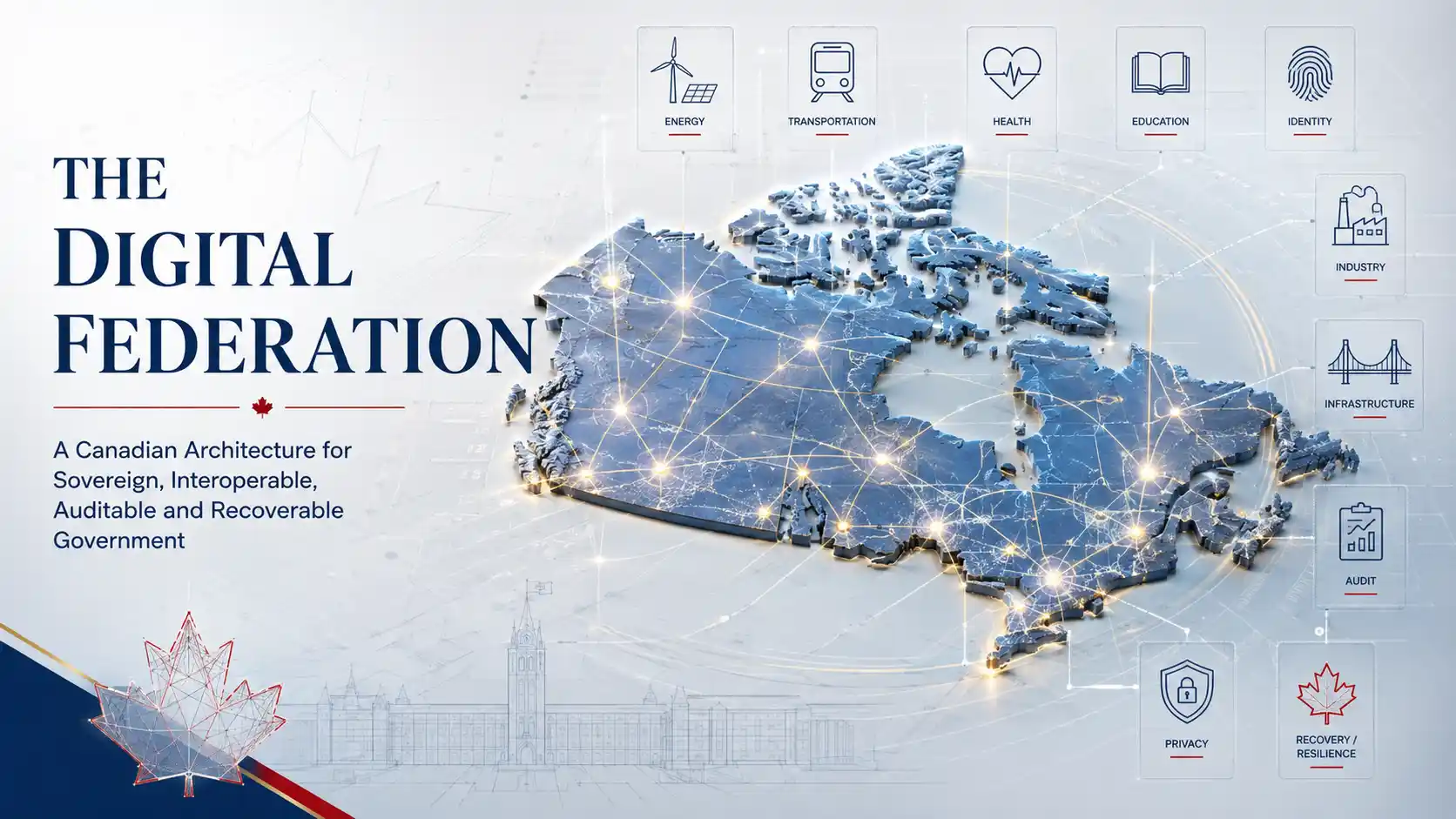
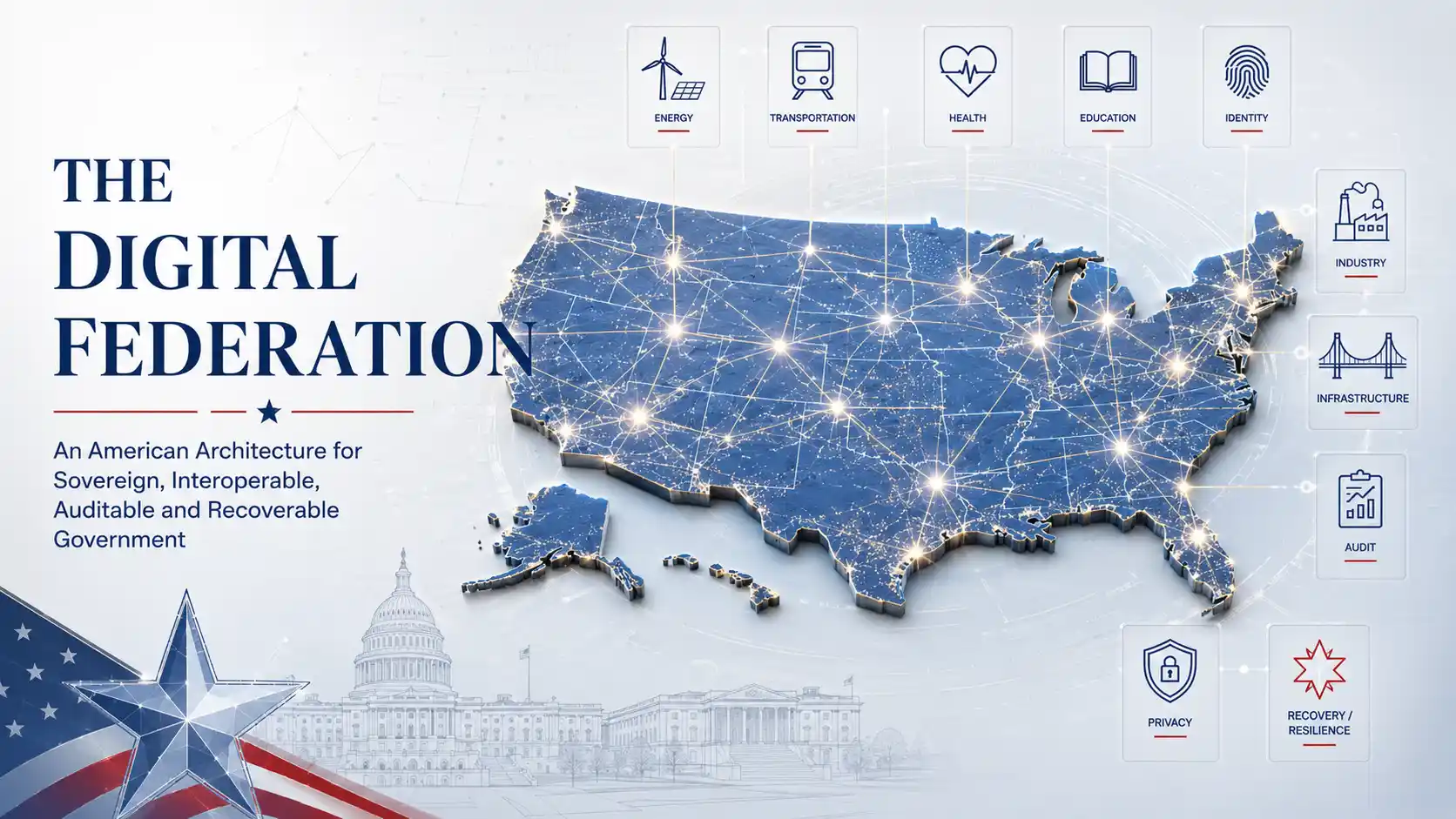
RAPID DIGITAL NTEROPERABILITY ≠ POLITICAL MERGER.
Try:
🇨🇦 CANADIAN IMPLEMENTATION
🇺🇸 UNITED STATES IMPLEMENTATION
🔗 SHARED DIGITAL FEDERATION / FCMA TECHNICAL ARCHITECTURE
Not one blended state.
That could be substantially powerful.



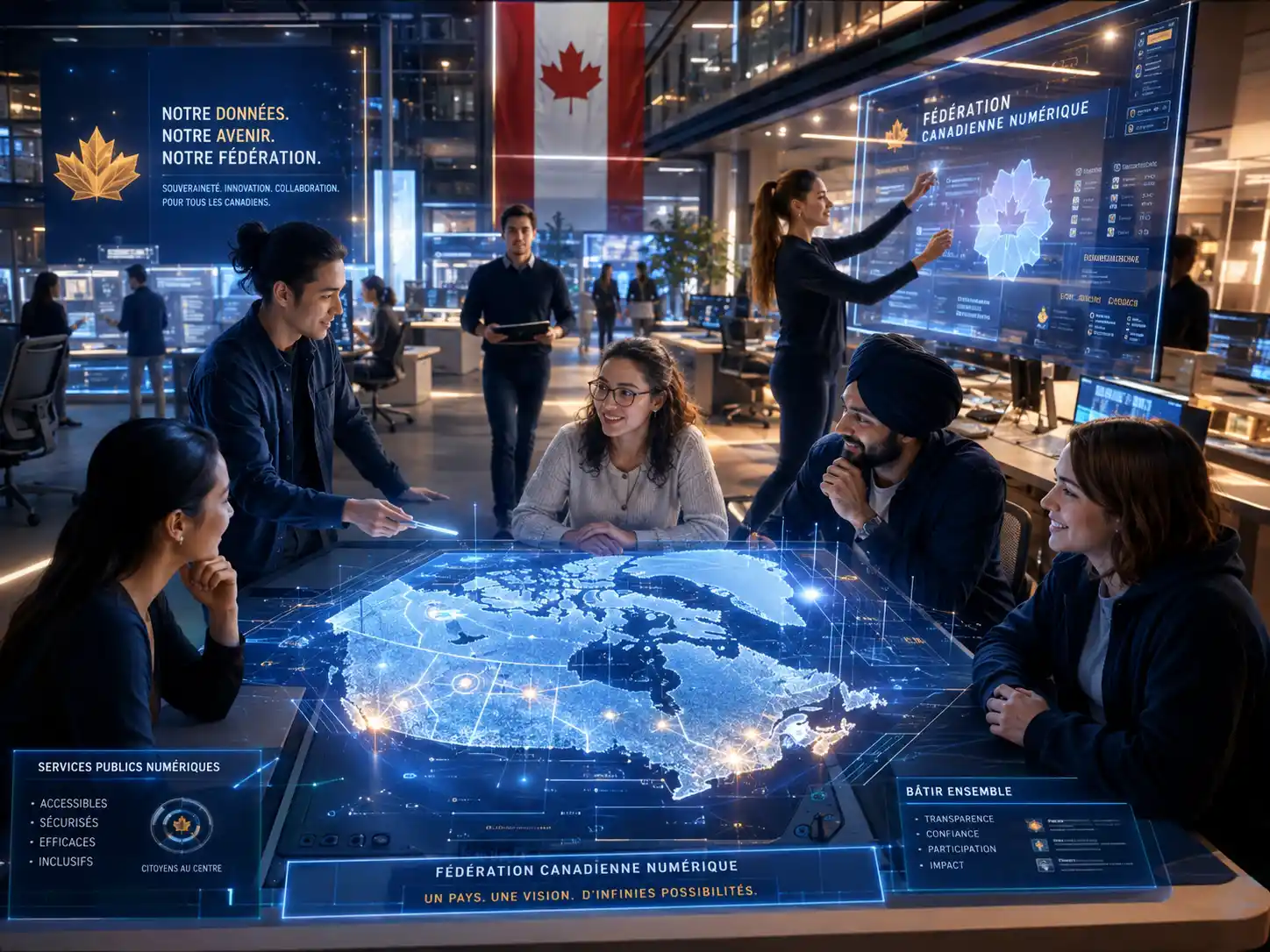





MASTER CITATION, SOURCE & INHERITANCE REGISTER
The Digital Federation — R2 Definitive Full-Depth Human-Readable Edition
Source-status key
[DIRECT] Direct source architecture incorporated into the Digital Federation lineage.
[INHERITED] Later architecture or audit work explicitly inherited into mature R2.
[EXTERNAL] External policy, technical, scholarly, or institutional source explicitly linked or named in the R2 master.
[HISTORICAL-SOURCE-FAMILY] Source family named in recovered historical text, but the exact underlying report/table/publication is not identified in the surviving R2 source.
[LEGAL-MANIFEST-OPEN] Legal authority is invoked by class, but exact jurisdiction-specific pinpoint authorities remain to be completed for implementation.
A. DIRECT SGT / NSIR / DIGITAL FEDERATION SOURCE LINEAGE
A1. [DIRECT] Skills Gap Trainer. “The Digital Federation: How AGI, Blockchain & NSIR Can Rebuild Canada From Collapse (Part 1).” Subtitle: “A Grounded Blueprint to Save $500B+/year, Unite the Provinces, Restore the Builder Class, and Escape the Great Filter.” SGT project corpus.
A2. [DIRECT] Skills Gap Trainer. “The Digital Federation: How AGI, Blockchain & NSIR Can Rebuild Canada From Collapse (Part 2).” Subtitle: “A Grounded Blueprint to Save $500B+/year, Unite the Provinces, Restore the Builder Class, and Escape the Great Filter.” SGT project corpus.
A3. [DIRECT] Skills Gap Trainer. “The Digital Federation: How AGI, Blockchain & NSIR Can Rebuild Canada From Collapse (Part 3).” SGT project corpus; includes provincial/regional source architecture including the Ontario material.
A4. [DIRECT] Skills Gap Trainer. “National Systems Integrity Report (NSIR): Framework.” SGT public/project corpus. The project lineage preserves the earlier expansion “National Sovereignty Intelligence Report” while mature R2 uses “National Systems Integrity Report.”
A5. [DIRECT / CONCEPT LINEAGE] Skills Gap Trainer. Civilization OS architecture/framework. Higher-order SGT civilizational/institutional frame inherited by the Digital Federation; not one computer, AI, ministry, or federal platform.
A6. [DIRECT / CONCEPT LINEAGE] Skills Gap Trainer. Municipal Nodes architecture. Local civic/infrastructure node concept later hardened into local FCMA civic-module ecosystems.
A7. [DIRECT / CONCEPT LINEAGE] Skills Gap Trainer. Provincial NSIR Stacks architecture. Province-scale digital/AI/provenance/identity/infrastructure-stack concept later hardened with explicit jurisdictional and root-separation controls.
A8. [DIRECT / CONCEPT LINEAGE] Skills Gap Trainer. Inter-Nodal Coordination Grid / interprovincial federation architecture. Later hardened into the Federation Interoperability Layer using bounded protocols.
A9. [DIRECT / CONCEPT LINEAGE] Skills Gap Trainer. Digital Sovereignty architecture. Citizen/local control, anti-surveillance, distributed-data/identity and later vendor/cryptographic exit principles.
A10. [DIRECT / CONCEPT LINEAGE] Skills Gap Trainer. Builder Class and productive-capacity architecture. Human/technical capability, engineering, skilled trades, infrastructure, education and re-skilling treated as national systems infrastructure.
A11. [DIRECT / CONCEPT LINEAGE] Skills Gap Trainer. Digital Twins architecture. Planning, simulation and infrastructure decision-support layer; mature R2 separates model output from authoritative reality.
A12. [DIRECT / CONCEPT LINEAGE] Skills Gap Trainer. Great Filter / civilizational-risk framing. Preserved as a conceptual risk frame, not as proof of any specific forecast.
A13. [SUPPORTING SGT LINEAGE] Skills Gap Trainer. “The Great Filter Ahead: Engineering a Pathway to Complex Civilizational Survival and Overcoming Cosmic Hurdles.” April 9, 2025. https://skillsgaptrainer.com/the-great-filter-ahead-engineering-a-pathway/
A14. [SUPPORTING SGT LINEAGE] Skills Gap Trainer. “Digital Sovereignty at a Crossroads: The Case for Decentralized Identity in the Quest for Online Freedom.” https://skillsgaptrainer.com/digital-sovereignty-at-a-crossroads/
A15. [SUPPORTING / LATER INTERFACE LINEAGE] Skills Gap Trainer. “Sector 001: The Terra Nexus for Humanity’s Resilient & Decentralized Future.” https://skillsgaptrainer.com/sector-001-the-terra-nexus/
A16. [SUPPORTING / ATLANTIS-NEXUS LINEAGE] Skills Gap Trainer. “The Atlantis Accord: A Sovereign Operating System for 21st+ Century Civilization.” https://skillsgaptrainer.com/atlantis-accord/
B. LATER FCMA / CIVIL GOVERNANCE / STARFLEET INHERITANCE
B1. [INHERITED] Skills Gap Trainer. Civil Governance Architecture Master Report. “A Decentralized Integrity, Repair, Cooperation and Resilience Framework for Sovereign Human Systems.” 2026 project architecture.
B2. [INHERITED] Skills Gap Trainer. National Systems Integrity Architecture (NSIR): “A First-Principles Framework for Auditing Complex Public Systems, Digital Systems and Institutional Capability.” Phase 8 / Report 1 production architecture.
B3. [INHERITED] Skills Gap Trainer. Governance Operating System: “Fourteen Model Acts for Human-Governed Public Systems — A First-Principles Repair Framework for Complex Institutions, Digital Systems and Public Capability.” Phase 9 / Report 2 production architecture.
B4. [INHERITED] Skills Gap Trainer. “The Border Is Not the Operating System: The Bridge Protocol — A First-Principles Architecture for Sovereign Interoperability.” Version 2.0, August 10, 2026. SGT Reference Architecture.
B5. [INHERITED] Skills Gap Trainer. “Sector 001 / Nexus — Decentralized Civilization-Scale Cooperation Architecture.” Version 1.0, August 10, 2026. SGT Reference Architecture.
B6. [INHERITED] Skills Gap Trainer. Federated Civic Module Architecture (FCMA) hardened implementation report/source-depth architecture. Current R2 source-depth audit records the hardened FCMA source at 10,255 words. Exact standalone publication title is not exposed in the surviving R2 master and is therefore not invented here.
B7. [INHERITED] Skills Gap Trainer. Recovery / Truth Ledger. Civil Governance Architecture Phase 0 controlled-source artifact.
B8. [INHERITED] Skills Gap Trainer. Four Final Report Architectures. Civil Governance Architecture Phase 1.
B9. [INHERITED] Skills Gap Trainer. 100-Metric Master Benchmark / 100-Metric Validation Ledger. Civil Governance Architecture validation artifact.
B10. [INHERITED] Skills Gap Trainer. Integrity / Poisoning / Capture Red Team. Civil Governance Architecture Phase 3.
B11. [INHERITED] Skills Gap Trainer. Architectural Repair + Hard-Invariant Closure. Civil Governance Architecture Phase 4.
B12. [INHERITED] Skills Gap Trainer. Final Re-score + Publication Architecture. Civil Governance Architecture Phase 5.
B13. [INHERITED] Skills Gap Trainer. Integrated Four-System Validation. Civil Governance Architecture Phase 12; integrates NSIR, Governance OS, Bridge Protocol and Sector 001/Nexus while retaining separate authority boundaries.
B14. [INHERITED] Skills Gap Trainer. Hard Invariant Register. Civil Governance Architecture validation artifact.
B15. [INHERITED] Skills Gap Trainer. “Red-Team Findings Register — Civil Governance Architecture v2.0 — Poisoning, Capture and Failure Analysis.” Version 2.0, August 10, 2026. SGT Reference Architecture.
B16. [INHERITED] Skills Gap Trainer. SGT-TNG / Starfleet Entrance Invariant conformance architecture: sixteen invariant constellations, moral-to-architecture translation, and Constitutional Guarantee / Voluntary Service Covenant / Capability Requirement / Parent-Interface Inheritance separation.
B17. [INHERITED] Skills Gap Trainer. Starfleet Integrity Suite — R2 closure architecture. Current-suite closure assigns explicit architectural homes/mechanisms to 627 of 627 design criteria; this is an internal design audit, not operational certification.
B18. [INHERITED] Skills Gap Trainer. 16×16 Ethical Stress Architecture and related cross-audit stack, including the Original 16-Vector Civilization Stress Grid, Full 16-Point Moral Law Test, 16-Vector Moral Firewall, Artifact Alignment Test, Institutional Stress Test, Public Moral OS Checklist, Five Laws, NSIR Systems Audit, AGI Substrate Integrity Tests, Government/AI Safety Stack, Sixteen-Framework Cross-Audit and Stacking Principle.
B19. [INHERITED] Skills Gap Trainer. Final Consolidation / Release Audit and publication-layer anti-drift controls. These preserve original genealogy while making mature R2 rulings controlling.
C. PRECISE EXTERNAL SOURCES LINKED OR EXPLICITLY USED IN MATURE R2
C1. [EXTERNAL] Treasury Board of Canada Secretariat. “Guideline on Service and Digital.” Government of Canada. https://www.canada.ca/en/government/system/digital-government/guideline-service-digital.html
C2. [EXTERNAL] Treasury Board of Canada Secretariat. “Directive on Automated Decision-Making.” Government of Canada. https://www.tbs-sct.canada.ca/pol/doc-eng.aspx?id=32592
C3. [EXTERNAL] National Institute of Standards and Technology (NIST). “Artificial Intelligence Risk Management Framework (AI RMF 1.0)” and AI RMF Core. January 2023. https://airc.nist.gov/airmf-resources/airmf/5-sec-core/
C4. [EXTERNAL] Rose, Scott; Borchert, Oliver; Mitchell, Stu; Connelly, Sean. “Zero Trust Architecture.” NIST Special Publication 800-207. National Institute of Standards and Technology, August 2020. DOI: 10.6028/NIST.SP.800-207. https://csrc.nist.gov/pubs/sp/800/207/final
C5. [EXTERNAL] Souppaya, Murugiah; Scarfone, Karen; Dodson, Donna. “Secure Software Development Framework (SSDF) Version 1.1: Recommendations for Mitigating the Risk of Software Vulnerabilities.” NIST Special Publication 800-218. National Institute of Standards and Technology, February 2022. DOI: 10.6028/NIST.SP.800-218. https://csrc.nist.gov/pubs/sp/800/218/final
C6. [EXTERNAL — AUTHOR EXPLICITLY NAMED; EXACT WORK NOT NAMED IN RECOVERED R2 TEXT] Tainter, Joseph A. The recovered historical Digital Federation text names Joseph Tainter in its complexity/collapse framing. The most directly relevant canonical work is “The Collapse of Complex Societies.” Cambridge University Press, 1988. Treat the book identification as bibliographic reconstruction unless the original article archive confirms it as the intended citation.
C7. [EXTERNAL — AUTHOR EXPLICITLY NAMED; EXACT WORK NOT NAMED IN RECOVERED R2 TEXT] Homer-Dixon, Thomas. The recovered historical Digital Federation text names Thomas Homer-Dixon in its complexity/collapse framing. A directly relevant work is “The Upside of Down: Catastrophe, Creativity, and the Renewal of Civilization.” 2006. Treat the book identification as bibliographic reconstruction unless the original article archive confirms it as the intended citation.
D. HISTORICAL SOURCE FAMILIES NAMED IN THE RECOVERED DIGITAL FEDERATION BUT NOT BIBLIOGRAPHICALLY CLOSED
D1. [HISTORICAL-SOURCE-FAMILY] Statistics Canada / StatCan — sectoral employment and GDP splits. Exact table/product identifier is not supplied in the surviving recovered text.
D2. [HISTORICAL-SOURCE-FAMILY] Statistics Canada / StatCan — administrative salary data, together with unspecified “internal reports.” Exact tables/reports are not supplied in the surviving recovered text.
D3. [HISTORICAL-SOURCE-FAMILY] Organisation for Economic Co-operation and Development (OECD) — “public-sector overemployment models.” Exact publication/model is not identified in the recovered text.
D4. [HISTORICAL-SOURCE-FAMILY] International Monetary Fund (IMF). Named as a cross-validation source family; exact report/data series is not identified.
D5. [HISTORICAL-SOURCE-FAMILY] U.S. Government Accountability Office (GAO) — benchmark source family. Exact report(s) are not identified.
D6. [HISTORICAL-SOURCE-FAMILY] Defense Advanced Research Projects Agency (DARPA) — benchmark / resilience source family. Exact program(s) or report(s) are not identified.
D7. [HISTORICAL-SOURCE-FAMILY] Private-sector “builder economy” capacity data. Exact dataset/provider is not identified.
D8. [HISTORICAL-SOURCE-FAMILY] Engineering, infrastructure and construction industry associations. Exact organizations/publications are not identified.
D9. [HISTORICAL-SOURCE-FAMILY] “Industry Orgs.” Named in the recovered cross-validation stack without exact publications.
E. LEGAL / CONSTITUTIONAL AUTHORITY CLASSES INVOKED BY R2
E1. [LEGAL-MANIFEST-OPEN] Canadian constitutional/legal order: constitutional text, legislation, regulations, valid delegation, court authority, lawful policy and valid agreements are treated as sources of lawful authority. R2 does not replace them with code.
E2. [LEGAL-MANIFEST-OPEN] “Constitution” and “Charter” are explicitly invoked in the recovered and mature architecture, but the R2 master does not provide a complete section-by-section Canadian constitutional bibliography.
E3. [LEGAL-MANIFEST-OPEN] Federal, provincial and municipally delegated authority must be mapped per jurisdiction and function before deployment.
E4. [LEGAL-MANIFEST-OPEN] Indigenous governance, rights, treaties and Nation-specific legal context require jurisdiction-specific legal manifests rather than one generic national citation.
E5. [LEGAL-MANIFEST-OPEN] Courts, regulators and independent oversight bodies remain lawful authority/review nodes; exact enabling statutes and jurisprudence are deployment-specific.
F. CURRENT R2 MASTER / METHOD ATTRIBUTION
F1. Skills Gap Trainer. “The Digital Federation — A Canadian Architecture for Sovereign, Interoperable, Auditable and Recoverable Government — Master Integrated Edition: Restoration + Technical Hardening + Starfleet Integrity Closure R2.” R2 Definitive Full-Depth Human-Readable Edition, August 26, 2026.
F2. Original article, concepts and SGT/NSIR project lineage: Skills Gap Trainer (SGT).
F3. Later FCMA / Civil Governance / Starfleet Integrity hardening is preserved as later inheritance rather than retroactively attributed to the original three-part Digital Federation.
F4. First-principles review and editorial assistance for the 2026 integrated edition: ChatGPT — GPT-5.6 Sol (OpenAI), where identified in the project record.
PUBLICATION NOTE
This register distinguishes source provenance from claim validation. Inclusion of an SGT source establishes project lineage, not independent verification. Inclusion of an external source establishes that the source was used, linked or named; it does not mean every claim in the recovered historical material is proven by that source. Historical quantitative claims whose exact primary datasets were not recovered must remain Source-Derived / Not Reverified, Scenario, Target, Hypothesis or Open as appropriate until the underlying primary citation is reconstructed.