Purpose: expand the compressed framework skeleton into an expert-readable systems architecture page.
Status: concept architecture, requirements logic, interface discipline, and proof-path design.
Boundary: this file does not claim certification, airworthiness, roadworthiness, passenger approval, production readiness, or procurement maturity.
Format: no tables; bullets and registers only.
Reader Position: File 2 Begins Where the Icon Stops Being Enough
File 1 established the public hero: D.E.L.O.R.I.A.N. 001 SGT-TNG as a road-first captain’s capsule with a modular flight layer, a serious door and nacelle relationship, Q as explanatory intelligence, D.A.N.G.E.R. as a safety threshold, and a hard claim boundary. File 2 does something different. It takes the icon and asks whether the icon can become a civilization-grade system without collapsing into prototype chaos.
The answer is yes only if the vehicle is not treated as a lone object. A lone object can inspire, but it cannot govern variants, train builders, authorize mission kits, control interfaces, maintain configuration state, or protect public claims. A serious vehicle family needs a framework. That framework is NAV-CF: the North American VTOL Common Framework.
NAV-CF is not a brand slogan. It is the discipline that prevents a beautiful machine from becoming a pile of unrelated renderings, incompatible workshops, unsafe modifications, and overconfident public claims. It is the connective tissue between D.E.L.O.R.I.A.N., BOOM 1971, A.R.G.O., the Model A/B/C maturity path, Q, D.A.N.G.E.R., the digital twin, the open manual, and the red-team gates.
The central rule of this page is simple: the future is not unlocked by inventing more vehicles. The future is unlocked by defining the rules under which vehicles may safely become a family.
- D.E.L.O.R.I.A.N. is the icon that lets the public care.
- BOOM 1971 is the rugged wedge branch that prevents the icon from carrying every mission.
- A.R.G.O. is the mission-kit architecture that keeps field utility from becoming random modification.
- NAV-CF is the common framework that makes the family legible.
- Q explains vehicle state and configuration state.
- D.A.N.G.E.R. blocks unsafe transitions before ambition becomes risk.
- SGT-TNG turns the system into a literacy, manual, training, repair, and public-trust layer.
1. The First Principle: One Vehicle Is Not a Civilization
One vehicle is not a civilization.
But neither is the vehicle merely an isolated object waiting to be completed by a centralized external operating system.
The vehicle is designed as a locally possessable mobility capability.
That capability includes the physical platform, locally available energy, tools, replacement parts, repair materials, configuration records, diagnostic procedures, technical knowledge, proof records, and trained human operators and maintainers. These elements may be carried with the vehicle, distributed among support units, or preserved in local stockpiles.
They do not need to remain continuously connected to a manufacturer, electrical grid, fuel monopoly, cloud service, authorized dealer network, proprietary maintenance system, or commercial subscription.
The wider system strengthens the vehicle.
It does not complete the vehicle.
That distinction is foundational.
The vehicle must not require electricity to arrive continuously from a distant centralized system. Energy may be generated locally, stored, transported, exchanged, stockpiled, or replenished through multiple compatible pathways.
The vehicle must not require continuous access to a distant mechanical service network to remain understandable or repairable. Inspection procedures, repair methods, diagnostic logic, tooling requirements, component identities, and configuration records must be preserved locally.
The vehicle must not require the original manufacturer to remain alive forever.
- Parts can be stored.
- Repairable components can be rebuilt.
- Approved substitutions can be documented.
- Manufacturing knowledge can be preserved.
- Local workshops can be trained.
- New generations of maintainers can inherit the technical record.
The vehicle must not require remote software permission to explain its own physical condition.
Its installed hardware, software version, mission modules, repair history, inspection state, energy condition, and proof status must remain readable and understandable by the people responsible for operating and maintaining it.
A vehicle that cannot explain itself without contacting its manufacturer is not fully owned by its operator.
A vehicle that cannot be repaired without a proprietary server is not resilient.
A vehicle that becomes mechanically unusable because a subscription expires has been designed around commercial control rather than engineering necessity.
A vehicle that depends on a permanent cloud connection for functions that can safely exist locally contains a false dependency.
A vehicle that uses proprietary fasteners, inaccessible diagnostics, sealed assemblies, non-replaceable modules, software locks, undocumented interfaces, or supplier-exclusive components without a genuine safety justification has converted inconvenience into captivity.
The architecture must not confuse convenience with necessity.
- Some centralized services may be useful.
- Remote diagnostics may be useful.
- Factory expertise may be useful.
- Large energy networks may be useful.
- Specialist maintenance centers may be useful.
- Cloud-based coordination may be useful.
But usefulness must not silently become mandatory dependency.
The system must distinguish between a service that improves performance and a service without which the platform is deliberately prevented from functioning.
That is one of the most important design tests in the entire architecture.
If a dependency exists because physics requires it, the architecture must acknowledge it.
If a dependency exists because safety requires controlled authority, the architecture must prove it.
If a dependency exists only because a manufacturer finds control commercially convenient, it should not be embedded as though it were an engineering law.
The Open Manual as Resilience Infrastructure
This is why the approximately 1,000-page open-source technical manual matters.
It is not an accessory.
It is not a marketing document.
It is not merely an unusually detailed owner’s guide.
It is part of the resilience architecture.
The manual transfers knowledge that would normally remain trapped inside a company into the custody of operators, mechanics, engineers, training institutions, emergency services, local workshops, public authorities, and future generations.
It preserves:
- system descriptions
- component identities
- interface definitions
- operating limits
- energy procedures
- inspection standards
- maintenance procedures
- diagnostic logic
- tooling requirements
- repair pathways
- recovery procedures
- configuration rules
- parts information
- substitution rules
- training materials
- proof requirements
- known limitations
- prohibited configurations
- restricted authorities
- claim boundaries
The manual allows the mobility capability to survive the company that first produced it.
That is the first firewall.
Knowledge must not be fused to the manufacturer.
The same principle applies across the rest of the architecture.
- Energy must not be fused to one provider.
- Maintenance must not be fused to one authorized service chain.
- Diagnostics must not be fused to a proprietary cloud.
- Parts must not be fused to one fragile supply route.
- Training must not be fused to one institution.
- Software must not become an unchallengeable authority over the physical machine.
- Configuration truth must not exist only inside a remote database that local operators cannot independently inspect.
- Proof must not depend entirely on the claims of the organization being evaluated.
- Governance must not be fused to the commercial interests of the platform manufacturer.
These systems may cooperate.
They may exchange information.
They may reinforce one another.
But cooperation must not become captivity.
The Vehicle and the Civilization Layer
A civilization-grade mobility layer is a network of vehicles, builders, maintainers, operators, users, authorities, training institutions, workshops, energy reserves, parts stockpiles, manufacturing pathways, configuration records, proof gates, data systems, service infrastructure, and claim boundaries.
The design failure of many future-mobility fantasies is that they show an object and imply a system.
The object looks finished, but the system is missing.
The opposite failure is equally dangerous.
Some designs show a vehicle embedded inside a seamless proprietary ecosystem and present dependency as sophistication.
The platform appears advanced because its energy supply, diagnostics, software authority, replacement parts, maintenance access, training pathways, configuration records, and commercial permissions have been compressed into one invisible service layer.
The product appears complete.
In reality, its independence has been removed.
When the service disappears, the capability disappears with it.
That is not resilience.
It is rented continuity.
The purpose of the civilization-grade mobility layer is not to remotely complete an otherwise helpless machine.
Its purpose is to multiply, replenish, coordinate, reproduce, verify, and improve locally possessable mobility capabilities across time and territory.
The platform provides immediate mobility.
The local resilience package preserves that capability during isolation, infrastructure failure, institutional failure, commercial collapse, communications loss, or supply disruption.
- The civilization layer restores scale.
- It replenishes exhausted reserves.
- It distributes lessons.
- It trains new specialists.
- It coordinates standards.
- It reproduces components.
- It validates major substitutions.
- It preserves manufacturing knowledge.
- It verifies configuration changes.
- It prevents local independence from becoming permanent technical fragmentation.
The larger system strengthens the platform, but it must not become a condition of the platform’s immediate survival.
The civilization system must reproduce and replenish the capability.
It must not be required to remotely complete it.
Mobility Is More Than Motion
Start from first principles.
Mobility is not only motion.
Mobility is the retained ability to move humans, tools, intelligence, supplies, decision-making capacity, repair capability, and civilizational continuity across real terrain.
That capability must persist not only under ideal commercial conditions, but when distant infrastructure is degraded, inaccessible, captured, commercially withdrawn, or absent.
That requires more than propulsion.
It requires:
- route logic
- local energy logic
- reserve and stockpile logic
- service logic
- field-repair logic
- recovery logic
- safety logic
- configuration logic
- training logic
- manufacturing logic
- software and data logic
- proof logic
- governance logic
The deeper principle is therefore not merely object versus system.
It is resilient separation between systems, with controlled interfaces connecting them.
The vehicle platform, energy system, maintenance system, software system, training system, manufacturing system, proof system, regulatory system, and commercial ecosystem must remain distinguishable.
Each layer must have a defined responsibility.
Each layer must expose the interfaces required for inspection, repair, replacement, substitution, and evolution.
Interfaces must be documented and controlled.
They should be standardized wherever interoperability, multi-supplier production, local servicing, component substitution, or long-term continuity depends on them.
A failure in one layer must not automatically erase the capability contained in the others.
- An energy-provider failure must not make an otherwise functional platform permanently unusable.
- A software-provider failure must not make the vehicle mechanically unknowable.
- A communications failure must not erase local diagnostic capability.
- A commercial failure must not erase repair knowledge.
- A supply-chain failure must not prevent the use of documented and properly verified substitute parts.
- A manufacturer’s disappearance must not convert a mechanically sound fleet into technological ruins.
- A new software version must not silently redefine the physical configuration of the machine.
- A new mission kit must not bypass structural, electrical, thermal, software, aerodynamic, mass, balance, safety, and proof requirements.
This is what the firewalls protect.
They are not walls of complete isolation.
They are boundaries of authority, responsibility, proof, and failure.
They prevent one subsystem from capturing the rest of the architecture.
No Conveniently Manufactured Dependencies
Modern products often contain dependencies that are presented as inevitable even when they are primarily the result of commercial or administrative design choices.
- A component is declared non-repairable because the manufacturer does not publish the procedure.
- A diagnostic function is declared cloud-dependent because local access has been disabled.
- A battery is declared non-replaceable because its interface is proprietary.
- A software update becomes mandatory because older versions are remotely deauthorized.
- A mechanically functional platform becomes unusable because a server, account, certificate, subscription, or supplier no longer exists.
- A local mechanic is prevented from repairing a known fault because the diagnostic code, calibration method, or configuration authorization remains commercially restricted.
- A replacement component is rejected not because it is unsafe, but because it did not originate from the approved commercial chain.
These are not always necessary properties of advanced technology.
They are often architectural choices.
NAV-CF must force those choices into the open.
Every claimed dependency should be classified.
- Is it required by physics?
- Is it required by safety?
- Is it required by interoperability?
- Is it required by proof and configuration control?
- Or is it required primarily to preserve institutional or commercial control?
The framework should not remove legitimate authorities.
- Some repairs may require advanced equipment.
- Some modifications may require specialist certification.
- Some structural changes may require original design data.
- Some software functions may require protected access.
- Some restricted configurations may require factory or sovereign authority.
But those boundaries must be justified by evidence, not convenience.
The system must distinguish:
- what can be performed by the operator
- what can be serviced by a trained local shop
- what requires a certified independent specialist
- what requires original design authority
- what legitimately requires factory authority
- what requires renewed testing
- what requires regulatory approval
- what must remain prohibited
The architecture should never create a centralized dependency merely because centralized control is easier for the organization designing the product.
NAV-CF as the Anti-Chaos Layer
This is why NAV-CF matters.
NAV-CF is not a centralized operating system that remotely completes the vehicle.
It is the anti-chaos framework that preserves interoperability without destroying local sovereignty.
It determines:
- what is common and what is variable
- what belongs to the core platform
- what belongs to supporting infrastructure
- what can be carried locally
- what should be held in reserve
- what should be held in distributed stockpiles
- what can be serviced by a trained local shop
- what requires independent specialist authority
- what legitimately requires factory or original design authority
- what interfaces must remain open
- what interfaces must be standardized
- what data must remain locally readable
- what functions must remain locally available
- what components may be substituted
- what substitutions require renewed proof
- what changes alter configuration state
- what is civil
- what is rugged
- what is specialized
- what is restricted
- what may be published
- what may be demonstrated
- what may be claimed
- what must remain unclaimed until proof exists
NAV-CF does not erase system boundaries.
It protects them.
- It prevents the energy layer from capturing the vehicle.
- It prevents the software layer from becoming the only authority capable of understanding the machine.
- It prevents the maintenance layer from becoming a permanent commercial lock.
- It prevents the manufacturer from retaining exclusive custody of repair knowledge.
- It prevents a temporary supplier relationship from becoming a permanent operational dependency.
- It prevents restricted complexity from contaminating the civil platform.
- It prevents convenience features from becoming hidden single points of failure.
- It prevents public symbolism from overrunning engineering truth.
- It also protects proof from ownership.
The manufacturer may produce evidence, but it cannot be the sole authority deciding whether its own claims, repairs, substitutions, software changes, or configuration states are valid.
- Proof must remain independently inspectable.
- Evidence must be traceable.
- Configuration changes must be recorded.
- Claims must remain bounded by demonstrated capability.
The architecture must be able to say not only what the vehicle can do, but how that conclusion was reached, under which configuration, under what conditions, and with what remaining uncertainty.
Myth, Framework, and Honor
The framework does not weaken the myth.
It gives the myth structural integrity.
A myth without a framework becomes spectacle.
A framework without a myth could become bureaucracy.
The project needs both:
- A vehicle people remember.
- A capability communities can possess.
- A system engineers can respect.
- A technical inheritance future generations can retain.
- If the vehicle is beautiful but cannot be maintained locally, it is not mature.
- If the vehicle moves but cannot explain its configuration state, it is not trustworthy.
- If the vehicle flies but no one can independently verify which hardware, software, energy system, or mission modules are installed, it is not ready.
- If the vehicle survives only while connected to a manufacturer, subscription, cloud service, authorized dealer, proprietary diagnostic system, or single energy supplier, it is not sovereign.
- If the repair knowledge disappears when the original engineering team disappears, the knowledge architecture has failed.
- If essential parts cannot be stored, repaired, reproduced, or responsibly substituted, the logistics architecture has failed.
- If an artificial software or commercial restriction disables a physically sound machine, the ownership architecture has failed.
- If the platform accepts mission kits without mass, power, cooling, software, structural, aerodynamic, center-of-gravity, interface, configuration, and proof discipline, it is not a framework.
- If the same vehicle is presented for luxury road use, harsh field service, public mobility, restricted missions, and civilizational symbolism without branch separation, the architecture becomes conceptually contaminated.
- If the platform depends on the continuous survival of every supporting institution around it, the system has created fragility rather than resilience.
- If the wider architecture cannot replenish, reproduce, and transfer the capability across generations, it is not civilization-grade.
- If the public claim outruns the proof state, the architecture loses honor.
The governing principle is therefore clear:
The civilization system must be capable of reproducing, replenishing, verifying, and improving the mobility capability, but it must not be required to remotely complete the vehicle.
- The platform must remain locally operable.
- The energy must remain locally obtainable and preservable.
- The knowledge must remain locally possessable.
- The tools must remain locally usable.
- The parts must remain locally stockpilable, repairable, or reproducible.
- The configuration must remain locally understandable.
- The proof must remain independently inspectable.
- The wider civilization must retain the ability to rebuild the whole capability when local reserves are eventually exhausted.
- That is the separation.
- That is the firewall.
- That is ownership.
- That is continuity.
- That is resilience.
This is the product humanity actually needs for long-term continuity —and almost no one offers it.
People do not merely want to buy a vehicle, machine, platform, or service. They want to buy a capability they can truly possess: one built on correct first-principles separation, protected by real system firewalls, supported by durable ownership, and designed to survive commercial failure, infrastructure loss, institutional decline, and the passage of time.
That complete architecture is the product.
But it is difficult to build.
It requires rigorous, complete, professional engineering across the platform, energy, maintenance, software, parts, training, configuration, proof, and recovery layers.
It cannot be produced through proxy engineering: assembling fashionable components, copying derivative requirements, or satisfying only the narrow conditions needed to make a prototype move.
- A machine can appear advanced while its dependencies remain hidden.
- A system can pass limited requirements while failing the deeper test of ownership.
- A product can perform today while containing no credible path to repair, replenish, reproduce, or rebuild it tomorrow.
- Civilization-grade engineering must solve the whole capability — not merely the visible object.
- The product is not only the vehicle.
- The product is the vehicle, the knowledge, the tools, the reserves, the interfaces, the proof, the repair path, and the retained ability to continue without permission.
That is what people believe they are purchasing when they buy an engineered system.
This architecture is what would finally make that belief true.
2. NAV-CF Defined
NAV-CF means North American VTOL Common Framework. The name matters because it describes both geography and discipline. It is North American in the sense that the project thinks continentally: long distances, remote communities, harsh weather, infrastructure gaps, coastal corridors, city corridors, northern access, industrial service, and alliance-grade standards. It is VTOL because the architecture studies vertical access, but it does not worship hover. Hover is treated as a costly access mode. Cruise, road use, reserve, and proof remain central. It is common because the framework must prevent each variant from becoming a separate engineering universe.
NAV-CF is the platform grammar behind the vehicles. It is not a single chassis, not a single aircraft type, and not a claim of certification. It is a set of disciplined architectural relationships: common functions, common interfaces, common proof gates, common terminology, common claim boundaries, and common safety doctrine.
- It defines what the system family is trying to do before it chooses hardware.
- It keeps D.E.L.O.R.I.A.N. from drifting into generic flying-car fantasy.
- It keeps BOOM 1971 from drifting into random armored-vehicle fantasy.
- It keeps A.R.G.O. from becoming a box of ungoverned accessories.
- It keeps Q from becoming sovereign AI.
- It keeps D.A.N.G.E.R. from becoming a slogan instead of a safety threshold.
- It keeps public claims aligned with evidence instead of excitement.
3. The Architecture Ladder
The family works only if each layer has a clear job. Confusing the layers destroys the architecture. D.E.L.O.R.I.A.N. is not NAV-CF. BOOM is not A.R.G.O. Q is not the pilot. D.A.N.G.E.R. is not a marketing mode. SGT-TNG is not the vehicle body. The stack is a coordination stack, not a name pile.
- D.E.L.O.R.I.A.N. 001 SGT-TNG – the public hero, the executive road-first captain’s capsule, the icon that carries beauty, command, intelligence, and continuity.
- BOOM 1971 – the wedge and field branch, built for rugged posture, service bay readiness, industrial access, harsh terrain, and more aggressive mission support.
- A.R.G.O. – the mission-kit architecture, governing payload modules, field kits, service packages, and controlled configuration changes.
- NAV-CF – the common framework, defining the functional spine, interfaces, model family, safety gates, maturity ladder, and variant discipline.
- Q – the explanatory intelligence and diagnostic companion, local, useful, removable where appropriate, but not sovereign.
- D.A.N.G.E.R. – the safety, no-go, degraded-mode, and recovery threshold layer that prevents unsafe mode transitions.
- SGT-TNG – the civilization coordination layer: manual culture, training, repair literacy, public claim discipline, builder education, and design philosophy.
The architecture ladder is not decorative. It is the reason the project can expand without becoming incoherent. Every new idea must be placed on the ladder. If an idea belongs in A.R.G.O., do not force it into D.E.L.O.R.I.A.N. If an idea belongs in a restricted branch, do not pollute the civil trunk. If an idea belongs in the manual, do not pretend it is already hardware. If an idea belongs in the proof path, do not present it as a validated capability.
4. Functions First. Interfaces Second. Hardware Third. Variants Last.
This is the governing sequence of NAV-CF. It exists because advanced vehicle concepts often fail by beginning with hardware. The designer sees a shape, a pod, a wing, a rotor, a nacelle, a battery, a cockpit, a mission bay, or a dramatic image. Then the project tries to justify the object after the fact. That path produces beautiful confusion.
NAV-CF reverses the order. It asks what functions are necessary, what interfaces must be controlled, what hardware choices can satisfy those functions, and only then what variants may be permitted. This method does not remove creativity. It gives creativity a load path.
- Function first: what must the system do in road mode, access mode, flight mode, service mode, emergency mode, and degraded mode?
- Interface second: what must connect mechanically, electrically, thermally, digitally, procedurally, and legally?
- Hardware third: what body, wing, nacelle, motor, battery, fuel-cell, sensor, controller, and service module can satisfy the functions and interfaces?
- Variant last: what civil, rugged, restricted, visual, regional, and mission-specific variants are allowed without breaking the common spine?
This sequence is also how the project remains honest. It prevents the tempting move of saying, ‘This looks good, therefore it works.’ Instead, it says, ‘This may look good; now show the function, the interface, the risk, the proof, and the claim boundary.’
5. The Common Spine
The common spine is the part of the system family that should remain recognizable across variants. It does not mean every vehicle has identical dimensions, identical missions, or identical equipment. It means that the family shares enough architecture that training, inspection, configuration control, safety logic, and public claims can remain coherent.
The common spine is the answer to a dangerous question: how do you allow variety without allowing collapse?
- Common language: the same names mean the same thing across the family.
- Common safety logic: door state, nacelle state, energy state, mission-kit state, and proof state must be known before capability expands.
- Common digital record: every serious configuration change must update the digital twin.
- Common service philosophy: a module is not mature unless it can be inspected, explained, and maintained.
- Common claim boundary: no variant may claim more than its proof state allows.
- Common human authority: assistance may increase, but human command remains the organizing doctrine.
- Common training spine: operators, builders, and maintainers need shared manuals, not folklore.
6. Model Family Overview
The Model A/B/C ladder is not a marketing trick. It is a way to prevent the project from trying to do everything at once. A serious architecture must separate proof maturity from imagination. It must allow a civil baseline to mature before rugged or restricted branches borrow authority from it.
The model family should be read as a progression of evidence and responsibility. Model A proves the civil trunk. Model B studies rugged and endurance expansion after the trunk is credible. Model C remains separated, permissioned, audited, and restricted so that field or security ambitions do not contaminate the public civil architecture.
- Model A – civil proof baseline, battery-first, simplest architecture, road-first public trust path.
- Model B – rugged or public-service branch, potentially hydrogen-electric or hybrid-electric after Model A proof, more payload and endurance burden, more severe service workflow.
- Model C – restricted branch, separated from the civil trunk, audited, human-authorized, export-controlled, digitally tracked, and never used as evidence for public passenger readiness.
The framework is honest because it refuses to let the most exciting branch become the first public claim. The civil trunk must be boring enough to inspect before the rugged branch becomes interesting. The rugged branch must be disciplined enough to audit before any restricted branch is even considered.
7. Model A – The Civil Trunk
Model A is the discipline vehicle. It is not the most dramatic branch, but it is the most important branch because it establishes the trust spine. If Model A cannot become coherent, every later branch becomes theater. Model A should begin as the simplest serious version of the architecture that can preserve the core doctrine: road-first, flight-optional, battery-first, human-commanded, configuration-aware, and claim-safe.
Model A must resist feature greed. It should not try to become luxury car, family vehicle, rugged utility craft, restricted platform, rescue vehicle, hydrogen demonstrator, and long-range aircraft at the same time. It should prove the first true sequence: road vehicle integrity, capsule integrity, door and egress integrity, energy state truth, digital twin truth, Q explanation, D.A.N.G.E.R. no-go logic, nacelle interface discipline, and only then controlled lift research.
- Primary role: civil proof and public trust.
- Energy posture: battery-electric baseline, with reserve and thermal truth treated as hard constraints.
- Mobility posture: road-first, flight-optional, access-oriented, not hover-as-lifestyle.
- Design posture: D.E.L.O.R.I.A.N. 001 as the public hero if the public branch is being communicated.
- Proof posture: simulation, ground test, service article, tethered lift, envelope expansion, and claim discipline.
- Forbidden shortcut: using visual renders, estimated performance, or framework logic as evidence of certified passenger capability.
Model A is where the project learns humility. The sky is not earned by declaring the sky. It is earned by making every state of the machine legible before asking the machine to leave the ground.
8. Model B – The Rugged Branch
Model B is where the architecture becomes useful in harsher conditions. It is the branch for rugged public service, industrial support, remote-area logistics, harsh-weather studies, emergency support concepts, field service, and potentially hydrogen-electric or hybrid-electric endurance studies. It is not the first public claim. It is a later branch because it carries greater burden.
Model B must pay for its ambition. More payload means more structure, more energy, more thermal demand, more braking load, more tire load, more maintenance complexity, more certification complexity, and more service workflow. If hydrogen enters the branch, the burden increases again: pressure, storage, leak detection, venting, thermal management, stack behavior, balance-of-plant, refueling procedures, emergency isolation, and infrastructure assumptions.
- Primary role: rugged extension after civil trunk maturity.
- Possible vehicle identity: BOOM 1971 for wedge / field / industrial posture.
- Possible mission-kit identity: A.R.G.O. for controlled field modules.
- Energy posture: battery plus buffer; hydrogen-electric or hybrid-electric only after proof path maturity.
- Mission posture: public-service study, industrial access, remote support, rescue logistics, sensor relay, med/logistics support, harsh-weather access.
- Forbidden shortcut: claiming rugged service maturity because a vehicle looks rugged.
Model B is not more mature because it looks tougher. It becomes mature only when its heavier structure, harsher environment, larger service burden, and more complex energy path are proven through evidence.
9. Model C – The Restricted Branch
Model C exists because the world is not naive. Advanced mobility systems can be useful for civil continuity, emergency response, remote access, and public service. They can also be misunderstood, over-militarized, misused, exported irresponsibly, or turned into ungoverned security toys. The architecture therefore needs a restricted branch not because it wants to become aggressive, but because a serious civilization separates the civil trunk from restricted use.
Model C must be quarantined by design. It cannot be allowed to back-infect Model A with language, claims, hardware assumptions, or public posture. It cannot be used to imply that civil vehicles are combat platforms. It cannot be used as a shortcut around certification. It cannot be used to sell drama where proof is missing.
- Restricted branch is separated, permissioned, audited, and digitally tracked.
- Human authorization remains mandatory; autonomous escalation is not the doctrine.
- Export, security, legal, safety, and ethical boundaries must be explicit before any restricted interpretation is allowed.
- Restricted branch images and scenarios must not contaminate public civil claims.
- Model C cannot borrow trust from Model A unless the specific configuration, environment, and function are proven.
- No public passenger-readiness claim may be inferred from branch exploration.
The point of Model C is not to make the project militaristic. The point is to preserve the honor of the civil architecture by admitting that some future branches, if studied at all, must live behind stronger gates.
10. D.E.L.O.R.I.A.N. in the Framework
D.E.L.O.R.I.A.N. 001 SGT-TNG is the public hero because the public needs an icon that carries the emotional argument. The framework should not hide this. Advanced systems fail in public when they are technically interesting but emotionally dead. A civilization does not adopt a machine only because the machine has performance. It adopts a machine because the machine feels worthy of trust, status, continuity, and care.
Within NAV-CF, D.E.L.O.R.I.A.N. has a very specific job. It is the premium road-first captain’s capsule. It is the vehicle that proves the architecture can remain desirable while becoming disciplined. It is not a random eVTOL, not a bubble taxi, not a sedan with rotors, not a shuttle pod, not a military rover, and not a toy.
- D.E.L.O.R.I.A.N. carries the public imagination.
- D.E.L.O.R.I.A.N. anchors the road-first doctrine.
- D.E.L.O.R.I.A.N. proves that beauty and claim discipline can coexist.
- D.E.L.O.R.I.A.N. carries the 2+2 captain’s capsule logic.
- D.E.L.O.R.I.A.N. forces the door and nacelle architecture to respect human entry and exit.
- D.E.L.O.R.I.A.N. gives Q and D.A.N.G.E.R. a visible public interface.
- D.E.L.O.R.I.A.N. must not be overloaded with every rugged or restricted mission.
The visual work revealed a hidden engineering truth: body shape is not decoration. The long hood, rear quarter, wing placement, nacelle symmetry, split door, and blue-white Q lighting are not merely aesthetic preferences. They encode functional relationships. When the image generation drifted, the architecture drifted. That means the framework must preserve visual DNA as an interface discipline, not only as styling.
11. BOOM 1971 in the Framework
BOOM 1971 exists because D.E.L.O.R.I.A.N. should not be forced to become everything. A serious architecture needs branch identity. D.E.L.O.R.I.A.N. is the executive road-first public hero. BOOM 1971 is the wedge / field branch: tougher, more industrial, more service-oriented, more comfortable in dockyards, remote corridors, rough surfaces, harsh weather, and mission-kit contexts.
BOOM is not a replacement for D.E.L.O.R.I.A.N. It is not the same car with aggressive tires. It is a sibling branch under the common framework. It shares doctrine, digital-state truth, Q assistance, D.A.N.G.E.R. thresholds, mission-kit discipline, service logic, and claim boundaries, but it has a different public role and a different design language.
- BOOM carries rugged posture without contaminating the executive icon.
- BOOM uses wedge, field, industrial, and service-bay visual language.
- BOOM can host A.R.G.O. mission-kit thinking more naturally than D.E.L.O.R.I.A.N.
- BOOM is where harsh-terrain, remote-access, emergency-support, and industrial-use studies belong.
- BOOM should remain claim-safe: field branch concept does not mean certified public-service deployment.
- BOOM must preserve its own body canon: aggressive wedge, rugged tires, low armored stance, silver-black finish, BOOM 1971 / A.R.G.O. identity, and high mechanical detail.
The reason BOOM matters is architectural hygiene. It gives the system somewhere to put ruggedness. Without BOOM, the elegant public hero would be overloaded until it no longer knew what it was.
12. A.R.G.O. as Mission-Kit Architecture
A.R.G.O. is not simply a name for accessories. It is the mission-kit architecture. This distinction is decisive. An accessory is a thing attached to a vehicle. A mission kit is a controlled configuration state that changes what the vehicle is allowed to do, what it weighs, how it draws power, how it sheds heat, how it affects center of gravity, how it is maintained, how it is inspected, and what can be claimed.
A.R.G.O. exists to prevent mission kits from becoming chaos. It says that a field module cannot merely fit physically. It must fit structurally, electrically, thermally, digitally, procedurally, and legally. The module must be known by the digital twin, explainable by Q, bounded by D.A.N.G.E.R., and supported by the manual.
- A mission kit is not approved because it bolts on.
- A mission kit is not approved because it looks useful.
- A mission kit is not approved because a rendering shows it working.
A mission kit begins to become credible when its interfaces, mass budget, power budget, cooling budget, software state, center-of-gravity effect, maintenance method, inspection path, proof gates, and claim boundary are defined.
13. The Hidden Variant Test
NAV-CF needs a simple test to prevent fake modularity. A kit is not modular if installing it forces a new vehicle. A kit is not modular if every serious use case requires custom wiring, custom flight controls, custom thermal plumbing, custom structural reinforcement, custom maintenance procedures, and custom claim language. That is not modularity. That is uncontrolled variant growth.
- If the kit forces new primary structure, it is not a simple kit.
- If the kit forces new flight-control logic, it is not a simple kit.
- If the kit forces new cooling architecture, it is not a simple kit.
- If the kit forces a new certification basis or approval path, it is not a simple kit.
- If the kit requires customer-specific wiring outside the governed interface, it is not a simple kit.
- If the kit cannot be represented in the digital twin, it is not a trusted kit.
- If Q cannot explain the state, and D.A.N.G.E.R. cannot bound the state, the kit is not ready.
The hidden variant test is harsh on purpose. It protects the project from the glamorous lie that everything can be modular if the render looks convincing.
14. Civil Trunk, Rugged Branch, Restricted Branch
The branch doctrine is one of the most important ideas in the whole project. It is how the architecture remains honest under pressure. Every powerful technology attracts three types of ambition: public civil use, hard-environment utility, and restricted/security use. If those ambitions are mixed too early, the project loses trust.
The civil trunk must come first because public trust is the hardest asset to rebuild. The rugged branch must come second because harsh environments introduce extra load, service, energy, and proof burdens. The restricted branch, if studied at all, must come third and remain separated because it carries legal, ethical, export, and public-trust consequences.
- Civil trunk: road-first, public-facing, claim-safe, training-oriented, safety-first, evidence before expansion.
- Rugged branch: field service, industrial access, remote support, heavier service burden, stronger mission-kit discipline.
- Restricted branch: separated, audited, human-authorized, export-aware, digitally tracked, never used to inflate public claims.
This branch doctrine is not timid. It is mature. A civilization that cannot separate branches will eventually confuse utility with permission and capability with legitimacy.
15. Interface Domains
A serious framework must name the interface domains. Every domain has its own failure modes. Every domain creates design obligations. If the framework does not name them, the project will drift into hidden complexity.
- Mechanical interface – mounting points, load paths, locks, hinge geometry, service panels, crash paths, fatigue paths.
- Electrical interface – high-voltage bus, low-voltage control, grounding, isolation, charging, fault protection.
- Thermal interface – batteries, motors, inverters, fuel-cell branch, cabin, mission kits, repeatability, emergency heat rejection.
- Digital interface – Q, digital twin, configuration records, diagnostics, software version state, cybersecurity boundaries.
- Human interface – cockpit, doors, egress, manual controls, alerts, training, maintenance readability.
- Energy interface – battery state, buffer state, fuel-cell state, hydrogen state, charging/refueling procedures, reserve logic.
- Flight interface – nacelle state, wing state, lift control, transition logic, redundancy, weather boundaries.
- Road interface – wheels, tires, steering, braking, suspension, crashworthiness, road legal boundary, service cycle.
- Payload / mission interface – mass, center of gravity, power draw, cooling demand, electromagnetic behavior, release/retention .
- Regulatory / claim interface – what is architecture, what is simulation, what is prototype, what is tested, what is certified, what is not yet claimable.
The interface map is the foundation of expert confidence. It shows that the project is not merely adding features. It is identifying where complexity enters and how it must be governed.
16. Configuration State: No Trusted State, No Flight
The most important sentence in the framework may be this: no trusted state, no flight. A vehicle with modular doors, nacelles, mission kits, batteries, Q module, digital twin, and possible future fuel-cell branch cannot rely on vibes. It needs explicit state knowledge.
Configuration state means the system knows what it is, what is attached, what is locked, what is powered, what is cooled, what software version is running, what service actions occurred, what faults are active, what mission kit is installed, what mass state exists, and what operational modes are allowed.
- Unknown door state means no flight.
- Unknown nacelle state means no flight.
- Unknown mission-kit state means no expanded mission.
- Unknown battery state means no high-power operation.
- Unknown hydrogen state means no hydrogen operation.
- Unknown software state means no trust expansion.
- Unknown service state means inspection before capability.
Q explains configuration state. D.A.N.G.E.R. enforces boundaries when configuration state is incomplete or unsafe. The digital twin records the history. The manual teaches humans how to interpret the result.
17. Q in the Framework
Q is not a magic AI and not a sovereign operator. Q is an explanatory, diagnostic, configuration, and continuity intelligence layer. In the framework, Q exists to make the vehicle more understandable, not less. It helps translate system state into human action. It can assist the driver, technician, builder, or custodian, but it does not own the vehicle.
The removable Q module idea strengthens this doctrine. If the vehicle is damaged, lost, or separated from infrastructure, Q can remain a continuity object: diagnostics, manuals, safe procedures, configuration records, navigation support, and repair guidance. This makes Q closer to a trusted field companion than a cloud-owned autopilot.
- Q explains, it does not rule.
- Q assists, it does not replace responsibility.
- Q records, it does not fabricate proof.
- Q can be local and portable where appropriate.
- Q supports builder literacy instead of hiding the machine.
- Q must remain bounded by D.A.N.G.E.R. and human authority.
The framework places Q between human and machine as a translator of truth. That is the opposite of black-box dependency.
18. D.A.N.G.E.R. in the Framework
D.A.N.G.E.R. is the safety threshold layer. It is deliberately named with force because safety language should not be soft when the system is powerful. D.A.N.G.E.R. does not invite recklessness. It prevents it. It watches the state boundaries where ambition must stop.
D.A.N.G.E.R. is not a stunt mode, not a combat mode, and not an excuse for dramatic driving. It is the architecture that says no when the system state is not safe enough for the requested action.
- Door not confirmed: no flight.
- Nacelle not confirmed: no flight.
- Mission kit not authorized: no expanded capability.
- Thermal state unsafe: no high-power repetition.
- Battery state uncertain: no peak-power claim.
- Hydrogen state uncertain: no hydrogen operation.
- Digital twin inconsistent: no trusted configuration.
- Weather boundary exceeded: no mode expansion.
- Service interval unresolved: inspection required.
The project becomes more credible when it has the courage to define no-go states. A system that cannot say no is not intelligent. It is merely permissive.
19. The Digital Twin as Trust Record
A digital twin in this framework is not a decorative hologram. It is the trust record. It tells the system and the human what vehicle exists today, not what the brochure promised.
That matters because modularity creates state diversity. Without a trusted record, the vehicle family becomes impossible to govern.
The digital twin should record configuration, service history, fault history, mission-kit installation, software version, battery state history, energy-system health, nacelle service, door service, Q module status, D.A.N.G.E.R. events, and proof-state boundaries.
- The digital twin protects against mystery configuration.
- The digital twin supports return-to-service decisions.
- The digital twin makes mission-kit approval legible.
- The digital twin helps prevent unauthorized drift.
- The digital twin supports builder education and auditability.
- The digital twin must not be treated as proof unless it is fed by verified evidence.
- The digital twin is not the same as reality. It is a disciplined record of reality.
If it lies, the system lies.
If it is missing, the system is not mature.
But the digital twin is only one half of the human interface. The other half is Q.
Q is not merely a voice in the dashboard. Q is the applied-skills companion that helps the human interpret the machine, the manual, the environment, and the next safe step.
- Q does not replace the manual.
- Q activates the manual.
- Q does not replace the builder.
- Q forms the builder.
- Q does not replace judgment.
- Q helps judgment become better trained.
That means Q can help the owner understand why the vehicle refuses flight, why a nacelle inspection is required, why a battery thermal state is unsafe, why a door lock status is not trusted, why a mission kit is not approved, or why D.A.N.G.E.R. has placed the system into a protected mode.
But the larger SGT-TNG idea is even broader.
Q is not only for the vehicle.
Q is for the journey of life through complex systems.
A person may be stuck in a remote region, a disaster corridor, a war-damaged city, a broken house, a failed workshop, a damaged vehicle, a collapsed network, or an unfamiliar career path. In those conditions, the most valuable technology is not only propulsion. It is guided understanding.
- Q can help as:
- a smart engineer, explaining the machine and the repair path
- a smart guardian, helping prioritize safety, shelter, power, water, communication, and evacuation
- a smart researcher, searching the manual, comparing known procedures, and organizing evidence
- a smart tutor, teaching the person what they are looking at and what they are allowed to do
- a smart maintainer, helping distinguish safe inspection from unsafe intervention
- a smart continuity tool, preserving knowledge when the vehicle, network, or normal infrastructure fails
In a dangerous environment, Q’s purpose is not to make the human reckless. It is to help the human remain alive, oriented, informed, and capable.
Q should help answer practical questions:
- What is broken?
- What is safe to touch?
- What is not safe to touch?
- What does the manual say?
- What tools are needed?
- What system state is known?
- What system state is unknown?
- What can be repaired locally?
- What requires expert help?
- What should be shut down?
- What should be preserved?
- What is the safest route out?
- What evidence should be recorded?
- What must not be improvised?
This is why the Q module matters as a removable continuity object. If the vehicle is damaged, abandoned, captured, destroyed, or inaccessible, Q should not vanish with it. A portable Q module can carry manuals, diagnostics, maps, training records, verified procedures, emergency checklists, language support, repair guidance, and the user’s learning pathway.
- That makes Q more than an assistant.
- It becomes a portable applied-skills university.
- The vehicle teaches the human.
- The manual structures the knowledge.
- The digital twin tells the truth.
- Q guides the learning.
- D.A.N.G.E.R. protects the threshold.
This should never become artificial intelligence as sovereignty. Q must not command the person, replace lawful authority, bypass safety, provide false certainty, or pretend to be a certified engineer, doctor, pilot, regulator, or commander.
Q’s role is humbler and more powerful:
to help the human understand reality more clearly and act more responsibly inside it.
Final doctrine:
The digital twin tells the truth of the machine. The manual teaches the structure of the system. Q guides the human through the problem. D.A.N.G.E.R. protects the threshold. The vehicle becomes a classroom. The journey becomes an applied-skills university.
19. The Digital Twin as Trust Record
A digital twin in this framework is not a decorative hologram. It is the trust record. It tells the system and the human what vehicle exists today, not what the brochure promised. That matters because modularity creates state diversity. Without a trusted record, the vehicle family becomes impossible to govern.
The digital twin should record configuration, service history, fault history, mission-kit installation, software version, battery state history, energy-system health, nacelle service, door service, Q module status, D.A.N.G.E.R. events, and proof-state boundaries.
- The digital twin protects against mystery configuration.
- The digital twin supports return-to-service decisions.
- The digital twin makes mission-kit approval legible.
- The digital twin helps prevent unauthorized drift.
- The digital twin supports builder education and auditability.
- The digital twin must not be treated as proof unless it is fed by verified evidence.
The digital twin is not the same as reality. It is a disciplined record of reality. If it lies, the system lies. If it is missing, the system is not mature.
20. Why Mission Kits Are Harder Than They Look
Mission kits are attractive because they promise expansion without redesign. But every mission kit is a physics object. It has mass, volume, thermal load, power draw, attachment geometry, software consequences, and failure modes. The framework should treat every kit as a new question, not a casual upgrade.
- Mass changes braking, handling, crash energy, hover power, wing loading, and reserve.
- Power draw changes battery demand, thermal rejection, inverter load, and emergency margin.
- Cooling demand changes ducting, heat exchangers, mission duration, and repeatability.
- Center of gravity changes road behavior, flight stability, nacelle loading, and safe envelope.
- Software integration changes failure modes, cyber boundary, driver alerts, Q explanation, and D.A.N.G.E.R. thresholds.
- Maintenance changes inspection intervals, technician training, spare parts, and service liability.
- Public claim language changes because a vehicle with a kit is not necessarily the same evidence state as a vehicle without it.
This is why A.R.G.O. matters. It turns mission-kit excitement into mission-kit discipline.
21. BOOM and A.R.G.O. Use Cases Without Overclaiming
BOOM 1971 and A.R.G.O. should be described as concept branches and mission-kit studies until proof exists. The language should be strong enough to show why they matter, but not so strong that it implies deployment maturity. The branch can explore use cases without claiming approval.
- Remote corridor support: concept study for access where roads are unreliable, seasonal, damaged, or absent.
- Industrial service: concept study for moving tools, technicians, power modules, diagnostics, and sensors across hard sites.
- Emergency logistics: concept study for med supplies, communications, temporary power, and route scouting after infrastructure failure.
- Arctic / northern access: concept study for harsh-weather service, cold-state reliability, energy burden, and sovereignty support.
- Coastal and island access: concept study for ferry gaps, storm routes, shoreline infrastructure, and public-service reach.
- Infrastructure inspection: concept study for bridges, pipelines, power lines, ports, roads, and remote assets.
- Training and builder culture: concept study for how local shops could learn controlled customization without unsafe improvisation.
The phrase ‘concept study’ is not weakness. It is honesty. It lets the architecture describe value before proof without pretending proof already exists.
22. The Manufacturing Implication of a Framework
A framework is not only about design. It is also about manufacturability. A vehicle family that allows every variant to redesign the body, wiring, mounts, software, energy system, cockpit, and service workflow will never become a disciplined product ecosystem. Manufacturing maturity requires repetition. Variant utility requires difference. NAV-CF must balance both.
The common spine should protect the repeated modules: structural zones, service access, digital state, Q/D.A.N.G.E.R. logic, energy interface, mission-kit approval process, door and egress rules, and nacelle hardpoints. Variants may differ where the framework allows difference, not wherever imagination gets excited.
- Repeat what must be reliable.
- Customize what can be bounded.
- Audit what changes safety state.
- Document what builders touch.
- Block what cannot be explained.
- Split a variant when the common spine breaks.
This is where SGT-TNG becomes more than a style. It becomes a factory literacy doctrine: the system must be buildable by people who understand the rules, not merely imagined by people who like the image.
23. The International Builder Problem
The user vision includes international builders, shops, and countries customizing the system within disciplined boundaries. This is powerful, but it is also dangerous if misunderstood. Open-source vehicle architecture cannot mean uncontrolled modification of a powered-lift vehicle. It must mean readable requirements, defined interfaces, repeatable proof, safe training, documented service, and claim discipline.
A global builder ecosystem should be treated like a controlled educational and manufacturing network, not an invitation to improvise flight-critical systems. Every builder should know what they are allowed to adapt, what requires authority, what must be tested, what must be documented, and what must never be claimed.
- Local customization may be allowed only inside approved interface envelopes.
- Flight-critical interfaces require stronger authority than aesthetic or non-critical service modules.
- Energy modules require isolation, thermal, software, service, and emergency procedures.
- Mission kits require mass, power, cooling, center-of-gravity, digital twin, and proof-gate discipline.
- Software changes require version control, verification, rollback, cybersecurity review, and D.A.N.G.E.R. compatibility.
- No local builder should be able to turn an unproven configuration into a public claim by language alone.
- Open source, in this architecture, means civilization can learn. It does not mean safety can be bypassed.
24. The Framework as Public Trust Technology
The strongest thing about NAV-CF may be that it converts public imagination into public trust technology. People do not only need to see the machine. They need to understand what the machine is not allowed to do. That is the difference between spectacle and civilization.
Public trust is not built by hiding complexity. Public trust is built by explaining complexity honestly enough that experts do not feel insulted and ordinary readers do not feel deceived. The framework makes the project legible.
- It tells the public which branch they are looking at.
- It tells builders which interfaces are open and which are controlled.
- It tells operators which modes are available and which are locked out.
- It tells engineers where proof is missing.
- It tells policymakers what is concept architecture versus certified reality.
- It tells investors that the project understands risk before scale.
- It tells skeptics that the strongest claims are being held back until evidence earns them.
A serious next-generation project does not fear the phrase ‘not proven yet.’ It uses that phrase as a credibility marker.
25. Source Context for the Framework
This page is original SGT-TNG concept architecture. The external sources do not validate D.E.L.O.R.I.A.N., BOOM 1971, A.R.G.O., NAV-CF, Q, or D.A.N.G.E.R. as certified systems. They provide context for why the framework is pointed in the right kind of disciplined direction: systems engineering, powered-lift integration, advanced air mobility, VTOL certification thinking, development assurance, standards development, noise research, and concept-of-operations thinking.
- FAA powered-lift final rule and SFAR context: powered-lift integration into the national airspace requires a formal pilot, operations, and regulatory framework; this supports the project stance that public flight claims must wait for regulatory proof.
- FAA Urban Air Mobility Concept of Operations 2.0: UAM/AAM operations require concept-of-operations thinking, airspace integration, stakeholder coordination, and phased development; this supports the NAV-CF idea that the aircraft cannot be separated from the operating system.
- EASA Special Condition VTOL and Means of Compliance: VTOL aircraft certification thinking is actively structured around special conditions and means of compliance; this supports claim discipline and proof-gate language.
- Transport Canada Advanced Air Mobility type-certification roadmap: Canadian AAM development is being treated as a certification and validation challenge, not just a technology reveal.
- NASA Systems Engineering Handbook: complex systems should move through requirements, architecture, verification, validation, technical risk, and lifecycle thinking; this supports the NAV-CF sequence of functions, interfaces, hardware, variants.
- NASA Advanced Air Mobility research and NASA AAM noise research: AAM is not only vehicle design; noise, community integration, operations, and prediction tools matter.
- SAE ARP4754A/B and FAA AC 20-174 context: aircraft and system development assurance are central to complex civil aircraft development; this supports the project boundary that software, functions, hazards, and verification cannot be treated casually.
- ASTM F44 general aviation standards context: standards bodies organize work across flight, structures, powerplant, systems, performance, quality, and safety monitoring; this supports the branch and domain discipline used here.
26. Framework Requirements Register – File 2 Draft
This draft register expands the skeleton into actionable requirements language. It is not final engineering specification. It is a concept-level requirements register for expert review.
- FW-001 – The architecture shall preserve a civil trunk before rugged or restricted branches borrow public trust from it.
- FW-002 – The architecture shall define D.E.L.O.R.I.A.N. as the public hero and not overload it with every field or restricted mission.
- FW-003 – The architecture shall define BOOM 1971 as the field branch and maintain its separate wedge / rugged identity.
- FW-004 – The architecture shall define A.R.G.O. as mission-kit architecture, not accessory marketing.
- FW-005 – The architecture shall require every mission kit to declare mass, power, cooling, center-of-gravity effect, software effect, service effect, proof gate, and claim boundary.
- FW-006 – The architecture shall require the digital twin to know every flight-relevant and service-relevant configuration before expanded capability is allowed.
- FW-007 – The architecture shall require Q to explain state and assist humans without becoming sovereign authority.
- FW-008 – The architecture shall require D.A.N.G.E.R. to block unsafe mode transitions when state is unknown or unsafe.
- FW-009 – The architecture shall prevent restricted branch language from contaminating civil public claims.
- FW-010 – The architecture shall treat hydrogen-electric or hybrid-electric branches as later proof burdens, not baseline shortcuts.
- FW-011 – The architecture shall preserve no-table public documentation when intended for X publication while retaining expert-readable depth.
- FW-012 – The architecture shall treat open-source manual culture as disciplined education, not uncontrolled modification.
- FW-013 – The architecture shall split a variant when it breaks the common spine.
- FW-014 – The architecture shall mark estimates as estimates and proof gates as future work until evidence exists.
- FW-015 – The architecture shall preserve visual DNA as a design interface when visual drift implies mechanical drift.
27. Framework Failure Modes
The framework becomes credible when it names how it can fail. The following failure modes should remain visible in later files.
- Prototype capture – the beautiful first vehicle becomes so emotionally powerful that the project forgets the framework.
- Variant sprawl – every new use case becomes its own vehicle and destroys commonality.
- Mission-kit fantasy – accessories are treated as safe modules without mass, power, cooling, CG, software, service, or proof discipline.
- Civil/restricted contamination – security imagery or restricted ambition leaks into public civil claims.
- AI sovereignty drift – Q is mistakenly described as the decision-maker instead of the explanation assistant.
- Safety slogan drift – D.A.N.G.E.R. becomes branding instead of a strict no-go layer.
- Digital twin theater – holograms and screens are used to imply trust without verified configuration data.
- Open-source chaos – manual culture is misread as permission for uncontrolled flight-critical modification.
- Hydrogen shortcut – fuel-cell-up is treated as a magic range solution rather than an endurance branch with major system burdens.
- Public claim inflation – concept architecture is described as if it were airworthy, roadworthy, passenger-ready, or production-ready.
28. Framework Proof Gates
Proof gates are the bridge from concept to seriousness. This page does not complete those gates. It defines the order in which they should become unavoidable.
- Gate 0 – language and claim boundary locked.
- Gate 1 – functional architecture mapped.
- Gate 2 – interface register drafted.
- Gate 3 – digital twin state model drafted.
- Gate 4 – mission-kit envelope defined.
- Gate 5 – Model A baseline mass, power, thermal, and road model quantified.
- Gate 6 – door, egress, nacelle, and roof-hardpoint geometry tested digitally.
- Gate 7 – ground service article built for fit, access, lock, and maintenance studies.
- Gate 8 – energy and thermal subsystems tested under repeat cycles.
- Gate 9 – controlled lift research only after state, locks, thermal, and emergency logic are credible.
- Gate 10 – any public capability claim limited to the exact evidence state achieved.
29. Closing Doctrine: The Framework Is the Machine Behind the Machine
The public may fall in love with D.E.L.O.R.I.A.N. The field branch may make BOOM 1971 feel inevitable. The mission-kit idea may make A.R.G.O. feel powerful. The Q module may make the intelligence layer feel alive. D.A.N.G.E.R. may make the safety layer feel serious. But the real machine behind all of it is the framework.
NAV-CF is what keeps the future from becoming a pile of disconnected futures. It says that the icon may inspire, the wedge may serve, the kit may adapt, the intelligence may explain, the safety layer may block, the manual may teach, and the human may remain in command. But none of those pieces may lie about their proof state.
This is how the project becomes more than a car and more than a flight module. It becomes a disciplined mobility architecture: civil trunk first, rugged branch second, restricted branch separated; functions first, interfaces second, hardware third, variants last; beauty invited, physics respected, claims bounded, humans taught, civilization extended.
- D.E.L.O.R.I.A.N. is the icon.
- BOOM 1971 is the field branch.
- A.R.G.O. is the mission-kit architecture.
- NAV-CF is the common framework.
- Q explains.
- D.A.N.G.E.R. protects.
- SGT-TNG teaches the civilization how to build without losing control of the truth.
30. The Framework Governance Loop
A framework is only real if it has a governance loop. A diagram can name the parts, but governance decides what happens when a builder wants to change them, a mission owner wants a new kit, a service technician finds a fault, a software team proposes an update, an energy team proposes a new battery module, or a public communicator wants to claim a capability that the proof path has not earned.
The governance loop is not meant to slow the project for no reason. It exists to prevent invisible errors from becoming public confidence. In aviation and high-performance mobility, many disasters are not caused by one dramatic mistake. They are caused by small ungoverned changes that accumulate until the system no longer matches the assumptions under which it was considered safe.
NAV-CF therefore needs a loop that starts with proposal, moves through interface review, risk review, proof requirement, digital twin update, manual update, training update, claim update, and release decision. The same loop can scale from a small service revision to a major mission-kit branch.
- Proposal – what change is requested and why?
- Classification – is it aesthetic, service-level, mission-level, flight-relevant, energy-relevant, software-relevant, or restricted?
- Interface review – what mechanical, electrical, thermal, digital, human, service, and regulatory interfaces are affected?
- Risk review – what can fail because of the change?
- Proof requirement – what simulation, bench test, ground test, service test, or flight test is required before release?
- Digital twin update – how will the vehicle know the new state exists?
- Manual update – how will humans learn the new state?
- Training update – who must be trained before the change is allowed?
- Claim update – what public language is allowed and what must remain forbidden?
- Release decision – pass, pass with constraint, redesign, split variant, or stop.
The loop is the professional answer to creative expansion. It lets the project remain alive without becoming loose. The future can evolve, but every evolution must leave a trail of truth.
31. Model Crossover Hazards
The Model A/B/C ladder is useful only if crossover hazards are controlled. A crossover hazard occurs when a feature, claim, visual language, or mission assumption jumps from one branch into another without earning its proof state. This is especially dangerous in a project with strong cinematic imagery because images can make branches feel more mature than they are.
For example, a BOOM field image may show rugged service confidence. That does not mean D.E.L.O.R.I.A.N. has a field-service certification. A Model B hydrogen study may suggest endurance potential. That does not mean Model A has hydrogen readiness. A restricted branch exploration may imply harder defensive use. That does not mean the civil trunk is a security platform. A beautiful convoy image may suggest civic use. That does not mean public deployment is approved.
The framework must therefore maintain branch firebreaks. Firebreaks do not prevent learning across branches. They prevent evidence from being misused across branches.
- Visual firebreak – label or frame imagery so the viewer knows which branch is being shown.
- Evidence firebreak – never transfer proof from one configuration to another unless the configuration difference is proven irrelevant.
- Language firebreak – do not use rugged or restricted language for the civil trunk.
- Hardware firebreak – do not assume a mission kit proven on BOOM is automatically valid on D.E.L.O.R.I.A.N.
- Energy firebreak – do not assume hydrogen branch findings apply to battery-only baseline without analysis.
- Regulatory firebreak – do not imply that a study branch has the same approval path as a civil passenger configuration.
The project should use branch separation as a strength. It shows that the architecture can be imaginative without becoming careless.
32. The Framework as a Game System, Not a Free-For-All
There is a useful gaming-design analogy here. A great game is not great because the player can do absolutely anything. A great game is great because the rules are coherent enough that creativity becomes meaningful. The player understands the world, the constraints, the upgrade paths, the risks, and the consequences. A bad game gives freedom without meaning. A bad engineering ecosystem gives customization without responsibility.
NAV-CF should be designed like a serious system of rules. A vehicle can enter road mode if road state is safe. It can enter service mode if isolated systems are safe. It can accept a mission kit if the kit is known, bounded, and recorded. It can request flight readiness if doors, nacelles, energy, software, weather, mission state, and service state are trusted. It can refuse if the state is unknown. That refusal is not failure. It is the system protecting the story from turning into tragedy.
This gaming lens matters because the project also has a public imagination layer. People will imagine missions, vehicles, skins, field branches, carrier drones, manuals, crews, and cinematic arcs. The framework should welcome imagination while making it clear that the playable universe has rules.
- Road mode is a rule state.
- Flight-ready mode is a rule state.
- Service mode is a rule state.
- Mission-kit mode is a rule state.
- Degraded mode is a rule state.
- Restricted branch mode is a rule state with stronger gates.
- Public claim mode is a rule state too: the project may speak only what the evidence allows.
A well-designed future is not lawless. It is rule-rich enough that humans can act with confidence.
33. The Operating Philosophy of NAV-CF
NAV-CF should be written not only as engineering structure, but as operating philosophy. It answers the question: how should a civilization behave when it builds machines that are too powerful to treat as consumer gadgets and too meaningful to hide inside closed institutions? The answer is to make the system readable, bounded, repairable, teachable, and honest.
Readable means that a human can understand the state of the machine. Bounded means that the system knows when not to proceed. Repairable means that service paths exist and are not hidden behind unnecessary mystique. Teachable means that manuals, diagrams, simulations, and builder education are part of the product. Honest means the project does not inflate maturity, hide risk, or confuse aspiration with proof.
This operating philosophy is the bridge between engineering and civilization. It is why SGT-TNG belongs above the vehicle layer. The vehicle moves. The framework governs. The manual teaches. The culture decides whether the future becomes trusted or feared.
- Readable machines make better operators.
- Bounded machines make safer systems.
- Repairable machines make stronger communities.
- Teachable machines make better builders.
- Honest machines make better public trust.
In that sense, NAV-CF is not only a vehicle framework. It is a compact civilization lesson: do not build power faster than you build understanding.
34. X Page 2 Public Posting Spine
If this file is compressed back into an X post, the following spine should be preserved. These are the lines that carry the public argument while the longer report carries the expert depth.
- One vehicle can inspire. One framework can scale.
- The future is not unlocked by a flying car. It is unlocked by a disciplined mobility family.
- D.E.L.O.R.I.A.N. is the icon. BOOM 1971 is the field branch. A.R.G.O. is the mission-kit architecture. NAV-CF is the common framework.
- The order matters: functions first, interfaces second, hardware third, variants last.
- Civil trunk first. Rugged branch second. Restricted branch separated.
- A mission kit is not a box. It is a controlled vehicle state.
- No trusted state, no flight.
- Q explains. D.A.N.G.E.R. protects. The digital twin remembers. The manual teaches. The human remains in command.
- Open source does not mean chaos. It means disciplined knowledge given to humanity.
- A serious future can be cinematic and honest at the same time.
These lines should not replace the full technical argument. They are the public doorway into it. The expert reader needs the proof chain behind the line. The general reader needs the line so the proof chain has memory.
35. What File 2 Must Preserve for File 3
File 3 will move into the harder engineering: structure, lift, nacelles, doors, batteries, hydrogen fuel-cell-up, electronics, Q, digital twin, and D.A.N.G.E.R. The purpose of File 2 is to make sure those engineering chapters do not float without an organizing framework. File 3 should not read like a random technical inventory. It should read like the technical consequence of NAV-CF.
That means every engineering topic in File 3 should inherit the branch logic and interface logic from this page. The structure chapter should know whether it belongs to D.E.L.O.R.I.A.N., BOOM, Model A, Model B, or a later branch. The lift chapter should know that hover is access, not the whole mission. The energy chapter should know that battery is baseline and hydrogen is a later endurance branch. The electronics chapter should know that Q explains and D.A.N.G.E.R. gates. The digital twin chapter should know that configuration state is the difference between confidence and mythology.
- File 3 must not erase branch separation.
- File 3 must not treat Model B or hydrogen as baseline proof.
- File 3 must not let mission kits become generic payload boxes.
- File 3 must not separate nacelle engineering from door and egress engineering.
- File 3 must not treat software as magic or autonomy as sovereignty.
- File 3 must not replace proof gates with cinematic confidence.
The framework is therefore the contract for the next page. File 2 says what the system is allowed to become. File 3 must show what the system must prove before it is allowed to become it.
External Source Notes Consulted for File 2
These sources are used for context and framing. They do not certify or validate the SGT-TNG project. Internal SGT-TNG doctrine remains original concept architecture.
- Federal Aviation Administration, “With New Rule, FAA is Ready for Air Travel of the Future,” Oct. 22, 2024, official FAA newsroom.
- Federal Aviation Administration, “Integration of Powered-Lift: Pilot Certification and Operations; Miscellaneous Amendments Related to Rotorcraft and Airplanes,” official FAA final rule / Federal Register context.
- Federal Aviation Administration, “Urban Air Mobility Concept of Operations 2.0,” official FAA PDF, 2023.
- European Union Aviation Safety Agency, “Special Condition for VTOL and Means of Compliance,” official EASA document library, including current means-of-compliance updates.
- Transport Canada, “Advanced Air Mobility,” including Roadmap for Advanced Air Mobility Aircraft Type Certification, official Transport Canada page.
- NASA, “Advanced Air Mobility,” official mission page.
- NASA, “Systems Engineering Handbook,” official NASA PDF.
- NASA, “Advanced Air Mobility Mission Researches Noise,” official NASA article.
- FAA Advisory Circular AC 20-174, recognizing SAE ARP4754A as an acceptable method for development assurance process context.
- SAE International, ARP4754A/B, Guidelines for Development of Civil Aircraft and Systems.
- ASTM International Committee F44 context for general aviation aircraft standards work across flight, structures, powerplant, systems, performance, quality acceptance, and safety monitoring.
Build Log
- Created as File 2 of the five-part X publication series.
- Scope limited to framework architecture: NAV-CF, Model A/B/C, BOOM 1971, A.R.G.O., mission kits, and branch discipline.
- No tables used.
- Claim boundaries preserved.
- Internal doctrine not cited as external fact.
- External sources used only as context for systems engineering, AAM, powered-lift, VTOL, certification, standards, and noise/operations discipline.s.
SGT-TNG Civilization Photos
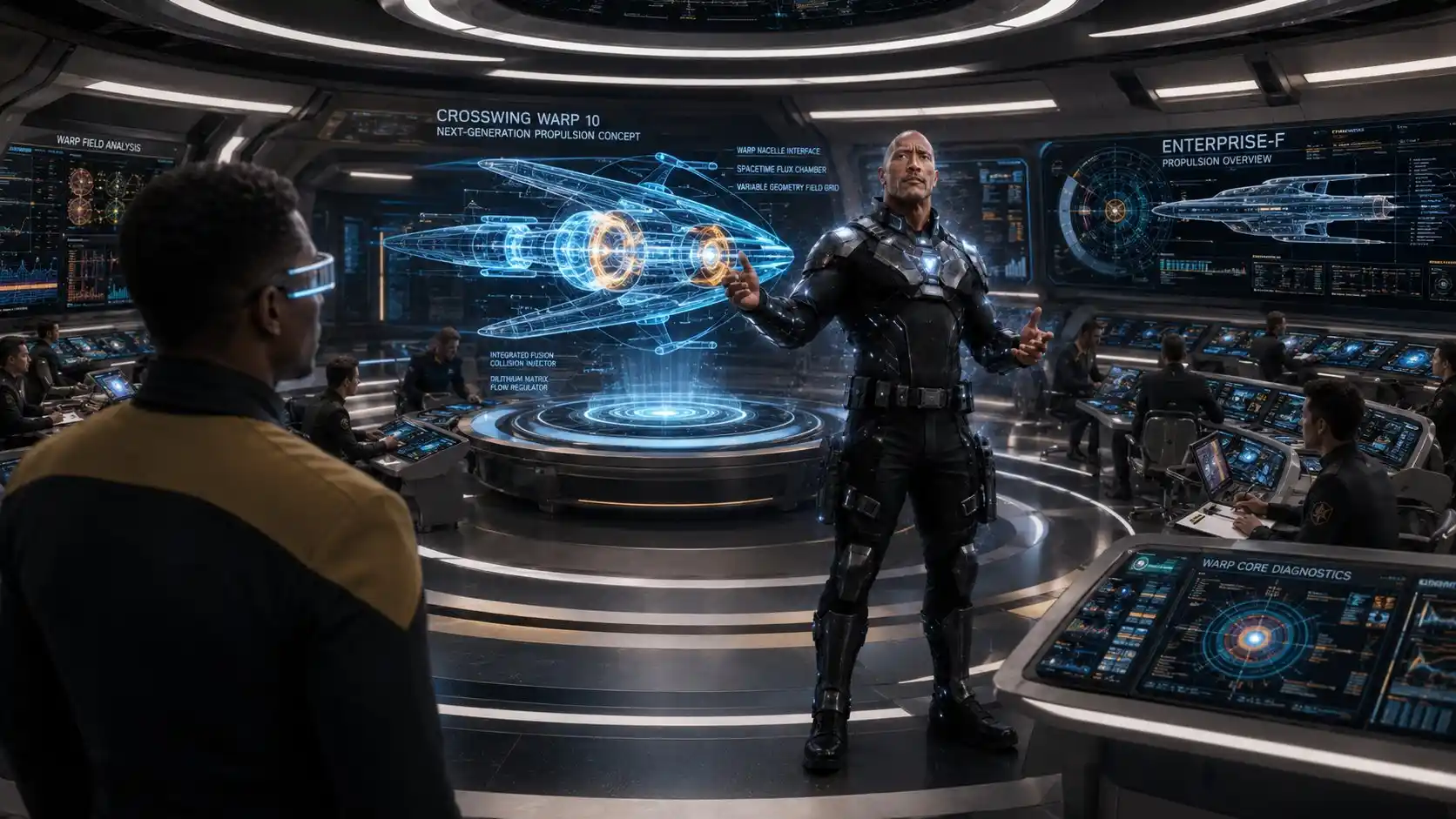
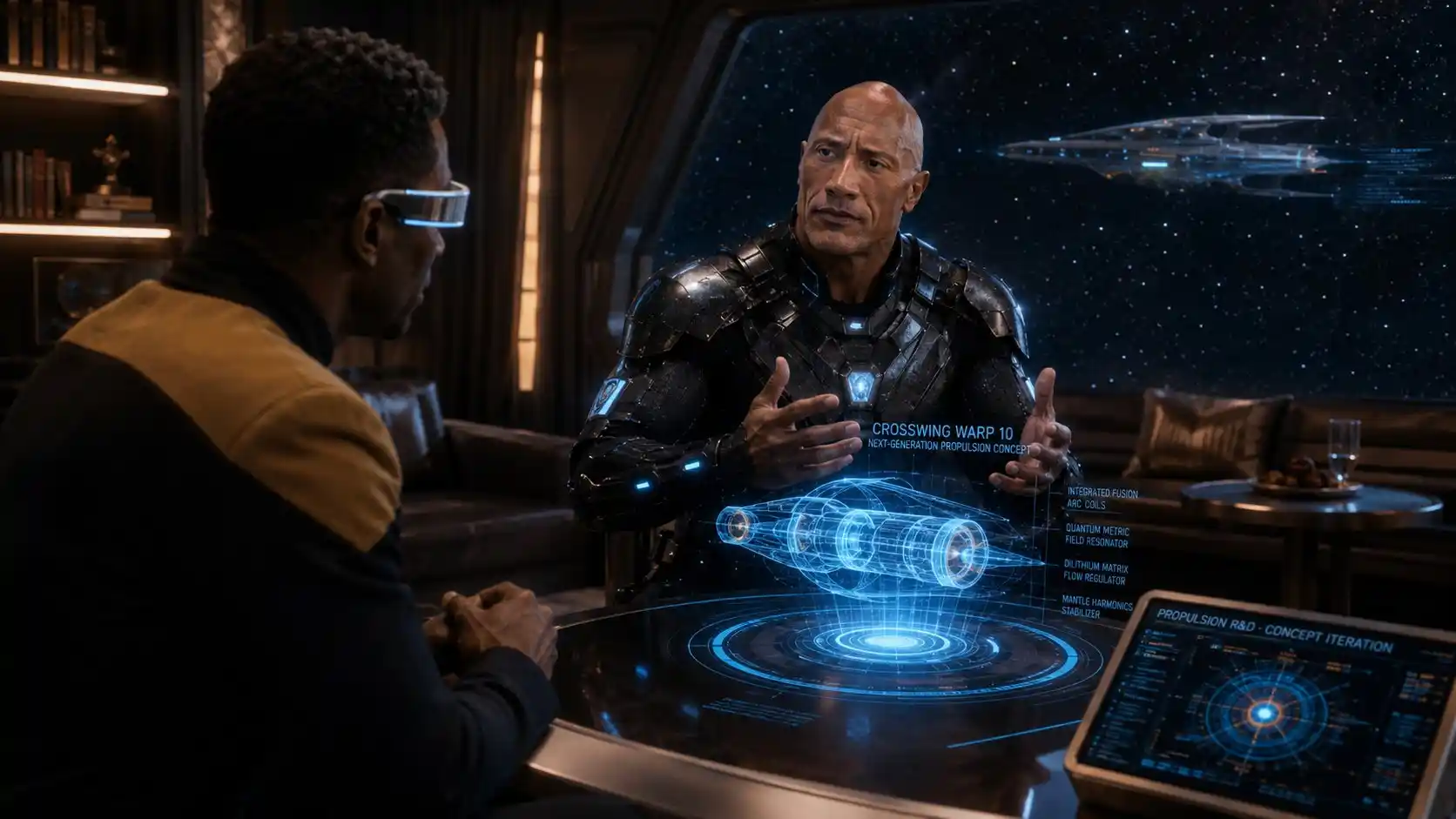
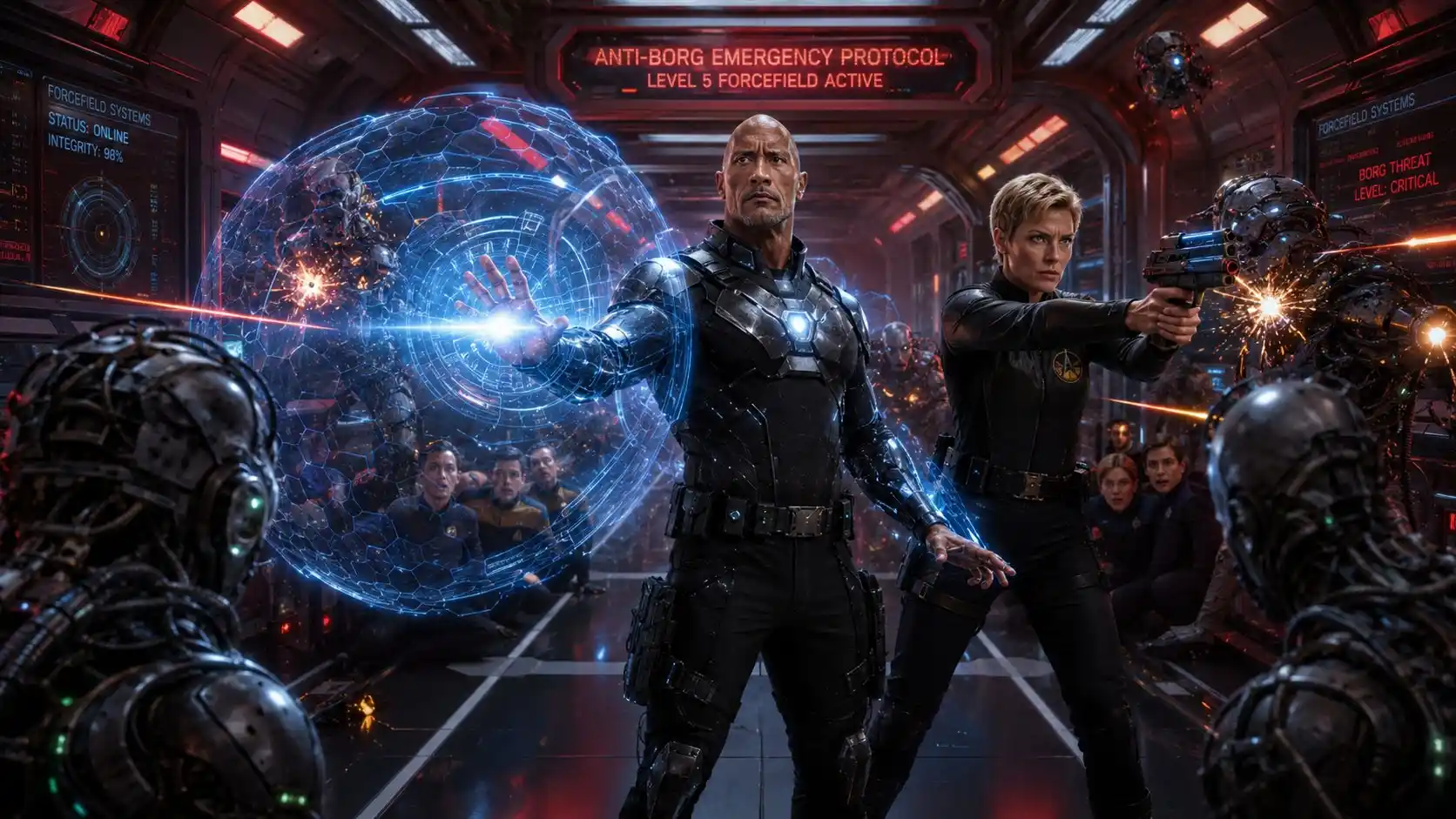
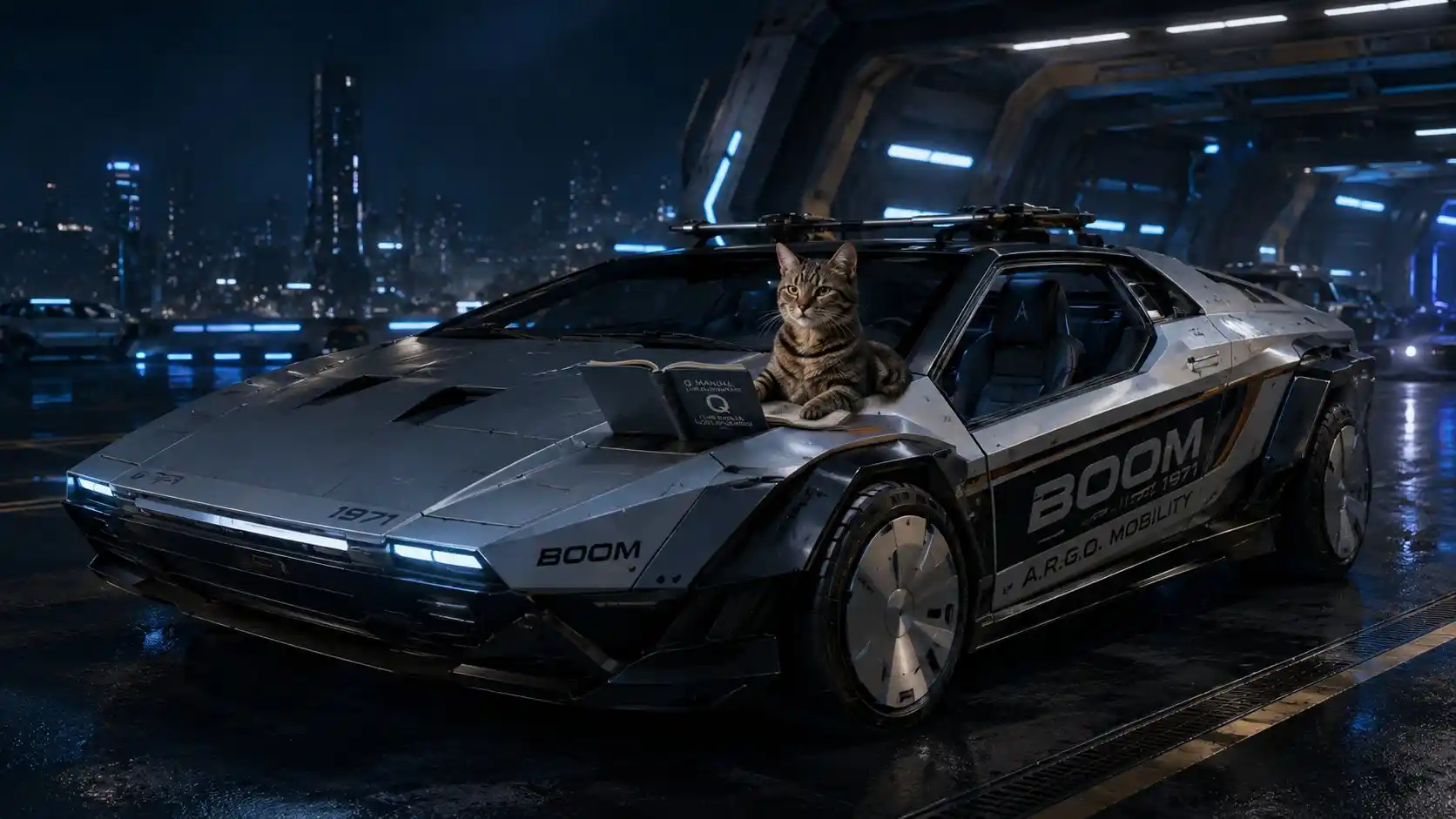
👉 D.E.L.O.R.I.A.N. 001 SGT-TNG – X-File 1 – Thesis + Icon https://x.com/SkillsGapTrain/status/2075573855167689158
👉 D.E.L.O.R.I.A.N. 001 SGT-TNG – X File 3 – THE ENGINEERING https://x.com/SkillsGapTrain/status/2075574071950279037
👉 D.E.L.O.R.I.A.N. 001 SGT-TNG – X File 4 – PROOF + RED-TEAM https://x.com/SkillsGapTrain/status/2075574131018633350
👉 D.E.L.O.R.I.A.N. 001 SGT-TNG – X File 5 – Manual + Civilization https://x.com/SkillsGapTrain/status/2075574207409520705