Shuttle Mobility Architecture for the Next Generation
SGT-TNG Master Architecture Book – Public X-File 1 of 5
A road-first captain’s capsule, a modular flight layer, a common VTOL framework, and an open engineering manual for civilization-grade mobility.
Prepared as a concept architecture and public engineering narrative. This file is not a certification package, not a type-design submission, not a road-worthiness approval, not an operating approval, and not evidence that any estimated performance number has been achieved.
Contents
-
Reader Boundary: What This Page Is
-
Cinematic Opening: The First Serious Shape
-
Why ‘Flying Car’ Is the Wrong Dream
-
Shuttle Mobility From First Principles
-
D.E.L.O.R.I.A.N. as Icon, Not Entire System
-
The Captain’s Capsule
-
Road-First / Flight-Optional Ascension Doctrine
-
Door Architecture: Human Access Before Spectacle
-
Wing and Nacelle Architecture
-
Q: Intelligence That Explains, Not Intelligence That Rules
-
D.A.N.G.E.R.: The Safety Threshold
-
Claim Boundary: The Architecture Is Strong Because It Tells the Truth
-
The Five-Part Publication Arc
-
Recovered Requirements From the Full Project
-
Expert Hooks Hidden Inside the Icon
-
What File 1 Deliberately Does Not Finish
-
Source Notes for File 1
-
Final Doctrine for File 1
1. Reader Boundary: What This Page Is
This first X-file is the public opening of the larger SGT-TNG master architecture. It is designed to stand alone as a serious long-form post, but it is also the first gate into a five-part publication sequence. Its job is not to prove the aircraft. Its job is to make the architecture readable, serious, and difficult to dismiss before the deeper framework, engineering, benchmark, red-team, and manual volumes arrive.
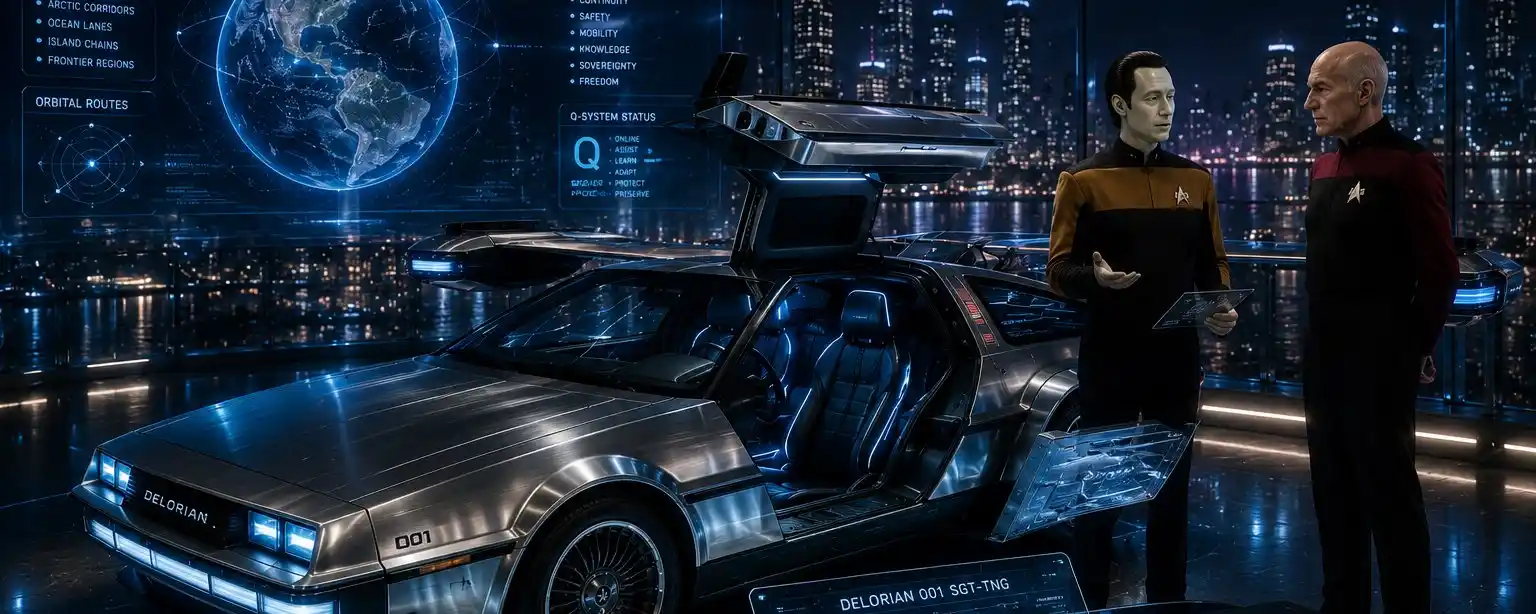
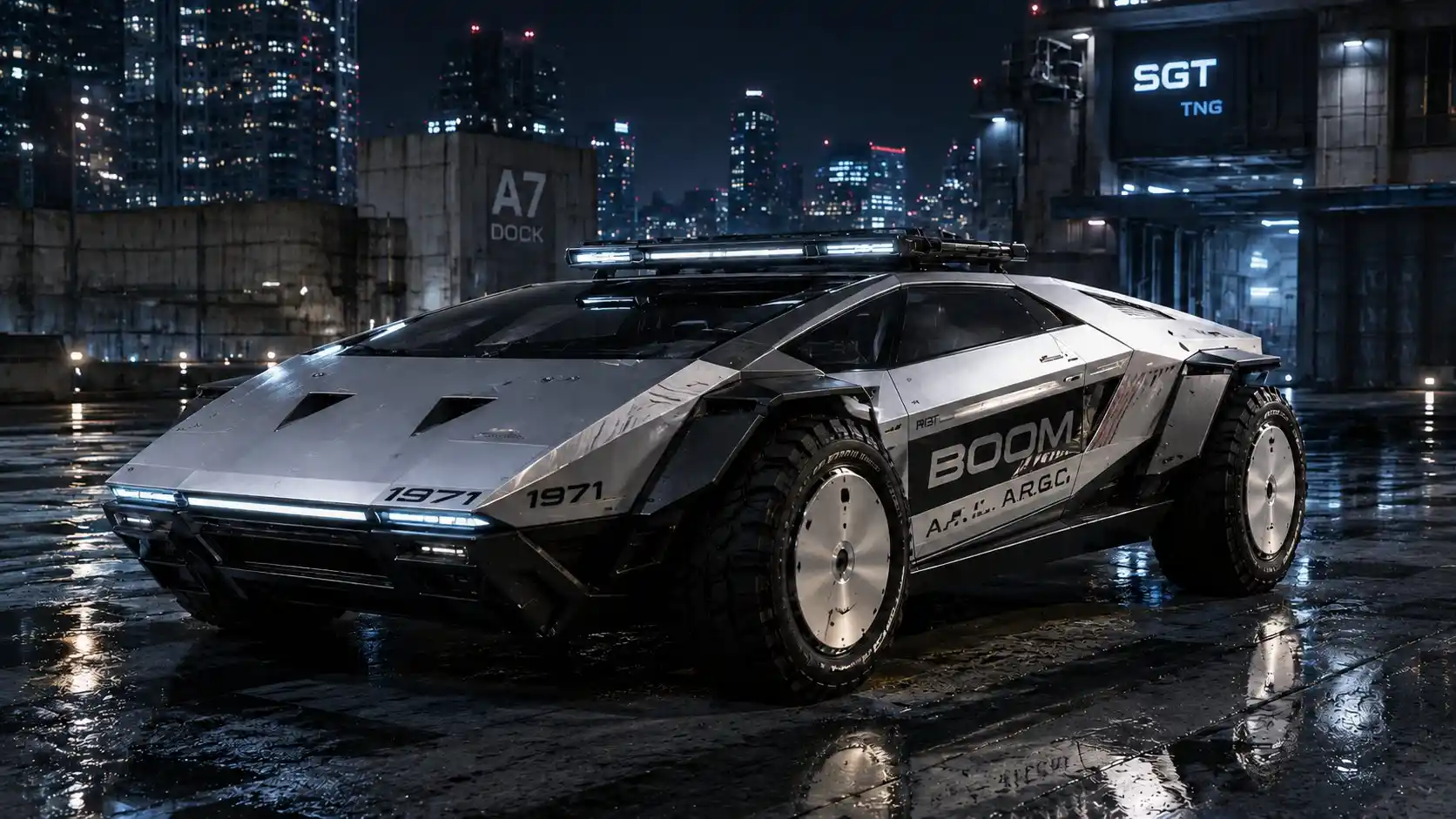
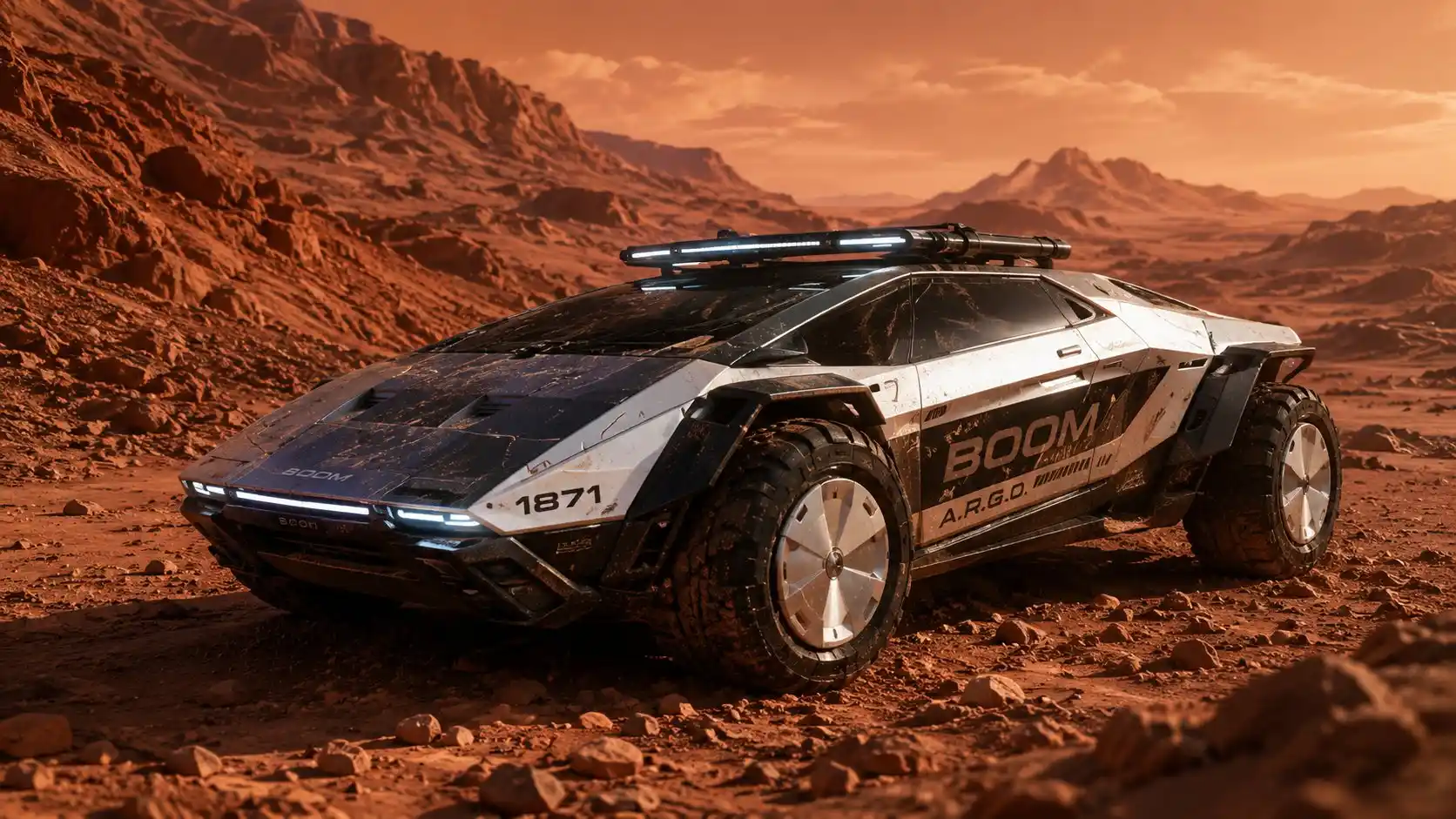
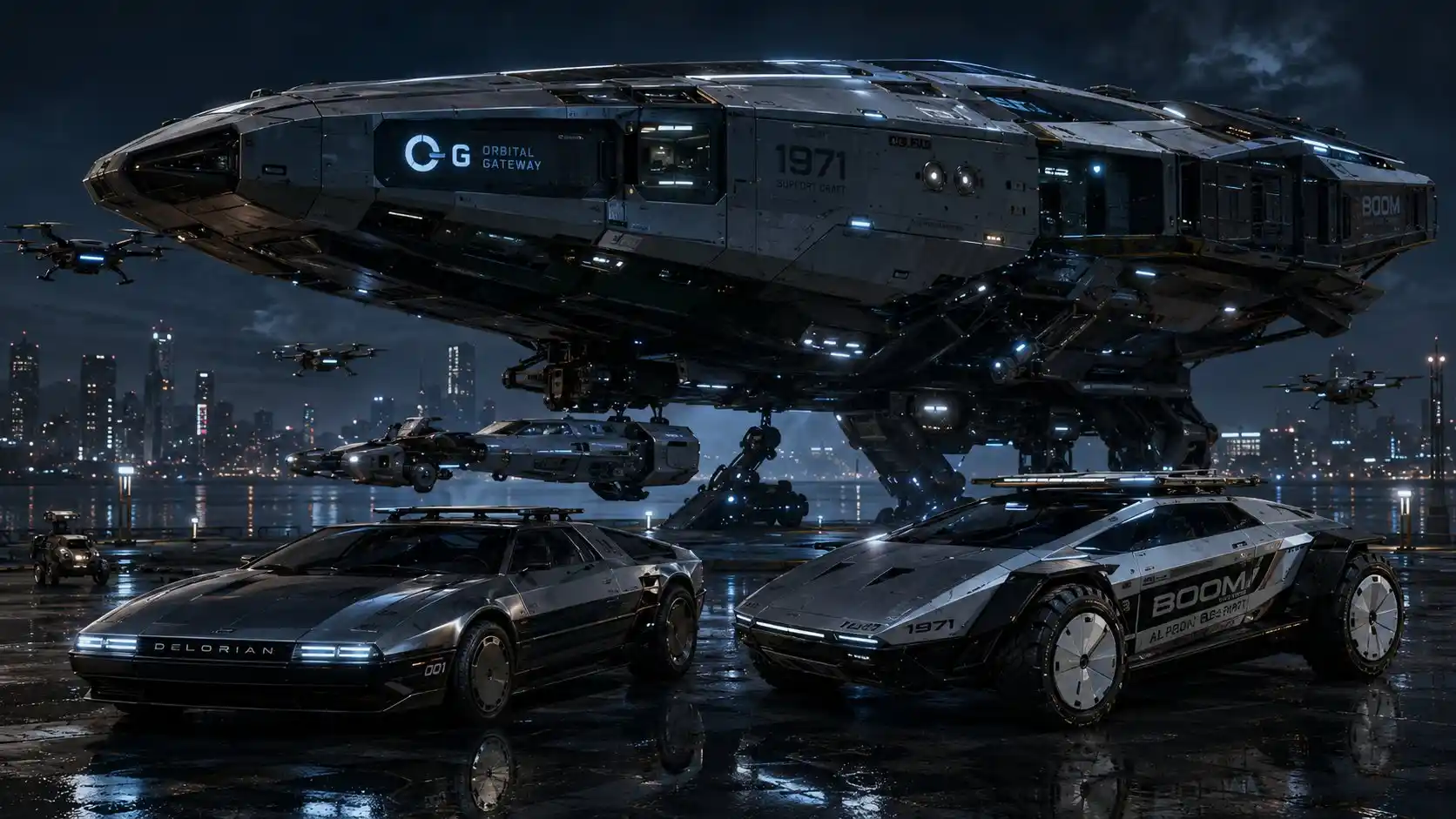
The object at the center is D.E.L.O.R.I.A.N. 001 SGT-TNG. In this project language, D.E.L.O.R.I.A.N. is the icon: the visible road-first captain’s capsule that lets the public understand why the architecture matters. BOOM 1971 becomes the wedge and field branch. A.R.G.O. becomes the mission-kit architecture. NAV-CF becomes the common framework that prevents one-off prototype chaos. Q explains the system. D.A.N.G.E.R. protects the threshold. SGT-TNG coordinates the civilization layer: literacy, repair culture, claim discipline, training, source awareness, and public trust.
This page deliberately begins with the icon because the public does not enter a new engineering world through a requirements matrix. The public enters through a shape, a door, a cockpit, a feeling, a purpose, and a promise that the promise will be governed by truth. Experts may begin with load paths and certification constraints, but even experts know that a serious vehicle must earn both minds: the technical mind and the imaginative mind. The imagination gives the project social energy. Engineering prevents that energy from becoming fraud.
The central claim is simple:
-
The old phrase “flying car” is too small.
-
The stronger frame is shuttle mobility.
-
The first serious public machine should remain useful on the road before it asks for the sky.
-
The flight layer should be modular on the ground, captive in flight, mechanically locked, geometry-captured, and digitally confirmed.
-
The human should remain in command.
-
The system should explain itself.
-
The safety layer should stop false confidence before it becomes a public hazard.
The short doctrine is the spine of this whole page:
The doors fold. The nacelles fly. The capsule protects. The human remains in command.
That line is not decoration. It is an engineering boundary written as a memorable public sentence. The doors are for human access and emergency egress. The nacelles are for flight authority. The capsule is for crash structure, command posture, passenger continuity, and recoverability. The human remains in command because a civilization-grade machine cannot become a sovereign black box merely because it carries more software.
2. Cinematic Opening: The First Serious Shape
Imagine the vehicle at night, not in a showroom, not in a cartoon future, not hovering randomly above traffic, but resting on wet pavement at the edge of a real city. The surface is black with rain. The skyline is blue-white. The car is low, long, metallic, and still. Its body is not a pod. It is not a shuttle. It is not a vertical box pretending to be friendly. It has a hood, a cockpit, a rear quarter, wheels, stance, and a shape that makes the road part of the story.
The driver does not climb into a generic air taxi. The driver approaches a captain’s capsule. The front seats are command seats. The rear seats are continuity seats. The cabin glows with a restrained blue Q interface, not a nightclub screen wall. The doors do not become wings. The doors are honest doors. The upper panel opens in a compact gullwing or dihedral motion. A secondary rear section slides or folds away to create a comfortable human egress path without invading the wing assembly zone. The wing and nacelle system is not floating above the vehicle like a separate drone. It is seated low into a rear roof and structural hardpoint zone, behind the main door path, with the car itself remaining the primary body.
This is where the image work became engineering work. Every time the wing moved too far forward, it collided with the door logic. Every time the door became too wide, it swallowed the roof area needed for the wing assembly. Every time the nacelles floated, the machine looked like a logistics drone carrying a car instead of a car carrying a modular flight system. Every time the body softened, the project lost its soul. The struggle to make the image look right exposed the deeper requirement: the vehicle needs a distinct access architecture, a distinct roof hardpoint architecture, and a distinct body canon.
That is why D.E.L.O.R.I.A.N. 001 cannot simply be described as a car with rotors. It must be described as an integrated road-first mobility capsule with a controlled flight layer. The body is not only a body. The body carries geometry, passenger access, stiffness, crash logic, mass distribution, service access, and the emotional signature required for public adoption. The wing system is not only a wing. It carries lift, drag, nacelle spacing, structural load paths, propulsion mass, electrical interfaces, lock logic, inspection burden, and transition risk. The door is not only a door. It is the human boundary between beauty and usability.
The best future does not begin by deleting the road. It begins by respecting the road and then adding a new layer of reach. That is why the first serious vehicle in this architecture should not scream that it has escaped the earth. It should show that it has earned the road so well that the sky becomes an extension, not a gimmick.
2. Why ‘Flying Car’ Is the Wrong Dream
The phrase “flying car” usually produces the wrong design instincts. It makes people imagine a normal road vehicle that somehow escapes gravity without paying the full bill of mass, power, noise, downwash, safety, flight control, certification, maintenance, weather, and public risk. That framing is emotionally attractive, but physically evasive.
A car is judged by road laws: traction, braking, crashworthiness, tires, suspension, visibility, drivability, service cost, and daily use. An aircraft is judged by air laws: lift, thrust, control, stability, redundancy, inspection, weather, pilot training, failure modes, and airspace integration. A vehicle that tries to do both cannot simply inherit the easy parts of both worlds. It inherits the hard parts of both worlds.
From first principles, the word “flying” is not the key. The key is reach. A civilization has reach when people, tools, medicine, energy, sensors, repair crews, and families can move through the real world when ordinary infrastructure is weak, broken, absent, overloaded, or too slow. Roads are powerful, but they are also fragile. Bridges fail. Ferries stop. Mountain passes close. Northern communities become isolated. Islands depend on schedules. Floods break corridors. Airports are not everywhere. Rail is fixed. Helicopters are useful but costly, noisy, maintenance-heavy, and not a mass public vehicle layer.
The right question is not “Can a car fly?” The right question is: what kind of machine restores real human reach without pretending physics has disappeared?
That question produces a different architecture.
It says the vehicle should:
-
Drive every day.
-
Fly only when the journey requires it.
-
Keep the road body desirable and useful without the flight system attached.
-
Treat flight as a proof-gated mode, not a marketing mood.
-
Separate public imagination from public claims.
-
Use a common framework so variants do not become chaos.
-
Make the vehicle understandable to builders, operators, responders, regulators, and serious readers.
That is why D.E.L.O.R.I.A.N. 001 is not the whole civilization. It is the icon. The larger civilization architecture is NAV-CF plus SGT-TNG. The vehicle gives the future a shape. The framework gives the future discipline. The manual gives the future literacy. The safety layer gives the future restraint.
The public sees the doors first. The engineer sees the load path. The operator sees the state logic. The regulator sees the claim boundary. The builder sees the interface register. The civilization analyst sees something larger: a machine that only becomes serious when it is paired with the culture required to understand, maintain, and govern it.
3. Shuttle Mobility From First Principles
Start from the simplest chain.
A human being needs to move through the world. Movement is not entertainment only. Movement is medicine, work, family, emergency response, food, energy, repair, sovereignty, and continuity. If mobility collapses, many other systems collapse behind it. A road network is one layer of mobility. It is not the whole geometry of civilization.
Roads create reach where they exist. Roads also create dependency because all road vehicles inherit the limits of the road graph. A road vehicle can be fast and still be trapped by a broken bridge. It can be luxurious and still useless when the ferry is cancelled. It can be powerful and still unable to cross a flooded valley. It can be cheap and still irrelevant to an island or remote mountain site. A serious future mobility architecture should not treat road dependency as destiny.
At the same time, aircraft are not magic. Vertical flight is expensive in energy. Hover is a tax. Cruise is the dividend. Reserve is the safety margin. Proof is the permission. Any architecture that spends too much time hovering becomes energy-poor, noisy, and difficult to scale. Any architecture that ignores wing-borne flight becomes trapped in the physics of brute-force lift. Any architecture that ignores road use becomes a niche aircraft system with a car-shaped costume.
The D.E.L.O.R.I.A.N. thesis is that the right early public vehicle is road-first and flight-optional:
-
Road-first means the vehicle must be desirable, practical, and legible as a premium road machine even before the flight layer is mature.
-
Flight-optional means the flight kit is not required for every trip, every owner, every day, or every environment.
-
Roadless capability means the architecture can eventually reach across missing or failed infrastructure without pretending every use case is a daily commute.
-
Modular flight means the vehicle can be developed in stages, inspected in stages, and claimed in stages.
This avoids the weakest flying-car fantasy: the assumption that every road user will become a casual pilot in dense city airspace. The better first target is not mass chaos in the sky. The better first target is disciplined access: controlled corridors, constrained missions, public-service cases, remote-reach cases, proof campuses, pilot fleets, and eventually mature civilian corridors only after evidence supports them.
The first principle is not spectacle. The first principle is conditional mobility.
The vehicle should know whether it is in road mode, docked mode, service mode, preflight mode, flight-ready mode, restricted mode, degraded mode, or no-go mode. Q explains the state. D.A.N.G.E.R. enforces the threshold. The digital twin records the configuration. The human remains in command but is not allowed to override physics with ego.
This is what makes the architecture more serious than a shape. It is not simply asking whether a car can fly. It is asking what conditions must be true before the system is allowed to change state.
5. D.E.L.O.R.I.A.N. as Icon, Not Entire System
An architecture this complex needs a visible hero. That is the role of D.E.L.O.R.I.A.N. 001 SGT-TNG.
The public hero must do several things at once. It must be emotionally readable. It must be technically suggestive. It must be beautiful enough to carry adoption energy. It must be disciplined enough not to become a lie. It must look like a future people would actually want, not a regulatory diagram with tires. It must also expose the right questions: Where does the door open? Where do the wings mount? Where do the passengers sit? Where does the battery mass go? Where does the Q module live? How does the system know it is safe? How does the vehicle remain a road machine when the flight kit is not installed?
D.E.L.O.R.I.A.N. is the icon because it carries the public myth of the project. Its body language is executive, road-first, polished, stainless, low, and capable. It should not look like a generic pod. It should not look like a military ATV. It should not look like a minivan. It should not look like a toy. It should retain the dignity of a serious grand tourer while carrying a next-generation technical layer.
The visual canon matters because visual drift becomes conceptual drift. When the hood gets too short, the road identity weakens. When the rear quarter becomes too smooth and anonymous, the car loses its engineered tension. When the wing assembly rises too high, the vehicle looks like it is being lifted by an external drone. When nacelles appear as extra floating pods, the architecture becomes incoherent. When the doors grow into huge triangular panels, the human access logic becomes wrong. When blue-white technical light turns washed-out violet, the visual energy loses command.
The locked visual canon for D.E.L.O.R.I.A.N. is therefore part of the requirements culture:
-
Low, long, premium road-first body.
-
Clean executive wedge.
-
Brushed stainless or silver-metal skin.
-
Black lower architecture.
-
Blue-white Q lighting.
-
Strong hood presence.
-
Clean rear quarter shape.
-
Premium wheels.
-
2+2 captain’s capsule.
-
Compact upper gullwing or dihedral door.
-
Secondary rear-sliding or rear-folding egress panel.
-
Wing assembly mounted low behind the main door zone.
-
One continuous wing span when flight kit is active.
-
Symmetrical nacelles.
-
No floating extra pods.
-
No raised drone carrier.
-
No bubble taxi body.
This is not aesthetics detached from engineering. In this architecture, the aesthetic is a memory structure for requirements. The body reminds the reader that the vehicle must drive. The door reminds the reader that humans must enter and exit. The wing reminds the reader that flight is physical. The nacelles remind the reader that lift requires machinery, mass, and power. The cockpit reminds the reader that command still belongs to the human.
D.E.L.O.R.I.A.N. gives the future a face. NAV-CF gives that face a skeleton.
6. The Captain’s Capsule
The 2+2 captain’s capsule is one of the most important choices in the architecture because it prevents the vehicle from collapsing into two weak extremes.
One extreme is the two-seat toy: thrilling, expensive, visually exciting, but limited as a civilization object. Two seats can make a machine desirable. They do not necessarily make it shareable. They do not automatically create continuity. They can become a private thrill object rather than a public future.
The other extreme is the sedan or shuttle: practical in theory, but visually diluted, heavier, larger, harder to package, less emotionally sharp, and often more likely to become a generic mobility pod. A four-door sedan logic would fight the roof, the wing, the nacelle mount, the mass budget, the stiffness requirements, and the public icon role.
The 2+2 captain’s capsule is a middle path. It gives the front row the seriousness of command seats. It gives the rear row a continuity role without pretending the vehicle is a minivan. It allows the project to say that the vehicle is not only for one heroic driver, but it does not hide the payload reality. Rear seats are real enough to matter, but flight payload must remain honest.
This matters because payload honesty is one of the trust foundations of the whole project. A road vehicle can carry people and cargo because roads support weight through wheels. A vertical-lift vehicle pays for every kilogram. A flying-capable road machine must therefore speak with unusual clarity about which configuration is being discussed:
-
Road-only mode.
-
Road mode with flight kit attached but inactive.
-
Flight-ready mode with payload restrictions.
-
Short-hop access mission.
-
Tethered or controlled test mode.
-
Public-service or pilot-fleet mode.
-
Future mature corridor mode.
The architecture should never imply that every road payload automatically becomes a flight payload. That would be a claim error. The vehicle may have four seats as a continuity design, but the flight envelope must be earned through mass modeling, battery modeling, lift modeling, structural testing, noise measurement, downwash analysis, and certification engagement.
The capsule also carries the human-command doctrine. A cockpit is not only a place to sit. It is a relationship between human attention and machine state. The human needs to see what state the system is in, what mode is active, what is blocked, what is degraded, and why the system says no. Q must explain without flattering the driver. D.A.N.G.E.R. must protect without becoming theatrical. The cockpit should feel calm because panic is a systems failure before it is a human emotion.
That is why the front seats are not just seats. They are command positions. The rear seats are not just marketing. They are continuity positions. The capsule is not a cabin stuffed into a shape. It is the protected human center of the architecture.
7. Road-First / Flight-Optional Ascension Doctrine
The road-first doctrine is the discipline that stops the project from becoming a failed aircraft with license plates.
A vehicle that is miserable on the road will not become a trusted public machine merely because it can hover. It will be too niche, too expensive, too fragile, too strange, or too operationally constrained. A vehicle that is only optimized for flight may become a good aircraft, but then it should be called an aircraft. D.E.L.O.R.I.A.N. 001 must remain a road object with real road appeal.
Road-first does not mean road-only. It means daily utility comes before flight spectacle. It means the machine must be capable of existing as a premium road vehicle even when the flight kit is absent, stowed, restricted, or under maintenance. It means the owner does not need to fly every day to justify the vehicle. It means the road vehicle has its own design dignity.
Flight-optional does not mean flight is casual. It means flight is conditional, proof-gated, and mission-dependent. The vehicle may drive every day. It may fly when the journey requires it. It may detach from the flight kit when the road is enough. It may upgrade when the owner, operator, vehicle, infrastructure, and authority state are ready.
The doctrine can be written as a simple operating philosophy:
Drive every day. Fly when the journey requires it. Detach when the road is enough. Upgrade when the owner is ready.
That line protects development sequencing. Model A should remain battery-first and civil proof-oriented. Model B can explore rugged, hydrogen-electric, or hybrid-electric endurance paths after the first branch has learned enough. Model C, if it exists at all, must be separated, audited, permissioned, human-authorized, digitally tracked, and kept out of the civil trunk.
Road-first also protects the imagination. A beautiful road vehicle gives people a point of entry. It says: this future is not only for pilots, militaries, or transport operators. It can be understood from the ground. But flight-optional keeps the imagination honest. It says: the sky is not claimed by desire alone. The sky is earned through lift, control, reserve, proof, and truth.
This is why the architecture should avoid overclaiming public readiness. Even if the body design is strong, the flight mode remains a proof path. The current project can claim a concept architecture. It can claim a requirements spine. It can claim visual DNA. It can claim a safety philosophy. It can claim benchmark context. It can claim estimated performance bands. It cannot claim airworthiness, roadworthiness, operating approval, production readiness, public passenger readiness, or commercial deployment.
The strongest public voice is not the loudest voice. It is the voice that can say: this is powerful, and this is not proven yet.
8. Door Architecture: Human Access Before Spectacle
The door architecture became one of the hidden discoveries of the project.
At first, the simplest visual instinct is to give the vehicle large dramatic gullwing doors. That looks iconic, but it creates a problem. A very large door wants to occupy the same roof and rear zone that the wing assembly wants to occupy. If the door extends too far back, it fights the structural hardpoints. If the wing assembly moves forward, it fights the door path and the driver’s head path. If the nacelles sit too close to the door, egress becomes compromised. If the door becomes a triangle or cutout under the wing, the side body loses coherence. The image may look futuristic for a moment, but the architecture becomes mechanically confused.
The solution is a split access system.
The upper portion opens compactly in a gullwing or dihedral motion. It preserves the inheritance and ceremony of the door without consuming the whole roof. The secondary portion handles the rest of the human opening by sliding rearward or folding rearward along the rear edge of the opening. This creates a larger entry path without forcing the upper door to become a massive panel. It also allows the wing assembly to stay low and close to the roof behind the door zone, rather than being lifted five feet above the car like an external aircraft.
The access doctrine is:
-
Open upward for the upper access panel.
-
Slide or fold rearward for the secondary access panel.
-
Keep the rear edge of the opening honest.
-
Preserve the roof structure behind the door for the wing assembly.
-
Do not let the door become a flight surface.
-
Do not let the nacelle become an egress obstacle.
-
Unknown door state means no flight.
-
Unknown door lock state means flight.
The Captain’s Egress Bay is the clearance volume required for human dignity and emergency usability. It is not a styling phrase. It means the driver and passenger can enter and exit without crawling, contorting, or walking into a propulsion mount. It means the door path must be predictable. It means the emergency ground release must exist. It means the digital twin must know the door state. It means D.A.N.G.E.R. must block flight if the state is ambiguous.
This is how a visual critique becomes a requirement:
-
If the door is too wide, it conflicts with the wing.
-
If the wing is too far forward, it conflicts with the door.
-
If the wing is too high, it looks like a drone carrier.
-
If the nacelle is too close to the opening, it harms egress.
-
If the rear side panel opens incorrectly, it looks attached to the wrong body edge.
-
If the secondary panel slides or folds correctly, the human access problem becomes elegant.
The result is stronger than a traditional gullwing and more disciplined than a generic scissor door. It is a next-generation access system: ceremonial, practical, compact, and structurally aware.
9. Wing and Nacelle Architecture
The wing and nacelle architecture must be described with precision because this is where the design most easily mutates into the wrong object.
The flight kit is not a drone that picks up the car. It is not a roof rack. It is not a random pair of floating pods. It is not a visual accessory. It is an integrated modular flight package attached to built-in structural hardpoints. The car remains the aircraft body. The wing kit is the flight layer.
The basic rule is this:
The wing assembly mounts behind the main door zone, over the rear passenger and rear roof structure, seated close to the vehicle, connected to hardpoints, and clear of the split-door motion.
That rule exists because of physics and human access. The wing cannot occupy the driver’s primary door zone. The nacelles cannot hover in the image like decorative boxes. The wing span must be continuous and solid from left nacelle to right nacelle when active. The left and right nacelles must be symmetrical. The mount must imply structure, not magic. The system must look as though a load path exists from nacelle to wing to roof hardpoint to lower keel and body structure.
The nacelle safety doctrine is equally important:
-
Ground-detachable.
-
Flight-captive.
-
Second-path retained.
-
Mechanically locked.
-
Geometry-captured.
-
Digitally confirmed before reflight.
-
No in-flight release.
-
No software-only release.
-
No single-point detachment.
Every phrase in that list answers a failure mode. Ground-detachable means the road vehicle can be serviced, stored, or used without the flight layer. Flight-captive means the module cannot casually depart in flight. Second-path retained means one failed lock cannot become total loss. Mechanically locked means software alone cannot be trusted as the physical keeper. Geometry-captured means the shape itself helps retain the module. Digitally confirmed means the system state is known before flight. No in-flight release prevents a dangerous myth of casual separation. No software-only release prevents cyber or command error from becoming structural disaster. No single-point detachment prevents one local failure from becoming catastrophic.
This is where the architecture becomes first-principles honest. A nacelle has mass. Mass creates load. Load needs structure. Structure adds mass. Added mass increases hover power. Hover power increases battery demand. Battery demand increases mass again. Increased mass affects road dynamics, crash energy, tire load, brake load, and thermal load. Therefore the wing and nacelle system cannot be an afterthought. It must be integrated with the whole vehicle architecture.
This is also why a common framework matters. If every builder invents a different wing mount, different nacelle interface, different lock state, different power bus, different cooling interface, different maintenance method, and different software permission model, the project becomes chaos. NAV-CF exists to prevent that. It turns visual modularity into governed modularity.
The public should see a beautiful wing. The engineer should see the interface. The maintainer should see inspection points. The safety reviewer should see no-go states. The claims reviewer should see what has not yet been proven.
10. Q: Intelligence That Explains, Not Intelligence That Rules
Q is the intelligence layer, but the architecture must never confuse intelligence with sovereignty.
In this project, Q is not a magic pilot. Q is not a deity in the vehicle. Q is not a cloud-owned master. Q is not an excuse to hide complexity. Q is a diagnostic, explanatory, configuration, continuity, and learning assistant. It helps the human understand state. It translates technical system condition into meaningful language. It supports service. It records what the vehicle knows about itself. It helps maintain the digital twin. It can exist as a modular continuity device that can be removed or carried when the vehicle is damaged or unavailable.
That removable Q idea matters because it converts the vehicle from a sealed product into a knowledge relationship. If the vehicle is destroyed, disabled, abandoned, or separated from infrastructure, the human should not lose all diagnostic memory, manuals, configuration records, and guidance. A rugged portable Q module can preserve a portion of the system’s intelligence: service history, manuals, emergency instructions, maps, diagnostic snapshots, and training logic. It is not a weapon. It is continuity.
This idea is powerful because it addresses one of the worst problems in modern technology: black-box dependency. Many advanced systems become unusable when the network is gone, the vendor is gone, the screen is dead, the authentication fails, or the owner is not allowed to understand the machine. A civilization-grade vehicle should not fail like a locked phone. It should degrade like an aircraft: understandable, inspectable, recoverable, and documented.
Q should therefore have layered roles:
-
State explanation for the driver.
-
Diagnostic interpretation for the technician.
-
Configuration awareness for mission kits.
-
Energy-state explanation for battery and later hydrogen systems.
-
Door and nacelle state reporting.
-
Digital-twin record support.
-
Training and manual navigation.
-
Degraded-mode guidance.
-
Emergency continuity record.
Q should also have boundaries:
-
Q does not override certified or proof-gated limitations.
-
Q does not authorize flight when D.A.N.G.E.R. blocks it.
-
Q does not convert unknown state into safe state by optimism.
-
Q does not hide uncertainty.
-
Q does not replace human command.
-
Q does not become the owner of the vehicle.
-
Q does not turn a concept architecture into proof.
The best personality model for Q is calm, precise, observant, loyal, and curious. It is the synthetic intelligence officer archetype without copying any franchise character. It studies the world, explains the state, learns the human purpose, and refuses to flatter the operator into danger.
Q explains. D.A.N.G.E.R. protects. The human commands.
11. D.A.N.G.E.R.: The Safety Threshold
D.A.N.G.E.R. is deliberately named with force because the safety layer must be memorable. It is not a joke system. It is not a theatrical red button. It is the architecture that protects the vehicle from pretending a dangerous state is acceptable.
A powerful vehicle needs a language for refusal. The more advanced the system becomes, the more important refusal becomes. A simple vehicle can be unsafe because it lacks capability. An advanced vehicle can be unsafe because it has too much capability without enough discipline. D.A.N.G.E.R. is the discipline layer.
It watches the conditions that must be true before certain actions are allowed:
-
Door state.
-
Door lock state.
-
Nacelle attachment state.
-
Nacelle lock state.
-
Wing assembly state.
-
Battery state.
-
Thermal state.
-
High-voltage isolation state.
-
Later hydrogen pressure, leak, valve, and stack state.
-
Mission-kit state.
-
Weather state.
-
Payload state.
-
Digital-twin configuration state.
-
Maintenance release state.
The simplest D.A.N.G.E.R. rule is: unknown state is not safe state.
That rule matters because many failures begin as ambiguity. The system does not know whether the door is locked. The system does not know whether a nacelle fastener is properly engaged. The system does not know whether a mission kit changed center of gravity. The system does not know whether a battery module is thermally ready for repeat high-power use. The system does not know whether a service action was completed correctly. In a weak culture, the driver or operator assumes. In a strong culture, the system blocks the transition until the state is known.
D.A.N.G.E.R. should not make the human powerless. It should make the human more serious. It should explain why it says no. It should give a path to recovery. It should identify the inspection, service, cooldown, configuration, or proof step required. It should protect the operator from false confidence, not trap the operator in meaningless automation.
The degraded-mode ladder belongs here:
-
Full capability.
-
Assisted capability.
-
Road-only capability.
-
Limp-home capability.
-
Stationary shelter / power support.
-
Safe shutdown.
-
Recovery and service release.
That ladder is one of the strongest pieces of the project. It says the vehicle should not fail like a phone. It should degrade like an aircraft. A phone can go dark and become useless. A civilization-grade vehicle should fall back through understandable states, preserving as much safe function as possible while refusing unsafe claims.
D.A.N.G.E.R. is not the enemy of freedom. It is the guardian of real freedom, because freedom without state truth becomes accident, liability, or public backlash. A future mobility system that cannot say no will eventually be stopped by someone else saying no for it.
12. Claim Boundary: The Architecture Is Strong Because It Tells the Truth
The most important credibility move is not adding more heroic language. It is telling the truth about what exists and what does not exist.
This page can claim:
-
A concept architecture.
-
A public naming hierarchy.
-
A road-first doctrine.
-
A flight-optional development logic.
-
A 2+2 captain’s capsule concept.
-
A split-door and Captain’s Egress Bay architecture.
-
A modular wing and nacelle interface doctrine.
-
A Q explanation and diagnostic layer.
-
A D.A.N.G.E.R. safety threshold layer.
-
A NAV-CF framework preview.
-
A proof path.
-
A claim-safe public narrative.
This page cannot claim:
-
Certified aircraft status.
-
Certified road-vehicle status.
-
Passenger approval.
-
Public flight approval.
-
Production readiness.
-
Manufacturing readiness.
-
Demonstrated flight performance.
-
Demonstrated road performance.
-
Hydrogen flight readiness.
-
All-weather capability.
-
Autonomous approval.
-
Regulatory endorsement.
-
Affiliation with any automaker, company, franchise, or public agency.
This boundary does not weaken the project. It strengthens it. Expert readers are not impressed by a concept that pretends to be finished. They are impressed by a concept that knows which gates remain.
The current external world supports the caution. Powered-lift and advanced air mobility are real regulatory topics, but they remain certification-heavy and operations-sensitive. The FAA has created powered-lift pilot and operational rules for integrating a new class of aircraft [SN1]. EASA maintains Special Condition VTOL and related means-of-compliance work [SN2]. Transport Canada has published advanced air mobility material and a roadmap orientation [SN3]. Public eVTOL companies publish ambitious benchmarks, but those benchmarks are not transferable proof for this architecture [SN4]. NASA systems engineering guidance reinforces the central idea that complex systems require disciplined requirements, interfaces, verification, and lifecycle thinking [SN5].
The conclusion is not that the project should be timid. The conclusion is that ambition must be organized.
D.E.L.O.R.I.A.N. 001 should be presented as powerful architecture, not proven hardware. Its scores can be high as concept architecture and still lower as validated engineering proof. That honesty protects the work from hype and invites the right kind of expert response.
13. The Five-Part Publication Arc
This file is File 1. It introduces the thesis and the icon. The larger release should unfold in five X-Files so the architecture can breathe without becoming a compressed slogan.
Page 1 — Thesis + Icon.
-
D.E.L.O.R.I.A.N. 001 SGT-TNG.
-
Roadless mobility thesis.
-
Road-first / flight-optional doctrine.
-
Captain’s capsule.
-
Door and nacelle logic.
-
Q and D.A.N.G.E.R.
-
Claim boundary.
-
Cinematic opening.
Page 2 — Framework.
-
NAV-CF.
-
Model A / Model B / Model C.
-
BOOM 1971.
-
A.R.G.O.
-
Mission-kit architecture.
-
Civil trunk, rugged branch, restricted branch.
-
Why one vehicle is not a civilization.
Page 3 — Engineering.
-
Structure.
-
Lift.
-
Nacelles.
-
Doors.
-
Batteries.
-
Hydrogen fuel-cell-up.
-
Electronics.
-
Q module.
-
Digital twin.
-
D.A.N.G.E.R.
Page 4 — Proof + Red-Team.
-
Benchmarks.
-
Estimated performance.
-
Hover reality.
-
Disk loading.
-
Downwash.
-
Noise.
-
Mass.
-
Certification boundaries.
-
Proof gates.
-
Maturity ladder.
Page 5 — Manual + Civilization.
-
The 500- to 1000-page open engineering manual concept.
-
Builder culture.
-
Global customization.
-
SGT-TNG literacy.
-
Repair culture.
-
TNG command philosophy as archetype, not copying.
-
Visual canon.
-
Final doctrine.
The publication sequence matters because the project should not be read as only a car. It should be read as a staged architecture: icon first, framework second, engineering third, proof fourth, civilization fifth.
That sequence mirrors how a serious future should be built. First, define the purpose. Second, define the framework. Third, define the systems. Fourth, define the proof. Fifth, define the culture that prevents the machine from becoming either a toy or a threat.
14. Recovered Requirements From the Full Project
The most valuable part of the full project is not only the final report. It is the long chain of observations that forced the design to become sharper. A compressed executive bundle can preserve conclusions, but it can lose the living logic that produced those conclusions. File 1 therefore records the requirements that emerged from the full project conversation, image work, and red-team process.
The first recovered requirement is that body shape is not cosmetic. The vehicle needs a long hood, low wedge, clean rear quarter, and strong road stance because those features communicate and support the road-first doctrine. If the front becomes too short or the rear becomes too soft, the vehicle stops reading as an executive road machine and starts reading as a generic prop. That matters because public trust begins with legibility. A road-first vehicle should look as if it belongs on the road.
The second recovered requirement is that the wing assembly belongs behind the main door zone. When it moves above the driver or front passenger zone, it creates a mechanical conflict with the door. When it rises too high, it becomes a separate aircraft. When it moves too far back, the wing span can become visually and structurally unbalanced. The correct placement is close to the roofline, over the rear passenger / rear roof structural zone, behind the compact upper door path, and connected through visible hardpoint logic.
The third recovered requirement is that the nacelles must remain symmetrical and purposeful. Extra floating pods corrupt the architecture. A hidden third engine behind one wing corrupts the design language. A left nacelle that shrinks while a right nacelle remains large corrupts the physics story. A serious wing module needs balance. The viewer should read one continuous wing span and two balanced nacelle stations, not an accidental swarm of gadgets.
The fourth recovered requirement is that the door is a system, not a flourish. The upper door should be compact because only part of the opening needs to swing upward. The rest of the human access can come from a secondary panel that slides rearward or folds rearward. This is the key insight that allows the wing assembly to stay low and structurally credible. The more the upper door tries to do everything, the more it invades the wing assembly zone. The split-door solution is therefore not stylistic excess; it is conflict resolution.
The fifth recovered requirement is that Q should be visible as a trusted continuity layer. A removable Q module gives the architecture a survival and repair-culture dimension. It is not only a dashboard assistant. It can be a rugged portable intelligence and manual node that preserves knowledge when the vehicle is offline, damaged, disconnected, or being serviced. That idea belongs in the public thesis because it transforms the vehicle from product into knowledge system.
The sixth recovered requirement is that D.A.N.G.E.R. must remain serious. The acronym has cinematic force, but the function is sober: block unsafe transitions, explain no-go conditions, protect degraded modes, and prevent public claims from outrunning proof. The name is memorable because the function must be memorable. If a future machine carries road, flight, high voltage, modular wings, software, and eventually hydrogen possibilities, the safety threshold cannot be hidden in small print.
The seventh recovered requirement is that the visual universe matters, but it must be translated into original architecture. The command archetypes are useful: calm synthetic intelligence, moral captaincy, tactical security seriousness, stellar-cartography blue, guardian-class protection, and engineering dignity. But the project should not copy existing characters, uniforms, insignia, or franchise designs. The inheritance is philosophical: command, restraint, curiosity, loyalty, and responsibility. The design must become SGT-TNG, not a replica.
The eighth recovered requirement is that open-source must mean disciplined knowledge, not uncontrolled modification. The project should invite builders, but only through interface discipline, manual structure, inspection gates, mass budgets, power budgets, cooling budgets, software boundaries, and proof steps. A machine this complex cannot be open in the sense of arbitrary hacking. It must be open in the sense of readable, teachable, inspectable, repairable, and governed.
The ninth recovered requirement is that the public release should not be too short. The 55-page initial final bundle was useful as an executive package, but the expert-facing release needed room to show first-principles chains. Experts enjoy the path from problem to constraint to requirement to interface to test. They do not want slogans only. The five-file X structure solved this by giving each page enough length to be readable, serious, and still publishable.
The tenth recovered requirement is that the project must hold cinematic power and engineering humility at the same time. If the writing becomes too dry, the vehicle loses its mission. If it becomes too mythic without proof discipline, it becomes hype. The SGT-TNG voice is strongest when it sounds like a technical manual written by people who still believe civilization should be beautiful.
15. Expert Hooks Hidden Inside the Icon
A strong icon should give experts many doors into the architecture. Different disciplines will notice different things.
The aerospace engineer will notice mass, lift, wing area, nacelle placement, transition control, redundancy, rotor or propulsor spacing, disk loading, downwash, acoustics, and certification burden. That engineer will not be convinced by beauty alone. The architecture therefore needs to show that hover is a tax, cruise is a dividend, reserve is a margin, and proof is the permission.
The automotive engineer will notice crash structure, road mass, suspension geometry, braking energy, tire load, steering feel, body stiffness, thermal repeatability, high-voltage safety, service access, and daily usability. That engineer will not accept a vehicle that destroys its road identity for flight theater. The road-first doctrine is meant to satisfy that discipline: the vehicle must be a serious road machine before flight is even considered.
The human-factors engineer will notice entry path, door reach, step-in height, visibility, cockpit workload, display clarity, emergency egress, failure communication, and mode confusion. That engineer should immediately care about the Captain’s Egress Bay and Q explanation layer. A system that can change mode must explain mode. A system that can refuse action must explain refusal. A system that carries humans must allow humans to enter and leave with dignity.
The software and systems engineer will notice state truth. Is the vehicle in road mode, docked mode, preflight mode, flight-ready mode, service mode, degraded mode, or no-go mode? Which sensors know? Which sensors disagree? Which state is authoritative? What does the digital twin record? What happens when a module is changed? What happens when the system is offline? Q and D.A.N.G.E.R. are answers to those questions.
The cybersecurity engineer will notice that a modular, software-rich vehicle creates attack surfaces. A flight release cannot depend on software optimism alone. Nacelle retention cannot be software-only. Door lock truth cannot be a decorative UI. Mission-kit authorization cannot be a casual owner setting. The project should therefore separate explanation, authority, and physical retention. Q may explain. D.A.N.G.E.R. may block. Mechanical geometry must still matter.
The battery engineer will notice peak power, thermal repeatability, fast charging stress, service isolation, crash damage, water exposure, cell chemistry assumptions, and repeated high-load cycles. The architecture should not pretend that road EV logic automatically solves vertical-lift power demand. Battery for peak power is a useful doctrine, but the peak-power layer must be sized, cooled, isolated, monitored, and tested.
The hydrogen engineer will notice that hydrogen is not an aesthetic word. It means tanks, pressure, temperature, leak detection, venting, stack dynamics, balance-of-plant, thermal management, refueling, service training, infrastructure, crash safety, and authority engagement. That is why hydrogen belongs later as a fuel-cell-up branch, not as the first public proof baseline. It may become an endurance layer, but only after the architecture earns the right to carry it.
The manufacturing engineer will notice that a beautiful prototype can be a trap. Production needs repeatability, fixtures, supplier quality, inspection methods, line-replaceable modules, traceability, service documentation, and cost control. Open-source builder culture must not erase quality management. It must explain quality management in a way more people can learn and follow.
The policy reader will notice airspace, public acceptance, noise, emergency corridors, responder training, infrastructure, pilot qualifications, insurance, municipal permissions, certification pathways, and claim control. That reader needs the project to be ambitious but calm. The words “concept architecture” are not legal decoration. They are social trust.
The civilization reader will notice the deeper purpose. The goal is not to escape Earth into simulation. The goal is to restore reach on Earth. Roads, bridges, ferries, airports, and rail corridors remain vital, but they are not enough in every geography or every crisis. Shuttle mobility is a way to keep real communities connected when ordinary infrastructure fails or never existed.
That is why the icon matters. D.E.L.O.R.I.A.N. 001 is a public shape that invites every discipline to ask the next serious question.
16. What File 1 Deliberately Does Not Finish
This first page opens the architecture. It does not finish it.
It does not fully size the aircraft. That belongs in the engineering and proof pages. Mass, wing loading, disk loading, hover power, downwash, acoustics, transition behavior, battery thermal limits, and reserve margins must be treated in greater depth later.
It does not fully define NAV-CF. That belongs in File 2. This page names NAV-CF as the discipline behind the icon, but the common framework requires its own expansion: Model A, Model B, Model C, civil trunk, rugged branch, restricted branch, interface registers, mission-kit approval, and configuration control.
It does not fully define BOOM 1971 or A.R.G.O. That also belongs in File 2. BOOM is the field branch, and A.R.G.O. is the mission-kit architecture. Their roles should not be collapsed into D.E.L.O.R.I.A.N. because the public hero should not be forced to carry every hard mission.
It does not fully define the technical architecture. That belongs in File 3. Structure, lower keel, battery placement, rear balance mass, roof hardpoints, high-voltage bus, BMS, inverters, motor controllers, hydrogen future branch, digital twin, software boundaries, service workflow, and sustainment deserve their own file.
It does not fully red-team the concept. That belongs in File 4. The red-team page must openly attack total mass, hover power, disk loading, downwash, noise, thermal repeatability, battery peak power, nacelle loads, door clearance, crash protection, hydrogen safety, certification path, manufacturing cost, service workflow, and public claims control.
It does not fully develop the manual culture. That belongs in File 5. The 500- to 1000-page open engineering manual idea is one of the deepest parts of the project. It should become a serious builder-culture chapter: not chaos, not random customization, but structured instruction, quality gates, repair culture, and global technical literacy.
This boundary is important because it prevents Page 1 from trying to become the whole book. Page 1 should make the reader care. Page 2 should show the framework. Page 3 should show the engineering. Page 4 should show the proof. Page 5 should show the civilization layer.
A five-part public architecture can carry far more truth than a single compressed post. It lets the reader move through the project like a serious briefing rather than a marketing splash.
17. Source Notes for Page 1
These source notes are included to support public credibility without pretending that external references prove this vehicle. They are context references, not certification evidence for D.E.L.O.R.I.A.N. 001 SGT-TNG.
-
[SN1] FAA powered-lift operational context. The FAA issued powered-lift pilot certification and operations rules to support integration of aircraft that combine airplane and helicopter characteristics. This supports the claim that powered-lift is a real regulatory category, not a claim that this concept is approved.
-
[SN2] EASA Special Condition VTOL. EASA maintains VTOL special-condition and means-of-compliance material for vertical-lift aircraft certification pathways. This supports the claim that VTOL aircraft require specialized certification logic.
-
[SN3] Transport Canada advanced air mobility material. Transport Canada has published advanced air mobility information and roadmap-oriented material. This supports the Canadian context for future authority engagement, not any approval.
-
[SN4] Public eVTOL benchmarks. Joby publishes aircraft technology figures including up to 200 mph and 2400 kg gross weight on its official technology page. These figures are useful as benchmark context only. They do not validate D.E.L.O.R.I.A.N. 001 because the architecture has different mass, road, door, nacelle, and mission constraints.
-
[SN5] NASA Systems Engineering Handbook. NASA systems engineering guidance supports requirements, interfaces, verification, validation, lifecycle thinking, and disciplined architecture development. This supports the report method, not a NASA endorsement.
-
[SN6] EV battery safety context. NHTSA electric and hybrid vehicle safety guidance reinforces that high-voltage battery systems require special emergency, damage, fire, water, and handling awareness. This supports battery caution and responder-facing design logic.
-
[SN7] Internal SGT-TNG doctrine. The phrases Q explains, D.A.N.G.E.R. protects, road-first / flight-optional, Captain’s Egress Bay, and the civilization-coordination thesis are project doctrine. They should not be attributed to external sources.
18. Final Doctrine for Page 1
The point of D.E.L.O.R.I.A.N. 001 is not to make a louder gadget. It is to show what happens when a vehicle is treated as part of civilization architecture.
A normal concept car asks: does it look exciting?
This architecture asks more:
-
Does the body honor the road?
-
Does the door honor the human?
-
Does the wing honor physics?
-
Does the nacelle honor structure?
-
Does the battery honor mass and heat?
-
Does Q honor explanation?
-
Does D.A.N.G.E.R. honor refusal?
-
Does the digital twin honor state truth?
-
Does the manual honor builders?
-
Does the claim boundary honor public?
That is why the project can be visionary without becoming dishonest. It does not need to pretend the vehicle is certified. It needs to show that the architecture knows how certification-level seriousness begins.
The first serious future is not the one that hides its constraints. The first serious future is the one that can make its constraints beautiful enough that people want to help solve them.
-
D.E.L.O.R.I.A.N. 001 SGT-TNG is the icon.
-
NAV-CF is the discipline.
-
Q explains.
-
D.A.N.G.E.R. protects.
-
The doors fold.
-
The nacelles fly.
-
The capsule protects.
-
The human remains in command.
Page 1 Build Log
-
Created as the first one-file X publication segment: Thesis + Icon.
-
Expanded the compressed v6 bundle into a longer public proof-story instead of adding filler.
-
Preserved the locked naming hierarchy: D.E.L.O.R.I.A.N., BOOM 1971, A.R.G.O., NAV-CF, Q, D.A.N.G.E.R., SGT-TNG.
-
Recovered image-discovered engineering requirements around compact split doors, rear-zone wing placement, symmetrical nacelles, and non-floating flight kit logic.
-
Kept all claims concept-safe and explicitly separated architecture from certification, roadworthiness, operating approval, production readiness, and demonstrated performance.
-
Used bullets only where register structure improves readability; no tables were used.
-
Added source notes as context references rather than proof of this concept.
Standards and Authority Hierarchy
A final hierarchy of standards, technical authorities, interface specifications, certification levels, and deviation rules is not prescribed in this report.
This omission is deliberate.
NAV-CF is presented as an architectural schematic, not as a standards organization, certification authority, managed open-source program, or request for volunteer contributions.
The purpose of the framework is to make the governing design principles visible:
-
avoid artificial dependencies
-
preserve local ownership and operability
-
separate systems through controlled interfaces
-
maintain configuration truth
-
preserve repair and technical knowledge
-
distinguish civil, rugged, specialized, and restricted branches
-
require proof before claims
-
prevent commercial convenience from being disguised as engineering necessity
The detailed hierarchy through which those principles would become enforceable standards must be developed by organizations that possess the relevant technical expertise, operational responsibility, regulatory legitimacy, testing capacity, funding, and long-term maintenance resources.
This report does not invite submissions or imply that outside work will be reviewed, incorporated, managed, funded, or carried to implementation by the author.
People should not be drawn into an undefined project merely because the architecture is compelling. Participation without sufficient resources, decision authority, risk calculation, implementation capacity, and a credible path to completion can waste effort and create false expectations.
NAV-CF therefore does not attempt to become the institution that completes every unresolved layer.
It provides a schematic that may help capable leaders, engineering organizations, manufacturers, standards bodies, public institutions, and independent builders recognize a better design direction within work they are already equipped to undertake.
-
The framework aligns thought.
-
It identifies failure patterns.
-
It exposes false dependencies.
-
It clarifies the architecture that a mature mobility system would eventually require.
-
It does not manufacture authority that the project does not possess.
The standards hierarchy remains outside the present scope until it is developed by actors with the competence, resources, evidence, responsibility, and legitimate mandate to maintain it.
The report’s role is not to command that future process.
Its role is to make the next-generation design logic difficult to miss.
“NAV-CF is a schematic for alignment, not a program seeking participants.”
Brochure Photos







👉 D.E.L.O.R.I.A.N. 001 SGT-TNG – X File 2 – THE FRAMEWORK https://x.com/SkillsGapTrain/status/2075573991566422084
👉 D.E.L.O.R.I.A.N. 001 SGT-TNG – X File 3 – THE ENGINEERING https://x.com/SkillsGapTrain/status/2075574071950279037
👉 D.E.L.O.R.I.A.N. 001 SGT-TNG – X File 4 – PROOF + RED-TEAM https://x.com/SkillsGapTrain/status/2075574131018633350
👉 D.E.L.O.R.I.A.N. 001 SGT-TNG – X File 5 – Manual + Civilization https://x.com/SkillsGapTrain/status/2075574207409520705