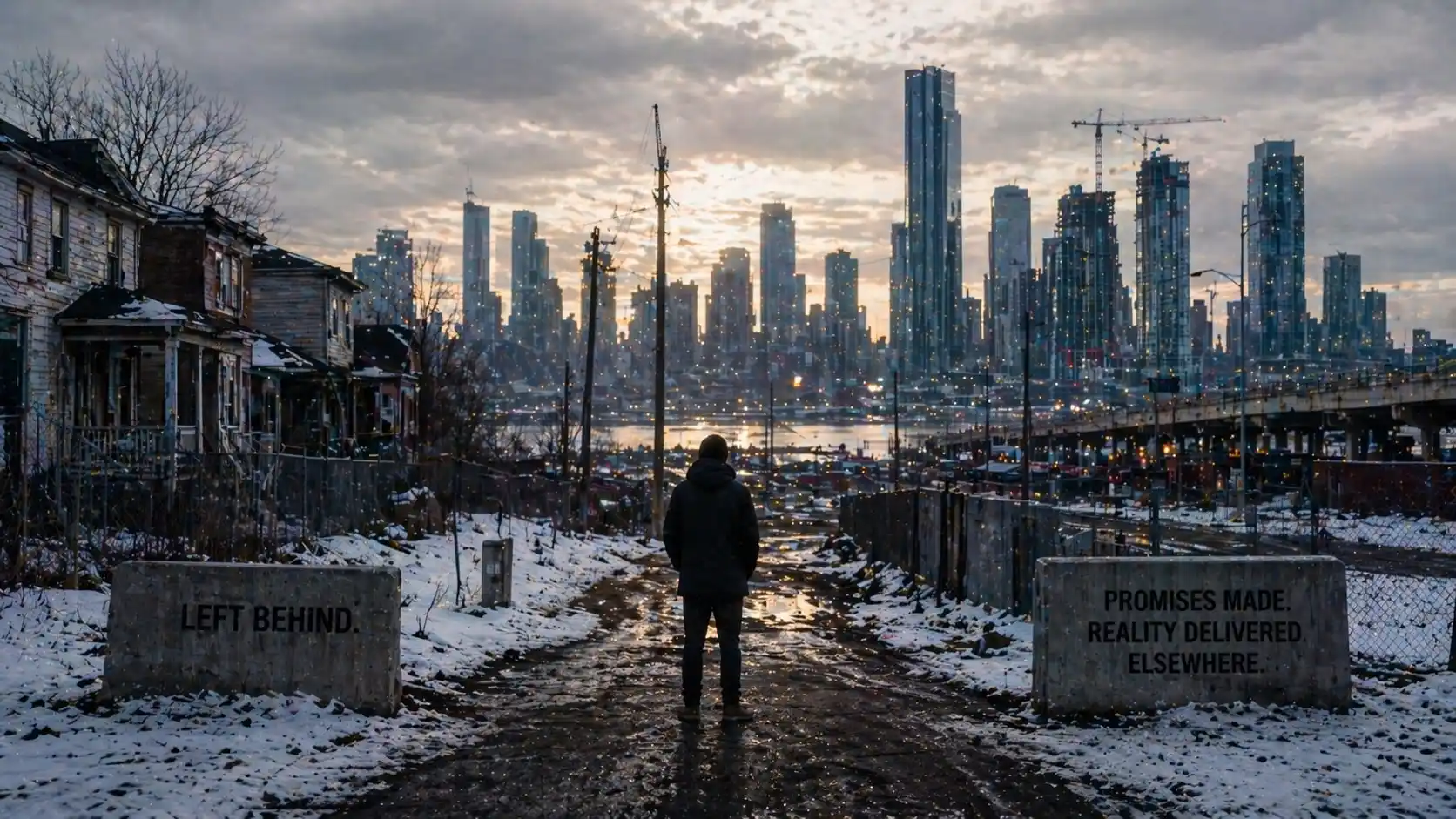
Chapter 9 — Benefit Capture
Core claim: the lock-in persisted because it paid people— through asset appreciation, institutional insulation, jurisdiction, and protected normality.
Systems do not survive on force alone. [9][11][12][16]
They survive because enough people are paid by them.
Not always with cash in hand. Not always in ways crude enough to trigger moral alarm. A durable order can reward people with rising asset values, with institutional insulation, with status, with protected careers, with procedural power, with easier access for their children, with control over language, with calmer retirements, with the feeling that the world is still legible because it still tilts in their direction. A country can become more unequal in its structure without requiring most of its beneficiaries to think of themselves as beneficiaries at all. In fact, a system becomes strongest when its gains arrive dressed as normal life. [10]
That is the next layer of the lock-in.
The previous chapters traced the break, the command structure, the housing bottleneck, the financial amplification, and the widening economic cost of a country that grew better at repricing access than at creating new room. But no such order persists for half a century merely because people fail to notice it. It persists because it distributes enough comfort, enough reassurance, and enough selective advantage to enough of the right people that correction becomes politically dangerous and morally confusing. If Chapter 10 will ask who paid, this chapter asks the prior question: who was paid first.
The answer matters because Canadians are often taught to think of the country’s long stagnation as a diffuse national disappointment, equally regrettable for everyone. That is too soft. The lock-in did not impose uniform pain on a uniform public. It structured gain. It made some positions safer, some balance sheets larger, some careers more authoritative, some reputations more credible, some inheritances more consequential, and some forms of life more defensible than they would otherwise have been. It did not reward everyone equally. It rewarded incumbency. [11][12]
That is the governing principle of this chapter.
The most obvious beneficiaries were homeowners who entered earlier.
That fact is so familiar that it is easy to stop seeing how consequential it really is. A country restricts the elasticity of land and shelter. Prices rise faster than useful capacity. Earlier owners watch the value of the same physical structures climb. The gain feels private, but its cause is social. It comes not merely from renovation, prudence, or individual virtue, but from a collective decision structure that has made entry harder and scarcity more durable. The people who benefit most directly from that change do not need to lobby for it explicitly. Their ordinary desire to preserve their position becomes a political force in its own right.
This is one of the great quiet coalitions of the lock-in: people who do not think of themselves as defending scarcity but live inside rewards created by it.
That reward is not small. It changes the experience of citizenship.
A homeowner whose house has doubled or tripled in value under a constrained system does not simply own shelter. He or she owns insulation. Equity becomes a buffer against uncertainty, a source of confidence, a retirement supplement, a family gift fund, a backstop for illness, job loss, or relational disruption. The same society that has become harder to enter has become softer to inhabit for those already inside. That softness matters politically. It gives people a material reason to prefer continuity even when they can see, in the abstract, that continuity is unjust to others.
The house becomes more than a house. It becomes a political mood.
That mood spreads outward through families.
One of the most underexamined gain channels in modern Canada is not simply ownership but intergenerational transmission from ownership. A system that reprices shelter rewards not only the original owner but the owner’s descendants. Some gains arrive formally: inheritances, gifts, early transfers, co-signing capacity, home-equity support, rent-free years during schooling or unstable work. Others arrive more diffusely: better neighborhoods, calmer households, stronger educational outcomes, less early-life financial volatility, more time to choose rather than scramble. The result is a society in which prior entry into land and housing becomes a hidden admissions system for later security. [9]
This is what makes the benefit structure so politically slippery. The gains are both economic and familial. They feel loving, natural, and private. But they are still system gains.
The second great beneficiary class is the broader asset-holding middle and upper middle strata whose wealth became increasingly tied to property, credit, and stable institutional returns.
These households did not need to be rich in the grand, theatrical sense. Many would still describe themselves as ordinary, stretched, responsible, or middle class. That self-description is often sincere. But sincerity does not cancel structure. If a household owns appreciating property, participates in pension growth linked to inflated asset environments, carries institutional job protection, or benefits from a regulatory and financial order built to damp volatility for insiders, then it occupies a different relation to the country than the late entrant paying ever-higher rent or the younger worker whose earnings must chase asset inflation that began before adulthood. The system does not need to make insiders feel luxurious. It only needs to make them feel safe enough that they become continuity’s constituency. [9][32]
That safety is one of the main currencies of benefit capture.
It is not glamorous. It does not trend on social media. It does not sound like corruption. But it is often more powerful than overt enrichment because it creates emotional loyalty. The people whose mortgages are manageable because they bought earlier, whose homes now carry collateral value, whose pensions are growing, whose neighborhoods remain protected, whose institutions still feel navigable, and whose children may receive family support experience Canada as difficult but basically survivable. Their version of the country remains harder to indict than the version encountered by those entering later. This asymmetry in lived reality is one of the reasons the system proved so stable. Enough people still felt buffered. [10][11][12]
The third beneficiary stratum is administrative.
This is where the story becomes less popularly visible and more structurally important. The lock-in did not only reward asset ownership. It also rewarded those whose careers, prestige, and authority expanded as the country became more procedural, more review-heavy, more mediated, more regulated, and more administratively layered. The earlier chapters described the rise of a permission-oriented order. This chapter asks what that order paid out.
It paid out power to the people who sat near permission.
When approvals thicken, planners gain. When reviews multiply, reviewers gain. When compliance grows, compliance offices gain. When consultation becomes mandatory, consultation machinery gains. When a society becomes more difficult to build in, the institutions that interpret, sequence, assess, certify, defer, or manage access to building become more important than they were in a thinner order.
This does not mean every planner, regulator, bureaucrat, school administrator, health executive, licensing officer, or public manager is cynically defending stagnation. Most are not. That is precisely why the system is so hard to judge honestly. A great many people in these roles believe, with varying degrees of justification, that they are protecting the public, maintaining standards, balancing interests, or ensuring fairness. Sometimes they are. But the larger structure still matters:a country that becomes more dependent on mediated permission expands the authority of those who work inside mediation.
Their gain is not necessarily asset inflation.
It is jurisdiction.
Jurisdiction is one of the least discussed forms of modern benefit capture because it sounds too abstract to trigger resentment. Yet for an administrative class, jurisdiction is wealth in institutional form. It means more relevance, more necessity, more staff, more reports, more influence over sequence, more moral prestige, more ability to define what counts as responsible public behavior, and more insulation from the rougher disciplines of production. Once enough of a society’s serious people occupy these roles, the lock-in develops a cultural guardian class. The order no longer needs only winners in the housing market. It also has winners in the interpretation market. [9]
Universities belong here too.
Not as cartoon villains, but as institutions whose prestige can expand even while the society’s builder logic weakens. A university system can grow in administrative density, in symbolic authority, in credentialing power, and in elite social reproduction while maintaining a much looser relation to the actual renewal of national productive capacity than the public story suggests. A country that increasingly routes security through degrees, professional gatekeeping, and cultural legitimacy rather than through direct capacity-building confers enormous advantage on the institutions that control those passageways.
This is another quiet beneficiary class of the lock-in: the people and institutions that govern the credentials of seriousness.
They do not gain in the same way a homeowner gains. Their reward is position. Their reward is definitional power. Their reward is being needed.
The same is true of major professional bodies and regulatory colleges.
In a more direct builder order, many occupations are disciplined more visibly by output, consequence, and field competence. In a thicker administrative order, professional gatekeepers gain greater power over entry, legitimacy, discipline, and public credibility. That power can be used wisely or foolishly. It can support standards or shield incumbency. Often it does both at once. But the larger point remains: the more a society routes access through regulated permission systems, the more it rewards the people who govern those systems.
The fourth beneficiary class is financial.
Not simply in the crude sense that banks made money. Banks are supposed to make money. The deeper issue is that a scarcity-and-collateral order creates a long runway of dependable business for institutions built around mortgage origination, servicing, refinancing, securitization support, balance-sheet growth, and the broader machinery of housing-linked credit. The housing bottleneck made property more valuable. Finance made that value legible, liquid, transferable, and systemically central. Once that happens, the financial layer does not merely observe the order. It becomes part of its reproduction. [11][12]
Again, this does not mean a room full of bankers explicitly chooses national scarcity over national provision as a matter of philosophy. Systems do not usually work that way. The mechanism is more banal and more powerful. A constricted housing market produces higher prices. Higher prices produce larger loans, more collateral, more financial intermediation, and more sensitivity to any policy that would puncture valuations. The whole structure then grows more delicate politically. Institutions whose balance sheets are tied to the order become structurally conservative about deep correction, even when they can publicly acknowledge the social problem. [9][11][12]
This is what a successful lock-in looks like: even the institutions that can diagnose the distortion have reasons to preserve its manageable form.
The fifth beneficiary class is political.
This matters because it explains why so many governments appear to circle the problem without solving it. A country that has turned land scarcity into household balance-sheet comfort and financial-system stability has made housing politically radioactive in a specific way. Any government that seriously restores elasticity risks looking like the author of loss. Any government that leaves the system mostly intact can still harvest the language of concern while relying on the quiet loyalty of incumbents who do not want a genuine correction. The result is a politics of calibrated non-solution: enough noise to perform concern, not enough structural force to reverse the order.
That, too, is a form of benefit capture.
The governing class benefits from postponement because postponement avoids concentrated pain among those already inside the system. It also allows rulers to live in the moral center of a public drama without having to choose fully against the constituencies most materially tied to the lock-in. They can announce studies, strategies, credits, tax tweaks, target numbers, anti-speculation gestures, mortgage adjustments, and small exceptions. They can speak as if they are fighting the problem while never fully breaking with the underlying asset coalition.
The system does not need courage. It rewards choreography.
The sixth beneficiary class is narrative.
This one is harder to see, but it is central. Public broadcasters, legacy media, universities, policy institutes, and prestige commentary institutions gain a peculiar kind of authority in a lock-in society because they help define what counts as a reasonable description of events. They may not gain direct wealth the way homeowners do. Their gain is softer and therefore more durable: they help govern the atmosphere in which responsibility can or cannot be named. They can make some questions sound serious and others sound vulgar. They can let the country discuss crisis while policing the language through which crisis becomes connected to command. [31]
This is why narrative institutions must be counted among the beneficiaries, not because they were all cynically protecting the order, but because the order elevated their type of power.
A country that struggles to build but continues to interpret itself incessantly has not escaped control. It has shifted the location of authority.
The seventh beneficiary class is geographic and social.
The lock-in did not reward all places equally. It concentrated advantage in zones already close to the institutions that decide price, planning, finance, credentialing, and national discourse. The Ontario–Quebec corridor, major metropolitan homeowners, financial centers, administrative capitals, and the professions clustered around them occupied a structurally different relation to the system than resource regions, young families on the margins, private-sector outsiders, or places whose frustrations could be narrated as provincial grievance rather than systemic diagnosis. The country’s gain structure, in other words, had a geography. Some regions captured more of the stability, status, and voice associated with the order; others absorbed more of its costs. [9][21][23]
That geography matters because it turns benefit capture into worldview.
A person living inside a well-protected institutional belt can honestly experience the country as still functioning. A person living downstream of corridor failure, weak local opportunity, or impossible metropolitan entry costs experiences something else. The national conversation then becomes a contest between different realities, not merely different ideologies. The lock-in survives because the reality of the beneficiaries still feels sufficiently normal. [9]
Normality is the regime’s most valuable dividend.
That is worth pausing over. The most important benefit in a late administrative order is often not visible luxury. It is the preservation of a calm enough life that the system still appears basically legitimate to those who sit closest to its rewards. The homeowner sees appreciation. The banker sees stability. The administrator sees process. The regulator sees duty. The broadcaster sees seriousness. The professor sees institutional continuity. The minister sees manageable optics. The parent sees equity. The pension holder sees calm returns. None of these people needs to think of the system as unjust. They only need to continue experiencing it as livable. [9][32]
This is how the lock-in ceases to feel like a crisis to those it pays.
And that, in turn, is why younger frustration can be so radically misread. The person who gains from the order does not experience it as an order of gain. He experiences it as life. The exclusions hidden inside it are less visible because they are happening further away— in time, in age, in class position, in geography, in the future. By the time the late entrant arrives at the gate, the beneficiary has already spent years treating the gate as an ordinary feature of the landscape. What the outsider experiences as blockage, the insider experiences as structure. What the younger Canadian experiences as a narrowing of life, the incumbent can mistake for the ordinary difficulty of adulthood.
That misrecognition is not incidental. It is one of the regime’s most stabilizing effects.
So when this report says the lock-in paid people, it means more than that some got rich.
It means that the order distributed enough direct and indirect gain to turn large segments of the country into continuity’s constituency. It rewarded prior entry, property ownership, administrative relevance, financial intermediation, institutional prestige, professional gatekeeping, geographic centrality, and the calm self-image of those for whom the country still worked well enough to flatter them. Some of these beneficiaries were affluent. Many were merely insulated. But insulation, in a declining order, is power.
This is the real answer to why the lock-in persisted.
Not because no one noticed. Because enough of the people who noticed were still being paid.
The next chapter has to complete the picture.
Because if this is how the regime rewarded insiders, then the moral argument becomes impossible to avoid. A system that distributes gains this selectively does not merely create winners. It creates people whose ordinary comfort depends on the continuation of burdens they do not bear equally. That is why the country’s later arguments about youth, work, family, gratitude, and responsibility became so warped. The ruling order was no longer simply producing outcomes. It was shifting costs downward.
And once that began, the question was no longer only who gained.
It was who had to carry the bill. [9][11][12]
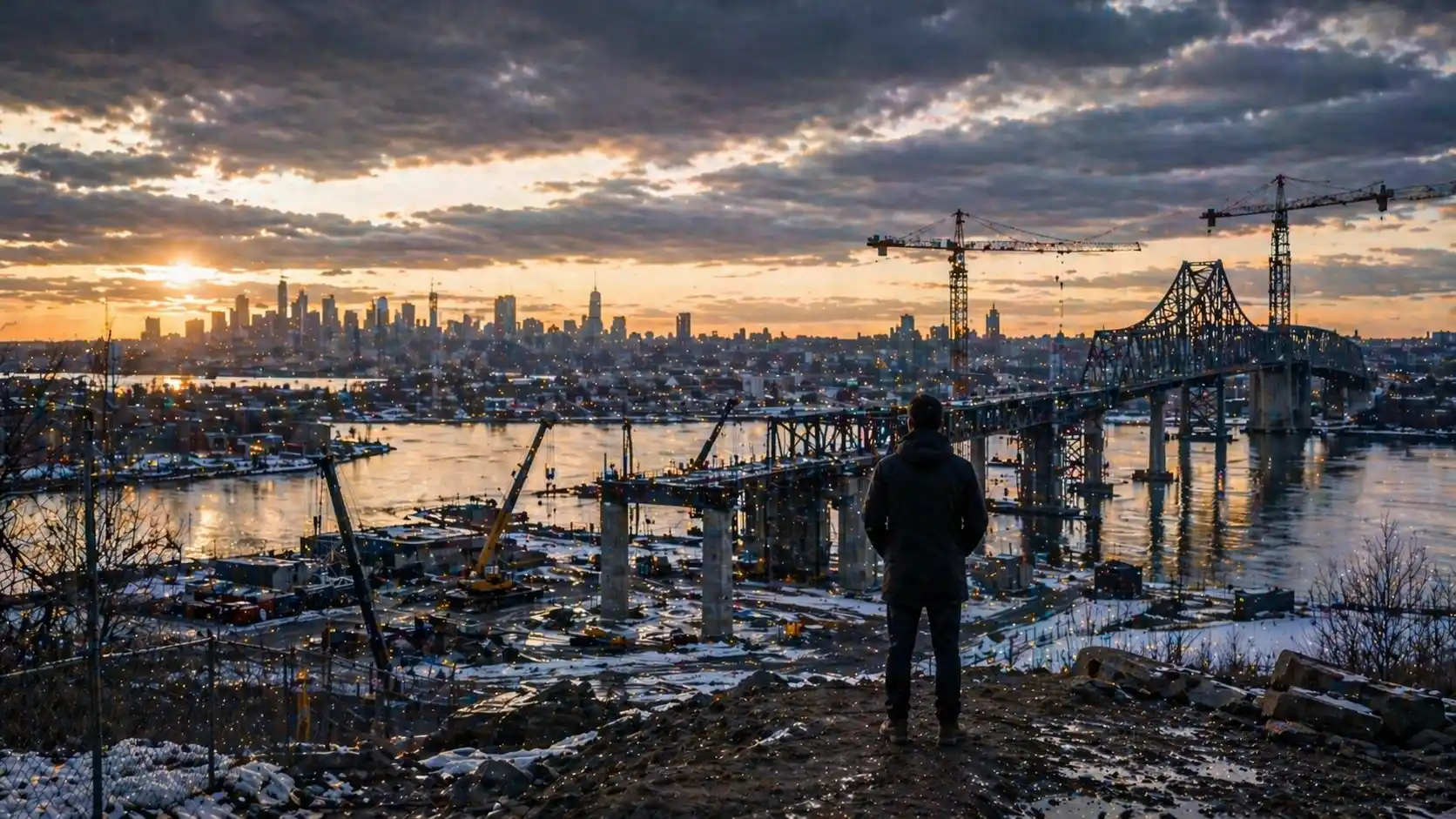
Chapter 10 — Burden Transfer
Core claim: the bill for the lock-in moved downward and forward onto later entrants, renters, family-formers, outsiders to protected systems, and the future itself.
Every durable order has a bill. [9][10][11][12]
The question is never whether the bill exists. The question is who gets it, when they get it, and whether the people paying it are also the people who wrote the rules that made it inevitable. By this point in the report, the pattern should be clear enough to name without euphemism. Canada’s long lock-in did not simply generate winners. It generated a method for pushing costs away from those already protected by the system and onto those arriving later, entering from outside, or trying to build a life without inherited leverage. The gains settled upward and inward. The burdens moved downward and forward. That is the structure this chapter names.
The moral importance of that transfer is easy to underestimate because it rarely looks theatrical in daily life.
There is no one national ceremony in which the older order formally announces that the next cohort will pay more for less. There is no single invoice marked your adulthood has been repriced. There is no cabinet communiqué admitting that the cost of preserving comfort for insiders will be deferred onto younger families, later entrants, peripheral regions, renters, builders, and workers whose main mistake was to arrive after the game had already changed. The transfer happens more quietly than that. It happens in rent, in commute length, in delayed exits from the family home, in postponed children, in smaller apartments, in weaker savings, in higher debt loads, in more years spent converting income into mere stability, in the quiet sense that ordinary life has become a strategic project rather than a social expectation. [9][10][11][12][24][25]
That quietness is part of the system’s protection.
A burden that arrives as one catastrophic blow can provoke revolt. A burden that arrives as a thousand normal humiliations can be moralized instead. It can be called maturity, realism, competition, the price of living in a successful country, the ordinary challenge of city life, the need to adapt, the need to compromise, the need to work harder, the need to “be strategic,” the need to delay, the need to make wiser choices. This is how historical burden transfer disguises itself as advice.
The first burdened class is obvious, but its full importance is still not adequately understood: younger non-owners.
In theory, a younger cohort entering adulthood in a rich country should be able to rely on some version of the following sequence. Work leads to income. Income supports independent shelter. Independent shelter supports household formation. Household formation supports family, long-term planning, social confidence, and eventually some measure of asset accumulation. None of this is ever perfect or guaranteed. But the sequence itself remains culturally legible. It is how a society tells its young that the future is hard but structurally open.
The lock-in broke that sequence.
It did not break it equally for everyone, and that is part of the point. It broke it selectively enough that those still able to complete it could interpret their own success as proof that the sequence remained broadly intact. But for large numbers of younger Canadians, the path from work to shelter to stable adulthood became longer, narrower, and more dependent on timing, family assistance, or luck than the older public story admitted. The issue was not simply that houses cost more. The issue was that the country quietly raised the threshold of what counted as a normal entry point into adult life while continuing to judge younger people by standards formed under easier structural conditions.
That is burden transfer in one of its purest forms: a society changes the structure, then blames the cohort meeting the changed structure.
The second burdened class is late entrants more generally, even when they are not young in the narrow sense.
The lock-in punishes lateness. That is one of its governing rules. If advantage is increasingly tied to prior entry into appreciating assets, scarce housing, protected institutions, regulated professions, or stable insider networks, then the person arriving later is not merely behind. He or she is entering a world whose main rewards have already been claimed. This is why timing becomes destiny under a scarcity order. It is not just that prices rise. It is that earlier arrival captures the compounding effects of a system designed to preserve the value of being already inside it.
A society organized this way stops being generous to sequence. It becomes ruthless about it.
The older entrant who bought before the great repricing can imagine adulthood as a demanding but intelligible ladder. The later entrant meets a gate. The older professional who entered a thinner, cheaper, less credential-heavy labor and housing market can continue to tell a story of sacrifice and discipline. The later entrant meets not only harder conditions, but a culture prepared to interpret those harder conditions as an individual failing. The earlier public servant who rose during a period of expanding institutions and stronger entry pathways can still narrate his or her career as earned in the strictest moral sense. The later outsider trying to enter a thicker, more protected system discovers that institutional maturity often means institutional closure. [9]
The bill is not merely financial. It is chronological.
The third burdened group is the builder kept downstream.
This is one of the least discussed casualties of the long lock-in because the builder still exists, and the mere continued existence of builders allows the country to pretend that nothing deep has changed. Engineers still graduate. Contractors still bid. Trades still work. Designers still design. Technicians still maintain. Infrastructure still appears. Towers still rise in selective places. Because the builder has not vanished entirely, the public can comfort itself with the fiction that the builder still governs.
But the builder does not govern.
That is the burden.
The report has already argued that one of the defining changes of the lock-in period was the movement of builders, engineers, and throughput-oriented actors further down the legitimacy chain. They remain necessary, but necessity is no longer enough to put them near the front of decision-making. They are increasingly summoned after the interpretive work has been done: after politics, review, procedural sequencing, consultation, legal exposure, administrative caution, reputational filtering, and symbolic balancing have passed judgment on whether a project may exist at all. The burden transferred onto the builder is therefore not only delay. It is humiliation. It is the obligation to answer to a society that still needs their competence while treating their kind of competence as morally secondary.
A country that does this does not merely slow projects. It teaches the people who know how to make things real that they are less authoritative than the people who know how to supervise what may become real.
That is a civilizational burden transfer.
The fourth burdened class is the family-forming adult.
This is where the lock-in becomes impossible to contain within the language of economics, because family is where the entire structure shows its human meaning. A society may tolerate high housing prices for years as a spreadsheet problem. It may tolerate weak productivity as an economist’s concern. It may tolerate infrastructure delay as an administrative annoyance. But when the same order begins to delay partnership, postpone children, compress households, prolong dependency, and make the basic conditions of ordinary family life feel strategic, it is no longer simply inefficient. It is reorganizing time. [10][17][18][19][20]
That is what the family-forming adult pays with: time.
Time spent saving for a down payment under rising prices. Time spent in smaller rentals not suited to children. Time spent commuting farther to reach marginally affordable space. Time spent staying in the parental home longer than desired. Time spent waiting for career and shelter to align. Time spent negotiating whether another child is even spatially possible. Time spent trying to force biological, relational, and economic clocks to cooperate inside a system that has made ordinary sequence harder than it used to be. [9][10]
This cost is almost never discussed honestly by the ruling order because it is too revealing. Once the housing and income structure are allowed to shape fertility timing, partnership timing, and the basic confidence required for household formation, the country can no longer pretend that its problems are merely about markets. It has begun to govern demography through scarcity. It is deciding, indirectly but powerfully, how many years of ordinary life must be surrendered before stability becomes possible. [10]
And then it wonders why younger people look hesitant.
The fifth burdened class is the renter whose adulthood is permanently conditional. [9]
Renting, in itself, is not failure. Many healthy societies include large renter populations without making them feel exiled from ordinary security. The Canadian burden is different. The lock-in turned renting, for many, into a prolonged condition of exposure. High rents, weak tenure security, unstable transitions, geographic compression, and the psychological impossibility of imagining a stable future inside a permanently tightening market all combine to produce a specific kind of life: one that remains functional, often even respectable, while structurally provisional. [9]
The provisional life is one of the central social products of the lock-in.
You can work in it. You can date in it. You can save a little in it. You can delay in it. You can become educated in it. You can even appear middle class in it. What you struggle to do is relax into the assumption that ordinary life has a floor beneath it. The country that once claimed to provide a broad path into ordinary security now offers many people a permanent audition.
That audition is exhausting.
It alters risk tolerance, family planning, neighborhood attachment, political confidence, and mental life. A person without secure shelter does not think like a person whose shelter is already incorporated into a thicker balance sheet and a clearer future. A renter facing repeated repricing of existence becomes easier to manage and harder to blame accurately at the same time. The public sees instability. It misses the structure manufacturing it. [9][11][12]
The sixth burdened class is the outsider to protected systems.
This includes private-sector workers in uninsulated occupations, immigrants who arrive into a country selling stability but delivering bottlenecks, young professionals without family housing support, tradespeople facing administrative drag, small entrepreneurs, and many others whose relationship to the lock-in is defined not by total exclusion but by asymmetry. They are allowed to participate in the country. They are not allowed to do so on terms equal to those whose security rests on prior entry or protected institutional position.
This matters because the public story of Canada remains deeply attached to fairness. The society still likes to describe itself as broad-based, moderate, and open. But an open society is not merely one that lets people arrive. It is one that lets them build ordinary life without being structurally disadvantaged by timing, lineage, or proximity to protected systems. In a lock-in order, the outsider is often invited in only to discover that the most important gains are already spoken for. The welcome remains rhetorically generous. The structure does not.
That contradiction is one of the deeper moral injuries of the regime.
The seventh burdened group is regional.
This report has concentrated heavily on command, housing, finance, and institutional layers, but a country as large as Canada cannot transfer burdens only across class and age. It transfers them across geography. Some regions, especially those clustered closer to the institutions of finance, national narrative, major public administration, and concentrated asset appreciation, experience the lock-in as inconvenience inside continuing relevance. Other regions experience it as neglect, dependence, corridor weakness, energy bottlenecks, thinner opportunity, and the recurring sense that the national system knows how to absorb their resources more easily than it knows how to deepen their future.
Regional burden transfer is one of the ways national unity starts to decay without anyone formally declaring a crisis.
A corridor-centered leadership class can continue to experience the country as governable while provinces or metros downstream of administrative delay, infrastructure under-reach, or weak productive renewal begin to feel that they are living inside a federation that knows how to lecture them more readily than how to connect them. The cost here is not just economic. It is interpretive. People outside the core are often required to keep trusting institutions that do not seem to trust their own need for capacity.
That, too, becomes a burden of citizenship.
The eighth burdened class is the future itself.
That phrase can sound too poetic until one remembers what a functioning civilization really does. It does not simply distribute present comfort. It creates margin for people who are not yet here. It leaves behind systems, housing, infrastructure, public legitimacy, and productive capacity that make later ordinary life less precarious, not more. A country that instead transfers its unresolved bottlenecks forward — its housing shortages, its debt dependence, its administrative thickening, its under-built corridors, its weak productivity renewal, its politically protected scarcity — has begun billing the unborn. [11][12][17][18][19][20]
This is one reason the report refuses to frame the lock-in as merely unfortunate drift. It is an inter-temporal decision structure.
The people who benefited most directly from rising asset values, administrative insulation, and inherited strength were not the only people involved in the order. But the burdens that accumulated under that order did not remain in their own time. They were projected forward. The next cohort entered later. Then the next. Each faced a system more expensive, more filtered, more credentialized, more indebted, more dependent on prior advantage, and more comfortable blaming the entrant than revisiting the structure. A society that behaves this way is not only unequal across class or region. It becomes unequal across time.
That is the true shape of burden transfer.
The cruelty of the arrangement is sharpened by one further fact: many of the people carrying the bill are then instructed to feel ashamed of how heavy it is.
They are told they are delaying adulthood. They are told they are too dependent. They are told they do not save well enough. They are told they do not value family deeply enough. They are told they chose the wrong career, the wrong city, the wrong risk, the wrong lifestyle. They are told that every generation had hardship, that the market is simply the market, that nothing fundamental is being done to them.
This is where burden transfer becomes moral inversion.
The cohort that meets the most expensive, bottlenecked, deferential, and strategically punishing version of the social contract is judged as though it authored the thinning. The people forced to adapt are treated as if adaptation proves weakness. Those asked to pay the bill are scolded for not smiling while paying it. That is not an accidental insult added on top of the structure. It is part of the structure’s stability. A society protects an unjust order more easily when it can reinterpret the wounds it inflicts as evidence of the wounded party’s defect. [9]
This is why the burden chapter has to be written with such precision.
The issue is not simply that life got harder. Harder life is universal. The issue is that the hardness was distributed historically, selectively, and dishonestly.
It fell on those entering later. It fell on those without inherited shelter advantage. It fell on those outside protected institutional lanes. It fell on builders denied authority. It fell on adults trying to form families under repriced conditions. It fell on renters whose security remained permanently conditional. It fell on regions treated as inputs more often than priorities. It fell on the future itself. [9]
And the ruling order that presided over this transfer did not merely fail to prevent it. It often benefited from enough of the system’s gains that it could continue to interpret the resulting burdens as unfortunate, regrettable, or culturally revealing rather than as evidence of a structure it had allowed to harden.
That is why the bill matters so much.
Because once a society becomes organized around shifting burdens forward and downward while narrating itself as prudent, moderate, and successful, its crisis is no longer just economic. It is moral. It has started teaching one class of people to live well enough inside the order that they mistake its gains for merit, while teaching another class to live with enough instability that they begin to doubt themselves rather than the system.
That is the transfer this chapter names.
Not simply from rich to poor. Not simply from owners to renters. Not simply from one region to another. [9]
From earlier to later. From insider to entrant. From custodian to successor. From inherited security to purchased uncertainty.
The next chapter follows the wound where it turns into language.
Because once the bill is pushed onto the wrong people, the system has one more task left if it wants to remain stable: it has to teach the public how to talk about the injured as though they were the cause. [9][10][11]
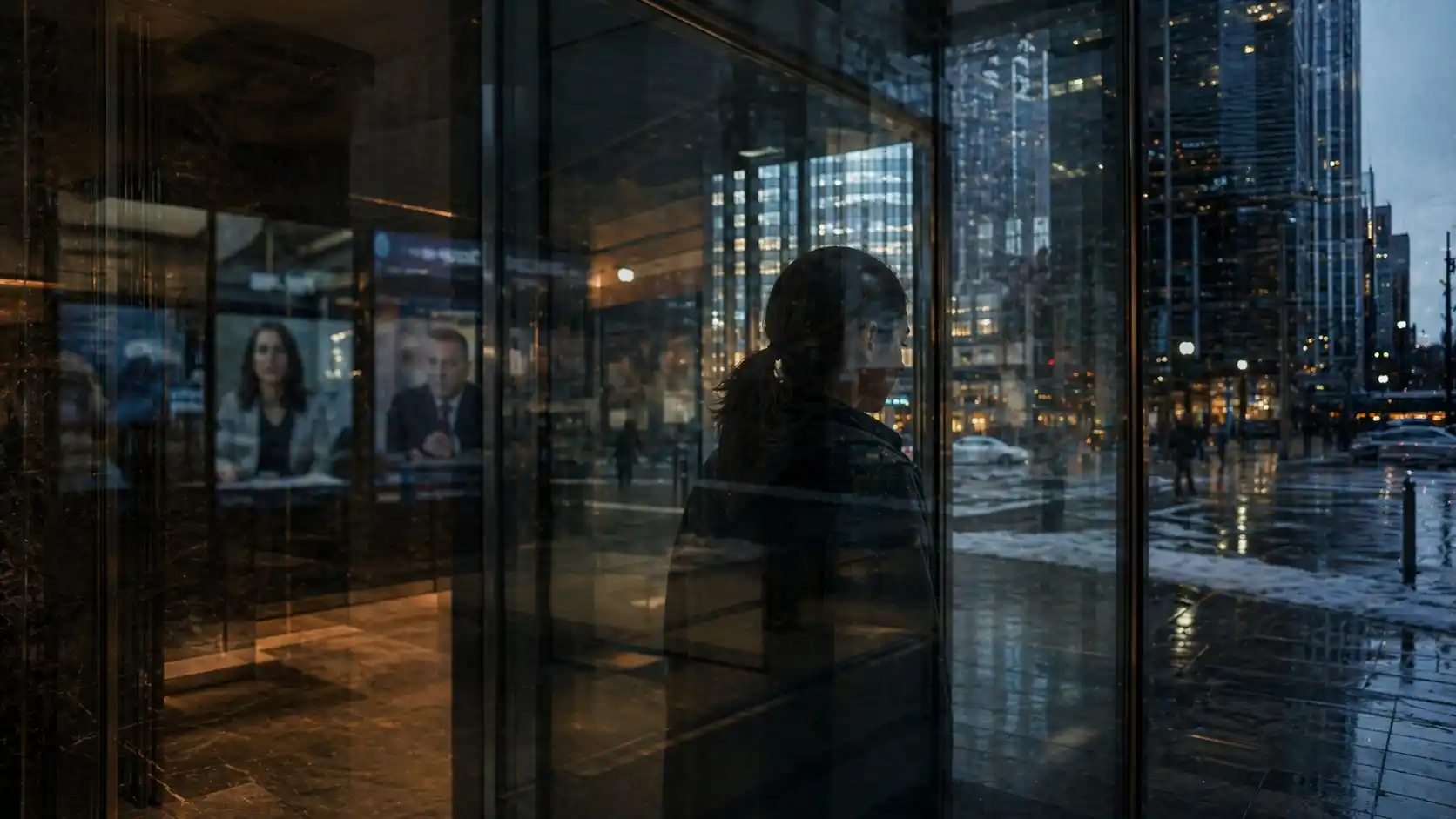
Chapter 11 — Blame Transfer
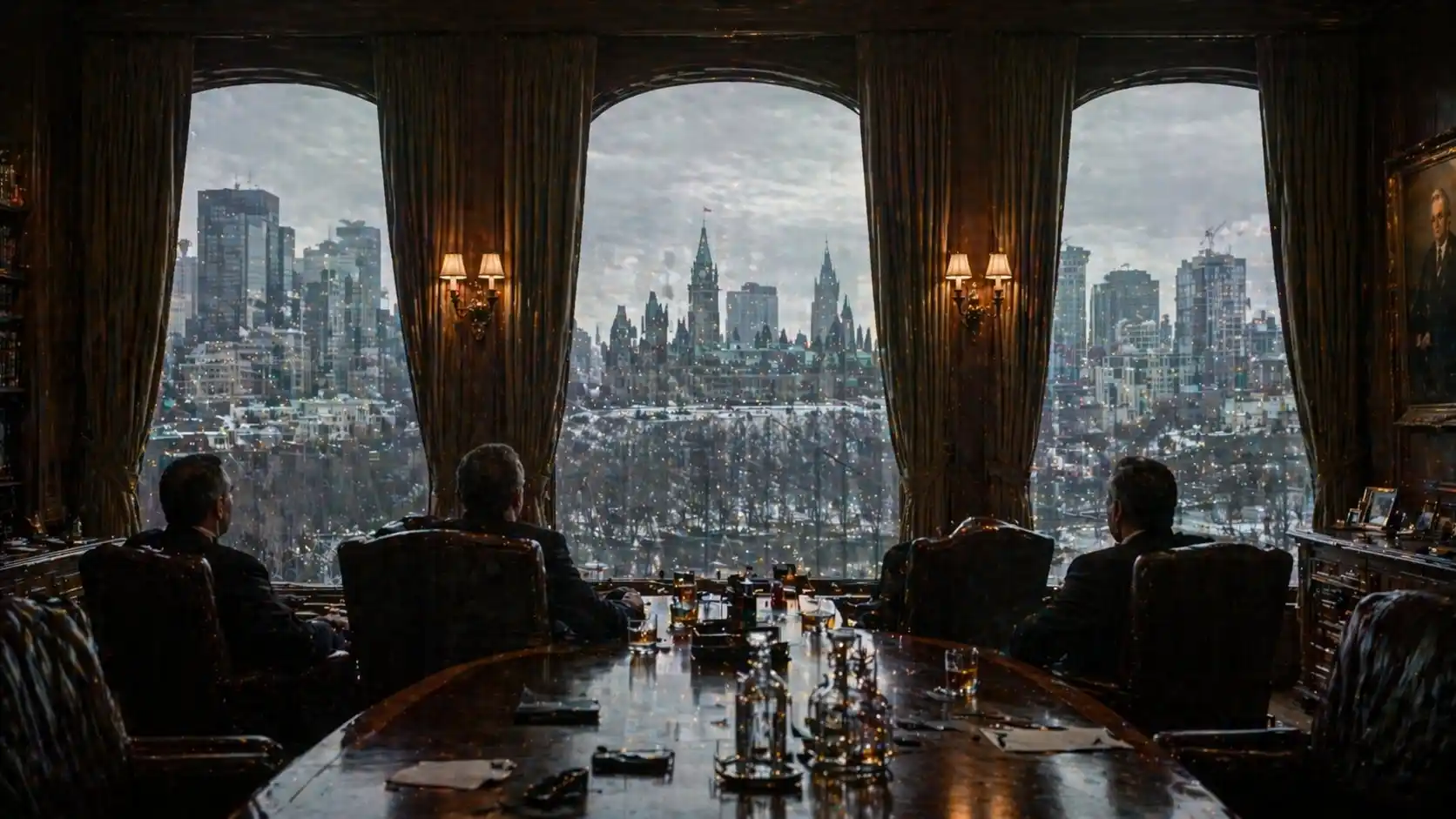
Chapter 12 — The Canadian Myths

👉 Who Locked Down Canada (Part 1) https://skillsgaptrainer.com/who-locked-down-canada-part-1/
👉 Who Locked Down Canada (Part 2) https://skillsgaptrainer.com/who-locked-down-canada-part-2/
👉 Who Locked Down Canada (Part 4) https://skillsgaptrainer.com/who-locked-down-canada-part-4/