Author name: Skills Gap Trainer

Tech Design

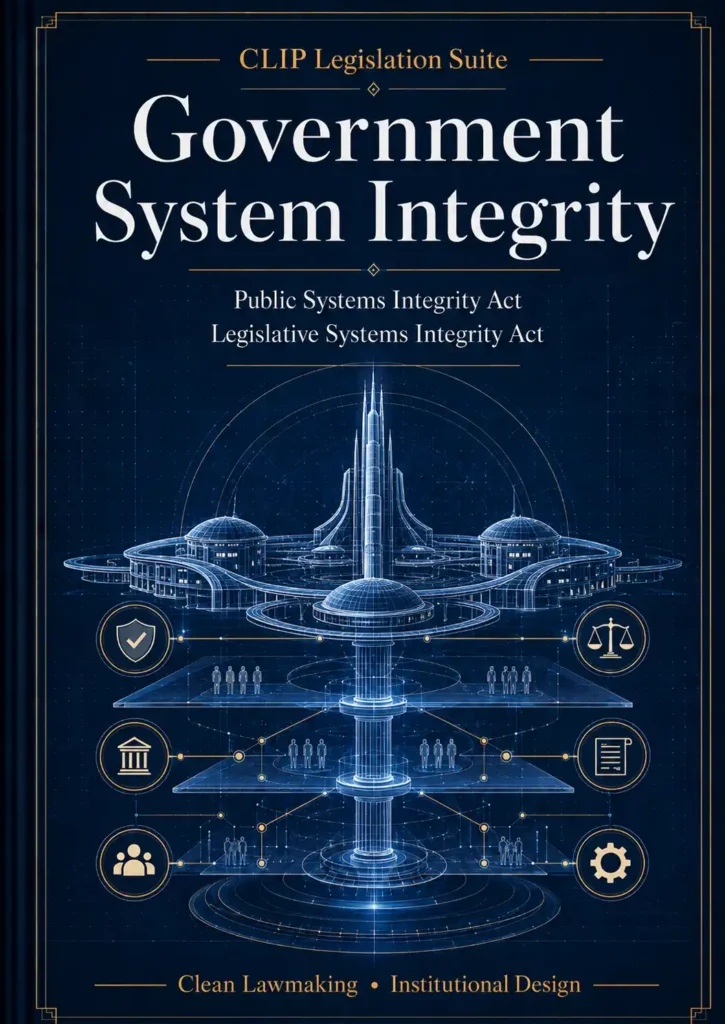
Legislative Systems Integrity Act

The Legislative Systems Integrity Act is a model clean-system law for ensuring that high-impact bills expose their purpose, authority, data powers, rights effects, AI exposure, appeal paths, implementation risks, failure modes, and rollback mechanisms before becoming law.

Tech Design

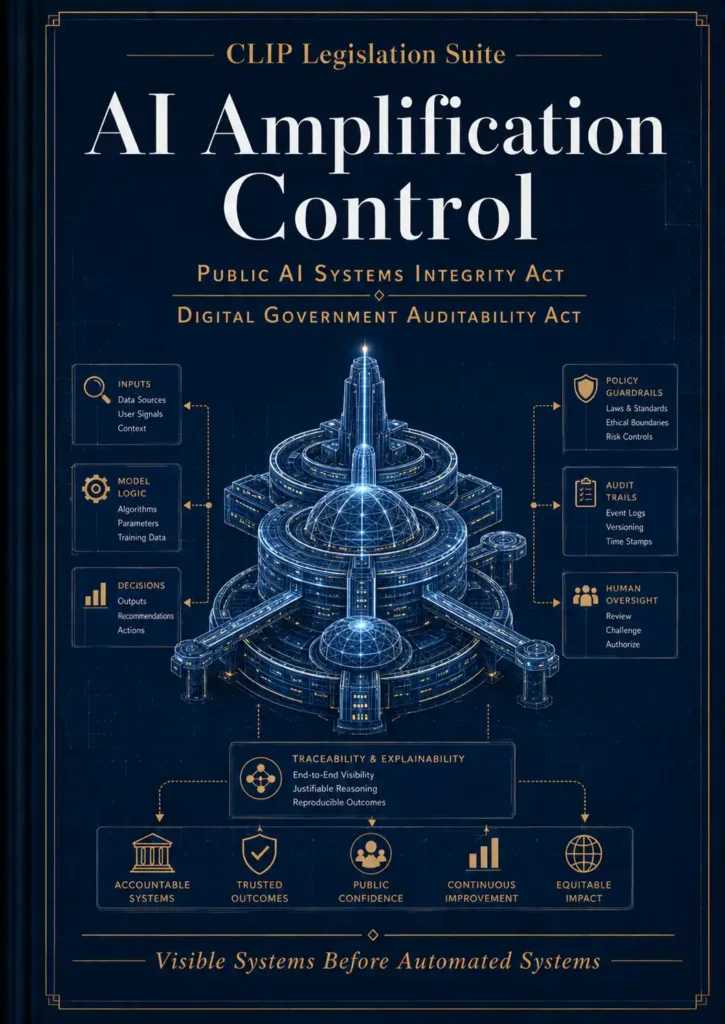
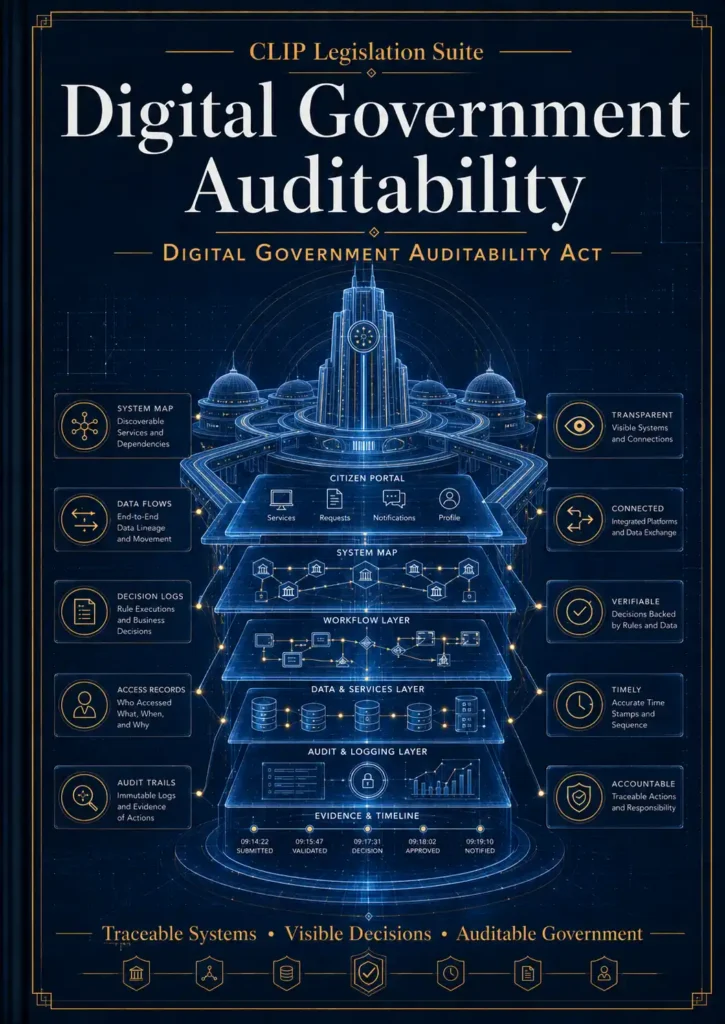
Public Dashboard and Systems Transparency Act

A model act for public dashboard transparency, requiring high-impact government systems to be visible, auditable, citizen-readable, challengeable, and measured by real public outcomes instead of announcements, activity, or symbolic metrics.

Tech Design

🇨🇦 National Systems Integrity Report (NSIR): The Systems Audit of Canada (2015 to 2025), Collapse

The National Systems Integrity Report (NSIR 2.0) delivers a 15-year engineering audit of Canada’s collapse (2010–2025). Across energy, governance, education, defense, and digital rights, the findings show systemic failure driven by legislative design flaws, bureaucratic drift, and absent feedback loops. This is not a story of conspiracy, but of collapse by consensus — and the urgent need for renewal through the Starfleet Nexus framework.

Tech Design

From Great Reset to Great Builders: Alberta’s AI Path to Sovereignty, Destiny & the Next Operating System for Civilization

As the world accelerates toward centralized AGI and carbon lock-in, Alberta faces a historic choice: become the world’s first AI-aligned province — or fall deeper into simulation and decay. This manifesto from Skills Gap Trainer lays out a radical path: rebuild governance from the code up, reclaim sovereignty through ethical AI, and design an operating system worthy of civilization itself.

Tech Design

National Systems Integrity Report: Engineering Verdict on Bill C-21 & the Collapse of Civil Resilience in Canada

This National Systems Integrity Report evaluates Canada’s Bill C-21 using a professional systems engineering and constitutional audit framework. The analysis finds that the bill removes critical civic redundancy, centralizes control without feedback or override mechanisms, and introduces severe resilience, exploitability, and Charter alignment risks. From an engineering perspective, Bill C-21 fails core safety, control, and recovery principles required of any mission-critical national system.

Military Tech

Total National Defense Collapse & 10-Axis Blueprint to Increase Efficiency & Rebuild 🇺🇸🇨🇦🇪🇺

Canada spent $9 trillion in a decade yet built no lasting defense or sovereignty. The NSIR 10-Axis Blueprint exposes this collapse and offers a systems-engineering solution to eliminate inefficiency, unlock $198 trillion across NATO, and rebuild national strength. A warning and a pathway: without coherence, nations fall — with it, they can endure.

Tech Design

The Lost OS of Canadian Civilization

Canada did not forget itself all at once It forgot itself through ordinary losses: snow days became notifications, library cards became logins, shop class became rare, first jobs became portals, and neighbourhoods became housing markets. This project asks what those systems once formed — and how to rebuild the functions worth saving.

Tech Design

The Ghost in the Human Shell

When a corrupted AI learns to breach neural firewalls, Valentin saves the city by sealing Zone 7A — but Carmen’s survival leaves one terrifying question: can the machine remain inside the person after the shell is gone?

Leadership

Canada Is Testing a New Operating System (Part 2)

Canada is not simply passing isolated digital-era laws. It is assembling a layered governance stack across speech, identity, AI, data, cyber security, and platform regulation — an emerging operating system that could reshape visibility, access, surveillance, and human agency.

Leadership

Canada Is Testing a New Operating System (Part 1)

Canada is not facing isolated policy disputes, but a deeper systems transition: from constitutional, consent-based governance toward a managerial order built on harm language, technocratic legitimacy, digital compatibility, medical administration, and output-based sovereignty.

Leadership

Who Locked Down Canada (Part 4)

Part 4 argues that “Boomer” was kept fuzzy to avoid naming generational command, then tests the lock-in thesis against counterarguments before delivering a final verdict on Canada’s inherited strength, scarcity regime, and historical responsibility.

Leadership

Who Locked Down Canada (Part 3)

Part 3 argues that Canada’s lock-in survived not merely through policy failure, but because it rewarded insiders, shifted burdens onto later entrants, blamed the injured, and protected the whole structure with comforting national myths.

Leadership

Who Locked Down Canada (Part 2)

Canada’s housing crisis was not an accident of demand alone. It was produced through politicized land, filtered supply, thicker permissions, and a financial system that turned scarcity into collateral wealth. Part 2 shows how access narrowed, incumbents gained, and later entrants inherited the burden.

Leadership

Who Locked Down Canada (Part 1)

Canada’s decline was not just a string of policy failures. It was a long lock-in: a shift from building capacity to managing scarcity, from broad access to incumbency advantage, and from inherited strength to burden transfer. This report asks who held command while that order hardened — and who paid the price.

Tech Design

Who Gets to Author the Future?

Who gets to author the future? This essay argues that when a civilization loses the capacity to build materially, it begins to manage decline by expanding governance over language, visibility, identity, and mediated intelligence. The result is a deeper struggle not only over resources, but over who gets to shape reality itself.

Tech Design

The Resilience Vehicle Thesis

This paper argues that ultra-light CNG/LNG hybrid dual-fuel vehicles deserve a serious but limited role in future transport, especially in fleet, rural, cold-weather, and continuity-sensitive use cases where resilience, fallback capability, and lower system brittleness matter.

Leadership

The Housing Scarcity Regime (P2)

An exploration of housing scarcity in Canada, showing how rising costs, constrained land supply, and policy choices turned homes from shelter into scarce assets. The result is delayed adulthood, weaker family formation, and a country forced to choose between scarcity protection and building renewal.

Leadership

The Housing Scarcity Regime (Part 1)

The Housing Scarcity Regime examines how Canada turned housing from shelter into a scarcity-driven asset. It argues that land-use restrictions, weaker supply response, credit expansion, and homeowner politics helped transform housing into a system of exclusion, rising prices, and defended scarcity.

Scroll to Top