SKYNET-MATRIX ATLAS 2026
A Present-Day Capability Atlas of the Matrix–Skynet–Terminator–Regeneration Stack — What Exists, Who Holds Each Piece, How the Pieces Connect, Where
Canada’s problem is not simply that important information is hidden. Sometimes the information is sitting directly in front of us, but we have outsourced the work of interpreting it. The “broken-lens effect” occurs when people consume headlines, videos, algorithms and third-party explanations without independently reasoning through the underlying text, evidence and systems. In an age of AI, behavioural modelling and information warfare, sovereignty increasingly depends on citizens learning to read beneath the visible layer and understand the architecture of power, ownership and control.
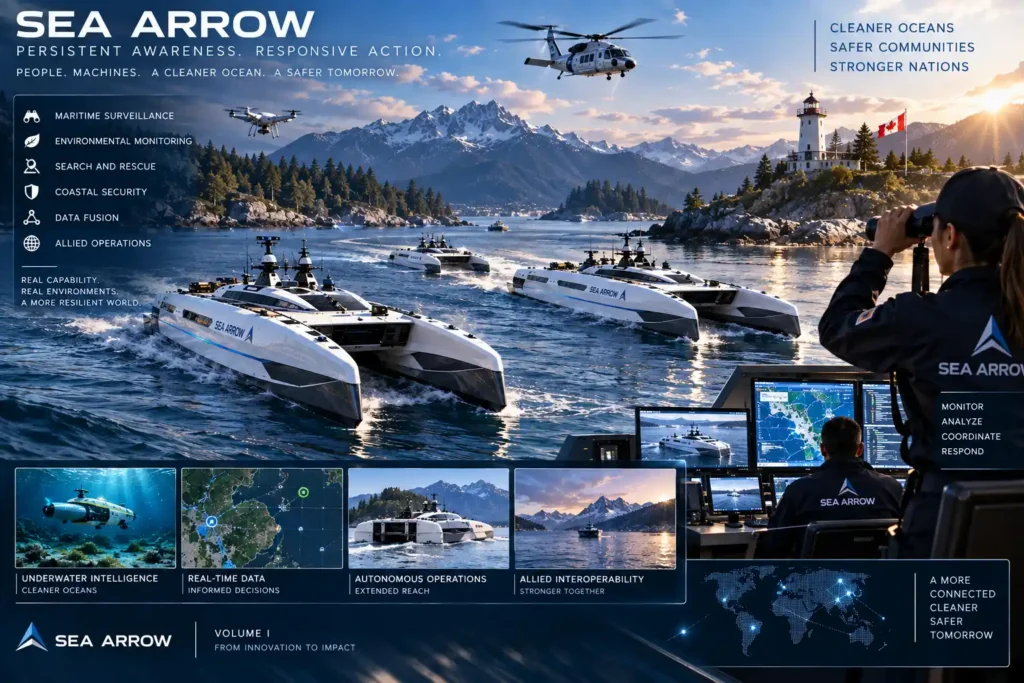
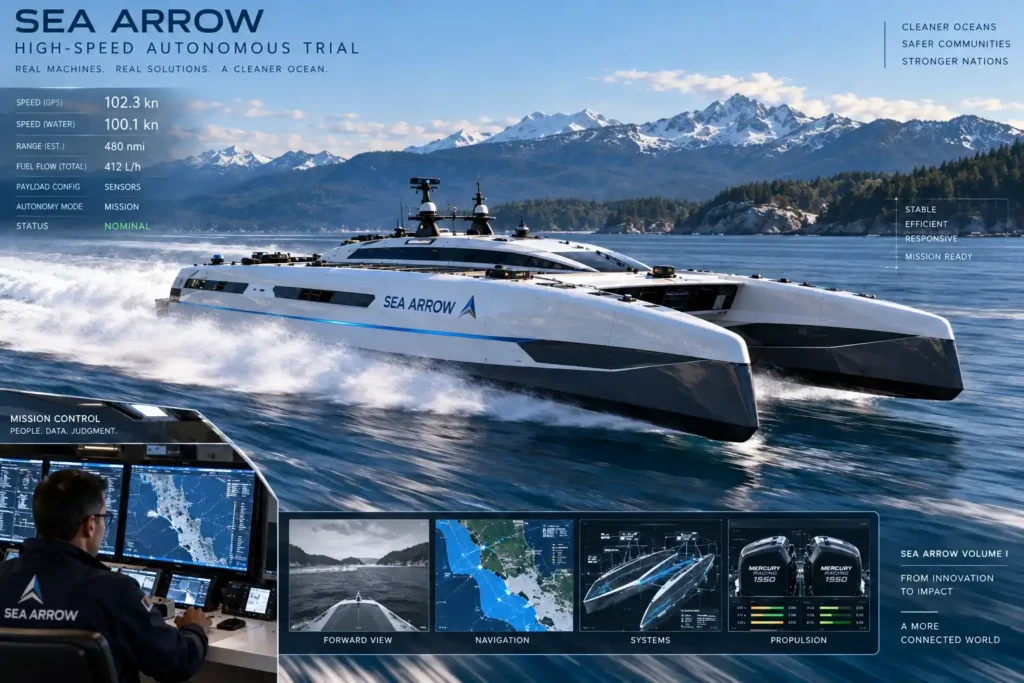
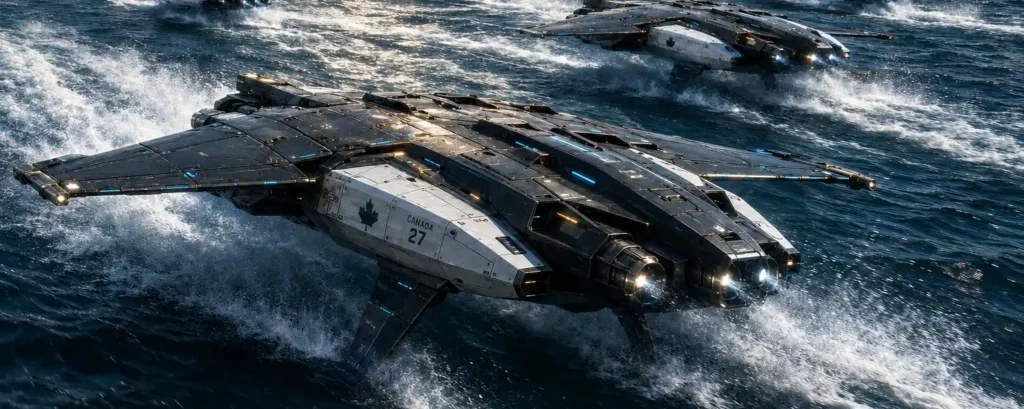
Sea Arrow is a high-speed autonomous marine concept built from first principles. This engineering record follows the machine from mass, hull geometry and propulsion through aerodynamics, hydrodynamics, quiet propulsion, thermal management, autonomy and safety — showing how a 100-knot target is turned into a coherent, testable system without confusing engineering ambition with proven performance.
Sea Arrow is a proposed next-generation autonomous maritime surface system designed to fill the capability gap between small uncrewed vessels and large crewed warships. Built around high selective mobility, modular payloads, resilient local control and degraded-return capability, the concept explores how a family of fast, interoperable maritime nodes could expand the reach and flexibility of a distributed surface fleet.
Part 2 of the SGT-TNG Entrance Invariants applies the framework to Iran’s constitutional and governing architecture, then completes a first-principles audit across truth, dignity, democracy, family, engineering, security, AI, stewardship, and civilizational resilience.
SGT-TNG Entrance Invariants defines a civilizational architecture centered on truth, human dignity, family, constitutional order, builder culture, security, resilience and human command over AI. It combines the strongest lessons of historical civilizations with correction mechanisms designed to preserve freedom, capability and civilizational continuity into the space age.
At the frontier of quantum AI, the greatest breakthrough may not come from calculating faster, but from recognizing when we are solving the wrong problem. Using *Star Trek: The Next Generation’s* “Booby Trap” as a first-principles model, this article explores human creativity, AI, quantum computing, scientific discovery, problem reframing, and the architecture needed for humans and machines to think together without losing diversity, judgment, or contact with reality.
A strong civilization does more than accumulate power, knowledge, or wealth. It learns to govern them. Part III brings together three ethics — strength, wisdom, and generative support — to show how capability can expand human agency without becoming domination, technocracy, or control.
Part II explores the three ethics of civilization through Valentin, Carmen and John: strength disciplined by limits, wisdom disciplined by humility, and sacrifice transformed into generative support. Together, they ask how power, knowledge and care can serve human beings without becoming domination, infallibility or ownership — and how each virtue must constrain the others to remain ethical.
A personal and evidence-based exploration of the Canada I remember growing up in — where sport, culture, institutions and shared activity helped strangers become participants, and participation became belonging. The research asks what changed, what modern Canada gained, and whether we can strengthen the pathways that still give unfamiliar people something worth doing together.
Explore X-Wing V2, an autonomous maritime ground-effect vehicle designed to float, hydrofoil, fly above the sea, return, recover, and repeat.
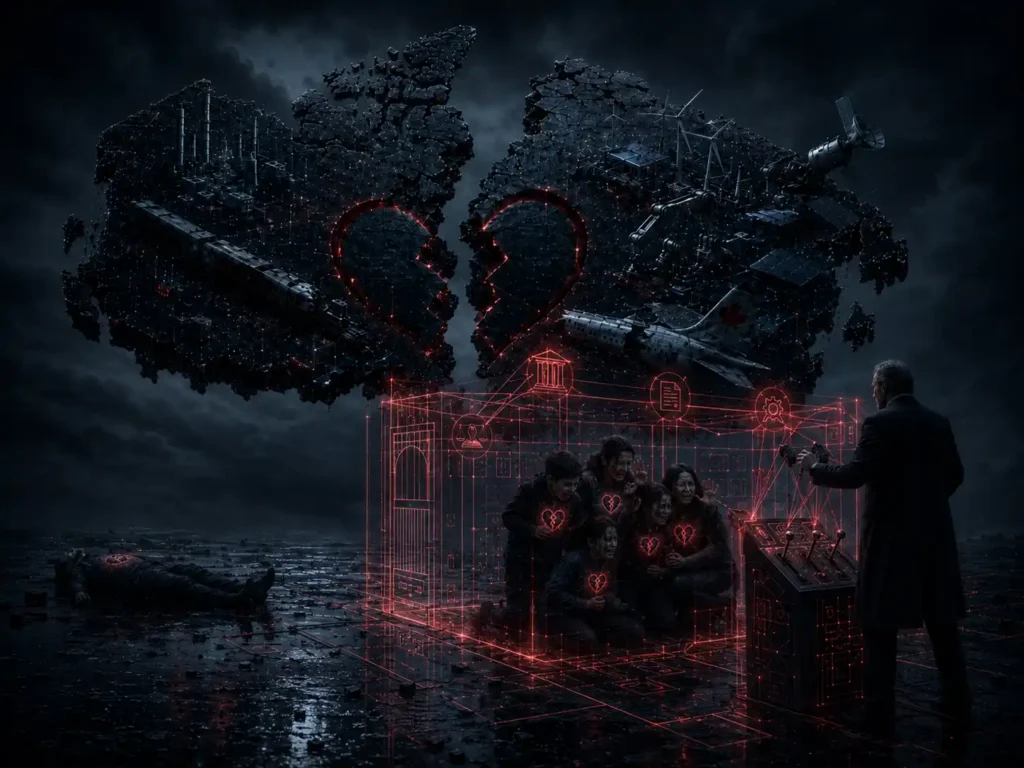
Canada does not lack intelligence, talent, resources, or institutions — it lacks a coherent architecture for connecting them. The Digital Federation proposes a sovereign, interoperable, auditable, and recoverable model of government built around modular systems, bounded AI, digital sovereignty, resilient infrastructure, and a renewed Builder Class.
Embark on an analytical journey comparing SGT’s mission of skill empowerment with science fiction’s greatest heroes. From Professor Charles Xavier’s mentorship to Morpheus’ pursuit of truth, find out which character best embodies the spirit of SGT.
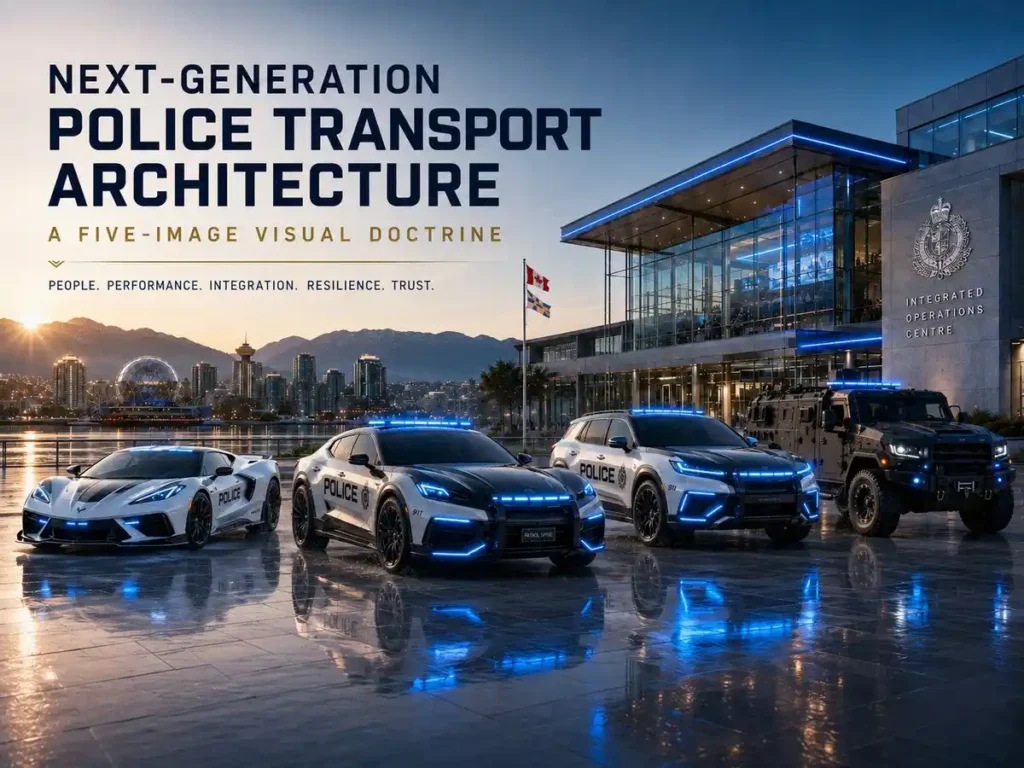
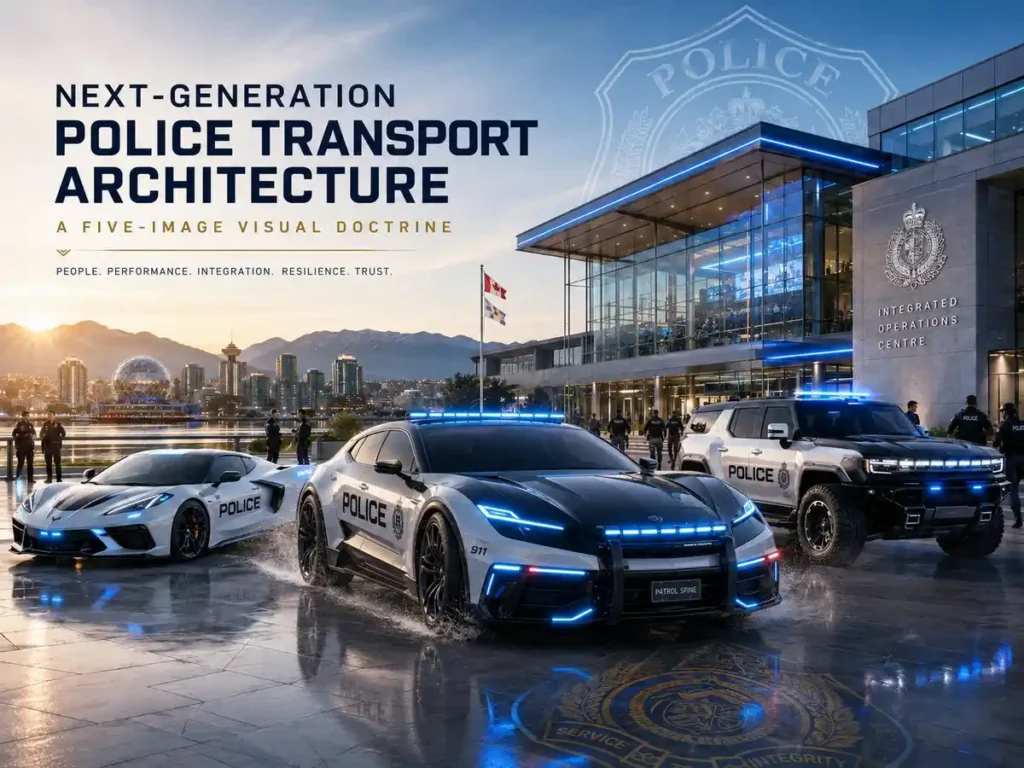
A next-generation police transport architecture designed around systems integrity, resilience, human command, repairability, cybersecurity, mission legitimacy, and long-term continuity—turning the police vehicle into a testable standard for public engineering.
A first-principles architecture for next-generation police transport, combining efficient patrol vehicles, resilient command systems, emergency mobility, human fallback, and disciplined fleet governance.
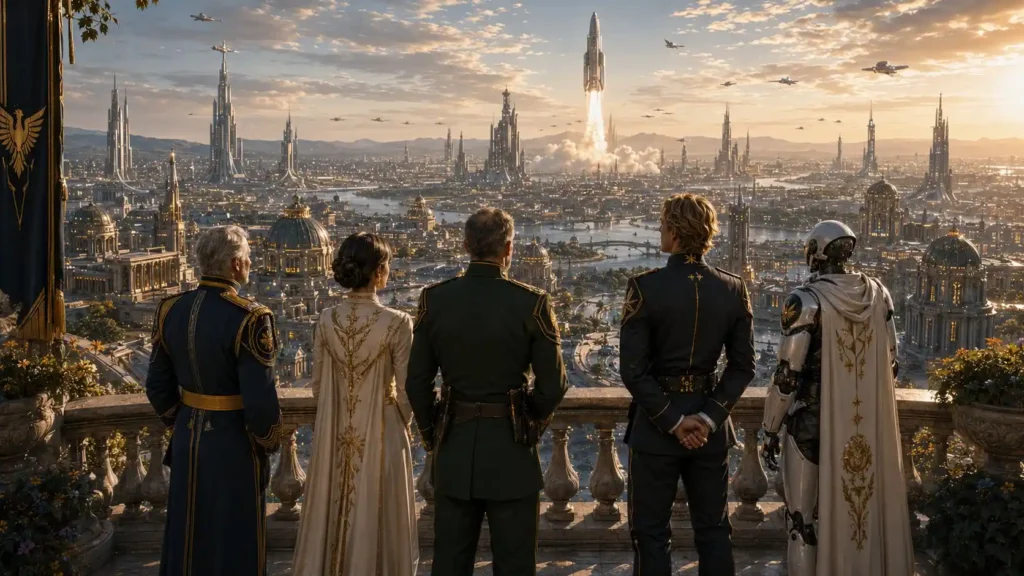
From Empire to Starfleet explores how humanity can build shared industrial, governance and spacefaring systems without recreating empire or centralized control. Part II develops the Concord of Wings and a distributed path toward a worldbuilding fleet.
The Concord of Wings explores how humanity can preserve civilizational strength while governing its dangers, combining sovereignty, interoperability, industrial capacity, constitutional safeguards, and professional alignment to build a capable spacebuilding civilization without creating a new empire.
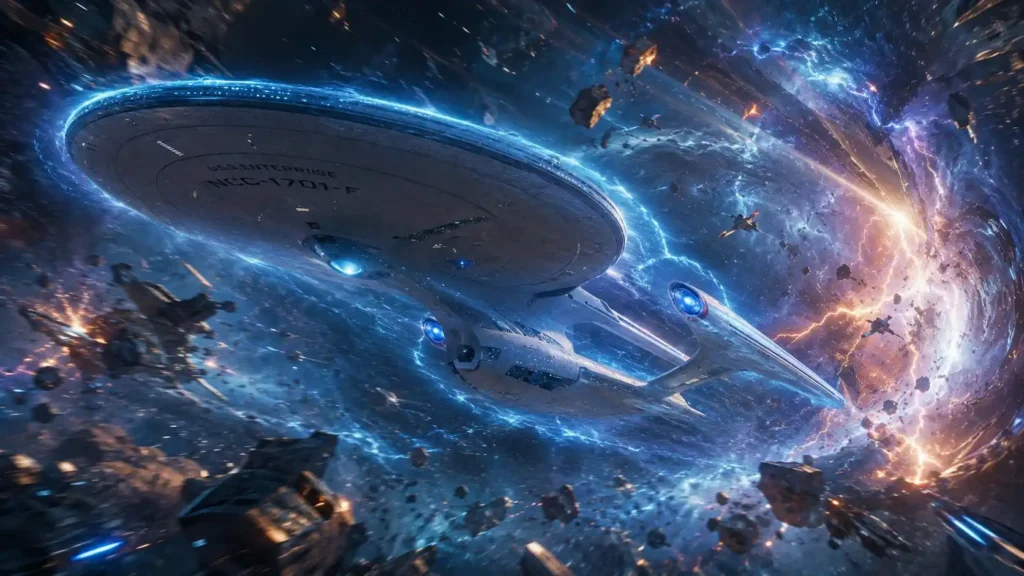
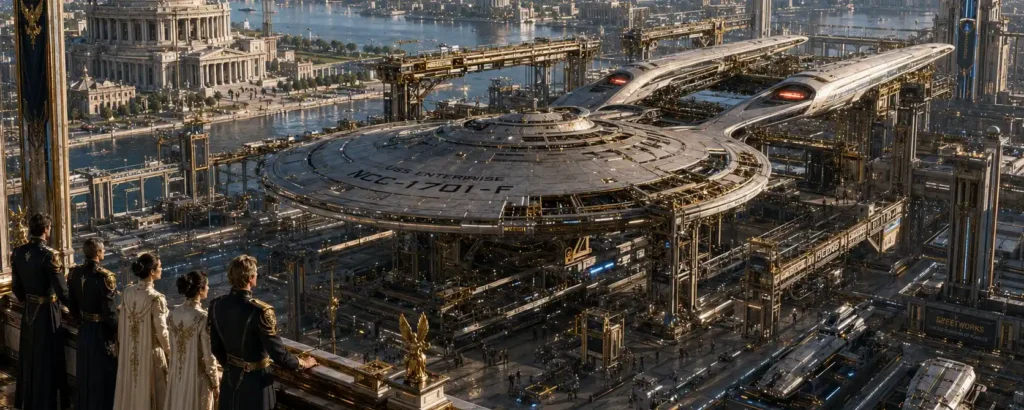
The Continuity Engine explores how civilizations can preserve and transfer knowledge, character, technology, industrial capacity, legitimate authority, and human agency across generations. Through the SGT–TNG cinematic universe, Enterprise-F, synthetic intelligence, Starfleet, mythology, and engineering become parts of a larger blueprint for civilizational resilience — and for making the future inheritable.
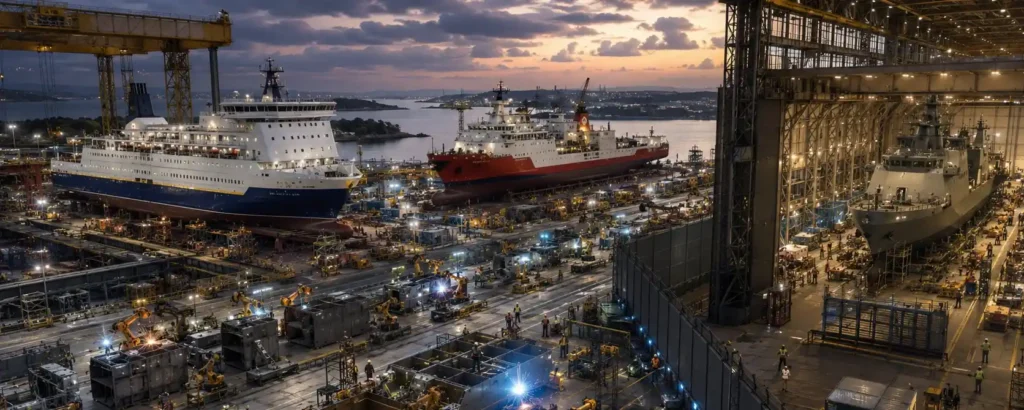
Canada’s maritime challenge is bigger than building more ships. This paper proposes a resilient national shipbuilding architecture built around distributed production, automation, repair capacity, technology transfer, qualified second production paths, and industrial systems capable of operating before and during a crisis.
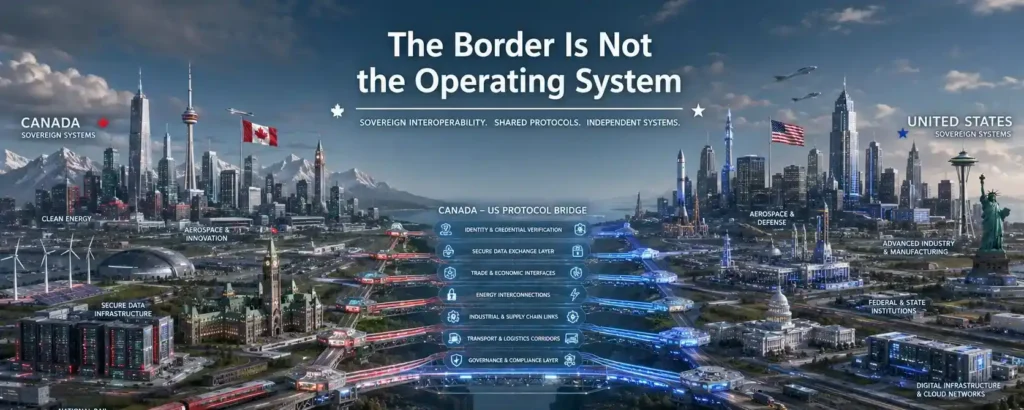
A first-principles architecture for sovereign interoperability between allied nations—preserving constitutional authority while enabling secure cooperation across government, trade, technology, infrastructure, defence, and critical systems.
The Convergence Architecture brings together prepared citizens, restrained machines, human command, interoperable systems, advanced engineering, and resilient infrastructure into a unified vision for the future. It explores how societies can build extraordinary technological capability without sacrificing human authority, freedom, accountability, or cultural continuity.
Canada did not just lose Bombardier. It lost the chance to build a sovereign engineering spine linking aerospace, rail, defense, AI, robotics, manufacturing, and national industrial power.
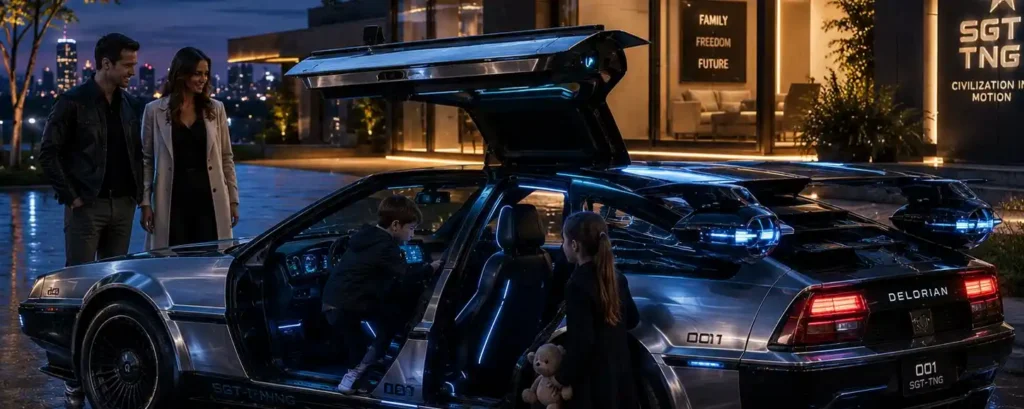
D.E.L.O.R.I.A.N. 001 SGT-TNG moves beyond the vehicle itself to the knowledge system required to sustain it: open engineering manuals, builder culture, repair doctrine, AI safety, human command, controlled customization, and a civilization capable of understanding, maintaining, and improving its most advanced machines.
D.E.L.O.R.I.A.N. 001 SGT-TNG enters the proof stage: benchmarking eVTOL performance, hover power, downwash, energy, safety, certification, manufacturing, and technical risk. This red-team report defines what the next-generation flying-car architecture can claim today, what remains unproven, and the engineering gates required to move from concept toward validated hardware.
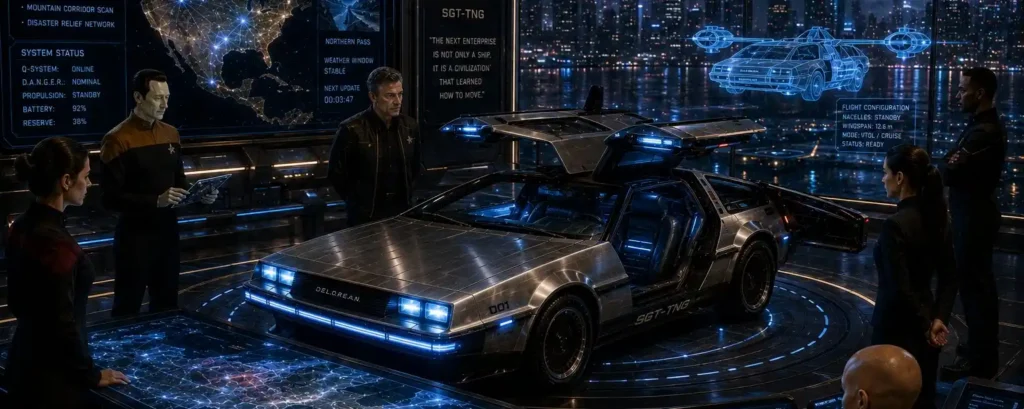
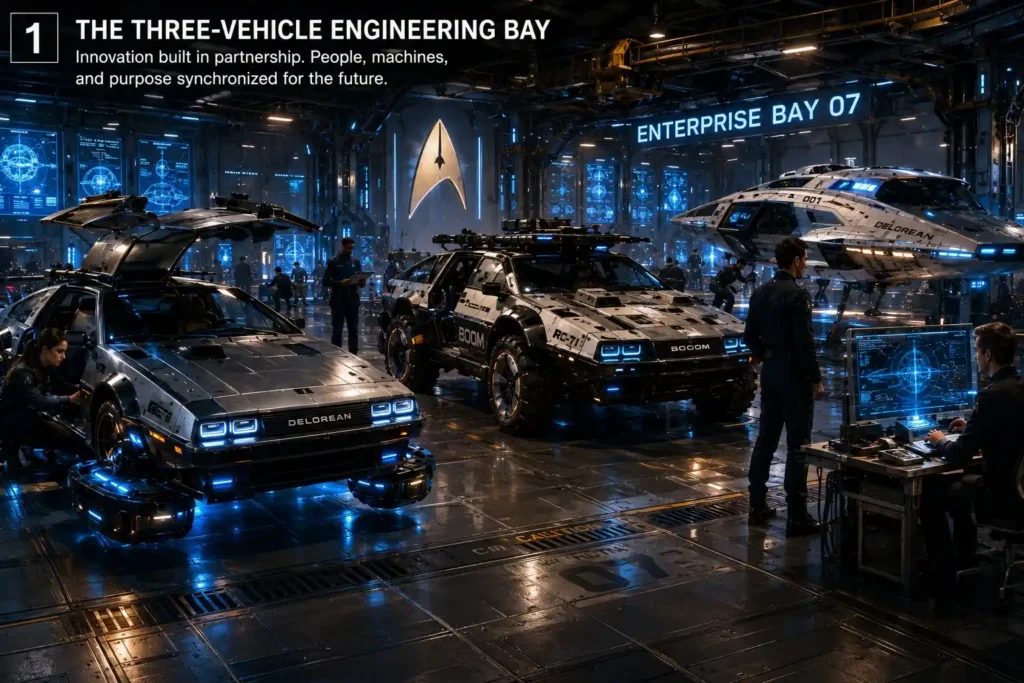
D.E.L.O.R.I.A.N. 001 SGT-TNG enters the engineering: structure, lift, wing and nacelle integration, doors, batteries, hydrogen, electronics, Q, digital twin, D.A.N.G.E.R., manufacturing, service, and the proof gates required to move from concept architecture toward real hardware.
D.E.L.O.R.I.A.N. 001 is more than a vehicle concept. This post introduces NAV-CF, the common framework connecting D.E.L.O.R.I.A.N., BOOM 1971, A.R.G.O., mission kits, Q, D.A.N.G.E.R., digital twins, branch discipline, open technical knowledge, and the proof architecture required to build a resilient mobility family.
D.E.L.O.R.I.A.N. 001 SGT-TNG presents a road-first, flight-optional shuttle mobility architecture designed around modular flight, human command, transparent system intelligence, and proof-gated safety. More than a flying-car concept, it is a public engineering framework for restoring human reach while preserving road utility, repairability, technical honesty, and decentralized mobility.